African Women Shaping Africa’s Water Future: Leadership, Governance, Financing, and Partnerships for the Africa Water Vision 2063

DIALOGUE BRIEF | WRITTEN BY EUPHRESIA LUSEKA

Executive Overview

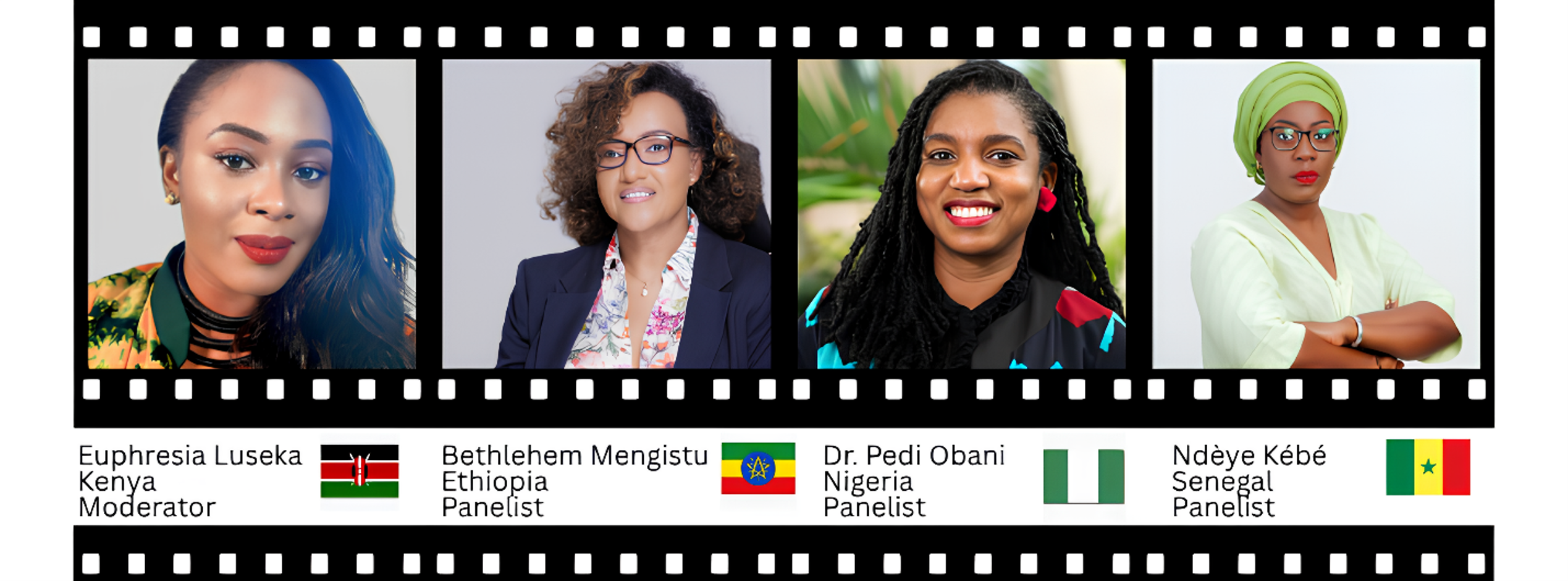
As Africa advances the Africa Water Vision 2063, the central challenge is no longer confined to expanding physical infrastructure. It is fundamentally a question of executive leadership who shapes policy, governs utilities, mobilises capital, and negotiates transboundary agreements. In celebration of Africa Women’s Day 2026, this Strategic Leadership Dialogue, convened with, African Women In Trade, Pan-African Women’s Organization (PAWO), Rural Water Supply Network (RWSN), African Water and Sanitation Association (AFWASA) and other partners, brought together Strategic Dialogue Lead and Moderator Euphresia Luseka, Dr. Pedi Obani (Associate Professor of Law, University of Bradford), and Bethlehem Mengistu (Executive Director, Agenda for Change). Together with foundational framing from Ndeye Kebe (President, WIIS Senegal), the dialogue advanced transitioning African women from water collectors into becoming the architects, policy-makers, financiers and diplomats shaping Africa’s water economy.

The Opening Perspective

Euphresia (Moderator):

Welcome to our Leadership Dialogue: African Women Shaping Africa’s Water Future: Leadership, Governance, Financing, and Partnerships for the Africa Water Vision 2063.

Earlier this year, African Heads of State adopted the Africa Water Vision 2063, recognising that gender equity is a prerequisite for water security. Yet according to UN Water, Sub-Saharan Africa faces an estimated $30 billion annual water investment gap, while women and girls spend 250 million hours every day collecting water.

Today’s conversation asks: How do we move from recognising African women as water collectors to architects, regulators, financiers, and diplomats of Africa’s water economy?”

Foundational Context

Euphresia (Moderator):

I want to anchor us in the powerful framing shared by Ndeye Kebe, President of WIIS Senegal.

She reminded us of Ole, 12-year-old girl who dreamt to be a doctor but never returned home after setting out to fetch water. Ole did not die because of war or disease but water access. Behind every statistic on water insecurity is a life constrained.

Imagine what Africa could achieve if those 250 million hours were redirected toward education, entrepreneurship, research, innovation and infrastructure? Water scarcity threatens livelihoods, intensifies resources competition, conflict vulnerability in communities, displacement, and gender-based violence.

However, transboundary cooperation demonstrates that shared water resources can become platforms for collaboration rather than confrontation. Therefore, there will be no Agenda 2063 without water security, and there will be no water security without women.  

She challenged us to position African women as negotiators, investors, and decision-makers. When women participate in mediation and natural resource governance, peace agreements become more durable and communities more resilient.  The ambition she set before us is: ensuring that by 2030, women hold at least 30% of decision-making roles in water governance and transboundary negotiations.

From Representation to Institutional Power

Euphresia (Moderator):

To the first challenge, Governance. Bethlehem, let me start with you. Across Africa, many policies already recognise gender inclusion. However, women remain significantly underrepresented in executive positions.

What is the single most important leadership decision African governments and institutions must make today to move women to decision-makers shaping Africa’s water future?

Bethlehem:

Across our continent, women already manage water daily in households, agriculture, healthcare systems, and communities. They understand the realities of water insecurity most. Yet they remain underrepresented in the rooms where policies are designed, budgets are allocated, and investments are prioritised.

We cannot build Africa’s water future while excluding the people who understand the challenge most deeply. But this is not simply about inviting more women into existing structures. Leadership is not about participation alone but sharing power.

Women should be intentionally placed in positions where they can influence policy decisions, investment priorities, and institutional reform. Representation alone is not enough. We need women to have authority, resources, and accountability. The strongest reforms I have seen happen when leadership is collaborative and locally driven; when different perspectives shape decisions, institutions become stronger, more responsive, and more resilient.

Africa Water Vision 2063 will not be achieved through infrastructure alone. It will be achieved through leadership that reflects the diversity, talent, and ambition of Africa’s people. The question is no longer whether women are ready to lead; it is whether our institutions are ready to trust women with leadership.

Euphresia (Moderator):

Thank you, Bethlehem. That distinction is key. This is not simply about increasing the number of women in leadership positions.

Representation without merit and power does not transform institutions.

Dr. Pedi, let me bring you into the conversation. You have written extensively on law, climate justice, and governance. What needs to change in how we frame women’s participation in water governance?

Dr. Pedi:

I think one of the most important shifts we need is rethinking vulnerability. Most conversations around water begin with the image of women walking long distances, carrying water, and providing care. Those realities are important, but when they become the dominant narrative, they limit how we see women’s potential. African women are often framed through what we lack rather than what we bring.

We need to move from a vulnerability-based approach to an agency-based approach. Women are not inherently vulnerable. Vulnerability is created by the systems within which people operate, systems that restrict access to resources, decision-making spaces, finance, and legal protections.

“If you think about a fish taken out of water, that fish becomes vulnerable because the environment does not support it. The issue is not the fish itself; it is the system around it.”

The same applies to women. Leaders must recognise that African women are not one single category. Women differ by age, education, income level, geography, and experience. So, policy responses cannot simply be ’empower vulnerable women.’ The question must be: how do we remove the structural barriers preventing women from exercising their agency? Moving forward, water governance must recognise women not only as beneficiaries of services, but as experts, professionals, entrepreneurs, regulators, and leaders.

Euphresia (Moderator):

Thank you, Dr. Pedi. Both of you have brought us to a central point: the challenge is not a lack of women’s capacity but whether institutions are designed to recognise and unlock that capacity.

Moving women from carrying water to governing water requires a shift in mindset, but also a shift in systems.

Continue reading “African Women Shaping Africa’s Water Future: Leadership, Governance, Financing, and Partnerships for the Africa Water Vision 2063”