Pastoralists and Water 2 – Learning what is pastoralism

Dr Kerstin Danert, Ask for Water Ltd, Edinburgh, Scotland

In my first blog, I explained my discomfort around the stigma and attitudes towards pastoralists that I came across in my early working life, alongside my complete lack of understanding of how pastoralists function. With this (second) blog, let me try and share something of what I learned about pastoralism through reading and learning from the people I met through online communities since 2020 including that of IYRP2026 Global Alliance and the Food and Agriculture Organisation (FAO).

Pastoralism is an economic activity and a cultural identity. Pastoralists make a living by raising livestock or semi-domesticated animals on rangelands (a term which I shall come back to). In fact, “pastoralist” is really an umbrella terms covering many groups, as illustrated by the word cloud below (and this one is only in English!)

Figure (above): Terms for pastoralists (in English) (Link

In keeping with the diversity of names and contexts in which they live, pastoralists keep different kinds of livestock species on native and semi-native rangelands, including cows, buffalos, yaks, llamas, sheep, camels, goats, reindeer, horses and donkeys and even grazing ducks. I understand that pastoralism means that animals are herded, moved or rotated from grazing point to another grazing point at least some of the time, rather than being constantly penned or left by themselves. In short, the livestock move around, but the people may or may not move.

And now to rangelands. These are essentially the places where livestock graze and pastoralists live. Rangelands are areas where the indigenous vegetation is predominantly grasses, grass-like plants, forbs (was a new word for me) or shrubs that are grazed and browsed (which means livestock, such as camels eating shrubs and trees). Rangelands provide a natural ecosystem for raising grazing livestock and wildlife. In my next blog I will talk more about the extent of rangelands, and how they are being destroyed by conversion to cropland, which I suspect, will come as a surprise to you. But as a spoiler, rangelands cover at least 54% of the world’s land mass, and pastoralism exists in two thirds of the countries in the world! 

I mentioned cultural identity, and have learned that the term ethnic pastoralist can refer to people who come from ethnic groups that traditionally practised pastoralism but whose livelihoods are no longer derived from grazing livestock. The woman I got to know in Kampala (see Blog 1) may be among them, and I now realised that I should have asked her much more…

Pastoralists have different degrees of mobility, and can be sedentary. As an economic activity, pastoralism is an animal production system that is able to create livelihoods in highly variable environments. This point is key, and will remain a theme throughout my series of blogs. Mobile pastoral systems take advantage of environmental variability by managing grazing itineraries to improve livestock productivity as well as deal with pests and diseases and to avoid conflicts.

Further, pastoralism is a fundamental part of the global food system. One of the things that has struck me most, is that pastoralists actually produce food in the world’s harshest environments – in land that may have poor water supply or soil quality, face extreme temperatures, have steep slopes and or be remote. And it gets even more interesting when one realises that, by moving from one place to another, animals fertilise the soil with their dung and scatter seeds with their regular grazing and trampling. This has the effect of enhancing biodiversity and maintaining landscapes. I want to understand more here! 

And I am coming to realise that, despite the global significance of pastoralism and rangelands, pastoralists are under-recognised and undervalued. As I mentioned in my first blog, they can also be stigmatised. 

It seems that pastoralism is largely misunderstood, with pastoralists traditionally suffering from marginalisation and exclusion from dialogue. Pastoralists have been deeply affected by sedentary societies with poor understanding of the pastoral livelihood system have imposed alien social and governance schemes including attempts to settle pastoralists and create barriers to herd mobility or pastoralists’ access to public services. This is yet another area to learn more about. As with other marginalised groups, it is the voices of pastoralist communities themselves that need to be heard at local, national and international levels.

With more pastoralists gaining voice, and with a better understanding of pastoralism by those living with, studying and working with pastoralist communities, recognition of the value of pastoralism as well as the value of herd mobility is growing. But there is much to learn!

2026 will be the International Year of Rangelands and Pastoralists (IYRP2026). Over the coming months, I will continue to share my reflections and insights on Pastoralists and Water with you through a series of blogs. 

Sources of information

African Union (2010) Policy Framework for Pastoralism in Africa: Securing, Protecting and Improving the Lives, Livelihoods and Rights of Pastoralist Communities. Department of Rural Economy and Agriculture, African Union, Addis Ababa. 

Axweso F (2011) Understanding pastoralists and their water, sanitation and hygiene needs, Discussion Paper, WaterAid, Available at https://www.ircwash.org/sites/default/files/pastoralismintzdiscussion.pdf (accessed 28 Sept 2020)

CELEP and VSF (2020) For an International Year of Rangelands and Pastoralism [Online], Coalition of European Lobbies for Eastern African Pastoralism and Vétérinaires Sans Frontières (accessed 5 October 2020)

FAO (2020) Pastoralist Knowledge Hub [Online], Food and Agriculture Organization of the United Nations, http://www.fao.org/pastoralist-knowledge-hub/en/ (accessed 28 Sept 2020)

IFAD (2018) How to do, Engaging with pastoralists – a holistic development approach, International Fund for Agricultural Development, Rome, Available at https://www.ifad.org/en/web/knowledge/publication/asset/40318809 (accessed 5 October 2020)

IRC (2025) Pastoralism and Rangelands: People and Institutions a Glossary of Terms, International Rangeland Congress, https://www.iyrp.info/sites/default/files/2025-01/Glossary_pastoralism-rangelands_people-institutions-2024.pdf (accessed 27 Jan 2025)

IYRP (2019) A global call for a United National International Year of Rangelands and Pastoralists, Proposal for an International Year of Rangelands and Pastoralists Mongolia, International Year of Rangelands and Pastoralists, Available at https://globalrangelands.org/sites/globalrangelands.org/files/Mongolian%20Proposal_IYRP_updated_0.pdf (accessed 5 Oct 2020)

Mundy P (2020) Defining pastoralism and nomadic pastoralism, Email on https://dgroups.org/fao/pastoralist-hub/discussions, 2 October 2020,

Niamir-Fuller, M. ed. (1999). Managing Mobility in African Rangelands: The Legitimization of Transhumance. London: Intermediate Technology Publications, 1999. African Studies Review | Cambridge Core
https://www.cambridge.org/core/journals/african-studies-review/article/abs/maryam-niamirfuller-ed-managing-mobility-in-african-rangelands-the-legitimization-of-transhumance-london-intermediate-technology-publications-1999-xiv-314-bibliography-index-2995-paper/3570749A673ABF1AFE556A26002AFAE4

Jenet A. Buono N, Di Lello S, Gomarasca M, Heine C, Mason S, Nori M, Saavedra R, Van Troos K (2016) The path to greener pastures: Pastoralism, the backbone of the world’s drylands. Technical Report. Vétérinaires Sans Frontières International (VSF-International). Brussels, Belgium, Available at https://doi.org/10.13140/RG.2.2.11042.22725

Jonckheere S, Liversage H, Rota A (2017) Pastoralism and Land Tenure Security: Lessons from IFAD-supported projects, Paper prepared for presentation at the “2017 World Bank Conference on Land and Poverty”, The World Bank – Washington DC, March 20-24, 2017, Available at https://www.oicrf.org/documents/40950/43224/Pastoralism+and+land+tenure+security+Lessons+from+IFAD+supported+projects.pdf/e3b560d6-0bbc-3109-1c33-a5851e551b49?t=1510194133215 (accessed 28 Sept 2020)

Krätli S (2019) Pastoral Development Orientation Framework: Focus on Ethiopia, MISEREOR, Aachen; Available at https://www.researchgate.net/publication/336983785_Pastoral_Development_Orientation_Framework

Republic of Kenya (2012) Releasing Our Full Potential. Sessional Paper No. 8, National Policy for the Sustainable Development of Northern Kenya and other Arid Lands, Ministry of State for Development of Northern Kenya and Other Arid Lands, Nairobi. 

USAID (2017) Water Currents, September 19, 2017 – WASH and Pastoralists, United States Agency for International Development Water Team, Washington DC, Available at https://mailchi.mp/waterckm/water-currents-wash-and-pastoralists-september-19-2017?e=b631faae3e(accessed 28 Sept 2020). 

THE INTERSECTION OF WASH AND GENDER

Blog by Euphresia Luseka, co-lead of the RWSN Leave No-one Behind theme.

“Gender equality is a fundamental human right and an obvious question of equity and fairness. But it is also a necessary foundation for sustainable development and a peaceful, prosperous world.”
– Beate Trankmann, UNDP Resident Representative

However, the intersection of WASH reveals profound challenges that hinder the potential of women and girls in achieving equitable and sustainable development, within the realms of WASH. Cecilia Sharp, UNICEF Director of WASH and CEED, explains this by informing that “unsafe water, toilets, and handwashing at home robs girls of their potential, compromises their well-being, and perpetuates cycles of poverty.” She added, “responding to girls’ needs in the design and implementation of WASH programmes is critical to reaching universal access to WASH and achieving gender equality and empowerment.”

Since the emergence of gendered thinking in WASH in 1970s, the dialogue surrounding gender equity has evolved including a dedicated  SDG 5 that envisions a world where gender equality is achieved and all women and girls are empowered. It targets the eradication of discrimination and violence against women, child marriage and female genital mutilation, and the recognition of unpaid care work. Furthermore, it emphasizes the necessity for women’s participation in decision-making and access to sexual and reproductive health services.

Yet, five decades later, the promise of transformative models within policies and programs remains nascent.  This stagnation raises pressing questions about the efficacy of our current approaches and the urgency of progressive change.

The connection between WASH and gender equity remains tenuous.

This status is explained by the acknowledgement that while the importance of advancing WASH as a means to achieve SDG 5 is increasingly acknowledged in global discourse with even SDG 6.2 explicitly calling for paying special attention to the needs of women and girls, still a glaring omission persists: a lack of commonly agreed-upon indicators for the national and global monitoring of gender within WASH initiatives. This absence underscores a systemic failure that perpetuates gender inequalities, inhibiting the realization of SDG 6 targets.

Water Scarcity and Gender Inequality: Exploring the Hidden Costs of a Thirsty World

The intersection of WASH and gender unveils unique challenges that disproportionately burden women and girls. As demonstrated on Graph 2 below, Research reveals that when water sources are not easily accessible, women and girls aged 15 and older assume the primary responsibility for water collection in 70% of households—an alarming statistic that starkly contrasts with the 30% of households where men share this burden. This reality not only highlights the entrenched gender roles but also raises critical questions about the time and energy expended by women and girls, which could otherwise be invested in education, employment, or health.

Compared to men, women experience many negative WASH-related health outcomes, some of which have been disaggregated. Dr. Maria Neira, Director of the WHO’s Environment, Climate Change, and Health Department, informs, “Women and girls not only face WASH-related infectious diseases, like diarrhoea and acute respiratory infections, they face additional health risks because they are vulnerable to harassment, violence, and injury when they have to go outside the home to haul water or just to use the toilet.”  They also account for a higher number of disabilities adjusted life years (DALYs) caused by inadequate hygiene.

Graph 2 Average time spent collecting water by women, girls and boys, by country, selected surveys, 2012-2022 Source UNICEF and WHO, 2023

The gravity of these issues is further compounded by the fact that contaminated drinking water and poor sanitation can have dire consequences for maternal health, including complications during pregnancy and an increased incidence of reproductive tract infections. Despite the wealth of existing studies on health inequities related to WASH, there exists a significant research gap regarding the specific impacts of drinking water access on gender disparities. While some investigations have touched upon the broader issues of water fetching, sanitation, and sexual violence, the social, educational, and economic ramifications of inadequate access to safe drinking water for women remain largely underexplored.

This multifaceted vulnerability contributes to a staggering increase in mortality rates among women and girls.

Brightening the Horizon: Positive Trends in Gender Recognition in WASH Initiatives

“In the landscape of gender recognition, a nuanced narrative unfolds—one that, while acknowledging persistent challenges, also celebrates the transformative strides women are making within the water sector.”

The forthcoming UN WWDR 2026 stands as a beacon of hope, poised to spotlight the remarkable achievements of women in this vital field. By illuminating their contributions and sharing success stories, the report shall aim not just to honour past accomplishments but to ignite inspiration in future generations of women aspiring to carve out their own paths in WASH careers. This acknowledgment is not merely celebratory; it is a critical step toward fostering gender equity in a sector that has historically marginalized female voices.

Each March annually heralds the convening of the United Nations Commission on the Status of Women (CSW), a platform designed to evaluate the progress made since the Beijing Declaration and Platform for Action. Despite the stark realities of slow advancement in gender and WASH, some nations have emerged as exemplars of progress.

Senegal, for instance, has shown remarkable strides between 2015 and 2020, as highlighted in the 2022 SDG Gender Index by Equal Measures 2030. They improved on undernourishment (SDG2) and drinking water (SDG6). The Senegalese government, since adopting the Beijing Declaration, has actively championed gender equality. The introduction of a parity law for elected institutions in 2010 has positioned Senegal as a global leader, boasting one of the highest proportions of women parliamentarians in West Africa. This progressive move places Senegal fourth in Africa concerning gender parity in its legislative assembly. Complementing these efforts, the government has ratified several international conventions to bolster women’s rights and developed a National Strategy for Gender Equity (SNEEG 2016-2026), to ensure equitable participation of both genders in decision-making and access to resources.

Such positive trends in gender recognition in WASH, have spilled into the political arena particularly women’s activism; Hon. Anne Désirée Ouloto—dubbed ‘Maman Bulldozer’ lead transformative efforts in WASH initiatives in Côte d’Ivoire. Presiding over a monumental US$1.2 billion investment in sanitation and drainage in Greater Abidjan, her work exemplifies the profound impact of female leadership in WASH sector.

The landscape of advocacy and legal rights protecting women in WASH is also evolving. In Kenya, alongside legislators and WASH CSOs’, I have led concerted efforts to address the pernicious issue of sextortion in the water sector. Such advocacy is not only a legal necessity but a moral imperative, critical to achieving SDG5 on gender equality and SDG16.6 on accountable governance.

Moreover, Women are not just participating but breaking barriers, challenging norms and stepping into leadership roles, shaping policies, and driving change by making their voice heard. Indonesia’s Retno Marsudi, who serves as the first UN Special Envoy on Water, exemplifies the vital role women play in global discourse on water issues.

#HearingTheUnheardHRWS Digital Campaign and Side-Event at the UN Water Conference 2023

Our friends from End Water Poverty, Water Integrity Network & partners invite you to join to this UN 2023 Water Conference side event Hearing the Unheard: the Human Right to Water and Sanitation‘ & its digital campaign #HearingTheUnheardHRWS which aims to amplify the call for global action to HRWS for the vulnerable groups.

The goal of the campaign #HearingTheUnheardHRWS is to generate multi-stakeholder conversations; to raise awareness and gather key messages, opinions and recommendations that shall inform commitments, pledges, actions, initiatives and endeavours for vulnerable groups who are left behind towards realising HRWS. The campaign consists on sharing videos & live testimony of the experiences, agency and demands of marginalised groups from across the globe with responses from the Special Rapporteur, OHCHR and governments

 As provided by UN OHCR, groups in vulnerable situations include: Children and adolescents, Women and Girls, Indigenous peoples, LGBTI, Migrants Refugees Asylum seekers, Older persons, Persons with disabilities. 

We are handing over the mic to all WASH stakeholders to share their experiences, stories and views on improving WASH access for vulnerable groups. The campaign gives an opportunity for everyone to follow these experiences and views, get inspired by the vulnerable groups, reform champions, activists and advocates who are making a difference every single day, and find out how to can take action. 

How to participate in the digital campaign: 

The campaign requires original content in the form of shareable media, photographs, quotes, blog posts and videos, to promote the voices of vulnerable groups. This material will be shared through Twitter, LinkedIn and Facebook. If you are interested to participate please take this into account:

  1. Record A Short, Social Media-Friendly Video (Maximum 1 Minute) Or Take Photographs Or Share A Quote Or Write A Blog (Maximum 300 Words With A Photograph) Reflecting: 
  • Impacts: How does lack of (adequate, affordable, acceptable) water and sanitation affect your community/ group? 
  • Actions: What existing initiatives or actions have you taken to address this? 
  • Responses: What responses have you received from the government? 
  • Support: What support and action do you want to see from the international community/ UN?  

N.B. If you do not have a social media handle or profile, you can also send your content to equity@dgroups.org 

Side Event: Hearing the Unheard. the Human Right to Water and Sanitation

The side event session is hosted on March 23, 2023, 3:00PM-4:30PM EST Time in Hybrid mode. Registrations to participate in this side event of the UN 2023 Water Conference here

To learm more about this side event session and the organisations involved, please find hereunder the concept note on Hearing the Unheard: the Human Right to Water and Sanitation side event.


Online learning on groundwater – strengthening capacity in African member states and beyond

Professional Drilling Management & Groundwater Resources Management

Thanks to funding from the Federal Institute for Geosciences and Natural Resources (BGR) in Germany, 2022 saw Ask for Water GmbH, together with the Africa Groundwater NetworkCap-Net UNDP and several other partners (see below) develop and run two online courses on groundwater. The courses strengthened the capacity of staff of governments, NGOs, the private sector and academia in African member states and beyond. 

The courses, hosted by Cap-Net UNDP, and offered free of charge to participants, were entitled Groundwater Resources Management and Professional Drilling Management. Each course was specifically developed for professionals working on these issues, or responsible for decision making.

Face to face training course on drilling supervision
in Sierra Leone (Source: Kerstin Danert)

Professional Drilling Management Course

Drilled water wells are vital to achieving universal clean drinking water, providing safe, affordable, reliable and available water sources. To ensure that the water wells or boreholes are built to last, they must be drilled, developed and completed in a professional manner. Key elements of a professional drilling sector are robust procurement, contract management, siting, borehole design, construction, and supervision. Furthermore, the management of the groundwater resources must also be considered and support provided to long-term maintenance if services are to last. Unfortunately, in many countries it is difficult to develop skills in these areas due to a lack of training and mentoring opportunities.

The 2022 online course on Professional Drilling Management provided participants with a comprehensive overview of the different aspects of drilling management, specifically (i) groundwater data and siting; (ii) procurement and contract management (including costing and pricing; (iii) borehole drilling and supervision and (iv) legal and institutional frameworks. In the last of five modules, participants were encouraged to reflect upon and share actions that they as individuals and as organisations could take to raise drilling professionalism in the context in which they work. From the 781 people who applied for the course, 314 were selected, of which 209 were active participants. A total of 162, equivalent to 78% of the active participants passed the course. 

You can access the 2022 course report, manual and key training materials here.

If you would like to learn about what alumni of previous online courses on Professional Drilling Management have done with their knowledge, check out the short film below or the short report of their testimonials.

Groundwater Resources Management Course

An estimated 50% of the global and 75% of the African population rely on groundwater for their drinking water supplies. Groundwater supports social and economic development and will become increasingly important in the face of climate change, as groundwater resources are often less affected than surface water by climate change impacts. If groundwater is to provide reliable, safe and sustainable water supplies now and for future generations, the resource must be well-managed. This requires consideration of the entire system of policies & laws, strategies & guidance, monitoring & management as well as investments & projects. Good groundwater management needs sound capacities in water authorities. But at same time, as many elements of groundwater management fall in other sectors, a general understanding of groundwater management principles in sectors like agriculture and urban planning is key for its successful implementation. 

The 2022 online course on groundwater resources management provides participants with a comprehensive overview of the multiple factors that impact upon groundwater. It was a self-paced course and was hosted on the virtual campus of Cap Net/UNDP.

The course comprised 5 modules; each with a short introduction, goal, learning objectives and orientation video, as well as mandatory videos and reading materials: 

  • Module 1: Characterization of Aquifer Systems from a Management Perspective
  • Module 2: Groundwater monitoring and data/information management & communication
  • Module 3: Groundwater quality and source water protection
  • Module 4: Groundwater regulation, licensing, allocation and institutions for aquifer management
  • Module 5: Transboundary aquifers in Africa: Approaches and mechanisms

You can access the 2022 course report, manual and key training materials here.

Artesian well near Lake Chad, Chad
(Source: Moustapha Diene

What next?

The Rural Water Supply Network (RWSN), Ask for Water GmbH, the Africa Groundwater Network (AGW-Net), Cap-Net UNDP and partners would like to offer these courses on an annual basis. We are currently looking for sponsors/funders to make this possible. In case you are interested, please contact us via  info@rural-water-supply.net.

Should we manage to get these courses off the ground, we will announce them through the Africa Groundwater NetworkCap-Net UNDP and the Rural Water Supply Network as well via LinkedIn.

Funded by

Partners

Charting the evolution of rural water services delivery across continents

This year we are celebrating 30 years since the Rural Water Supply Network was formally founded. From very technical beginnings as a group of (mostly male) experts – the Handpump Technology Network- we have evolved to be a diverse and vibrant network of over 13,000 people and 100 organisations working on a wide range of topics. Along the way, we have earned a reputation for impartiality, and become a global convener in the rural water sector.

RWSN would not be what it is today without the contributions and tireless efforts of many our members, organisations and people. As part of RWSN’s 30th anniversary celebration, we are running a blog series on rwsn.blog, inviting our friends and experts in the sector to share their thoughts and experiences in the rural water sector.

This is a guest blog by RWSN Member Lilian Pena P. Weiss based in Washington DC, USA.

I started working in the rural water sector in 2002, in my very first assignment with the World Bank, when I was part of a team assessing the social and environmental impacts of rural water systems in the dry northeast part of Brazil.  As a recent engineering graduate, I was very much focused on the infrastructure – but I quickly learned that sustainable rural water services need to take into account a lot more than that. I remember vividly exchanging with the rural users on how to organise the community associations for managing water services, discussions on tariffs, Operation & Maintenance, and support from local governments amongst others.  Since there, I never stopped working on delivering rural water services

In the early 2000s in Latin America, I worked on many projects in rural water services to indigenous and Afro-Latin communities that had been financed by the Inter-American Development Bank and the World Bank. Through those, I gained a better understanding of how these communities value water, the related cultural connections, and their willingness to have and pay for better services! This underlined the importance of working on the social side, especially behavior change and communications to make rural water services sustainable. At the time, the Demand-Responsive Approach (DRA) was the mantra with rural water practitioners! Some of the lessons learned from my engagement with Indigenous communities in Latin America and the Caribbean were later captured in this publication.

Around 2010, we started to develop a joint rural water information system, SIASAR, with Honduras, Nicaragua and Panama, which has since turned into a rural water platform across 14 national or subnational governments, from Costa Rica and Uganda to Kyrgyzstan.  Developing SIASAR has been one of the most interesting and rewarding initiatives of my professional career so far; we worked hand in hand with multiple countries to develop – from scratch – a new governance and structured information system that focused on service delivery and sustainability with active participation from local users up to central governments harmonized across a wide range of countries.

It was around 2012 that I became involved in the Rural Water Supply Network. At the time, I was co-chairing the internal rural water thematic group of the World Bank together with my colleague Miguel Vargas. The interactions with the RWSN I believe were a win-win for us and for them. The RWSN with its powerful outreach and strong presence in Africa could deepen our dialogue and understanding of how to reach the last mile in rural water supply and give us the opportunity to exchange lessons and initiatives with so many institutions working on the same topic. At the same time, the World Bank’s global perspective also helped the RWSN to expand beyond Africa.

Later in 2015, I was fortunate to join the World Bank’s team in Vietnam, to lead a new generation of rural water projects where financing was fully based on results. It was fascinating to evolve our dialogue from delivering tanks and connections to really focusing on ‘how can we make sure these systems will deliver 24/7, reliably, with O&M cost recovery and sustain over the years? The work started in Vietnam has scaled up globally; this blog gives a good overview of the lessons learned from this approach in Vietnam. To date that the World Bank has supported more than 20 programs for results in the water sector globally.

Although so much progress has been achieved in rural water over the last 20 years, from an old top-down, infrastructure-based approach, to the evolution of the CBO-based models with institutionalized backstopping support, and growing Private Sector Participation,  the challenges ahead remain complex. Not only do we need to continue working to ‘leave no one behind’,we also need to promote better and more efficient levels of service (ie. household connections, 24/7 supply, financial sustainability, etc). Moreover, climate change and its impacts on water security are perhaps the greatest challenge for this decade. Rural systems and their water sources are naturally more vulnerable to extreme climate events. The role of Development Partners, including the RWSN, become increasingly important to work with Governments, rural water practitioners, academia, and the private sector to develop and deploy effective solutions and advocate for the necessary funding to ensure universal, sustainable and climate resilience rural water services.

About the author: Lilian Pena P. Weiss is a Lead Water Supply and Sanitation specialist at the World Bank, based in Washington DC, USA. She has been working for over 20 years with World Bank operations, in Latin America countries, in East Asia and more recently in South Asia. She has led over 20 World Bank-financed investment projects in the water and sanitation sector, mostly focused on the rural water and sanitation sector. Lilian has also worked with water sector reforms, institutional strengthening of water utilities, environmental sanitation topics, community-driven development (CDD), results-based approaches and water security. She was the co-chair of the World Bank’s Rural Water Thematic Group from 2012 to 2015. Lilian is a Brazilian national, civil engineer, has a master in water resources management and environmental technology, and has a MBA in financial management.

Did you enjoy this blog? Would you like to share your perspective on the rural water sector or your story as a rural water professional? We are inviting all RWSN Members to contribute to this 30th anniversary blog series. The best blogs will be selected for publication. Please see the blog guidelines here and contact us (ruralwater[at]skat.ch) for more information. You are also welcome to support RWSN’s work through our online donation facility. Thank you for your support.

Photo credits:

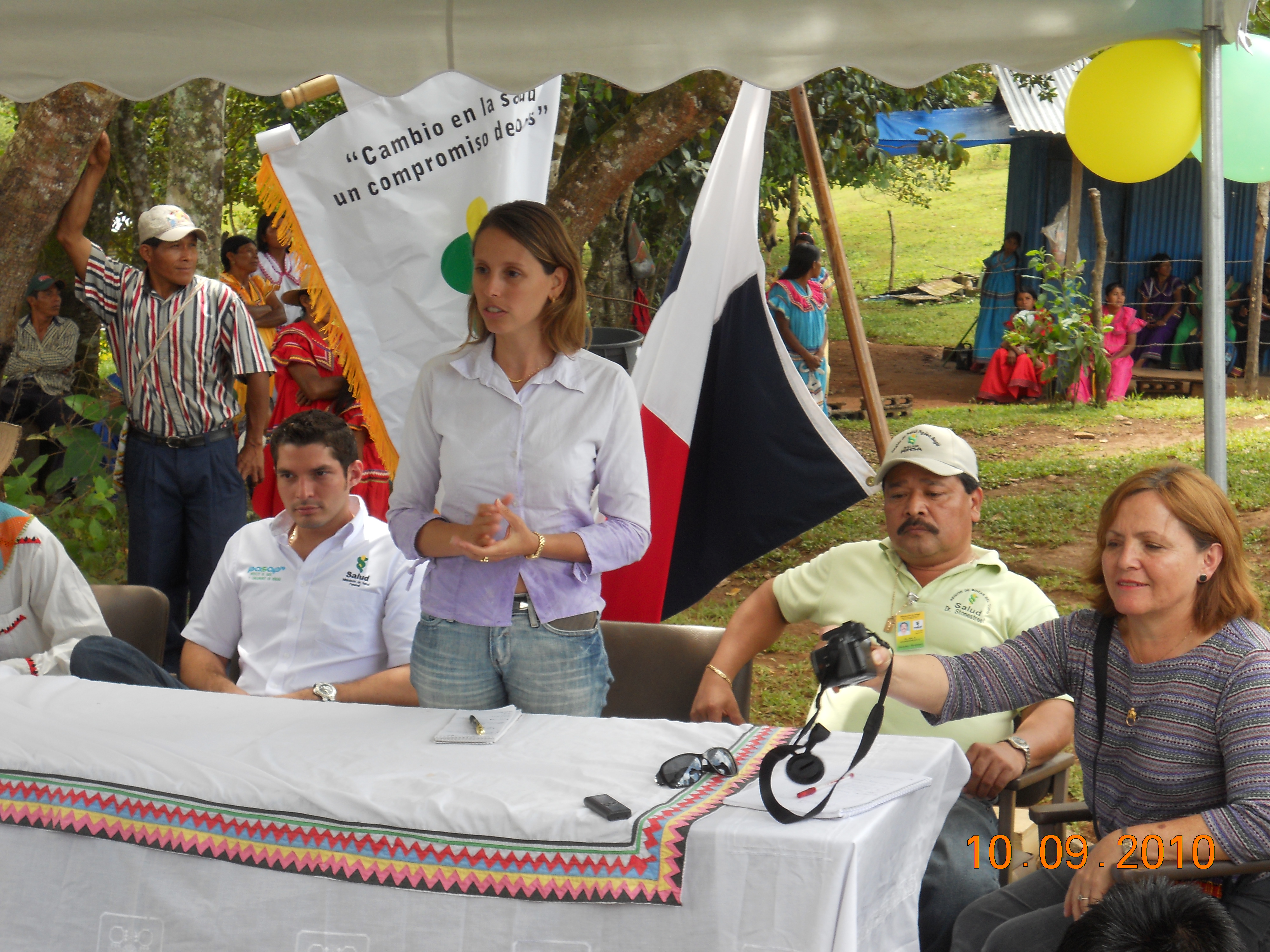
  1. Inauguration ceremony of a new water system in Panama. Photo credit: Lilian Pena P. Weiss. 
  2. SIASAR information system. Each point represents a rural community and the colour defines the status of rural water services.
  3. Visiting a rural water source in Vietnam. Photo credit: Lilian Pena P. Weiss.

Sand dam’s contribution to year-round water supply

This year we are celebrating 30 years since the Rural Water Supply Network was formally founded. From very technical beginnings as a group of (mostly male) experts – the Handpump Technology Network – we have evolved to be a diverse and vibrant network of over 13,000 people and 100 organisations working on a wide range of topics. Along the way, we have earned a reputation for impartiality, and become a global convener in the rural water sector.

RWSN would not be what it is today without the contributions and tireless efforts of many our members, organisations and people. As part of RWSN’s 30th anniversary celebration, we are running a blog series on rwsn.blog, inviting our friends and experts in the sector to share their thoughts and experiences in the rural water sector.

This is a blog post from RWSN Member Hannah Ritchie, based in the United Kingdom

In 2020, I joined forces with Sand Dams Worldwide (SDW) to help them answer the question of “how long water from sand dams is lasting throughout the year”. In this short blog post, I am happy to discuss with you our findings and the implications of this study. We’ll be discussing “why we are interested in this question”, “how we researched this question”, and “what we found out”.

Firstly though, for those of you not familiar with what a sand dam is, I would like to direct you here for a video, which explains them better than I could, and here to SDW’s website where you can find everything sand dam related you might need to know.

Why are we interested (and why you should be too)?

So, why do we care about whether sand dams are providing water year-round? There is uncertainty over whether water from sand dams is lasting all the way through the dry season, or whether people can only abstract water from sand dams at the beginning of the dry season, when they have just been replenished by the rains. Because of this conflict in results, we can’t easily conclude how effective sand dams are as a dryland and specifically dry season water source. For example, can people rely on them when other water sources are unavailable (such as when surface waters have run dry)? Or are the dams dry by the second week of the dry season? Answering this question is very important for understanding their level of use, acceptance, and financial viability, helping to inform future water management interventions and to ensure that communities are serviced with a continuous improved supply. Knowing whether there are certain dry season months when sand dams have no water being abstracted can also inform on months when water supply from other sources needs expanding. Finally, knowing which sand dams have more or less water being abstracted can aid in optimising sand dam design.

You might be thinking, “but no water abstracted doesn’t necessarily mean no water being available”, and you would be right. Because, whilst abstraction volumes may be linked to storage, many other variables, such as convenience, quality, and the use of other sources can also impact abstraction. Thus, the contribution that sand dams make to water security is not synonymous with the amount of water actually stored in the dam. Therefore, whilst this study can show us abstraction patterns from sand dams and therefore behaviours of use, it cannot confirm for certain whether there is or isn’t any water available.

How did we do it?

Now you know why we’re interested and why it matters, how did we actually go about answering the question: “how long water from sand dams is lasting throughout the year”? In 2019, 26 sand dam hand pumps in Makueni and Machakos Counties, Kenya were fitted with Waterpoint Data Transmitters (WDT) by ASDF. These devices measure the number of times and with what force a handpump is used over an hour and convert this into an estimated volume of water abstracted (Thomson et al., 2012). This data point is then transmitted by SMS. I had access to this remotely sensed data from April 2019 until October 2021. With a data point every hour for 26 sites over 31 months, I ended up with a very large data set!

Alongside this abstraction data, I also had access to interview and observation data provided by MSc student Joanna Chan, ASDF, and SDW. These variables included perceived salinity, abstraction limits, livestock use, whether the dam is said to have ever run dry, presence of rainwater harvesting tanks, actual salinity (μs/cm), area of dam wall (m2), average distance travelled from home to dam (km), and user numbers (Chan, 2019).

This data was then analysed to assess how much water people were abstracting and for how long throughout the year the water continued to be abstracted for. The variables collected from interview and observation were then analysed to provide insight into differences in abstraction between sites. For example, did sites with larger dam walls have more water being abstracted, or did salinity impact abstraction in any way?

Finally, we looked specifically at the last week in September (as a proxy for the end of the long dry season) to assess whether enough water to specifically meet drinking water needs (2 L/p/day) was still being abstracted at any sites. Due to the necessity of an improved source of water for drinking (of which a handpump is one), we wanted to know whether the handpumps could independently meet drinking water needs, in case no other water sources were available.

What did we find out? 

After analysing all of the data and wrapping my head around some statistical analysis, I like to think that we found some interesting results.

The most obvious finding was that of high variability in abstraction volume between the 26 hand pumps and seasons. We found abstraction to be significantly higher in the long dry season, indicating a high reliance and delivery of water when other sources are compromised. The diagram below shows median monthly abstraction (L/month) (red line) and average monthly rainfall (mm) (brown bars – dry season and blue bars rainy season) across all sites – indicating higher abstraction when rainfall is lower.

There was abstraction data available from 21 handpumps (81%) by the end of at least one of the analysed long dry seasons, with at least some water still being abstracted. At 59.1% of these sites, enough water to meet each user’s drinking water needs (2 L/p/day) was being abstracted in at least one of the analysed years. This indicates that such dams can meet the drinking water needs of users independently of other sources.

Using the variables which were collected in interviews and observations, we found that sites with a greater proportion of people using the water for livestock, higher salinity, and larger dam walls had significantly higher levels of abstraction. This is to be expected as higher salinity sites are often used more for livestock (Chan, 2019), which have a greater water demand than that for drinking, whilst larger dam walls can lead to a greater volume of sand build up and therefore water storage (Maddrell & Neal, 2012). 

These results highlight sand dams as a sustainable alternative to other dry season sources such as water vendors, which can be expensive and unreliable. However, lower abstraction in certain months and sites highlights that we must approach water management holistically. No one technique is necessarily the answer to dryland water security and all available water sources must be considered. Clearly, not all sand dams behave the same, with certain sand dams always likely to have higher levels of abstraction than others. However, high abstraction and sustained water availability by the end of the long dry season at many sites profess the positive contribution that sand dams can make to a community’s water supply, offering opportunities for further success in the future.

Closing remarks

I really hope you enjoyed learning about abstraction trends from sand dams as much as I enjoyed studying them (most of the time!) If you’re interested in learning more, I hope the paper will be published soon, which will be freely available for everyone to read. If you’d like to reach out, my email is hannah.ritchie@cranfield.ac.uk. Many thanks for reading.

A bit about the author

I am a PhD student at Cranfield University. I began my PhD in September 2019 in WaSH with the CDT Water WISER. With a background in geology and environmental engineering, I wanted to design my PhD project around earth sciences and development. This was how I ended up finding sand dams and partnering with SDW and Africa Sand Dam Foundation (ASDF).

Outside of work I love to run, hike (generally be outdoors as much as possible), read, and am learning French. I am very passionate about science communication and firmly believe that research results need to be translated into accessible formats for all to read and understand, hence why I have written this blog post for you (definitely shorter, more fun, and less boring than reading a 15-page paper!)

Did you enjoy this blog? Would you like to share your perspective on the rural water sector or your story as a rural water professional? We are inviting all RWSN Members to contribute to this 30th anniversary blog series. The best blogs will be selected for publication. Please see the blog guidelines here and contact us (ruralwater[at]skat.ch) for more information. You are also welcome to support RWSN’s work through our online donation facility. Thank you for your support.

Photo credits: Hannah Ritchie

References

Chan, J. (2019). Abstraction of Water from Sand Dams in Machakos and Makueni Counties (Kenya) via Handpumps.

Maddrell, S., & Neal, I. (2012). Sand Dams: a Practical Guide.

Thomson, P., Hope, R., & Foster, T. (2012). GSM-enabled remote monitoring of rural handpumps: A proof-of-concept study. Journal of Hydroinformatics, 14(4), 829–839. https://doi.org/10.2166/hydro.2012.183

30 años en la búsqueda de agua potable en Nicaragua

Este año celebramos los 30 años de la fundación formal de la Red de Abastecimiento de Agua en Zonas Rurales. Desde unos inicios muy técnicos como grupo de expertos (en su mayoría hombres) la Red de Tecnología de Bombas de Mano- hemos evolucionado hasta convertirnos en una red diversa y vibrante de más de 13.000 personas y 100 organizaciones que trabajan en una amplia gama de temas. En el camino, hemos ganado una reputación de imparcialidad, y nos hemos convertido en un convocante global en el sector del agua rural.

La RWSN no sería lo que es hoy sin las contribuciones y los incansables esfuerzos de muchos de nuestros miembros, organizaciones y personas. Como parte de la celebración del 30º aniversario de la RWSN, estamos llevando a cabo una serie de blogs en rwsn.blog, invitando a nuestros amigos y expertos del sector a compartir sus pensamientos y experiencias en el sector del agua rural.

Esta es una entrada de blog del miembro de la RWSN Joshua Briemberg, con sede en Nicaragua.

Mi carrera en el sector del agua y el saneamiento comenzó en 1993, poco después de que naciera la RWSN. Fue una elección deliberada para mí después de un breve período en la industria petrolera del Reino Unido que siguió a vivir y trabajar durante 4 meses entre 1991 y 1992 en la zona rural de Nicaragua para construir una casa escuela de dos habitaciones. Durante ese tiempo, la diarrea estaba a la orden del día, y de la noche, en una rudimentaria letrina de pozo. Todavía recuerdo que miraba a las hojas de plátano gigantes que se agitaban a la luz de la luna para encontrar una sensación de paz en cierta agonía. En aquella época, luchaba por concentrarme mientras estaba en la universidad en Canadá, entre los estudios de ingeniería química, con una clase de tratamiento del agua que me llamaba la atención, y los estudios de humanidades, intrigado por el debate sobre los derechos del agua y los pueblos de las Primeras Naciones de Canadá.

Una vez terminada mi carrera de ingeniería en 1992, mi verdadera vocación siguió eludiéndose y me trasladé al Reino Unido. Durante mi estancia en Londres, primero como mensajero en bicicleta y luego como ingeniero de salud y seguridad para la construcción de una plataforma petrolífera de 11.000 millones de dólares en el Mar del Norte, la librería Intermediate Technology (que más tarde se convertiría en Practical Action) se convirtió en mi destino favorito y la publicación mensual Waterlines en una temprana inspiración, mientras planeaba volver a Nicaragua para hacer algo, cualquier cosa relacionada con el agua. También recuerdo haber llevado algún que otro paquete como mensajero a una pequeña oficina de WaterAid en un edificio cercano a Green Park. Veinte años más tarde, todavía viviendo en Nicaragua, se me pediría que diseñara y luego dirigiera el primer programa de país de WaterAid en América Latina.

En algún momento, dejé de lado cualquier idea de seguir una formación formal en las aulas de institutos de renombre como el WEDC de la Universidad de Loughborough, donde una vez me reuní con John Pickford, o el IHE de Delft, donde también hice una breve visita. El campo se convertiría en mi aula.

Mi andadura en el mundo del agua y el saneamiento en 1993 empezó de verdad al realizar un estudio sobre la presencia de pesticidas en las aguas subterráneas de las ciudades del histórico cinturón algodonero de Nicaragua en los años setenta. De ahí pasé a un par de trabajos en lo que iba a ser mi campo como ingeniero químico: planes maestros de alcantarillado para Managua y tratamiento de aguas residuales mientras estaba brevemente en Canadá.

Foto: Clase de graduados de Agua para la Vida

Pero fue entonces, cuando me encontré dirigiendo el primer ciclo de un programa de formación de ingenieros de pueblos para diseñar y construir pequeños sistemas rurales de abastecimiento de agua por gravedad alimentados por manantiales en las montañas del centro-norte, cuando realmente encontré mi vocación: el abastecimiento de agua en zonas rurales. En poco más de 30 años esta operación –Agua para la Vida– ha trabajado con pequeñas comunidades rurales de montaña para establecer más de 100 sistemas de abastecimiento de agua utilizando herramientas de diseño de última generación para optimizar el rendimiento y el coste. Los sistemas de abastecimiento de agua por gravedad alimentados por manantiales de montaña bien diseñados son asombrosamente duraderos con unos costes de funcionamiento muy manejables; el principal reto es la protección de la zona de recarga de la cuenca y garantizar la cohesión de la comunidad y una gestión eficaz.

Cautivado por la alegría de abrir el grifo y tener agua limpia a borbotones después de meses de sudor y esfuerzo, me sentí impulsado a seguir en la búsqueda de un vaso de agua limpia en todas partes.

Una cosa que descubrí durante estos años fue que, mientras diseñábamos para el crecimiento, las comunidades a menudo se reducían en tamaño debido a la migración en busca de mayores oportunidades económicas en otros lugares.

Aproveché los conocimientos aprendidos con las comunidades devastadas por la guerra en la frontera agrícola para trabajar con las comunidades indígenas Miskitu y Mayangna para llevar agua limpia de montaña a la gente a lo largo de un sistema de ríos en las profundidades más lejanas de una de las dos reservas de la biosfera en Nicaragua. El suministro de agua por tubería alimentada por gravedad siguió siendo mi opción por defecto hasta que se agotaron los manantiales.

En mi primera misión de reconocimiento, en 1997, en la aldea de Raiti, en el río Coco (Wangki), que separa Honduras de Nicaragua, me acompañó un hidrogeólogo estadounidense que no hablaba ni español ni la lengua local, el Miskitu. Durante la conversación con los líderes de la comunidad sobre la existencia de fuentes potenciales de manantiales, un líder de la comunidad me dijo que la fuente potencial estaba a unos 15 minutos de distancia mientras que otro dijo que estaba más bien a un día de distancia. Ni que decir tiene que mi hidrogeólogo decidió quedarse atrás y tardamos cerca de 6 horas en llegar al lugar que los aldeanos consideraban una fuente viable.

Desafortunadamente, como casi todas las fuentes de agua superficiales en la región oriental o caribeña de Nicaragua, estaba situada a una altura inferior a la de la comunidad, que era la forma en que las comunidades se protegían contra el riesgo de inundaciones. Y así comenzaron mis primeras experiencias de excavación y perforación de pozos con lo que para entonces se había convertido en un estándar nicaragüense: la bomba de mecate.

Transportando tubos en el Río Coco (2000-2003)

No fue hasta principios de la década de 2000, y con una década de experiencia empírica sobre el terreno, cuando empecé a entrar en contacto con redes como la RWSN, que se convirtieron en referencias esporádicas pero importantes, combinadas con otros focos de inspiración que encontraba en las escasas oportunidades en que salía de comunidades remotas por senderos, caminos de tierra y ríos.

A través de estos contactos, me inspiré para añadir nuevas herramientas a mi caja de herramientas en la búsqueda continua de agua limpia. La recogida de agua de lluvia y el tratamiento en el punto de uso o los filtros se convirtieron en aspectos importantes de mi búsqueda para llegar realmente a la última milla, al tiempo que experimentaba con bombas hidráulicas de ariete en el camino. Además de las tecnologías en sí, enfoques como el Marco de Aplicabilidad de la Tecnología (TAF), la aceleración del autoabastecimiento y el fortalecimiento de los sistemas se han convertido en herramientas esenciales en los últimos diez años de mi viaje.

Además de la RWSN, que no conocí formalmente hasta 2011, cuando asistí al 6º Foro Internacional de la RWSN en Kampala, Uganda, también encontré inspiración en la red HWTS, la Alianza Internacional para la Recolección de Agua de Lluvia (IRHA), el Grupo del Centro SMART, SuSanA, Agenda para el Cambio y otros. A nivel local, las redes WASH de Nicaragua y Centroamérica (RASNIC y RRAS-CA, respectivamente) representaron los esfuerzos por llevar la colaboración a los niveles regional, nacional y local.

De estos contactos surgieron no sólo referencias técnicas clave, sino una mayor comprensión de la importancia del contexto en la aplicabilidad de una solución, la complejidad de la sostenibilidad, la importancia de los enfoques basados en la demanda acompañados de sistemas que no son necesariamente exclusivos del sector público, sino que incluyen el papel del sector privado local, el espíritu empresarial, las alianzas y la aceleración de los modelos de autoabastecimiento de la prestación de servicios.

Todavía existe una tensión considerable entre estos dos enfoques del suministro de agua -el fortalecimiento de los sistemas y la aceleración de los modelos de autoabastecimiento-, aunque considero que estos últimos son complementarios y forman parte de los primeros, y a pesar de que en el ámbito del saneamiento las soluciones familiares individuales siguen siendo la norma para la población de las zonas rurales.

Ni que decir tiene que pasé de mis inicios en los sistemas de abastecimiento por gravedad alimentados por manantiales a los pozos de sondeo superficiales y profundos, a la perforación manual y mecánica, a las bombas manuales y a las impulsadas por energías renovables, a la captación de agua de lluvia en los tejados y al tratamiento y almacenamiento de agua en los hogares. También me adentré en el concepto de resiliencia y en los conceptos de usos múltiples y fuentes múltiples o sistemas híbridos, este último todavía menos considerado.

No debe pasar desapercibido que mi búsqueda de agua limpia en Nicaragua se ha visto confrontada y marcada en el camino por un número creciente de huracanes: Mitch en 1998, que me llevó al río Coco para construir sistemas de abastecimiento de agua donde no los había, pero donde las comunidades a lo largo del río habían sido totalmente arrasadas. Félix, en 2007, dejó una franja de destrucción en la costa caribeña nororiental. Y, más recientemente, Eta e Iota, en noviembre de 2020, arrasaron con todos los más de 250 sistemas de captación de agua de lluvia en los tejados, con tanques de ferrocemento de 4.000 litros, que habían sido construidos uno a uno durante 5 años por hombres y mujeres en la comunidad de Wawa Bar.

Training RWH System installers Wawa Boom (2021)

En el camino, también me encontré con algunas contribuciones significativas al abastecimiento de agua en las zonas rurales, incubadas en Nicaragua en el espíritu de su afamado poeta de las letras españolas modernas Rubén Darío: Si la Patria es pequeña, uno grande la sueña. Entre ellas se encuentran la bomba de mecate, el filtron de barro (Filtron) y un clorador en línea de fabricación artesanal (conocido originalmente como CTI-8).

Fueron el tratamiento y el almacenamiento de agua en el hogar y Ron Rivera, de Alfareros por la Paz, los que me iniciaron en el concepto de autoabastecimiento y los enfoques basados en el mercado. Este concepto ha terminado por costarme dos veces mi trabajo con organizaciones “sin ánimo de lucro” que no están dispuestas a socavar su modelo de caridad y su dependencia de un estado permanente de “filantropía humanitaria”.

Ahora que mi camino de vida entra en su recta final, mi enfoque es reunir tanto física como virtualmente la mayor cantidad de todas estas grandes iniciativas y las nuevas que surjan, dentro de un marco basado en el contexto y la construcción colectiva de modelos de prestación de servicios adecuados.  Mi vehículo desde 2017 es el Centro SMART de Nicaragua: Conectando, asistiendo, acelerando.  El Centro SMART fue inspirado en 2015 por Henk Holtslag, a quien conocí en el Foro de la RWSN en Kampala en 2011.

El Centro SMART en Nicaragua

A principios de este año, RWSN publicó una versión concisa de mi evaluación rápida del impacto a largo plazo del enfoque SMART: El caso de la bomba de mecate en Nicaragua, una mirada retrospectiva a 40 años de desarrollo como historia de éxito del autoabastecimiento acelerado. Sólo me queda esperar que el faro de la Red Rural de Abastecimiento de Agua siga iluminando el camino durante otros 30 años para que yo pueda aportar unos cuantos granos de arena más.

Sobre el autor:

Joshua ha trabajado como profesional en el sector de WASH rural durante más de 30 años, casi en su totalidad en Nicaragua, América Central, con la excepción de un período de 3 años en el que dirigió el desarrollo de un programa en Colombia. Su trabajo le ha llevado desde breves periodos en el sector público y en una empresa privada de consultoría de ingeniería, hasta organizaciones no gubernamentales pequeñas e internacionalmente reconocidas, y agencias de ayuda bilateral. Es el director fundador del Centro de Tecnologías SMART de Agua, Saneamiento e Higiene de Nicaragua, una empresa social que reúne a los sectores público y privado, las instituciones de microfinanciación y el mundo académico para promover los enfoques SMART, incluido el autoabastecimiento para llegar a la última milla. Recientemente ha sido coautor de una nota de campo de la RWSN en la que se hace un balance de los 40 años de historia de la bomba de mecate en Nicaragua.

¿Le ha gustado este blog? ¿Le gustaría compartir su perspectiva sobre el sector del agua rural o su historia como profesional del agua rural? Invitamos a todos los miembros de la RWSN a contribuir a esta serie de blogs del 30º aniversario. Los mejores blogs serán seleccionados para su publicación y traducción. Por favor, consulte las directrices del blog aquí y póngase en contacto con nosotros (ruralwater[at]skat.ch) para obtener más información.Si aprecia el trabajo de la RWSN y desea apoyarnos económicamente, puede hacerlo aquí.

30 years in the search for clean drinking water in Nicaragua

This year we are celebrating 30 years since the Rural Water Supply Network was formally founded. From very technical beginnings as a group of (mostly male) experts – the Handpump Technology Network – we have evolved to be a diverse and vibrant network of over 13,000 people and 100 organisations working on a wide range of topics. Along the way, we have earned a reputation for impartiality, and become a global convener in the rural water sector.

RWSN would not be what it is today without the contributions and tireless efforts of many our members, organisations and people. As part of RWSN’s 30th anniversary celebration, we are running a blog series on rwsn.blog, inviting our friends and experts in the sector to share their thoughts and experiences in the rural water sector.

This is a blog post from RWSN Member Joshua Briemberg, based in Nicaragua.

My career in the water and sanitation sector started in 1993 not long after RWSN was born.  It was a deliberate choice for me after a brief stint in the UK oil industry that followed upon living and working during 4-months between 1991 and 1992 in rural Nicaragua to build a two-room school house.  During this time diarrhea  was often the order of the day, and night, for me in a rudimentary pit latrine.  I still remember looking up into giant banana leaves waving in the moonlight to find a sense of peace in certain agony. At the time, I struggled to focus while in university in Canada between studies in chemical engineering with one class in water treatment that caught my attention, and studies in humanities, intrigued by the discussion of water rights and the First Nations people of Canada.

Having finished my engineering degree in 1992, my true calling continued to elude me and I moved to the UK.  While in London, first as a bicycle courier and then as a health and safety engineer for the construction of an 11 billion dollar North Sea oil platform, the Intermediate Technology book shop (which later became Practical Action) became my favorite destination and the monthly publication Waterlines an early inspiration, as I planned a return to Nicaragua to do something, anything related to water.  I also remember carrying the odd parcel as a courier to a small WaterAid office in a building near Green Park.  Twenty years later, still living in Nicaragua I would be asked to design and then lead WaterAid’s first country program in Latin America.

Somewhere along the way, I let fall by the wayside any idea of pursuing further formal training  in the halls of renowned institutes like WEDC at the University of Loughborough, where I once met with John Pickford, or IHE in Delft where I also made a short visit.  The field was to become my classroom.

My journey in the world of water and sanitation in 1993 started for real by conducting a study of the presence of pesticides in the groundwater supplies for the cities of Nicaragua’s historic cotton-belt of the 1970s.  I moved on from there to a couple of jobs in what was meant to be my field as a chemical engineer – sewerage master plans for Managua and wastewater treatment while briefly back in Canada.

Photo: Agua Para la Vida Graduating Class

But it was then, as I found myself heading up the first cycle of a program to train village-engineers to design and build small rural spring-fed gravity-driven water supply systems in the north-central mountains that I truly found my calling: rural water supply.  In just over 30 years this operation – Agua para la Vida – has worked with small rural mountainous communities to establish more than 100 water supply systems using state-of-the-art design tools to optimize performance and cost.  Well-designed mountain spring-fed gravity-driven water supply systems are amazingly durable with highly manageable operating costs; the main challenge is the protection of the recharge area of the watershed and ensuring community cohesion and effective management.

Captivated by the joy of opening the tap and having clean water gushing out after months of sweat and toil, I was driven to carry on in pursuit of a glass of clean water everywhere.

One thing I found during these years was that while we designed for growth the communities often shrunk in size due to migration in search of greater economic opportunities elsewhere. 

I took the skills learned with war-ravaged communities on the agricultural frontier to work with indigenous Miskitu and Mayangna communities to bring clean mountain water to people along a system of rivers in the farthest depths of one of two biosphere reserves in Nicaragua.  Gravity-fed piped water supplies continued to be my default option until the springs ran out. 

On my first reconnaissance mission in 1997 to the village of Raiti on the Coco River (Wangki) that separates Honduras from Nicaragua, I was accompanied by an American hydrogeologist who spoke neither Spanish nor the local language Miskitu.  During the conversation with community leaders about the existence of potential spring sources, one community leader told me that the potential source was about 15 minutes away while another said it was more like a day away.  Needless to say my hydrogeologist decided to stay behind and it took us close to 6 hours to reach the place thought by the villagers to be a viable source! 

Unfortunately, like almost all surface water sources in the eastern or Caribbean region of Nicaragua, it was located at lower elevations than the community, which was the way the communities would protect themselves against the risk of flooding.  And thus began my first experiences with digging and drilling wells with what had become a Nicaraguan standard by then: the rope pump

Transporting pipes on the Rio Coco (2000-2003)

It was not until the early 2000s, and with a decade of empirical experience in the field, that I began to come in contact with networks such as RWSN which became sporadic but important references combined with other guiding lights of inspiration that I encountered in the rare opportunities when I emerged from remote communities by footpaths, dirt roads, and rivers. 

Through these contacts, I was inspired to add new tools to my toolbox in the continued search for clean water.  Rainwater harvesting and point-of-use treatment or filters became significant aspects of my search to truly reach the last mile, while also experimenting with hydraulic ram pumps along the way.  In addition to technologies themselves, approaches such as the Technology Applicability Framework (TAF), accelerating self-supply, and systems strengthening have become essential tools in the last ten years of my journey.

In addition to RWSN, which I did not formally encounter until 2011 when I attended the RWSN’s 6th International Forum in Kampala, Uganda, I also found inspiration from the HWTS network, the International Rainwater Harvesting Alliance (IRHA), the SMART Centre GroupSuSanA, Agenda for Change, and others.  At the local level the Nicaraguan and Central American WASH Networks (RASNIC and RRAS-CA respectively) represented efforts to bring collaboration to the regional, national and local levels.

Out of these contacts came not only key technical references, but a greater understanding of the importance of context in the applicability of a solution, the complexity of sustainability, the importance of demand-based approaches accompanied by systems that are not necessarily exclusive to the public sector but include the role of the local private sector, entrepreneurship, alliances and the acceleration of self-supply models of service delivery.

There is still considerable tension between these two approaches to water supply – systems strengthening and accelerating self-supply models – although I consider the latter to be complementary and part of the former, and despite the fact that in sanitation individual family solutions continue to be the standard for the population in rural areas. 

Needless to say, I moved on from my beginnings in spring-fed gravity-driven systems to shallow and deep borehole wells, manual and machine drilling, handpumps and renewable energy-driven pumps, rooftop rainwater catchment, and household water treatment and storage.  I also ventured in to the concept of resilience and the concepts of both multiple uses and multiple sources or hybrid systems, the latter still less commonly considered.

It should not go unnoticed that my search for clean water in Nicaragua has been both confronted and marked along the way by an increasing number of hurricanes:  Mitch in 1998 that took me to the Coco River to build water supply systems where there had been none but where the communities along the river had been entirely wiped away.  Felix in 2007 left a swath of destruction across the northeast Caribbean Coast.  And most recently Eta and Iota back-to-back in November 2020 that wiped out all of the more than 250 rooftop rainwater catchment systems with 4,000 litre ferrocement tanks that had been built one by one over 5 years by men and women in the community of Wawa Bar.

Training RWH System installers Wawa Boom (2021)

On this journey, I also came across some significant contributions to rural water supply incubated in Nicaragua in the spirit of its famed poet of modern Spanish letter Ruben Dario: Si la Patria es pequeña, uno grande la sueña.  (If the homeland is small, one dreams it to be grand.)  These include the rope pump (known in Nicaragua as the bomba de mecate), the clay pot filter (Filtron), and an artisan-made in-line chlorinator (originally known as CTI-8).

It was household water treatment and storage, and Ron Rivera of Potters for Peace that started me on the road to the concept of self-supply and market-based approaches. This concept has ended up twice costing me my job with “non-profit” organizations unwilling to undermine their charity model and dependence on a permanent state of “humanitarian philanthropy”.

Now as my life journey enters its home stretch, my focus is on bringing together both physically and virtually as many of all these great initiatives and new ones as they come along, within a context-based framework and the collective construction of appropriate service delivery models.  My vehicle since 2017 is the Nicaragua SMART Centre: Connecting, assisting, accelerating.  The SMART Centre was inspired in 2015 by Henk Holtslag whom I first met that the RWSN Forum in Kampala in 2011.

The SMART Centre in Nicaragua

Earlier this year, RWSN published a concise version of my rapid assessment of the long term impact of the SMART approach: The case of the rope pump in Nicaragua, a look back at 40 years of development as a success story of accelerated self-supply. I can only hope that the beacon of the Rural Water Supply Network will continue to light the way for another 30 years so that I can contribute a few more grains of sand.

About the author: 

Joshua has worked as a practitioner in the rural WASH sector for over 30 years almost entirely in Nicaragua, Central America with the exception of a 3-year period when he led the development of a program in Colombia.  His work has taken him from brief stints in the public sector and with a private engineering consulting firm, to both small and internationally recognized non-governmental organizations, and bilateral aid agencies.  He is the founding director of the Nicaragua Centre for SMART Technologies for WASH (Centro de Tecnologías SMART de Agua, Saneamiento e Hygiene), a social enterprise bringing together the public and private sectors, microfinance institutions, and academia to promote SMART approaches including self-supply to reach the last mile.  He recently co-authored a RWSN Field Note taking stock of the 40-year history of the rope pump in Nicaragua.

Did you enjoy this blog? Would you like to share your perspective on the rural water sector or your story as a rural water professional? We are inviting all RWSN Members to contribute to this 30th anniversary blog series. The best blogs will be selected for publication. Please see the blog guidelines here and contact us (ruralwater[at]skat.ch) for more information. You are also welcome to support RWSN’s work through our online donation facility. Thank you for your support.

Photo credits: Joshua Briemberg

Las tecnologías EMAS WaSH – experiencias, logros y objetivos futuros

Este año celebramos los 30 años de la fundación formal de la Red de Abastecimiento de Agua en Zonas Rurales. Desde unos inicios muy técnicos como grupo de expertos (en su mayoría hombres) la Red de Tecnología de Bombas de Mano- hemos evolucionado hasta convertirnos en una red diversa y vibrante de más de 13.000 personas y 100 organizaciones que trabajan en una amplia gama de temas. En el camino, hemos ganado una reputación de imparcialidad, y nos hemos convertido en un convocante global en el sector del agua rural.

La RWSN no sería lo que es hoy sin las contribuciones y los incansables esfuerzos de muchos de nuestros miembros, organizaciones y personas. Como parte de la celebración del 30º aniversario de la RWSN, estamos llevando a cabo una serie de blogs en rwsn.blog, invitando a nuestros amigos y expertos del sector a compartir sus pensamientos y experiencias en el sector del agua rural.

Este blog fue escrito por nuestro miembro de RWSN, Jaime Aguirre, de Bilbao, España.

EMAS es el acrónimo de “Escuela móvil del agua y saneamiento”; fue acuñado en los años 80 en Bolivia por Wolfgang Buchner, con el apoyo de un grupo de voluntarios

La misión principal de EMAS es enseñar a las familias a obtener agua limpia por sí mismas. El “aprendizaje práctico” es la forma más óptima de aprender estas técnicas.

El programa WaSH de EMAS incluye varias tecnologías Do-It-Yourself, como la bomba manual  EMAS,  la perforación manual de pozos de hasta 90 metros, tanques de almacenamiento de agua y los aseos VIP, entre otros. Todas las tecnologías han estado en constante desarrollo desde los años 90. Se han implantado en más de 25 países, principalmente en América Latina y África. La biblioteca de la RWSN alberga documentación y evaluaciones del uso de las tecnologías EMAS en Uganda, Sierra Leona, Panama y Bolivia, entre otros.

El objetivo de las tecnologías de EMAS es facilitar el acceso al agua potable y al saneamiento mediante la formación de técnicos locales y beneficiarios. Estas formaciones son cursos compactos en los que durante varias semanas se muestran y practican todas las técnicas. A largo plazo, todas las instalaciones pueden ser mantenidas por el usuario debido a la simplicidad de la tecnología. El resultado:

  • Mejora del acceso al agua potable para las poblaciones rurales del mundo, combinada con instalaciones sanitarias sencillas, evitando así la propagación de enfermedades infecciosas y reduciendo las tasas de mortalidad.
  • Aumento de la calidad de vida, por ejemplo, al eliminar el laborioso acarreo de agua, lo que ahorra tiempo a las mujeres y los niños y permite realizar pequeños trabajos agrícolas.
  • Los constructores de pozos formados son autosuficientes e independientes, y pueden, si es necesario, recibir más asesoramiento y formación.
  • Sostenibilidad: Los pozos y las instalaciones de agua son muy asequibles. La experiencia ha demostrado que los propietarios mantienen bastante bien las instalaciones, lo que se traduce en una larga vida útil. Las reparaciones que puedan ser necesarias suelen ser fáciles de realizar.
  • Todos los materiales necesarios para estas reparaciones pueden obtenerse localmente.
  • Los materiales y los métodos son respetuosos con el medio ambiente y la mayoría de los pasos se realizan manualmente.
  • La extracción de cantidades moderadas de agua y su uso disciplinado no tienen un impacto negativo en el medio ambiente ni en los niveles de agua subterránea.
  • Mejora de las oportunidades para que las personas permanezcan en sus regiones de origen de forma permanente.

    Algunas de las principales tecnologías son:

Perforación en el centro WASH de Sierra Leona

La bomba manual EMAS es el componente clave de las tecnologías EMAS porque es capaz de bombear agua verticalmente hasta 50 m. Mientras que otras bombas manuales tienen una mayor resistencia al uso intensivo o incluso inapropiado (muchas veces cuando la bomba está siendo utilizada por toda una comunidad), la bomba EMAS está diseñada principalmente para el uso doméstico. Las bombas EMAS tienen una larga vida útil, ya que las reparaciones que puedan ser necesarias suelen ser fáciles de realizar por el usuario.


Las instrucciones en vídeo pueden verse en nuestro canal de YouTube que cuenta con unos 15.000 seguidores y algunos vídeos tienen más de 700.000 visitas.  

A veces hay que hacer adaptaciones de las tecnologías en algunos países debido a la disponibilidad de material.

Amadou, técnico de Senegal marchando con su equipo de perforación a hacer un nuevo pozo


Por el momento, se han perforado aproximadamente 70.000 pozos EMAS en todo el mundo. La mayoría han sido financiados por las familias o los beneficiarios. Desde los años 80, más de 100 técnicos formados han creado una microempresa que ofrece servicios WASH a su comunidad. Las tecnologías de EMAS se han implantado en más de 25 países a través de cooperaciones con diversas organizaciones locales e internacionales (por ejemplo, OPS). Como resultado de la cooperación con Welthungerhilfe se han perforado más de 3.000 pozos EMAS en Sierra Leona.

EMAS pretende asociarse con organizaciones que incluyan WASH en sus programas y que también deseen implementar las tecnologías mencionadas a través de proyectos de formación en WASH. Los proyectos deben incluir un seguimiento y apoyo a los técnicos WASH formados durante su camino para convertirse en PYMES. Muchos casos demuestran que los trabajadores de las PYMES crean su propia empresa y sirven a otras regiones que tienen una gran demanda de servicios WASH.


A corto plazo, se lanzará una página de aprendizaje de EMAS para compartir todas las experiencias en varios países y también facilitar todo el material disponible. Esta página también se dirigirá a los usuarios con conocimientos técnicos que deseen aprender más sobre las tecnologías.

Curso de creación de bombas EMAS en Sierra Leona

Perforación en Mali

Sistemas EMAS incluyendo captación de agua pluvial con cisterna enterrada, bomba manual, ducha, lavamanos y baño

Sobre el autor: Jaime Aguirre es originalmente un ingeniero mecánico que trabajo muchos años como ingeniero de diseño en el sector de la energía eólica. Después de algunas experiencias decepcionantes con la implementación de tecnologías WaSH de alta tecnología, se unió en 2014 voluntariamente a una formación EMAS en Bolivia. Desde entonces, se ha dedicado permanentemente a impartir formación junto con la ONG EMAS-International e.V. con sede en Alemania. En 2015 puso en marcha la ONG española TADEH en Bilbao, España, que ofrece formación en tecnologías de autoabastecimiento EMAS en todo el mundo.

¿Le ha gustado este blog? ¿Le gustaría compartir su perspectiva sobre el sector del agua rural o su historia como profesional del agua rural? Invitamos a todos los miembros de la RWSN a contribuir a esta serie de blogs del 30º aniversario. Los mejores blogs serán seleccionados para su publicación y traducción. Por favor, consulte las directrices del blog aquí y póngase en contacto con nosotros (ruralwater[at]skat.ch) para obtener más información.Si aprecia el trabajo de la RWSN y desea apoyarnos económicamente, puede hacerlo aquí.

Stop the Rot – Stakeholder perspectives on handpump corrosion and quality – Part 2

A summary of the second part of the RWSN webinar (April 2022)

The findings of the ‘Stop the Rot’ study on handpump* corrosion and component quality was presented at an RWSN webinar in April 2022, attended by 135 people from over 60 countries. What were the reactions of those that attended the webinar and what is next?

In this second blogs of the series, I try to summarise the perspectives shared by the audience as well as the questions and responses. In case you would like to read a summary of what the discussants said, click here.

Groundwater mapping
In the webinar chat, it was noted that that mapping pH levels, and thus identifying areas where pH levels are lower than 6.5 and at risk of causing rapid corrosion of galvanised iron (GI) materials would be a good starting point. Solutions for such areas are needed, whatever the pH level, as all people need access to suitable drinking water service.

Alternatives to GI riser pipes
In cases where the water depth is less than 45 meters, the Afridev, which uses PVC rather than GI offers an alternative pump to the India Mark pumps. However, for countries that have locked themselves in to an India Mark II/III pump, it is a big issue to move to using an Afridev. However, it may be a viable option, despite the need to retrain handpump mechanics and communities as well as ensure the supply of different spare parts.

Practical solutions to avoid using galvanised iron (GI) riser pipes on India Mark pumps put forward include the use of uPVC riser with stainless steel couplers, or stainless steel riser pipes with stainless steel couplers. The fully stainless steel option is being promoted in Uganda. At depths greater than 45 meters, it is also worth considering solar pumping options, with use of PVC, or stainless steel riser pipes.

Suppliers attending the webinar pointed out that the above mentioned components could be availed in both Zambia and Uganda. However, the grade of stainless steel is also important, with one supplier stating that “Stainless Steel Riser Pipes should be of AISI 304 grade if you want to control the corrosion. Nowadays for cost cutting Stainless Steel AISI 201 or 202 grades Riser Pipes are used in most of the countries”. Good quality stainless steel does not corrode as rapidly as galvanised iron, but the quality of stainless steel varies, as does the quality of galvanisation. While there are countries where replacing GI with stainless steel has been successful, this does come at a cost. And, whatever the material, quality assurance is required.

One participant explained that after ten years of experiencing the same issue with corrosion, their organisation switched to using PVC pipes. Other organisations are also opting for PVC. However, as Stop the Rot reports point out, these options are not specified in the current international standards or in specifications issued by the Indian Bureau of Standards. There is need for alignment, and the specifications should provide alternatives that have been adequately tested.

Efforts to prevent corrosion
Change takes a long time, but UNICEF has taken steps to prevent rapid handpump corrosion, and international procurement from India by no longer procuring GI components. While there could still be some cases where there is local procurement of GI with partners, UNICEF is trying to stop that too. Further, galvanised iron is no longer in the UNICEF supply catalogue.

The need for the donor community to better understand costs
The call by Ron Sloots for a stronger involvement and larger responsibility of the donor community to address the issues raised by Stop the Rot was supported by several people in the webinar chat. One participant noted that there is more emphasis on infrastructure cost rather than service costs, and called for a paradigm shift to service provision and sustainability. Another participant shared the link to a recent publication: Donor’s Guide to Rural Water Service Delivery. A participant from Rotary, which works in multiple countries, informed the group that they are focusing on Life Cycle costs, not just implementation costs, which allows higher cost for quality materials and capacity development to offset the cost of ongoing operations and repair over the life of a well point or water distribution system.

One participant stated very clearly, “the new dawn government wants lowered costs, how can we specify stainless steel couplers which will turn out to be higher than the usual GI pipes. Many of our decision makers do not fully understand the problems in the rural area. How can this be addressed to stop the rot of corrosion?” This is a key issue, as highlighted by Ron Sloots. Decision makers need to fully understand the true cost of quality service delivery, and any ideas to do that are most welcome (see contacts below).

Emerging approaches
WaterAid informed the participants that they are strengthening their own internal contracting and procurement processes for borehole drilling, as well as exploring alternative management models for rural water supply services (beyond community management). Further, the organisation is supporting local service providers and authorities to enhance asset mapping, service performance monitoring, district-wide planning and full life cycle costing assessments to inform its advocacy at higher levels of government.

Involve and inform handpump mechanics and area pump minders
In the case of any changes to the materials used, it was pointed out that it is essential that handpump mechanics/area pump minders are trained accordingly, with a participant from Uganda stating that one of the challenges is that handpump mechanics working in rural areas are not updated on the availability of better quality handpump parts and the supply chain.

Whave in Uganda are undertaking a programme that tries to move away from repetitive maintenance, and to continuous operation and maintenance. There is clearly need for awareness raising on this issue, right to local level, and this webinar is part of that process.

Regulation and quality assurance
The India Mark and Afridev pumps are mainly manufactured in India and exported to Africa and other regions. UNICEF has recently been invited to sit on the handpump section of the committee of the Bureau of India Standards, which is a major development, given the lack of influence there in the past. This has partly come out of the Stop the Rot project, and raising the profile of the issue, leading to UNICEF seeking out how to influence policy within India.

Specific questions and responses

The future of handpumps: one participant asked whether “we still need boreholes fitted with hand pumps. I guess we can reduce the risks with submersible pumps installed and overhead tank installed to allow multiple collection of water by taps”. Kerstin Danert, author of the Stop the Rot reports responded by stating “there are still 200 million people in Sub-Saharan Africa using handpumps, and another 230 million who use unimproved sources or surface water. Handpumps are going to be around for a while”.

Handpump sensors: apart from all the actions outlined to Stop the Rot, could remote handpump sensors be a key in monitoring the handpump functionality performance against handpump parts quality. Response – “there is certainly a role for sensors, but the installation needs to be high quality in the first place, and … there is also need for a clear, robust and viable operation and maintenance service to be in place”.

Lead: what about leaching of lead from brass handpump components? Is there any work being done on this? Response – The Stop the Rot report II includes information about the leaching of lead from brass and bronze components, drawing on emerging research. This is an emerging issue, and the World Health Organisation (WHO) is in the process of developing a guideline on lead, which is actually a broader issue in water supply systems than brass and bronze handpump components. An informal working group on trace metals has been established by the University of North Carolina and comprises a large group of organisations that are really thinking through the lead issue.

Drilling casing: in Lagos, Nigeria we have the problem of metal casing corrosion (for deep wells) due to salinisation of the coastal aquifers. However, there are some companies that use PVC casing to solve this problem. Response “this problem has also been noted in Kenya, and is documented report II of the Stop the Rot trilogy. Corrosion of steel casing and screen has been observed in certain places there too.

PVC riser pipes: I recall we installed some handpumps in the past with PVC riser pipes. Are there any efforts to look in that line? Response “The Afridev has PVC riser pipes, but it can only reach about 45 m depth. There have been attempts to use PCV riser pipes on the India II with mixed results – some good, but the documentation is weak, and the material specifications, including pipe thickness and type of PVC, or most suitable couplings are not included in the current RWSN/SKAT specifications”. In the case of particularly shallow groundwater, the Tara pump (can lift from a depth of 15m), as well as the EMAS pump, the rope pump and small scale solar pumps may be an option – all rely on PVC pipes.

Quality control: In Zambia, is there a process to control the quality of the pumps and their validity period? If so, is the community involved in this process? Response: “There is no such process to control quality. For now, it is left to the vendor. There are however plans to develop a national technical standard for boreholes which document can contain such controls which can then be used by procurement entities.”

Long and short term solutions

Solving the rapid corrosion and poor quality components problem requires long term thinking and action, with the involvement of basically everyone who is working on handpump solutions for rural water supplies. Regulation is a key issue and it is essential that industry standards are brough in, as described by Christopher Lindsay.

A Stop the Rot action group is being established, and one of the issues that this group will look at is awareness-raising. This group wants to engage with others, and will reach out through the RWSN DGroups platforms and other means. For those who want to continue to be involved, please let us know (contacts below). There is a lot that needs to be done, from advocacy to grass roots work in communities, as well as quality control and regulation. The group welcomes contact from webinar participants and others, including those from other sectors.

If you would like to know more about, or engage with the ongoing Stop the Rot initiative, please contact info@rural-water-supply.net or ask@ask-for-water.ch

* The Stop the Rot research looked specifically at the main public domain handpumps – the India Mark Pump, and the Afridev Pump, and drew learnings from the Zimbabwe Bush Pump, documenting experiences of rapid corrosion and poor quality components.