How Women Are Turning Africa’s Water Crisis into an Economic Engine

By Euphresia Luseka In Celebration of Africa Women’s Day 2026
KENYA, JULY 31, 2026

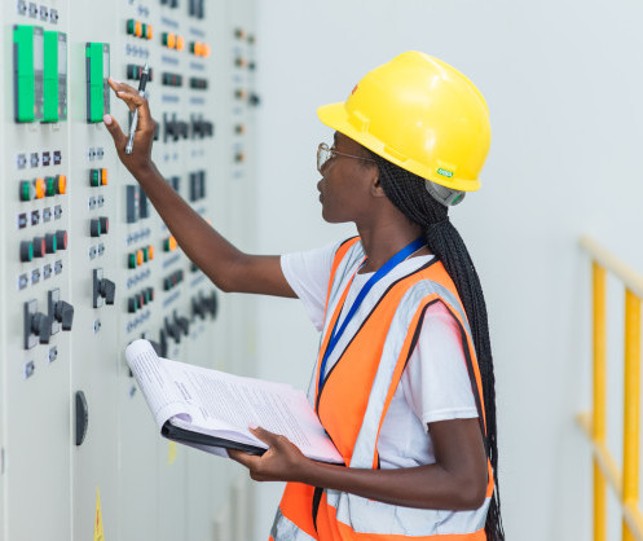
Featured photo: Gilda Giza Rede an Angolan Electromechanical maintenance technician. Rede also represents a new generation of women entering highly technical engineering roles in large-scale water infrastructure. Source, African Development Bank (AfDB).

As the African Union declares 2026 the Year of Water and Sanitation, the continent’s most persistent social burden is being reframed as a productive economic asset; driven by policy innovation, institutional partnerships, and female-led advances in infrastructure, science, and enterprise.

For decades, global development policy viewed African water through the lens of charity and endurance; measuring the billions of unpaid hours women spent carrying water rather than the economic value lost through reduced productivity, constrained livelihoods, and foregone opportunity[i].

As the African Union declares 2026 the Year of Water and Sanitation, that narrative is beginning to shift[ii]. Governments, investors, and Development Finance Institutions (DFIs) are increasingly recognising what many African women leaders have long understood: water is not simply a welfare issue. It is productive infrastructure that underpins agriculture, manufacturing, energy security, public health, and, ultimately, economic growth.

This structural transition is reshaping the sector. The traditional model, centred on public expenditure and development assistance, is giving way to a diversified water economy in which governments, DFIs, commercial investors, technology firms, utilities, and local enterprises collectively finance, deliver, and scale water solutions as illustrated on the figure below.[iii] Within this emerging ecosystem, women are no longer positioned primarily as beneficiaries of water services but as scientists, engineers, entrepreneurs, utility leaders, policymakers, and investors shaping how water is governed, financed, and deployed.

Figure Showing The AU 2026 Shift: How Female Leadership and Blended Finance are Transforming Africa’s Water Economy.

The implications extend well beyond the water sector. Reliable water systems determine agricultural productivity, industrial competitiveness, urban resilience, and countries’ capacity to adapt to climate change.[iv] Investment in water is therefore increasingly recognised not only as a social imperative but as a strategic economic investment.

The women shaping this transition are helping to build a new African water economy where science, policy, entrepreneurship, and finance converge to transform water from a development necessity into a catalyst for inclusive growth.

Some of the Women Building Africa’s Water Economy

This transformation is already visible across the continent through a new generation of scientists, entrepreneurs, and institutional leaders who are changing how water resources are measured, governed, financed, and delivered. As profiled in the 1st African Women in Water and Sanitation Compendium,[v] their work demonstrates that the future of Africa’s water economy will depend not only on physical infrastructure, but on the systems of knowledge, innovation, and governance that make investment possible.[vi]

From satellite-based groundwater mapping in the Sahel to community-led watershed management in The Gambia, circular sanitation enterprises in Senegal, and digital water distribution models in Rwanda, women are building the capabilities required to convert water and sanitation challenges into economic opportunities as elaborated below:

1. Science: Turning Uncertainty into Investable Assets:

      Investment follows information. Nowhere is this more evident than in the Sahel, where advances in satellite hydrology are transforming how groundwater resources are identified, valued, and managed. Among the pioneers is Dr. Fadji Zaouna Maina, a Nigerien Earth scientist and hydrologist at NASA’s Goddard Space Flight Center. Using satellite remote sensing, artificial intelligence, and high-performance computing, she maps deep aquifers across one of the world’s most climate-vulnerable regions. Her work enables governments, utilities, and investors to make more informed decisions on irrigation, water infrastructure, and long-term resource management.

      Continue reading “How Women Are Turning Africa’s Water Crisis into an Economic Engine”

      A Few Drips Shouldn’t Close the Tap: The 16th Anniversary of the Human Right to Water and Sanitation

      Blog by Euphresia Luseka, RWSN Leave No One Behind theme co-Lead

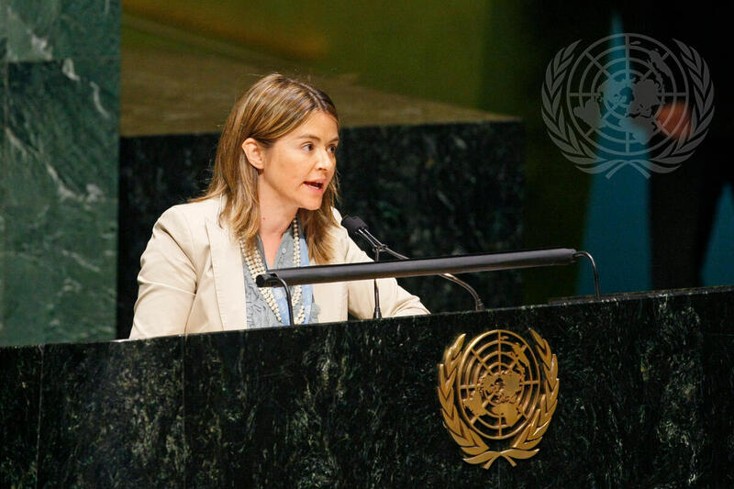
      Featured photo: Catarina de Albuquerque, then United Nations Special Rapporteur on Human Right to Safe Drinking Water and Sanitation, addressing the United Nations General Assembly on 27 July 2011. Source: United Nations.

      On July 28, 2010, the United Nations General Assembly adopted Resolution 64/292[i], recognising access to safe drinking water and sanitation as a fundamental human right. More than a symbolic declaration, the resolution marked a significant shift in global development policy, affirming that water and sanitation are not simply public services or economic commodities, but essential prerequisites for human dignity, public health, gender equality, and sustainable development.[ii]

      16 years later, the Human Right to Water and Sanitation (HRWS) stands at a pivotal moment. Progress toward SDG6 has slowed, Official Development Assistance (ODA) is under pressure, and climate change is intensifying water insecurity across regions already struggling with fragile infrastructure[iii]. Against this backdrop, a growing narrative suggests that the promise of the right has failed to translate into meaningful change.[iv]

      That conclusion overlooks an important reality.

      The strongest argument for the Human Right to Water and Sanitation is not found in international declarations, but in the measurable progress achieved since its recognition in 2010.

      The past 16 years have produced measurable progress in expanding access to safe water and sanitation, strengthening legal protections, and improving public service delivery.[v] While universal access remains out of reach, the evidence demonstrates that where governments have embedded the right in domestic law, invested in resilient infrastructure, and strengthened public institutions, the results have been transformative.[vi]

      Building on 16 years of Progress

      As illustrated in the figure below, the record since 2010 offers compelling evidence that rights-based governance can deliver tangible development outcomes when supported by political commitment, sound institutions, and sustained investment. Across countries and regions, the recognition of water and sanitation as a human right has influenced constitutional reforms, shaped public policy, strengthened accountability, and accelerated investments in essential services.

      The expansion of water and sanitation services over the past two decades is unprecedented in scale. According to the WHO/UNICEF Joint Monitoring Programme (JMP), more than 2.2 billion people have gained access to safely managed drinking water services, while 2.8 billion people have gained access to safely managed sanitation. 5 During the same period, the number of people practicing open defecation declined dramatically; from more than 1.3 billion at the turn of the century to an estimated 350 million today.5 These gains have contributed to lower rates of waterborne disease, improved child survival, and better health and education outcomes, particularly for women and girls.

      While these advances cannot be attributed to Resolution 64/292 alone, the recognition of water and sanitation as a human right helped reshape the global policy landscape.1 It reinforced political commitments, informed national legislation, and strengthened accountability by establishing access to water and sanitation as a public obligation rather than a discretionary service.

      The influence of the resolution is perhaps most evident in domestic legal reform. Although the resolution itself is not legally binding, it has served as an important normative foundation for constitutional and legislative change in many countries. Kenya’s, Uruguay’s, Ecuador’s, Bolivia’s and South Africa’s Constitution explicitly guarantees the right to sufficient water, providing citizens with a legal basis to challenge unjustified service disconnections and demand government accountability.7 In India, the Supreme Court has interpreted the constitutional right to life to encompass access to safe drinking water, expanding legal protections for vulnerable communities.8 Across Latin America, countries including Costa Rica, Colombia, Mexico, Paraguay, Peru and Brazil have strengthened constitutional and statutory provisions that prioritise water for domestic use over competing commercial interests.6 Similar developments have occurred in Europe. Slovenia amended its Constitution in 2016 to recognise access to drinking water as a fundamental right, while the European Union’s revised Drinking Water Directive requires Member States to improve access to water, particularly for vulnerable and marginalised groups.

      Legal recognition, however, has proven most effective when accompanied by capable public institutions.

      The experience of the Phnom Penh Water Supply Authority in Cambodia illustrates what is possible when governance reforms accompany infrastructure investment. Once characterised by high water losses, weak financial management, and widespread corruption, the utility transformed itself into one of the world’s leading public water providers through universal metering, improved operational efficiency, transparent management, and progressive tariff structures.6 Today, Phnom Penh enjoys near-universal urban water coverage while protecting affordability for low-income households.

      A similarly instructive example comes from eThekwini Municipality in Durban, South Africa.[vii] Through its Free Basic Water policy, the municipality guarantees vulnerable households a minimum allocation of water free of charge, financed through increasing block tariffs that require higher-volume consumers to pay proportionately more.8 The model demonstrates that equity and financial sustainability need not be competing objectives. Well-designed pricing systems can simultaneously protect vulnerable households, recover operating costs, and expand access.

      Taken together, these experiences underscore an important lesson. The Human Right to Water and Sanitation does not deliver results simply because it exists as an international norm; its true value lies in its ability to shape domestic institutions, guide public investment, and strengthen accountability. The unfinished nature of the global agenda should therefore not obscure the considerable progress already achieved or the practical lessons it offers for accelerating universal access.

      The Unfinished Agenda

      Recognising progress is not the same as declaring victory. Despite significant advances over the past 16 years, universal access to safe water and sanitation remains one of the world’s most pressing development challenges. More than 2.1 billion people still lack safely managed drinking water at home, while 3.4 billion do not have access to safely managed sanitation.5 These gaps are not simply the result of technical constraints; they reflect persistent weaknesses in law, finance, infrastructure, and governance.

      Continue reading “A Few Drips Shouldn’t Close the Tap: The 16th Anniversary of the Human Right to Water and Sanitation”

      RWSN at the 43rd UN Water Meeting in Rome

      By Valérie Bertschy. Re-blogged from Skat Foundation, RWSN’s host organisation.

      Bringing Field Experience into the Preparatory Process for the 2026 UN Water Conference

      In March 2026, The Rural Water Supply Network (RWSN) participated in the 43rd UN Water Meeting, held over three days at IFAD headquarters in Rome. As an official UN Water Partner (one of only 39 organizations with that status) RWSN has recognized standing to participate in these intergovernmental preparatory processes, deliver oral interventions, and submit written contributions to official policy documents. 

      This article explains what RWSN brought to Rome, what happened there, and why it matters for the communities RWSN serves. 

      Context: RWSN, Skat Foundation, and UN Water

      Before turning to the meeting itself, a word on institutional roles.

      RWSN is a global knowledge network with more than 17,000 members across 190 countries. It is hosted by Skat Foundation – a St. Gallen-based Swiss NGO that provides the secretariat and staff support that keeps the network running. Valérie Bertschy, Knowledge Management Officer at Skat Foundation, represented RWSN in Rome in her capacity as secretariat staff. 

      UN Water is the United Nations inter-agency coordination mechanism for all freshwater-related issues, including sanitation. Its Members Meeting are held twice yearly, typically in Rome, and serve as a key preparatory forum for major global water policy processes. RWSN’s status as a UN Water Partner gives it formal access to these meetings – a recognition of its role as a credible, evidence-based voice for rural water across the global governance architecture. 

      The 43rd Members Meeting was the second major preparatory milestone for the 2026 UN Water Conference, which will only be the third UN Water Conference since 1977. The stakes are high: the conference is expected to produce a framework shaping global water governance well into the post-2030 period. 

      The Conference Framework: Six Interactive Dialogues

      The Abu Dhabi conference will be structured around six Interactive Dialogues (IDs), each with member state co-chairs and UN agency co-convenors. These dialogues formed the backbone of discussions throughout the three days in Rome:

      • (a) Water for People – co-chaired by Ghana and Switzerland
      • (b) Water for Prosperity – co-chaired by China and Spain
      • (c) Water for Planet – co-chaired by Egypt and Japan
      • (d) Water for Cooperation – co-chaired by Zambia and Finland
      • (e) Water in Multilateral Processes – co-chaired by Germany and Mexico
      • (f) Investments for Water – co-chaired by France and South Africa
      Participants of the 43rd UN Water Meeting in Rome

      What RWSN Brought to Rome

      RWSN’s participation was grounded in substantial preparation ahead of the meeting. RWSN produced a gap analysis comparing its Draft Position Paper against each of the six concept paper outlines, and prepared six tailored oral interventions (one per dialogue) designed to introduce rural water priorities into the intergovernmental discussion.

      Continue reading “RWSN at the 43rd UN Water Meeting in Rome”

      Are Governments Simply Technophobic?

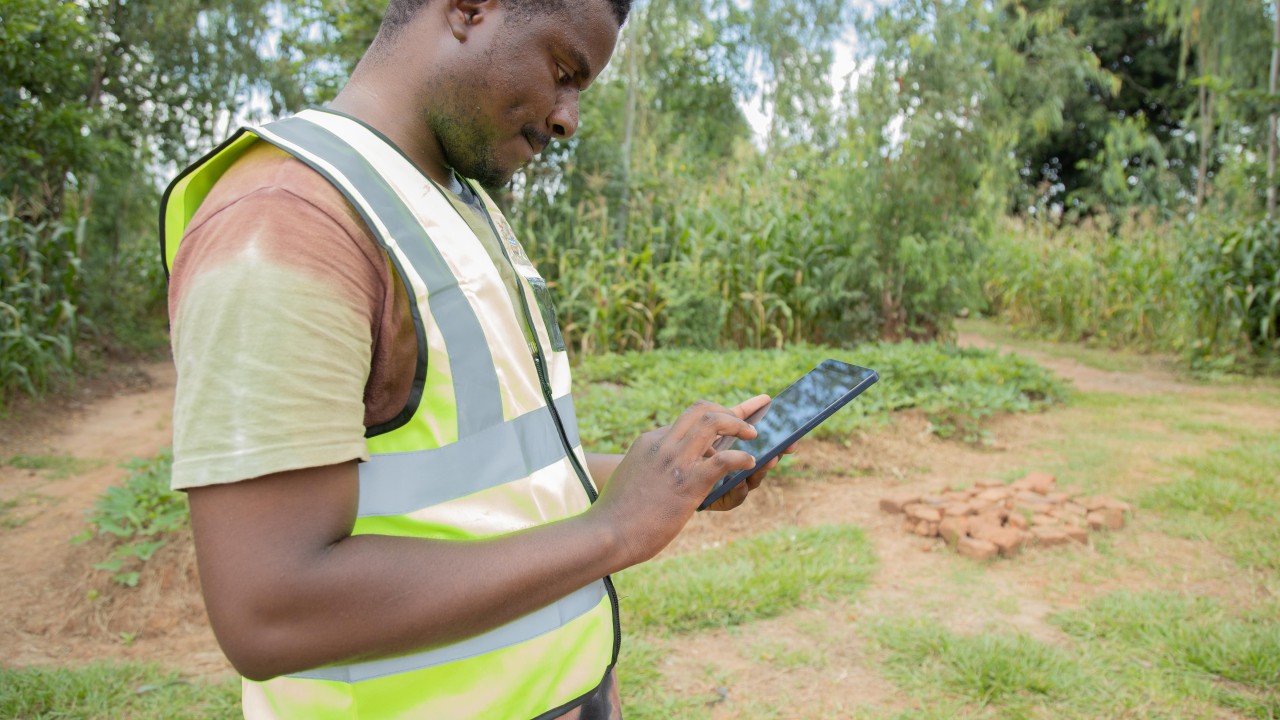
      By Muthi Nhlema. Re-blogged from Are Governments Simply Technophobic?, LinkedIn. Photo: local government extension using a mobile phone for data collection, Malawi.

      Mutala Abdul-Mumin and I recently co-hosted a RWSN – Rural Water Supply Network webinar examining how countries are using water, sanitation and hygiene (WASH) data to support progress toward Sustainable Development Goal 6 targets for #water. More than 240 people joined, and the discussion ran long so we couldn’t cover everything in the time available. A few observations on government adoption of digital technologies stood out, and I wanted to share them.

      Firstly, governments recognize the value of data. It is sometimes assumed that governments remain indifferent to evidence, but the presentations from Ghana and Sierra Leone suggested a different picture. There is a clear interest in having a firmer grip on data, provided it is relevant to the decisions governments actually face (that is, addressing actual pain points) rather than information collected for its own sake. Sierra Leone’s use of WASH Accounts to track how financial resources are allocated, and whether they reach sustainable water and sanitation services, illustrated how data was responding to a question the government genuinely had. Because it answered a real question, the incentive to adopt and implement was already there.

      Secondly, governments are increasingly embracing digitization. The move from paper-based methods toward digital systems was all the talk across the continent more than a decade ago. The session indicated that this transition is now underway in practice, with both Ghana and Sierra Leone taking different paths to migrating from paper to digital systems and even further to more centralized systems. This is no easy feat though; Sierra Leone has been on this data journey for more than four years and is not done yet, but they are still driving and leading the process.

      Thirdly, digitization appears to be broadening ambition. The World Health Organisation presentation highlighted institutional fragmentation (WASH responsibilities being split across different ministries) as one of the most consistent systemic barriers to data-driven decision-making. Governments, using digital tools, are stepping up to address this barrier. In Ghana, in particular, they are leading to make sure WASH data serves more than just the ministry responsible for water, but also other strategic sectors such as health and education. This is a considerable undertaking that will require sustained resources and coordination across government departments, but the willingness to pursue this was evident and shows how digital tools have opened up options that weren’t on the table before.

      Lastly, and interestingly given our times, a comment from a participant concerning artificial intelligence made me reflect on one key lesson I believe we can take forward from the digitization experience. When I asked the speakers what role they saw for AI in their work, both countries described a deliberate, sequential approach, meaning they preferred to address governance, financing and underlying systems gaps first BEFORE introducing AI as an additional layer. It was a measured response, and a clear signal that both countries want to move at their own pace. Given the impact AI has had across the world, do you blame them? Learning from the digitization experience, this measured response was not necessarily surprising. The ‘fail fast’ culture may suit NGOs and the private sector, but governments need more time to weigh effectiveness against trade-offs, especially on tax-payer funded services such as water supply.

      So, if I had to wrap this up under one simple lesson from this webinar, it would be this: governments are not necessarily technophobic, they are technocautious. And with the current push, mostly via philanthropy, to scale new technologies through government systems, this is a valuable lesson to keep in mind. If nothing else, it could help manage expectations around the pace of government adoption. Fascinating stuff!

      My thanks to Fiona Gore (WHO), Suzzy Abaidoo (Ghana) and DAUDA KAMARA (Sierra Leone) for their contributions, and to all who attended. The recording are currently available on the RWSN website for those who missed the webinar or would wish to revisit the discussion. Links can be found below:

      Where Water and Energy meet

      By Sean Furey. Re-blogged from where Water and Energy meet, LinkedIn.

      I have to credit the likes of Patrick Moriarty , IRCWASH, Bethlehem Mengistu Agenda for Change and Duncan McNicholl for getting me back into #SystemsThinking, which I had obsessed over 20 years ago when working on integrated water management withing urban and catchment master-planning for the Environment Agency but once I moved on it faded into the background.

      Then, a while back, Tom Chaplin and The Stone Family Foundation asked me whether the private-sector run water mini-grids that they had been supporting in Cambodia were to be found anywhere else in the world. Using the power of the RWSN – Rural Water Supply Network and our network of networks I tried to find any examples around the world that had similarities. I wasn’t very successful. However, as a by-product, I learned a lot about electricity mini-grids and this, along with an experience of meeting village micro-hydropower entrepreneurs in Myanmar with Dipti Vaghela and Hedi Feibel slowly baked into an obsession: could the parallel systems of rural #water supply and rural #energy supply be brought together?

      So, I had great discussions over the last year with David Lecoque and Jens Jæger at Alliance for Renewable Electrification and internally, with the RWSN Executive Committee – particularly with James Origa, Ph.D and Diane Arjoon when it came to the #Mission300 – the ambitious World Bank/AfDB investment programme for electrification for 300 million people across Africa.

      Attending the #EAIF2026 conference in Nairobi recently, I listened to some great speakers (learned a load of new acronyms and jargon) and had a range of really interesting conversations, some brief, some in depth with wonderfully open, helpful people, including Cornay Keefer , Ravishka Jairam and Prince Innocent from Schneider Electric ; Karin Jeanneret Vezzini from ennos ag ; Jakub Vrba from the Energy Saving Trust ; Mihaela Chirca from Expertise France ; Vivian Vendeirinho ; Leonard D’Cunha ; Dr. Georgia Badelt ; Petteri Pulli ; Sisty Basil ; Elizabeth (Lizzie) Biney-Amissah ; Kondwani Gondwe ; Janos Bonta ; Lena Musoka, MPH, MSc and many more.

      Some of my current thoughts on the water + energy link

      The graphic is my attempt to distill what I’ve learned through all of this (trying to avoid a systems diagram with lots of squiggly arrows) to identify some leverage points where the two sectors could reinforce each other. Right now, the urban way of thinking and working dominates: water and energy are separate and there are very good reasons for doing that; but applying urban logic to rural areas, with lower populations densities, different economies and different social and cultural norms, does not have great track record.

      Instead, how about focusing attention on these three leverage points where the two systems intersect:

      Continue reading “Where Water and Energy meet”