“Financial Innovations for Rural Water Supply in Low-Resource Settings” Innovation 3: Water Quality Assurance Funds

Innovation 3: Water Quality Assurance Funds

This blog post is part of a series that summarizes the REAL-Water report, “Financial Innovations for Rural Water Supply in Low-Resource Settings,” which was developed by The Aquaya Institute and REAL-Water consortium members with support from the United States Agency for International Development (USAID). The report specifically focuses on identifying innovative financing mechanisms to tackle the significant challenge of providing safe and sustainable water supply in low-resource rural communities. These communities are characterized by smaller populations, dispersed settlements, and economic disadvantages, which create obstacles for cost recovery and hinder the realization of economies of scale.

Financial innovations have emerged as viable solutions to improve access to water supply services in low-resource settings. The REAL-Water report identifies seven financing or funding concepts that have the potential to address water supply challenges in rural communities:

  1. Village Savings for Water
  2. Digital Financial Services
  3.  Water Quality Assurance Funds
  4. Performance-Based Funding
  5. Development Impact Bonds
  6. Standardized Life-Cycle Costing
  7. Blending Public/Private Finance

Understanding Water Quality Assurance Funds

In rural areas, community-managed water supplies are increasingly recognized as unsustainable,  in part because communities with small water systems (e.g., handpumps, mechanized boreholes, and small piped systems) often struggle to collect enough money to maintain water infrastructure (Whaley et al. 2019). As a result, they typically must neglect critical aspects of professional water management, such as water quality testing to verify its safety for human consumption. Rural agricultural communities, situated far from public or private laboratories, struggle to access testing services due to distance and irregular income patterns.  However, a viable solution comes in the form of introducing a third-party guarantor to distribute the risks associated with unpaid water testing fees among various stakeholders (Halvorson-Quevedo and Mirabile 2014). The third party can help to facilitate testing arrangements and provide indirect financial support, wherein stand-by funds are only accessed when the local fee-for-service exchange is disrupted.

How does it work?

Assurance funds” provide liquid assets (e.g., a savings account) that can be quickly mobilized if a liability arises. Water quality assurance funds are held by a third party (e.g., a nongovernmental organization) to guarantee payment for to the beneficiary (e.g., a centrally located water quality laboratory) if a rural community is unable to pay for water testing services on time (Press-Williams et al. 2021). 

By employing this innovative model, larger professional laboratories can extend low-cost centralized monitoring services to smaller rural water systems, fostering efficiency and incentivizing wider-scale testing. As a result, laboratories gain a new market for their services while rural communities gain a reliable means of verifying their drinking water safety with greater certainty and lower startup cost than establishing onsite laboratory capacity.The assurance fund accounting is managed by the third party and can be drawn down

slowly, leveraging donor aid, or replenished if the rural community is able to pay back service fees at a later date (Figure 1). Contract enforcement is managed through the local government authorities.
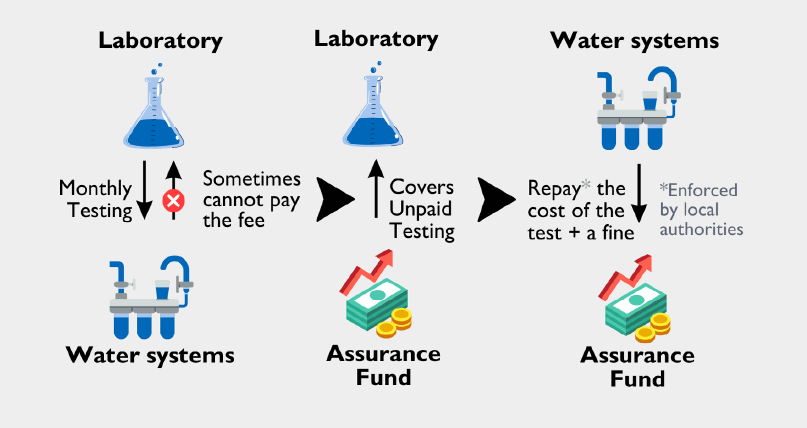
Figure 1. Simplified illustration of a water quality assurance fund mechanism (Source: Vanessa Guenther, The Aquaya Institute)

Implementation of assurance funds requires diligent management to ensure accountability. Skilled staff must manage the fund as long as it exists.For water quality assurance funds, field and laboratory staff must adhere to good protocols to ensure water quality data are accurate and address decision-making needs in a timely manner.

Examples

Pilot examples come from a few African countries:

With funding support from the Hilton Foundation, The Aquaya Institute (a nonprofit research and consulting organization) developed an assurance fund in 2020 to encourage an existing laboratory to provide water quality monitoring services to small rural water systems in the Asutifi North District of Ghana (Figure 2; Press-Williams et al. 2021). The water systems mobilized community-collected water fees to pay Ghana Water Company Limited’s (GWCL’s) central laboratory (Figure 3) for monthly services. If they defaulted on payments, then GWCL could file a claim against the assurance fund. This centralized testing approach cost an average of $67 per test, or approximately 60% of what it would have cost to provide training and testing equipment for each separate water system.

Between March 2020 and January 2021, GWCL testing revealed microbial contamination in more than half of the 134 water samples across nine water systems, raising awareness among water system managers about issues with chlorination procedures (Press-Williams et al. 2021). In most cases, water systems were able to pay GWCL within one month of receiving testing services. Despite payments being delayed for approximately one third of testing services, GWCL filed only one claim against the assurance fund, instead negotiating directly with the defaulting water systems to allow more time. Extension of the same concept to other districts in

Ghana as well as in Kenya, Uganda, and Tanzania is underway with additional funding support from USAID REAL Water, the Hilton Foundation, and the Helmsley Charitable Trust. Another use of the assurance fund was to deliver targeted subsidies for specific communities during times of need (e.g., Covid-19 pandemic, fuel price inflation).
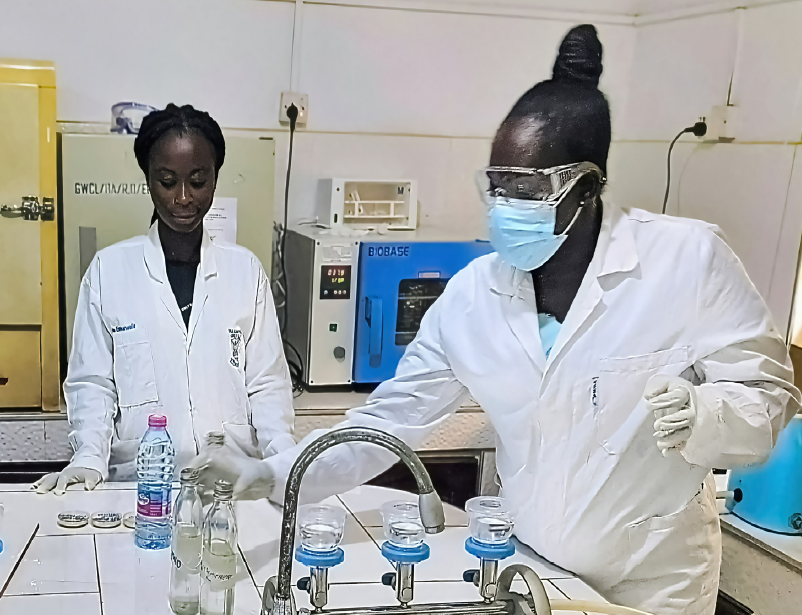
Figure 2. Ghana Water Company Limited analyzes bacteria in drinking water samples from small water systems in the nearby rural district of Asutifi North. (Source: Bashiru Yachori, Aquaya Institute).

Figure 3. A Ghana Water Company Limited technician collects a sample from a water point in Asutifi North, Ghana, as part of the Water Quality Assurance Fund agreement (Source: Bashiru Yachori, Aquaya Institute).

To access further information on financial innovations for rural water supply in low-resource settings, you can download the complete report HERE.

The information provided on this website is not official U.S. government information and does not represent the views or positions of the U.S. Agency for International Development or the U.S. Government.

References:

Halvorson-Quevedo, Raundi, and Mariana Mirabile. 2014. “Guarantees for Development.”

Press-Williams, Jessie, Caroline Delaire, Bashiru Yachori, AJ Karon, Rachel Paletz, and Ranjiv Khush. 2021. “Water Quality Testing Assuance Fund: Lessons Learned.” Research Brief. Lesson Learned. Aquaya Institute. https://aquaya.org/wp-content/uploads/2021_Water-Quality-Assurance-Fund-Lessons-Learned-_ResearchBrief.pdf.

Whaley, Luke, Donald John MacAllister, Helen Bonsor, Evance Mwathunga, Sembeyawo Banda, Felece Katusiime, Yehualaeshet Tadesse, Frances Cleaver, and Alan MacDonald. 2019. “Evidence, Ideology, and the Policy of Community Management in Africa.” Environmental Research Letters 14 (8): 085013. https://doi.org/10.1088/1748-9326/ab35be
From Gaps to Growth: Capacity development in WASH sector

This is a guest blog by RWSN member Kirsten de Vette.

Capacity development plays a pivotal role in fostering sustainable progress towards ensuring availability and sustainable management of water and sanitation for all. This article presents several striking findings stemming from several recent capacity assessments and capacity development reviews I was involved in over the past three years. Tackling these issues will have transformative impact on the water, sanitation, and hygiene and development sectors, whilst the required effort is expected to be relatively low.

Photo 1: WASHPaLS#2: Focus Group Discussion Jigawa Nigeria. Photo credit Nanpet Chuktu

Finding 1: There is misalignment on what capacity means

There are diverse definitions and interpretations of this concept, which can impede effective implementation of interventions. Some speak of institutional capacity (enabling environment and organizational capacity), others speak about individual capacity (skills, competencies, abilities), and others only address the organizational capacity (knowledge management, leadership, systems etc) itself. This has a knock-on effect on what capacity development means. For some it is simply looking at the education of new professionals (i.e. TVET, universities). Others only equate the term capacity development with training, and others may indicate it is strengthening institutions (i.e. systems, policies etc.).

Very few stakeholders interviewed incorporate all four levels of capacity (enabling environment, organizational, individual, and society)[1] in their thinking. Many even seem to neglect the broader issues affecting capacity, such as workforce development and sustainable employment.

On top of this the terms capacity – building, – development and – strengthening are now used interchangeably to describe the process of increasing capacities. In academic literature the first two are explored and do in fact mean something different. The third is used by some to overcome a certain level of tension on the terminology inherited from the history of capacity development (will be described in following blog).

To address this, we need to develop a common understanding among stakeholders in water, sanitation, and or hygiene (perhaps broaden to include all development work) on what capacity means, and what effective capacity development then entails. This will create a solid foundation for future endeavours and collaboration.

Photo 2: WASHPaLS#2: Field visit Bihar India. Photo credit: Anand Shekhar

Finding 2: Addressing the Job Shortage Dilemma

Strengthening capacity and education alone may not be sufficient if there is a lack of suitable job opportunities. While the importance and shortages of human resources have been identified (IWA, 2014; GLAAS 2012/ 2014/ 2017/ 2022; World Water Development Report, 2016; forthcoming USAID WASHPals#2), the existence or development of corresponding employment opportunities cannot be guaranteed.

The labor market, especially for rural sanitation, is largely reliant on (I)NGOs, or Development partners, who are normally in place on project basis. Where positions are present in the public sector, they are shared with other responsibilities (e.g. water, solid waste, building & constructions and or others) that are of higher priority. The positions in the informal private sector are dependent on demand (and or projects) and often do not (yet) guarantee full-time employment in the long run.

To address this, we need to address sustainable employment, and create avenues for career growth in the sectors. This can be supported by raising awareness about the need for job creation (and investment), but also by developing the proper policies, mandates and incentives that justify stakeholders to create the needed jobs.

Finding 3: Coordination and Communication gaps

There is insufficient coordination and communication among capacity development providers, development partners, and sector actors. The education sector often struggles to meet the needs of the WASH sector, while the sector itself is unable to effectively communicate its requirements. It was also highlighted by several key informant interviews in country studies that INGOs/ development partners working at country level often fail to coordinate (all of) their capacity development efforts (the forthcoming USAID WASHPaLS #2). This results in overlapping interventions in certain regions while leaving others with inadequate support. 

We need to make capacity development a collaborative endeavour. By integrating capacity development (jointly defined as per finding one) and in particular workforce development into the narrative, and into the national review meetings and or Water, Sanitation and or Hygiene plans. But also, by developing a platform for stakeholders to engage in dialogues and share insights on how to develop the needed workforce and supporting structures to deliver the country’s plans. By fostering collaboration and shared responsibility, we can harness the collective expertise and resources to enhance capacity development outcomes.

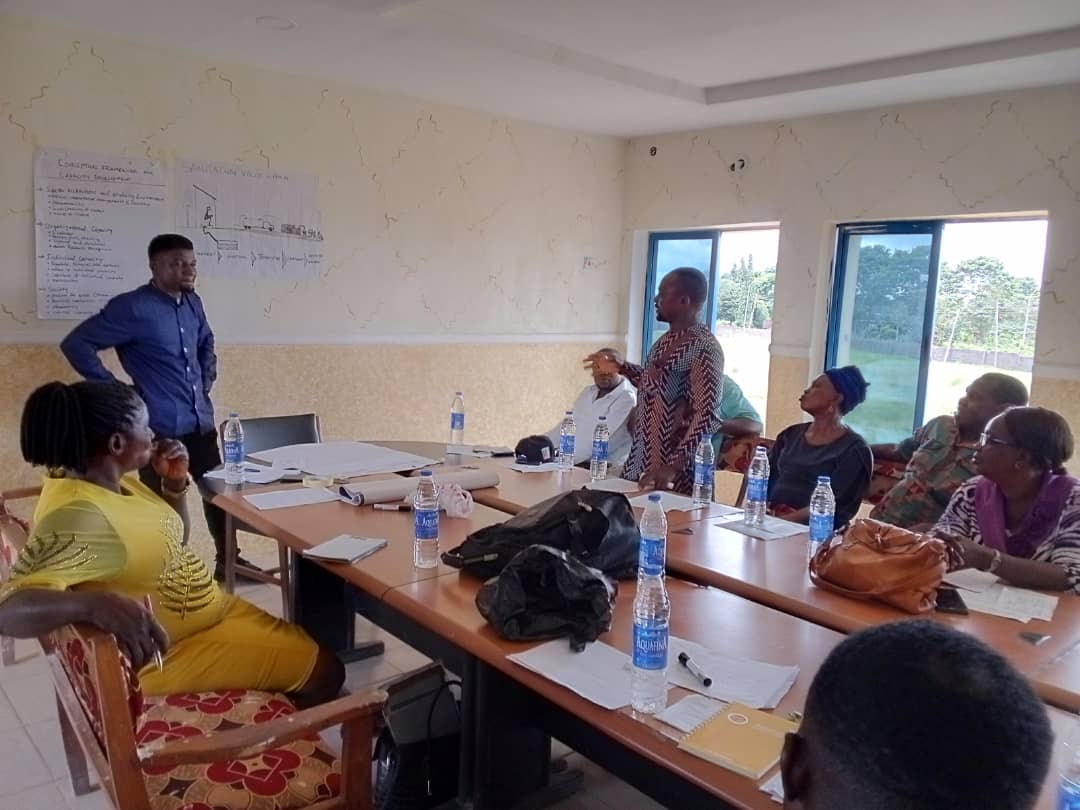
Photo 3: WASHPaLS#2: Validation workshop, Accra Ghana. Photo credit Bertha Darteh

Finding 4: Persistent challenges in capacity development efforts

Beyond, the higher-level findings (1-3), there are also persistent challenges in capacity development interventions themselves. The most important ones are:

  • Mismatch supply and demand:  This can be caused by focus on what supply has on offer rather than soliciting what the audiences need.
  • Time Constraints and Limited Application: Capacity development initiatives often fall short in allocating sufficient time for participants to fully engage in the learning process and apply acquired knowledge to their work. This issue is compounded when training or workshops disrupt regular duties, compelling participants to tackle additional workload.
  • Narrow Focus and Overemphasis on Training: Capacity development is still frequently equated solely with training. This neglects other ways of (adult) learning that have already been recognized by the education sector and (adult) learning specialists. This limited perspective also fails to address broader aspects such as organizational structures, enabling environments, and societal factors that significantly influence capacity development outcomes.
  • One-Size-Fits-All Approach: Many capacity development efforts suffer from a lack of consideration for the diverse target audiences involved, including politicians, managers, and technicians. Recognizing the unique interests, needs, and learner preferences of each group is pivotal in designing tailored interventions that foster meaningful impact.
  • Unidirectional Learning: Traditional capacity development activities often fail to harness the valuable expertise and input of participants. By disregarding the insights of practitioners and experts during the design and implementation of programs, the potential for an inclusive and collaborative learning environment is undermined.
  • Lack of (long-term) capacity development strategy: Many capacity development efforts lack a comprehensive strategy (also referred to as design) capturing the outcomes, outputs, objectives, audiences, learning methods approaches, actions at the four levels of capacity, and evaluation of the intervention. In addition, and relevant for our sectors with high turnover rates, is strategizing for the retention and utilization of acquired learning and knowledge through knowledge management practices.
  • Insufficient Knowledge of Effective Practices: A lack of information on successful but also failing capacity development practices poses a significant challenge to the advancement of this field. Collecting data on impact and application is essential to identify and share evidence-based strategies, enabling continuous improvement and enhanced effectiveness.

Every capacity development intervention needs to check these points and address them accordingly.

Guiding Principles for Effective Capacity Development:

Building upon the identified four challenges there is a need for overarching guiding principles for effective capacity development.

  1. Time and Application: Allow sufficient time for learning and provide opportunities for participants to apply their knowledge in their work. Consider local governance, mandates, and roles to minimize disruptions and extra workload.
  2. Holistic Approach: Expand the scope of capacity development to address multiple levels of capacity, including individual, organizational, enabling environment, and society. Incorporate diverse learning methods, such as peer-to-peer interactions, virtual tours, mentoring, communities of practice, and working groups.
  3. Tailored Solutions: Recognize the unique interests, needs, and approaches of different target audiences. Develop customized capacity development activities that align with specific requirements.
  4. Engage Specialists: Involve practitioners and experts in the design and implementation of capacity development programs. Their expertise will ensure a comprehensive design that considers different audiences, learning methods, and impact measurement.
  5. Inclusive Learning Environment: Value the input and expertise of participants to create an inclusive and collaborative learning environment.
  6. Evidence-based Approach: Emphasize the importance of measuring impact and collecting effective capacity development practices. This data-driven approach enables continuous improvement and knowledge sharing.
  7. Learning Mindset: Foster a culture of sharing experiences, success stories, failures and lessons learned to encourage ongoing learning and adaptation

Photo 4: WASHPaLS#2: Focus Group Discussions, Bihar India. Photo credit Anand Shekhar

By embracing these guiding principles, stakeholders involved in capacity development can address common errors and enhance the effectiveness of interventions in the water, sanitation, and hygiene sectors. Collaboration, coordination, and a shared vision are paramount in creating sustainable solutions and achieving meaningful impact. Let us, as water professionals and international development professionals, strive for innovative and context-specific approaches to capacity development that foster lasting change.

Do you have additional thoughts, ideas, or guiding principles to add? Reach out to me


Sources:

link to WASHPaLS 2: https://www.globalwaters.org/resources/assets/washpals-2-factsheet 

link to one of Wateraid projects I worked on (the others are internal to WaterAid)

https://washmatters.wateraid.org/publications/capacity-needs-assessment-for-regulators-in-water-sanitation-and-hygiene-how-to-guide

IWA. 2014. An Avoidable Crisis: WASH Human Resource Capacity Gaps in 15 Countries. [online] Available at: <https://iwa-network.org/wp-content/uploads/2015/12/1422745887-an-avoidable-crisis-wash-gaps.pdf&gt;

UN-Water GLAAS. 2022. GLAAS 2021/2022 Survey Data. https://glaas.who.int/glaas/un-water-global-analysis-and-assessment-of-sanitation-and-drinking-water-(glaas)-2022-report

UN-Water GLAAS. 2014. Investing in water and sanitation https://www.unwater.org/publications/un-water-glaas-2014-investing-water-and-sanitation

UN-Water GLAAS. 2012. The challenge of extending and sustaining services  https://www.un.org/waterforlifedecade/pdf/glaas_report_2012_eng.pdf

Lincklaen Arriëns, W. and Wehn de Montalvo, U., 2013. Exploring water leadership. Water Policy, 15(S2), pp.15-41.

UN World Water Development report. 2016. Water and Jobs. https://www.unwater.org/publications/un-world-water-development-report-2016

UNDP, 2008. Capacity Assessment Methodology User’s Guide. [online] Available at: [Accessed 23 February 2021]

About the author: Kirsten de Vette is independent consultant and facilitator working in water, sanitation, and hygiene (related) sectors for over 13.5 years. She is a sociologist with business background who connects people, facilitates knowledge and expertise exchange, facilitates partnerships, collaboration and or change processes and facilitates capacity assessment/ development. Her expertise is in capacity development, stakeholder engagement & facilitation of change processes and learning.

She wrote this blog to share recurring findings across her recent projects in the hope that it may support action in the future. The type of projects this blog is based on is 1) coordinating (or facilitated) the undertaking of capacity assessments at organizational, national and global level and 2) reviewing capacity development efforts (2020-2023). Over 300 grey and white paper reports were reviewed across these projects, 150 people directly interviewed, and 6 country capacity assessments coordinated (with 350 people). The author wants to thank WaterAid and Tetra Tech under USAID WASHPaLS #2 for these assignments and their openness for the findings to be re-used.  To take these learnings forward, she will be approaching key actors in the water, sanitation and hygiene sector to engage on these capacity development principles, and will write follow-up blogs. Stay tuned on her website and on  linkedin  

“Financial Innovations for Rural Water Supply in Low-Resource Settings” Innovation 2: Digital financial services

This blog post is part of a series that summarizes the REAL-Water report, “Financial Innovations for Rural Water Supply in Low-Resource Settings,” which was developed by The Aquaya Institute and REAL-Water consortium members with support from the United States Agency for International Development (USAID). The report specifically focuses on identifying innovative financing mechanisms to tackle the significant challenge of providing safe and sustainable water supply in low-resource rural communities. These communities are characterized by smaller populations, dispersed settlements, and economic disadvantages, which create obstacles to cost recovery and hinder the realization of economies of scale.

Financial innovations have emerged as viable solutions to improve access to water supply services in low-resource settings. The REAL-Water report identifies seven financing or funding concepts that have the potential to address water supply challenges in rural communities:

  1. Village Savings for Water
  2. Digital Financial Services
  3.  Water Quality Assurance Funds
  4. Performance-Based Funding
  5. Development Impact Bonds
  6. Standardized Life-Cycle Costing
  7. Blending Public/Private Finance

Understanding Digital financial services

Digital financial services have penetrated many aspects of daily life, including water services. 

One strategy to address the gap in rural water funding is to increase the financial sustainability of water systems through improved water revenue collection and management (Waldron and Sotiriou 2017). In low-income countries, the collection of service fees primarily relies on cash, which can be labor-intensive, difficult to track, prone to miscalculations, and susceptible to theft or loss (Sharma, 2019). However, by implementing automated digital recording of time-stamped water usage and payment data, the planning, projection, and delivery of water services can be significantly improved (Waldron et al., 2019).Good record-keeping aids water service providers in tracking performance changes over time, as well as supporting financial sustainability, water conservation, and climate adaptation.

How does it work?

“Digital financial services” encompasses two concepts: financial services (e.g., payments,

savings, credit, insurance, user suport) and the technologies that deliver them to end users (Waldron et al. 2019). Services such as online savings or credit accounts mainly benefit adults who work outside the home and have bank accounts (Coulibaly 2021). The digital technologies accessible to users who rely on cash may include mobile money (electronic wallets using a mobile phone), water sale kiosks or “ATMs,” and prepaid token technologies (REAL-Water 2022).

Customers can use digital mechanisms to conveniently purchase water, reducing waiting times and operational downtimes when live vendors or caretakers are unavailable (Waldron et al., 2019). With prepaid digital services, the efficiency of water fee collection can reach nearly 100% (with the exception of targeted subsidies or discounts). “Postpaid” digital financial services, which collect fees retrospectively for prior water usage, enable service providers to automatically track outstanding payments and initiate billing. Digitization may enable better payment compliance, as those with seasonal or inconsistent income are able to deposit a sum of money and draw on it over time (Sharma 2019).

Moreover, the implementation of prepaid metering for automated water dispensing devices and postpaid digital water service accounting brings benefits to both water system operators and customers, improving fee collection consistency as well as convenience. They may likewise simplify subsidy delivery to vulnerable customer segments. 

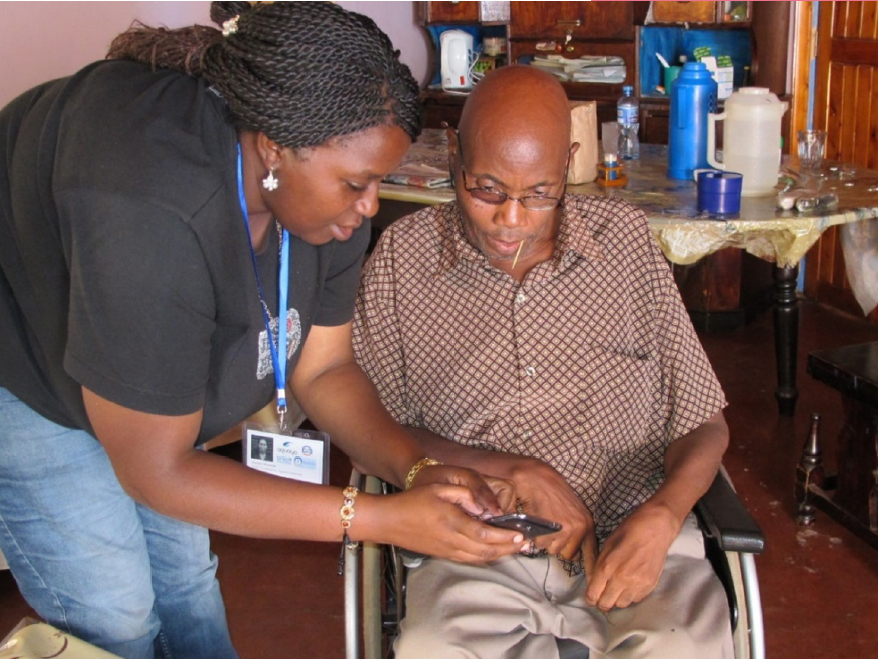
Figure 1. Training a customer in Ruiru, Kenya on how to use his phone for making

water payments (Source: Joyce Kisiangani, The Aquaya Institute)

Examples

Technology provider Grundfos partnered with the nongovernmental organization World Vision and Safaricom, the leading telecommunications provider in Kenya, to install 32 self-service water kiosks (called LifeLink systems) in locations that lacked water infrastructure, serving both

homes and businesses (Waldron et al. 2019). Initial uptake was high and interviews documented user benefits from reduced favoritism in water distribution as well as being able to track and review spending. Collecting mobile payments cost less than collecting cash payments, a savings that could be reinvested to upgrade services or passed onto consumers (Sharma 2019). The World Bank and others have likewise been working to scale affordable water installations in Tanzania using prepaid Grundfos card kiosks combined with solar pumping, which vastly reduces water transportation time and stabilizes high prices offered by private sellers (World Bank 2017). Recognized downsides of this and other digital payment examples have included questions of who requires data access, remote monitoring needs, labor cuts, reduced customer service capabilities, and difficulty paying among the ultra-poor (Waldron et al. 2019).

The nonprofit organization Safe Water Network uses Hangzhou LAISON Technology digital household prepaid meters in their piped connection program in Ghana. Customers receive a device to input a token purchased through mobile money. New users joined quickly following customer workshops to explain the payment system, and the enhanced cost recovery shifted the operation from a net loss to a net surplus (Waldron et al. 2019). Ensuring proper use will likely require sustained engagement. Safe Water Network has continued expanding the household connection metering program to serve several thousand households in small rural towns in Ghana’s Ashanti Region.

Transitioning to digital payments comes with certain challenges, such as additional transaction fees, costly startup infrastructure, poor telecommunications technology, skepticism towards technology, and the belief that water services should be cheaper or free, as well as income loss for traditional vendors who primarily handle cash transactions. Local training support and outreach efforts for social inclusion can be beneficial for expanding digital services. However, digital financial services do not represent a fix-all solution. Their successful implementation requires substantial training and effective governance to transition service providers and communities to new processes that increase collection efficiency, while minimizing the impact on customers’ water usage (Heymans, Eales, and Franceys, 2014).

Digital financial service innovations have made inroads globally in urban areas and are rapidly expanding to serve rural residents in Africa, Asia, and Latin America. As use expands, social inclusion efforts may be needed to ensure the services benefit vulnerable populations (Coulibaly 2021).

To access further information on financial innovations for rural water supply in low-resource settings, you can download the complete report HERE.

The information provided on this website is not official U.S. government information and does not represent the views or positions of the U.S. Agency for International Development or the U.S. Government.

References:

Coulibaly, Sionfou Seydou. 2021. “A Study of the Factors Affecting Mobile Money Penetration Rates in the West African Economic and Monetary Union (Waemu) Compared with East Africa.” Financial Innovation 7 (1): 25. https://doi.org/10.1186/s40854-021-00238-0.

Heymans, Chris, Kathy Eales, and Richard Franceys. 2014. “The Limits and Possibilities of Prepaid Water in Urban Africa: Lessons from the Field.” Case Study. WSP.

REAL-Water. (2022). Technological Innovations for Rural Water Supply in Low-Resource Settings. United States Agency for International Development (USAID) Rural Evidence and Learning for Water Project

Sharma, Akanksha. 2019. “Digital Payments in Water: Findings from Two New Research Projects.” Mobile for Development (blog). March 18, 2019. https://www.gsma.com/mobilefordevelopment/blog/digital-payments-in-water-findings-from-two-new-research-projects/.

Waldron, Daniel, and Alexander Sotiriou. 2017. “Digital Finance and Sustainable Water Service for All.” Brief. CGAP. https://www.cgap.org/research/publication/digital-finance-and-sustainable-water-service-for-all

Waldron, Daniel, Caroline Frank, Akanksha Sharma, and Alexander Sotiriou. 2019. “Testing the Waters: Digital Payments for Water and Sanitation.” Working Paper. Washington, D.C.: CGAP.

“Financial Innovations for Rural Water Supply in Low-Resource Settings” Innovation 1 – Village Savings for Water

Innovation 1: Village Savings for Water

This blog post is part of a series that summarizes the REAL-Water report, “Financial Innovations for Rural Water Supply in Low-Resource Settings,” which was developed by The Aquaya Institute and REAL-Water consortium members with support from the United States Agency for International Development (USAID). The report specifically focuses on identifying innovative financing mechanisms to tackle the significant challenge of providing safe and sustainable water supply in low-resource rural communities. These communities are characterized by smaller populations, dispersed settlements, and economic disadvantages, which create obstacles for cost recovery and hinder the realization of economies of scale.

Financial innovations have emerged as viable solutions to improve access to water supply services in low-resource settings. The REAL-Water report identifies seven financing or funding concepts that have the potential to address water supply challenges in rural communities:

  1. Village Savings for Water
  2. Digital Financial Services
  3.  Water Quality Assurance Funds
  4. Performance-Based Funding
  5. Development Impact Bonds
  6. Standardized Life-Cycle Costing
  7. Blending Public/Private Finance

Understanding Village Savings for Water

Community-based savings and credit associations offer rural dwellers in low-income settings an opportunity for member-only access to loans, emergency support, and small annual investment returns. With abundant existing savings groups in sub-Saharan Africa and India, the mechanism has been leveraged in some cases to improve financial management of rural water systems. They offer a framework for creating dedicated, affordable, and transparent savings funds to pay for high-quality maintenance and repairs. Groups may dissolve over time, though, and require periodic external support. Field results from limited-scale water initiatives in several African countries have maintained an above-average reserve fund to support water point maintenance, repairs, or upgrades (The Water Trust 2022).

How does it work?

One low-barrier approach to improve funding for water system maintenance shifts financial management duties from volunteer water committees to new or existing community-based savings and credit associations. These self-selected, self-governed groups offer rural residents informal yet structured financial services with several built-in accountability mechanisms. Groups made up of 5–40 members usually operate on a 12-month cycle (VSL Associates 2022; Orr et al. 2019; Allen and Panetta 2010; Swinderen et al. 2020). At the beginning of each cycle, the group develops a constitution, defining savings and borrowing terms along with group bylaws (Figure 1). At weekly or monthly meetings, each member deposits the agreed amount of money into a common fund. Members can then take small, low-interest loans from this internally-generated capital. At the end of the cycle, each member receives their savings plus a portion of the overall interest earned from loans. Many savings groups offer a small mutual insurance scheme as well, using funds to provide allowances or no-interest loans in the case of unexpected member hardships (e.g., family illness or death).

Figure 1. Typical community savings group approach (Source: Vanessa Guenther, The Aquaya Institute)

The saving group model offers several advantages, including transparency, accountability, and trust-building among members. Successful implementation examples in sub-Saharan Africa, particularly in Uganda, have demonstrated their positive impact on water point management. By integrating savings groups, water user committees have reinforced accountability and improved the community’s commitment to paying for water services.

However, this model also faces challenges, such as limited capacity and technical expertise, the potential disintegration of savings groups, and the need for ongoing subsidization of maintenance services. While there may be initial costs associated with establishing savings groups, the return on investment can be significant. For instance, external support costs for savings group startup could exceed $1,000 per system, with a longer time frame needed to observe returns in the form of a sustained water fund (The Aquaya Institute, in press); however, the return on investment considering all-purpose savings can reach up to 20:1 (Krause 2022).

Examples

In sub-Saharan Africa, savings groups have been utilized to support water point management. In the Lira district of Northern Uganda, existing water user committees began offering small loans for personal needs, which reinforced their record-keeping accountability as well as the community’s commitment to paying monthly for water services (Nabunnya et al. 2012). Challenges included some refusal to pay for water and the informal process and money handling approach (by the local volunteer treasurer). In the Kamwenge district of southwestern Uganda, Water for People trained communities on financial planning for water point breakdowns, with savings groups as one of the strategy options (Muhangi 2018). Additional Ugandan examples come from Link to Progress (Piracel 2021), The Aquaya Institute (Marshall, Guenther, and Delaire 2021), WE Consult and Charity Water, Lifewater International, and Amref (Teo 2016). SEND has supported savings groups in Sierra Leone (SEND 2020), while the USAID West Africa Water, Sanitation, and Hygiene Program (USAID ND) and the nongovernmental organization WaSaDev have supported savings groups in Ghana.

In Malawian “borehole banking,” a central account is established at a water point and contributions are made through monthly water user fees. Then, community members who contribute can access loans, to be paid back with interest to the water point account (Mbewe 2018).

A pilot of 175 water points with “borehole banks” achieved an average savings of approximately $80 for operation and maintenance, about ten times higher than the average savings reported for water points without borehole banks. The rate of functionality increased from 64% to 94% between 2015 and 2017.

In another program from Uganda, The Water Trust worked with VSLAs to set aside an agreed-upon fraction of members’ payments earmarked as a “water point reserve fund,” which can only be used for handpump maintenance. Monitoring results have been encouraging: in the 2017 pilot, 32 water points with VSLA-based water funds had collected an annual average fund about four times greater than 28 communities relying on coached water user committees or a maintenance contract approach alone (Prottas, Dioguardi, and Aguti 2018). By 2020, The Water Trust invested training resources to extend the approach to more than 200 communities, with annual reserve funds continuing to meet or exceed target amounts (The Water Trust 2020). The approach has expanded to cover more than 700 water points, documenting higher measures of water point functionality and active water point management for water points with an associated VSLA (The Water Trust 2022).

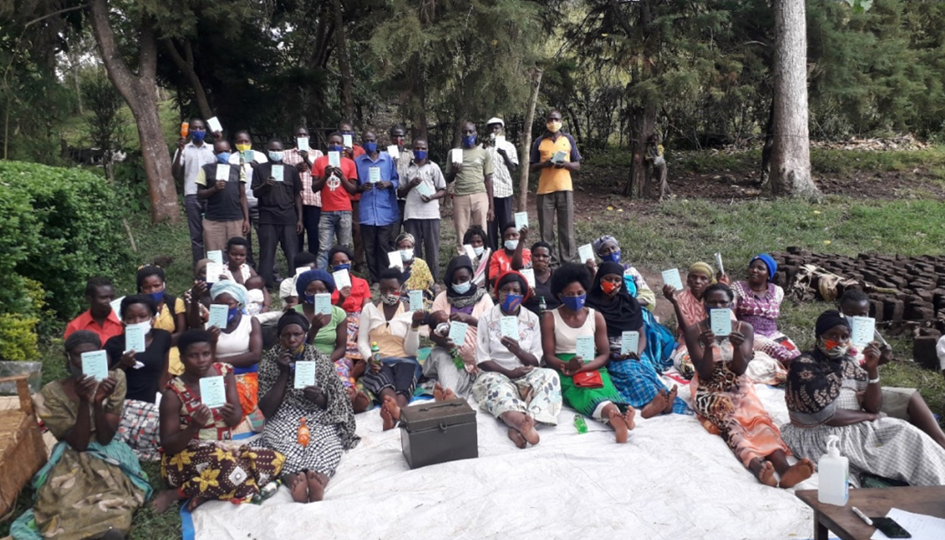
Figure 2. Village Savings and Loan Association members in the Kabarole district, Uganda, holding up their passbooks (Source: Katherine Marshall, The Aquaya Institute)

Although the concept of using savings groups to mobilize and manage water point funds has existed for several years (Agbenorheri and Fonseca 2005), this approach is not yet common and remains in the early stages of evaluation research (e.g., by The Water Trust and The Aquaya Institute). Despite compelling examples, its application to serve rural water supply services is globally limited. The knowledge base comes almost exclusively from implementation experience, with fewer examples of rigorous evaluation at scale. Improved documentation would improve the sector’s understanding of how to most effectively leverage community savings groups to improve rural water services.

Savings groups supporting water point management are of interest to government service providers and NGOs offering subsidies. Rural service providers facing challenges with inconsistent user payments should consider experimenting with community savings groups, particularly in areas where pay-as-you-fetch systems are underperforming, such as communities served by public handpumps (Marshall, Guenther, and Delaire 2021). Danert (2022) estimates that approximately 20% (ranging from 1%–60%, by country) of sub-Saharan

Africa’s population relies on handpumps. Additional opportunities arise in communities with gravity flow schemes and mechanized boreholes that have regularly struggled to collect revenue.

To access further information on financial innovations for rural water supply in low-resource settings, you can download the complete report HERE.

The information provided on this website is not official U.S. government information and does not represent the views or positions of the U.S. Agency for International Development or the U.S. Government.

References:

Agbenorheri, Maxwell, and Catarina Fonseca. 2005. “Local Financing Mechanisms for Water Supply and Sanitation Investments.” Backgroud report for briefing paper. WELL-Resource Centre Network for Water, Sanitation and Environmental Health.

Allen, Hugh, and David Panetta. 2010. “Savings Groups: What Are They?” Overview. Washington, DC: The SEEP Network

Danert, Kerstin. 2022. “Stop the Rot Report I: Handpump Reliance, Functionality and Technical Failure. Action Research on Handpump Component Quality and Corrosion in Sub-Saharan Africa.” St Gallen, Switzerland: Ask for Water, Skat Foundation & The Waterloo Foundation.

Krause, Heather. 2022. “VSLA by the Numbers: A Comprehensive Analysis of the Impact and ROI of VSLAs.” CARE International. 

Marshall, Katherine, Vanessa Guenther, and Caroline Delaire. 2021. “Willingness-to-Pay for Water Management in Kabarole District, Uganda.” RESEARCH BRIEF. Uganda: Aquaya Institute.

Muhangi, Martin. 2018. “Saving for Operation & Maintenance around Water Point Sources.” Uganda: Water for People.

Nabunnya, Jane, Lydia Mirembe, Peter Magara, Martin Watsisi, and Robert Otim. 2012. “Community Management of Water Services: Approaches, Innovations from Lango & Rwenzori Regions.” Triple-S. Uganda: IRC International Water and Sanitation Centre.

Orr, Tracy, Meagan Brown, Jennine Carmichael, Christine Lasway, and Mario Chen. 2019. “Saving Groups Plus: A Review of the Evidence.” Accelerating Strategies for Practical Innovation & Research in Economic Strengthening (ASPIRES).

Piracel, Esther. 2021. “External Evaluation Report: Improvement of Water Supply and Sanitation in Oyam District in Northern Uganda.” External evaluation Report. Arua, Uganda: Link to Progress

Prottas, C, A Dioguardi, and S Aguti. 2018. “Empowering Rural Communities to Sustain Clean Water and Improve Hygiene Through SelfHelp Groups.” In 41st WEDC International Conference, 3030:6. Nakuru, Kenya.

SEND. 2020. “Improved Access to Sustainably Managed Micro-Finance and WASH Systems – WASH Self-Supply Project.” Sierra Leone: SEND Sierra Leone.

Swinderen, Anne Marie van, M Phil, Sekou Traoré, Andrew Magumda, Paul Rippey, David Panetta, Juliet Munro, et al. “Long-Term Performance and Evolution of Savings Groups.” Final Report. SEEP Network, 2020.

Teo, Namata. 2016. “Water User Committees Using Village Savings and Loans Association for Sustainable O&M of Their Water Facility.” In 7th RWSN Forum, 6. Abidjan, Côte d’Ivoire.

The Water Trust. 2022. “Improving Water Point Functionality in Rural Uganda through Self-Help Groups: A Cross-Sectional Study.” The Water Trust.

USAID ND. “USAID WA-WASH Success Story: Improving Payment for Water Services through Village Savings and Loans Associations (VSLAs).” 

VSL Associates. 2022. “VSL Associates – Who We Are.” VSLA. 2022.