How Women Are Turning Africa’s Water Crisis into an Economic Engine

By Euphresia Luseka In Celebration of Africa Women’s Day 2026
KENYA, JULY 31, 2026

Featured photo: Gilda Giza Rede an Angolan Electromechanical maintenance technician. Rede also represents a new generation of women entering highly technical engineering roles in large-scale water infrastructure. Source, African Development Bank (AfDB).

As the African Union declares 2026 the Year of Water and Sanitation, the continent’s most persistent social burden is being reframed as a productive economic asset; driven by policy innovation, institutional partnerships, and female-led advances in infrastructure, science, and enterprise.

For decades, global development policy viewed African water through the lens of charity and endurance; measuring the billions of unpaid hours women spent carrying water rather than the economic value lost through reduced productivity, constrained livelihoods, and foregone opportunity[i].

As the African Union declares 2026 the Year of Water and Sanitation, that narrative is beginning to shift[ii]. Governments, investors, and Development Finance Institutions (DFIs) are increasingly recognising what many African women leaders have long understood: water is not simply a welfare issue. It is productive infrastructure that underpins agriculture, manufacturing, energy security, public health, and, ultimately, economic growth.

This structural transition is reshaping the sector. The traditional model, centred on public expenditure and development assistance, is giving way to a diversified water economy in which governments, DFIs, commercial investors, technology firms, utilities, and local enterprises collectively finance, deliver, and scale water solutions as illustrated on the figure below.[iii] Within this emerging ecosystem, women are no longer positioned primarily as beneficiaries of water services but as scientists, engineers, entrepreneurs, utility leaders, policymakers, and investors shaping how water is governed, financed, and deployed.

Figure Showing The AU 2026 Shift: How Female Leadership and Blended Finance are Transforming Africa’s Water Economy.

The implications extend well beyond the water sector. Reliable water systems determine agricultural productivity, industrial competitiveness, urban resilience, and countries’ capacity to adapt to climate change.[iv] Investment in water is therefore increasingly recognised not only as a social imperative but as a strategic economic investment.

The women shaping this transition are helping to build a new African water economy where science, policy, entrepreneurship, and finance converge to transform water from a development necessity into a catalyst for inclusive growth.

Some of the Women Building Africa’s Water Economy

This transformation is already visible across the continent through a new generation of scientists, entrepreneurs, and institutional leaders who are changing how water resources are measured, governed, financed, and delivered. As profiled in the 1st African Women in Water and Sanitation Compendium,[v] their work demonstrates that the future of Africa’s water economy will depend not only on physical infrastructure, but on the systems of knowledge, innovation, and governance that make investment possible.[vi]

From satellite-based groundwater mapping in the Sahel to community-led watershed management in The Gambia, circular sanitation enterprises in Senegal, and digital water distribution models in Rwanda, women are building the capabilities required to convert water and sanitation challenges into economic opportunities as elaborated below:

1. Science: Turning Uncertainty into Investable Assets:

      Investment follows information. Nowhere is this more evident than in the Sahel, where advances in satellite hydrology are transforming how groundwater resources are identified, valued, and managed. Among the pioneers is Dr. Fadji Zaouna Maina, a Nigerien Earth scientist and hydrologist at NASA’s Goddard Space Flight Center. Using satellite remote sensing, artificial intelligence, and high-performance computing, she maps deep aquifers across one of the world’s most climate-vulnerable regions. Her work enables governments, utilities, and investors to make more informed decisions on irrigation, water infrastructure, and long-term resource management.

      Continue reading “How Women Are Turning Africa’s Water Crisis into an Economic Engine”

      A Few Drips Shouldn’t Close the Tap: The 16th Anniversary of the Human Right to Water and Sanitation

      Blog by Euphresia Luseka, RWSN Leave No One Behind theme co-Lead

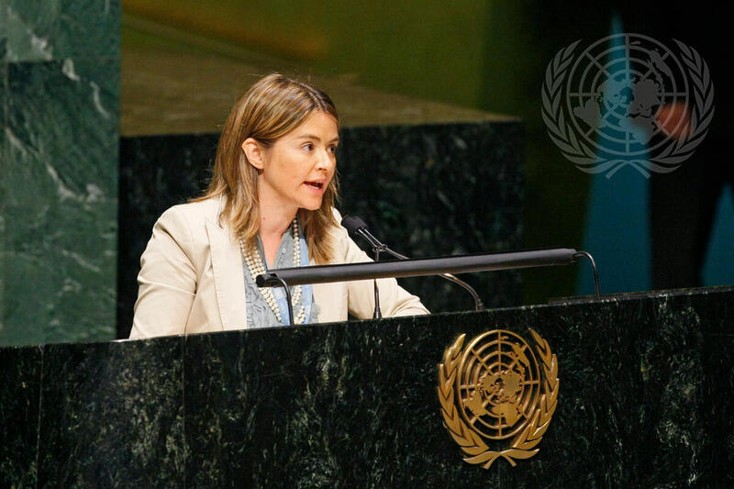
      Featured photo: Catarina de Albuquerque, then United Nations Special Rapporteur on Human Right to Safe Drinking Water and Sanitation, addressing the United Nations General Assembly on 27 July 2011. Source: United Nations.

      On July 28, 2010, the United Nations General Assembly adopted Resolution 64/292[i], recognising access to safe drinking water and sanitation as a fundamental human right. More than a symbolic declaration, the resolution marked a significant shift in global development policy, affirming that water and sanitation are not simply public services or economic commodities, but essential prerequisites for human dignity, public health, gender equality, and sustainable development.[ii]

      16 years later, the Human Right to Water and Sanitation (HRWS) stands at a pivotal moment. Progress toward SDG6 has slowed, Official Development Assistance (ODA) is under pressure, and climate change is intensifying water insecurity across regions already struggling with fragile infrastructure[iii]. Against this backdrop, a growing narrative suggests that the promise of the right has failed to translate into meaningful change.[iv]

      That conclusion overlooks an important reality.

      The strongest argument for the Human Right to Water and Sanitation is not found in international declarations, but in the measurable progress achieved since its recognition in 2010.

      The past 16 years have produced measurable progress in expanding access to safe water and sanitation, strengthening legal protections, and improving public service delivery.[v] While universal access remains out of reach, the evidence demonstrates that where governments have embedded the right in domestic law, invested in resilient infrastructure, and strengthened public institutions, the results have been transformative.[vi]

      Building on 16 years of Progress

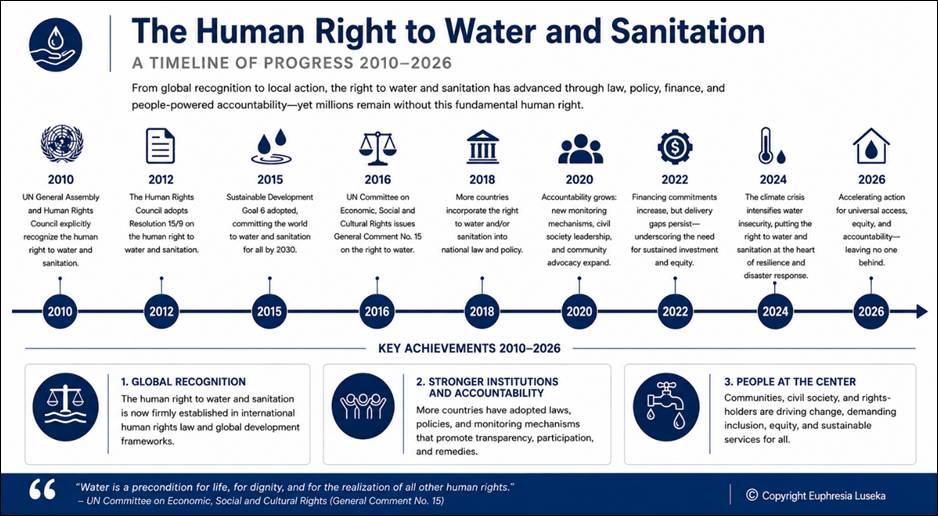
      As illustrated in the figure below, the record since 2010 offers compelling evidence that rights-based governance can deliver tangible development outcomes when supported by political commitment, sound institutions, and sustained investment. Across countries and regions, the recognition of water and sanitation as a human right has influenced constitutional reforms, shaped public policy, strengthened accountability, and accelerated investments in essential services.

      The expansion of water and sanitation services over the past two decades is unprecedented in scale. According to the WHO/UNICEF Joint Monitoring Programme (JMP), more than 2.2 billion people have gained access to safely managed drinking water services, while 2.8 billion people have gained access to safely managed sanitation. 5 During the same period, the number of people practicing open defecation declined dramatically; from more than 1.3 billion at the turn of the century to an estimated 350 million today.5 These gains have contributed to lower rates of waterborne disease, improved child survival, and better health and education outcomes, particularly for women and girls.

      While these advances cannot be attributed to Resolution 64/292 alone, the recognition of water and sanitation as a human right helped reshape the global policy landscape.1 It reinforced political commitments, informed national legislation, and strengthened accountability by establishing access to water and sanitation as a public obligation rather than a discretionary service.

      The influence of the resolution is perhaps most evident in domestic legal reform. Although the resolution itself is not legally binding, it has served as an important normative foundation for constitutional and legislative change in many countries. Kenya’s, Uruguay’s, Ecuador’s, Bolivia’s and South Africa’s Constitution explicitly guarantees the right to sufficient water, providing citizens with a legal basis to challenge unjustified service disconnections and demand government accountability.7 In India, the Supreme Court has interpreted the constitutional right to life to encompass access to safe drinking water, expanding legal protections for vulnerable communities.8 Across Latin America, countries including Costa Rica, Colombia, Mexico, Paraguay, Peru and Brazil have strengthened constitutional and statutory provisions that prioritise water for domestic use over competing commercial interests.6 Similar developments have occurred in Europe. Slovenia amended its Constitution in 2016 to recognise access to drinking water as a fundamental right, while the European Union’s revised Drinking Water Directive requires Member States to improve access to water, particularly for vulnerable and marginalised groups.

      Legal recognition, however, has proven most effective when accompanied by capable public institutions.

      The experience of the Phnom Penh Water Supply Authority in Cambodia illustrates what is possible when governance reforms accompany infrastructure investment. Once characterised by high water losses, weak financial management, and widespread corruption, the utility transformed itself into one of the world’s leading public water providers through universal metering, improved operational efficiency, transparent management, and progressive tariff structures.6 Today, Phnom Penh enjoys near-universal urban water coverage while protecting affordability for low-income households.

      A similarly instructive example comes from eThekwini Municipality in Durban, South Africa.[vii] Through its Free Basic Water policy, the municipality guarantees vulnerable households a minimum allocation of water free of charge, financed through increasing block tariffs that require higher-volume consumers to pay proportionately more.8 The model demonstrates that equity and financial sustainability need not be competing objectives. Well-designed pricing systems can simultaneously protect vulnerable households, recover operating costs, and expand access.

      Taken together, these experiences underscore an important lesson. The Human Right to Water and Sanitation does not deliver results simply because it exists as an international norm; its true value lies in its ability to shape domestic institutions, guide public investment, and strengthen accountability. The unfinished nature of the global agenda should therefore not obscure the considerable progress already achieved or the practical lessons it offers for accelerating universal access.

      The Unfinished Agenda

      Recognising progress is not the same as declaring victory. Despite significant advances over the past 16 years, universal access to safe water and sanitation remains one of the world’s most pressing development challenges. More than 2.1 billion people still lack safely managed drinking water at home, while 3.4 billion do not have access to safely managed sanitation.5 These gaps are not simply the result of technical constraints; they reflect persistent weaknesses in law, finance, infrastructure, and governance.

      Continue reading “A Few Drips Shouldn’t Close the Tap: The 16th Anniversary of the Human Right to Water and Sanitation”

      RWSN at the 43rd UN Water Meeting in Rome

      By Valérie Bertschy. Re-blogged from Skat Foundation, RWSN’s host organisation.

      Bringing Field Experience into the Preparatory Process for the 2026 UN Water Conference

      In March 2026, The Rural Water Supply Network (RWSN) participated in the 43rd UN Water Meeting, held over three days at IFAD headquarters in Rome. As an official UN Water Partner (one of only 39 organizations with that status) RWSN has recognized standing to participate in these intergovernmental preparatory processes, deliver oral interventions, and submit written contributions to official policy documents. 

      This article explains what RWSN brought to Rome, what happened there, and why it matters for the communities RWSN serves. 

      Context: RWSN, Skat Foundation, and UN Water

      Before turning to the meeting itself, a word on institutional roles.

      RWSN is a global knowledge network with more than 17,000 members across 190 countries. It is hosted by Skat Foundation – a St. Gallen-based Swiss NGO that provides the secretariat and staff support that keeps the network running. Valérie Bertschy, Knowledge Management Officer at Skat Foundation, represented RWSN in Rome in her capacity as secretariat staff. 

      UN Water is the United Nations inter-agency coordination mechanism for all freshwater-related issues, including sanitation. Its Members Meeting are held twice yearly, typically in Rome, and serve as a key preparatory forum for major global water policy processes. RWSN’s status as a UN Water Partner gives it formal access to these meetings – a recognition of its role as a credible, evidence-based voice for rural water across the global governance architecture. 

      The 43rd Members Meeting was the second major preparatory milestone for the 2026 UN Water Conference, which will only be the third UN Water Conference since 1977. The stakes are high: the conference is expected to produce a framework shaping global water governance well into the post-2030 period. 

      The Conference Framework: Six Interactive Dialogues

      The Abu Dhabi conference will be structured around six Interactive Dialogues (IDs), each with member state co-chairs and UN agency co-convenors. These dialogues formed the backbone of discussions throughout the three days in Rome:

      • (a) Water for People – co-chaired by Ghana and Switzerland
      • (b) Water for Prosperity – co-chaired by China and Spain
      • (c) Water for Planet – co-chaired by Egypt and Japan
      • (d) Water for Cooperation – co-chaired by Zambia and Finland
      • (e) Water in Multilateral Processes – co-chaired by Germany and Mexico
      • (f) Investments for Water – co-chaired by France and South Africa
      Participants of the 43rd UN Water Meeting in Rome

      What RWSN Brought to Rome

      RWSN’s participation was grounded in substantial preparation ahead of the meeting. RWSN produced a gap analysis comparing its Draft Position Paper against each of the six concept paper outlines, and prepared six tailored oral interventions (one per dialogue) designed to introduce rural water priorities into the intergovernmental discussion.

      Continue reading “RWSN at the 43rd UN Water Meeting in Rome”

      Where Water and Energy meet

      By Sean Furey. Re-blogged from where Water and Energy meet, LinkedIn.

      I have to credit the likes of Patrick Moriarty , IRCWASH, Bethlehem Mengistu Agenda for Change and Duncan McNicholl for getting me back into #SystemsThinking, which I had obsessed over 20 years ago when working on integrated water management withing urban and catchment master-planning for the Environment Agency but once I moved on it faded into the background.

      Then, a while back, Tom Chaplin and The Stone Family Foundation asked me whether the private-sector run water mini-grids that they had been supporting in Cambodia were to be found anywhere else in the world. Using the power of the RWSN – Rural Water Supply Network and our network of networks I tried to find any examples around the world that had similarities. I wasn’t very successful. However, as a by-product, I learned a lot about electricity mini-grids and this, along with an experience of meeting village micro-hydropower entrepreneurs in Myanmar with Dipti Vaghela and Hedi Feibel slowly baked into an obsession: could the parallel systems of rural #water supply and rural #energy supply be brought together?

      So, I had great discussions over the last year with David Lecoque and Jens Jæger at Alliance for Renewable Electrification and internally, with the RWSN Executive Committee – particularly with James Origa, Ph.D and Diane Arjoon when it came to the #Mission300 – the ambitious World Bank/AfDB investment programme for electrification for 300 million people across Africa.

      Attending the #EAIF2026 conference in Nairobi recently, I listened to some great speakers (learned a load of new acronyms and jargon) and had a range of really interesting conversations, some brief, some in depth with wonderfully open, helpful people, including Cornay Keefer , Ravishka Jairam and Prince Innocent from Schneider Electric ; Karin Jeanneret Vezzini from ennos ag ; Jakub Vrba from the Energy Saving Trust ; Mihaela Chirca from Expertise France ; Vivian Vendeirinho ; Leonard D’Cunha ; Dr. Georgia Badelt ; Petteri Pulli ; Sisty Basil ; Elizabeth (Lizzie) Biney-Amissah ; Kondwani Gondwe ; Janos Bonta ; Lena Musoka, MPH, MSc and many more.

      Some of my current thoughts on the water + energy link

      The graphic is my attempt to distill what I’ve learned through all of this (trying to avoid a systems diagram with lots of squiggly arrows) to identify some leverage points where the two sectors could reinforce each other. Right now, the urban way of thinking and working dominates: water and energy are separate and there are very good reasons for doing that; but applying urban logic to rural areas, with lower populations densities, different economies and different social and cultural norms, does not have great track record.

      Instead, how about focusing attention on these three leverage points where the two systems intersect:

      Continue reading “Where Water and Energy meet”

      New paper: O&M and the Finance Gap for Drinking Water Services

      There is a multibillion-dollar finance gap slowing progress towards universal drinking water services. Focusing on how governments are investing to address this gap, a new open access research article examines the different elements that contribute to this gap, and argues that the funds needed for operations & maintenance (O&M) of services should be considered differently from the funds needed for infrastructure. With the functionality and sustainability issues the sector faces, these differences are worth paying attention to.

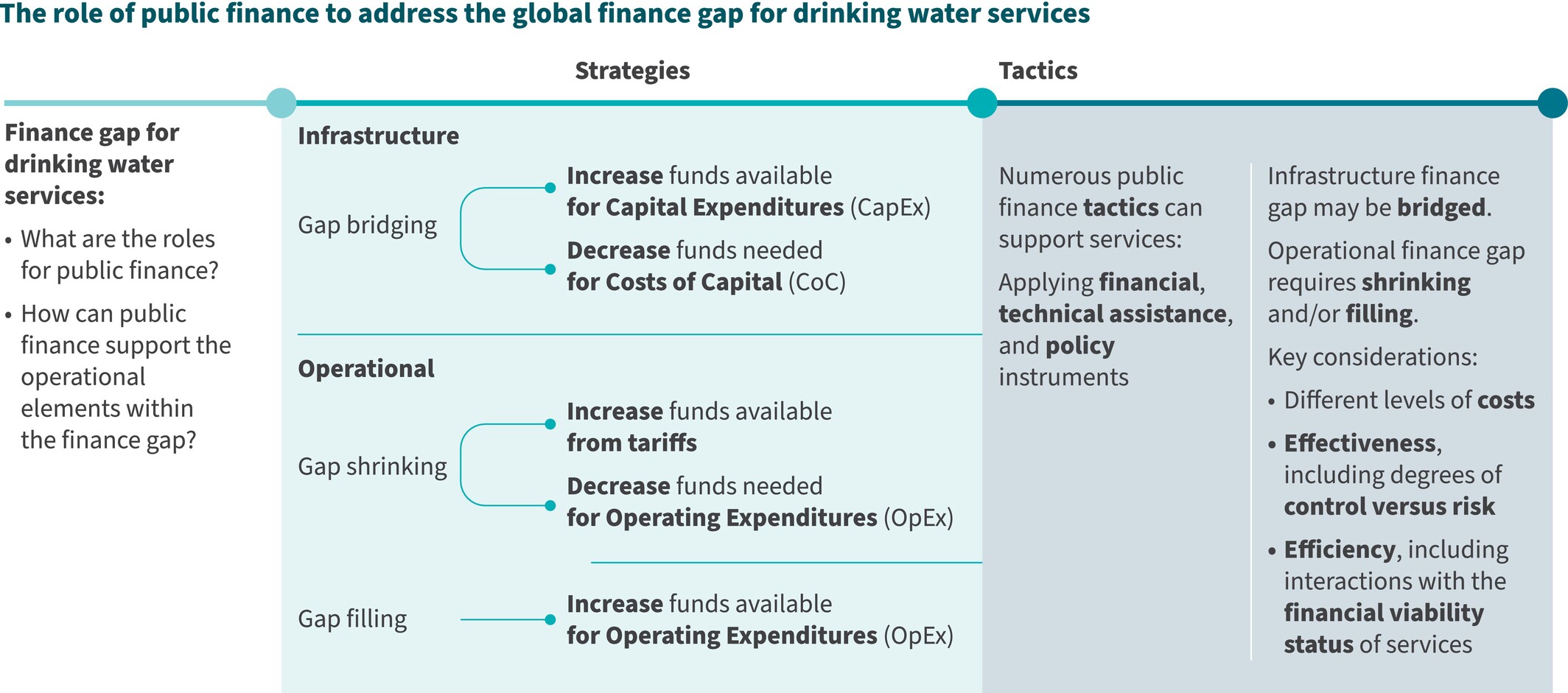
      This research suggests a framework of five strategies for bridging, shrinking, and filling the finance gap for drinking water services, based on how the funds available from tariffs, taxes, and transfers compare to the life-cycle costs of services.

      A framework for bridging, shrinking, and filling the finance gap for drinking water services (Nilsson, 2025)

      Do we need a new framework?

      Maybe, yes! Approaches for targeting gaps in infrastructure finance have been well studied, with many frameworks already available to guide actions and suggest new funding sources and mechanisms. However, the parts of the finance gap related to operational needs has been less analysed, even though there is an increasing need for operational finance.

      The water sector continues to struggle with the financial sustainability of drinking water services. Most repayable finance sources are not suitable for operational costs, and so it falls to governments and service providers to see how to balance ongoing costs and revenues. This framework shows that, after construction, there are fairly limited options: increase tariffs, cut costs, and/or set up subsidies.

      How can the operational finance gap be addressed, to keep water services flowing?

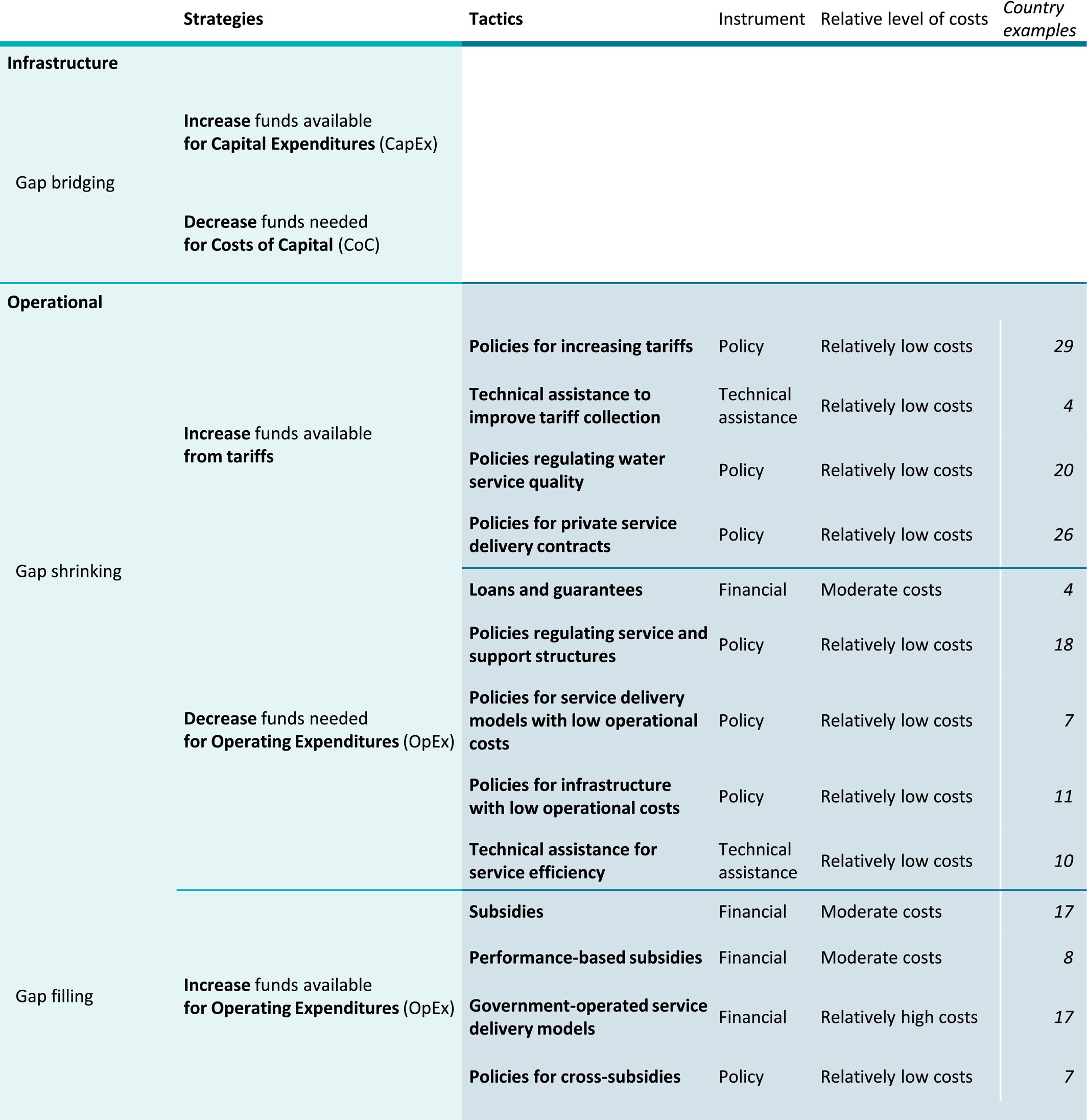
      This research studied 213 examples of government investments for drinking water services, from 68 countries, to see how public finance is being used to address the operational finance gap. It found 13 tactics being used by governments from around the world, using financial, technical assistance, and/or policies, to:

      • increase funds available from tariffs, and/or
      • decrease funds needed for operations & maintenance, and/or
      • increase funds available for operations & maintenance through subsidies.

      These tactics, and their investment requirements, are presented here: 

      Public finance tactics to support operations of drinking water services (Nilsson, 2025)

      This framework could help to better understand and compare tactics for addressing the finance gap for drinking water services. To read more about this study, you can access the full article here: The Role of Public Finance to Address the Global Finance Gap for Drinking Water Services.

      What do you think?

      • Which tactics are being applied in your areas, by governments, or by other sector actors? Which are not?
      • Are the tactics being used achieving what is needed, supporting services for more people, and services which are more financially sustainable?
      • Are there other tactics being used that are not captured here?

      About the author: Kristina Nilsson is a governance and development professional with over a decade of experience working on water and sanitation service delivery in Africa and Asia. She is currently a PhD student at the University of Oxford, researching public finance support for rural drinking water services.

      Financing Maintenance in Last-Mile Contexts: Endowment Funds for Rural Water Sustainability

      Featured photo: Ghana, Lucy Parker

      Article by Cincotta K. & Nhlema M.

      Abstract

      Rural water supply systems in low-income settings, particularly in last-mile communities, face chronic sustainability challenges. Financing predictable operation and maintenance (OPEX) remains a persistent gap, with one in four water points in sub-Saharan Africa being non-functional at any given time. While community-based management has been the dominant model for post-construction maintenance, it is increasingly recognized as insufficient, relying on underfunded household tariffs, volunteer committees, and limited technical support. Emerging solutions like results-based financing and professionalized maintenance contracts have shown promise with some securing government financing.  This paper proposes district-level maintenance endowment funds, a mechanism where invested capital generates predictable income, as another option for financing rural water maintenance. These funds would support targeted subsidies, results-based contracting, and accountable, locally governed service delivery aligned with decentralization frameworks. This proposed model is agnostic to the specific management model, whether community-based, professionalized, or hybrid. The focus is on creating a predictable, long-term financing mechanism, particularly for so‑called ‘last-mile’ rural communities: small, dispersed villages, often with fewer than 1,000 people, that are typically excluded from piped water systems due to high per-capita service costs.

      Two key arguments frame this proposal: (1) while endowment funds may be initially capitalized by international donors or organizations, over time they reduce dependency on short-term donor cycles by creating a predictable, locally managed revenue stream, and (2) Piloting endowments at the district government level strikes the right balance between being close enough to last-mile communities, accountable to them, and large enough to achieve economies of scale that will ensure financial viability for service provider payments.

      THE PROBLEM: Persistent Non-Functionality and Unrealistic Expectations

      Across sub-Saharan Africa, one in four rural water systems are non-functional at any given time. These failures are not anomalies, but they reflect a systemic global challenge: the absence of a reliable model for rural water service delivery beyond construction. For decades, community-based management (CBM) has been the dominant approach. It assumes that because communities value water, they will voluntarily manage infrastructure. But the viability of CBM is increasingly being questioned. Tariffs based on affordability rarely cover full maintenance costs, especially in small, dispersed communities, with variable incomes, that are often not prioritized for piped systems. Trained committee members often leave, and access to spare parts or technical support is limited. Volunteer fatigue, lack of retraining, and systemic underinvestment compound the problem.

      The expectation that people living in the poorest rural villages must fully fund and manage the long-term maintenance of their own water systems does not align with how water systems are managed anywhere else in the world. In high-income countries, water infrastructure is maintained by trained professionals and supported by stable funding streams, often not limited to water user fees, but supplemented by public financing mechanisms such as property taxes and municipal budgets. The same should hold true, if not more so, in low-resource rural settings. A more realistic, equitable approach is therefore urgently needed.

      TRIED AND TESTED SOLUTIONS: Results-Based Financing (RBF) – When Performance Meets Poverty

      New RBF models are emerging. Uptime, as an example, is a partnership supporting professionalized rural water service providers that pays providers based on verified uptime. This shifts incentives from reactive repairs to preventive maintenance. Between 2020 and 2022, Uptime supported services for 1.5 million people in seven countries. Governments in countries such as Kenya, Bangladesh, and Zambia are now beginning to adopt performance-based financing approaches like this into their own public financing systems. This has been inspired in part by the evidence generated through philanthropic pilots. Yet, a central limitation remains: these models have demonstrated viability primarily in communities large enough or more “well-off” to generate economies of scale. This makes them financially attractive to service providers, but systematically excludes smaller, remote last-mile communities that are seen as less “bankable”. This is not a critique of performance-based models like Uptime, they are delivering results and proving their value. But it does highlight the need to pilot complementary result-based financing mechanisms that can address the unique realities of last-mile communities. Expecting the world’s poorest to fully finance their own essential services is neither equitable nor realistic. What’s needed is smart, targeted financing, including well-placed subsidies, that reflects the diversity of community capacity and directs public investment where it’s needed most. This is especially critical for last‑mile communities, i.e. remote, low‑density villages where user fees alone can never sustainably cover operating expenses.

      This frame of thought, of differential and context-specific financing solutions, borrows from Dorward et al.: “Hanging In, Stepping Up, and Stepping Out.” Most rural households are “Hanging In,” unable to pay without full subsidy. Others can co-finance with support (“Stepping Up”), or engage with market models (“Stepping Out”). This model enables differentiated financing that aligns with real-world capacity. Targeted subsidies are not about dependence; they free up cash for productive use while ensuring reliable services. Importantly, we differentiate between water as a service that must be reliably provided for health and dignity, and water as a productive resource used to generate income. The proposed endowment-backed financing model speaks to the former, guaranteeing essential domestic supply. Other financing tools may be more appropriate for supporting productive uses of water in agriculture or enterprise.

      RBF models have proven we know how to make maintenance work. The challenge now is to pilot solutions, such as endowment funds, that can sustainably support these communities where market-based approaches do not reach, thereby ensuring universal access to all.

      THE PROPOSAL: District-Level Maintenance Endowment Funds

      To close the financing gap, we propose district-managed endowment funds dedicated to rural water maintenance. These funds would invest capital to generate steady income for maintenance costs, insulating service delivery from budget shocks and donor cycles. They would:

      • Provide predictable financing by requiring implementing agencies to allocate a fixed amount, e.g. 10-20% of infrastructure costs, into the fund.
      • Enable targeted subsidies using the Hanging In/Stepping Out framework.
      • Support results-based contracting for professional maintenance providers.
      • Align with decentralization by placing fund management at the district level, while national governments serve as regulators.

      This model borrows from urban utility principles where professional service delivery is underpinned by predictable financing and adapts them to rural realities. It does not assume full cost-recovery from users, nor does it treat water as a commodity for profit. Instead, it creates a stable platform for targeted subsidies and professional maintenance services in communities where user fees alone are structurally insufficient.

      Continue reading “Financing Maintenance in Last-Mile Contexts: Endowment Funds for Rural Water Sustainability”

      Weaving threads of knowledge and trust across the world – Part 1 (Global Actors)

      by Sean Furey, Director – RWSN Secretariat @ Skat Foundation

      Rural Water, Sanitation and Hygiene (WASH) is such a local, personal, issue that does global-level exchange make sense?

      At first glance, rural areas and communities worldwide seem too diverse for networking and knowledge exchange to be useful or meaningful. What does WASH for isolated hamlets in the Nepalese Himalayas have in common with a fishing village on the Peruvian coast or a small town in northern Nigeria? Quite a lot, it turns out.

      Last year, we were privileged to be approached by the Water Section at the Inter-American Development Bank (IDB), to support them with an exciting programme called Sustainable and Innovative Rural Water, Sanitation and Hygiene (SIRWASH), funded by the Water Section of the Swiss Agency for Development & Cooperation (SDC). They asked us to help strengthen the sharing on rural WASH topics within the Latin America and Caribbean (LAC) region and to encourage South-South exchange between LAC, Africa and Asia. Thanks to our strategic partnership with SuSanA we felt well placed to do this, and a great opportunity for both networks to grow our membership in the LAC region and serve our members there better.

      Multilateral Development Banks – amazing allies

      When it comes to shear financial clout and convening power, Multi-lateral Development Banks (MDBs) are hard to beat, but even they have had mixed success with rural WASH – but there have been successes and they have recognised that they can learn from each other so that they can provide their client governments with the technical assistance and financial options to deliver sustained improvements. So, last year the relevant focal points from the African (AfDB), Asian (ADB) and Inter-American (IDB) met and agreed on a Call to Action with three priorities:

      • Information-based decision-making and rural WASH investments and service monitoring.
      • Institutional strengthening & coordination.
      • Rural sanitation.

      From this, we organised a webinar mini-series drawing on their recommendations for case studies on each topic from each region.

      Finding the common threads and bringing them together to make them stronger

      This year, we took more steps to build an understanding and appreciation of the solutions that have the potential to transcend the variability of local contexts and be adapted. With growing interest, our colleagues at the World Bank also joined the small group and together we organised a special SIRWASH breakfast meeting and an open session on “Coordinating Rural Water Investments to Promote Security and Stability” with REAL-Water :

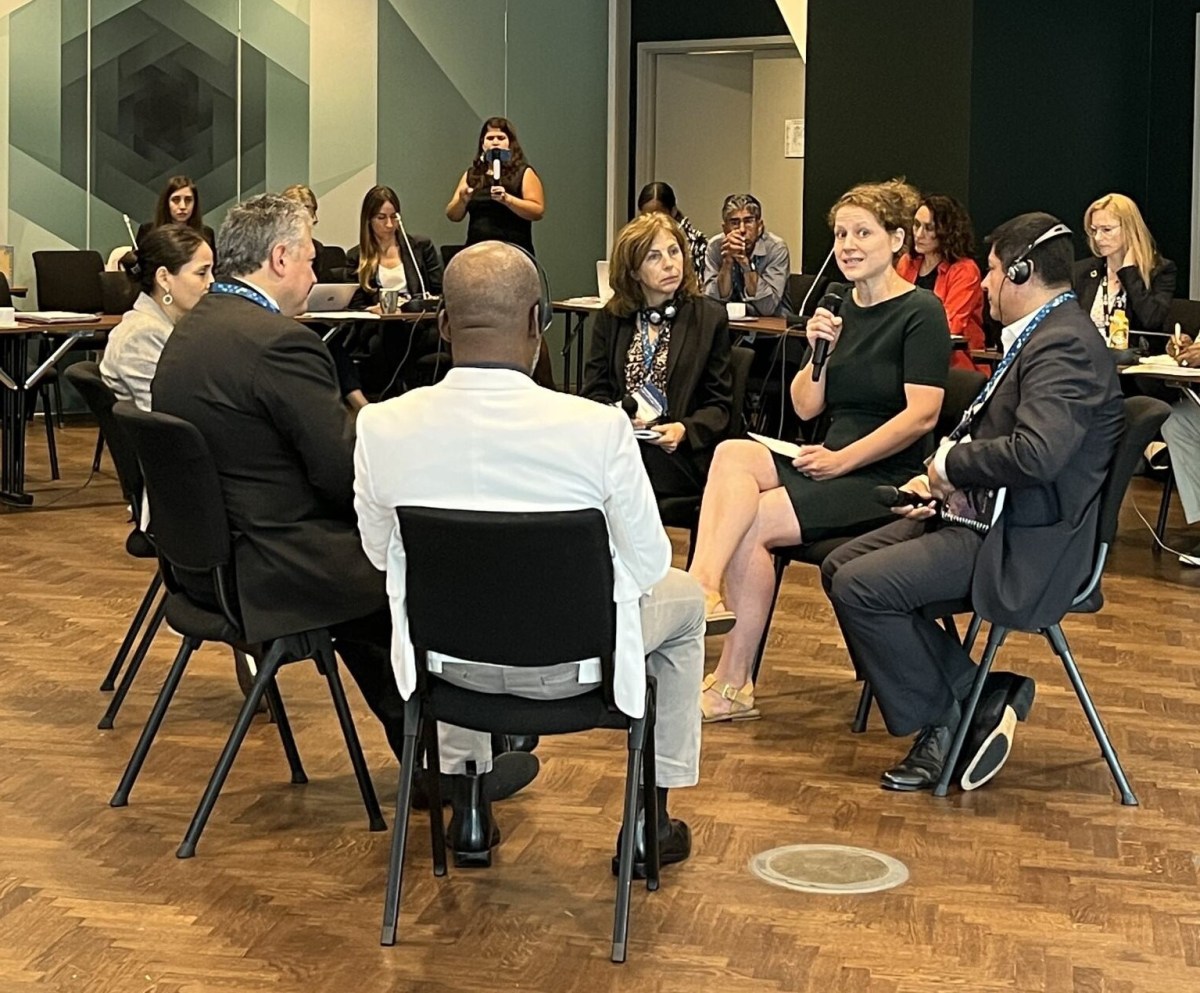
      The SIRWASH breakfast meeting that followed was in the spirit of collaboration among countries in the global south, using knowledge sharing as a catalyst for innovative and sustainable solutions. It was attended by more than 40 representatives from countries (Haiti, Brazil, Peru, Chile, Nigeria and Uganda), multilateral banks, multilateral and bilateral agencies (SDC, AECID, SIDA, WHO, OAS, UNICEF), NGOs and philanthropists (including, One Drop, Water For People, Avina, Aguatuya, mWater, Global Water Center), as well as networks, partnerships and research (RWSN, SuSanA, WASH Agenda for Change, WASH Funders Group, SIWI, Uptime, the Aquaya Institute). 

      Reflections on the SIRWASH Breakfast meeting (source: IDB)

      Using the “Fishbowl” method, participants exchanged their perspectives in an open and dynamic way on how strategic partnerships can increase impact in the sector. Discussions focused on two key questions: 

      1. How can technological innovations in rural WASH information systems be supported to be truly effective in decision making and incentivize scaling up? 

      2. What are practical solutions to improve the design and implementation of national rural WASH programs so that their benefits are sustained over the long term? 

      One of the central themes was innovation through sector information systems, a crucial tool for planning and managing water and sanitation services in rural areas. Three countries shared their experiences on how they have adapted and improved these systems:

      The importance of institutionalizing information at the national level and ensuring that communities participate in the validation and appropriation of data and decisions was emphasized.

      In addition to information systems, the event underscored the need to integrate both technological and social innovations to improve rural services. Social innovations and behavioural change are essential for communities to take ownership of the systems and actively participate in their management and maintenance. Participants agreed that long-term sustainability is about finding the sweet spot between community-ownership/responsibility and external support.

      The second critical issue addressed was the sustainability of rural water and sanitation services. Participants stressed that the successful implementation of these services cannot depend solely on initial investments in infrastructure. Innovative mechanisms need to be developed to ensure their financing and continued operation. The examples of Brazil and Nigeria were instructive, both countries demonstrating how the combination of effective governance and innovative financial models can ensure the operational sustainability of services:

      • Brazil presented its comprehensive implementation of their National Rural Sanitation Program (PNSR).
      • Nigeria highlighted the ways a results-based SURWASH programme is strengthening institutional capacity.
      • The Uptime Consortium shared their experiences and successes with Results-based Contracting on rural water service delivery across many contexts.

      The discussion emphasized the need for functionality and quality indicators for rural services, linking reliable information to financial incentives for operators. This strategy can enhance the long-term sustainability of these systems. The working group concluded that collaboration is essential to ensure countries have reliable information for decision-making, aimed at improving the quality of rural services.r decision-making aimed at enhancing the quality of services in rural areas.

      In the final discussion, consensus was reached on the need to create and maintain an enabling ecosystem for the development and sustainability of rural services. The great opportunity for development partners to join efforts and seek synergies, contributing technical and financial resources to this ecosystem in the countries was highlighted.

      The event concluded with a clear call to action: all actors – governments, development banks, cooperation agencies, NGOs, networks and the private sector – must remain committed to financing and strengthening rural water and sanitation services. The MDBs will continue to work together on a concrete action plan to exchange and replicate successful and innovative experiences to ensure universal and quality WASH services in the countries.

      Knowledge exchange is not just talk and powerpoint presentations, it is about building connections and trust between individuals and organisations, finding those common interests and encouraging co-creation of new insights and more sustainable solutions.

      The symbolic activity organized by One Drop, where participants bonded to represent their intention to work together towards a common goal, was a powerful reminder of the importance of lasting partnerships. This symbolic gesture is just the beginning; it is essential to continue to scale up efforts so that the most vulnerable communities can access quality water and sanitation services in a sustainable and equitable manner.

      Top-Down meets Bottom-Up

      After this event, our partner Aguatuya convened an online meeting of Latin American WASH networks to encourage bottom-up exchange to complement our high-level approach. But we will follow that thread in the next post…


      Many thanks to the large number of people involved, but in particular to Sergio Campos, Manuela Velasquez-Rodriguez and Cristina Mecerreyes at IDB; Diane Arjoon at AfDB, Vivek Raman and Tanya Huizer at ADB, Awa Diagne and Sarah Nedolast at the World Bank, Janine Kuriger at SDC, and to the wonderful RWSN/SuSanA team: Dr Aline Saraiva, Batima Tleulinova, Susanna Germanier, Lourdes Valenzuela, Paresh Chhajed, Chaiwe Sanderse and all the speakers and panellists for the webinars and sessions.

      “Financial Innovations for Rural Water Supply in Low-Resource Settings” Innovation 2: Digital financial services

      This blog post is part of a series that summarizes the REAL-Water report, “Financial Innovations for Rural Water Supply in Low-Resource Settings,” which was developed by The Aquaya Institute and REAL-Water consortium members with support from the United States Agency for International Development (USAID). The report specifically focuses on identifying innovative financing mechanisms to tackle the significant challenge of providing safe and sustainable water supply in low-resource rural communities. These communities are characterized by smaller populations, dispersed settlements, and economic disadvantages, which create obstacles to cost recovery and hinder the realization of economies of scale.

      Financial innovations have emerged as viable solutions to improve access to water supply services in low-resource settings. The REAL-Water report identifies seven financing or funding concepts that have the potential to address water supply challenges in rural communities:

      1. Village Savings for Water
      2. Digital Financial Services
      3.  Water Quality Assurance Funds
      4. Performance-Based Funding
      5. Development Impact Bonds
      6. Standardized Life-Cycle Costing
      7. Blending Public/Private Finance

      Understanding Digital financial services

      Digital financial services have penetrated many aspects of daily life, including water services. 

      One strategy to address the gap in rural water funding is to increase the financial sustainability of water systems through improved water revenue collection and management (Waldron and Sotiriou 2017). In low-income countries, the collection of service fees primarily relies on cash, which can be labor-intensive, difficult to track, prone to miscalculations, and susceptible to theft or loss (Sharma, 2019). However, by implementing automated digital recording of time-stamped water usage and payment data, the planning, projection, and delivery of water services can be significantly improved (Waldron et al., 2019).Good record-keeping aids water service providers in tracking performance changes over time, as well as supporting financial sustainability, water conservation, and climate adaptation.

      How does it work?

      “Digital financial services” encompasses two concepts: financial services (e.g., payments,

      savings, credit, insurance, user suport) and the technologies that deliver them to end users (Waldron et al. 2019). Services such as online savings or credit accounts mainly benefit adults who work outside the home and have bank accounts (Coulibaly 2021). The digital technologies accessible to users who rely on cash may include mobile money (electronic wallets using a mobile phone), water sale kiosks or “ATMs,” and prepaid token technologies (REAL-Water 2022).

      Customers can use digital mechanisms to conveniently purchase water, reducing waiting times and operational downtimes when live vendors or caretakers are unavailable (Waldron et al., 2019). With prepaid digital services, the efficiency of water fee collection can reach nearly 100% (with the exception of targeted subsidies or discounts). “Postpaid” digital financial services, which collect fees retrospectively for prior water usage, enable service providers to automatically track outstanding payments and initiate billing. Digitization may enable better payment compliance, as those with seasonal or inconsistent income are able to deposit a sum of money and draw on it over time (Sharma 2019).

      Moreover, the implementation of prepaid metering for automated water dispensing devices and postpaid digital water service accounting brings benefits to both water system operators and customers, improving fee collection consistency as well as convenience. They may likewise simplify subsidy delivery to vulnerable customer segments. 

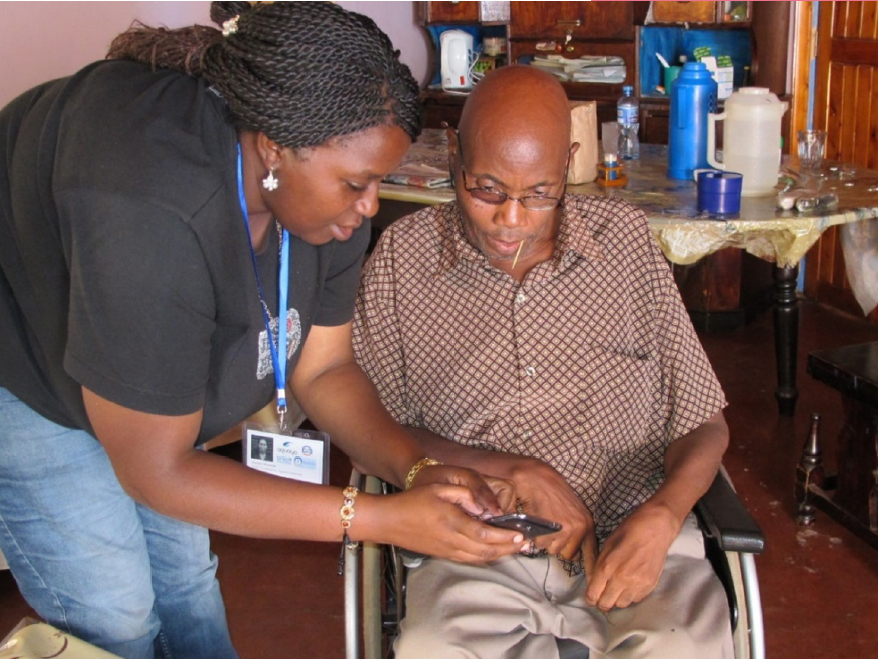
      Figure 1. Training a customer in Ruiru, Kenya on how to use his phone for making

      water payments (Source: Joyce Kisiangani, The Aquaya Institute)

      Examples

      Technology provider Grundfos partnered with the nongovernmental organization World Vision and Safaricom, the leading telecommunications provider in Kenya, to install 32 self-service water kiosks (called LifeLink systems) in locations that lacked water infrastructure, serving both

      homes and businesses (Waldron et al. 2019). Initial uptake was high and interviews documented user benefits from reduced favoritism in water distribution as well as being able to track and review spending. Collecting mobile payments cost less than collecting cash payments, a savings that could be reinvested to upgrade services or passed onto consumers (Sharma 2019). The World Bank and others have likewise been working to scale affordable water installations in Tanzania using prepaid Grundfos card kiosks combined with solar pumping, which vastly reduces water transportation time and stabilizes high prices offered by private sellers (World Bank 2017). Recognized downsides of this and other digital payment examples have included questions of who requires data access, remote monitoring needs, labor cuts, reduced customer service capabilities, and difficulty paying among the ultra-poor (Waldron et al. 2019).

      The nonprofit organization Safe Water Network uses Hangzhou LAISON Technology digital household prepaid meters in their piped connection program in Ghana. Customers receive a device to input a token purchased through mobile money. New users joined quickly following customer workshops to explain the payment system, and the enhanced cost recovery shifted the operation from a net loss to a net surplus (Waldron et al. 2019). Ensuring proper use will likely require sustained engagement. Safe Water Network has continued expanding the household connection metering program to serve several thousand households in small rural towns in Ghana’s Ashanti Region.

      Transitioning to digital payments comes with certain challenges, such as additional transaction fees, costly startup infrastructure, poor telecommunications technology, skepticism towards technology, and the belief that water services should be cheaper or free, as well as income loss for traditional vendors who primarily handle cash transactions. Local training support and outreach efforts for social inclusion can be beneficial for expanding digital services. However, digital financial services do not represent a fix-all solution. Their successful implementation requires substantial training and effective governance to transition service providers and communities to new processes that increase collection efficiency, while minimizing the impact on customers’ water usage (Heymans, Eales, and Franceys, 2014).

      Digital financial service innovations have made inroads globally in urban areas and are rapidly expanding to serve rural residents in Africa, Asia, and Latin America. As use expands, social inclusion efforts may be needed to ensure the services benefit vulnerable populations (Coulibaly 2021).

      To access further information on financial innovations for rural water supply in low-resource settings, you can download the complete report HERE.

      The information provided on this website is not official U.S. government information and does not represent the views or positions of the U.S. Agency for International Development or the U.S. Government.

      References:

      Coulibaly, Sionfou Seydou. 2021. “A Study of the Factors Affecting Mobile Money Penetration Rates in the West African Economic and Monetary Union (Waemu) Compared with East Africa.” Financial Innovation 7 (1): 25. https://doi.org/10.1186/s40854-021-00238-0.

      Heymans, Chris, Kathy Eales, and Richard Franceys. 2014. “The Limits and Possibilities of Prepaid Water in Urban Africa: Lessons from the Field.” Case Study. WSP.

      REAL-Water. (2022). Technological Innovations for Rural Water Supply in Low-Resource Settings. United States Agency for International Development (USAID) Rural Evidence and Learning for Water Project

      Sharma, Akanksha. 2019. “Digital Payments in Water: Findings from Two New Research Projects.” Mobile for Development (blog). March 18, 2019. https://www.gsma.com/mobilefordevelopment/blog/digital-payments-in-water-findings-from-two-new-research-projects/.

      Waldron, Daniel, and Alexander Sotiriou. 2017. “Digital Finance and Sustainable Water Service for All.” Brief. CGAP. https://www.cgap.org/research/publication/digital-finance-and-sustainable-water-service-for-all

      Waldron, Daniel, Caroline Frank, Akanksha Sharma, and Alexander Sotiriou. 2019. “Testing the Waters: Digital Payments for Water and Sanitation.” Working Paper. Washington, D.C.: CGAP.

      Strengthening accountability for water


      This blog is based on the Accountability for Water action and research programme funded by the William and Flora Hewlett Foundation and managed by the Partnership For African Social and Governance Research (PASGR), supported by Water Witness International, KEWASNET and Shahidi Wa Maji. The full webinar summary is available here.

      On 15th December 2022, a global webinar was held to discuss the critical importance of accountability for water. During the webinar, a partnership of organizations led by PASGR and Water Witness presented the findings of their Accountability for Water research program, which aimed to identify specific actions to strengthen accountability in different contexts. The programme partners involved in the research include KEWASNET, Shahidi Wa Maji, WaterAid, Water Integrity Network, End Water Poverty, IRC, and World Bank. Dr Pauline Ngimwa and Dr Muthio Nzau of PASGR introduced the webinar.

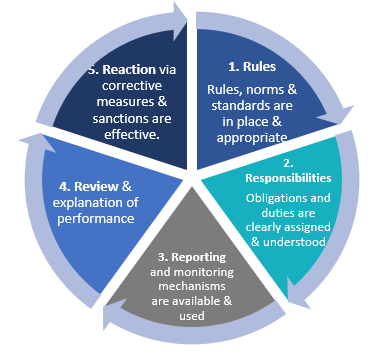
      Dr Tim Brewer of Water Witness gave an overview of the research programme which started with the global review of evidence carried out in 2019-2020.  According to this review, 80% of the research papers on accountability found that interventions contributed to improved water, sanitation and hygiene (WASH) services and water resource management (WRM). Common lessons emerged with clear recommendations for action by governments, civil society, donors and others. While a key lesson is that accountability is context specific, an analytical framework based on the “5 Rs of accountability” can be used to identify specific challenges and opportunities within this framework – the ability to review, explain, and report performance against rules, responsibilities, and obligations, and to react constructively to improve performance through sanctions, incentives, or corrective measures.

      The review identified a series of knowledge gaps and questions, including gender, donors, government responsiveness, measurement, and civic space. Based on this analysis, 14 Professional Research Fellows (PRF) working in the water sector in Ethiopia, Kenya, Tanzania, Zambia, Liberia, and Zimbabwe from a range of government, civil society and academic institutions investigated accountability issues in their own contexts. The full list of research topics and researchers is at the bottom of this blog.

      The following key takeaways for governments, civil society organizations (CSOs), and donors were drawn from a compilation of recommendations from the research projects .Presenters included Dr Firehiwot Sintayehu (Addis Ababa University);  Eunice Kivuva (CESPAD); Chitimbwa Chifunda (WaterAid Zambia), The full list of research topics and researchers at the end of this blog demonstrates the depth and breadth of evidence underlying these recommendations .

      Three key takeaways for governments      

      1. Laws, policies and accountability mechanisms are essential to support accountability. However, lack of clarity and consistency between sectors and levels, a lack of knowledge and capacity about the laws and mechanisms, and weak enforcement often undermine these. Therefore, the key recommendations are to: 
        • Harmonise, strengthen, and execute laws and policies for water resources and WASH at national and subnational levels,
        • Strengthen accountability systems and relationships:  mechanisms, standards, regulation, monitoring, stakeholder engagement and enforcement including for the private sector,
        • Build capacity on accountability, develop an accountable outlook and de-politicise accountability systems.
      2. Clear roles and responsibilities and better coordination: Accountability mechanisms are often let down by poor coordination, unclear or conflicting roles and responsibilities and widespread lack of enforcement. Key actions required are to:
        • Clarify institutional roles and responsibilities between actors for WASH and WRM – eliminate conflicts in functions,
        • Separate implementation and regulatory institutions,
        • Strengthen horizontal and vertical institutional and sector coordination across water users through enforceable accountability systems and mechanisms.
      3. Informed engagement with citizens and users: All the researchers found that effective engagement with citizens, citizen groups and water users is essential for accountability but wanting. To address this governments need to:
        • Introduce or strengthen accountability mechanisms such as public hearings and citizen oversight panels,
        • Provide Information, education, and mobilisation for communities ensure access for marginalised groups,
        • Support civil society to vertically integrate social accountability initiatives into decision making at different levels,
        • Support coordination amongst actors to increase the capacity of rural women and marginalised communities to participate in problem analyses and decision-making processes.

      Three key takeaways for civil society,

      1. Activate and institutionalise effective citizen oversight mechanisms.  As well as the government actions to strengthen engagement with citizens and water users Civil society organisations need to support this, they should:
        • Advocate for more legally institutionalised avenues of citizen oversight,
        • Ensure that citizens’ monitoring and advocacy initiatives are vertically and strategically integrated in decision making at all levels,
        • Carry out budget tracking throughout the whole cycle from planning to expenditure.
      2. Build capacity, empowerment and organise communities. A very common cause of weak accountability is the low levels of knowledge and capacity of water users about their rights, the laws and responsibilities around water provision and resource management, and how they can use accountability mechanisms. Civil society organisations need to:
        • Build capacity on accountability mechanisms and support their use,
        • Strengthen grassroots user groups and associations to participate in decision making,
        • Support civil society and water users, especially women, to move up the Participation ladder from token participation to active participation,  decision making, and control.
      3. Build on what works, like budget tracking, evidence-based advocacy, litigation. There is growing knowledge about successful strategies for strengthening accountability. This research has helped to strengthen a community of practice on accountability and identify examples that others can learn from. Key lessons for civil society are to:
        • Strike a balance between constructive and critical approaches to advocacy,
        • Bring strong evidence for advocacy,
        • Raise awareness of WASH and WRM issues amongst all stakeholders including citizens, government and development partners.

      Four key takeaways for donors and private sector

      1. Support governments and CSOs to strengthen accountability frameworks, monitoring and enforcement. Donors can provide financial and political support for the actions for governments and civil society mentioned above. They need to:
        • Support governments on WASH and WRM accountability actions as above,
        • Support CSO actions as above,
        • Support good governance and democratic space for citizens’ voice. Citizens’ engagement is critical to enhancing accountability,
        • Invest in women’s participation and reaching marginalised people,
        • Strengthen political will for accountability.  Donors can influence government priorities,
        • Invest seriously in sustainability.
      2. Water investments need to go beyond projects. They need to: 
        • Go beyond procedural & financial accountability. For example strengthen basins planning to ensure responsible industrial water use,
        • Support budget tracking through the cycle – budget tracking is an effective tool to improve budget performance,
        • Invest in appropriate technology to support accountable and responsive services, For example digital monitoring of services and water treatment technology to prevent pollution of water resources.
      3. Enhance due diligence. Researchers found examples of very weak accountability in economic uses of water by industrial and agricultural actors. Donors and private investors can help strengthen accountability by requiring:
        • Stronger due diligence of companies in relation to water use,
        • mandatory reporting on water,
        • promoting and enforcing the Polluter pays principle
      4. Be accountable!  Donors are major investors in the water sector but often do not fulfil their commitments. For example in Zambia the WASH sector is 80% funded by Donors but only 29% of that was tracked through the budget.
        • Accountability Mechanisms are needed to enable Governments and CSO to hold Donors accountable for their commitments. 

      Discussion and next steps

      During the webinar, Sareen Malik from KEWASNET, emphasised the importance of legislation to strengthen accountability mechanisms. NGOs can play an important role to advocate for this and bring stakeholders together in Joint Sector reviews as a critical mechanism for accountability, monitoring and reporting. 

      Martin Atela of PASGR reflected on the role of politics in undermining accountability and suggested that political interference can be mitigated by greater clarity on roles and boundaries of ministerial responsibilities. He also emphasized the need to find ways to work with political elites so they see the value in change

      Next steps involve joining the community of practice on accountability for water, to continue learning from experience and to advocate for commitments to strengthen accountability.

      Research partners are organising an event at the UN Conference on Water 2023: “Where is the accountability”  on Tuesday 21st March, driving a greater emphasis on governance and accountability. This needs to be front and centre of all discussion.

      The Research programme is managed by the Partnership for African Social and Governance Research (PASGR) and Water Witness International with financial support from the Hewlett Foundation.

      More information about the research is on the website including findings from the global review of evidence, recorded presentations from webinars at World Water Week 2022 in Stockholm, presentations from country specific webinars, and summary briefings of all the research topics. www.accountabilityforwater.org

      List of Research topics, Professional Research Fellows and host institutions

      Ethiopia

      • Government Dynamics of Accountability in Ethiopia, Mulugeta Gashaw, Water Witness Ethiopia
      • Political Economy Analysis of water governance, Asnake Kefale
      • Risks and opportunities for growth in Ethiopia’s textile and apparel industries,  Esayas Samuel
      • Wastewater management in upstream catchment of ARB, Yosef Abebe, Addis Ababa University and Ministry of Water and Energy
      • Accountability of the One WASH National Programme of Ethiopia, Michael Negash, PSI
      • Towards a sustainable management of faecal sludge: the case of Addis Ababa, Tamene Hailu
      • Alwero Dam governance, Firehiwot Sentayu, Addis Ababa University

      Kenya

      • Government Dynamics of Accountability in Kenya, Dr Tiberius Barasa
      • Enhancing coordination for accountability and sustainability in water resources management; a case of Kerio sub-catchment in Baringo rift valley basin. Eunice Kivuva (CESPAD)
      • Kakamega County Water and Sanitation Company, Kenya.  Mary Simiyu, Kakamega Water Service Provider
      • Rural Women and water decisions in Kwale and Kilifi Counties, Felix Brian, KWAHO
      • Strengthening accountability in solid waste management through incentives and penalties in Naivasha, Kenya, Naomi Korir, Sanivation

      Tanzania

      • Government Dynamics of Accountability in Tanzania, Dr Opportuna Kweka
      • Assessment of Gender Power Relations and Accountability in Community Based Water Supply Operators in Selected Water Basins of Tanzania, Pitio Ndyeshumba, Institute of Lands
      • Regulatory and Legal Accountability for Water Pollution in Tanzania: The Case of Msimbazi River Basin in Dar es Salaam City, Mwajuma Salum, University of Dar Es Salaam
      • Opportunities and challenges of accountability claiming in Tanzania’s water sector, Dr Parestico Pastory, University of Dodoma

      Zambia

      • What makes budget advocacy an effective accountability tool, Bubala Muyove, NGO WASH Forum and Chitimbwa Chifunda, WaterAid Zambia

      Zimbabwe

      • Assessing the effectiveness and impact of statutory accountability mechanisms to improve water service provision and catchment management, Mable Murambiwa, Combined Harare Residents Association, Zimbabwe

      Liberia

      • Accountability Challenges in The Liberia Water-Supply Sector: LWSC in Robertsport and Kakata, Timothy Kpeh, United Youth for Peace,  Liberia

      About the author:  This blog is authored by Louisa Gosling, freelance specialist in accountability, rights and inclusion in WASH, previously working with WaterAid and as chair of RWSN.

      Rural Community Water Supply: Sustainable Services for All

      Covid-19 gave me the chance to commit to paper (or electronic form, if you prefer) some of my understanding and experience gained over several decades. The outcome is a book, published earlier this year, entitled Rural Community Water Supply: Sustainable Services for All.

      by Professor Richard C. Carter

      Richard encountering some resistance in Kaabong, Uganda (photo. RC Carter)

      Many hundreds of millions of rural people – the exact number is not known, and it is immaterial, except that it probably lies between one and two billion – experience inadequacies in the supply of the water which they use for drinking and other domestic uses.

      These inadequacies are partly reflected in the ‘normative criteria’ as defined by the human right to water which apply to water services globally. These criteria ask whether and to what extent water services are available, accessible, affordable and acceptable, and whether their quality meets national or international standards. They also highlight the importance of cross-cutting criteria (non-discrimination, participation, accountability, impact, and sustainability).

      Continue reading “Rural Community Water Supply: Sustainable Services for All”