

Featured photo: Daily, millions of girls and women in Kenya walk for water, losing time, safety, and opportunity. Photographer: Euphresia Luseka
Blog by Euphresia Luseka, co-lead of the RWSN Leave No-one Behind theme.
The views and opinions expressed in this blog post are those of the author. They do not necessarily reflect the views of the Rural Water Supply Network (RWSN) or its Executive Committee.
A Walk Before Dawn
At five in the morning, Busia County, Kenya is still wrapped in silence. But Jeruto is already walking. Fourteen years old, barefoot, a yellow jerrycan pressed into her hip. Three kilometres to water, three kilometres back.
She knows this path by heart. She also knows it is never safe. Men wait in the shadows. The price of water is sometimes not money but dignity. By the time she returns, the day has already slipped away; half her classes gone, her body exhausted, her hope dimmed.
“I was afraid,” she says. “But what choice did we have?”
This is the reality of women and girls without drinking water supplies on the premises every day stolen by the simple act of survival. And yet, here is the cruel paradox; when decisions are made about water, women are nowhere in the room. They carry the heaviest burden but hold the least power. The sector is still led by men.
That irrationality is finally being challenged. In western Kenya, three men, yes, men are ripping up the old rules of water and power. They are saying: enough. Not with platitudes, not with empty gender policies that gather dust, but with radical reforms that change who gets to sit at the table, who gets paid, who gets promoted, who gets heard.
And the truth they have stumbled into is this; Gender equity is not tokenism. It is infrastructure. It is resilience. It is the difference between a girl chained to a jerrycan and a girl being educated.
When Water Becomes Opportunity
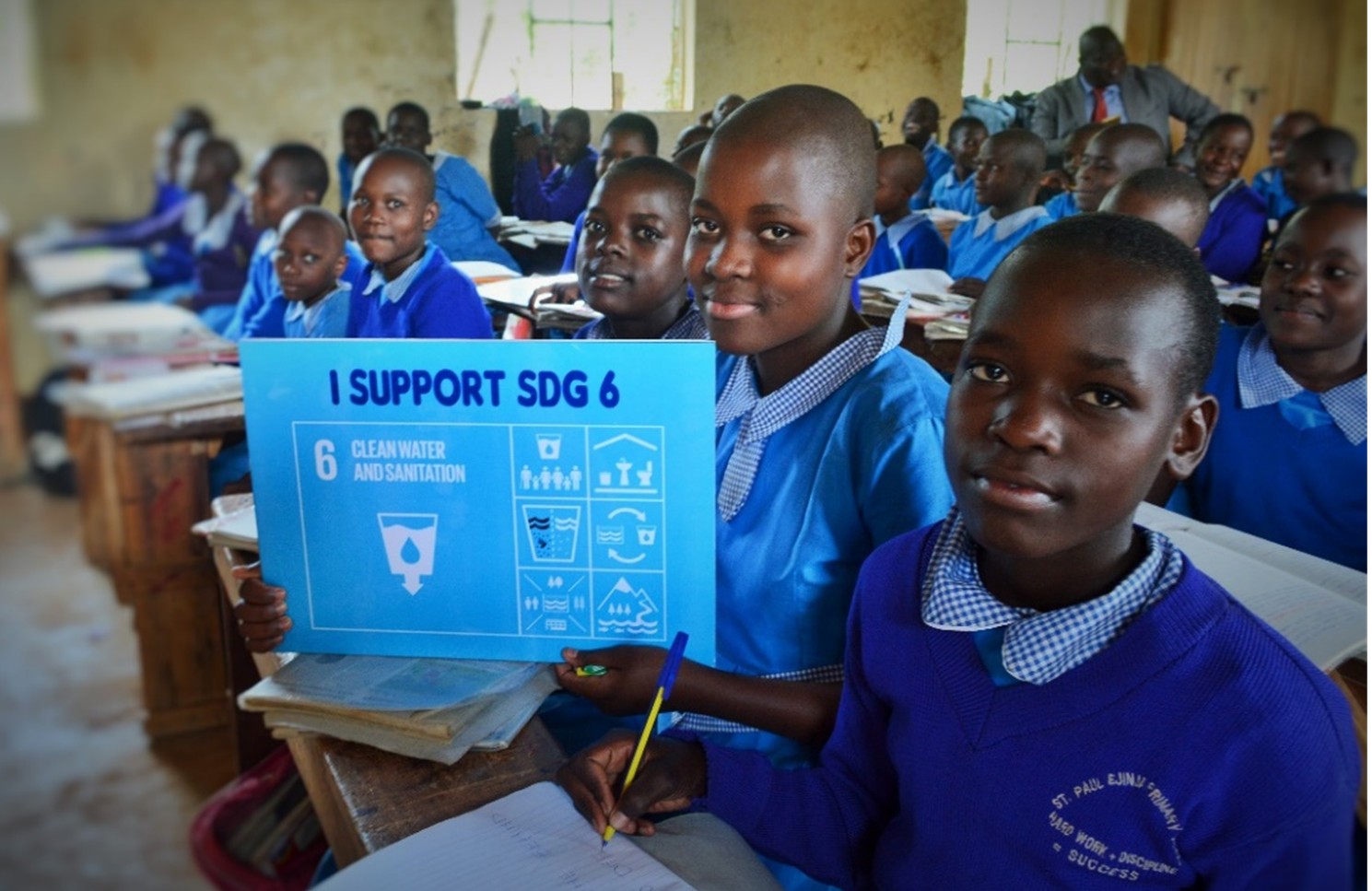
The revolution begins small. For Jeruto, it started with the hum of a drilling rig. Just metres from her school gate, the Lake Victoria North Water Works Development Agency (LVNWWDA) sunk a borehole. Water surged from the ground, and with it, time, safety, and dignity returned to her life.
The 3 hours she once lost on the road became minutes. Within a year, girls’ local schools’ attendance had risen by nearly 30 percent.
For Joel Wamalwa, the agency’s CEO, this borehole was not just a piece of engineering. It was a revelation.
“Water unlocks education, strengthens health, reduces risks of violence, and frees women’s time for work and enterprise,” he says. “When women are included in planning and leadership, water systems become not only more equitable but more sustainable.”
Water, he insists, is not only a service. It is a multiplier.

The Paradox of Exclusion
And yet, Joel has spent much of his career staring at a contradiction that borders on absurd. Women carry the heaviest weight of water scarcity rationing supplies, absorbing the stress of breakdowns, managing survival when systems fail. They are the first to wake, the last to sleep, the ones who walk the farthest.
But when utilities gather to make decisions on staffing, on budgets, on infrastructure women are almost invisible.
“We made choices about them without them,” he says quietly. “That was not only unjust. It was inefficient.”
The numbers from Mckinsey back him up. Utilities with gender-diverse leadership are 21 per cent more profitable. Boards with women deliver up to 95 per cent higher returns. For Joel, the conclusion is obvious: “Equity is not compliance. It’s not tokenism. It’s strategy.”
Changing the Rules of the Institution
But strategy meant nothing without rewriting the rules.
“We couldn’t just have a gender policy sitting on a shelf,” Joel explains. “We had to re-engineer how we recruit, how we promote, how we govern, how we budget.”
So they began. Recruitment drives reserved positions for women in science and engineering. Flexible hours and lactation rooms made it possible for mothers to remain in the workforce. Mentorship schemes paired young women with senior engineers. Budgets included equity lines. Gender data was tracked, measured, reported.
The change was unmistakable. More women entered technical roles. More advanced into leadership. The culture bent toward inclusion and stayed there.
Board-Level Accountability
Culture can shift, but unless governance holds it in place, it slips back. For John, Chairman of LVNWWDA’s board, that was the fight worth picking.
“For too long, equity was treated like a side agenda,” he says. “Something you ticked off once a year in a compliance report. I wanted to change that. Our job as a Board is to make equity impossible to ignore.”
And they did. Gender equity became a standing item at every governance meeting. Gender targets were tied directly to the CEO’s appraisal. Fail them, and leadership itself was in question.
“The moment we treated equity like a KPI, donors and other partners looked at us differently,” John recalls. “They saw we weren’t paying lip service. We were backing it with accountability and data.”
From Policy to Practice
Policies look impressive on paper. They win applause at conferences, get bound in glossy covers, and gather dust on office shelves. As Eng. Simon Thuo, co-lead of the SISTARS Project, insists: “Policies on their own don’t change lives.”
Subsequently, he and his team flipped the script. They began, not with diagrams or policy briefs, but with questions that cut straight to lived reality: Who collects the water? Who decides how it’s used? Who bears the risks?
Almost always, the answer was women.
And when that truth was acknowledged, the design changed. Women were no longer token names on committees. They became operators, trained to repair pumps, trusted to manage water points, equipped to lead.
“When women fix pumps, they don’t just fix infrastructure,” Eng.Simon says. “They change perceptions. Girls see role models. Families see daughters differently. Communities see women as technical experts. And the system itself becomes more resilient because when women are part of the solution, they sustain it.”
The outcomes were undeniable: girls’ attendance up by 28 per cent. Fifteen women trained as operators now manage more than 40 water points. Maintenance costs down by 23 per cent. Gender-based violence cases at water points cut by 67 per cent. Equity was resilience.

Overcoming Resistance
Revolutions rarely arrive without friction. Each leader met resistance in the workplace, in the community, in the policy arena.
For Joel, colleagues scoffed. “Some asked why we were giving women ‘special treatment’ with flexible hours or lactation rooms,” he recalls. “But these aren’t favours. They are investments. Retention went up. Knowledge stayed in the institution. Once we showed the data, the doubts collapsed. The numbers did the talking.”
Eng.Simon faced cultural resistance in the field. Men laughed at the idea of women as plumbers. Until the very women they mocked fixed pumps in record time. Respect replaced ridicule. With visible male allies standing beside them, women’s competence silenced the stereotype.
At boardrooms and ministry meetings, John ran into sceptics who waved gender aside. “‘Why focus on equity when our mandate is water?’ they asked. We reframed it: gender isn’t a distraction, it’s competitiveness. Inclusive systems consistently delivered lower maintenance costs, reduced conflict, and stronger community ownership. That’s what consumers, donors and governments need.”
Pushback turned to proof. Resistance to respect. Doubt into conviction.
From Pilot to National Standard
The borehole outside Jeruto’s school was never meant to stand alone. From the beginning, LVNWWDA and SISTARS knew it had to be more than a local story.
“Our ambition was never just one agency,” Joel says. “When we saw girls going back to school, women repairing pumps, and costs going down, we knew this was bigger. Our goal is sector-wide gender balance in technical and leadership roles. That means pipelines of talent, not isolated projects.”
John agrees, “This cannot succeed on the shoulders of a few champions. It must be a coordinated movement. Every utility, every board, every county pulling in the same direction. Otherwise, progress is fragile.”
Momentum is building. The Principal Secretary for Water, Julius Korir has endorsed LVNWWDA’s efforts. Other state corporations and county governments are adopting it.
“Scale doesn’t happen automatically,” Eng.Simon cautions. “You prove the model, then you institutionalise it. You train, you mentor, you fund. Sustained financing and clear technical guidelines are what ensure equity is embedded permanently into the system. That’s what makes it last.”
Global Lessons for Leaders
Kenya’s experience is more than a national case study. It is a mirror for leaders everywhere who are trying and often failing to turn equity from rhetoric into reality. The lessons are not abstract. They are clear, hard, and transferable.
- Make it measurable: At LVNWWDA, gender targets are tied to the CEO’s appraisal. Miss them, and leadership itself is in question.
- Fund it: Budgets are where promises either live or die. Without dedicated resources, equity is always the first to be cut.
- Design it in: 60 per cent of water user committee seats were reserved for women, and technical training slots were allocated with gender balance in mind.
- Champion it: Male allies create space. Women leaders fill it. Both matter.
- Prove it. Gender inclusive systems in Kenya reduced Gender Based Violence cases by 67 per cent and cut costs by almost a quarter, while boosting school attendance by nearly a third. Equity is strategy.
As John puts it: “If equity is not in your board papers, it is not in your institution. And if it’s not in your institution, it won’t show up in your impact.”
Equity as Infrastructure
Back in Busia, Jeruto arrives at school on time. For her, the borehole outside the school gate is not just a tap. It is liberation.
But the real story lies upstream: a CEO who rewrote how people are hired and supported; a board chairman who welded gender equity into governance; an engineer who placed women at the very heart of operations.
Together, they have demonstrated something both simple and radical; equity is not tokenism. It is infrastructure. It is the hidden architecture that sustains resilience, strengthens institutions, and unlocks futures.
And if we are serious about water, about climate, about education, about systems that last; then equity must flow through the foundations.
That is where revolutions begin.

 Rural Water Supply Network - blog