Lessons from the RWSN webinars

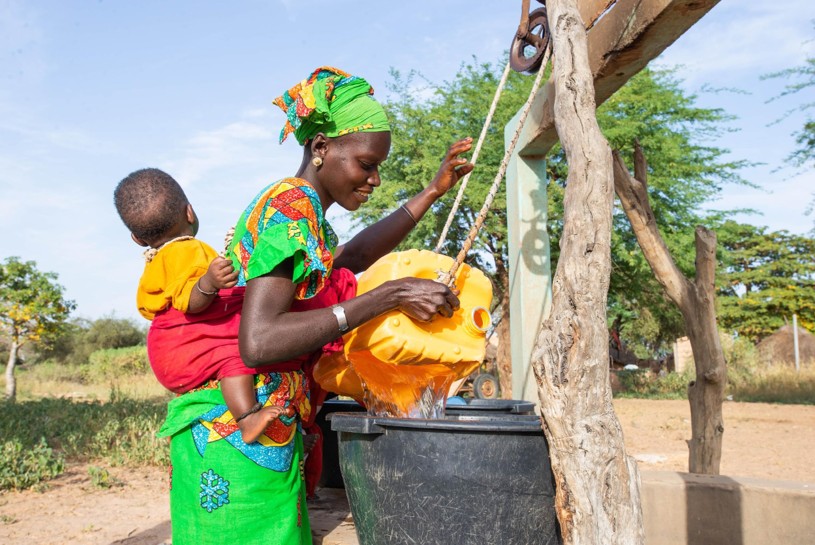
Guest blog by Rebecca Laes-Kushner. Featured photo from RWSN webinar presentation on 29.4.25 (What Drives the Performance of Rural Piped Water Supply Facilities?) by Babacar Gueye from GRET Senegal.

Professionalism. Standards. Systems. These themes are repeated throughout Rural Water Supply Network’s (RWSN) spring and fall 2025 webinar series.

Given the large percentage of boreholes with early failure – within one to two years – improvements in standards and professionalism in borehole drilling are necessary. Drilling association leaders spoke passionately about the need for borehole drillers to professionalize to improve the quality of boreholes, increase accountability, stop illegal drilling and enhance community buy-in, which occurs when standards are enforced and certified materials are used.

George k’Ouma, from the Small Scale Drillers Association of Kenya, said it best: Professionalism isn’t optional.

A tidbit: Small borehole drillers have an advantage over large operations because they have knowledge of the local geology and seasonal changes, which enables better planning and materials selection.

Another area in need of increased professionalism is water management. Professor Kwabena Nyarko, from Kwame Nkrumah University of Science and Technology, Kumasi (KNUST), conducted a study comparing public sector, private sector and community water management in Ghana. Model type was less important than having professional standards and following best practices, including metering, tariffs that covered maintenance costs, efficient collection of tariffs, audits and reporting, digital recordkeeping and training, as well as financial support.

Jose Kobashikawa, head of the Enforcement Directorate for Sunass, the regulatory body for drinking water and sanitation services in Peru, echoed these concepts in his presentation. SUNASS uses a benchmarking tool to evaluate rural providers. Metrics include formality and management (are they registered, do they have a water use license), financial sustainability (do they collect tariffs, what percent of customers are defaulters), and quality of services (is water chlorinated and daily hours of water supply). High performing providers are awarded certificates recognizing their good practices in public management and workshops are held in each region to disseminate best practices.

Focusing on systems is another thread that runs through the varied webinar topics. Systems thinking means designing a scheme for the long-term provision of water. Boreholes must be properly sited. Appropriate materials, such as high quality stainless steel (304/316), need to be selected in order to prevent corrosion, as RWSN’s Stop the Rot initiative details. Handpumps often corrode within months or years instead of lasting a decade. Ayebale Ared, Technical and Social Expert at Welthungerhilfe, shared Uganda’s systemic solution: in 2016 the country banned the use of galvanized iron (GI) risers and rods in all new and rehabilitated handpumps – the first sub-Saharan country to do so. Uganda also requires a water quality analysis be done before materials are selected.

In addition, data collection and use must be embedded in all stages and aspects of water projects.. Dr. Callist Tindimugaya, Commissioner for Water Resources Planning and Regulation in Uganda, collects data from drillers which he then turns into groundwater maps the drillers can then use.

Systems thinking also means including the needs of the entire population in the design, especially women,  who bear the burden of hauling and carrying water. Women – who are killed by crocodiles while washing clothes in rivers, whose skin is irritated by harsh detergents, who find leaning over low wash basins harder as they age, who need to wash bloody clothes and bedsheets separately from the family’s regular laundry when they menstruate. Laundry is barely mentioned in WASH circles but RWSN devoted an entire webinar to the topic. One speaker questioned how the WASH sector would be different if the metric for success was the amount of time women spend collecting water.

Understanding the local culture is critical; psychologists, behaviorists and sociologists can help provide insights. Technical solutions which aren’t accepted by the community will only lead to failure.

The lack of funds to cover maintenance work on wells is well known. Systems thinking means anticipating root causes of funding issues in a community and pre-emptively building a system that attempts to solve those issues. Tariffs are too low to cover maintenance? Then the project needs to determine how sufficient funds will be raised, whether through higher water fees (that may be less affordable to low-income families) or from external sources. The water committee is inefficient at collecting funds? Then training and capacity building need to be part of the project design from the beginning. 

Looking at the bigger picture helps creative ideas flourish: Household rainwater harvesting, replenishing water aquifers through tube recharging, deep bed farming that breaks up the hard pan so water can return to the aquifer, sand dams that filter water and incorporating water management and regreening in the design and construction of roads so crops can grow next to roads. During the laundry webinar, three organizations presented their laundry solutions – devices that save women time, eliminate much of the manual labor, use less water and even offer income-generating opportunities.

The webinars are at times frustrating because we clearly know what needs to be done – yet professionalism, systems thinking and best practices are not always prevalent. More often, though, the webinars are full of insightful information and inspiring stores from experts. The knowledgeable participants, who ask focused, detailed questions, enhance the experience. I look forward to the spring 2026 webinars which are currently being planned.


Rebecca Laes-Kushner is a consultant to NGOs and companies with a social mission, with a particular focus on development issues such as WASH, climate change, supporting SMEs, health care and nutrition. Laes-Kushner Consulting (https://laeskushner.net/) provides research and writing, data analysis, M&E and training services. Rebecca has a Master’s in Public Administration (USA) and a Certificate of Advanced Studies in Development and Cooperation from ETH NADEL in Switzerland.

New Book: Dispelling Myths About Water Services

by Tapio S. Katko, Jarmo J. Hukka, Petri S. Juuti, Riikka P. Juuti and Eric J. Nealer.

Illustrations: Pertti O. Väyrynen. Publisher: IWA Publishing, London.

Is bottled water better for you than tap water? Is the pollution created by wastewater treatment plants a major issue? Is privatisation the best solution for more efficient water use? These are just a few of the myths busted in Dispelling Myths About Water Services.

In any society, water and wastewater systems are of fundamental importance to the development of communities and the well-being of both people and the ecosystem. Unfortunately, this fact has been reinforced by the COVID-19 pandemic, by all manner of natural disasters, and by recent armed conflicts around the world. In such situations, clean water and sanitation are among the first things that need to be organised.

In this book, internationally renowned experts examine 21 common misconceptions regarding water supply and wastewater services, dispelling the myths by drawing on their global insights and avoiding technical jargon, while simultaneously raising questions of concern relating to water services.

Access to clean water and safe sanitation is essential for life. Without it, our time on this planet becomes dangerously short. People do not necessarily think about the challenges relating to water services, but the message is clear: to build sustainable water services, proper rules, accountable and responsive leadership, and well-informed stakeholders are vital, alongside resilient organisations and robust physical systems.

Originally published in Finnish, this English edition has been completely rewritten and includes examples and references from countries across the world. Original illustrations bring the content to life.

Whether you’re a water professional, policy maker, or environmental enthusiast, Dispelling Myths About Water Services helps sort the fact from the fiction regarding our most vital resource: water.

The book is freely available as an e-version: DOI: https://doi.org/10.2166/9781789064162 and a printed copy can be bought as well from the website for 20% off seasonal offer for the printed version by the code “DMAWS25”, Valid until 21st Dec 2025.

Remembering Erich Baumann, founder of RWSN (1944-2025)

Erich Bauman, the founder of RWSN, passed away in Ireland at the age of 81 after a brief illness. He was an imaginative and gifted water engineer and development practitioner with many years of hands-on field experience, mainly in Asia and Africa.

A pragmatic, out-of-the-box thinker and leading authority on the design, manufacture, and maintenance of handpumps in low-income countries, Erich was a forceful advocate for the community ownership and management of small-scale water schemes and an indefatigable trainer of government engineers and village-level operatives.

Erich was born and grew up in Switzerland. After graduating as a mechanical engineer, he began his career designing tractors, but the 1970s were a bad time for the industry and many factories, including his, closed. So, in 1979, he moved to Bangladesh where he began work at the Mirpur Agricultural Workshop and Training School (MAWTS) where his focus moved from tractors to expanding the manufacturing capacity of factories to produce and sell the simple rower-pump, which was ideal for low-cost irrigation. It was through this that he met Ken Gibbs (UNICEF) and Tim Journey (World Bank) who were working on improvements to direct-action handpumps for domestic water supply.

In 1984, Erich turned down a job at the World Bank to return to Switzerland and join SKAT, which was then an association affiliated with the University of St. Gallen. He rose to become Managing Director and navigated the organisation through the tricky transition of becoming an independent consulting company, SKAT Consulting Ltd, in 1997 and establishing Skat Foundation in 2002, before handing over the reins to Jürg Christen. His attention to detail and quality was applied to getting ISO 9000 accreditation in quality management within the organisation.

But perhaps Erich will be best remembered for his progressive management of two influential, global development networks: The Handpump Technology Network (HTN); and The Rural Water Supply Network (RWSN).

In 1992, in the wake of the 1981-1990 International Drinking Water Supply and Sanitation Decade (IDWSD) during which hand pumps had become the mainstay of rural water supply programmes, a meeting was organised by the donor community at Kakamega, Kenya. A global forum for the better coordination of hand pump development, manufacture, operation and maintenance was mooted and Erich was tasked with setting up a Secretariat for what was to become the Handpump Technology Network (HTN). It was to be funded by The Swiss agency for Development Cooperation (SDC) and based at Skat in St. Gallen, Switzerland.

After twelve years under Erich’s leadership and with the proven benefits of this coordinating technical network for everything related to hand pumps, the HTN mandate was broadened in 2004 to become the Rural Water Supply Network (RWSN) to more comprehensively support rural water supply initiatives from drilling and hand pumps to water quality testing and everything in between.

During his tenure, his achievements, which it is no exagerration to say have touched the lives of tens of millions of people and their everyday water access, included:

  • Supporting governments in multiple countries, including Ghana and Uganda to develop standardisation policies so that chaos of 10, 20, 30 different handpumps was rationalised to 2-3 so that supply chains and operation and maintance support become more sustainable.
  • With the CAD skills of Karl Erpf, developed comprehensive public domain blueprints for the most widespread handpumps, including the India Mark II/III, Afridev, Tara, Jibon, No.6, and Walimi, which have been used in the manufacture of many millions of handpumps across Africa and Asia.
  • Organising four global HTN/RWSN Forum conferences in India, Malawi, South Africa and Ghana
  • Raising the alarm about high rates of handpump failure and the causes that needed to be addressed.
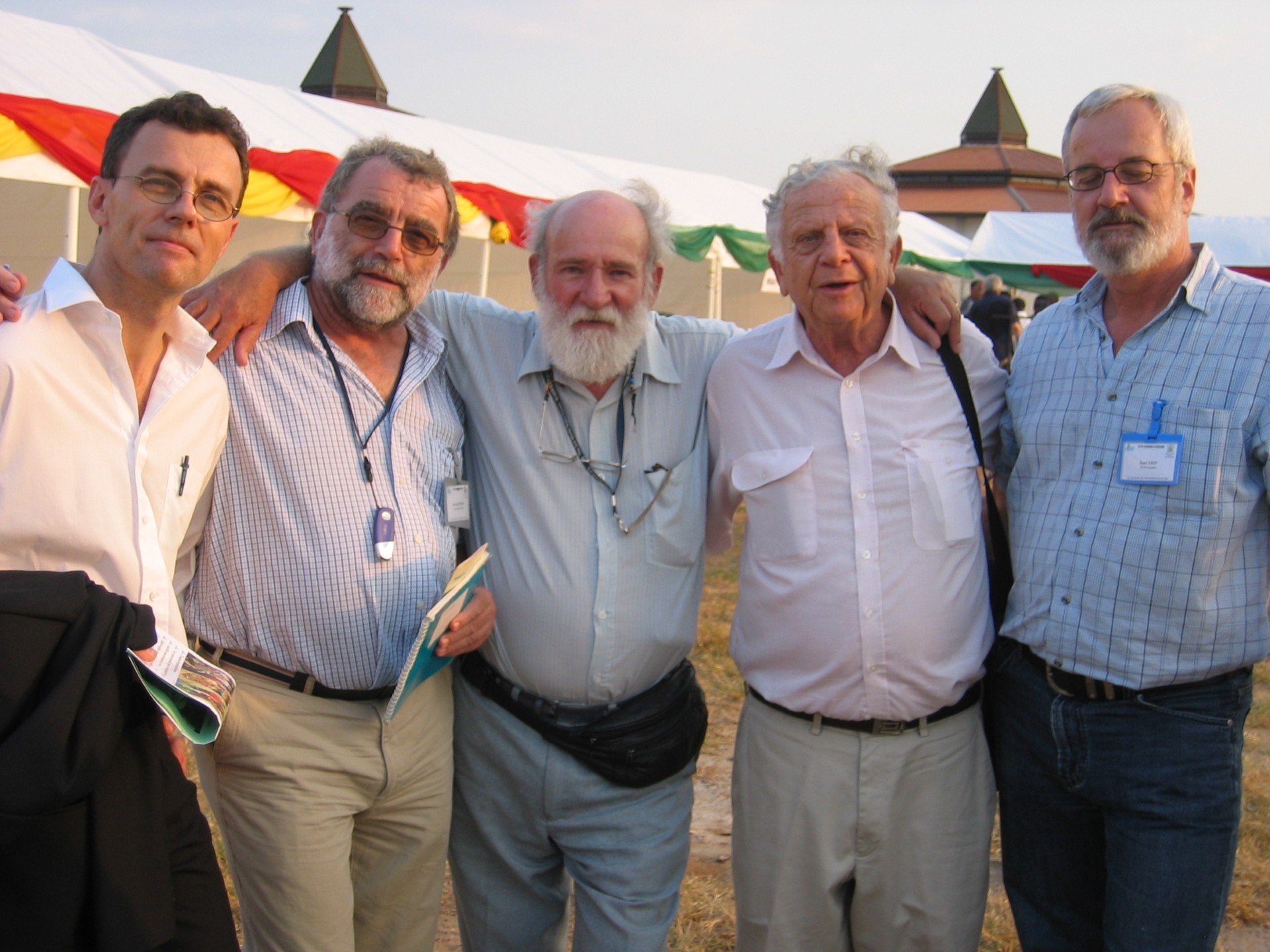
At the RWSN Forum Ghana (2005), from the left: Julian Jones, Erich Baumann, Peter Morgan, Peter Wurzel, Karl Erpf (photo from Peter Morgan)

Those of us who worked with Erich in the early years know that the HTN and its successor, the RWSN, would never have come into being, let alone thrived, without his passion, drive and commitment. His engagement with Network members, travels to participating programmes in far flung places, the training courses he ran and his precise documentation of the successes and failures of water projects around the world, reinforced belief in the worth of the RWSN, while his promotion of multi-year work plans  secured longer term funding and continuity in the running of the Network.

In 2009, after seventeen years, Erich handed over the reins of the Secretariat to Dr Kerstin Danert and retired to Ireland from where he maintained a watching brief over his RWSN brainchild, mentoring and encouraging his successor to grow the Network. Which she did, embracing drilling practice and bringing it mainstream.

Erich leading a handpump training course hosted by the Austrian Red Cross, Vienna, 2012 (Photo: S Furey)

Kerstin was succeeded in 2017 by the Network’s third and current Director, Sean Furey who has continued to build on Erich’s pioneering initiatives and Kerstin’s work while expanding the RWSN remit and enhancing its profile such that it is now recognised by donors, governments and sector professionals as the leading rural water supply forum globally – a vibrant network of some 17,000 members in 174 countries and bringing rural water supply know-how and technical solutions to quite literally, millions of poor communities. This then, is Erich’s legacy, and likely a long lasting one.

Erich was a humanist at heart; generous and self-effacing but dogged in the pursuit of a goal. Balancing the serious business of rural development with his own wry brand of humour was a welcome asset when accompanying him on contentious field missions or when engaged in difficult negotiations with partners.

Erich was a much-valued mentor to many water wallahs around the world and a great friend to those who were lucky enough to know him. He was a one off. Irreplaceable.

RIP Erich and thank you for what you did in the time that you had, mostly for others.

By Rupert Talbot (UNICEF WES; India, Sri Lanka, Ethiopia (1970 -2003), HTN Chair, 1996-2003) with contributions from Dr Peter Wurzel (UNICEF, HTN Chair, 1992-1996); Jürg Christen (former Managing Director, Skat Consulting Ltd.); Dr Peter Morgan; Dr Kerstin Danert (Ask for Water Ltd. RWSN Director, 2009-2017); Sean Furey (Skat Foundation, RWSN Director, 2017-present).

Main photo from Dr Peter Wurzel