THE INTERSECTION OF WASH AND GENDER

Blog by Euphresia Luseka, co-lead of the RWSN Leave No-one Behind theme.

“Gender equality is a fundamental human right and an obvious question of equity and fairness. But it is also a necessary foundation for sustainable development and a peaceful, prosperous world.”
– Beate Trankmann, UNDP Resident Representative

However, the intersection of WASH reveals profound challenges that hinder the potential of women and girls in achieving equitable and sustainable development, within the realms of WASH. Cecilia Sharp, UNICEF Director of WASH and CEED, explains this by informing that “unsafe water, toilets, and handwashing at home robs girls of their potential, compromises their well-being, and perpetuates cycles of poverty.” She added, “responding to girls’ needs in the design and implementation of WASH programmes is critical to reaching universal access to WASH and achieving gender equality and empowerment.”

Since the emergence of gendered thinking in WASH in 1970s, the dialogue surrounding gender equity has evolved including a dedicated  SDG 5 that envisions a world where gender equality is achieved and all women and girls are empowered. It targets the eradication of discrimination and violence against women, child marriage and female genital mutilation, and the recognition of unpaid care work. Furthermore, it emphasizes the necessity for women’s participation in decision-making and access to sexual and reproductive health services.

Yet, five decades later, the promise of transformative models within policies and programs remains nascent.  This stagnation raises pressing questions about the efficacy of our current approaches and the urgency of progressive change.

The connection between WASH and gender equity remains tenuous.

This status is explained by the acknowledgement that while the importance of advancing WASH as a means to achieve SDG 5 is increasingly acknowledged in global discourse with even SDG 6.2 explicitly calling for paying special attention to the needs of women and girls, still a glaring omission persists: a lack of commonly agreed-upon indicators for the national and global monitoring of gender within WASH initiatives. This absence underscores a systemic failure that perpetuates gender inequalities, inhibiting the realization of SDG 6 targets.

Water Scarcity and Gender Inequality: Exploring the Hidden Costs of a Thirsty World

The intersection of WASH and gender unveils unique challenges that disproportionately burden women and girls. As demonstrated on Graph 2 below, Research reveals that when water sources are not easily accessible, women and girls aged 15 and older assume the primary responsibility for water collection in 70% of households—an alarming statistic that starkly contrasts with the 30% of households where men share this burden. This reality not only highlights the entrenched gender roles but also raises critical questions about the time and energy expended by women and girls, which could otherwise be invested in education, employment, or health.

Compared to men, women experience many negative WASH-related health outcomes, some of which have been disaggregated. Dr. Maria Neira, Director of the WHO’s Environment, Climate Change, and Health Department, informs, “Women and girls not only face WASH-related infectious diseases, like diarrhoea and acute respiratory infections, they face additional health risks because they are vulnerable to harassment, violence, and injury when they have to go outside the home to haul water or just to use the toilet.”  They also account for a higher number of disabilities adjusted life years (DALYs) caused by inadequate hygiene.

Graph 2 Average time spent collecting water by women, girls and boys, by country, selected surveys, 2012-2022 Source UNICEF and WHO, 2023

The gravity of these issues is further compounded by the fact that contaminated drinking water and poor sanitation can have dire consequences for maternal health, including complications during pregnancy and an increased incidence of reproductive tract infections. Despite the wealth of existing studies on health inequities related to WASH, there exists a significant research gap regarding the specific impacts of drinking water access on gender disparities. While some investigations have touched upon the broader issues of water fetching, sanitation, and sexual violence, the social, educational, and economic ramifications of inadequate access to safe drinking water for women remain largely underexplored.

This multifaceted vulnerability contributes to a staggering increase in mortality rates among women and girls.

Brightening the Horizon: Positive Trends in Gender Recognition in WASH Initiatives

“In the landscape of gender recognition, a nuanced narrative unfolds—one that, while acknowledging persistent challenges, also celebrates the transformative strides women are making within the water sector.”

The forthcoming UN WWDR 2026 stands as a beacon of hope, poised to spotlight the remarkable achievements of women in this vital field. By illuminating their contributions and sharing success stories, the report shall aim not just to honour past accomplishments but to ignite inspiration in future generations of women aspiring to carve out their own paths in WASH careers. This acknowledgment is not merely celebratory; it is a critical step toward fostering gender equity in a sector that has historically marginalized female voices.

Each March annually heralds the convening of the United Nations Commission on the Status of Women (CSW), a platform designed to evaluate the progress made since the Beijing Declaration and Platform for Action. Despite the stark realities of slow advancement in gender and WASH, some nations have emerged as exemplars of progress.

Senegal, for instance, has shown remarkable strides between 2015 and 2020, as highlighted in the 2022 SDG Gender Index by Equal Measures 2030. They improved on undernourishment (SDG2) and drinking water (SDG6). The Senegalese government, since adopting the Beijing Declaration, has actively championed gender equality. The introduction of a parity law for elected institutions in 2010 has positioned Senegal as a global leader, boasting one of the highest proportions of women parliamentarians in West Africa. This progressive move places Senegal fourth in Africa concerning gender parity in its legislative assembly. Complementing these efforts, the government has ratified several international conventions to bolster women’s rights and developed a National Strategy for Gender Equity (SNEEG 2016-2026), to ensure equitable participation of both genders in decision-making and access to resources.

Such positive trends in gender recognition in WASH, have spilled into the political arena particularly women’s activism; Hon. Anne Désirée Ouloto—dubbed ‘Maman Bulldozer’ lead transformative efforts in WASH initiatives in Côte d’Ivoire. Presiding over a monumental US$1.2 billion investment in sanitation and drainage in Greater Abidjan, her work exemplifies the profound impact of female leadership in WASH sector.

The landscape of advocacy and legal rights protecting women in WASH is also evolving. In Kenya, alongside legislators and WASH CSOs’, I have led concerted efforts to address the pernicious issue of sextortion in the water sector. Such advocacy is not only a legal necessity but a moral imperative, critical to achieving SDG5 on gender equality and SDG16.6 on accountable governance.

Moreover, Women are not just participating but breaking barriers, challenging norms and stepping into leadership roles, shaping policies, and driving change by making their voice heard. Indonesia’s Retno Marsudi, who serves as the first UN Special Envoy on Water, exemplifies the vital role women play in global discourse on water issues.
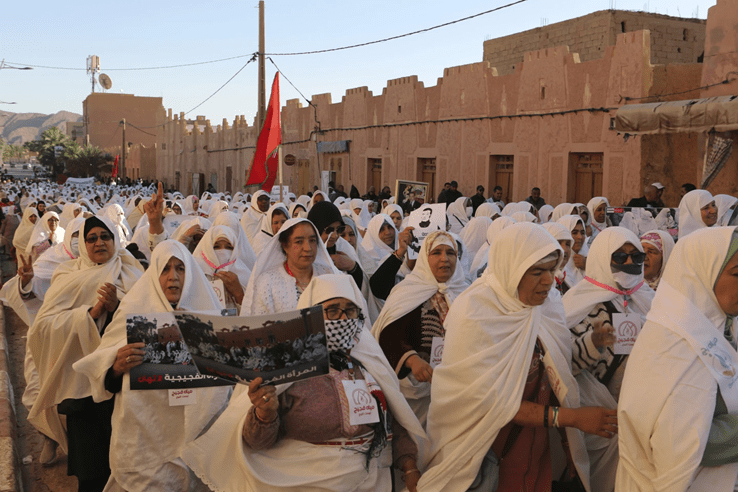
EMPOWERING PROGRESS: THE UN WWDR 2026 REPORT ELEVATES GENDER AND WATER DISCOURSE

Featured photo: March 2024, Women in Figuig, Eastern Morocco marching during the biweekly protests against water privatisation. Source AP News.

Blog by Euphresia Luseka, co-lead of the RWSN Leave No-one Behind theme.

As the waves of time crash upon the shore of progress, a mighty force is rising. These waves carry the strength of female leaders, revolutionising the Water Sanitation and Hygiene (WASH) sector. To mark another milestone in the pursuit of a sustainable future, the upcoming United Nations World Water Development Report (UN WWDR 2026), will shine a spotlight on a critical yet oft-overlooked aspect of the global water crisis: the inextricable link between gender and water, illuminating a path towards a more sustainable and equitable future. UNWWDR 2026 is not merely an echo of problems, but an inspiring melody of change, empowerment, and sustainable future.

It is not just about women being disproportionately affected by lack of safe WASH access and representation in its management, but it is also about recognising the power of women as managers and catalysts for change in the WASH sector. From the pioneers in Indonesia like Retno Marsudi, UN 1st Special Envoy on Water, the indigenous Mexican women water stewards using ancient techniques passing them down to generations to preserve water in the drought-prone Oaxaca region to the relentless Figuig women of Morocco who marched in protest for several months to amplify water rights voices against water privatization and the ‘humming bird’ Nobel laureate Wangari Maathai from my country Kenya, on water catchment protection efforts, all serve as a powerful reminder that one person can create waves of change.

Water and Economic Poverty: How the Global Water Crisis Disproportionately Affects Women

The global water crisis is a crisis of inequalities disproportionately affecting women.

As we celebrate these and more trailblazing women in water leaders, the world inches closer to the 2030 deadline for achieving the Sustainable Development Goals (SDGs) with women still left behind. The United Nations’ Global Analysis and Assessment of Sanitation and Drinking Water (GLAAS) 2019 report reveals that a staggering 78% of countries have incorporated specific policies or strategies to promote gender equality in water and sanitation. On the other hand, the International Decade for Action (2018-2028) calls to address gender disparities in WASH access.

Alongside the progress, we also confront persistent gaps. Gaps that threaten to undermine our hard-won achievements, forming a path that recognizes the interconnected nature of WASH-related challenges and the need for inclusive solutions.

Terms like sex and gender may seem straightforward but their nuances hold profound implications for how we perceive and address WASH and gender issues. UNICEF defines Sex as the biological and physical differences between women and men while Gender as socially constructed differences in attributes and opportunities associated with being a woman, man, girl, or boy and to the social interactions and relations between women and men. Woman refers to biological females according to UNOHCR. In my view this affirms the gap in the context of WASH statistics where WASH data is often disaggregated by sex, but rarely disaggregated by gender.

Imagine a world where the simple act of accessing safe WASH does not dictate one’s ability to attend school, earn an income, or live a life free from danger. A world where our mothers, sisters, and daughters are not disproportionately burdened with the responsibility of fetching water, but are empowered managers and change agents in WASH initiatives. For more than two billion people around the globe, particularly women and girls, this is a distant reality. The latest stark metrics reveal a concerning reality: despite progress, millions of women and girls worldwide still lack access to safe WASH services, hindering their empowerment, health, and economic opportunities. This world, although still a distant reality, is one we must strive for, beginning with a deep understanding of the water-gender nexus.

Women are 2.5 times more likely to be responsible for water collection, yet they hold only 17% of the paid jobs in the water sector as confirmed by a Women for Water Partnerships Report. UN Women adds another layer of concern revealing that in 2022 a quarter of women globally lacked access to safely managed drinking water, and two-fifths lacked access to secure sanitation.

The gendered impact of inadequate WASH access is not just a reflection of biological differences, but a manifestation of socially constructed disparities. It serves as a stark reminder that water is not just a women’s issue – it’s a human issue and Graph 1 below illustrates these realities.

Graph 1 Proportion of households in which women, men, girls and boys are primarily responsible for water collection, by country, selected surveys where at least 10% of households collect water, 2012–2022 (%) Source UNICEF and WHO, 2023

UN Water’s dictum concurs and aptly captures that “Water is a human right, not a privilege,” this blog series embodies a bold commitment to upholding the rights of all.

The upcoming UN WWDR for 2026, aims to bridge this chasm by placing gender equity at the heart of WASH management and sustainability discussions. It stands as a pivotal blueprint for understanding the critical nexus between water and gender, presenting an urgent call to action for policymakers, practitioners, and stakeholders dedicated to fostering an inclusive, equitable, and water-secure world. By weaving together, a rich narrative of data, case studies, and expert insights, the report shall transcend mere enumeration of challenges to celebrate the resilience and ingenuity of women who are at the forefront of change within the WASH sector. It shall compellingly argue that embedding gender equality and social inclusion into water policy and practice is not just a moral imperative but a pragmatic necessity for achieving all SDGs especially SDG 5 and 6. Statistical evidence revealing the extensive failures of undervaluing women’s expertise in WASH management will be juxtaposed with success stories of women-led interventions that have illuminated pathways towards peace, prosperity, and sustainability. As the report critically examines the barriers that women and girls face in accessing safe WASH, it shall highlight the detrimental impacts of gender disparities in decision-making roles, pushing the narrative beyond mere awareness to active transformation. With a focus on fostering gender-responsive approaches in the WASH sector, the UN WWDR 2026 shall serve not only as a repository of insightful analysis but as a clarion call for disruptive change, intended to inspire dialogue and galvanize global commitment towards a future where equitable access to safe WASH is a universal reality.

Sextortion in Kenya: water sector CSOs lead bring down the legislative hammer

Photo 1: Hon.Esther Passaris Tabling the Petition for Amending the Penal Code. Source, Euphresia Luseka

This blog is written by Euphresia Luseka, RWSN Leave No One Behind theme co-lead.

The mood in the room was palpable, Furaha’s eyes were welling up with tears, I felt something rising in my throat. “They threw my water jerrycan away, held me tightly and raped me, taking rounds on me, I screamed but no one heard until I passed out, they then left me for dead and disappeared.” She got consciousness at the hospital.

Strongly appealing to the Government of Kenya Public Petitions Committee at Senate house, Hon.Esther Passaris argued, “Daily, women and girls in Kenya are coerced into sex for basic necessities such as water, employment, education or food. We must redefine sextortion in our laws, providing clear penalties, support systems for victims and measures for accountability to eradicate this blight in our society.”

In many countries, such pervasive incidents are hard to prosecute, partly due to the nature of existing legislation. Nevertheless, activists are relentlessly pressuring authorities by raising awareness on legal protection against sextortion.

Passaris, Women Representative, Nairobi City, has been at the forefront in sextortion solutioning with water sector actors. She tabled to Kenya Parliament a petition for debate; urging amendments to Kenya’s Penal Code to specifically include sextortion as a criminal offense. This legal tool lays details to fight against sexual exploitation in response to instances reported in the Water sector backed by research evidence and increasing lobbying championed by Sareen Malik, Executive Secretary African Civil Society Network for Water and Sanitation (ANEW) and Shivaji Malesi, CEO Kenya Water and Sanitation Network (KEWASNET).

Her petition has gained support from fellow legislators recognising need for stronger legal protection for women and girls.

“It’s a missed opportunity that this was not included in the initial Sexual Offences Bill,” further support came from Member of Parliament (MP) Hon.Jayne Wanjiru, criticising slow progress of protecting women’s integrity in corporate realms.

Sextortion in Kenya Water Sector Hits Tipping Point

Sex is a currency for accessing safe water in Kenya.

World Bank and Kenya Demographic and Health Survey Program confirm 60%-93% of slum households are dependent on informal urban water vendors for their water supply where public utilities fail to deliver. They not only charge high prices, sell low-quality water but also perform unfair water transactions to consumers especially women and girls.

Activists say that this leaves consumers vulnerable to harassment, sexual assault, or abuse. Water fetching is costing time and trauma.

“The tariff is unfair. Most water vendors are male. Sometimes they hike prices intentionally for not submitting to their advances. I am forced to pay more money given the limited options of water sources. They gang up with other men to spank and body shame women who deny them and it’s violating. During overcrowding they rub themselves on us,” Rosemary a Katwekera, Kenya dweller narrates painfully.

Indeed the  Water Governance Facility report  confirms that women may feel pressured to flirt or ‘play along’ with utility workers out of fear of having their connection cut off.

At a crowded water kiosk at Mukuru Kwa Reuben, Melissa affirms the report’s views, “Water is priceless in the ghetto especially during shortages. It is astonishing to see the lengths residents go to fetch leading to STDs, Early marriages and pregnancies. Even boys are affected. Women contract small boys to help them fetch water and sometimes pay them with sex.” Some would say it is the struggle for survival, but it is a normalization of a vice that is eating up our community.”

The price of a basic human right is high. They demand more than just money.

This is rape.

Photo 2: Consumers at Korogocho slum queue for water, Source, Euphresia Luseka

Naming and Shaming Sextortion to End it

Rebecca Root, IBA Southeast Asia Correspondentexplains that various forms of WASH related violence do exist: (a) Sexual violence (rape, assault, molestation, and inappropriate touching); (b) Psychological violence (harassment, sextortion, eve-baiting (public harassment of women by men), bullying or other actions that may cause fear, stressor shame; (c) Physical violence (beating or fighting leading to injury or death); (d) Sociocultural violence (social ostracism, discrimination, political marginalization or social norms that have negative impacts).

One of the most prevalent and silent forms of Water related violence and corruption is sextortion; defined by International Association of Women Judges as abuse of power to obtain a sexual benefit or advantage.

Malesi, informed “The local term for sextortion is ‘water for water’ which means sex for water. The vendors capitalize on socioeconomic vulnerabilities of women and girls to coerce them into sex for water while some women are forced to seduce vendors into sex for water.”

“It’s prevalent in all sectors, all regions, all countries. It affects women from all backgrounds,” details Marie Chêne, head of research and knowledge at Transparency International. She backs this with statistics from a Transparency International Research confirming in Latin America and the Caribbean, one in five people had either experienced sextortion or heard of someone who had. In Zimbabwe, 57% of women admitted being forced into sexual acts for jobs, medical care or schooling. In Jordan, Lebanon and Palestine, almost half of respondents said sextortion occurs occasionally.

Here in Kenya, over 40% of women  have experienced sextortion, finds the Kenya Demographic and Health Survey (KDHS) with Water sector recording an unprecedented number of women reporting being forced to sextortion further affirmed by a KEWASNET study; one out of ten women in Kenya’s informal settlements is a victim of sextortion.

This makes sex the main form of non-monetary bribes in Kenya’s water sector amid a deteriorating economy.

Still there is a Deafening Silence around Sextortion

Research that gathered sextortion voices on water access in Kenya, found out sextortion and sexual harassment was ‘a common phenomenon’ and ‘common knowledge to the residents.’

So why is little or no action taken against it?

Luz Nagle, Scholarship Officer of the IBA Human Rights Law Committee replies, “While many countries have legislation that covers transactional sex or sexual harassment, sextortion is unique in that it’s coercive and involves an abuse of power.” This is why there is still little or no action against it.

Kenya lawyers add the country ranks low on the UN gender inequality index; sextortion is difficult to prosecute as it is undefined in our existing legal framework, women cannot file a complaint and perpetrators cannot be held accountable. Low political will has further frustrated the efforts. Data is scanty with limited research and most victims and survivors do not report cases due to fear of reprisal following disclosure and unawareness on reporting mechanisms.

From personal experience, the fear of reprisal is what stops most people from reporting, there is no incentive for reporting corruption. They taint your image and stigmatise you instead. The justice system is too masculine and very few women leaders support you. Women and the poor suffer most from extortion, they earn the least yet pay the highest percentage of their income in bribes as affirmed by World Bank.

“There’s a lot of shame, social stigma, taboo linked with this kind of offense,” Marie said, adding that in some cases women are forced to marry an abuser or can be fined for adultery.

Measures to bring to light sextortion are desperately important as they are measures to curb the vice. According to Benazir Omotto of Umande Trust and other lobbyists the compounded effects of sex for water need strengthening of the community referral pathways and workplace ethics that links victims and survivors to appropriate support services including legal and financial support. CBOs like Polycom Development Project, Inua dada, Umande Trust have helped in compilation of the women and girls’ narrative as well as providing psycho-social support.

Still, Raising Awareness is not Enough

As Sareen works with water organizations to raise awareness on sextortion, she indicates the lack of belief and resistance to addressing the situation.  

“Sextortion is not only happening at the taps but also corporate environments in higher-income contexts. To tackle it, those affected, who are predominantly women, need to be empowered to report incidents, safeguards should be established and perpetrators must be deterred by penalties,” Nagle asserts.

Meaning, dialogue needs to be sustained around this sensitive issue, to find its way into policy, planning and budgeting to ensure that efforts against the vice are sustained.

For this to happen, Countries must treat Sextortion as they would Corruption.

“Corruption takes place because it’s quid pro quo, it’s abuse of power,” Nagle adds, highlighting that the only difference here is that sexual acts are exchanged instead of money.

Sextortion occurs at the intersection between corruption and sexual exploitation it tends to fall through the cracks and not get addressed by either,” guides Nancy Henry, Senior Advisor, IAWJ.

“When you do not have a name or do not recognize the practice, it is not measured, you do not collect statistics, you do not pass laws or think of strategies to address it including anti-corruption policies so it is invisible,” Marie Chêne, head of research and knowledge, Transparency International.

According to the IBA report ‘Sextortion: A crime of corruption and sexual exploitation’, published in 2020, anti-corruption laws fail to specifically focus on sexual favours and sexual offence laws don’t encompass the corruption component. This means the issue is often dismissed and considered consensual instead.

“Here in Kenya the law does not care because it sees anything other than screaming and fighting as consent,” Millicent a sexual assault survivor told Avaaz.

However, we have progress; the passage of Resolution 10/10 at 10th Conference of States Parties to the UN’s Convention Against Corruption is significant towards recognizing and addressing sexual corruption, including sextortion. It calls on states to raise awareness about the issue and take measures to prevent and prosecute sexual corruption effectively. It is a positive development that can help drive change and accountability in addressing sextortion at a global level. The Water Governance Facility offers a course on water integrity and gender covering sextortion to support authorities including judiciary with knowledge.

Victims petition Kenya legislators to change Law to provide penalties for Sextortion

Photo 3: Malesi making remarks during petitions handover, Source, Euphresia Luseka

Meanwhile, there are ongoing efforts to criminalise sextortion in other ways in Kenya. The Attorney General is under pressure for a bespoke legislation at national level that offers ‘clarity and consistency in defining sextortion and applicable sanctions, according to underlying requirements of the rule of law.

Sustaining the petition, MP Hon.Beatrice Elachi demanded broader implications of the amendment, “Sextortion challenges demand integrating changes across all relevant legislation to end the expectation of sexual favours for professional or personal advancement.”

“Sextortion is a significant infringement of human rights and obstacle to attaining SDG5 on gender equality, and SDG16.6 on accountable governance. By the end of 2024 we aim to have sextortion to be punishable by law in the penal code” Passaris said.

The petition has proposed amendments to the Penal Code, Section 4 and 146, CAP 63, 2024 of the Sexual Offences Act and any other relevant criminal laws.

“Sometimes it is men in positions of power harassing women and sometimes it is women harassing men, all gender need to fight sextortion,” said Hon. Caroli Omondi who took part in drafting the amendments.

This sextortion legal framework will enable adequate prosecution of sextortion cases, raise awareness, strengthen level of women’s participation and involvement in water decision-making structures; providing safe confidential and gender sensitive reporting mechanism that gives victims/survivors access to appropriate support to resources needed as well as empowering women and girls promoting a more just and equitable society for all.

African children submit demands to governments to be first and fast to firm up climate change action in the water sector

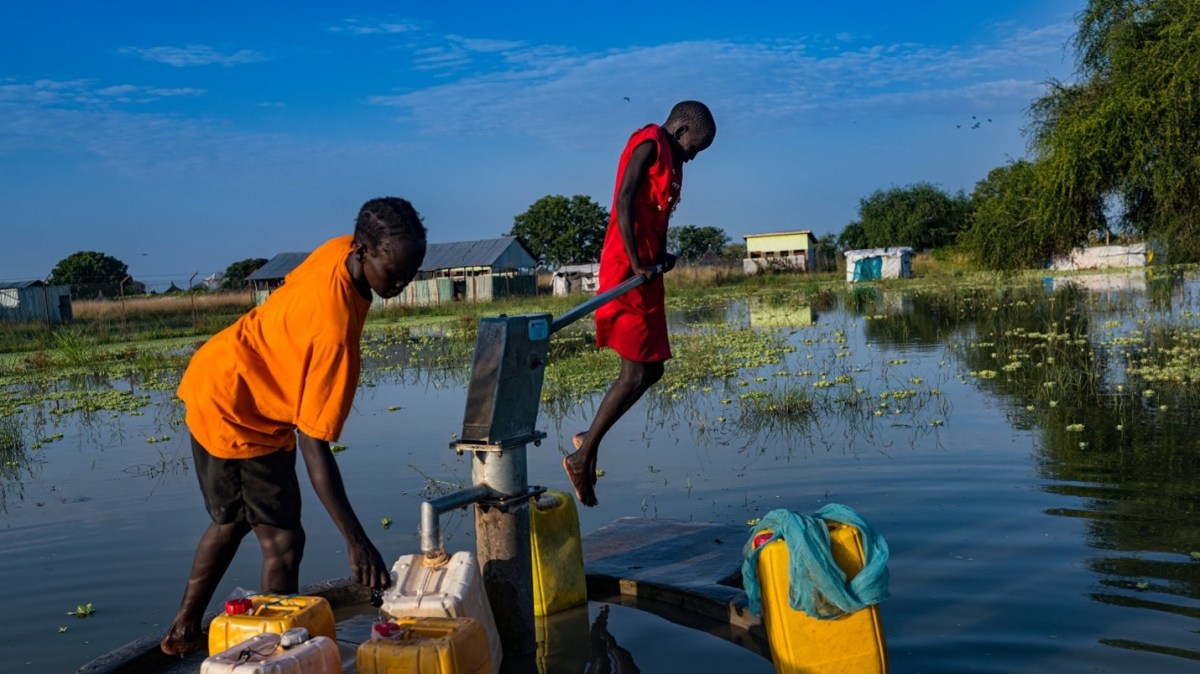
Feature image: Ajoh Majur, 12, uses her body weight to activate a handpump. South Sudan, Photo Credit: Lynsey Addario

Blog by Euphresia Luseka, RWSN Leave No-one Behind Theame Leader

The SDG’s commitment to ‘Leave No One Behind’ means acceleration efforts must focus on reaching the most vulnerable groups; this includes children.

 African children are born and grow in the climate crisis. 

“Present and future generations of children will bear the brunt of the intensifying effects of the climate crisis throughout their lifetime, these impacts are already occurring,” said UNICEF.

UNICEF estimates that one billion children globally are at “extremely high” risk of suffering from impacts of the climate crisis. The need for action has never been more urgent. The climate crisis is a children’s rights crisis.

Since the adoption of the United Nations Convention on Rights of the Child (UNCRC) in 1989, unprecedented gains have been made for children. However, the UN Intergovernmental Panel on Climate Change (2018), Special Report on Global Warming warns the progress risks undermining the escalating climate crisis, which poses an acute threat to children’s survival, development and well-being. 

Short-term Thinking as a Triple Threat of Water-Related Crisis is Endangering the Lives of Africa’s Children

On August 2023, the United Nations Committee on the Rights of the Child affirmed children’s right to a clean, healthy and sustainable environment under General Comment No. 26. During the 2023 Human Rights Council the United Nations High Commissioner for Human Rights Mr.Volker Türk, deplored that despite all the alarm bells going off, leaders were still not acting with the determination required and getting “stuck in the short term”. 

“If this is not a human rights issue, what is?”, he asked.

Africa is facing a water catastrophe. While the climate and water-related shocks are escalating globally, the risks compound most for children in Africa; 40% of Africa’s population was under 15 years old in 2022Children in 98 percent of African countries are at the highest risk from a convergence of three water-related threats: Inadequate water, sanitation, and hygiene; Its related diseases; and Climate hazards. This is most acute in the Central African Republic, Chad, Nigeria, Guinea, Somalia, and Guinea-Bissau making West and Central Africa one of the world’s most water-insecure and climate-impacted regions. 

Continue reading “African children submit demands to governments to be first and fast to firm up climate change action in the water sector”

Service Delivery Management Models, Good Political and Water Governance for Strong Rural Water Systems (3/3)

If the water sector is going to attain safe water for all then it should deliberately make efforts to move from pilots and projects to systems change and to scale and move from policy development to policy implementation. Potentially innovative finance should focus on funding rural water solutions in an environment with strong institutional frameworks to attain sustainable impact. Building upon the insights of the previous blog under the same title “Service Delivery Management Models, Good Political and Water Governance for Strong Rural Water Systems”, this blog explores the institutional reforms driving a resilient rural water sector. Learn about the significance of Kakamega County Rural Water and Sanitation Corporation (KACRWASCO) activities and other key strategies for achieving scale and long-term sustainability in rural water service provision.

Kakamega County Government Scales Sustainable Rural Water Service Delivery Models

If the water sector is going to attain safe water for all then it should deliberately make efforts move from pilots and projects to systems change and to scale and move from policy development to policy implementation.

In spite of significant investments in Kakamega County’s Rural water supply over the past years, that brought improved access rates, still the water service levels was a big challenge in the Year 2016. Two main challenges existed: (1) Inadequate deteriorating sources and dilapidated infrastructure to meet the demand of the increasing population and (2) Weak institutional capacity to manage the facilities viably.

According to the Kakamega County Water Supply and Urban Sewerage Strategic Plan, (2015-2019) the functionality rates in the county were un-known however 61% of the residents (urban and rural) used improved water sources. Rural water coverage was at 30% according to the Lake Victoria North Water Works Development Agency (LVNWWDA) reports. This meant that 70% of the rural population probably had access to un-improved sources attributing to the county’s slow pace in attaining Sustainable Development Goal 6 (SDG6) then. Despite the existence of the rural water supplies, almost 59% of the functional ones did not perform as per set standards due to lack of professional management.

Some of the institutional arrangements for rural water service delivery were in place however there was need to review the existing ones, to be in tandem with the current water sector devolution dispensation. Using a systemic approach lens it was widely concurred that the technical aspects were not the main constraint to improved water service delivery access rather weak management. Therefore, Sustainable Service Delivery Models emerged as one of the most critical areas to improve in order to respond to the county’s water crisis.

Establishing an Institutional Framework for Resilient Rural Water Management

The Constitution of Kenya 2010 (CoK) Article 43 recognizes that access to safe and sufficient water is a basic human right and assigns under the 4th Schedule the responsibility for water provision and resources management to the county governments in pursuant to article 185 (2), 186 (1) and 187 (2) of the County Governments Act 2012. Further, article 174 (f) of the Constitution provides that one of the objects of devolution is to promote social and economic development and the provision of easily accessible services throughout Kenya. The Water Act 2016 affirms this alongside the National Water Policy 2021 that was being drafted then with clauses on retaining cost recovery principles and ring fencing of the water sector revenue to ensure sustainability. However, the institutional framework for managing the water services delivery in rural areas was still unclear.

Focus on SDMs was fundamental to improving rural water supply sustainability and service levels as it focuses on long-term provision of water services at scale as opposed to the existing discrete one-off community projects. Therefore, a critical determinant of devolution success in Kenya’s Water sector will be how timely the county governments develop and manage resilient systems that are responsive and accountable to public needs. However, Kakamega County still lacked the overall capacity to develop and implement effective institutional framework for SDMs.

The impetus for implementing and scaling promising alternative Service Delivery Management Models from Organisations like SNV was eminent but Scale and Speed proved necessary towards Resilient Rural Water Supplies.

To address these challenges for long term sustainability, from a Systems approach it was imperative that not only should the Service Delivery Management Models be developed but they be anchored on an institutional framework. The USAID KIWASH Project WASH Governance interventions also entailed supporting County Governments systematically improve rural water service delivery through stimulating local government support and political commitment, budget allocations and financing for WASH. Subsequently, the Project’s activities in Kakamega county ambitiously aimed at supporting its County Government establish a legal County Rural Water Service Provider. 

The Approach and Process

Section 93 (1), (2) and (3) of the Water Act 2016 provides for Water Service Providers and County Governments to establish different water services delivery options. The County Executive Committee Member (CEC) in-charge of Kakamega Water Department directed adoption of Service Delivery Management options after a situational analysis report by USAID-KIWASH Project on status of targeted rural water supplies including a market research, willingness and ability to pay for water services and commercial viability. This was done concurrently with exchange visits to successful peer WSPs under various SDMs including Nakuru Rural Water and Sanitation Co. and Tachasis Water and Sanitation Company as part of lobbying and awareness creation for legislators to support the process.

  • Public Consultations and Handover of rural water projects:

The Water Act 2016, section 139 (1)-(6) requires a public consultation on intent to improve water services provision through SDMs. The CECM through the Kakamega County Assembly Legislators on the Water and Environment Committee held 12 public participation exercises across all the sub-counties and entered into negotiations and agreements with asset owners towards establishing a rural water services provider to manage rural service provision affirmed by Section 94 (2)(3).

The CECM with advice from director water services commissioned handing-over of targeted rural water supplies upon a situational assessment, viability analysis and agreed service delivery option. The director of water services provided a comprehensive inventory of all assets and liabilities: human resources, entire infrastructure (hardware and software) customer inventories, cash and bank balances and project history; all the assets and liabilities were evaluated at current values. Handing over tools included earlier registration documents, the deed of hand-over/surrender and Water services regulations.

  • Management Contracting, Licensing and Operationalisation:

The management model adopted was the Rural Water Service Provider as illustrated in Figure 2 below; the unserved area was large it was necessary to have an entity the county will ensure the right to water is met for the rural communities. USAID-KIWASH Project supported Kakamega County Department of Water to follow due process in forming the Rural WSP with institutional setup, planning and investments and monitoring and evaluation activities. This was important since Section 104 of the County Government Act provides that these plans shall be the basis for all budgeting and spending in the county. No public funds shall be appropriated without a planning framework developed by the county executive committee and approved by the county assembly. In consultation with WASREB Kakamega County Department of Water ensured that they meet all the requirements set out under section 77 (2), (3) and (4) of the Water Act 2016. The Kakamega County Rural Water and Sanitation Corporation Bill 2019 was developed and Kakamega County Rural Water Co (KACRWASCO) was registered as a rural water service provider as a public limited liability company and applied for a license including a proposed tariff from the national regulator (WASREB) to ensure compliance with requirements to keep them accountable and viable in their service provision area. Procedurally a new Management, Board of Directors and staff were acquired. Formation of County Rural WSP.

Figure 2 Illustrating SDM for Formation of County Rural WSP

  • Investment Planning, Financing and Coordination

Kakamega County Department of Water alongside USAID-KIWASH Project kicked off the process of development of operational policies and plans (County Water Strategies, Water Master Plans, Policies, Monitoring and Evaluation Frameworks, Procurement Guidelines, Consumer Engagement Strategy and CIDP) in accordance to Water Act,2016 Section 94. Additionally, Kakamega County Government allocated targeted subsidy to enable KACRWASCO to meet operation and maintenance costs and increase coverage to rural areas. They also partnered with various Organisations including the Private sector through Acacia Mining on a tripartite agreement to serve 15,000 people and DANCO on leasing of equipment including metres and HDPE pipes and state corporations including Water Sector Trust Fund and Lake Victoria North Water Works Development Agency (LVNWWDA) on financing water infrastructure like tanks, water kiosks and so on . Pursuant to section 94(3) of the Water Act 2016, the County Governments should develop water infrastructure which may be managed a WSPs. Subsequently the county government have invested US$3Million in both urban and rural water sector between 2016-2021.

KACRWASCO ring fences revenues to meet operational and maintenance costs and undertake service expansion against approved annual investment plans and budgets. National and County Government entities, departments, agencies coordinate in the development and provision of rural water services in the County through them. Non state entities consult and coordinate with KACRWASCO through County Government regarding development and provision of rural water services in the County.

  • Performance Monitoring and Reporting

KACRWASCO continues to ensure they provide accurate and verified monitoring and evaluation key performance data as set out by WASREB. The County Government sits in the BOD and inspects and monitor elements of water services delivery from the monthly status reports to undertake appropriate remedial measures to ensure effective service delivery.

 Moving Forward

The activities towards the establishment of KARWASCO resulted to increased Kakamega County’s rural water coverage from 30% to 57% between 2016-2021 with over 569,600 people accessing safely managed drinking water services and an additional 271,984 accessing basic drinking water services. County investments in the WASH sector were at US$26Million during the Financial Year 2016-2022.

When governments deliver services as per the needs of the people they serve, they can increase public satisfaction and reduce costs. New thinking is needed to deliver the benefits of rural water infrastructure investments to eliminate waste given the dwindling water sector funding. Cognizant of the essential central role that rural water supply systems play towards the progressive realization of the right to water and improving livelihoods to alleviate poverty amid limited Water sector funding, it is imperative that professionalization in management of these systems is adopted at scale with speed. Kakamega’s unfunctional rural water projects successfully increased their integration into formal markets, with closer relationships to WSPs like KACWASCO, counties and institutional actors.

Rural Water Sector Funding had consistently lagged investment needs to address system issues; however, when investment was directed towards well-executed projects that improved outcomes for the network crowding in by market actors increased. Better procurement and vendor contracting were two of the primary mid-term levers that supported small capital-expenditure projects make more efficient use of capital that improved water coverage.

WASH sector coordination through the Multistakeholder Kakamega County WASH Forum supported acquisition and equitable allocation of additional investments from the private sector, recoverable grants, growth in WSP revenues and 36 percent increase in county investments in WASH sector. The forum also supported lobbying and advocacy activities on citizen Right to Water and responsibility of both levels of government in ensuring they have access to safe water. They demanded their rights during 2017 national elections campaigns pushing politicians to include access to safe water in their manifestos that support measure their performance. After attending a social accountability briefing session on attaining SDG6 in Kakamega County organised by USAID-KIWASH Project in partnership with the Kakamega County DWENR the County coined a Clarion Call Amatsi Khumukuru a word in Luhya dialect meaning Water At The Doorstep. Such strong political will supported increase finance and equitable budget allocation for the water sector

Using a citizen-centric approach to delivering government services was helpful in creating ownership of processes and consumers taking responsibility in giving service feedback, paying water bills, reporting leaks, bursts, vandalism. WASREB has begun the process of disseminating the official guidelines for provision of water services in rural and underserved areas in Kenya. This marks WASREB’s first venture into regulation of services in the rural sector, it will significantly increase the uptake of the SDMs, establishing them as the first official guidance of formalizing water services provision in rural areas.

In closing this blog series, the significance of strong political and administrative governance, transformative partnerships, and adaptive strategies shines through in building a resilient rural water sector. Prioritizing safe water access for all and fostering collaboration pave the way for a sustainable water future, fostering prosperity and inclusivity. Thank you for joining this enlightening journey.

About the author:

Euphresia Luseka is a Water Governance Specialist and Co-Lead of RWSN Leave No-One Behind Theme. She is a seasoned Expert with experience in leadership, strategy development, partnerships and management in WASH sector nationally, regionally and internationally. She has specialised in WASH Public Policy, Business Development Support Strategies and Institutional Strengthening of urban and rural WASH Institutions. Euphresia has several publications and research work in her field.

Service Delivery Management Models, Good Political and Water Governance for Strong Rural Water Systems (2/3)

To unlock the economic potential and alleviate poverty in rural areas, access to improved water access crucial. Building upon the insights of the previous blog under the same title “Politics, Water Governance and Service Delivery Management Models for A Resilient Rural Water Sector”, this blog delves into the transformative power of adaptation and partnerships in addressing the challenges of the rural water sector. Discover how Kakamega County Government adopted Pilot Markets Based Water Service Delivery Management Models, its benefits and lessons.

Transforming Rural Water Management through Partnerships.

Between 2012-2015, SNV Kenya in partnership with Kenya Markets Trust and Adams Smith International designed a participatory action research based innovative programme; the Market Assistance Programme (MAP) that aimed at improving sustainability of rural and small towns’ water supply by engaging private firms. This project used the Making Markets Work for the Poor (M4P) concept in analysing and designing models for post-construction management of water systems.

By addressing capacity of both public and private actors (formal and informal), SNV concluded space for interventions taking a market systems approach could be successful. The approach in Kakamega County included: (1) Market Research on willingness and ability to pay by consumers (2) Commercial Viability Assessments for rural water supplies (3) Modelling Private Public Community Partnerships (PPCPs) and business planning for private firms (4) Procurement, negotiation and contracting of private firms (5) Orientation and capacity building for the lease operator and nurturing relationships (6) Consumer Awareness, (7) Strengthening National and County level evidence-based policy lobbying and advocacy.

Kakamega County selected the Lease Operator Model (Refer to Figure 1 below) where a Water Service Board (Lake Victoria North Water Service Board) engaged a Lease Contract with the main Water Service Provider (WSP) in Kakamega; Kakamega County Water and Sanitation Co. (KACWASCO). The national water regulator (WASREB) approved the framework for water tariff setting and enforcement, while taking into consideration affordability and cost recovery principles. The project created awareness on the pros and cons of adopting Public Private Community Partnership Management Model, oriented KACWASCO on possible business opportunities and models; and supported public authorities (WSB and Kakamega County Government) on participatory and transparent procurement process. KACWASCO provided water services under a licensing regime/revenue payment model in Navakholo Sub- County. KACWASCO was attracted by the potential of increasing their bottom line and public sector investments in infrastructure to strengthen overall profitability.

Figure 1 Illustrating the Lease Operator Model

Results

The facilitated interventions improved sustainability of water services in Navakholo. KACWASCO was able to increase access to water for 8,330 people in underserved and unserved areas of Navakholo by 2015, whilst greater oversight opened the possibility for the county government support to improve services, collect data on performance, and demand accountability from them. Other results included:

  • Improved Management of Navakholo Rural Water Supplies:

In rural areas, improving management practice of Water Management Committees is key to improving sustainability.

SNV facilitated: (1) legal transformation of the Water Management Committees to Water Users Association (WUAs) to separate governance and management roles, and (2) engagement of KACWASCO Lease Contract that enabled professionalized management towards demand responsive service provision.

  • Access to Finance for the Lease Operator: During the initial stages of implementing the Lease Contract, financing rehabilitation works to operationalise unfunctional systems was a key issue. If KACWASCO were to borrow from a commercial market (at a high interest rate of 18-21%) notwithstanding the risks, the water tariff had to be increased to ensure the water supplies are commercially viable which would be unaffordable for the poor. MAP designed a water-financing product, using blended subsidy concept, to enable WSPs access market finance.  

 It is worth noting that taking a market systems approach in the water sector is complicated given the public nature of water. A purely free-market approach was fraught with risks and could lead to inequitable access, meaning careful consideration had to be given to the role of the public sector. SNV first evaluated the rural water sector, highlighting potential for growth in services delivery. Whilst assets were publicly owned and activities regulated by WASREB, there was room for commercial incentives. Profits were generated through tariffs and connection/reconnection fees, creating potential for private sector investment that encouraged the uptake of the water financing product.

  •  Public Sector Capacity Strengthening: The PPP procurement is different from the traditional procurement of good and services, as the payment for the PPP’s is mainly made from the projected revenues of the water systems. A high level of trust, mutual commitment to set objectives and clearly defined incentives for KACWASCO was created.
  • Policy Advocacy and Support: The entire concept of PPCP and private sector participation was a relatively new concept in the rural water sector. Therefore, the project supported evidence-based policy advocacy and improvements at national and county levels; MAP supported the State Department for Water in developing PPP tools and guidelines and in improving coordination and communication through National PPP Node.

Lessons

The success of any SDM pilot depends a lot on learning and adaptation to provide an effective evidence base for policy and regulatory adjustments. Overall, there was a huge potential for PPPs to improve sustainability, service levels and revenues through operational and managerial efficiencies. Change of mind sets takes time MAP was time bound; the success of the model required strategic continuous engagement of all three groups of stakeholders: the water buyers (users), the water sellers (Lease operator) and the Sector policy and regulations makers (public authorities) to achieve sustainable outcomes. Particularly there was need to support Kakamega County in developing and implementing appropriate legislations, policies, guidelines so that PPPs are fully recognised and adopted to enhance scaling of the model through transparent procurement process and tools, financing, performance monitoring, learning and replication of emerging success of PPCPs, yet such documents take a lot of time and resources to be accented and adopted.

Through these partnerships and improved legislations and policies, the path is paved for understanding the institutional reforms and scaling solutions needed to achieve a sustainable rural water sector, fostering economic growth and improving livelihoods. More on “Scaling Sustainable Models can be found in the Blog 3 of “Politics, Water Governance and Service Delivery Management Models for A Resilient Rural Water Sector”

About the author:

Euphresia Luseka is a Water Governance Specialist and Co-Lead of RWSN Leave No-One Behind Theme. She is a seasoned Expert with experience in leadership, strategy development, partnerships and management in WASH sector nationally, regionally and internationally. She has specialised in WASH Public Policy, Business Development Support Strategies and Institutional Strengthening of urban and rural WASH Institutions. Euphresia has several publications and research work in her field.

Service Delivery Management Models, Good Political and Water Governance for Strong Rural Water Systems (1/3)

Photo: Lumino Containarised Water Project in Kakamega County, Kenya financed on PPP at US$765,000 serving 8,000 Households

Water has a profound bearing on health, human dignity. Inequalities in access to safe rural drinking as an input for economic growth towards alleviating poverty reinforce wider inequalities in opportunities. This blog explores the economic significance of improved water access, its role as a fundamental input for economic growth, and the challenges faced by Kakamega County’s rural water sector.

A Well Governed and Effective Rural Water Sector has Potential to Spur its Economic Growth and Alleviate Poverty Levels

The case for strengthening the Rural Water Sector in Kakamega County, Kenya continues to be solid; across Sub-Saharan Africa, universal access to improved water and basic sanitation could lead to economic gains of 34.7 billion USD per year. The UN calculates a global cost-benefit ratio of 2.0 times more for improved drinking water. Kenya’s development blueprint, Vision 2030, targets a 10% Gross Domestic Product (GDP) growth rate per year from 2012 to 2030. Water plays a fundamental role in enabling this growth as a necessary input for agriculture, manufacturing, blue economy and so on, in fact 78% of jobs globally are dependent on water. Similarly in Kakamega County, Water is an essential resource for economic growth, health and quality of life. Recognizing this, the County Government of Kakamega aims to ensure access to improved water for all by 2030, in line with Sustainable Development Goal six and its current Governor’s Political Manifesto for the year 2022-2027 affirmed and budgeted for in their County Integrated Development Plan 2022-2027; the main planning document guiding Counties development.

Systemic Challenges in Kakamega’s Rural Water Functionality in the year 2012

Overall and nationally, the strategy for Socially Responsible Commercialisation (SRC) as pioneered by the Water Act of 2002 was successful in urban and peri-urban areas in Kenya but the concept dismally realised its potential in the rural areas where service provision areas are small, water coverage, usage and willingness to pay is low. Towards addressing the challenge, the Community Based Management Model was rolled out with an objective of empowering communities towards enhancing sustainability. There are few cases of the success of the model, Kakamega County faced the following challenges:

  • Rural Water Knowledge Gap: Kenya’s National Water Services Regulatory Board (WASREB) Impact Report 10  indicated that it is ‘not in a position to provide detailed information on rural areas with regards to rural water supply and sanitation coverage’. This information gap made it impossible to respond to key rural water indicators in Kakamega County and undermined assessing whether investments were translated to impact reflected in increased water coverage. This also explained why despite Kakamega County being predominantly rural, water sector investments were skewed towards the urban water sub-sector that had validated data.
  • Non-Functionality and Weak Management of Rural Water Supplies: A Water Point Mapping (WPM) Report by SNV Kenya in 2012 revealed that 59% of Kakamega water points had no professional manager. Those managed by voluntary Water Management Committees (WMCs) reported non-compliance, unaccountability and lack of skills in managing and operating the water supplies. This was worrying because in case of a breakdown, the water supplies stood a high risk of complete abandonment. Further 60% of residents in rural areas did not pay for water. The lack of consumer focus and incentives for private sector contributed to the inability to attract alternative financing support. The limited funds, when available from NGOs and public authorities, were depleted in maintenance with no or minimal resources available to expand services to un-served areas.
  •  Equity and Inclusion: The WPM exposed a concern about fair budget allocation and distribution of infrastructure in rural areas. The poor purchased unreliable poor-quality water from vendors at higher rates compared to those with household connections. The glaring evidence that some areas had fewer safe water infrastructure was attributed to politics; areas that voted the government of the day had better allocations.

Understanding the importance of a resilient rural water sector in alleviating poverty sets the foundation for exploring innovative approaches and partnerships in the next blog of Service Delivery Management Models, Good Political and Water Governance for Strong Rural Water Systems.”

About the author:

Euphresia Luseka is a Water Governance Specialist and Co-Lead of RWSN Leave No-One Behind Theme. She is a seasoned Expert with experience in leadership, strategy development, partnerships and management in WASH sector nationally, regionally and internationally. She has specialised in WASH Public Policy, Business Development Support Strategies and Institutional Strengthening of urban and rural WASH Institutions. Euphresia has several publications and research work in her field.

Credits for the Photos: Euphresia Luseka

A window into the future of India’s rural stepwells: perspectives from Gujarat

India’s rural stepwells (or vavs, baolis or jhalaras) mark past relationships between communities and local water supply. Today, many are protected by the Archaeological Survey of India as historical sites of heritage. But, in the face of modern-day challenges, this second blog in a two-part series asks, what future lies ahead for these water sources with their intricate architecture, and for their local rural communities? To find out, I went to Adalaj Ni Vav near to Ahmedabad, Gujarat in early 2023.

Gujarat’s rural vavs: under threat from competing demands

More than just a water point, Adalaj Ni Vav is steeped in history with a story of love and tragedy. Yet, as nearby Adalaj village expands to meet the demands of this tourist hotspot, changing surroundings and competing priorities bring new challenges for the future conservation of this stepwell, and others like it. Buses arriving with tourists lack drop off spots. I saw the congestion on the roads leading to the well in the absence of an auto rickshaw stand, with vehicles, pedestrians and street vendors fighting for space.

The water body in the stepwell is also under threat. Local women no longer climb down Adalaj’s steps to collect water. Over time, the water has been polluted due to the influx of visitors dumping plastic into it, contaminating it, and leaving it stagnated, and no longer fit for use[i]. The Urban Management Centre[ii]’s work with the jhalaras of Jodhpur, Rajasthan, has identified challenges of overflowing and flooding during monsoon seasons. As piped water supply reaches every household, water is not collected from the stepwells and they stand neglected. This is despite them being part of a network of natural and artificial reservoirs where upstream water bodies collect the water and transfer it downstream. Lessons can be taken from this work in India’s cities to adopt a renewal approach for the adaptive re-use of rural stepwells such as Adalaj Ni Vav and others.

Sustaining Gujarat’s vavs

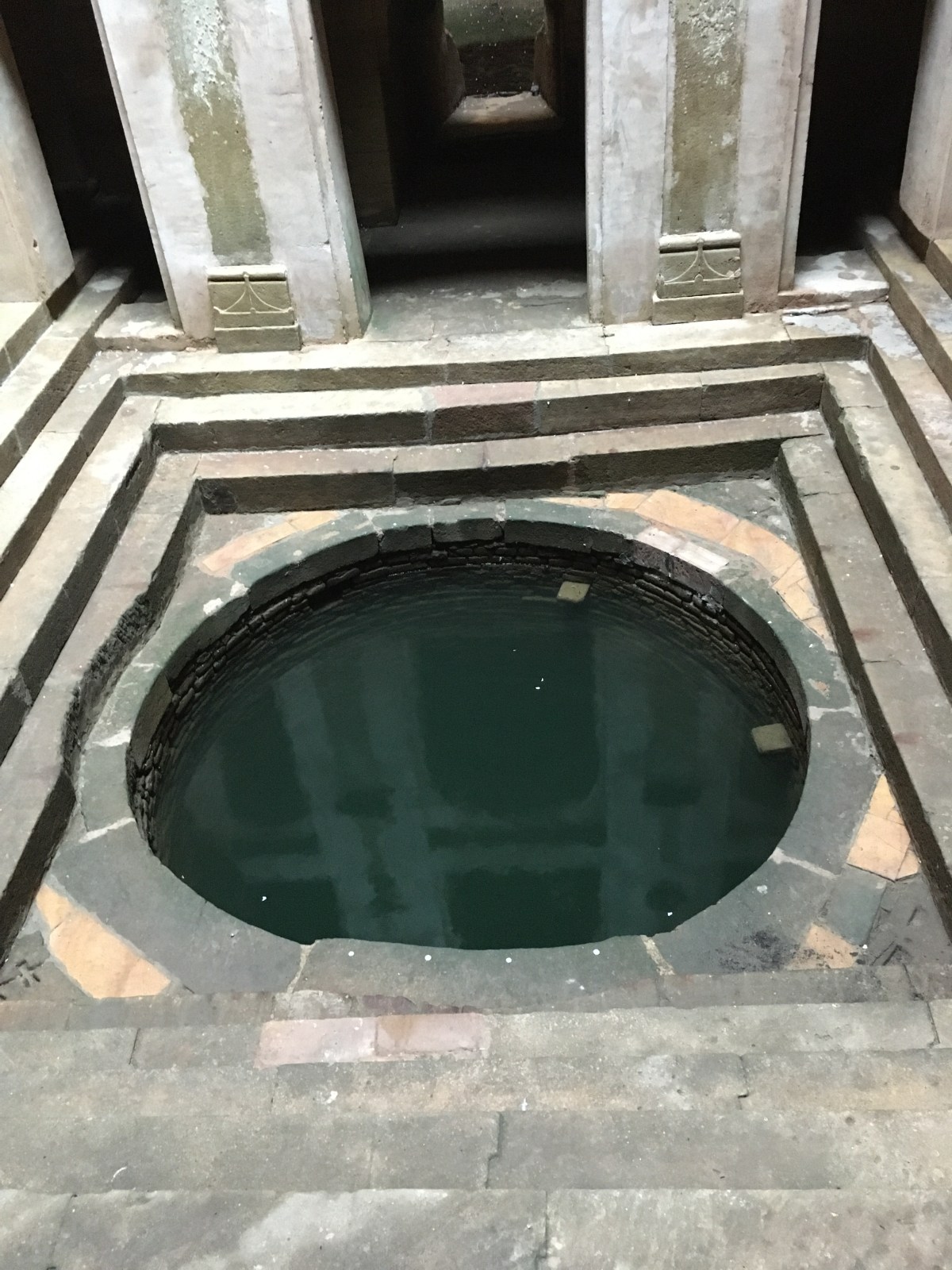
At present, there is significant focus on the maintenance and restoration of the sculptural elements of Adalaj Ni Vav, through protective guards that stop the many visitors from directly interacting with the structure, and vigilant caretakers ensuring their upkeep. Coverings over the octagonal well demonstrates the efforts being taken to prevent the water being contaminated by visitors dropping waste from outside the structure into the well.

Covering at the top of the structure to protect the well (Photo: Amita Bhakta)

Protecting and sustaining Gujarat’s vavs for the future also requires interventions from external organisations. Aside from the protection granted for Adalaj by the Archaeological Survey of India, it comes under nearby Ahmedabad’s recognition as a UNESCO World Heritage Site. Gujarat’s Directorate of Archaeology and Museums has been pivotal in efforts to clean the stored water in the state’s vavs, and has a role to play in supporting local authorities to conserve stepwells such as Adalaj for the longer term. As heritage sites, there remains a challenging balance to strike in the longer term. Whilst creating a ‘tourism zone’ through public-private partnerships can generate much needed revenue for the local economy, the re-use of the vav as an attraction should not come at a cost of further harm to the vav from pollution. Ensuring public awareness of the need to conserve vavs as markers of India’s water history is key.

Sustaining vavs for the future involves curation. Stepwells could be turned into ‘living’ water ‘museums’ to teach future generations about the importance of water security as climate change takes hold in India. Converting stepwells to water museums can create awareness of the rich history and the role that Adalaj and other vavs played in supplying water, acting as community hubs, and providing livelihoods for well-digging artisans in the past.

Rural stepwells of the past could inspire engineers and architects of today. As we grapple with the challenges of energy security, we should look to vavs for lessons on integrating light and natural ventilation into buildings of the modern era.

Adaptive reuse of rural vavs can be done creatively. The magnificent architecture that strikes tourists as they descend towards the pool of water can provide a temporary backdrop for outdoor concerts and art exhibitions. Water festivals at stepwells, which can provide exhibition spaces, can incorporate traditional music and stories of their rich past, to educate younger generations about their historical roots and recognise the cultural significance of stepwells for their ancestors.

Looking ahead

Gujarat’s rural stepwells may no longer fulfill their traditional purpose of supplying water, but there is no need to consign these beautiful structures to the past. Let’s look forwards towards routes to celebrate and keep India’s rural water history alive. It’s time we worked together to ensure stepwells continue to play a role in our lives in creative ways.

Acknowledgement

Special thanks to my friend, Mona Iyer, for facilitating this field visit, and to Mahesh Popat for his brilliant support in the field. Thank you  to the secretariat for their moral support for this work and to Temple Oraeki for reviewing drafts of this blog.

About the author: Amita Bhakta is a freelance consultant and co-lead for the leave no-one behind theme at the Rural Water Supply Network. She has specialised in looking at hidden issues to achieve equity and inclusion in WASH and has a keen interest in rural water heritage in India.

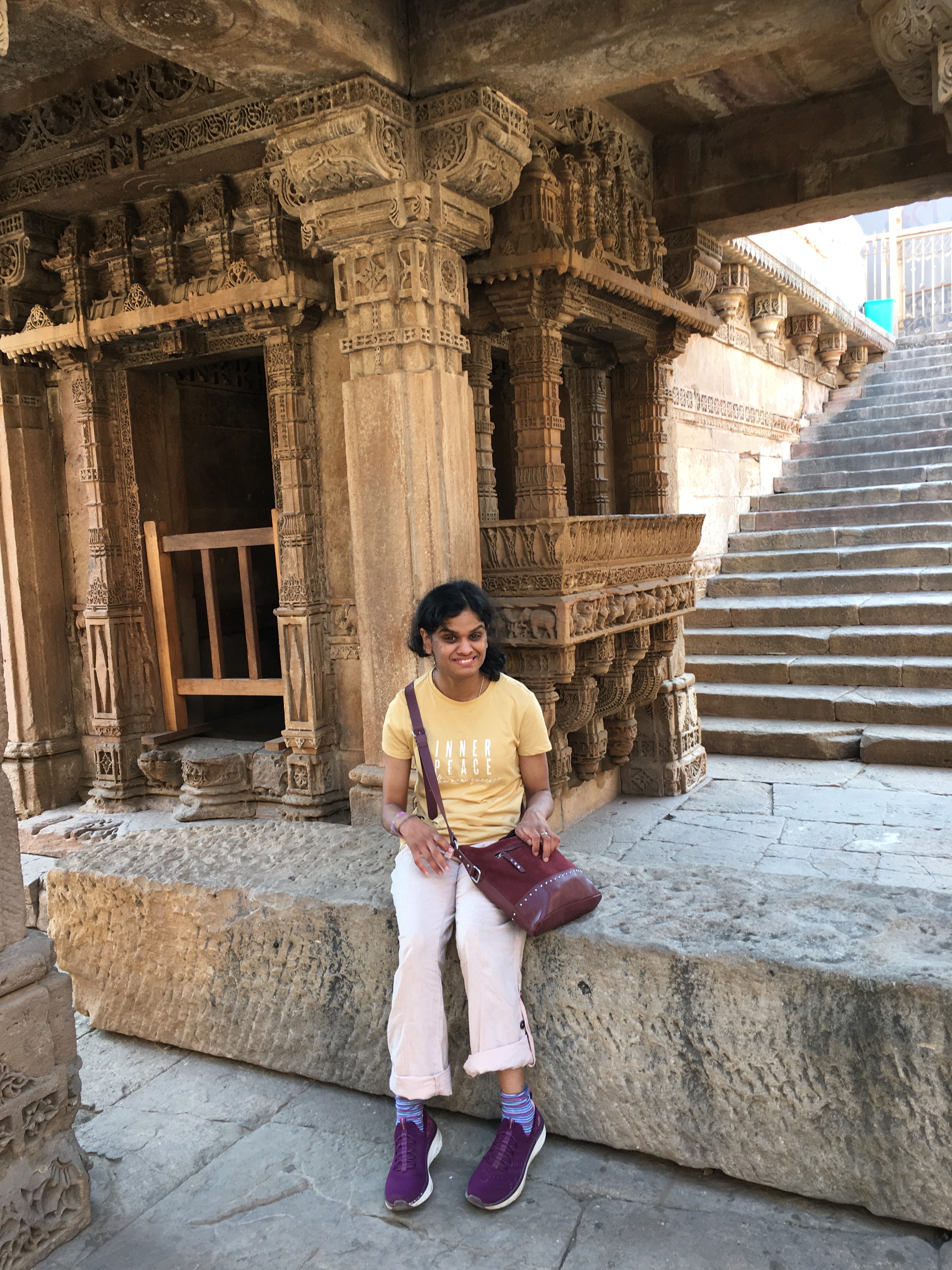
Amita Bhakta at Adalaj Ni Vav, Gujarat, India

Photo credits: Amita Bhakta.


[i] Srivapathy, U. and Salasha T. 2021. Adalaj Stepwell: A Magical Resonance of Architectural Ingenuity. Athens Journal of Architecture – Volume 7, Issue 2 pp. 275-304

[ii] Anurag Anthony, Urban Management Centre, personal communication, March 2023

Learning from Gujarat’s past relationship with rural water through its stepwells

India: home to almost a fifth of the global population. Yet, its rural communities continue to face challenges in accessing water, due to overextraction depleting groundwater, poor recharge, and increased demand for water as industries expand and the rural economy grows. Ensuring water security for the future requires us to learn from the past. Across  India, rural populations once met their water needs through ingenious feats of architecture in the form of stepwells (or baolis or vavs). I went to visit Adalaj Ni Vav (Rudabai Stepwell), on the outskirts of Ahmedabad, Gujarat in February 2023. In this two-part blog series, I reflect on the lessons we can learn about the significance of stepwells for India from past uses of Adalaj (part 1) and look ahead the role that stepwells could play in the future (part 2).

What are stepwells?

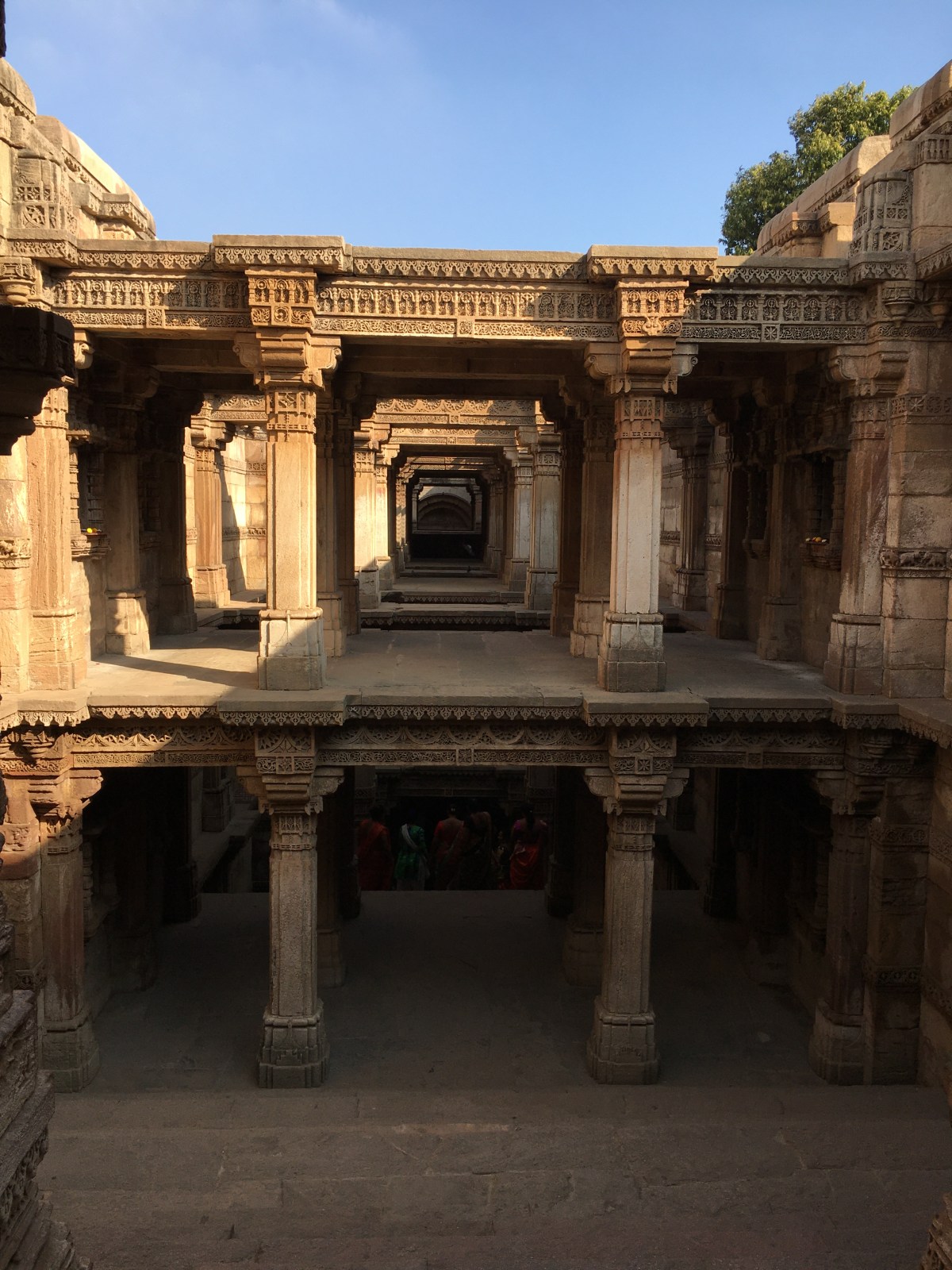
Stepwells are linear buildings. Steps lead down to landings with pavilions that house two shrines, and columns which make them resemble a room, followed by more steps, until reaching a cylindrical well at the bottom. The roof of one room becomes the floor of the pavilion above. Gujarat’s stepwells range from 60 to 80-feet in depth, with their upper-most landings receiving the most light, screened by walls known as Jalees to provide shade. Stepwell corridors are open to the sky except where it enters a pavilion. The terraces of stepwells are typically marked by noises and splashes as women beat clothes and scour pots, animals drink and children run around. The stepwells are referred to by landmarks (e.g. station vav), goddesses (e.g. Surya Kundi), patrons (e.g. queen) or place (e.g. Adalaj)[i].

Shrine in a pavillion at Adalaj (Photo: Amita Bhakta)

Adalaj Ni Vav: a well with a tragic tale

Adalaj Ni Vav is a 75.3-metre-long stepwell laid out in a north-south direction. On my visit, I made my way down one of the three flights of steps arranged in a cross to enter the vav, which are attached to the main stepped corridor leading to the well at the bottom, with an octagonal opening at the top and a pavilion resting on 16 pillars with 4 built-in shrines. The vav was built between 1498-1505 by Sultan Mahmud Begada in honour of Queen Rudrarani, who he promised to marry after it was completed. When the vav was completed, Rudrarani committed suicide by jumping in to the well. Through his grief, the Sultan killed those who built it to prevent another similar vav from being built, who are buried in the graves in the nearby garden i.

Learning from Gujarat’s past links to Adalaj

Adalaj Ni Vav was once a hub for the local community until the British Raj put it and many other vavs into disuse, deeming it unhygienic and introducing taps, pumps and borewells. Rainwater harvesting enabled the community to wash their clothes and feed their animals. Travellers used the vav, built along trade routes to support India’s economic development, as a resting site[ii].

Whilst it is no longer used as a water point, Adalaj’s long-standing spiritual connections to local people can help to sustain the cultural legacy of the stepwell. There is scope to pave a way for the community to continue its traditional purpose as a place of worship. The shrine on the outer wall has long been used and maintained by local Brahmin women to the present day, who worship local goddesses for fertility, health, and family prosperity.

But, it is not just people who stand to benefit from lessons from Adalaj’s past. Birds and animals used to be attracted to the vav as a cool spot, drawn in by food left over from festivals. In an era of global challenges such as climate change, it is important to recognise that the stepwell was once a place where rich biodiversity could flourish.  

Moving forward: bridging the history of Gujarat’s stepwells to the future

The history of Gujarat’s rural stepwells reflects the cultural significance they held in the past, and show a need to recognise them as previous places of sustenance and of continued spiritual value. Whilst it is unlikely that Adalaj will once again serve as a water point, it can provide a place for biodiversity to flourish, and has the potential to teach and reengage local communities with their own water management systems for future preservation, particularly in these parts of Gujarat where drilling for petroleum is creating depressions in the water table. Let’s recognise the collective memory of Gujarat’s rural stepwells as historical sites of interest and work to preserve these ancient structures for the future.

Acknowledgement

Special thanks to my friend, Mona Iyer, for facilitating this field visit, and to Mahesh Popat for his brilliant support in the field. Thank you  to the secretariat for their moral support for this work and to Temple Oraeki for reviewing drafts of this blog.

About the author: Amita Bhakta is a freelance consultant and co-lead for the leave no-one behind theme at the Rural Water Supply Network. She has specialised in looking at hidden issues to achieve equity and inclusion in WASH and has a keen interest in rural water heritage in India.

Photo credits: Amita Bhakta.

References


[i] National Institute of Design (1992) Adalaj village: a course documentation Ahmedabad: National Institute of Design

[ii] Adalaj stepwell exhibition, Adalaj, India

UN Special Rapporteur – What’s next: the legacy of the UN Water Conference

Pedro Arrojo Agudo
UN Special Rapporteur on the human rights to safe drinking water and sanitation

Reposted from OHCHR

After some days of reflection, I want to share my thoughts on the UN Water Conference, which was undoubtedly a historical event for all those committed to the human rights to water and sanitation.

First, I would like to congratulate the President of the UN General Assembly and the UN Secretary-General, as well as the co-host member states, the Kingdom of the Netherlands and the Republic of Tajikistan. For the first time in 47 years, the UN family gathered to host a global event on water; this is in itself a positive achievement. The UN provides an important platform to discuss the fundamental human rights to water and sanitation and I welcome the decision to hold a third UN Water Conference in 2025.

Continue reading “UN Special Rapporteur – What’s next: the legacy of the UN Water Conference”