“The borehole is not a madman” 3 reasons why Community Based Management demands a rethink

by Dr Luke Whaley, Professor Frances Cleaver and Felece Katusiime (UPGro Hidden Crisis)

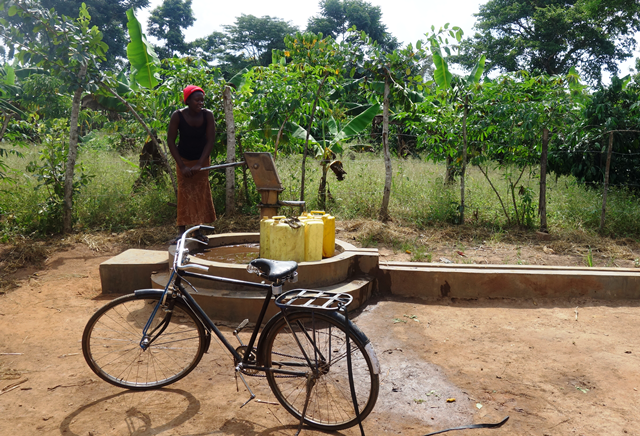
In Uganda, waterpoint committees exist more in name than in reality. Many waterpoints have been ‘personalised’. That is to say, they are under the control of one or a small number of individuals. Moreover, where local management arrangements (of any sort) are effective they tend to rely heavily on the authority of the head of the village council, known as the LC1 Chairperson. Indeed, it is often the LC1 Chairperson and not a waterpoint committee who is instrumental in collecting funds, securing maintenance and resolving disputes. Where an apparently functioning committee is in place, this is usually the result of concerted efforts on the part of particular local NGOs, who cannot guarantee this level of commitment in the longer term.

At least, these are the impressions of Felece Katusiime, a social science field researcher working on the UPGro ‘Hidden Crisis’ project, concerned with the sustainability of rural groundwater supply in Ethiopia, Uganda, and Malawi. They are field insights (preceding full data analysis) from someone who has spent many months in the field undertaking research in roughly 200 rural Ugandan villages. The discussion that follows is intended as a provocation and not a promulgation of project findings. We are interested in the extent to which the points made here accord or contrast with the experiences of you, the readers, and we welcome dialogue on these matters.

So, why might it be that in Uganda waterpoint committees,as envisaged on paper, seldom exist as such on the ground?

Continue reading ““The borehole is not a madman” 3 reasons why Community Based Management demands a rethink”

WPDx webinar: Beyond Water Point Mapping: Putting Data to Work for Improved Services

Too often, valuable data sits dormant in PDF reports and excel spreadsheets, never being used to its full potential to improve services.

Join this webinar and learn from people trying to change that. Joining Global Water Challenge will be Applied Predictive Technologies (APT) sharing findings from their Data Dive of the Water Point Data Exchange (WPDx) dataset and WASHNote addressing their recently-authored white paper: “Harnessing Water Point Data to Improve Drinking Water Services.” Akvo will moderate the session, lending their extensive water point data expertise.

By the end of the webinar, you will learn strategies to put your data to work for improved water services.

Register here

Gender and rural water services – lessons from RWSN members

Gender relations are critical to nearly every aspect of rural water supply, but rarely addressed in practice by rural water professionals. All water supply programmes affect men and women in different ways, and while practitioners assume their work will benefit women, how do they know whether it will or not, how do they know what impact it will have?

In 2016 RWSN’s Mapping and Monitoring Theme members had an impromptu and rich e-discussion on gender equality and WASH. In early 2017, RWSN’s Equality, Non Discrimination and Inclusion (ENDI) Theme launched a call to their members for examples of inspiring experiences of ‘Making Water Work for Women’. Both discussions have been rich with experiences from across Asia, Africa and Latin America, and reinforcing of each other. We have put together a short brief highlighting the key points from these discussions:

  • The nature of female participation within water committees should be discussed in terms of quality as well as quantity.  If women’s roles do not offer any opportunity to influence committee decisions and outcomes, their participation is largely tokenistic. Qualitative indicators can help to show whether women’s participation is tokenistic, or active and meaningful.
  • High-level government commitment to minimum quotas for women’s participation was seen as a crucial prerequisite to creating the space for the inclusion of women and the ability to demand it.
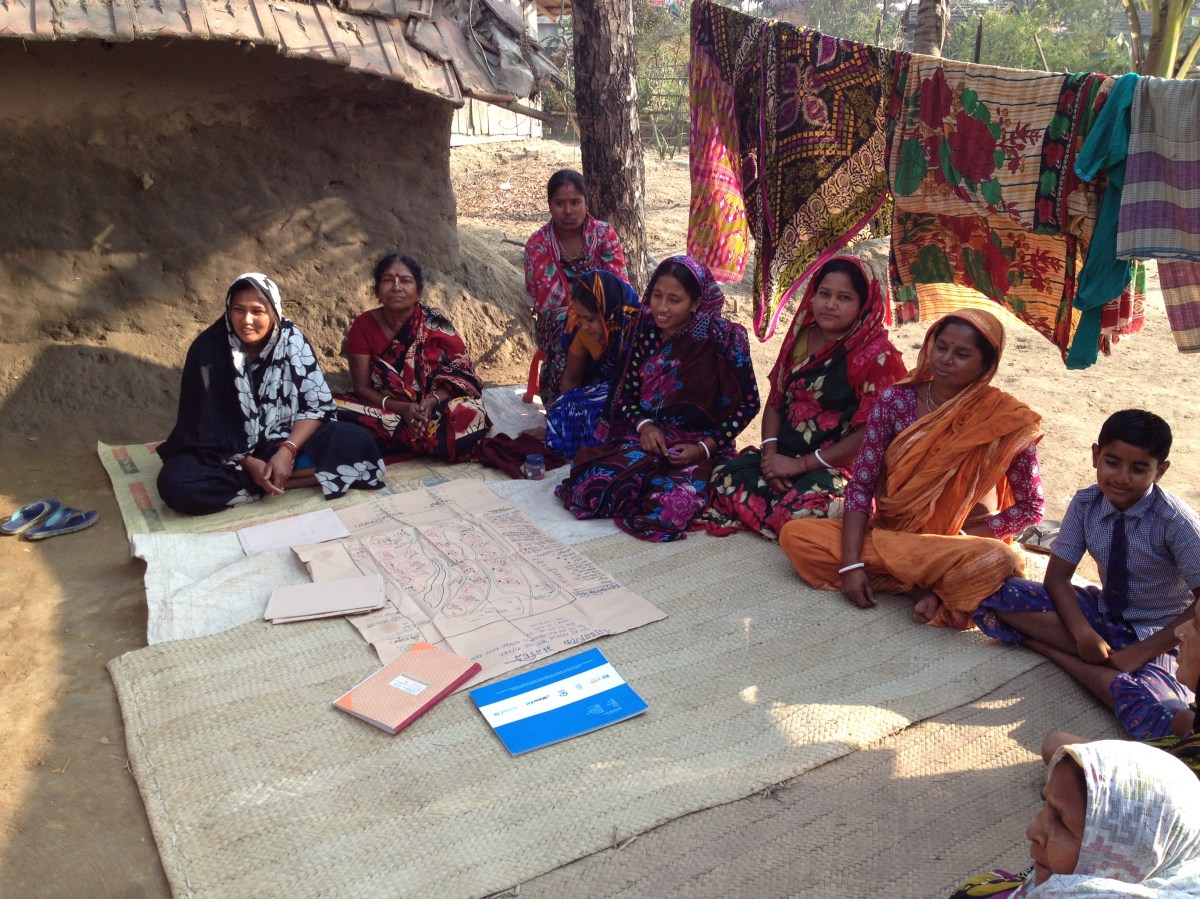
  • Where women were more influential on Water User Committees, it was strongly attributed to the special efforts of implementing organisations who worked on mobilising women and increasing their confidence and awareness about  the work involved, and sensitising men equally to create space for women’s involvement in the committees, as the example in India shows.
  • By working closely with women and men together it is possible to challenge gender norms amongst women and men in rural communities, so that they begin to share unpaid work associated with WASH more equally, as the example in Ethiopia shows.
  • Identifying the agents of change (women and men) from the community who are motivated and determined to advocate for water and sanitation can nurture lifelong advocates, as illustrated by the experience from Bangladesh.
  • Disaggregating monitoring indices by gender can help to raise gender equality as a priority, and set specific expectations about the participation of women in different aspects of service provision.
  • Conflict-sensitive approaches to water and sanitation can help to facilitate peace building by creating a platform for women around a common need, as in the example from India.

Download the brief : Gender and rural water services – lessons and experience from RWSN members

Leo Heller on : Regulation of water and sanitation services

by Léo Heller, UN Special Rapporteur on the human rights to safe drinking water and sanitation

Re-posted from: https://medium.com/@SRWatSan/regulation-of-water-and-sanitation-services-bef44401caf4 

Report A/HRC/36/45, submitted by the Special Rapporteur to the Human Rights Council in September 2017, focuses on the role regulatory frameworks play in the implementation of the human rights to water and sanitation at national level.

art by aicoculturas / anderson augusto

Regulatory frameworks comprise the rules or standards defining how services should be provided to individuals in a given context, and the institutions responsible for monitoring service providers’ compliance with these norms and standards.

The number of States with a regulatory framework for water and sanitation services is increasing and so is the contingent of regulatory actors. However, there is no universal regulatory model. Regulation should be adapted to local circumstances, needs and challenges.

States have interpreted the role of regulation in various ways depending largely on the norms applicable to their particular context and corresponding needs, leading to a range of different institutional arrangements and regulatory models including self-regulation, regulation by contract and regulation by a separate regulatory body.

Being at the interface between policy-makers, service providers and users, while acting as guarantors of accountability, regulatory actors play an essential role in the realisation of the human rights to water and sanitation.

Continue reading “Leo Heller on : Regulation of water and sanitation services”

A third of the glass is three-quarters full

The results of the water and sanitation SDG baseline report are as surprising as finding safely managed drinking water in rural Honduras. But we should be cautious in jumping to conclusions.


It is surprising to meet people like Kristel Castellanos. She is the operator of the drinking water treatment plant of the rural municipality of San Matías in Honduras. She makes sure that the people of San Matías get water that is safely managed. Her work is not common, as rural water supply systems in Honduras rarely have a treatment plant. At most, operators may chlorinate the water, and even that is a big challenge.

Photo: Kristel Castellanos, operator of the San Matías treatment plant, checking the water flow (photo credit: IRC)

As surprising as finding such good water quality management in rural Honduras, were the data on safely managed water supply in the baseline report for the water and sanitation SDGs. According to that report 71% of the World’s population has the same level of service as the people in San Matias, i.e. piped supplies with household connections that is available 24/7 and that has good quality water, or ‘safely managed water’, as the JMP calls it. More surprising is that 56% of the rural population has such water.

Ahead of the publication of the baseline report, there was lots of talk in the WASH sector that thebaseline would come as a big shock. With the adoption of the SDGs, the bar for water supply has been raised. Under the MDGs, we measured whether people had an improved supply. The SDGs require people to have safely managed water. And by raising the bar, it would only be logical that a larger part of the population would not meet that bar. And indeed, the press release that accompanied the report was brought as a shock, using the headline figure that 2.1 billion people don’t have safe water. I found that a way too alarmistic take on the findings of the report. With 71% of the World population having safely managed water the glass is not half full; it is three quarters full!

The figure however is surprising, as the MDG end-line indicated that in 2015, some 58% of the world population had piped on premise (33% in rural areas). Piped on premise doesn’t fully coincide with safely managed services. Safely managed services also require water to be of good quality and availability. One would expect that the percentage of population with safely managed services would be lower than the population with piped on premise in 2015, as there are always piped supplies in which quality and/or availability are not adequate. But, instead we don’t have a glass being half empty; we have one that is three quarters full.

However, we can only see a third of the glass, as Ben Harris mentioned. Sufficient data on safely managed services are only available for half of the countries. No data is available on the biggest countries in the World: China, India, Brazil and Indonesia. Most of the countries for which data are available are in the higher and middle income regions of Europe, Central Asia and Latin America. Only one region – Central and South Asia – has sufficient data on safely managed services in rural areas.

The report is very clear about these methodological limitations. And I think it is truly impressive that the JMP managed to make these estimates in such short time. But, it could have therefore also been more cautious in the message it sent out. It should have either said “more people than expected have safely managed services”, or better “the first estimate shows 2.1 billion don’t have safely managed services, but the data are too limited to jump to strong conclusions”.

Nevertheless, I would say to all sector colleagues: read the report; it really is obligatory reading. And if anything, read the methodological sections. They are not always the most exciting sections to read in a report. But if we don’t understand how the SDGs are monitored, the numbers will really take us by surprise. And by 2030, we should no longer be surprised to find as nicely safely managed water supplies in rural areas as the ones managed by Kristel Castellanos in San Matías.

For  the 2017 JMP report and related data, go to https://washdata.org/

The  original version of this blog is available here: https://www.ircwash.org/blog/third-glass-three-quarters-full.


The most important stories in rural water supply // Les histoires d’approvisionnement en eau en milieu rural les plus importants

Making water work for women – inspiring stories from around the world

The reality in much of the world today is that collecting water for the home is a job done by women – so gender issues are central to everything we do in rural water supply – self-supply, pump design, borehole siting, tariff collection, water resource management, business models or using ICT to improve service delivery.

In this week’s webinar we have brought together more inspiring stories from Nicaragua, India and the World Bank.  We are taking ‘gender’ from being a tokenistic tick-box to a living, vibrant, practical core of every rural water service.

Join the us next Tuesday 23 May – it an opportunity to have your practical and policy questions answered from world class experts.

 Did you miss Part 1? Don’t worry. You can watch and listen to the inspiring experiences from Burkina Faso, India, Ethiopia and Bangladesh on the RWSN video channel:

/////

L’eau au service des femmes – des histoires inspirantes

La réalité dans beaucoup d’endroits dans le monde aujourd’hui est que l’approvisionnement en eau pour les besoins domestiques reste un travail porté par les femmes – donc les questions liées au genre sont au coeur de toutes les activités que nous entreprenons dans le secteur de l’eau rurale: auto-approvisionnement, conception des pompes, emplacement des forages, recouvrement des tariffs, gestion des ressources en eau, ou utiliser les TIC pour améliorer les services.

Le webinaire de la semaine permettra d’entendre des histoires intéressantes du Nicaragua, de l’Inde et de la Banque Mondiale. Nous souhaitons passer d’une compréhension de la notion de genre se bornant à cocher une case, pour mettre en avant les aspects vivants, pratiques et essentiels qui font partie de tous les services d’eau ruraux.

Joignez-vous à nous mardi prochain – ce sera l’occasion de poser vos questions sur la pratique et la politique à des experts du domaine.

Vous n’avez pas pu participer à la première partie de ce wébinaire? Vous pouvez écouter des expériences inspirantes du Burkina Faso, de l’Inde, de l’Ethiopie, et du Bangladesh sur la chaine viméo du RWSN:


New 2017 RWSN Webinar series (18th April – 13th June 2017)

ENG: RWSN is delighted to announce the first of the 2017 series of webinars (on-line seminars) on rural water supply, running every Tuesday from April 18th, 2017 until June 13th, 2017. This series includes 9 weekly sessions on topics, which were presented and debated during the 2016 RWSN Forum in Abidjan, and related to the RWSN themes. For instance, we will find out about local government superheroes and their role in realising the human right to water and sanitation, but also hear about emerging cross-cutting issues such as improving WASH services in protracted crises. Each session will be bilingual, with one webinar in English as well as another language (French or Spanish) as we are trying to cater for a wide and varied audience. The format includes 1-2 presentations, comments from discussants, and a Question & Answer session where all participants are invited to ask questions or make comments. For more details on the first 2017 series, please refer to the table below.
The webinars in English start at 2.30 pm Paris time/ 1.30 pm London time/ 8.30 am Washington DC time. You can check your local time here. To register for one or all of the webinars, and receive an invitation please click on the following link: http://bit.ly/2movPGM

*******

FR : Le RWSN a le plaisir de vous annoncer une nouvelle série de webinaires en 2017 (les séminaires en ligne) qui auront lieu les mardis, du 18 avril 2017 au 13 juin 2017. Cette série comprend 9 sessions hebdomadaires sur des sujets ayant été présentés et débattus lors du RWSN Forum à Abidjan en 2016, et correspondant aux thèmes RWSN. Par exemple, on apprendra le rôle des superhéros des gouvernements locaux pour la réalisation du droit à l’eau et à l’assainissement, mais on découvrira également des sujets transversaux émergeants tels que l’amélioration des services EAH dans les cas de crises prolongées. Chaque session sera bilingue, avec un webinaire en anglais et dans une autre langue (espagnol ou français) selon le sujet, nous souhaitons en effet toujours toucher le public le plus large dans toute sa diversité ! Les thèmes abordés sont le droit humain à l’eau et à l’assainissement, l’auto-approvisionnement, la durabilité des services et le cadre de référence d’applicabilité des technologies. Chaque session comprend 1 ou 2 présentations, des réactions de la part d’un ou plusieurs intervenants et une partie Questions/Réponses lors de laquelle tous les participant(e)s peuvent poser leurs questions ou réagir aux échanges. Vous trouverez le détail de cette première série de webinaires de 2017 dans le tableau ci-dessous.
Les webinaires en français sont à 11h heure de Paris/ 9h heure de Dakar. Pour vérifier l’horaire du webinaire, vous pouvez cliquer ici. Pour vous inscrire à l’un ou à tous les webinaires de cette série et recevoir une invitation, cliquez ici : http://bit.ly/2movPGM

*******
ES: Desde el secretariado del RWSN tenemos el gusto de anunciar la nueva serie de webinars (seminarios en linea), la cual se efectuará entre el 28 de abril y el 13 de junio del 2017. Esta serie comprende 9 sesiones (una sesión por semana) respecto a los temas discutidos en el Foro RWSN en Abidjan en 2016, los cuales corresponden con los ejes temáticos del RWSN. Por ejemplo, aprenderemos sobre el rol de los superhéroes de los gobiernos locales para la realización de los derechos al agua y a saneamiento, pero también descubriremos temas transversales como la mejora de los servicios en agua y saneamiento en crisis humanitarias prolongadas. Cada sesión se implementará en dos idiomas, con una sesión en inglés y la otra o en francés o en español según el tema – de esta forma esperamos poder alcanzar a un público amplio y diverso. El formato incluye, para cada sesión, 1-2 presentaciones en línea, un comentario de al menos una persona, y una sesión de Preguntas y Respuestas donde todos los participantes tendrán la oportunidad de hacer preguntas o comentarios. Para mayor información sobre la serie por favor hacer clic en el vínculo abajo.

Los webinars en español empiezan a la 16.30 (hora de Madrid)/ 09.30 (hora de la Ciudad de México). Se pueden verificar los horarios para su localidad aqui. Para inscribirse a uno o a todos los webinarios de esta serie, haga clic aquí: http://bit.ly/2movPGM

18 April Improving WASH services in protracted crises
18 avril Améliorer les services EAH dans les situations de crises prolongées

25 April Professional Water Well Drilling: Guidance for Ensuring Quality
25 avril Le forage de puits d’eau professionnel : des orientations pour une meilleure qualité

02 May Making rights real – human rights guidance for practitioners
2 mai Faire des droits une réalité – conseils pratiques sur les droits de l’homme pour les professionnels

09 May Making water work for women – inspiring experiences
9 mai Faire fonctionner l’eau pour les femmes : des expériences inspirantes (1ère partie)

16 May Tackling corruption in rural WASH
16 mai S’attaquer à la corruption dans l’eau, l’assainissement et l’hygiène en milieu rural

23. May Making water work for women – inspiring experiences II
23 mai Faire fonctionner l’eau pour les femmes : des expériences inspirantes (2ème partie)

30. May Household wells: A lifeline in Nigeria?
30 mai Les puits d’eau résidentiels: une bouée de sauvetage au Nigéria ?

06 Jun Country-led monitoring
06 juin Le suivi au niveau des pays
6 de junio Monitoreo a nivel de países

13 Jun Searching for universal sustainability metrics for rural water services
13 de junio Buscando maneras universales de medir la sostenibilidad para servicios rurales de agua potable


More Information

» Register

Making rights real by supporting local government heroes

re-posted from: http://www.wateraid.org/news/blogs/2016/december/making-rights-real-by-supporting-local-government-heroes

Louisa Gosling, WaterAid’s Quality Programmes Manager, introduces a guide to using the status of water and sanitation as human rights to drive progress on the ground, and explains how marketing strategies can help us reach our target audiences.

The UN officially recognised the human rights to safe drinking water and sanitation in 2010. But what does this actually mean for work on the ground?

For people living in rich countries, where heavily regulated utilities supply the population with water and collect and treat wastewater, rights to water and sanitation are mainly covered by enforceable domestic laws and regulations.

Independent inspectorates and complaints mechanisms ensure service providers can be held accountable to service users.

But for people living in countries with very poor access to water and sanitation services, it is a different picture. For the nearly 2.4 billion people without access to adequate sanitation, and 663 million without access to clean water, these systems are often not in place. The lack of access is due to lack of capacity and resources in the sector, weak demand by service users, and poor accountability of service providers to users – their rights are neither demanded nor fulfilled.

The human rights framework clearly assigns responsibilities – people have the rights to water and sanitation services, and governments are duty bound to realise them. But what does that mean in practical terms for government, especially local government officials, who are closest to the people? How can the human rights actually help local officials to reach everyone, even when they have very limited resources and capacities?

With more countries integrating human rights to water and sanitation into national systems there is an opportunity to explore the difference this can make to both providers and users of water and sanitation services.

Making rights real – a guide

The UN Special Rapporteur’s handbook on realising the human rights to water and sanitation sets out the practical implications in considerable detail, which is helpful. But it is too long and detailed for many practitioners to use. So, WaterAid, WASH United, End Water Poverty, University of Technology Sydney, UNICEF, and the Rural Water Supply Network joined forces to develop guidance specifically aimed at local government officials. We worked with a content marketing agency, C3, to help make a really user-friendly guide.

Content marketing is customer centric communication. Understand your audience and their needs, and to be serious about it. What can we sell "them" today? What are you interested in right now?

Image 1: Finding out what the user wants to know.

A marketing approach

To find out more about our target audience the ‘Making Rights Real’ project partners, funded by players of the People’s Postcode Lottery, carried out an audience analysis. First, we interviewed local government officials in low-income settings to learn what they thought about their responsibilities for reaching everyone everywhere with water and sanitation. We wanted to know what helps them, what makes their work difficult, and what can help to inspire them. We presented the resulting paper – ‘Achieving universal and equitable access to water, sanitation and hygiene (WASH) for all – practitioner perspectives and perceptions [191]’1 at the Rural Water Supply Network forum in Abidjan.

Findings slide from C3

Image 2: Some of the challenges local government officials face, according to audience analysis.

The report clearly showed the many challenges that local government officials face, and their low understanding of human rights as something relevant to their work.

So, working with C3, we used these interviews to develop user ‘personas’ to help us better target the content of human rights to our audience.

Local government official personas

Image 3: Local government user personas adapted from C3.

Would-be heroes

We decided to target our materials towards the would-be heroes. The analysis defined this audience segment as a large group of people working in local government, who feel personally committed to providing services to local people but are constrained and thwarted by lack of resources and political support.

We agreed that if this group were empowered and supported some of them could become superheroes and really help progress. Champions within institutions can have a huge impact. For example, the WaterAid-commissioned research ‘A tale of clean cities’ found that one of the main drivers for improving urban sanitation was committed champions at the municipal level.

The would-be heroes have many misconceptions about human rights. For example, they often believe that if water is a human right it should be provided to everyone free of charge, which is clearly incompatible with governments needing to raise revenue to help run sustainable services. However, the human rights standards state that it is fine to ask people to pay for services, as long as the tariffs are affordable.

We also discovered the many different groups that influence the would-be heroes’ actions and decisions (see image 4). We learned how important it is to recognise these influencers, to galvanise as much support, advocacy, and collaboration as possible from them in order to achieve adequate and sustainable services for all.

Who influences the would-be hero?

Image 4: Influencers of local government officials. Adapted from a C3 slide.

We wanted to create a guide to help support and nurture sector champions. To clarify to local government officials the usefulness of human rights thinking, we used the analysis to design a colourful three-piece guide – ‘Making Rights Real’. The idea is for sector partners (like WaterAid) to use the materials in conversations with government partners.

The guide comprises: the pocket guide, containing basic thoughts and principles; the manual, with each step explained; and the journey, which shows the process at a glance.

You can download the guide (currently in English, French, and Portuguese) and instructions, from the Rights to Water and Sanitation website, and use them in your working relationships with governments.

Rights at the RWSN Forum

We launched the materials at the Rural Water Supply Network Forum (RWSN) in Cote d’Ivoire, using presentations, discussions, and role play. The response from participants was very promising. There is a strong desire among people in the sector to know more about human rights and how they can use them to clarify responsibilities of governments, communities, service providers, and service users, and make everyone more accountable to provide adequate and sustainable services for all.

If we are to reach everyone everywhere with access to water and sanitation by 2030, as promised in the UN Sustainable Development Goals, a change in approach is needed. These essential human rights can only be delivered if those with the duty to deliver them are empowered and inspired to do so.

1Keatman T, Carrard N, Neumeyer H, Murta J, Roaf V, Gosling L (2016). Achieving universal and equitable access to water, sanitation and hygiene (WASH) for all – practitioner perspectives and perceptions [191]. Making Rights Real project team. See the presentation here.

Louisa Gosling is Quality Programmes Manager at WaterAid. She tweets as @louisagosling1 and you can read more of her blogs here.

Update from the UN Special Rapporteur on Human Rights to Water and Sanitation

Hello all,

After what has been a prolonged period of absence for some members of the “friends list” to the mandate of the Special Rapporteur on the human rights to water and sanitation, I would like to touch base with you and renew my commitment to maintaining meaningful contact. As much time has passed, there is naturally a lot that could be shared. I will attempt to be selective and keep to key subjects that could be of your particular interest.

  1.     Recognition of human rights to water and sanitation

Firstly, the attentive among you may have recognized the change in my title. The General Assembly http://bit.ly/2drEiWH recognized the human rights to water and sanitation (plural) late last year in Resolution A/RES/70/169. More recently, the Human Rights Council also recognized the distinct rights in a new resolution http://bit.ly/2dPyVeY , meaning that my title has also changed accordingly to reflect the distinct rights. This is news to celebrate as I, like others http://bit.ly/2drFlpu , believe in the legal foundation and benefit of recognizing water and sanitation as two distinct but integrated rights.

Continue reading “Update from the UN Special Rapporteur on Human Rights to Water and Sanitation”

RWSN webinar: Participation: The key to gender equality in the human rights to water and sanitation?

Greetings/Buenos días (para el texto en castellano, por favor ver más abajo)

RWSN is delighted to announce the first two sessions of our mini-series of webinars (on-line seminars) on October 13, 2016. The first two sessions focus on the Human Rights to Water and Sanitation and will be take place both in English and in Spanish. Here is the more detailed information:

Topic: Participation: The key to gender equality in the human rights to water and sanitation?

Date: 13.10.2016

Time: 1.30 – 2.30 PM (Central European Time, CET – check this out in your local time zone here)

Speakers:

Léo Heller, Special Rapporteur to the UN on the Human Rights to Water and Sanitation

Mayra Gomez, Global Initiative for Economic, Social and Cultural Rights

Seema Kulkarni, Society for Promoting Participative Ecosystem Management (SOPPECOM), Pune India

The event will consist of three short presentations, followed by a Questions&Answer session where all participants are invited to ask questions or make comments. In order to participate, simply use the following link on the day of the webinar – it will take you to a “Skype for Business” session, where you first have to install a plug-in if you never used this platform before. It’s fast and free – after completing this process, you can join the session. We recommend you start this process about 30 minutes before the webinar starts.

https://meet.lync.com/skatconsulting/martinlaeng/D4JNC1YC

Feel free to pass on this message to others – there is no need to register for this event. At RWSN, we are looking forward to a wide and active participation.

//////

Buenos días

Es con mucho placer que RWSN está anunciando los primeros dos webinars de la mini-serie de otoño 2016, los cuales se efectuarán el 13 de octubre. La primera sesión en español enfocará en el tema de los Derechos Humanos al Agua y Saneamiento. A continuación estamos enviando la información detallada respecto a este evento:

Tema: Participación: ¿La clave para lograr la igualdad de género en el derecho humano a agua y saneamiento?

Fecha: 13.10.2016

Hora: 4.00 – 5.00 PM (Central European Time, CET – para conocer el horario en su zona local, por favor utilizar este  vínculo)

Presentadores:

Léo Heller, Relatador Especial ante Naciones Unidas respecto a los Derechos Humanos al Agua y Saneamiento, Brasil

Mery Quitón, consultora independiente, Bolivia

El evento consistirá de dos presentaciones y posteriormente los participantes tendrán la oportunidad de hacer preguntas o comentarios. Para participar, simplemente hay que hacer clic en el vínculo abajo – le llevará a un sitio de “Skype for Business”, donde tendrá que seguir las instrucciones para instalar el plug-in. Es un proceso rápido y fácil – posteriormente, podrá entrar al webinar. Recomendamos empezar este proceso unos 30 minutos antes de empezar el evento, para asegurar que todo funcione bien.

https://meet.lync.com/skatconsulting/martinlaeng/LM2ND2AY

Por favor, comparta este vínculo con otras personas que podrán estar interesadas – no hay necesidad de registrarse con anterioridad. Por parte de RWSN, nos hace mucha ilusión poder contar con una amplia y activa participación.