
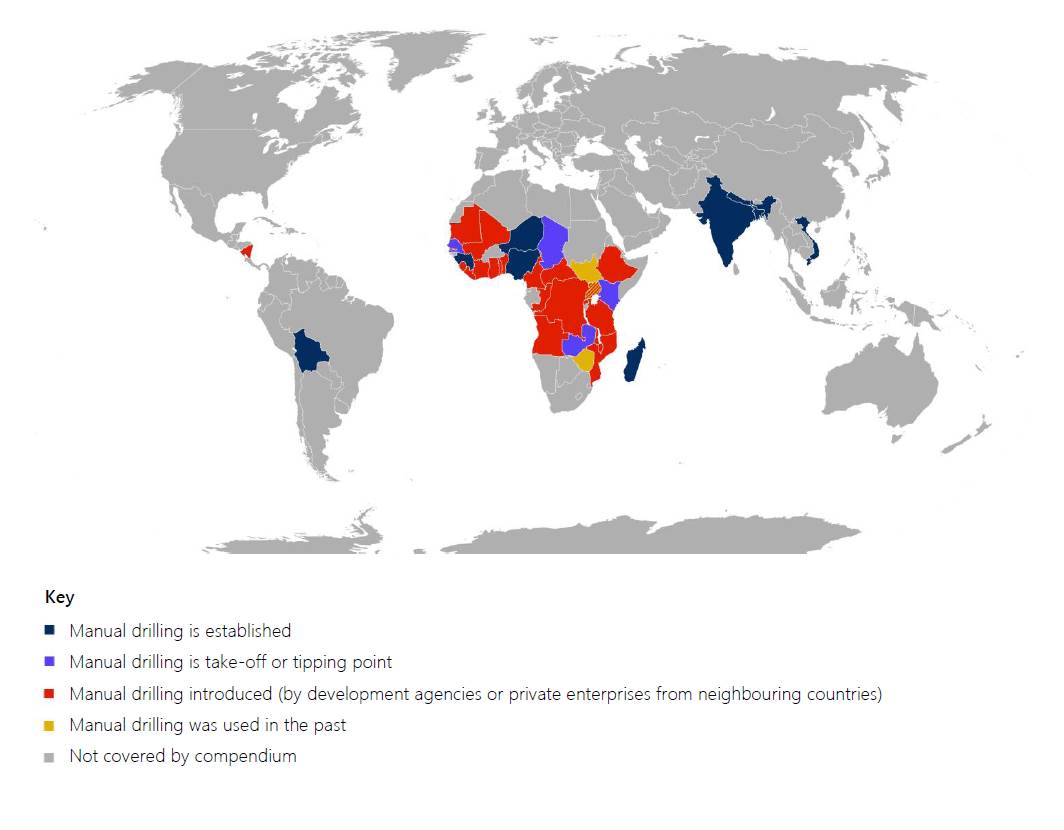
Let me tell you a not-very-well-kept secret. My PhD research some 15 years ago was on manual drilling. That was what took me to Uganda in the first place and taught me how to link social science, business development and technology. For those of you who don’t know what it is, manual drilling refers to several drilling methods that rely on human energy to construct a borehole and complete a water supply. These methods can be used in areas where formations are quite soft and groundwater is relatively shallow. And by the way, the “Pounder rig” as we called it worked, but it never took off in Uganda (the details are in my thesis).
Continue reading “What is the big deal about manual drilling anyway?”
Category: Sustainable Groundwater Development
Handpump standardisation in sub-Saharan Africa: Seeking a champion

by Jess MacArthur, IDE Bangladesh

As a millennial, I have to admit: I really enjoy technology and innovation. I love to read innovation blogs and to dissect innovation theory. So just over two years ago as I began researching how innovation intersects development in the world of handpumps, I felt a bit stumped. An estimated 184 million people in sub-Saharan Africa (SSA) today rely on handpumps for their domestic water and many of these use designs that were developed before I was born. Yes, that makes me young and maybe that make you feel old. But mostly, it made me sit back and think. Is this beneficial or is this concerning? At the time I was helping Water4 navigate the policy-sphere around new handpump integration. I wanted to know why certain handpumps have more dominance in certain areas and how innovators can pilot in the sector with both evolutionary and revolutionary designs.
Continue reading “Handpump standardisation in sub-Saharan Africa: Seeking a champion”
WÉBINAIRES – DÉBUT 2015: INSCRIVEZ-VOUS! WEBINARS – EARLY 2015: REGISTER NOW

À la demande générale, nous avons programmé une nouvelle série passionnante de wébinaires en ce début 2015. Ils auront lieu tous les mardi du 27 janvier au 31 mars inclus.
Back by popular demand, we have an exciting new series of webinars for early 2015, every Tuesday from 27 January to 31 March.
Plusieurs wébinaires sur la collecte des eaux de pluie sont également en cours de programmation par le RWSN et le Canal de l’Eau (TheWaterChannel) – nous vous tiendrons régulièrement informé(e)s à ce sujet.
There will also be more webinars on rainwater harvesting from RWSN and TheWaterChannel – look out for further announcements.
Continue reading “WÉBINAIRES – DÉBUT 2015: INSCRIVEZ-VOUS! WEBINARS – EARLY 2015: REGISTER NOW”
Out today: Addressing arsenic and fluoride in drinking water – Geogenic Contamination Handbook
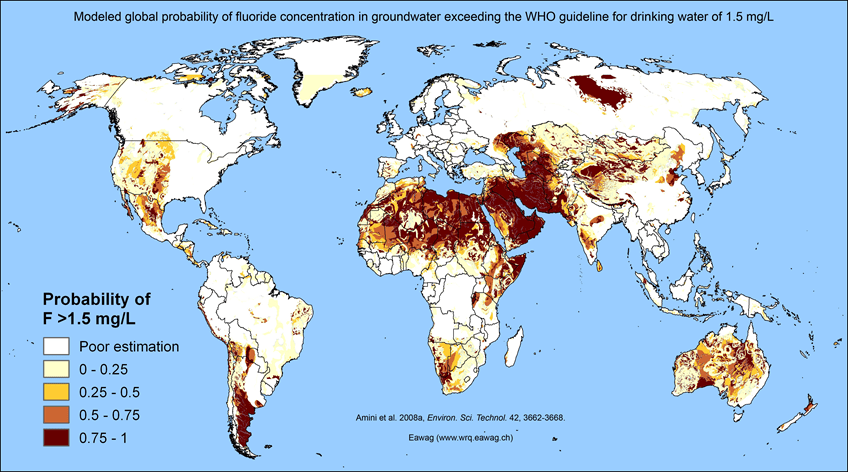
by Dr Annette Johnson and Anja Bretzler, Swiss Federal Institute of Aquatic Science and Technology (Eawag) – www.wrq.eawag.ch
Researchers at Eawag have been involved in finding technological solutions for arsenic-contaminated drinking water over the last decades. When we also started looking at fluoride contamination in drinking water we soon came to realise how enormous the problem was and how that challenges to long-term mitigation were the same irrespective of contaminant.
Continue reading “Out today: Addressing arsenic and fluoride in drinking water – Geogenic Contamination Handbook”
MEMBER NOTICE BOARD/PANNEAU D’AFFICHAGE DES MEMBRES: December 2014
Improve International: Guidelines for Resolution of Problems with Water Systems
Resolution is the process of addressing problems with water systems or toilets. Such problems are often identified during monitoring or evaluation after a project. Resolution reflects the concept that the organizations that are made aware that water systems or toilets they built aren’t working are responsible for doing something. Read more in the Guidelines for Resolution of Problems with Water Systems (Executive Summary) and Guidelines for Resolution of Problems with Water Systems (full report).
Improve International: Lignes directrices pour la résolution des problèmes des systèmes d’eau
Résoudre est le processus d’aborder les problèmes des systèmes d’eau ou des toilettes. De tels problèmes sont souvent identifiés lors du suivi ou de l’évaluation après le projet. Résoudre reflète le concept que les organisations qui se rendent compte que les systèmes d’eau ou les toilettes qu’elles ont construit ne fonctionnement pas sont responsables de faire quelque chose pour y remédier. Plus d’information dans Lignes directrices pour la résolution des problèmes des systèmes d’eau (résumé exécutif) et Lignes directrices pour la résolution des problèmes avec les systèmes d’eau (rapport complet).
Water for People: monitoring innovation for “Everyone Forever”
Metered hand-pumps: Privately operated hand pumps as a way to improve sustainability and service delivery
To encourage private sector engagement in the management of water points, Water For People and Appropriate Technology Centre, Uganda are testing a meter for hand pumps. This product has been introduced to entrepreneurs with the expectation that they will prove to be better managers of water points than the current committees.
Water For People Core Indicators and Monitoring Process
This piece outlines how Water For People currently conducts district-wide community and household-level monitoring in all Everyone Forever districts at least once per year. Data is typically collected by teams consisting of our staff and local government officials.
Water for People: suivre l’innovation pour “Pour chacun, pour toujours”
Des pompes manuelles avec compteur: des pompes manuelles opérées manuellement comme façon d’améliorer la durabilité et la fourniture de services
Pour encourager l’engagement du secteur privé dans la gestion des points d’eau, Water For People et Appropriate Technology Centre, Ouganda sont en train de tester un compteur pour les pompes manuelles. Ce produit a été introduit aux entrepreneurs avec l’espoir qu’ils seront de meilleurs gestionnaires de points d’eau que les comités actuels.
Principaux indicateurs et processus de monitoring de Water For People
Ce document met en exergue comment Water For People met en œuvre actuellement au moins une fois par an un monitoring à l’échelle des ménages et des communautés au sein des districts du projet « Pour chacun, pour toujours ». Les données sont en général collectées par des équipes composées par le personnel du projet et celui du gouvernement local.
Poldaw Designs: Call for Project Partners: New Handpump for Deep Wells
“In various regions there is a need for a Public Domain handpump for very deep boreholes with Static Water Level (SWL) 60m to 100m. Existing public domain handpumps are often unreliable at these depths.
Poldaw Designs with WaterAid have developed a solution. Prototypes have been successfully field-tested in various countries for 3 years, and the results have been assessed by a Skat expert engineer. Before releasing into the Public Domain as a proven design, a final validation programme is needed, testing on at least 20 boreholes with Static Water Level in the range 60m to 100m.
We are urgently seeking a partner (or partners) operating in the field, to provide suitable sites and to work with us on installing and monitoring the pumps. Funding partners are also welcomed to share in this valuable project.
If your organisation operates in areas with water levels in the range 60 to 100m, and you are interested in participating, then we would like to hear from you.”
For more information, please contact: Paul Dawson pdsundew @ btinternet.com or Sandy Polak tapolak @ aol.com Poldaw Designs, UK. (Poldaw Designs is a not-for-profit division of Neale Consulting Engineers
Poldaw Designs: Appel à des partenaires: Nouvelles pompes manuelles pour des puits profonds
“Dans de nombreuses régions, il y a le besoin d’une pompe manuelle du domaine publique pour les forages très profonds avec un niveau statique de l’eau de 60 à 100m. Les pompes existantes du domaine public sont souvent peu fiables à ces profondeurs.
Poldaw et WaterAid ont développé une solution. Des prototypes ont été restés avec succès sur le terrain dans différents pays pendant 3 ans et les résultats ont été évalués par un ingénieur expert de Skat. Avant de le sortir dans le domaine public comme design ayant fait ses preuves, un dernier programme de validation est nécessaire, avec test sur au moins 20 forages avec un niveau statique variant entre 60 et 100m.
Nous cherchons de toute urgence un ou plusieurs partenaires opérant sur le terrain pour nous fournir des sites appropriés et travailler avec nous pour installer et suivre les pompes. Des partenaires financiers sont aussi les bienvenus pour faire partie de ce projet de valeur.
Si votre organisation opère dans ces régions avec des niveaux d’eau oscillant entre 60 et 100m et que vous êtes intéressés de participer, alors nous serons ravis d’en savoir plus. »
Pour plus d’information, contacter : Paul Dawson pdsundew @ btinternet.com ou Sandy Polak tapolak @ aol.com Poldaw Designs, UK. (Poldaw Designs n’est pas une division à but non lucrative de Neale Consulting Engineers)
WEDC: WEDC Conference 2015
The 38th WEDC International Conference will be held on 27–31 July 2015, Loughborough University, UK. The call for abstracts will be launched soon on the WEDC Conference website.
WEDC: Conférence WEDC 2015
La 38ème conférence internationale de WEDC se tiendra du 27 au 31 juillet 2015 à l’université de Loughborough au Royaume Uni. L’appel à proposition pour les articles sera lancé bientôt sur le site de la conférence WEDC .
UNC: Water Safety Planning Distance Learning Course
The Water Institute at UNC now offers a distance learning course on Water Safety Plans (WSPs) aimed at those in the water industry with management, engineering, or operational responsibilities. Water Safety Plans represent a new approach to managing risks of water system failure that was developed by the World Health Organization and field-tested in the UK, Australia, Iceland, Nepal, and Uganda. Registration for the course is now open. To register or for additional information, email us: waterinstituteteaching@unc.edu or visit the Water Safety Plans distance learning webpage.
Skat/WaterAid/Waterlines: Writing for WASH courses
In the run-up to the 7th RWSN Forum in 2016 (see below), we are looking to organise more RWSN “Writing for WASH” courses. The format is flexible and can be run over 2 or 3 days. Since 2012, Skat and WaterAid have run courses in London, Kampala, Dar Es Salaam, Monrovia, Madagascar, Bangladesh and Kiev. We are looking for host organisations, so if you would be interested in developing the writing and presentation skills of your staff or partners then please contact the RWSN Secretariat (sean.furey @ skat.ch)
Skat/WaterAid/Waterlines: Ecriture pour les cours WASH
Dans la preparation du 7ème forum du RWSN en 2016 (cf ci-dessous), nous planifions de réaliser plus de cours RWSN « Ecrire pour le WASH ». Le format est flexible et peut être tenu sur 2-3 jours. Depuis 2012, Skat et WaterAid ont effectué des cours à Londres, Kampala, Dar Es Salaam, Monrovia, Madagascar, Bangladesh et Kiev. Nous sommes à la recherche d’organisations hôtes. Alors si vous êtes intéressés dans le développement de l’écriture et des compétences en présentation de votre personnel ou de vos partenaires, alors merci de contacter le secrétariat du RWSN (sean.furey @ skat.ch)
Beyond the Borehole: what do ecosystem services have to do with rural water supply?
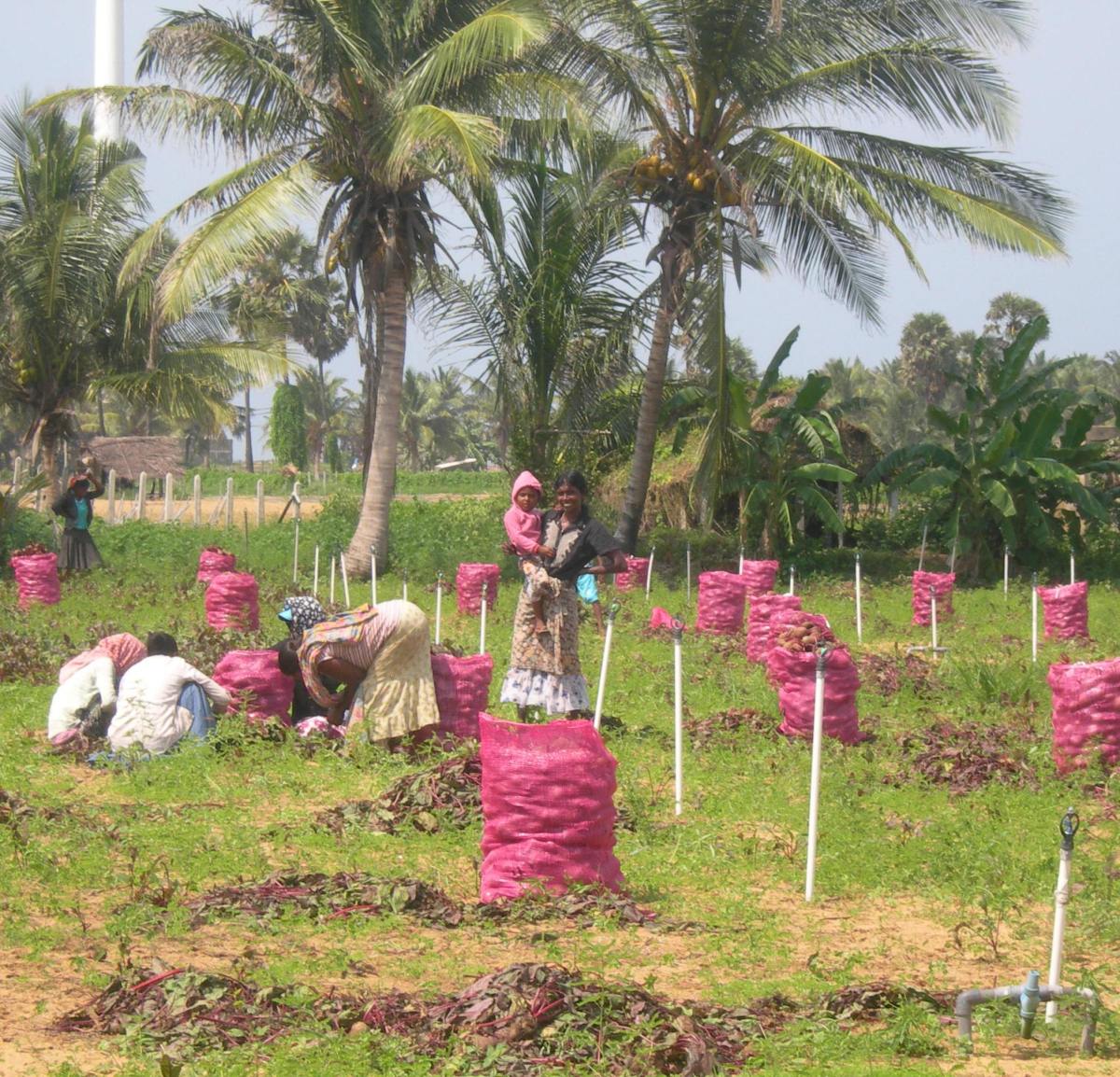
If there were no aquifers what would need to be built instead? That may seem an esoteric question given that groundwater is relied on every day by several billion people, but it is important to consider what useful things aquifers are, what we stand to lose if we mismanage them and what opportunities there are to tackle deep rooted poverty if they are used well. Continue reading “Beyond the Borehole: what do ecosystem services have to do with rural water supply?”
a new phase of RWSN is on the way…..

RWSN is not a formal organisation, more of a shared idea. In 1992, the network was founded as the Handpump Technology Network (HTN) with a narrow focus on…. handpump technology. 22 years on, and this small group of engineers from the Water & Sanitation Program of the World Bank, UNICEF, Skat and the Swiss Agency for Development and Cooperation (SDC) has become a much bigger family.
As of this morning we have 6,301 individual members, 23 RWSN Member Organisations (the newest are Yobe State Rural Water Supply and Sanitation Agency, Nigeria and the German-based NGO, Welthungerhilfe) and we have an active team of thematic leaders from Skat, WaterAid and IRC as well as a tremendously supportive Executive Committee.
So where now?
Addressing failure in rural water supply in Africa – how we can all do better (Video)
In his key note speech, Professor Richard Carter urged the delegation at the 41st IAH Congress to do more to explain why groundwater matters and why hydrogeological science is important.
Water Supply in Lagos and Nigeria – the importance of manual drilling

Nigeria has become increasingly dependent on groundwater over the last 20 years. Groundwater (from hand dug wells, boreholes/tubewells and springs) is the main source of drinking water for over 100 million people in the country. But how many people know about this, and what it means for the practices, policies and politics of Africa’s most populous country?
For our short photo/video documentary, visit: http://vimeo.com/107047730. The full report can be downloaded from http://www.rural-water-supply.net/en/resources/details/618.
Groundwater use in Nigeria has increased year after year: boreholes supplied drinking water to 10% of the population in 1999. By 2011 it was 32%. These boreholes are drilled by machines or manually. Most boreholes that are drilled on the sediments in the south or north east of the country are constructed using manual drilling techniques.
The Rural Water Supply Network (RWSN) is known for its work on water supply in rural areas. Thanks to the collaboration with UNICEF, I was able to undertake a short study of manual drilling in Lagos and neighbouring states in June this year. Have you ever visited Lagos? Lagos State is one the world’s most rapidly growing urban agglomerations. Its current population is estimated at 21 million. It is Nigeria’s smallest in terms of size but largest in terms of population. An extremely vibrant and energetic place where urban is interspersed with rural in a very dynamic situation.
Less than 10% of Lagosians access piped water, while the remainder largely fend for themselves. So what do they use? Well, people buy water from vendors, purchase bottled or sachet water, or draw water from their own hand-dug wells or boreholes. One of the less well known factors in Lagos’ success as an economic hub is that it sits on sediments. These are filled with relatively shallow groundwater (at a depth of 10 to 70 meters) which can be tapped affordably.
In recent years, most new groundwater supplies in Lagos are being constructed using manual drilling techniques. We estimate that there are about 200 drilling enterprises operating in Lagos, employing about 1,000 people. For Nigeria as a whole, there are even more.
Here are some quotes from the study:
- There is no other fast technology that can give water like manual drilling. It will keep on happening as long as people are building their houses.” Manual Driller, Lagos
- “[Manual Drilling] is the order of the day. Before you start building a house you must have money to put a borehole there” General Manager, Rural Water and Sanitation State Agency (RUWASSA),
Oyo State - “There is no need to go out [of Nigeria]. There is money to be made in this country…I would be proud for my son to enter this [manual drilling] business, Manual Driller, Oyo State
The manual drilling industry is attracting new recruits with its relatively low entry barrier (about US$2,000 for a set of drilling tools). Manual drilling is thus providing much-needed employment, most of which is within the informal economy. The manually drilled boreholes themselves are affordable, usually at a cost of less than US$2,500 per well. And they can be constructed in small spaces, and in parts of the city where conventional drilling equipment could never reach.
Manual drilling fills a need, but is not regulated. Variable construction quality poses health risks for the population, who, along with political leaders are largely in the dark about key construction standards. There are also longer terms risks of groundwater contamination. With no records of the number of wells drilled and abstraction rates, coupled with a lack of groundwater monitoring, there is no guarantee that groundwater levels will not start to fall in the future.
As the market for manual drilled boreholes and industry expands in many parts of Nigeria, those who can afford it, and are living on suitable formations will benefit from having a water source at their own home. Others will be less fortunate. In order to harness the benefits of manual drilling, we recommend the following:
- Recognise that manual drilling provides affordable water close to the home – but not for everyone
- Educate citizens and political leaders about groundwater
- Recognise and support the initiatives of the manual drillers to organise themselves
- Train manual drillers and supervisors to become professionals
- Popularise and strengthen regulations at state-level and issue permits for manual drillers and licences for manually drilled boreholes
- Find ways to ensure adherence of borehole construction standards – including supervision
- Test water quality
- Assess and monitor water resources
For our short photo/video documentary, visit: http://vimeo.com/107047730.
The full report can be downloaded from http://www.rural-water-supply.net/en/resources/details/618.
Manually Drilled Wells: Providing water in Nigeria’s Megacity of Lagos and beyond

by Dr Kerstin Danert, Skat Foundation
In Lagos, a city of over 17 million people, water demands are mainly being met from tapping the groundwater that lies beneath the city. Boreholes provide water directly at people’s homes or business premises. Borehole construction is being paid for by householders and businesses themselves. Water vendors, selling water in jerry cans or trucks are also prolific. Given the limited reach of the piped infrastructure, much of the water vended is likely to also originate from below ground. In fact, exploitation of the large, relatively shallow aquifers that lie below Lagos is one of the main reasons that the city can continue to grow at all.
Continue reading “Manually Drilled Wells: Providing water in Nigeria’s Megacity of Lagos and beyond”
 Rural Water Supply Network - blog