Stop the rot – action research on handpump quality in sub-Saharan Africa

Premature corrosion and failure of water supply hardware, particularly handpumps, is widespread in countries within Sub-Saharan Africa, but evidence is limited and largely anecdotal. If drillers are not assured of quality handpumps in country, how can they install pumps that provide water users with the services that they deserve? For the tens of millions of people in sub-Saharan Africa who depend on handpumps to meet their daily water needs, handpump failures threaten their health and livelihoods. 

In cases where communities receive a handpump or components of substandard quality, parts may rapidly wear. If components of the wrong material or inadequate quality are installed in aggressive groundwater, the water supply may not function properly or can fail. Alternatively, the water may not be suitable for drinking. If the handpumps fails, or if water is turbid, discoloured, or has a metallic taste, users may return to using distant or unsafe water sources. If handpump components wear prematurely, communities can incur unnecessary costs in trying to fix the problem. 

A new initiative by Skat Foundation and Ask for Water GmbH under the Rural Water Supply Network (RWSN) strives to find ways to ensure that handpump technologies and spare parts that are installed for drinking water in sub-Saharan Africa are consistently of high quality and can last.

The initiative runs up to March 2022 and will:

  • Document the scale and extent of the problem of handpump corrosion and poor-quality components in sub-Saharan Africa.
  • Understand the handpump supply chains for one country, analysing strengths and weaknesses.
  • Raise awareness of problems of handpump corrosion, poor-quality components alongside practical solutions for water users, drillers, governments, Non-Governmental Organisations (NGOs) and others.
  • Catalyse action through ongoing engagement of international organisations, national governments, research organisations and other stakeholders to catalyse actions to tackle the problem.

The initiative will examine corrosion (see box), quality assurance procedures and supply chains. It seeks to draw out successful or innovative ways of ensuring that users benefit good quality handpumps – consistently! If you would like to contribute to the initiative, especially by sharing your experiences and ideas, please contact Dr Kerstin Danert (ask @ ask-for-water.ch).

Box: Corrosion and handpump quality challenges

The twin challenges of how to ensure the quality of handpumps and how to prevent rapid corrosion of certain pump components have been discussed for over four decades. Corrosion of below-ground handpump components was documented in the 1980s. Research concluded that galvanisation of pump riser pipes and pump rods does not prevent corrosion where the pH < 6.5 and provides limited protection for pH 6.5 to 7. In light of this, programmes have switched riser pipes and pump rods to stainless steel or switched to uPVC riser pipes and stainless-steel pump rods, while some countries standardised on pumps which aims to be fully corrosion resistant by using a uPVC rising main and stainless steel, or fibre glass pump rods. Unfortunately, handpump corrosion problems and concerns over handpump component quality persist. The extent of the problem is not fully known because of relatively little research on this topic, coupled with a lack of information available in the public domain. 
This article first appeared in GeoDrilling International (March 2021)

NEW! Rural Water 2021 + RWSN Blue Pages / Pages Bleues

We are delighted that announce the launch today of “Rural Water 2021” and the “RWSN Blue Pages / Pages Bleues”, which you can download now from the RWSN website: https://www.rural-water-supply.net/en/resources/details/944

Continue reading “NEW! Rural Water 2021 + RWSN Blue Pages / Pages Bleues”

La planification, l’acquisition de marché et la gestion des forages: un référentiel de l’UNICEF est maintenant publier en français !

La planification, l’acquisition de marché et la gestion des forages: un référentiel de l’UNICEF 

est maintenant publier en français !

Cet outil guide le personnel de l’UNICEF chargé des programmes et des ressources tout au long du cycle de vie d’un projet. Il suit une séquence logique sur les pratiques d’achat de l’UNICEF et formule des recommandations sur les processus (appel d’offres ou demande de proposition de services), les critères d’évaluation, les clauses contractuelles, les devis génériques, les termes de référence et les approches contractuelles visant à des services techniques pour déterminer l’emplacement et la construction de forages et la supervision de travaux de construction (français et Anglais).

Borehole Drilling – Planning, Contracting & Management: A UNICEF Toolkit is now also available in French!

This toolkit guides UNICEF programme and supply staff through the life of a project. It follows a logical sequence on UNICEF procurement practices and provides recommendations on processes, evaluation criteria, contract provisions, generic bill of quantities, terms of reference and contractual approaches to seek technical services for siting of boreholes, borehole construction and supervision of construction works (English – French).

My experience of the RWSN Mentoring Programme

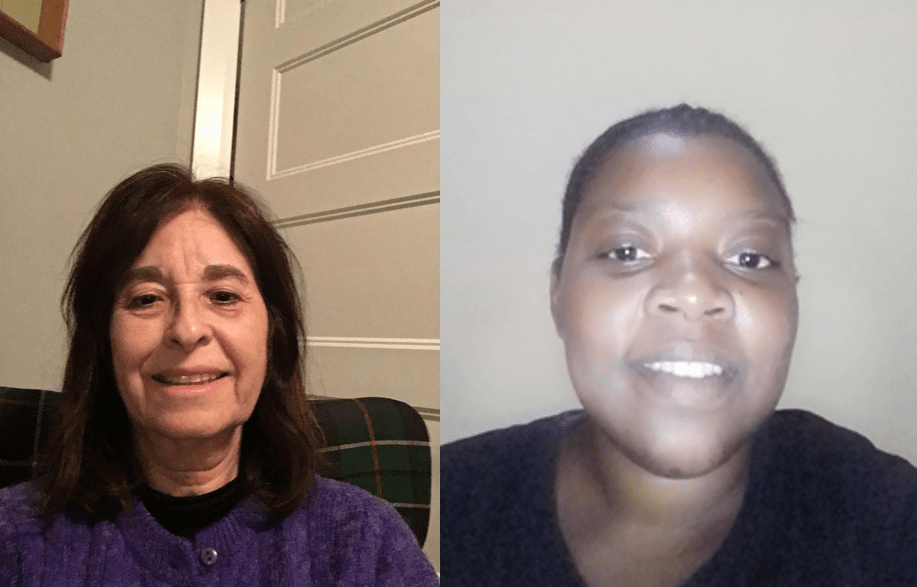
This is a guest blog by Amanda Mugwambi, a young professional from Zimbabwe enrolled as a mentee in the 2020 RWSN Mentoring Programme.

I’m Amanda Mugwambi from Zimbabwe. I have been working in the water, sanitation and hygiene (WASH) sector for over 5 years in addition to four years prior of environmental management. I am currently working as a Public Health Promoter for an international NGO. I have had the opportunity to work in both urban and rural projects. It has been fulfilling to see community transformation through donor funding complimenting stakeholder efforts and community engagement.

I heard about the Rural Water Supply Network (RWSN) mentoring programme through my country’s WASH National Coordination Unit. I was interested in the opportunity to gain knowledge and skills to advance my career and to hear about experiences in other countries. I must admit, I had a bit of trouble in the application process where I had to outline my expectations from being part of the programme. I just didn’t seem to be able to mainstream my thoughts. I wanted to know more about everything! When I finally managed to submit my application, I was anxious to find out who my mentor would be. I hoped they would be able to provide the right balance of academic and professional development.  I was matched with Susana Sandoz, a WASH specialist, currently a consultant with UNICEF. RWSN really did an excellent job pairing us! Not only is Susana a seasoned expert but her experience with UNICEF which funds some of the projects I have been working on gave me an extra understanding.

We began the mentorship process with Susana helping me gather my thoughts by streamlining topics that we would like to discuss over the duration of the programme. We communicated via email, whatsapp and skype. We had our first session in April 2020 via skype. To be honest, it was so easy talking to her. I didn’t have to worry about saying the wrong thing. We met online once a week on skype, then we’d decide on the topic for the following week. Susana would send me literature to review so that I could note down any questions for our next meeting. My favorite part of our sessions was when Susana would tell about her experiences in the different countries she had worked in, some of them were very applicable to Zimbabwe. It was relatable and gave me an insight on how to find solutions to the challenges I faced.

I have a keen interest in School WASH. I particularly liked the sessions on hygiene promotion, menstrual hygiene management, handwashing, child protection, emergency management, disaster risk reduction especially considering the Covid-19 pandemic. I have learnt the importance of using emotional triggers to reinforce positive behavior change such as effective handwashing. And I have also learnt more about community engagement to ensure the success of water and sanitation projects. It is crucial to trigger community members early for them to realize the importance of zero open defecation and the safe water chain to improve their health and hygiene. Below is the list of all the topics we discussed:

DateSession#Topic
15 Apr1COVID 19, Handwashing
22 Apr2Sanitation and Sato Pans
29 Apr3Menstrual Hygiene Management (MHM)
6 May4Disability and Inclusion
13 May5Monitoring & Evaluation; Communication for Disasters
20 May6Latrine types: advantages and disadvantages
3 June7Sustainability
10 June8Development and Environmental Issues
15 June9Communication for development (C4D)
24 June10Social Norms changes
14 July11Emergencies in WASH
21 July12Water Quality and Water Treatment
28 July13Why is Sanitation Important and Advocating for Sanitation
5 Aug14The Burden of COVID-19
13 Aug15Advocacy
21 Aug16Gender
25 Aug17Child Protection
3 Sep18Climate Change
8 Sep19Skills for Interviews
15 Sep20Hygiene Promotion
29 Sep21Capacity Building
6 Oct22WASH in Schools and COVID-19 Reduction
13 Oct23Types of Rural Water Supply Systems
20 Oct24Pollution Analysis of Water Supply Systems
27 Oct25Pollution Analysis of Water Supply Systems
11 Nov26Urban and Rural Characteristics and Different Approaches in WASH
17 Nov27Urban and Rural Characteristics and Different Approaches in WASH
23 Nov28General Climate Change Summary
7 Dec29How to obtain an Enabling Environment
15 Dec30Income Generating Activities, General Advice for Latrine Building Questions on topics previously discussed

I appreciate the opportunity to be part of the RWSN mentorship. A special thanks to Susana, I really enjoyed the sessions, always informative and flexible. We also developed a friendship over the months which was pleasant and has improved our mental health during the pandemic. In our case we have agreed to continue checking up on each other at least once a month. I encourage young professionals to join the RWSN network as it’s a platform for continuous learning and for personal and professional development.

About the author

Amanda Mugwambi holds an MSc in Disaster Management and a BSc in Environmental Science from the University of Science and Technology (NUST) Zimbabwe. Her interests range from WASH, climate change adaptation and Disaster Management.

About the RWSN Mentoring Programme

For more information on the RWSN Mentoring Programme, see here. RWSN thanks the Swiss Development Cooperation and World Vision for their support to the mentoring programme in 2020.

Coming soon: USAID Pro-WASH webinar series on Operation & Maintenance

Join PRO-WASH for a new webinar series focused on operation and maintenance of WASH infrastructure!

This four-part series will share lessons learned from USAID partners focusing on innovative advances in approaches to operation and maintenance (O&M) of water, sanitation and hygiene (WASH) infrastructure. Speakers will discuss their program’s approaches to engineering, environmental, financial, and political-economy challenges, and aim to draw out important lessons that are more widely applicable. During this webinar series, attendees will learn more about:

Continue reading “Coming soon: USAID Pro-WASH webinar series on Operation & Maintenance”

Self-supply: why I wrote the book

by Dr Sally Sutton, SWL Consultants, on her new book “Self-supply: Filling the gaps in public water supply provision” available to buy, or free to download from Practical Action Publishing from 15 February 2021.

Moving from deserts to humid lands

After 14 years working as a hydrogeologist in the deserts of the Middle East on traditional water supplies and wellfield construction, I moved to sub-Saharan Africa, which presented a whole new challenge.

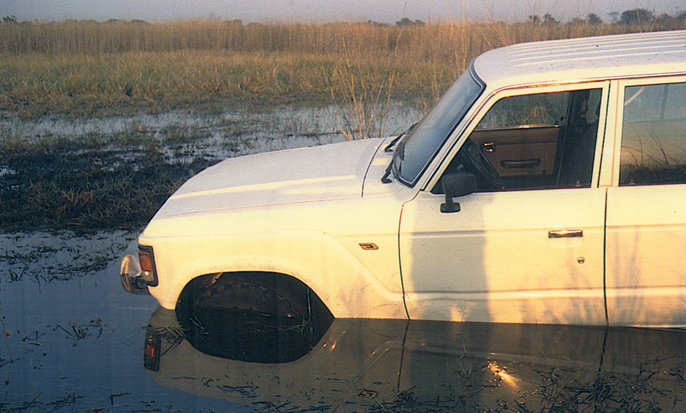
The easier availability of water was the most obvious difference – sometimes too much so (see photo)- but other important ones were the low quality of water and scattered population.

New challenges – Large areas with accessible groundwater and sparse populations – water, water everywhere but not a drop to drink.
Continue reading “Self-supply: why I wrote the book”

RWSN opportunity: part-time moderator for RWSN discussion platforms

Skat Foundation is looking for a part-time co-moderator of the RWSN online platforms from the Global South. The post will be a consultancy or paid Internship position in the RWSN Secretariat. If your application is successful you will receive a contract up to 31 July 2021 (containing about 1-2 days per week) which could be extended until the end of this year and beyond if performance is good.

Application deadline: 13:00 GMT 24 February 2021

Online Application form

Skat Foundation is looking for a part-time co-moderator of the RWSN online platforms from the Global South. The post will be a consultancy or paid Internship position in the RWSN Secretariat. If your application is successful you will receive a contract up to 31 July 2021 (containing about 1-2 days per week) which could be extended until the end of this year and beyond if performance is good.

Continue reading “RWSN opportunity: part-time moderator for RWSN discussion platforms”

Consultancy – Safe/Small Water Enterprise Consumer Knowledge Curation Phase 1

RWSN Member Organisations, Water4, Safe WaterNetwork, Water for Good and Water Mission have released an interesting consultancy opportunity.

Download the ToRs

Deadline is 19 February 2021

Please note that this is not an RWSN project so please contact Anna Rohwer at Water4 for queries and to apply

The world isn’t running out of water… it is running low on clean water

by Lalit Bajare, Nixie Engineers, India

Hi! A chemical engineer by education; I have been a water and wastewater treatment professional for last 24 years. Having started career at Ion Exchange (I) ltd; Mumbai in 1996, I moved to Singapore and worked with Hyflux and Chartered Semiconductor Mfg Ltd for around 5 years before moving back to India and starting on my own as “Nixie Engineers Pvt Ltd”.

Continue reading “The world isn’t running out of water… it is running low on clean water”