Dr Kerstin Danert, Ask for Water Ltd, Edinburgh, Scotland
High-quality infrastructure design and construction is not the only important concern in relation to rural water supply services, but provides a solid basis. Poor quality infrastructure jeopardises everything that follows – including it the maintenance, and management of the service, and even being able to collect user fees.
There are many reasons why infrastructure ends up not meeting the standards needed. And for the last two decades, the Rural Supply Network (RWSN) has emphasised ensuring that boreholes are properly drilled and completed – with a range of guidance and training materials now widely available – and (I am pleased to know) used!
However, we were mainly writing (or making short films) for people that are implementing projects. With the most recent publication we are addressing a different audience – FUNDERS OF WATER SUPPLY INFRASTRUCTURE. You may ask yourself why?
Unfortunately, not all funding agencies have the policies in place, nor the checks and balances that consistently foster high-quality infrastructure – whether initial construction and installation, or rehabilitation. And to make matters worse, well-intentioned policies can actually have negative unintended consequences. Low-per capita investment costs are a case in point – they can be set too low.
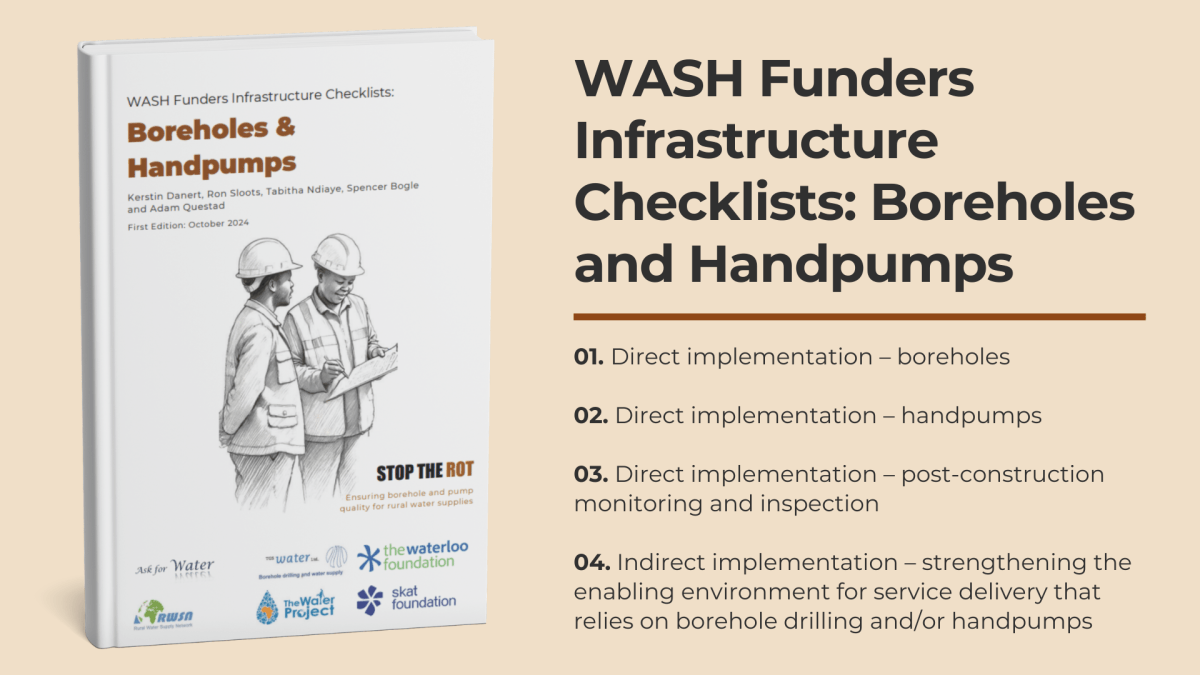
At the end of 2024, RWSN published the WASH Funders Infrastructure Checklists: Boreholes and Handpumps. They start off by recognising that when it comes to infrastructure quality, a number of things can go wrong. Grantees may simply not have the procedures in place, or the capacity to consistently ensure quality or they may not follow suitable contracting procedures. National standards may be lacking, or grantees may cut corners in order to meet Funder requests for an (unrealistic) low budget or fast schedules.
We have developed a series of four checklists – each providing guidance for WASH funders, whether financing direct implementation or systems strengthening activities. We have tried to make the checklists accessible even for those without a detailed knowledge of groundwater, drilling or handpumps. Each checklist is intended to help funders to reflect on their policies and procedures and/or those followed by the respective grantees.
Please take a look – and do get back to us through ask@ask-for-water.ch with comments feedback. We would like to keep improving this guidance in the future!
The WASH Funders Checklists were developed under the RWSN Initiative Stop the Rot.
Dr Kerstin Danert, Ask for Water Ltd, Edinburgh, Scotland
It was in 1998 when I started to work and then live in Uganda that I first really started to hear the term “Pastoralist”. That was in relation to the Karamojong (also spelt or Karimojong) – a group of people living in the semi-arid environments of north-eastern Uganda. At the time, although my knowledge of pastoralism was extremely poor, I was not fully comfortable with some of the derogatory language used about these people. However, it was hard to counteract the stereotyping and stigma that I was hearing. My efforts in relation to rural water supply had started, and continued to be with communities that were fairly, or very well settled; and if they moved in large numbers, this was primarily to flee widespread conflict and danger or settle back home again.
In my decade as a resident of the ‘Pearl of Africa’, it was largely considered too dangerous to travel through the districts of (now) Kaabong, Kotido, Moroto, Nakapiripiri, Napak and Amudet where the Karamojong and neighbouring agro-pastoral groups including the Pokot, Jie and Labwor lived. Cattle raiding (with use of firearms) and conflicts were frequent and could be deadly. On the other hand, I heard stories of Italian priests who lived among the Karamojong, plus stories of a few others. And occasionally my friends and colleagues would relate tales of some adventurous travel, or of tourists that flew up to Kidepo National Park. I never met a single Karamojong back then.
When I started to work in Kaproron, on the lush northern slopes of the extinct volcano of Mount Elgon, and staying in the residence of the local priest, I was able to look over the cliff edge onto the plains where the Karamojong lived. It was here in Kaproron that I heard stories from my colleagues and their families of their land that had been abandoned when the conflict was particularly bad. I learned a bit more about cattle raiding, but all in all, the Karamojong remained a mystery for me.
Photo (above): A view northwards from Kaproron (Source: Kerstin Danert, 2005)
In the subsequent years, other pastoral groups have fleeted in and out of my circle of attention, including the Maasai with their beautiful blankets, the Fulani with their marvellous hats and the Tuareg wearing exquisite blue. While curiosity was certainly there, my knowledge remained superficial.
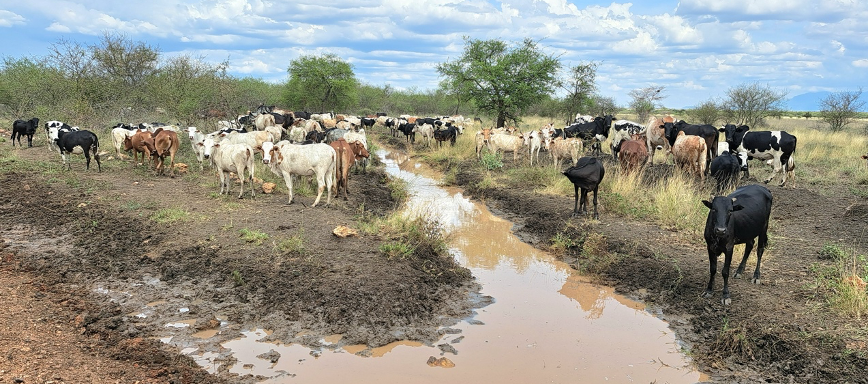
It was in 2014, when working in Chad, that my path physically intersected with pastoralists. I was simply in awe as I watched what I later learned was a transhumant family travelling southwards. Asking questions, I was struck by similar, and familiar derogatory language as it was explained that for their entire lives these people travel south and then north again with the movement of the rains. I do not wish to repeat in detail some of the things that I heard. Once again though, I had no interaction with these transhumant people themselves, and was simply left with an uncomfortable feeling – one that I now recognise as my own inner reaction when I am faced with hearing stigma towards others and am at a loss for a response.
Photo (above): Transhumance in Chad (Soure: Kerstin Danert, 2014)
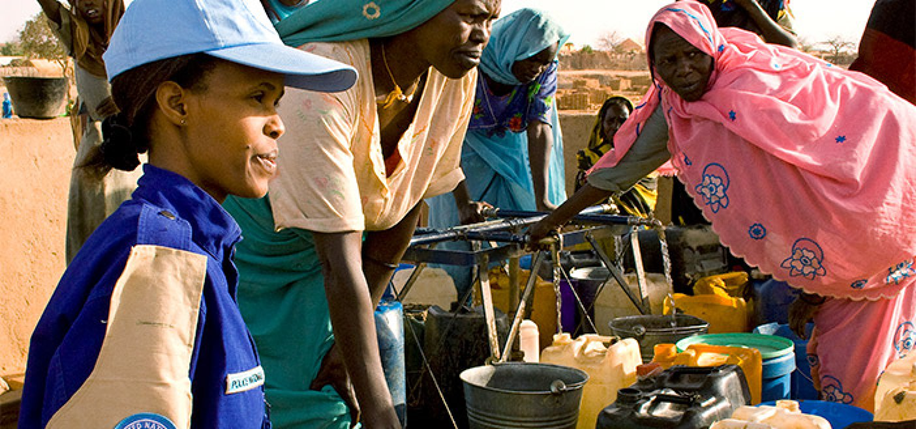
The discomfort I felt in Uganda, Chad and other places when listening to people talk about pastoralists never really left me. Thus, in 2020, while supporting UNICEF in preparing their Guidance Note on Leaving No One Behind in WASH, I decided to find out more about this group of people and include them in the publication. This turned out to be the start of a journey – a journey that continues. By this time, I had finally knowingly interacted with one single person from Karamoja: a woman police officer working in Kampala. She described the beauty of her home, how she travels back frequently, and how she loves to look at the stars when there. She told me that the conflicts have also eased over the years. I understand that following disarmament in 2001-2008 there was a period of stability, which was disrupted following rearmament in 2019 that degenerated into commercial raiding and involved the army, politicians and business people. You can read more here. Conflict continues with another round of disarmament underway.
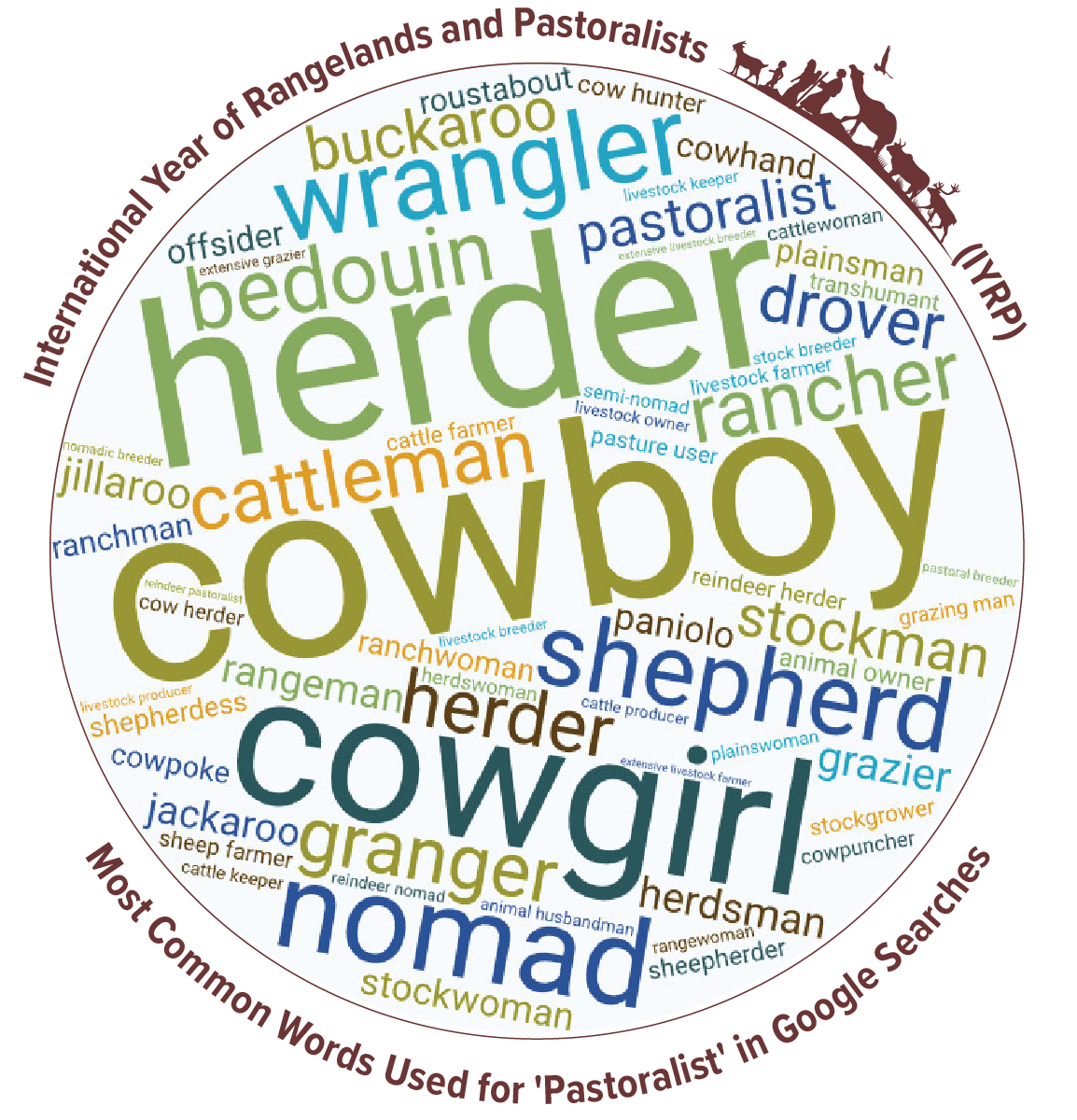
In 2022 the United Nations General Assembly proclaimed that 2026 will be the International Year of Rangelands and Pastoralists (IYRP). You can learn more here in this lovely short animated film. I have to say that the openness of the international communities that concern themselves with the IYRP, and their eagerness to share has been a warm welcome for me into this new world. When I first contacted one of those communities – FAO’s online community on pastoralism – and asked the very naïve question on how to define pastoralism, I was blown away by the many helpful responses from the community. Thank goodness, for I was lost as I tried to understand more in preparing the aforementioned guidance note!
And so, in support of IYRP 2026 and particularly with a view to the linkages with water, this is my first in a series of blogs on pastoralists and water. You are most welcome to join me as I share my own journey of discovery.
The UN WWDR 2026 shall serve as a vital resource, illustrating how global trends and phenomena are reshaping gender dynamics in societies around the world. The interplay between conflict, migration, and gender equity in WASH reveals stark realities. In regions afflicted by conflict and instability, women’s safety and access to essential services are severely compromised.
The plight of women in conflict zones is further exacerbated by migration. Women and girls face an increased risk of sexual and gender-based violence during conflicts. Yet, amid these challenges, women remain indispensable agents of change—actively participating in peace-building, conflict resolution, and post-conflict reconstruction. This resilience highlights the need to recognize and harness women’s potential for positive transformation in their communities.
Migration and its intersection and climate change also alters traditional gender roles and expectations, as families adapt to new environments; it presents opportunities for economic independence and education, empowering them to challenge restrictive gender norms. Still Migrant women often encounter exploitation, discrimination, and limited access to resources, underscoring the urgent need to address these barriers.
Corruption emerges as another formidable barrier to WASH and gender equity. It restricts women’s access to essential services and undermines their participation in leadership and decision-making processes, as demonstrated in weaponisation of water. U.N. Women has called for urgent action to protect Sudanese women and girls, emphasizing the need for accountability in addressing high levels of sexual violence and exploitation. “We cannot let Sudan become a forgotten crisis,” asserts U.N. Women’s Addou, highlighting the critical necessity for action in conflict-affected regions.
On my blog on Diversity in Water sector leadership I emphasise the concerning underrepresentation of women. A World Bank report highlights that less than 18% of the workforce in water utilities are women and that two-thirds of sanitation leaders are white according to a FLUSH LLC publication that I co-authored. This systemic inequity reflects deeper societal structures, suggesting that without diverse leadership, the water sector risks stagnation and failure in meeting SDG6 targets.
“Gender equality is a fundamental human right and an obvious question of equity and fairness. But it is also a necessary foundation for sustainable development and a peaceful, prosperous world.” – Beate Trankmann, UNDP Resident Representative
However, the intersection of WASH reveals profound challenges that hinder the potential of women and girls in achieving equitable and sustainable development, within the realms of WASH. Cecilia Sharp, UNICEF Director of WASH and CEED, explains this by informing that “unsafe water, toilets, and handwashing at home robs girls of their potential, compromises their well-being, and perpetuates cycles of poverty.” She added, “responding to girls’ needs in the design and implementation of WASH programmes is critical to reaching universal access to WASH and achieving gender equality and empowerment.”
Since the emergence of gendered thinking in WASH in 1970s, the dialogue surrounding gender equity has evolved including a dedicated SDG 5 that envisions a world where gender equality is achieved and all women and girls are empowered. It targets the eradication of discrimination and violence against women, child marriage and female genital mutilation, and the recognition of unpaid care work. Furthermore, it emphasizes the necessity for women’s participation in decision-making and access to sexual and reproductive health services.
Water Scarcity and Gender Inequality: Exploring the Hidden Costs of a Thirsty World
The intersection of WASH and gender unveils unique challenges that disproportionately burden women and girls. As demonstrated on Graph 2 below, Research reveals that when water sources are not easily accessible, women and girls aged 15 and older assume the primary responsibility for water collection in 70% of households—an alarming statistic that starkly contrasts with the 30% of households where men share this burden. This reality not only highlights the entrenched gender roles but also raises critical questions about the time and energy expended by women and girls, which could otherwise be invested in education, employment, or health.
This multifaceted vulnerability contributes to a staggering increase in mortality rates among women and girls.
Brightening the Horizon: Positive Trends in Gender Recognition in WASH Initiatives
“In the landscape of gender recognition, a nuanced narrative unfolds—one that, while acknowledging persistent challenges, also celebrates the transformative strides women are making within the water sector.”
The forthcoming UN WWDR 2026 stands as a beacon of hope, poised to spotlight the remarkable achievements of women in this vital field. By illuminating their contributions and sharing success stories, the report shall aim not just to honour past accomplishments but to ignite inspiration in future generations of women aspiring to carve out their own paths in WASH careers. This acknowledgment is not merely celebratory; it is a critical step toward fostering gender equity in a sector that has historically marginalized female voices.
Senegal, for instance, has shown remarkable strides between 2015 and 2020, as highlighted in the 2022 SDG Gender Index by Equal Measures 2030. They improved on undernourishment (SDG2) and drinking water (SDG6). The Senegalese government, since adopting the Beijing Declaration, has actively championed gender equality. The introduction of a parity law for elected institutions in 2010 has positioned Senegal as a global leader, boasting one of the highest proportions of women parliamentarians in West Africa. This progressive move places Senegal fourth in Africa concerning gender parity in its legislative assembly. Complementing these efforts, the government has ratified several international conventions to bolster women’s rights and developed a National Strategy for Gender Equity (SNEEG 2016-2026), to ensure equitable participation of both genders in decision-making and access to resources.
Such positive trends in gender recognition in WASH, have spilled into the political arena particularly women’s activism; Hon. Anne Désirée Ouloto—dubbed ‘Maman Bulldozer’ lead transformative efforts in WASH initiatives in Côte d’Ivoire. Presiding over a monumental US$1.2 billion investment in sanitation and drainage in Greater Abidjan, her work exemplifies the profound impact of female leadership in WASH sector.
Moreover, Women are not just participating but breaking barriers, challenging norms and stepping into leadership roles, shaping policies, and driving change by making their voice heard. Indonesia’s Retno Marsudi, who serves as the first UN Special Envoy on Water, exemplifies the vital role women play in global discourse on water issues.
As the waves of time crash upon the shore of progress, a mighty force is rising. These waves carry the strength of female leaders, revolutionising the Water Sanitation and Hygiene (WASH) sector. To mark another milestone in the pursuit of a sustainable future, the upcoming United Nations World Water Development Report (UN WWDR 2026), will shine a spotlight on a critical yet oft-overlooked aspect of the global water crisis: the inextricable link between gender and water, illuminating a path towards a more sustainable and equitable future. UNWWDR 2026 is not merely an echo of problems, but an inspiring melody of change, empowerment, and sustainable future.
Alongside the progress, we also confront persistent gaps. Gaps that threaten to undermine our hard-won achievements, forming a path that recognizes the interconnected nature of WASH-related challenges and the need for inclusive solutions.
Terms like sex and gender may seem straightforward but their nuances hold profound implications for how we perceive and address WASH and gender issues. UNICEF definesSex as the biological and physical differences between women and men while Gender as socially constructed differences in attributes and opportunities associated with being a woman, man, girl, or boy and to the social interactions and relations between women and men. Woman refers to biological females according to UNOHCR. In my view this affirms the gap in the context of WASH statistics where WASH data is often disaggregated by sex, but rarely disaggregated by gender.
Imagine a world where the simple act of accessing safe WASH does not dictate one’s ability to attend school, earn an income, or live a life free from danger. A world where our mothers, sisters, and daughters are not disproportionately burdened with the responsibility of fetching water, but are empowered managers and change agents in WASH initiatives. For more than two billion people around the globe, particularly women and girls, this is a distant reality. The latest stark metrics reveal a concerning reality: despite progress, millions of women and girls worldwide still lack access to safe WASH services, hindering their empowerment, health, and economic opportunities. This world, although still a distant reality, is one we must strive for, beginning with a deep understanding of the water-gender nexus.
The gendered impact of inadequate WASH access is not just a reflection of biological differences, but a manifestation of socially constructed disparities. It serves as a stark reminder that water is not just a women’s issue – it’s a human issue and Graph 1 below illustrates these realities.
Graph 1 Proportion of households in which women, men, girls and boys are primarily responsible for water collection, by country, selected surveys where at least 10% of households collect water, 2012–2022 (%) Source UNICEF and WHO, 2023
UN Water’s dictum concurs and aptly captures that “Water is a human right, not a privilege,” this blog series embodies a bold commitment to upholding the rights of all.
The upcoming UN WWDR for 2026, aims to bridge this chasm by placing gender equity at the heart of WASH management and sustainability discussions. It stands as a pivotal blueprint for understanding the critical nexus between water and gender, presenting an urgent call to action for policymakers, practitioners, and stakeholders dedicated to fostering an inclusive, equitable, and water-secure world. By weaving together, a rich narrative of data, case studies, and expert insights, the report shall transcend mere enumeration of challenges to celebrate the resilience and ingenuity of women who are at the forefront of change within the WASH sector. It shall compellingly argue that embedding gender equality and social inclusion into water policy and practice is not just a moral imperative but a pragmatic necessity for achieving all SDGs especially SDG 5 and 6. Statistical evidence revealing the extensive failures of undervaluing women’s expertise in WASH management will be juxtaposed with success stories of women-led interventions that have illuminated pathways towards peace, prosperity, and sustainability. As the report critically examines the barriers that women and girls face in accessing safe WASH, it shall highlight the detrimental impacts of gender disparities in decision-making roles, pushing the narrative beyond mere awareness to active transformation. With a focus on fostering gender-responsive approaches in the WASH sector, the UN WWDR 2026 shall serve not only as a repository of insightful analysis but as a clarion call for disruptive change, intended to inspire dialogue and galvanize global commitment towards a future where equitable access to safe WASH is a universal reality.
Nearly 30 years ago I began my first steps into a career in Water, Sanitation and Hygiene (WASH) in Guatemala. In the morning mist, there was the dull clank of the school bell. It was an old bombshell that had been dropped on the village at some point during the thirty-year civil war. On that day it was guiding children to lessons. The clothes of the people, particularly the women, were amazing. Incredibly colourful and ornately woven, and each is distinctive to that community.
Today, my job is a different type of weaving, but no less colourful. In my previous post, I described how we, as RWSN and SuSanA, have been working with the Multilateral Development Banks, bilateral aid agencies, NGOs and researchers to weave a new narrative for rural WASH – one of learning from each other to achieve universal and lasting access.
But success doesn’t come from top-down actions only, there also needs to be a meeting with bottom-up energy, experience and initiative. Thanks to the support from SDC and IDB, through the SIRWASH project, we have had the opportunity to connect and listen to what regional practitioners are interested in and find ways to collaborate.
On 24 October, our partner, Lourdes Valenzuela from Aguatuya/SuSanA Latinoamérica co-hosted an online meeting with fellow WASH networks: “Conversatorio virtual: Escuchando las voces del sector de agua y saneamiento rural en Latinoamérica” (Online Conversation: Listening to the Voices of Rural Water and Sanitation Leaders in Latin America)
This 80-minute session, co-hosted with COLSAR, connected experts from diverse backgrounds to identify current sector demands and innovative approaches for improving rural water and sanitation management.
Themes and Objectives
The session, moderated by Marcelo Encalada from LatinWASH, sought to:
Identify essential knowledge areas and skills for strengthening rural water and sanitation services.
Explore digital tools and resources that could improve access to critical knowledge.
Examine the role of digital platforms such as SuSanA and LatinWASH in promoting sustainable solutions.
by Sean Furey, Director – RWSN Secretariat @ Skat Foundation
Rural Water, Sanitation and Hygiene (WASH) is such a local, personal, issue that does global-level exchange make sense?
At first glance, rural areas and communities worldwide seem too diverse for networking and knowledge exchange to be useful or meaningful. What does WASH for isolated hamlets in the Nepalese Himalayas have in common with a fishing village on the Peruvian coast or a small town in northern Nigeria? Quite a lot, it turns out.
When it comes to shear financial clout and convening power, Multi-lateral Development Banks (MDBs) are hard to beat, but even they have had mixed success with rural WASH – but there have been successes and they have recognised that they can learn from each other so that they can provide their client governments with the technical assistance and financial options to deliver sustained improvements. So, last year the relevant focal points from the African (AfDB), Asian (ADB) and Inter-American (IDB) met and agreed on a Call to Action with three priorities:
Information-based decision-making and rural WASH investments and service monitoring.
Institutional strengthening & coordination.
Rural sanitation.
From this, we organised a webinar mini-series drawing on their recommendations for case studies on each topic from each region.
Finding the common threads and bringing them together to make them stronger
This year, we took more steps to build an understanding and appreciation of the solutions that have the potential to transcend the variability of local contexts and be adapted. With growing interest, our colleagues at the World Bank also joined the small group and together we organised a special SIRWASH breakfast meeting and an open session on “Coordinating Rural Water Investments to Promote Security and Stability” with REAL-Water :
The SIRWASH breakfast meeting that followed was in the spirit of collaboration among countries in the global south, using knowledge sharing as a catalyst for innovative and sustainable solutions. It was attended by more than 40 representatives from countries (Haiti, Brazil, Peru, Chile, Nigeria and Uganda), multilateral banks, multilateral and bilateral agencies (SDC, AECID, SIDA, WHO, OAS, UNICEF), NGOs and philanthropists (including, One Drop, Water For People, Avina, Aguatuya, mWater, Global Water Center), as well as networks, partnerships and research (RWSN, SuSanA, WASH Agenda for Change, WASH Funders Group, SIWI, Uptime, the Aquaya Institute).
Using the “Fishbowl” method, participants exchanged their perspectives in an open and dynamic way on how strategic partnerships can increase impact in the sector. Discussions focused on two key questions:
1. How can technological innovations in rural WASH information systems be supported to be truly effective in decision making and incentivize scaling up?
2. What are practical solutions to improve the design and implementation of national rural WASH programs so that their benefits are sustained over the long term?
One of the central themes was innovation through sector information systems, a crucial tool for planning and managing water and sanitation services in rural areas. Three countries shared their experiences on how they have adapted and improved these systems:
Haiti highlighted the use of information systems for decision-making;
The importance of institutionalizing information at the national level and ensuring that communities participate in the validation and appropriation of data and decisions was emphasized.
In addition to information systems, the event underscored the need to integrate both technological and social innovations to improve rural services. Social innovations and behavioural change are essential for communities to take ownership of the systems and actively participate in their management and maintenance. Participants agreed that long-term sustainability is about finding the sweet spot between community-ownership/responsibility and external support.
The second critical issue addressed was the sustainability of rural water and sanitation services. Participants stressed that the successful implementation of these services cannot depend solely on initial investments in infrastructure. Innovative mechanisms need to be developed to ensure their financing and continued operation. The examples of Brazil and Nigeria were instructive, both countries demonstrating how the combination of effective governance and innovative financial models can ensure the operational sustainability of services:
Brazil presented its comprehensive implementation of their National Rural Sanitation Program (PNSR).
Nigeria highlighted the ways a results-based SURWASH programme is strengthening institutional capacity.
The Uptime Consortium shared their experiences and successes with Results-based Contracting on rural water service delivery across many contexts.
The discussion emphasized the need for functionality and quality indicators for rural services, linking reliable information to financial incentives for operators. This strategy can enhance the long-term sustainability of these systems. The working group concluded that collaboration is essential to ensure countries have reliable information for decision-making, aimed at improving the quality of rural services.r decision-making aimed at enhancing the quality of services in rural areas.
In the final discussion, consensus was reached on the need to create and maintain an enabling ecosystem for the development and sustainability of rural services. The great opportunity for development partners to join efforts and seek synergies, contributing technical and financial resources to this ecosystem in the countries was highlighted.
The event concluded with a clear call to action: all actors – governments, development banks, cooperation agencies, NGOs, networks and the private sector – must remain committed to financing and strengthening rural water and sanitation services. The MDBs will continue to work together on a concrete action plan to exchange and replicate successful and innovative experiences to ensure universal and quality WASH services in the countries.
Knowledge exchange is not just talk and powerpoint presentations, it is about building connections and trust between individuals and organisations, finding those common interests and encouraging co-creation of new insights and more sustainable solutions.
The symbolic activity organized by One Drop, where participants bonded to represent their intention to work together towards a common goal, was a powerful reminder of the importance of lasting partnerships. This symbolic gesture is just the beginning; it is essential to continue to scale up efforts so that the most vulnerable communities can access quality water and sanitation services in a sustainable and equitable manner.
Top-Down meets Bottom-Up
After this event, our partner Aguatuya convened an online meeting of Latin American WASH networks to encourage bottom-up exchange to complement our high-level approach. But we will follow that thread in the next post…
Many thanks to the large number of people involved, but in particular to Sergio Campos, Manuela Velasquez-Rodriguez and Cristina Mecerreyes at IDB; Diane Arjoon at AfDB, Vivek Raman and Tanya Huizer at ADB, Awa Diagne and Sarah Nedolast at the World Bank, Janine Kuriger at SDC, and to the wonderful RWSN/SuSanA team: Dr Aline Saraiva, Batima Tleulinova, Susanna Germanier, Lourdes Valenzuela, Paresh Chhajed, Chaiwe Sanderse and all the speakers and panellists for the webinars and sessions.
This is a guest blog by Gloria Musopole, who participated as a mentee in the 2024 RWSN Mentoring Programme.
Participating in the RWSN Women in WASH Mentorship Program has been a great experience, offering many opportunities for both personal and professional development. The program provides a platform to connect with seasoned experts in the water sector, learn from their experiences, and gain valuable insights into navigating the challenges and opportunities in the industry. It also creates a space for building networks with fellow participants (both mentors and mentees), encouraging a supportive environment for learning, growth, and collaboration.
When I first joined the program I wasn’t sure what to expect. Looking back, I realise how much I have grown in my leadership abilities and technical skills. I have learned to take on challenges with confidence and approach tasks with a sense of purpose.
One of the highlights during this program was the opportunity to improve my skills in designing solar powered water supply systems, a field that holds a lot of potential for sustainable solutions in water access. through resources like the Global Water Partnership (GWP) course, I was able to improve my technical knowledge and now I feel more prepared to contribute to innovative projects in this area.
I have also learned the importance of strategic planning and preparation, particularly when it comes to advancing education and career opportunities. Success in competitive spaces, like school and scholarship applications, requires a well thought out plan. This insight is invaluable as I look to further my education and career within the water sector.
The program has also helped me to connect with a network of professionals from different countries, allowing for the exchange of ideas and solutions to common challenges in water sustainability. These connections are not only inspiring but are also a rich resource of knowledge and support for future collaborations.
I would like to extend my appreciation to RWSN and Women in WASH for organising such a life changing and career advancing program. Their dedication to empowering women in the WASH sector is truly inspiring, and I am thankful for the opportunity to be part of this initiative. I look forward to giving back and sharing my experiences with other emerging young professionals. I encourage anyone interested in the WASH sector to seek mentorship opportunities and connect with like-minded individuals.
Special thanks to my mentor, Elon Sooknanan, who generously shared his time and expertise in this journey. Through our sessions, I’ve gained the confidence to face challenges and opportunities head-on with belief and purpose.
Mentor’s Thoughts – Elon Ryan Sooknanan
“In March 2024, I had the privileged opportunity to mentor Gloria for six months through the Rural Water Supply Network (RWSN) mentorship program. Gloria’s experience was not only rich, resourced, and rewarding but truly a transformative one. She has always been persistent, consistent, and passionate about the issues of water, sanitation and hygiene (WaSH) in her community and by extension her country. Our initial conversations revealed a deep, unwavering commitment to making a difference, despite the multiple challenges she faced. As her mentor, I guided, supported, motivated, and inspired her. I shared my knowledge and experiences, and I helped her navigate the pathways of her professional aspirations. Mentoring Gloria has not only enriched her professional journey but has also deepened her understanding of networking and partnership and the critical importance of the 5Cs- culture, communicating, coordinating, collaborating and commitment in the field of WaSH. I look forward to seeing Gloria’s future successes and am grateful for the opportunity to have been part of her transformative journey of learning and growth” – Elon Ryan Sooknanan.
To join RWSN and be informed about the next round of the mentoring programme, please sign up here.
Handpumps have revolutionized access to safe and reliable water supplies in Sub-Saharan African countries, particularly in rural areas. They constitute a healthy and viable alternative solution when surface water is contaminated. Danert (2022) estimates that 200 million people in sub-Saharan depend on 700,000 handpumps to supply themselves with drinking water.
Unfortunately, many handpumps service face performance issues or premature failure due to technical or installation defects in the borehole or pump, operational and maintenance weaknesses, or financial constraints (World Bank, 2024). Statistics on the functionality of handpumps in Cameroon are very sparse and dispersed with very little data available. However, some studies show that 25% to 32% of handpumps in Cameroon are inoperative (RWSN, 2009; Foster et al., 2019).
Previous reviews of handpumps functionality data in Cameroon have been conducted, including RWSN (2009) and Foster et al. (2019). However, these estimations were based on partial data and thus may not reflect the situation in the country as a whole. In addition, the number of handpumps installed each year is constantly increasing, and there is a need to update functionality data. Thus the interest of the study.
The methodological approach used in this study was based on online searches. To do so, we searched, collected, and analyzed relevant data from the 310 Councils Development Plan (CDP) that had been collected from 2010 to 2022. Information sources included data sets and documents available online through the data portals of the National Community-Driven Development Program (PNDP).
Overall, based on the data analysed, the number of handpumps used as the main source of drinking water supply in Cameroon is 20,572, of which 9,113 are installed in modern wells and 11,459 in boreholes. Approximately 8.2 million people in Cameroon rely on a handpump for their main drinking water supply, which is equivalent to 36.8% of the population of Cameroon. Findings indicates that one in three handpumps in Cameroon is non-functional, which in 2022 was roughly equivalent to 6,724 inoperative water points. To put this in perspective, this number is about 33% of the total number of handpumps, enough to supply 2.7 million people, assuming 400 inhabitants per handpumps. According to this estimate, it is about 44.8 billion CFA francs, or 66.8 million USD, was invested in the construction of water points that are immobilized and do not generate any benefit (improved health, nutrition, or education).
Figure 1 presents estimations of non-functionality in the ten regions of Cameroon. This figure shows that the region that had the highest level of non-functional handpumps is the Adamawa region (43%), followed by the East region (39%), the Littoral (37%), the North (35%), the South (35%), the West (32%), the South West (31%), the Center (30%), the North West (30%), and the Far North (28%).
Figure 1 | Handpump functionality rate for Cameroon
The handpumps, like the Community Based Management, seem not to have given the expected results. The fact that some handpumps fail prematurely seems to indicate that technical defects (poor quality components and rapid corrosion) contribute to handpump failure and underperformance. Further, this review notes that questions related to the quality of handpump material and the corrosion of handpumps have not been sufficiently taken into account in the various research studies in Cameroon and Sub-Saharan Africa. Thus, Future research should focus on physical audits of handpumps, and handpump rehabilitation campaigns in order to shed light on these issues. Finally, preventing rapid corrosion of handpumps through regulations should be implemented in order to improve the performance of handpumps. Regulations may be implemented at the national, regional, or local levels, and it is advised to employ a pH threshold of less than 6.5 as a corrosion risk indication. Once they are more precisely defined, additional risk factors such as salinity, chloride, and sulphate levels can be added.
About the author:
Victor Dang Mvongo, MSc is a PhD Student at the University of Dschang (Cameroon) and an independent consultant in WASH. He conducted the work featured in this blog at the Faculty of Agronomy and Agricultural Sciences.
Further reading:
Mvongo D.V, Defo C (2024) Functionality of water supply handpumps in Cameroon (Central Africa). Journal of water, sanitation and Hygiene for development. https://doi.org/10.2166/washdev.2024.085
References:
Danert, K. (2022) Halte aux dégradations Rapport I : Fiabilité, fonctionnalité et défaillance technique des pompes à motricité humaine. Recherche-action sur la corrosion et la qualité des composants des pompes à motricité humaine en Afrique subsaharienne. Ask for Water GmbH, Skat Foundation et RWSN, St Gallen, Suisse.
Foster, T., Furey, S., Banks, B. & Willets, J. 2019 Functionality of handpump water supplies: a review of data from sub-Saharan Africa and the Asia-Pacific region. International Journal of Water Resources Development 36 (5): 855–69. https://doi.org/10.1080/07900627.2018.1543117
About 67% of the population of rural Uganda rely on a handpump, and, according to the Ministry of Water and Environment (MWE) database, the country currently has an asset base of over 63,000 handpumps. While there is a policy shift towards piped supplies (including using solar-driven pumps), handpumps will remain important in providing water to Uganda’s rural population for the foreseeable future. The U2 and U3 (known elsewhere as the India Mark II and Mark III), as well as the Uganda 3 Modified Pump (U3M) are the standardised pumps used in the country.
The rapid corrosion of submerged handpump riser pipes and rods has been well documented in Uganda, with over a dozen reports, and studies, including academic publications on the subject. When handpumps corrode, the red, badly-tasting water of the supply is often rejected and sources abandoned, with users returning to more distant and contaminated supplies. Rapid corrosion also leads to premature failure of the supply as riser pipes leak or even break completely. It is widely accepted that galvanised iron (GI) riser pipes and rods corrode in aggressive groundwater where pH levels are low (<6.5). High levels of salinity and high chloride concentrations are also highly corrosive.
In recognition of the widespread corrosion problem in Uganda, in 2016 MWE issued a letter suspending the use of galvanised iron riser pipes. Despite the fact that rapid corrosion is a problem in at least 20 countries in sub-Saharan Africa (plus Sudan), Uganda is one of the very few countries to have taken affirmative action to address the issue.
This short study, funded by The Waterloo Foundation, set out to document Uganda’s experience and lessons learnt in preventing rapid corrosion. It is intended to provide insights and recommendations for Uganda and other countries. The in-country study was undertaken in October/November 2023, and comprised interviews with 55 stakeholders from government, suppliers, NGOs, drillers and handpump mechanics as well as a review of select documentation and analysis of quantitative data collected in 16 districts by the NGO Water for People. As well as discussing with stakeholders based in Kampala, the study involved visits to Mityana, Kibaale, Kyegegwa, Mubende, Kamwenge and Masindi Districts, including some observations of components and handpump removal.
The study has found qualitative evidence that the suspension of use of GI pipes on handpump installations in Uganda has had an overall positive effect on reducing the phenomenon of handpump corrosion in the country. It took a few years for stakeholders to adjust to the suspension, including availing alternative materials and determining which grades of stainless steel to be used. In the early years, there were issues of availability and supply of alternatives, gaps in information among some stakeholders alongside cost concerns. Initially, some organisations installed grade 202 stainless steel, which was also found to corrode rapidly. In addition to stainless steel pipes, uPVC (with uPVC connectors) and uPVC pipes with stainless steel connectors are used.
While most stakeholders seem to be aware of the suspension of GI riser pipes and rods, this does not seem to be fully adhered to, with some district local governments, NGOs and communities apparently still installing GI on new installations or for replacements. The study witnessed “mixed” installations comprising GI, and stainless steel (which also sometimes appeared to comprise different grades). Such installations risk creating problems through galvanic corrosion, a phenomenon whereby dissimilar metals submerged in water increase corrosion.
The study concludes with a number of recommendations as summarised below:
Studies and research
Explore reasons why some stakeholders are not adhering to the suspension of GI riser pipes and pump rods and how to effectively overcome these barriers.
Undertake analysis of quantitative data including MWE Management Information System (MIS) data on shallow wells and boreholes (including their functionality status/due for decommissioning). Quantify the extent to which handpumps with corroding GI components have been replaced in the country, and also estimate the cost and human capacity implications of replacing poorly functioning or abandoned sources as a result of corrosion.
Monitor installations to determine if there are any problems with corrosion of the water tank and cylinder when connected to a stainless steel pipe as a result of galvanic corrosion or poor installation, and consider checking for the release of contaminants, including lead.
Clarify maximum installation depths for alternative materials through testing, and communicate this clearly to all stakeholders through written guidance (discussed below).
Developa short document (and film) on what users can measure and inspect directly. This could support stakeholders in assuring quality.
Undertake further research on the relationships between pH, salinity, other water quality parameters and the quality of the galvanising (particularly the thickness of the galvanising).
Explore alternatives to the nationwide suspension of GI, such as lifting the suspension locally based on very clear, scientifically robust criteria in relation to pH and salinity.
The appropriateness of the discontinuation of funding for shallow wells should be further studied and reviewed for appropriateness.
Recommended actions for Uganda
Support quality assurance efforts by updating the Uganda Standard Specifications for the India Mark deepwell and shallow well handpumps, referred to in Uganda as the U2 and U3 pumps.
Develop a certification mechanism for the suppliers of handpumps/components to ensure quality and include labelling requirements to help consumers identify appropriate parts.
Raise awareness and improve knowledge of (i) the GI suspension, and the rationale behind it, (ii) how to determine whether iron in water is naturally occurring or caused by corrosion, (iii) appropriate alternatives (iv) key issues with respect to grades of stainless steel and depth limitations and (v) identifying appropriate parts. Written guidance should be provided.
Provide training for handpump mechanics and handpump installers across the country on the correct handling of the uPVC and stainless-steel alternatives currently available on the market in Uganda, and ensure that they have the appropriate toolkits to handle these materials.
Incorporate inspection of handpump component quality and installation in post-construction monitoring by government, NGOs, the Uganda Drilling Contractors Association (UDCA) and funding agencies.
Continue to engage with and support innovations such as the Handpump Improvement Project.
MWE, in collaboration with NGOs and District Local Governments should find ways of supporting poor and vulnerable communities with ongoing corrosion problems to replace GI pipes and rods.
Lessons for other countries
Based on the experiences of Uganda, key lessons for other countries that are considering taking affirmative action to address rapid handpump corrosion are:
Undertake an in-country study to document the extent of the problem and any efforts that may have been undertaken to address it in the past. If rapid handpump corrosion is found to be a widespread problem in the country, and is related to GI installed in aggressive groundwater, consider suspending the use of GI – carefully considering the pros and cons of a nationwide or more localised suspension as well as the feasibility of using alternative parts.
Prior to any suspension, undertake extensive and transparent stakeholder consultation, taking on board concerns and developing a suitable timeline. Provide user-friendly guidance on alternative materials and their handling. In advance of any suspension, ensure that all stakeholders are informed of it, and are made aware of any implications for programmes and budgets.
Government should either refer to suitable international standard specifications, update national standard specifications or (as an interim measure) provide clear guidance regarding alternative materials, components and dimensioning that should be used. Evaluation is needed to ensure that materials are safe for contact with drinking water. Guidance should include information on depth limitations and material handling.
Document the process of suspension, and monitor adherence, as well as challenges faced by organisations and communities, and consider how to adapt programmes and policies to enable changes to be effective.
Ensure that handpump mechanics and others across the country are trained in the correct handling of the alternatives to GI. They should also be provided with appropriate toolkits for handling the stainless-steel and uPVC pipe materials.
The responsible line ministry should work with the agency responsible for standards to ensure the importation of quality handpump components and consider certification of suppliers.