
watch online now at http://www.odi.org/events/4037-groundwater-poverty-development
Our Rainwater Harvesting Community of Practice: towards our 2nd anniversary and beyond
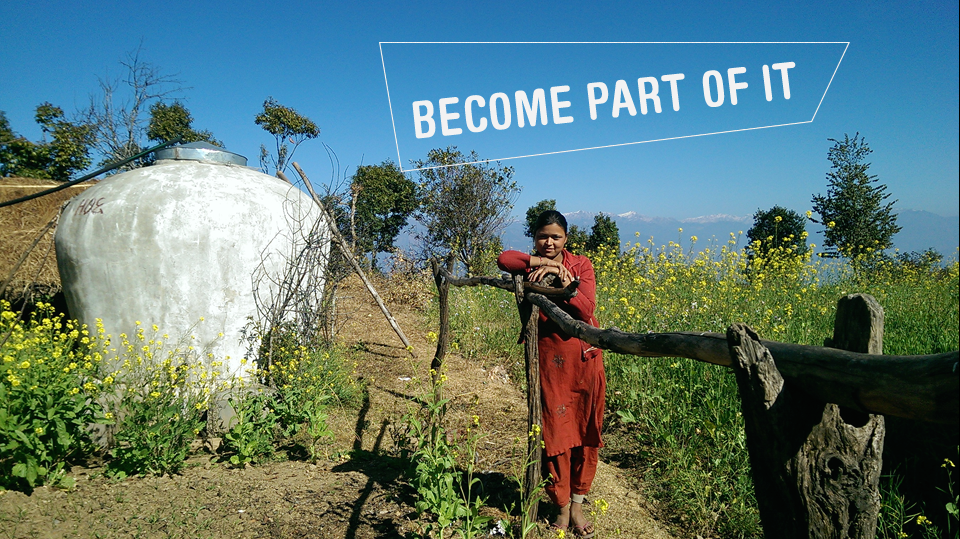
reblogged from www.rain4food.net
by Hans Merton, RAIN/Akvo
Mid 2013 we launched our Community of Practice on Rainwater Harvesting as a part of the Rainwater Harvesting for food Security programme, so with 1,5 year on the road it’s about time to look back and more important: where should we be heading to?
Where are we?
Continue reading “Our Rainwater Harvesting Community of Practice: towards our 2nd anniversary and beyond”
Social Dimension of Water Resource Management in Sri Lanka – Part 7
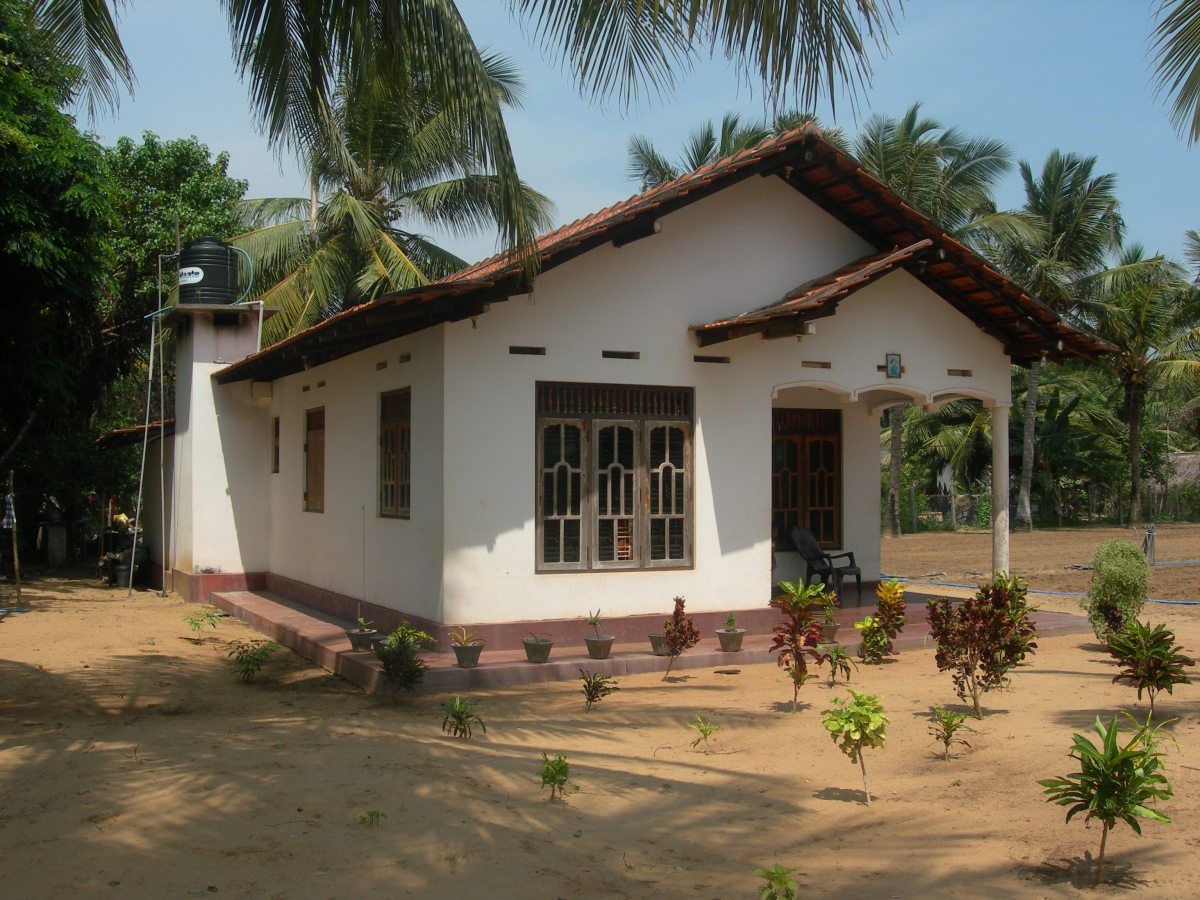

Assistant General Manager (Sociology)
Policy and Planning Division
National Water Supply and Drainage Board
by Delgollage Senevirathne, Assistant General Manager (Sociologist) at the National Water Supply & Drainage Board (NWSDB), Sri Lanka.
NWSDB is an RWSN Member Organisation. To find out more visit the RWSN main website.
(13) Community ownership and responsibilities for modern water resources management
Community ownership of water resources is not envisaged. However, the water resources can be allocated in bulk form according to agreed quantities as per a river basin plan for water resources allocation to community managed piped water supply schemes and Irrigation schemes at secondary and tertiary level.
The Community Based Organizations will be held responsible for managing the water allocated in bulk among individual users by ensuring equitable allocations are distributed among individual users.
They also have a responsibility to maintain good quality water and should participate in consultations for decision making process at village and district / divisional and provincial levels.
They also need to be associated with river basin committees where decisions are made in allocation of water resources for development projects for new water supply schemes and irrigation schemes particularly concerning water diversion schemes that may affect their water allocation rights that have been already granted. They also can play a role in common issues such as maintenance of watershed protection and conservation programmes and environmental flows and sand mining issues and over-extraction of groundwater etc.
Community partnerships will also be required to maintain demand management measures such as reduction of water use when there is shortage in supply levels to enable equitable use of water through awareness creation, application of technology transfer programmes in efficiency improvements, application of associated regulations, imposition of self rule in reduction of water use etc.
(14) Recommendations
Continue reading “Social Dimension of Water Resource Management in Sri Lanka – Part 7”
Social Dimension of Water Resource Management in Sri Lanka – Part 6
by Delgollage Senevirathne, Assistant General Manager (Sociologist) at the National Water Supply & Drainage Board (NWSDB), Sri Lanka.
(10) Gender sensitive approach to and participation in water issues countering caste, political and religious discrimination in access to water
Access to water is directly dependent on women participation in fetching water as they are held mainly responsible for provision of water at household level on a continuous basis particularly when they have to depend on non-point sources available in fair distances away from their households. Hence their participation is considered as an important factor in decision making process for developing water supply connections at their households. Caste and wealth are major factors in influencing the political hierarchy in promoting public funds to develop water supply projects among the minority communities particularly among the Tamil population. There is no religious discrimination in access to water. All religious institutions and people belonging to different religions are equally treated in deciding on the water supply development projects.
Continue reading “Social Dimension of Water Resource Management in Sri Lanka – Part 6”
Social Dimension of Water Resource Management in Sri Lanka – Part 5
by Delgollage Senevirathne, Assistant General Manager (Sociologist) at the National Water Supply & Drainage Board (NWSDB), Sri Lanka.
(8) The social consequences of failure to control excessive ground water extraction
There are many instances where excessive groundwater extraction affects the availability of groundwater for other users leading to social consequences. Over extraction of ground water from a plot of land has a negative impact on the use of groundwater from the adjacent land users in case of simultaneous extractions are affected. If one party continuously extracts groundwater it will impact the aquifer and will become unsustainable in recharge levels.
In Sri Lanka, there is no legal provision to control use/ extraction of groundwater in terms of quantity and quality parameters. Hence there is a need to introduce controlling legislation to manage the groundwater resources which is impacting on social consequences. Continue reading “Social Dimension of Water Resource Management in Sri Lanka – Part 5”
Social Dimension of Water Resource Management in Sri Lanka – Part 4
by Delgollage Senevirathne, Assistant General Manager (Sociologist) at the National Water Supply & Drainage Board (NWSDB), Sri Lanka.
(6) Awareness of aquifer as a finite resource
Groundwater comes from two main sources. When it rains water seeps down through the soil until it reaches an aquifer. These aquifers may also be in contact with rivers and streams allowing these surface waters to ‘drain’ into the aquifer. In some places these aquifers can also supply water to rivers and streams. Groundwater is a finite resource and must be replenished or else it will eventually be depleted.
An aquifer is a body of water-saturated sediment or rock in which water can move readily. Water in the ground travels slowly through pores or fractures depending on the type of sediment or rock material that the aquifer is made of.
Continue reading “Social Dimension of Water Resource Management in Sri Lanka – Part 4”
Social Dimension of Water Resource Management in Sri Lanka – Part 3

by Delgollage Senevirathne, Assistant General Manager (Sociologist) at the National Water Supply & Drainage Board (NWSDB), Sri Lanka.
(3) Grass roots and high level approach to resolution
Community based approach to resolution of water issues relating to competition resulting in water shortages for some communities operating in downstream areas will need strategies for water allocation including mechanisms to ensure equity in distribution of available water among the user communities based on rational allocation criteria. The water allocation policies at national and river basin levels will have to be formulated and implemented. Water conservation will be a common approach for resolving of issues relating to water shortages and demand management will be a tool for managing the issues using strategies such as awareness creation among the community users, legal provisions, technology improvements etc.
Continue reading “Social Dimension of Water Resource Management in Sri Lanka – Part 3”
Social Dimension of Water Resource Management in Sri Lanka – Part 2

by Delgollage Senevirathne, Assistant General Manager (Sociologist) at the National Water Supply & Drainage Board (NWSDB), Sri Lanka.
Awareness raising of the need for water conservation and pollution prevention and efficient use of water
Water availability depends on rainwater and groundwater and constrained by two factors space and timely occurrence while it is being impacted due to excessive use and type of use. Excessive use is based on the limitations in availability of water in the specific locations while type of use will lead to pollution of water bodies and as it depends on the quality of return flows in both surface and ground water resources. Efficient use of water will play a major role when there are instances of demand exceeding supply and purpose of water use. Water use for Hydro-power generation will depend on the timely releases from reservoirs and will become a source for secondary usage such as irrigation and water supply schemes. There is an advantage in secondary use of water if the primary use is for Hydro power generation, as there will be no impurities that will be accumulated during in-stream use of water.
Continue reading “Social Dimension of Water Resource Management in Sri Lanka – Part 2”
Social Dimension of Water Resource Management in Sri Lanka – Part 1

Assistant General Manager (Sociology)
Policy and Planning Division
National Water Supply and Drainage Board, Sri Lanka
by Delgollage Senevirathne, Assistant General Manager (Sociologist) at the National Water Supply & Drainage Board (NWSDB), Sri Lanka.
NWSDB is an RWSN Member Organisation. To find out more visit the RWSN main website.
Introduction
Water in Sri Lanka, being an island, comes from precipitation and the average annual rainfall is 1900 mm that falls in two monsoon seasons. The total rainfall is equivalent to a volume of 120 billion cubic metres spread over the land surface which equates to 2400 cubic metres per capita at current population levels – which is expected to reduce to 1900 cubic metres at a population threshold expected to reach 23 million by 2025. The high intensity rains drain through 103 river basins with catchments of varying sizes ranging from 9 sq. km. to 10,327 sq.km. which is the largest Mahaweli river basin. Twenty river basins are covering wet zone of the country which carry about 50% of the annual surface runoff ( Sri Lanka Water Partnership).
Continue reading “Social Dimension of Water Resource Management in Sri Lanka – Part 1”
Beyond the Borehole: what do ecosystem services have to do with rural water supply?
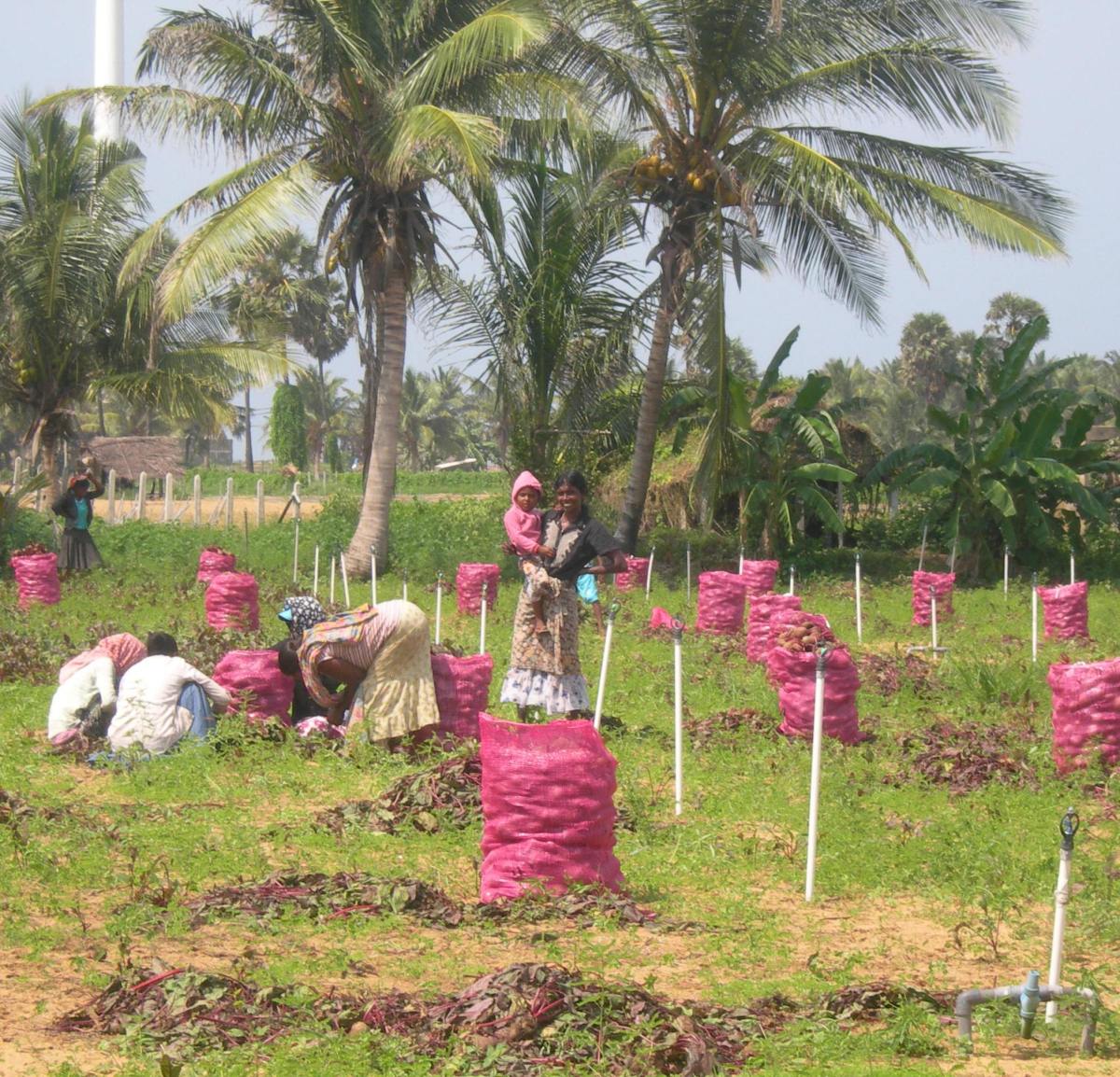
If there were no aquifers what would need to be built instead? That may seem an esoteric question given that groundwater is relied on every day by several billion people, but it is important to consider what useful things aquifers are, what we stand to lose if we mismanage them and what opportunities there are to tackle deep rooted poverty if they are used well. Continue reading “Beyond the Borehole: what do ecosystem services have to do with rural water supply?”
 Rural Water Supply Network - blog