Volunteer opportunity: RWSN co-Theme Leader – Sustainable Services

The Rural Water Supply Network (RWSN) is a network of individuals and organisations that are committed to improving water services for the rural poor everywhere in the world. Being a Theme Leader of RWSN is a commitment to sharing knowledge and good practices, and to share the RWSN vision of “a world in which all rural people have access to sustainable and reliable water supplies which can be effectively managed to provide sufficient, affordable and safe water within a reasonable distance of the home.”

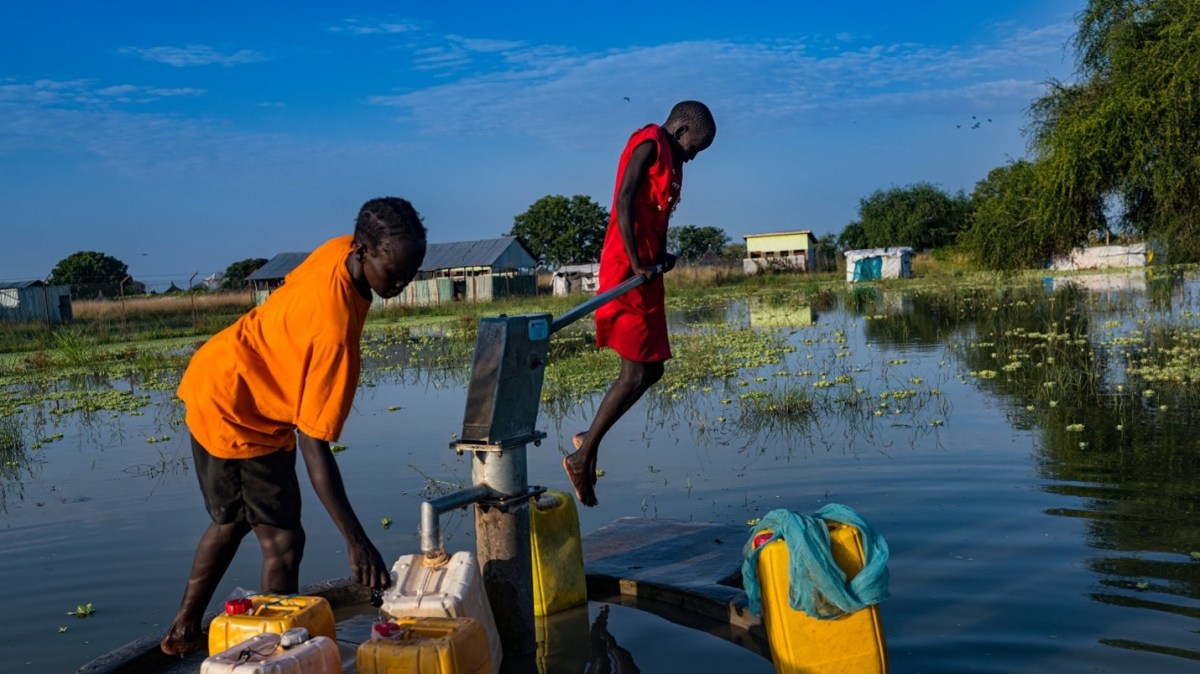
The Sustainable Services Theme is one of 6 Themes in the Rural Water Supply Network. Sustainable Services means that water users have reliable and affordable access to enough water of sufficiently high quality to meet their daily needs. There are many ways that such access can be achieved, from household self-supply to large-scale water utilities.

The sustainability of rural water services is a constant and critical challenge, requiring skilled individuals with adequate resources and support to ensure the consistent availability of safe water in households. Although community management is prevalent, it has limitations, prompting the development of new management models that prioritise professionalisation. This shift is occurring amidst escalating challenges such as climate change, pollution, shrinking aid budgets, corruption, rising income inequality, violence, and political instability.

Thematic Priorities

  • Systematic institutional strengthening: sharing lessons learned on strengthening local and national systems, and practical approaches and overcoming tensions between working with the grain of existing social and institutional structures that are likely to be more sustainable, but less inclusive to some marginalised groups.
  • Professionalisation: Documenting and sharing management models, professional development and management practices, and their enabling systems at local and national levels.
  • Regulation: engaging with regulators and sharing experiences and identifying good practices in rural and small town regulation on how to balance tensions and trade-offs between competing economic, social, political and environmental priorities.
  • Financing of life-cycle costs and exploring ways to increasing financial sources and financial viability of rural water services across different contexts.
  • Resilient services: sharing emerging practices and solutions for increasing the resilience of rural water service providers – with a  specific focus on climate resilience, which has be identified by RWSN members as one of their main challenges.

Interested?

We are particularly interested in applicants with operational experience of rural water services.

Download the full description and apply by 23 February:

Send your CV along with a 1-page cover letter to the RWSN Executive Steering Committee to introduce yourself and your organisation, and state why you’re interested in the Theme Leader position by 23 February 2024. Applications and enquiries should be sent to the RWSN Secretariat (info@rural-water-supply.net). 

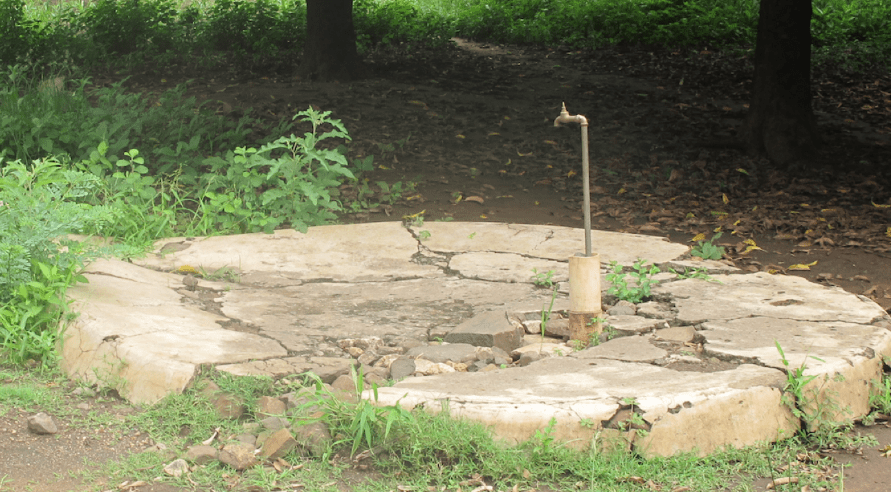
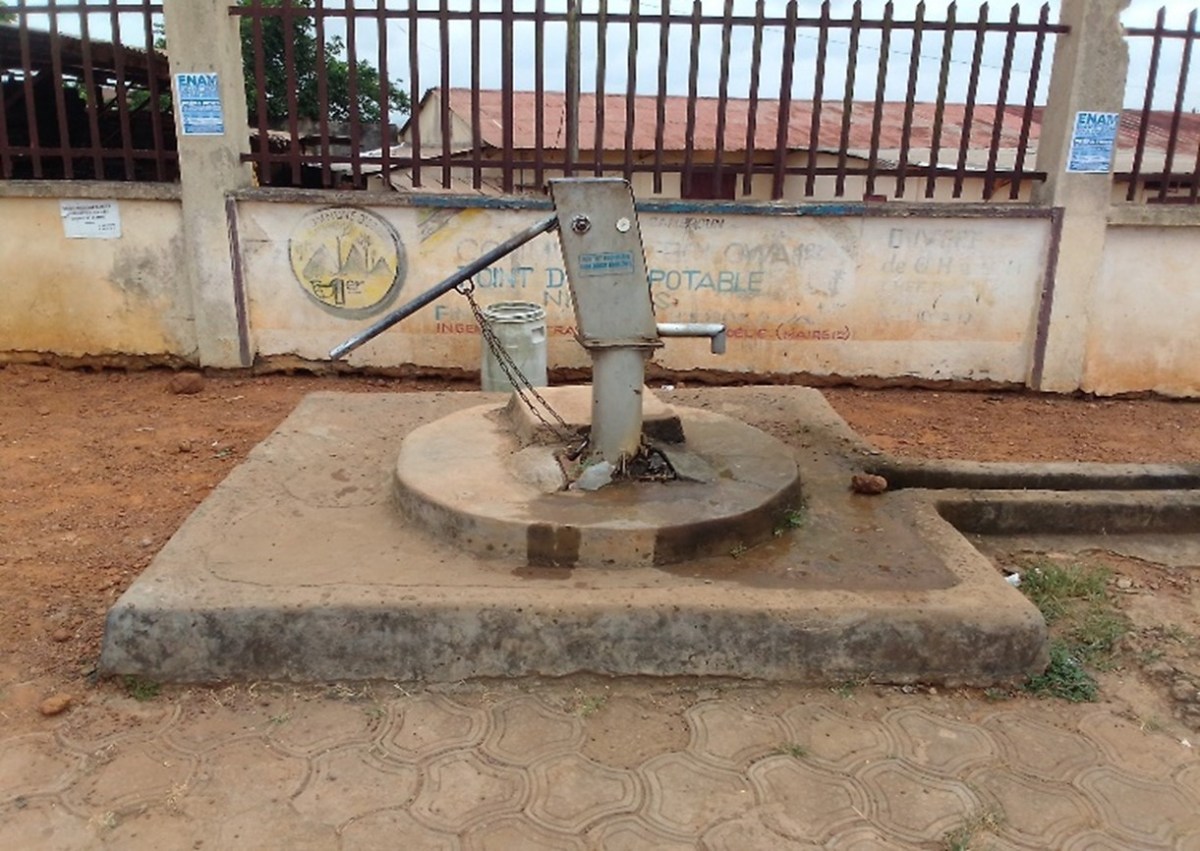
The presence of a handpump does not mean that people have access to reliable and sustainable water services. Here’s how we tried to show it in eight councils in the Mvila Division, South Region of Cameroon.

By Victor Dang Mvongo, MSc, a PhD student at the University of Dschang (Cameroon) and an independent consultant in WASH. He conducted the work featured in this blog at the Faculty of Agronomy and Agricultural Sciences.

Handpumps, the most common rural water supply equipment in sub-Saharan Africa, are a symbol of the sustainability issue facing rural water services. According to Macarthur (2015), handpumps are a lifesaver for 184 million people living in rural sub-Saharan Africa. Sub-Saharan African statistics on handpumps’ functionality indicate that 36% of them are broken, with country-level rates varying from 10% to 65% (RWSN 2009).

In Cameroon, little data are available on the functionality of the handpump. However, Deal and Furey (2019) estimate that 32% of handpumps are non-functional. Thus, for the impacted rural areas, this means that the anticipated returns on investment—better health, nutrition, and education—are jeopardized. In order to mobilize the necessary national and international efforts in the region, this study intends to give local information on the functionality of handpumps in the Mvila Division (Southern Region of Cameroon).

Continue reading “The presence of a handpump does not mean that people have access to reliable and sustainable water services. Here’s how we tried to show it in eight councils in the Mvila Division, South Region of Cameroon.”

My experience with the RWSN Mentoring Programme

This is a guest blog by RWSN mentee Margret Mwanza and RWSN mentor Esther Shaylor.

My name is Margret Mwanza, a Zambian who recently completed her Master of Science in Advanced Water Management from Cranfield University in the United Kingdom. As a young professional in the international water and environment sector, I became a member of the Rural Water Supply Network (RWSN) at the start of my MSc program and eventually, I came across the RWSN Mentorship Programme, a journey I embarked on in May 2023. At that point, I was eager to grow in the water sector and expand my professional network. I was interested in the prospect of being paired with a mentor who could guide me in job hunting, networking, career progression, and project management.

I sought to be paired with Esther Shaylor, an Innovation Manager for the UNICEF Sustainable WASH Innovation Hub in Denmark. She has always been a distinguished water and sanitation engineer and a published researcher. Her record in designing and implementing innovative solutions to WASH challenges in resource-poor environments and her systems thinking and people skills made her an ideal mentor for my aspirations.

Our mentorship journey began with a focus on networking. Esther encouraged me to proactively seek opportunities to connect with industry leaders and professionals by utilising platforms such as LinkedIn, participate in events under RWSN, my University, and membership bodies like CIWEM, and IWA, and be on the lookout for events in the industry that would provide this opportunity. The interactions I got from these recommendations not only broadened my professional network but also opened doors to new and exciting opportunities within the sector.

The quest for a fulfilling career in the water sector can be daunting for early-career professionals. My mentor played a crucial role in guiding me through my research thesis by suggesting valuable blogs, such as Ian Ross’s insights on the economics of water, sanitation, and hygiene (WASH) services. Additionally, she assisted me in identifying work and learning opportunities through platforms like Josh Water Jobs and making effective use of LinkedIn connections. To strengthen my professional profile, she suggested I actively participate in CV and cover letter reviews by tapping into the resources offered by the university careers office and seeking input from HR professionals in my previous workplaces. This was coupled with enhancing my branding on various social media platforms, applying the STAR method to articulate my skills and experiences effectively and diligently following up on unsuccessful applications and interviews. Her insights were influential in helping me navigate the competitive job market with confidence.

My mentor was key in helping me define my career goals and develop a strategic plan for professional advancement and career progression. Through honest discussions, we defined areas for personal and professional development and explored potential career paths within both the UK and international water sector. Her guidance enabled me to envision my career path and set achievable goals for achieving professional objectives. Having previously worked on projects in the international WASH sector, my mentor provided some useful tips in project planning, stakeholder engagement, resource allocation, and monitoring and evaluation. These insights equipped me with practical tools and techniques applicable to future projects in the WASH sector. She also advised me to seek training and learning opportunities that would intensify this skill. 

What stood out about Esther was her genuine interest in understanding my life beyond the professional and academic boundaries. She always encouraged me to maintain a social life, make friends, explore the UK, embrace different cultures, find my niche, and take each day as it came. This integrated approach contributed to a more balanced and fulfilling career journey.

As I embark on the next chapter of my career, I carry with me the priceless guidance my mentor rendered to me through the RWSN Mentorship Programme. I am confident that these experiences will serve as a compass, guiding me toward a fulfilling and impactful career in the water sector. The program, timed perfectly with my academic journey, provided the guidance needed to complete my thesis research, complete my MSc program, and secure a job in the industry. The RWSN Mentorship Programme stands as evidence of the transformative power of mentorship in personal and professional development. This has been a journey of growth, learning, and empowerment.

To join RWSN and be informed about the next round of the mentoring programme, please sign up here.

My experience with the RWSN Mentoring Programme

This is a guest blog by RWSN mentee Arra Clarize Jose and RWSN mentor Aline Saraiva Okello, Ph.D.

Overview

I discovered RWSN Mentoring Program as I was browsing career enhancement opportunities online. As a professional with humble experience in the water sector and in the early stage of my career, I always wanted to find a mentor who can help me navigate my profession and share experiences. It was quite difficult at the start of the mentoring program as some of the mentors were already committed to other mentees. The mentee pool is relatively huge but luckily, I connected with Aline, a fellow water professional in the program. The mentoring program unfolded over a six-month duration, focusing on cultivating expertise in water management and engineering, social and management skills, career path guidance, and network building. The agreed-upon mentoring activities were executed within a structured framework that catered to monthly meetings and specific objectives aimed at achieving learning goals.

Learning Goals

We identified the following learning objectives:

  1. Seeking counsel on career paths:
    • Humanitarian/fieldwork for WASH
    • Policy and governance concerning climate change and water
    • Pursuing academia (Master’s Degree)
  2. Building a robust professional network within these domains.
  3. Balancing career and life as a young expert

Mentoring Experience

Aline was the perfect mentor for me as she can relate to my experience. In this career stage, professionals like us are usually thinking about different paths we want to pursue, and with multiple milestones we plan to achieve, we end up being overwhelmed. In reality, such urge and energy to achieve goals may be exhausting and even daunting at times. We shared similar experiences, which made her guidance more relatable and valuable.

Navigating this stage of our careers often feels like juggling multiple possibilities, each with its own set of challenges. Aline’s insights helped me make sense of this complexity. She understood the struggle of balancing aspirations with the practicalities of achieving them.

The mentoring journey with Aline wasn’t just about setting targets and reaching them; it was about finding a balance. She emphasized the importance of pacing oneself, taking one step at a time, and ensuring that the pursuit of goals doesn’t overshadow personal well-being. At the same time, proper planning and diversion of priorities should also be taken into consideration especially when some things are not progressing according to plans and expectations.

Aline’s support and advice highlighted the significance of taking breaks, reassessing priorities, and acknowledging that it’s alright to adjust our plans as we go along. Her wisdom provided a much-needed perspective shift, reminding me that success isn’t solely measured by reaching milestones but also by finding fulfillment and balance in the journey.

The mentoring journey under Aline’s guidance wasn’t merely about professional growth; it was a holistic approach, acknowledging that our careers are only one aspect of our lives. It encouraged a reflection on self-care, personal values, and the importance of staying connected to what truly matters amid the pursuit of career goals.

Outcomes and Progress

The outcomes of the mentoring program are evident, some are listed below:

  1. During the program, I was actively applying for some jobs and scholarships that could open opportunities for me. Noteworthy highlights included the mentor’s insights into CV enhancement and LinkedIn profile refinement, which helped me land some offers from organizations I applied.
  2. I was able to access opportunities/forums such as World Water Week and MOOC courses that helped me increase my knowledge in the water sector.
  3. Learning about taking breaks, reassessing priorities, and being flexible in plans. This shift in perspective highlighted that success isn’t just about milestones but also about finding fulfillment in the journey.

My mentor expressed satisfaction and enthusiasm for our collaborative achievement of all our goals.

In summary, the RWSN mentoring program proved to be highly engaging, educational, interactive, and well-coordinated. Our gratitude extends to the organizers and sponsors for providing this valuable platform.

About the mentee and mentor

Arra Clarize Jose is a chartered civil engineer based in the Philippines, a former Water and Habitat Engineer of International Committee of the Red Cross and currently part of the UK-Med WASH Engineer Register Team. Her professional interests are centered on water engineering and her commitment to WASH (Water, Sanitation, and Hygiene) initiatives reflects her dedication to improving livelihoods and fostering resilient communities, showcasing her as a proactive force in the field of civil engineering and humanitarian aid.

Aline Saraiva Okello is a water expert, with a PhD and MSc in Hydrology and Water Resources from IHE/TU-Delft, Netherlands. Aline is Mozambican, currently living in Kenya, and has a wide experience in consulting, research and entrepreneur capacity in the water sector ranging from water resources management to water supply and sanitation, in both urban and rural spaces. Aline works as the global network manager of the Rural Water Supply Network (RWSN), hosted by the Skat Foundation (Switzerland) and as a short-term consultant to the World Bank Water East Africa Region Practice (Mozambique).

To join RWSN and be informed about the next round of the mentoring programme, please sign up here.

Mon parcours dans le programme de mentorat du RWSN

Ceci est un blog d’une mentorée de RWSN, Awa DIAGNE, et d’un mentor de RWSN, Yves Etienne RAKOTOARISON.

Présentation de la mentorée

Je me nomme Awa Diagne, de nationalité sénégalaise. Je suis actuellement doctorante en première année de thèse à l’université Cheikh Anta Diop de Dakar au Sénégal. J’ai fait une licence en géologie et je me suis spécialisée en hydrogéologie depuis ma première année de Master. Mes recherches ont débuté en 2021 dans le cadre de mon mémoire de Master dont le sujet portait sur l’évaluation du risque sur la santé des teneurs en nitrates et en fluor des eaux souterraines dans les régions de Mbour et Fatick. Actuellement en 2023, mes travaux de thèse sont en cours avec comme sujet de recherche : « Evaluation de la salinité et de la paléo salinité du système aquifère intermédiaire du Paléocène et de l’Eocène dans la zone centrale du bassin arachidier par l’utilisation d’outils isotopique chimique et hydrodynamique dans les régions de Fatick, Thiès, Diourbel et Louga. ». Il s’inscrit dans le cadre d’un projet d’études scientifiques « RAF 7021 » de la Direction de la Gestion et de la Planification des Ressources en Eau du Sénégal (DGPRE) avec l’appui de l’Agence Internationale de l’Energie Atomique (AIEA). Durant mon cursus universitaire, j’ai eu à faire pas mal de formations en ligne et en présentiel et assisté à des colloques universitaires.

Présentation du mentor

Mr Yves Etienne Rakotoarison est un coordonnateur national de projet à RWSN avec plus de 20 ans d’expérience dans le secteur WASH de Madagascar. Pendant 4 ans, avec une équipe de 20 personnes, il a pu aider plus de 700 villages à arrêter la défécation à l’air libre. Il a débuté comme Chef de Projet et occupé le poste de Coordinateur National de Département Wash pour un ONG international pendant 5 ans. Il possède des expériences solides en assainissement en milieu rural et urbain, des projets d’adduction d’eau potable dans différentes zones et surtout dans des zones arides. Il est un pionnier dans l’adoption des solutions innovantes pour faire face au changement climatique.

Pourquoi et comment j’ai intégré le programme de mentorat du RWSN en tant que mentorée ?

Etant jeune chercheure dans le domaine de l’eau et de l’assainissement, j’ai toujours cherché à agrandir mes connaissances dans ce secteur. J’avais besoin d’une personne plus expérimentée que moi avec qui je pourrais échanger. Etant également membre du RWSN, j’ai eu la chance de tomber sur ce programme de mentorat dont les objectifs répondent à mes besoins. J’ai donc suivi le processus pour trouver un mentor au niveau de la plateforme PushFar. Dans un premier temps j’ai pu avoir un mentor qui me correspondait mais qui, malheureusement, était très souvent en voyage et indisponible. Grâce au soutien du secrétariat du RWSN, j’ai pu avoir de nouveau un autre mentor : Mr Yves Etienne Rakotoarison.

Déroulement du mentorat

Après avoir pris contact avec Mr Yves, j’ai établi un calendrier d’activités contenant les jours des réunions ainsi que les thèmes à aborder à savoir : Améliorer mon CV, maitriser le travail de terrain, comprendre davantage le système d’approvisionnement en eau potable en milieu urbain et rural, comprendre comment améliorer l’accès à une eau de bonne qualité aux populations des zones rurales, comprendre comment améliorer les systèmes d’assainissement en milieu urbain et rural, savoir comment entreprendre un projet dans le secteur de l’eau, évaluation et suivi d’un projet dans le secteur WASH, aborder une thèse de manière efficiente, pouvoir allier un travail ou un stage et la rédaction d’une thèse de doctorat, développer mon réseau professionnel, gagner de l’expérience dans le secteur WASH, avoir une bonne stratégie de communication.
Nos échanges se faisaient par appels vidéo sur l’application « WhatsApp » car jugé plus flexible pour nous.
Par soucis de disponibilité, nous avons eu à faire jusque-là que 2 réunions au cours desquels j’ai pu tirer le maximum de conseils et connaissances. Néanmoins, nous comptons poursuivre le mentorat après la fermeture de ce programme.

Dates et durée des réunionsObjectifs et ordre du jourRéalisations
05 août 2023 1 heurePrise    de    contact    et    établissement du calendrier des activités à menerPrésentation du mentor et de la mentorée (parcours professionnels)Disponibilité et fréquence des réunionsPartage de documents (articles scientifiques)
02 Sept 2023 32 minsAborder une thèsePartage de documents (astuces pour bien gérer son temps, exemples et méthodes de gestion du temps, efficience et efficacité au travail, conseils pour rédiger sa thèse)ConseilsComment bien interagir avec mes encadreurs

Conclusions tirées du programme de mentorat

Ce programme de mentorat a été intéressant pour moi dans le sens où j’ai pu bénéficier de précieux conseils de la part de mon mentor. Les documents et articles qu’il a partagés avec moi me permettront respectivement de connaitre les astuces pour mener de manière efficace et efficiente ma thèse et d’enrichir ma documentation.

Je tiens à remercier chaleureusement Mr Yves pour sa disponibilité, sa gentillesse et sa bienveillance envers ma personne et espère qu’on pourra poursuivre nos séances de mentorat.

Merci également au RWSN de nous avoir offert ce programme.

Si vous souhaitez en savoir plus sur notre programme de mentorat et les activités de RWSN, rejoignez notre communauté ici. https://dgroups.org/rwsn

Nurturing Professional Growth in the WASH Sector

by Lisa Mitchell, Senior Director of Learning Services, Global Water Center, re-blogged from the Global Water Center

Mentoring plays an important role in the Global Water Center’s (GWC) strategy to offer ongoing support to our clients. We know that training is just the first step in learning new knowledge and skills. To consolidate new competencies, ongoing support is necessary. Mentors are well placed to provide this support.

This year, GWC trialed a new strategy to support the graduates of our solar powered water systems (SPWS) training: we paired with the Rural Water Supply Network’s (RWSN) Mentoring Program, to offer SPWS alumni mentoring support. We also supported RWSN’s general mentoring stream, so they could extend it to a broader pool of WASH professionals.

As part of these activities, I had the privilege of becoming a mentor to three mentees, from very different corners of the world: India, Côte d’Ivoire, and Switzerland. I believe I learned more from my mentees than they likely learned from me!

I met with the mentees once or twice per month over the last six months. During our exchange, I reviewed my mentees resume, journal submissions, and even a PhD application. We discussed behaviour change and educational theories and considered innovative approaches to their work. From them I learned about a range of topics from measuring the transfer of agrochemicals into groundwater to involving communities in groundwater recharge initiatives. I also discovered new WASH organizations and initiatives.

The beauty of these relationships is that they evolved according to the mentees’ needs. No two meetings were the same, and each meeting brought out new learning and ideas. I also formed a strong relationship with three people I would not have met otherwise, and I’m confident we will continue to support one another in our professional journeys moving forward.

In the coming months we will share the evaluation from the SPWS stream of the mentoring program. For now, I believe that the mentees from this stream of the program gained at least as much as I did from the program.

Interested in becoming a mentor or mentee yourself? Considering signing up for RWSN’s mentoring program. Details of next year’s program will be released in early 2024.

My experience with the RWSN Mentoring Programme

This is a guest blog by RWSN mentee Beatrice Kyomuhendo (Uganda) and RWSN mentor Eng. Cornelius Mpesi (Malawi) who took part in the 2023 RWSN Mentoring Programme.

Mentee’s Thoughts

My name is Beatrice Kyomuhendo, I am a WASH Technical Assistant at The Water Trust in Uganda. The Water Trust is an organization that aims at empowering the poorest rural communities in Uganda by providing clean water and healthy homes for children and their families to thrive.

I found out about RWSN through my supervisor Mr. Enock Obwon Gmuipe who shared information about the RWSN Mentoring Programme. After filling out the application, not knowing what exactly the outcome was going to be, I received an email from Eng. Cornelius Mpesi requesting to be my mentor.

Eng. Cornelius Mpesi is a mechanical and water engineer registered with the Malawi Engineering Institution (MEI) and working with Water Mission. I went through his profile, and I was very surprised at how someone willingly offers to share their knowledge at zero cost. I accepted the request, and we scheduled our first meeting. During the first meeting, we set our targets, objectives, expectations, mode of communication, convenient time for meetings and also signed the mentoring agreement. We were the first mentor and mentee to sign the mentoring agreement.

The most interesting bit of this mentoring programme is that, at the time, we were starting on our first piped water project as an organization and Eng. Cornelius was of great help to me throughout the whole project. The first assignment he gave me was to pick coordinates from our proposed source and where we planned to construct the public stand posts. This is what we used during our classes on Google Earth and EPANET. He took me through pump sizing and solar sizing basing on our project. This made work so interesting as I was always eager to go to the field and practice what we discussed in our previous classes and would also be eager to get back to my mentor with feedback on what transpired in the field.  

Eng. Cornelius has encouraged me to register with the Uganda Institution of Professional Engineers (UIPE) and helped me appreciate and utilize LinkedIn to its full capacity.

I see many benefits in my experience with the RWSN Mentoring Programme:

  • Gained skills in solar sizing, pump sizing
  • Learned to use Google Earth and EPANET
  • Appreciated the use of LinkedIn
  • Was encouraged join the UIPE.
RWSN Mentor Eng. Cornelius Mpesi

Mentor’s Thoughts

I saw the call for mentors and mentees on RWSN LindedIn page since I am a frequent user. I quickly signed up, and as I was searching for profiles of people with similar interests in my field, Beatrice’s profile sparked my interest. I looked through it and thought to myself that there is an opportunity for me to share the little I know with someone who is eager to learn. We linked up and had our first meeting to discuss the areas in which I could help. We communicated frequently through various platforms like WhatsApp, Google Meet and Emails. From the interactions we had, I saw someone who is willing to learn and is very inquisitive. Sometimes she would nudge me with a bunch of questions which I am glad I was able to answer and assist with. This experience helped me to be a better tutor. Knowing something is one thing, but knowing how to explain it to someone so they understand it, is a totally different thing altogether. I am glad I was able to help Beatrice shape her career, and I have no doubt she will take off and keep soaring higher.

To join RWSN and be informed about the next round of the mentoring programme, please sign up here.

Pouring hope or pouring doubt – Navigating the aftermath of disasters in coastal Bangladesh

by Afsana Afrin Esha, REACH Research Associate and PhD student at Durham University, re-blogged from REACH

Every year, the southwestern coastal zone of Bangladesh faces weather-related disasters, worsening a perpetual drinking water crisis. Cyclone Sidr in 2007 and Cyclone Aila in 2009 caused widespread destruction. While people were still recovering, Cyclone Amphan caused heavy damage to infrastructure and contamination. Saltwater intrusion due to cyclones and storm surges is having devastating consequences on groundwater and freshwater resources. Different water treatment options and alternative strategies are being applied by the local government institutions, NGOs and aid agencies, whilst informal or small water service providers too, are on the rise, addressing critical gaps in public investments in the rural water sector. However, in the face of rising climatic changes along with other socio-political factors, water shortages persist. In this short piece, I portray the effects of disaster on drinking water sources to understand the nuances of climate resilience.

Continue reading “Pouring hope or pouring doubt – Navigating the aftermath of disasters in coastal Bangladesh”

Making the Sum of All (WASH) Knowledge Freely Accessible: An interview with Elisabeth Von Muench

Paresh Chhajed-Picha interviews Elisabeth von Muench, former moderator of the SuSanA discussion forum and a dedicated Wikipedia editor. With over nine years of editing experience and nearly 50,000 edits to her name, she ranks among the top 2,000 editors globally for the English Wikipedia. Through volunteer work and paid assignments, she has improved and written numerous Wikipedia articles on WASH, climate change, and SDGs. In this interview, Elisabeth explains her motivation, the need for wider participation in editing Wikipedia articles, and the challenges in doing so. 

Re-blogged from SuSanA

Continue reading “Making the Sum of All (WASH) Knowledge Freely Accessible: An interview with Elisabeth Von Muench”

My Mentee Journey in the RWSN Mentoring Programme

This is a guest blog by RWSN mentee RAKOTOARIMANANA ZY Harifidy and RWSN mentor Sean Furey who took part in the 2023 RWSN Mentoring Programme.

Who am I?

My name is RAKOTOARIMANANA ZY Harifidy, from Madagascar. Currently, I am a Ph.D. candidate at the Interdisciplinary Center for River Basin Environment (ICRE), University of Yamanashi in Japan. My research focuses on water resources assessment of the Major River Basins in Madagascar (MRBM) in the context of global change. Before coming to Japan, I worked for an NGO involved in the water, sanitation, and hygiene (WASH) sector in Madagascar.

What is the Rural Water Supply Network (RWSN) Mentoring Programme?

I first learned about this program on my LinkedIn while I was searching for a mentorship or fellowship opportunity in the WASH sector. It turned out to be the RWSN Mentoring Programme, which enables professionals in the WASH sector to collaborate, advance their careers, and learn from one another. This program specifically supports mentees who are starting their careers or going through career transitions. It is important to note that this program is free and open to the public for a duration of 6 months. Thanks to the Pushfar platform, I could easily schedule appointment slots, monitor the progress of my mentoring relationship, and engage in online conversations with my mentor. For more information, please visit this website.

How was my experience as a mentee?

My journey as a mentee began when I found Sean Furey, the Director of RWSN Secretariat through the PushFar platform and he accepted my request on 15 May 2023. I am grateful and honored to have him as my mentor. I was in my second year of my doctoral program, uncertain about my next steps, and in need of direction. Therefore, Sean became the guiding hand I was looking for.

My objectives for joining this program were to receive feedback about my research project and to learn from my mentor’s experience and expertise in the WASH sector. I also want to improve my communication skills, particularly in presenting research findings and networking. I would like to get some advice on my future career development. These are my goals from this mentoring process.

During my mentorship, we had five one-on-one meetings scheduled once a month for 1 hour. Sean shared his experience and knowledge about the WASH sector with me. I have learned from his insights and perspectives.

  • 9 June 2023: During our first conversation, I talked about my goals and my expectations for the mentorship program. Upon Sean’s introduction, I was greatly inspired by his professional journey in the WASH sector, which I found to be particularly motivating for young people like me. Since I was uncertain about my post-graduation plans, Sean elucidated various career options for Ph.D. students. He asked about my dream job, which I regarded as a pivotal factor in selecting my career path. He also provided insights and comments related to my research.
  • 23 June 2023: I rehearsed my presentation for the SWAT conference in Denmark alongside Sean. As this marked my first experience at an international conference, I felt somewhat anxious and had concerns about my proficiency in English. Sean provided constructive feedback on how to effectively communicate my research findings to a non-academic audience, offering valuable tips and guidance to enhance my presentation slides for better audience comprehension. Thanks to his advice, my conference presentation was successful. Importantly, I honed both my presentation and networking abilities in the process.
  • 11 August 2023: Sean reviewed my CV and provided valuable guidance for proactive job hunting. He recommended that I prepare two distinct versions of my CV. One focused on my academic achievements, including qualifications, grants, fellowships, awards, research experience, and publications; and the other was tailored for a professional context, emphasizing work experience, responsibilities, deliverables, evidence of teamwork, and engagement within and outside the organization. Sean also emphasized the importance of including a brief motivational paragraph in my CV. Furthermore, he connected me with some amazing African women in the WASH sector so I could look at their career paths.
  • 15 September 2023: We focused on the review and completion of my CV. Sean provided guidance on writing a cover letter and preparing for job interviews. Moreover, he shared his own experiences, including insights from his initial interview and how he secured the job. He recommended that I practice with my friends and lab mates. An additional advantage of having Sean as my mentor is the opportunity to improve my English language skills by conversing with a native speaker.
  • 14 November 2023: In our last meeting, we talked about the results of the mentorship program and exchanged feedback. During this mentorship, I joined the RWSN Young Professionals which is an interesting platform for networking and receiving information about events, seminars, and job opportunities in the WASH sector. I was happy that I joined this program and I decided to keep in contact with my mentor through LinkedIn.

Overall, this mentorship program is a valuable journey for me. I strongly recommend this program to every Ph.D. student and young professional in the WASH sector, who wants to shape their career and personal development. I believe that my participation in this program would have a positive impact on my future career. I forged a strong international contact network. I sincerely thank my mentor, Sean Furey, for his advice, tutelage, and precious time during the program. I am also grateful to the RWSN Secretariat for their support since the beginning of the mentoring program.

My Mentor`s comment

Zy Harifidy Rakotoarimanana is a promising Ph.D. student who is quietly confident and determined to achieve her goals of working for an international organization in a water resource role. Our mentoring calls helpfully focused on specific topics that she chose. Over the course of the mentoring meetings, we explored her career ideas, aspirations, and some possible pathways. Working together on her presentation and CV helped her think about how to communicate clearly to different audiences about herself and her expertise and work. Being in her second year of Ph.D. she still has time to explore and reflect on what she wants from a career, and I encourage her to be brave and persistent! I will be following her career with interest.

To join RWSN and be informed about the next round of the mentoring programme, please sign up here.