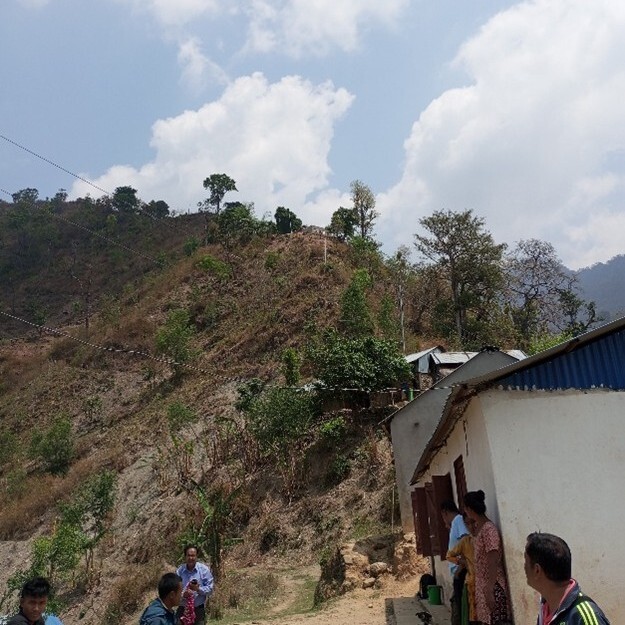
Moving towards professionalised community managed rural water schemes in Nepal

Reposted from IRC International Water and Sanitation Centre: see the original post here. The article is written by Digbijoy Dey and reviewed by Ruchika Shiva. Photo: IRC.

Rural water supply services are evolving quickly because of technology, climate stress, financing models, and governance changes. And these changes differ from country to country and within countries. However, the changes have some common characteristics as well, at least in lower middle-income countries. During our recent visits to Nepal, we have tried to understand the dynamics of rural water supply in this country. Here rural water supply essentially includes small urban and rural municipalities.

Common trends in rural water supply

Recent research and publications have documented the changing models of rural water supply, including Shiva and Saha (2025)Odhiambo et al. (2025), USAID (2023), and SFF (2020). An AI-assisted trend analysis based on these works highlights several shifts. Globally, rural water supply is moving from handpumps to piped schemes, as exemplified by India’s Jal Jeevan Mission and Ethiopia’s HoA-GW4R Project. Management is becoming more professionalised through private operators, public–private partnerships, and utility-style agencies, replacing traditional community-based volunteer committees. At the same time, digitalisation is transforming service delivery with Internet of Things (IoT) sensors, prepaid meters, and mobile payment systems that improve monitoring, detect leaks, and enhance cost recovery.

Other major trends include the integration of climate resilience and source diversification, such as combining groundwater, rainwater harvesting, and surface water treatment with climate-proofed infrastructure and energy-efficient pumping. Solar-powered and hybrid renewable energy systems are replacing diesel pumps, while water safety planning, real-time quality monitoring, and low-cost treatment are gaining ground. Financial sustainability is being strengthened through volumetric tariffs, prepayment, and blended finance, while regionalisation is clustering small schemes under federated utilities. Equity and inclusion are also central, with greater focus on women, marginalised groups, and people with disabilities. Finally, rural water networks are increasingly designed for multiple uses, linking drinking water to irrigation, sanitation, and livelihoods.

Why Nepal is different

Nepal has a population of about 30 million, 23 million of them live in rural areas, mostly in mountainous and remote regions. As per JMP 2024, 77.2% of the population is accessing basic drinking water services, only 16.5% of the population access safely managed drinking water (the remaining 6.3% have limited or unimproved services). With an aspiration to deliver reliable services, Nepal is trying to change its water service delivery ecosystem. If we look closely, we will see that the trends in Nepal are similar to those mentioned above. The difference is, while most countries are adopting more professionalised private or utility-managed services, Nepal is embracing a more formal version of community-managed services to address the rural water need. Historically, water supply in rural areas of Nepal has been managed voluntarily by the community. At present, the Water Users’ and Sanitation Committees (WUSCs) are being formalised into legal entities under sector laws.

Continue reading “Moving towards professionalised community managed rural water schemes in Nepal”

Is it the management model or its application?

Blog by Analía Saker, Terra Michaels, and Mohammed Farhaoui, co-leads of the RWSN Sustainable Services Theme. Featured image: Aguaconsult, Peru.

Trends come and go quickly in the WASH sector. When a new concept shows early signs of success, it is often promoted as the next big solution, packaged by development partners, donors, and foundations. These actors, in turn, push governments to adopt the latest approach, frequently triggering wide-reaching reforms with mixed results.

We have seen this cycle play out repeatedly: private sector participation, on-site sanitation, blended finance, carbon credits, and the list goes on. In rural water service delivery, the pattern is even clearer. Municipalities and local governments were once seen as the appropriate service providers. In the 1990s, the spotlight shifted to Community-Based Management (CBM). When the limitations of unsupported CBM systems became apparent, public rural utilities were pushed as a more “professional” solution. Today, Safe Water Enterprises (private companies heavily supported by international donors) are the rising stars.

These shifts are often driven more by the perceived failure of one model than by strong, scalable evidence of success from another. Governments are influenced to adopt new service delivery models, often initiating complex reform processes. Yet, the sector lacks solid evidence to prove that such reforms lead to better performance or more sustainable services.

A recent example comes from Ghana, where a now-concluded USAID-funded study sought to investigate this issue. The research compared three rural water service delivery models for piped schemes, aiming to identify what actually drives performance. This was especially relevant in a context where the Government of Ghana is increasingly backing service provision through the Community Water and Sanitation Agency, acting as a new rural public utility, while development partners strongly advocate for Safe Water Enterprises. Meanwhile, support for the still-widespread CBM model has all but disappeared.

Surprisingly, the study found small performance differences among the models. Performance outcomes were more closely linked to socio-economic context and the service provider practices than to the model itself. Although the findings are specific to Ghana, they raise a broader question: are we focusing on the wrong thing? Perhaps it is not about the model at all, but rather about how it is implemented and whether critical elements like professionalism, regulation, and accountability are in place.

This idea was reinforced in a recent webinar we hosted in April this year, where case studies from across the globe showcased how different models can succeed when implemented well and supported by an enabling environment.

  • Cambodia: Fully private rural providers invest in, operate, and maintain water systems, under government regulation and licensing.
  • Peru: CBM remains the dominant model in rural areas, but the sector is actively working to professionalize and regulate service provision.
  • Morocco: Public utilities manage rural service delivery as an extension of their urban mandates.
  • Senegal: A global best practice in public-private partnerships for rural water service delivery.

These examples show that success is not determined by the management model itself, but by the conditions in which it operates. Instead of chasing the next big trend, we should be focusing our energy and resources on strengthening the elements that matter most, regardless of the model. These include cost-reflective tariffs, regulatory oversight, accountability mechanisms, participation, professionalized staffing, and robust monitoring systems.

Let’s stop asking, “What is the right model?” and start asking, “What makes the model work?”

Join the RWSN Sustainable Services discussion group to continue this conversation.