Pastoralists and Water 3 – Learning about rangelands and pastoral mobility 

Dr Kerstin Danert [1] with Dr Maryam Niamir-Fuller [2]

In support of the International Year of Rangelands and Pastoralists (IYRP2026) and linkages with water in particular, this is my third in a series of blogs. Here, I start to draw out my highlights from the 2022 webinar on Pastoralists and Water, hosted by RWSN. If you want an introduction to pastoralists, check out my second blog. 

In contrast to some of the derogatory comments about pastoralists that I heard in my early working life (see Blog 1), pastoralism is not actually an outmoded way of living from the past at all! In fact, there are strong arguments that it is the solution for a sustainable future. Can this really be true, I ask myself?

In fact, it starts to make sense when you realise that pastoralists specialise in making use of highly variable environments to produce food. By moving with their livestock, they manage continuously changing opportunities for grazing in their landscape. You can learn more in this film, which I find fascinating. It turned some of my perceptions on their head.

In the 2022 RWSN Webinar, Maryam Niamir-Fuller, then vice chair of the International Support Group for the IYRP2026, explained that “rangelands” is a term used for grasslands, shrublands, woodlands, tundra as well as cold or hot deserts that are grazed by domesticated or wild animals. I was surprised to learn that it is estimated that rangelands actually cover 54% of the earth’s land surface. It makes me wonder why I have heard so little about them? And further, rangelands exist beyond drylands. As Maryam gives you a taste for in her picture gallery (Figure 1), there is much diversity in rangelands. 
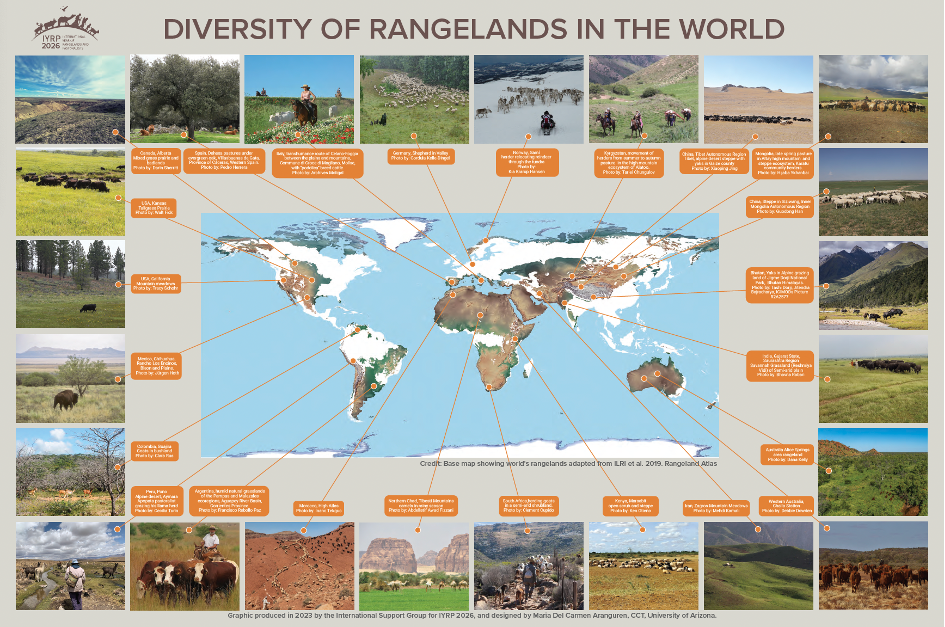
Figure 1 Picture gallery of rangelands (prepared by IYRP2026 Global Alliance)

It perturbed me to learn from Maryam that, although rangelands cover more than half of the earth’s land mass, they are the least known and valued ecosystem in the world. What also seems not to be widely known is that an estimated one billion people directly benefit from or have their livelihoods linked to rangelands. Further, another two million people benefit along the value chain, including processing products, gathering pharmaceuticals and making medicines. 

There are other nuggets of information that I would like to share with you. For example:

  • that pastoral milk and meat are very important sources of vital proteins that are not found in plants
  • that pastoral livestock has high genetic diversity – in stark contrast to livestock on monocultural farming and industrial systems
  • rangelands are extremely important for Planet Earth’s biodiversity

Maryam also explained that, while evidence is still emerging, research is showing that a well-managed pastoral system can be net carbon neutral or can ever sequester (store) carbon. That is something else that I would like to know more about on this journey. In summary, it seems that a lot is going on in rangelands, but this is not well known.

Let me move on to pastoral mobility (pun intended). As I mentioned above, this is not outmoded at all, despite prevailing attitudes. In the 2022 RWSN webinar, Maryam lucidly explained that mobility is a key factor in the stewardship of these ecosystems. Pastoralists have adapted to and managed natural variability through mobility of their animals. 

According to many studies, and as presented by Maryam Niamir-Fuller, one of the main reasons for rangeland degradation is because not all pastoralists are able to exercise their required mobility. Traditional movement routes have been blocked, and some rangelands have been converted to be used for cropping. The result is that animals are being confined into smaller and smaller spaces. Scientists are learning that the more the livestock keep moving, the less the degradation and the better are the chances for maintaining healthy rangelands.

Figure 2 The provisional 12 themes of the International Year of Rangelands and Pastoralism

These issues and others are recognised through the 12 themes of the International Year of Rangelands and Pastoralists (IYRP2026). The issue of water (and my own specialism) is directly included in two themes of the IYRP: 

  • Theme 3 looks at access to services and resources for pastoralists – advocating for safe and accessible water for pastoralists and their animals.
  • Theme 6 looks at water in the context of soils and land management – including waste management, the impact of droughts, aquifer recharge and watershed management.

However, water can be linked to all of the 12 themes of the IYRP – something that will be explored in the build-up to and during IYRP2026. The IYRP sets out to value the contribution of rangelands and pastoralists, break myths and influence informed, science-based policies throughout the world.

If you would like to find out more about IYRP2026, or even join the global or regional support groups or thematic working groups, check out this website or contact iyrp2026@gmail.com

Sources of information

RWSN (2022) Pastoralists and Water, Webinar, Rural Water Supply Network (RWSN).

IYRP LDN Working Group (2024) “Global Actions for Sustainable Rangelands and Pastoralism to achieve Land Degradation Neutrality: A Science-to-Policy Review with recommendations for the UNCCD Conference of Parties”.  https://iyrp.info/

[1] Director, Ask for Water Ltd, Edinburgh, Scotland

[2] Senior Advisor to IYRP2026 Global Alliance, based in USA
Pastoralists and Water 2 – Learning what is pastoralism

Dr Kerstin Danert, Ask for Water Ltd, Edinburgh, Scotland

In my first blog, I explained my discomfort around the stigma and attitudes towards pastoralists that I came across in my early working life, alongside my complete lack of understanding of how pastoralists function. With this (second) blog, let me try and share something of what I learned about pastoralism through reading and learning from the people I met through online communities since 2020 including that of IYRP2026 Global Alliance and the Food and Agriculture Organisation (FAO).

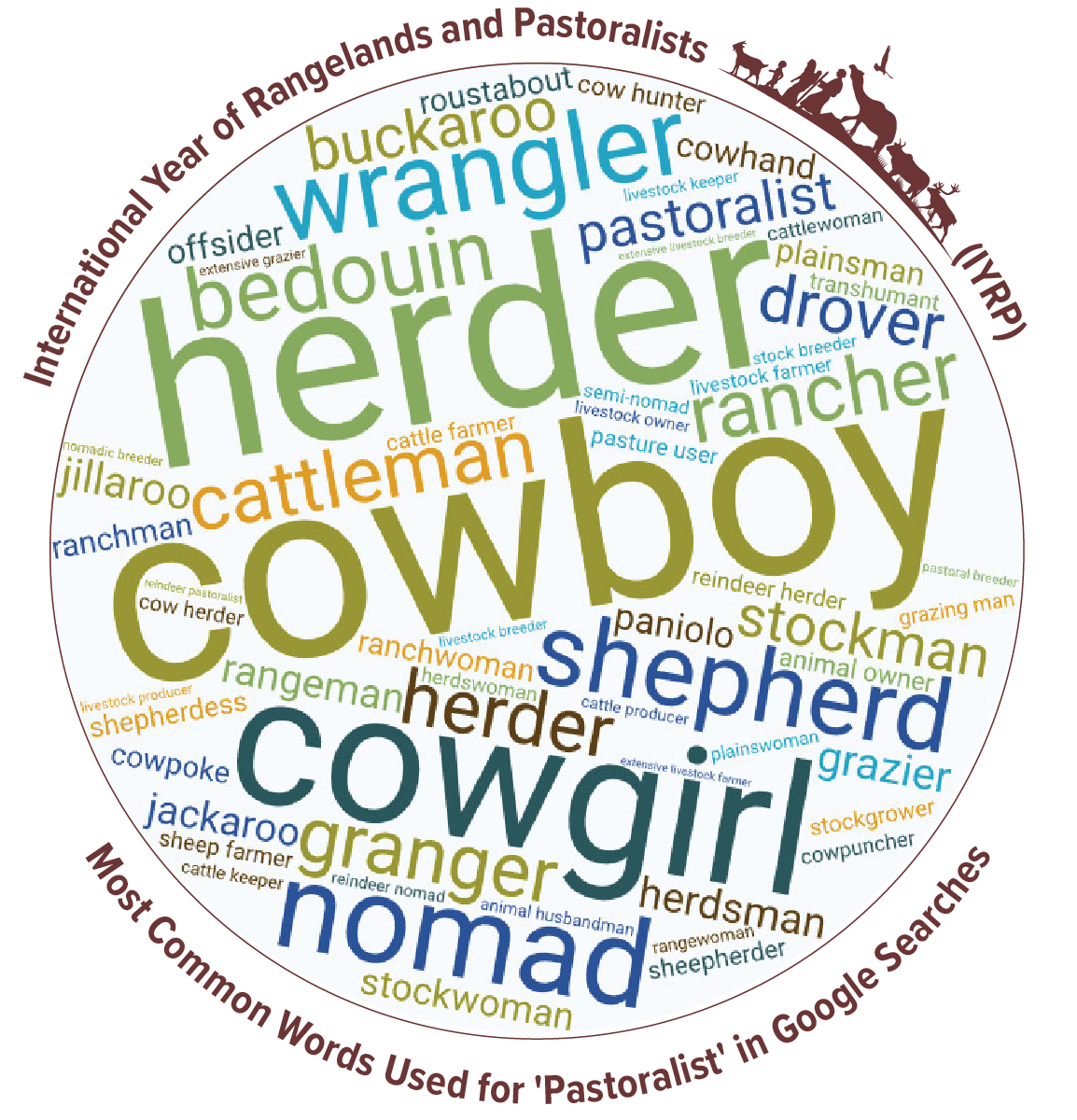
Pastoralism is an economic activity and a cultural identity. Pastoralists make a living by raising livestock or semi-domesticated animals on rangelands (a term which I shall come back to). In fact, “pastoralist” is really an umbrella terms covering many groups, as illustrated by the word cloud below (and this one is only in English!)

Figure (above): Terms for pastoralists (in English) (Link

In keeping with the diversity of names and contexts in which they live, pastoralists keep different kinds of livestock species on native and semi-native rangelands, including cows, buffalos, yaks, llamas, sheep, camels, goats, reindeer, horses and donkeys and even grazing ducks. I understand that pastoralism means that animals are herded, moved or rotated from grazing point to another grazing point at least some of the time, rather than being constantly penned or left by themselves. In short, the livestock move around, but the people may or may not move.

And now to rangelands. These are essentially the places where livestock graze and pastoralists live. Rangelands are areas where the indigenous vegetation is predominantly grasses, grass-like plants, forbs (was a new word for me) or shrubs that are grazed and browsed (which means livestock, such as camels eating shrubs and trees). Rangelands provide a natural ecosystem for raising grazing livestock and wildlife. In my next blog I will talk more about the extent of rangelands, and how they are being destroyed by conversion to cropland, which I suspect, will come as a surprise to you. But as a spoiler, rangelands cover at least 54% of the world’s land mass, and pastoralism exists in two thirds of the countries in the world! 

I mentioned cultural identity, and have learned that the term ethnic pastoralist can refer to people who come from ethnic groups that traditionally practised pastoralism but whose livelihoods are no longer derived from grazing livestock. The woman I got to know in Kampala (see Blog 1) may be among them, and I now realised that I should have asked her much more…

Pastoralists have different degrees of mobility, and can be sedentary. As an economic activity, pastoralism is an animal production system that is able to create livelihoods in highly variable environments. This point is key, and will remain a theme throughout my series of blogs. Mobile pastoral systems take advantage of environmental variability by managing grazing itineraries to improve livestock productivity as well as deal with pests and diseases and to avoid conflicts.

Further, pastoralism is a fundamental part of the global food system. One of the things that has struck me most, is that pastoralists actually produce food in the world’s harshest environments – in land that may have poor water supply or soil quality, face extreme temperatures, have steep slopes and or be remote. And it gets even more interesting when one realises that, by moving from one place to another, animals fertilise the soil with their dung and scatter seeds with their regular grazing and trampling. This has the effect of enhancing biodiversity and maintaining landscapes. I want to understand more here! 

And I am coming to realise that, despite the global significance of pastoralism and rangelands, pastoralists are under-recognised and undervalued. As I mentioned in my first blog, they can also be stigmatised. 

It seems that pastoralism is largely misunderstood, with pastoralists traditionally suffering from marginalisation and exclusion from dialogue. Pastoralists have been deeply affected by sedentary societies with poor understanding of the pastoral livelihood system have imposed alien social and governance schemes including attempts to settle pastoralists and create barriers to herd mobility or pastoralists’ access to public services. This is yet another area to learn more about. As with other marginalised groups, it is the voices of pastoralist communities themselves that need to be heard at local, national and international levels.

With more pastoralists gaining voice, and with a better understanding of pastoralism by those living with, studying and working with pastoralist communities, recognition of the value of pastoralism as well as the value of herd mobility is growing. But there is much to learn!

2026 will be the International Year of Rangelands and Pastoralists (IYRP2026). Over the coming months, I will continue to share my reflections and insights on Pastoralists and Water with you through a series of blogs. 

Sources of information

African Union (2010) Policy Framework for Pastoralism in Africa: Securing, Protecting and Improving the Lives, Livelihoods and Rights of Pastoralist Communities. Department of Rural Economy and Agriculture, African Union, Addis Ababa. 

Axweso F (2011) Understanding pastoralists and their water, sanitation and hygiene needs, Discussion Paper, WaterAid, Available at https://www.ircwash.org/sites/default/files/pastoralismintzdiscussion.pdf (accessed 28 Sept 2020)

CELEP and VSF (2020) For an International Year of Rangelands and Pastoralism [Online], Coalition of European Lobbies for Eastern African Pastoralism and Vétérinaires Sans Frontières (accessed 5 October 2020)

FAO (2020) Pastoralist Knowledge Hub [Online], Food and Agriculture Organization of the United Nations, http://www.fao.org/pastoralist-knowledge-hub/en/ (accessed 28 Sept 2020)

IFAD (2018) How to do, Engaging with pastoralists – a holistic development approach, International Fund for Agricultural Development, Rome, Available at https://www.ifad.org/en/web/knowledge/publication/asset/40318809 (accessed 5 October 2020)

IRC (2025) Pastoralism and Rangelands: People and Institutions a Glossary of Terms, International Rangeland Congress, https://www.iyrp.info/sites/default/files/2025-01/Glossary_pastoralism-rangelands_people-institutions-2024.pdf (accessed 27 Jan 2025)

IYRP (2019) A global call for a United National International Year of Rangelands and Pastoralists, Proposal for an International Year of Rangelands and Pastoralists Mongolia, International Year of Rangelands and Pastoralists, Available at https://globalrangelands.org/sites/globalrangelands.org/files/Mongolian%20Proposal_IYRP_updated_0.pdf (accessed 5 Oct 2020)

Mundy P (2020) Defining pastoralism and nomadic pastoralism, Email on https://dgroups.org/fao/pastoralist-hub/discussions, 2 October 2020,

Niamir-Fuller, M. ed. (1999). Managing Mobility in African Rangelands: The Legitimization of Transhumance. London: Intermediate Technology Publications, 1999. African Studies Review | Cambridge Core
https://www.cambridge.org/core/journals/african-studies-review/article/abs/maryam-niamirfuller-ed-managing-mobility-in-african-rangelands-the-legitimization-of-transhumance-london-intermediate-technology-publications-1999-xiv-314-bibliography-index-2995-paper/3570749A673ABF1AFE556A26002AFAE4

Jenet A. Buono N, Di Lello S, Gomarasca M, Heine C, Mason S, Nori M, Saavedra R, Van Troos K (2016) The path to greener pastures: Pastoralism, the backbone of the world’s drylands. Technical Report. Vétérinaires Sans Frontières International (VSF-International). Brussels, Belgium, Available at https://doi.org/10.13140/RG.2.2.11042.22725

Jonckheere S, Liversage H, Rota A (2017) Pastoralism and Land Tenure Security: Lessons from IFAD-supported projects, Paper prepared for presentation at the “2017 World Bank Conference on Land and Poverty”, The World Bank – Washington DC, March 20-24, 2017, Available at https://www.oicrf.org/documents/40950/43224/Pastoralism+and+land+tenure+security+Lessons+from+IFAD+supported+projects.pdf/e3b560d6-0bbc-3109-1c33-a5851e551b49?t=1510194133215 (accessed 28 Sept 2020)

Krätli S (2019) Pastoral Development Orientation Framework: Focus on Ethiopia, MISEREOR, Aachen; Available at https://www.researchgate.net/publication/336983785_Pastoral_Development_Orientation_Framework

Republic of Kenya (2012) Releasing Our Full Potential. Sessional Paper No. 8, National Policy for the Sustainable Development of Northern Kenya and other Arid Lands, Ministry of State for Development of Northern Kenya and Other Arid Lands, Nairobi. 

USAID (2017) Water Currents, September 19, 2017 – WASH and Pastoralists, United States Agency for International Development Water Team, Washington DC, Available at https://mailchi.mp/waterckm/water-currents-wash-and-pastoralists-september-19-2017?e=b631faae3e(accessed 28 Sept 2020).