
By Ayebale Ared (Welthungerhilfe)
With this blog, I would like to share a few short reflections from my experiences overseeing and supervising drilling activities over the past ten years, both from the contractor’s and the INGO/client’s perspectives.
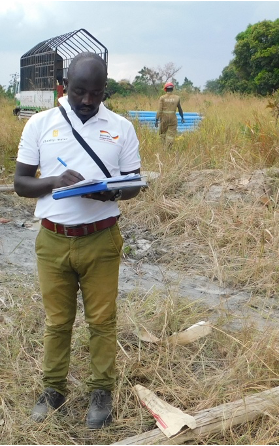
From the drilling contractor’s side – overseeing drilling operations
I was fortunate to work with a drilling firm that prioritized quality, accountability, and training. The work culture encouraged flexibility, allowing us to try out different drilling methodologies. One of the most valuable aspects was the emphasis on real-time logging and decision-making based on live site observations. As the overseer of the drilling operations, I had to be physically present in the field, equipped with a laptop, drilling logs, a handheld GPS, a tape measure, a V-notch Weir, a dip meter, an E.C & a pH meter, and a camera, to support real time supervision and technical decisions as drilling progressed.
There was no remote oversight; everything was site-based and collaborative. Communication within the team was strong both for daily updates and for collectively addressing any issues that had financial or technical implications.

However, there were limitations.
At the time, our machinery could not compete for larger contracts, particularly those requiring the drilling of production boreholes with casing diameters larger than 5″ internal diameter (ID). While we successfully drilled several open-hole design boreholes, which are suitable for handpumps these cannot be upgraded to accommodate technologies such as solar-powered water systems (SPWS) due to initial design constraints.
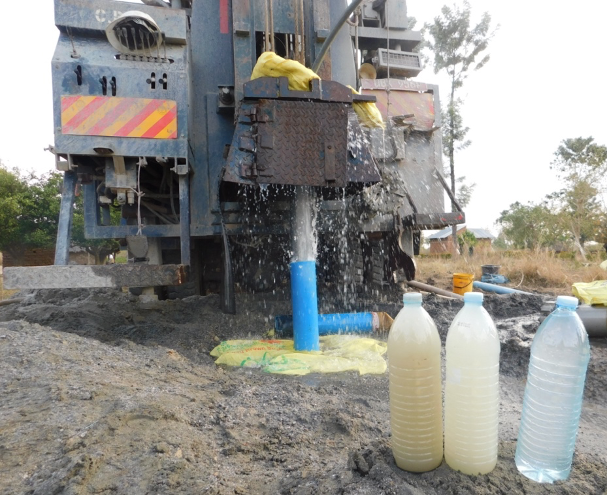
From the Client’s Side (INGO) – supervising drilling
Switching to the client’s side offered me the opportunity to work with a range of drilling firms year after year. By then, I had completed the Rural Water Supply Network (RWSN) Professional Drilling and Borehole Management course (2019), and I was actively applying the knowledge in the field. I have worked with drillers with different equipment, resulting in more efficient drilling, constructing cased, rather than open holes. I also have had the chance to mentor and train new supervisors in professional supervision practices, proper borehole logging, and how to make sound real-time decisions at the site.
However, not all experiences have been positive
Remote, or part time supervision is common with a bigger percentage of the drilling firms I have worked with, often resulting in decisions made by drillers to minimize cost rather than address real-time field conditions which are not supervised in the field by the client. Some drilling firms opt for untrained, inexpensive overseers, which undermines the quality of work. As an example, many have no idea what real time logging is but just write a number of pipes and send short video clips to their bosses in office who make remote decisions. This usually becomes a challenge with the client’s supervisor ends up being painted bad as “a bad guy”. Without a qualified client supervisor on-site, the narrative of events can shift dramatically. I’ve observed poor siting practices, with boreholes positioned near anthills or trees leading to complex drilling challenges and post-installation issues such as silting, root intrusion, and compromised water quality. This has been subsequently verified through borehole video inspections and microbial tests. Additionally, poor gravel packing techniques have led to bridging, and inadequate borehole development has left screens poorly cleaned and functioning below standard.
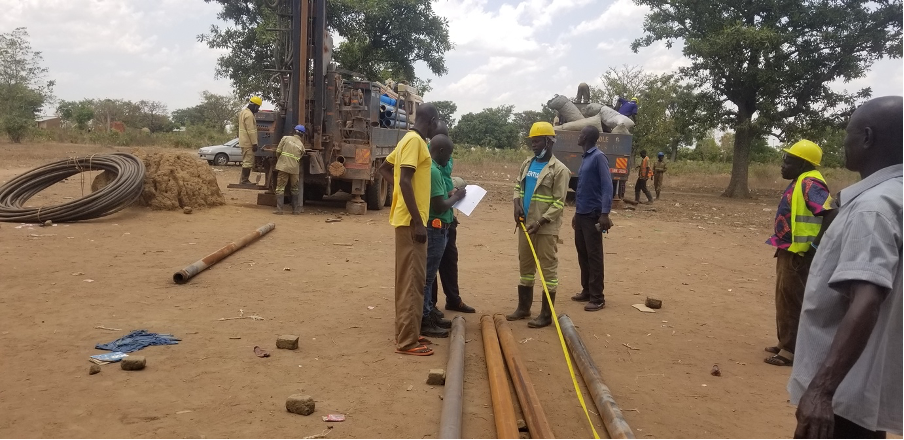
These reflections underline the critical importance of professional supervision, well-trained personnel, good oversight by the drilling contractor, and appropriate on-site decision-making throughout the drilling process.
I hope these insights are helpful as we continue to improve and uphold quality in our water supply interventions.
Ayebale Ared has over 10 years of experience in the water sector, specializing in WASH programs, borehole drilling, and rehabilitation in Uganda. He has worked on both the contractor and client sides, gaining a well-rounded perspective on best and worst drilling supervision experiences and practices
 Rural Water Supply Network - blog