by Tapio S. Katko, Jarmo J. Hukka, Petri S. Juuti, Riikka P. Juuti and Eric J. Nealer.
Illustrations: Pertti O. Väyrynen. Publisher: IWA Publishing, London.
Is bottled water better for you than tap water? Is the pollution created by wastewater treatment plants a major issue? Is privatisation the best solution for more efficient water use? These are just a few of the myths busted in Dispelling Myths About Water Services.
In any society, water and wastewater systems are of fundamental importance to the development of communities and the well-being of both people and the ecosystem. Unfortunately, this fact has been reinforced by the COVID-19 pandemic, by all manner of natural disasters, and by recent armed conflicts around the world. In such situations, clean water and sanitation are among the first things that need to be organised.
In this book, internationally renowned experts examine 21 common misconceptions regarding water supply and wastewater services, dispelling the myths by drawing on their global insights and avoiding technical jargon, while simultaneously raising questions of concern relating to water services.
Access to clean water and safe sanitation is essential for life. Without it, our time on this planet becomes dangerously short. People do not necessarily think about the challenges relating to water services, but the message is clear: to build sustainable water services, proper rules, accountable and responsive leadership, and well-informed stakeholders are vital, alongside resilient organisations and robust physical systems.
Originally published in Finnish, this English edition has been completely rewritten and includes examples and references from countries across the world. Original illustrations bring the content to life.
Whether you’re a water professional, policy maker, or environmental enthusiast, Dispelling Myths About Water Services helps sort the fact from the fiction regarding our most vital resource: water.
The book is freely available as an e-version: DOI: https://doi.org/10.2166/9781789064162 and a printed copy can be bought as well from the website for 20% off seasonal offer for the printed version by the code “DMAWS25”, Valid until 21st Dec 2025.
“Gender equality is a fundamental human right and an obvious question of equity and fairness. But it is also a necessary foundation for sustainable development and a peaceful, prosperous world.” – Beate Trankmann, UNDP Resident Representative
However, the intersection of WASH reveals profound challenges that hinder the potential of women and girls in achieving equitable and sustainable development, within the realms of WASH. Cecilia Sharp, UNICEF Director of WASH and CEED, explains this by informing that “unsafe water, toilets, and handwashing at home robs girls of their potential, compromises their well-being, and perpetuates cycles of poverty.” She added, “responding to girls’ needs in the design and implementation of WASH programmes is critical to reaching universal access to WASH and achieving gender equality and empowerment.”
Since the emergence of gendered thinking in WASH in 1970s, the dialogue surrounding gender equity has evolved including a dedicated SDG 5 that envisions a world where gender equality is achieved and all women and girls are empowered. It targets the eradication of discrimination and violence against women, child marriage and female genital mutilation, and the recognition of unpaid care work. Furthermore, it emphasizes the necessity for women’s participation in decision-making and access to sexual and reproductive health services.
Water Scarcity and Gender Inequality: Exploring the Hidden Costs of a Thirsty World
The intersection of WASH and gender unveils unique challenges that disproportionately burden women and girls. As demonstrated on Graph 2 below, Research reveals that when water sources are not easily accessible, women and girls aged 15 and older assume the primary responsibility for water collection in 70% of households—an alarming statistic that starkly contrasts with the 30% of households where men share this burden. This reality not only highlights the entrenched gender roles but also raises critical questions about the time and energy expended by women and girls, which could otherwise be invested in education, employment, or health.
This multifaceted vulnerability contributes to a staggering increase in mortality rates among women and girls.
Brightening the Horizon: Positive Trends in Gender Recognition in WASH Initiatives
“In the landscape of gender recognition, a nuanced narrative unfolds—one that, while acknowledging persistent challenges, also celebrates the transformative strides women are making within the water sector.”
The forthcoming UN WWDR 2026 stands as a beacon of hope, poised to spotlight the remarkable achievements of women in this vital field. By illuminating their contributions and sharing success stories, the report shall aim not just to honour past accomplishments but to ignite inspiration in future generations of women aspiring to carve out their own paths in WASH careers. This acknowledgment is not merely celebratory; it is a critical step toward fostering gender equity in a sector that has historically marginalized female voices.
Senegal, for instance, has shown remarkable strides between 2015 and 2020, as highlighted in the 2022 SDG Gender Index by Equal Measures 2030. They improved on undernourishment (SDG2) and drinking water (SDG6). The Senegalese government, since adopting the Beijing Declaration, has actively championed gender equality. The introduction of a parity law for elected institutions in 2010 has positioned Senegal as a global leader, boasting one of the highest proportions of women parliamentarians in West Africa. This progressive move places Senegal fourth in Africa concerning gender parity in its legislative assembly. Complementing these efforts, the government has ratified several international conventions to bolster women’s rights and developed a National Strategy for Gender Equity (SNEEG 2016-2026), to ensure equitable participation of both genders in decision-making and access to resources.
Such positive trends in gender recognition in WASH, have spilled into the political arena particularly women’s activism; Hon. Anne Désirée Ouloto—dubbed ‘Maman Bulldozer’ lead transformative efforts in WASH initiatives in Côte d’Ivoire. Presiding over a monumental US$1.2 billion investment in sanitation and drainage in Greater Abidjan, her work exemplifies the profound impact of female leadership in WASH sector.
Moreover, Women are not just participating but breaking barriers, challenging norms and stepping into leadership roles, shaping policies, and driving change by making their voice heard. Indonesia’s Retno Marsudi, who serves as the first UN Special Envoy on Water, exemplifies the vital role women play in global discourse on water issues.
Nearly 30 years ago I began my first steps into a career in Water, Sanitation and Hygiene (WASH) in Guatemala. In the morning mist, there was the dull clank of the school bell. It was an old bombshell that had been dropped on the village at some point during the thirty-year civil war. On that day it was guiding children to lessons. The clothes of the people, particularly the women, were amazing. Incredibly colourful and ornately woven, and each is distinctive to that community.
Today, my job is a different type of weaving, but no less colourful. In my previous post, I described how we, as RWSN and SuSanA, have been working with the Multilateral Development Banks, bilateral aid agencies, NGOs and researchers to weave a new narrative for rural WASH – one of learning from each other to achieve universal and lasting access.
But success doesn’t come from top-down actions only, there also needs to be a meeting with bottom-up energy, experience and initiative. Thanks to the support from SDC and IDB, through the SIRWASH project, we have had the opportunity to connect and listen to what regional practitioners are interested in and find ways to collaborate.
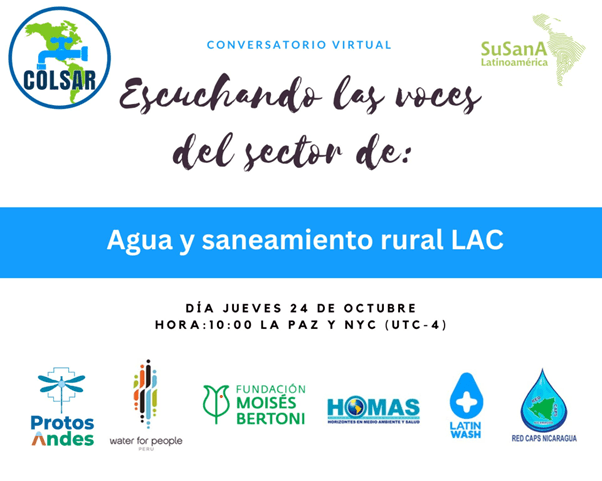
On 24 October, our partner, Lourdes Valenzuela from Aguatuya/SuSanA Latinoamérica co-hosted an online meeting with fellow WASH networks: “Conversatorio virtual: Escuchando las voces del sector de agua y saneamiento rural en Latinoamérica” (Online Conversation: Listening to the Voices of Rural Water and Sanitation Leaders in Latin America)
This 80-minute session, co-hosted with COLSAR, connected experts from diverse backgrounds to identify current sector demands and innovative approaches for improving rural water and sanitation management.
Themes and Objectives
The session, moderated by Marcelo Encalada from LatinWASH, sought to:
Identify essential knowledge areas and skills for strengthening rural water and sanitation services.
Explore digital tools and resources that could improve access to critical knowledge.
Examine the role of digital platforms such as SuSanA and LatinWASH in promoting sustainable solutions.
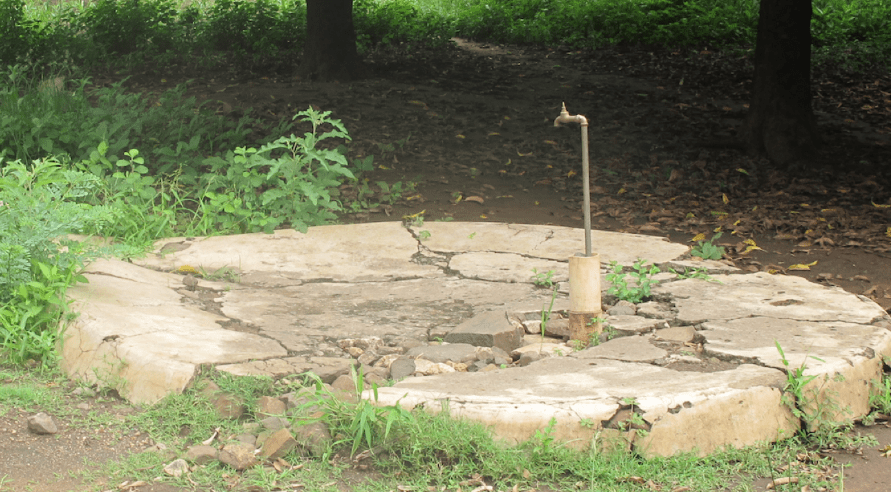
The sustainability of drinking water supply infrastructure remains a challenge in rural areas of low-and middle-income countries. Through this research to identify factors contributing to functionality, we analyzed monitoring data from ten non-governmental organization drinking water supply programs across nine sub-Saharan African and South Asian countries. Data were from 1,805 randomly selected water points, including tap stands, spring protections, rainwater collection systems, and hand pumps.
We found an impressive 92% of sampled water points constructed within the prior year were functional, versus only 79% of those constructed earlier (average 3.5 years, range: 1–12 years old).
Tap stands from piped water systems exhibited 74% lower odds of functioning than boreholes with hand pumps within the older construction sample. This disparity underscores the necessity of considering the suitability and reliability of various water supply systems in rural contexts.
As global efforts to expand piped water services align with international development goals, our results advocate for a nuanced approach. Higher water service levels offer undeniable benefits, but the accompanying technological, institutional, and financial requirements must be carefully weighed. Particularly in rural settings, where challenges of limited resources and infrastructure maintenance persist, comprehensive strategies are essential to mitigate risks and maximize the effectiveness of water supply interventions.
Read the full Open Access paper here:
Murray, A. L., Stone, G., Yang, A. R., Lawrence, N. F., Matthews, H., & Kayser, G. L. (2024). Rural water point functionality estimates and associations: Evidence from nine countries in sub-Saharan Africa and South Asia.Water Resources Research, 60, e2023WR034679. https://doi.org/10.1029/2023WR034679



 Rural Water Supply Network - blog