The UN WWDR 2026 shall serve as a vital resource, illustrating how global trends and phenomena are reshaping gender dynamics in societies around the world. The interplay between conflict, migration, and gender equity in WASH reveals stark realities. In regions afflicted by conflict and instability, women’s safety and access to essential services are severely compromised.
The plight of women in conflict zones is further exacerbated by migration. Women and girls face an increased risk of sexual and gender-based violence during conflicts. Yet, amid these challenges, women remain indispensable agents of change—actively participating in peace-building, conflict resolution, and post-conflict reconstruction. This resilience highlights the need to recognize and harness women’s potential for positive transformation in their communities.
Migration and its intersection and climate change also alters traditional gender roles and expectations, as families adapt to new environments; it presents opportunities for economic independence and education, empowering them to challenge restrictive gender norms. Still Migrant women often encounter exploitation, discrimination, and limited access to resources, underscoring the urgent need to address these barriers.
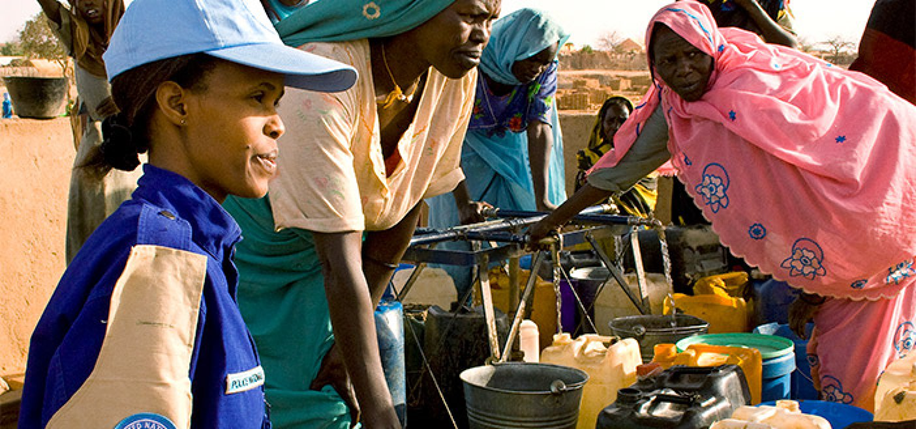
Corruption emerges as another formidable barrier to WASH and gender equity. It restricts women’s access to essential services and undermines their participation in leadership and decision-making processes, as demonstrated in weaponisation of water. U.N. Women has called for urgent action to protect Sudanese women and girls, emphasizing the need for accountability in addressing high levels of sexual violence and exploitation. “We cannot let Sudan become a forgotten crisis,” asserts U.N. Women’s Addou, highlighting the critical necessity for action in conflict-affected regions.
On my blog on Diversity in Water sector leadership I emphasise the concerning underrepresentation of women. A World Bank report highlights that less than 18% of the workforce in water utilities are women and that two-thirds of sanitation leaders are white according to a FLUSH LLC publication that I co-authored. This systemic inequity reflects deeper societal structures, suggesting that without diverse leadership, the water sector risks stagnation and failure in meeting SDG6 targets.
“Gender equality is a fundamental human right and an obvious question of equity and fairness. But it is also a necessary foundation for sustainable development and a peaceful, prosperous world.” – Beate Trankmann, UNDP Resident Representative
However, the intersection of WASH reveals profound challenges that hinder the potential of women and girls in achieving equitable and sustainable development, within the realms of WASH. Cecilia Sharp, UNICEF Director of WASH and CEED, explains this by informing that “unsafe water, toilets, and handwashing at home robs girls of their potential, compromises their well-being, and perpetuates cycles of poverty.” She added, “responding to girls’ needs in the design and implementation of WASH programmes is critical to reaching universal access to WASH and achieving gender equality and empowerment.”
Since the emergence of gendered thinking in WASH in 1970s, the dialogue surrounding gender equity has evolved including a dedicated SDG 5 that envisions a world where gender equality is achieved and all women and girls are empowered. It targets the eradication of discrimination and violence against women, child marriage and female genital mutilation, and the recognition of unpaid care work. Furthermore, it emphasizes the necessity for women’s participation in decision-making and access to sexual and reproductive health services.
Water Scarcity and Gender Inequality: Exploring the Hidden Costs of a Thirsty World
The intersection of WASH and gender unveils unique challenges that disproportionately burden women and girls. As demonstrated on Graph 2 below, Research reveals that when water sources are not easily accessible, women and girls aged 15 and older assume the primary responsibility for water collection in 70% of households—an alarming statistic that starkly contrasts with the 30% of households where men share this burden. This reality not only highlights the entrenched gender roles but also raises critical questions about the time and energy expended by women and girls, which could otherwise be invested in education, employment, or health.
This multifaceted vulnerability contributes to a staggering increase in mortality rates among women and girls.
Brightening the Horizon: Positive Trends in Gender Recognition in WASH Initiatives
“In the landscape of gender recognition, a nuanced narrative unfolds—one that, while acknowledging persistent challenges, also celebrates the transformative strides women are making within the water sector.”
The forthcoming UN WWDR 2026 stands as a beacon of hope, poised to spotlight the remarkable achievements of women in this vital field. By illuminating their contributions and sharing success stories, the report shall aim not just to honour past accomplishments but to ignite inspiration in future generations of women aspiring to carve out their own paths in WASH careers. This acknowledgment is not merely celebratory; it is a critical step toward fostering gender equity in a sector that has historically marginalized female voices.
Senegal, for instance, has shown remarkable strides between 2015 and 2020, as highlighted in the 2022 SDG Gender Index by Equal Measures 2030. They improved on undernourishment (SDG2) and drinking water (SDG6). The Senegalese government, since adopting the Beijing Declaration, has actively championed gender equality. The introduction of a parity law for elected institutions in 2010 has positioned Senegal as a global leader, boasting one of the highest proportions of women parliamentarians in West Africa. This progressive move places Senegal fourth in Africa concerning gender parity in its legislative assembly. Complementing these efforts, the government has ratified several international conventions to bolster women’s rights and developed a National Strategy for Gender Equity (SNEEG 2016-2026), to ensure equitable participation of both genders in decision-making and access to resources.
Such positive trends in gender recognition in WASH, have spilled into the political arena particularly women’s activism; Hon. Anne Désirée Ouloto—dubbed ‘Maman Bulldozer’ lead transformative efforts in WASH initiatives in Côte d’Ivoire. Presiding over a monumental US$1.2 billion investment in sanitation and drainage in Greater Abidjan, her work exemplifies the profound impact of female leadership in WASH sector.
Moreover, Women are not just participating but breaking barriers, challenging norms and stepping into leadership roles, shaping policies, and driving change by making their voice heard. Indonesia’s Retno Marsudi, who serves as the first UN Special Envoy on Water, exemplifies the vital role women play in global discourse on water issues.
As the waves of time crash upon the shore of progress, a mighty force is rising. These waves carry the strength of female leaders, revolutionising the Water Sanitation and Hygiene (WASH) sector. To mark another milestone in the pursuit of a sustainable future, the upcoming United Nations World Water Development Report (UN WWDR 2026), will shine a spotlight on a critical yet oft-overlooked aspect of the global water crisis: the inextricable link between gender and water, illuminating a path towards a more sustainable and equitable future. UNWWDR 2026 is not merely an echo of problems, but an inspiring melody of change, empowerment, and sustainable future.
Alongside the progress, we also confront persistent gaps. Gaps that threaten to undermine our hard-won achievements, forming a path that recognizes the interconnected nature of WASH-related challenges and the need for inclusive solutions.
Terms like sex and gender may seem straightforward but their nuances hold profound implications for how we perceive and address WASH and gender issues. UNICEF definesSex as the biological and physical differences between women and men while Gender as socially constructed differences in attributes and opportunities associated with being a woman, man, girl, or boy and to the social interactions and relations between women and men. Woman refers to biological females according to UNOHCR. In my view this affirms the gap in the context of WASH statistics where WASH data is often disaggregated by sex, but rarely disaggregated by gender.
Imagine a world where the simple act of accessing safe WASH does not dictate one’s ability to attend school, earn an income, or live a life free from danger. A world where our mothers, sisters, and daughters are not disproportionately burdened with the responsibility of fetching water, but are empowered managers and change agents in WASH initiatives. For more than two billion people around the globe, particularly women and girls, this is a distant reality. The latest stark metrics reveal a concerning reality: despite progress, millions of women and girls worldwide still lack access to safe WASH services, hindering their empowerment, health, and economic opportunities. This world, although still a distant reality, is one we must strive for, beginning with a deep understanding of the water-gender nexus.
The gendered impact of inadequate WASH access is not just a reflection of biological differences, but a manifestation of socially constructed disparities. It serves as a stark reminder that water is not just a women’s issue – it’s a human issue and Graph 1 below illustrates these realities.
Graph 1 Proportion of households in which women, men, girls and boys are primarily responsible for water collection, by country, selected surveys where at least 10% of households collect water, 2012–2022 (%) Source UNICEF and WHO, 2023
UN Water’s dictum concurs and aptly captures that “Water is a human right, not a privilege,” this blog series embodies a bold commitment to upholding the rights of all.
The upcoming UN WWDR for 2026, aims to bridge this chasm by placing gender equity at the heart of WASH management and sustainability discussions. It stands as a pivotal blueprint for understanding the critical nexus between water and gender, presenting an urgent call to action for policymakers, practitioners, and stakeholders dedicated to fostering an inclusive, equitable, and water-secure world. By weaving together, a rich narrative of data, case studies, and expert insights, the report shall transcend mere enumeration of challenges to celebrate the resilience and ingenuity of women who are at the forefront of change within the WASH sector. It shall compellingly argue that embedding gender equality and social inclusion into water policy and practice is not just a moral imperative but a pragmatic necessity for achieving all SDGs especially SDG 5 and 6. Statistical evidence revealing the extensive failures of undervaluing women’s expertise in WASH management will be juxtaposed with success stories of women-led interventions that have illuminated pathways towards peace, prosperity, and sustainability. As the report critically examines the barriers that women and girls face in accessing safe WASH, it shall highlight the detrimental impacts of gender disparities in decision-making roles, pushing the narrative beyond mere awareness to active transformation. With a focus on fostering gender-responsive approaches in the WASH sector, the UN WWDR 2026 shall serve not only as a repository of insightful analysis but as a clarion call for disruptive change, intended to inspire dialogue and galvanize global commitment towards a future where equitable access to safe WASH is a universal reality.
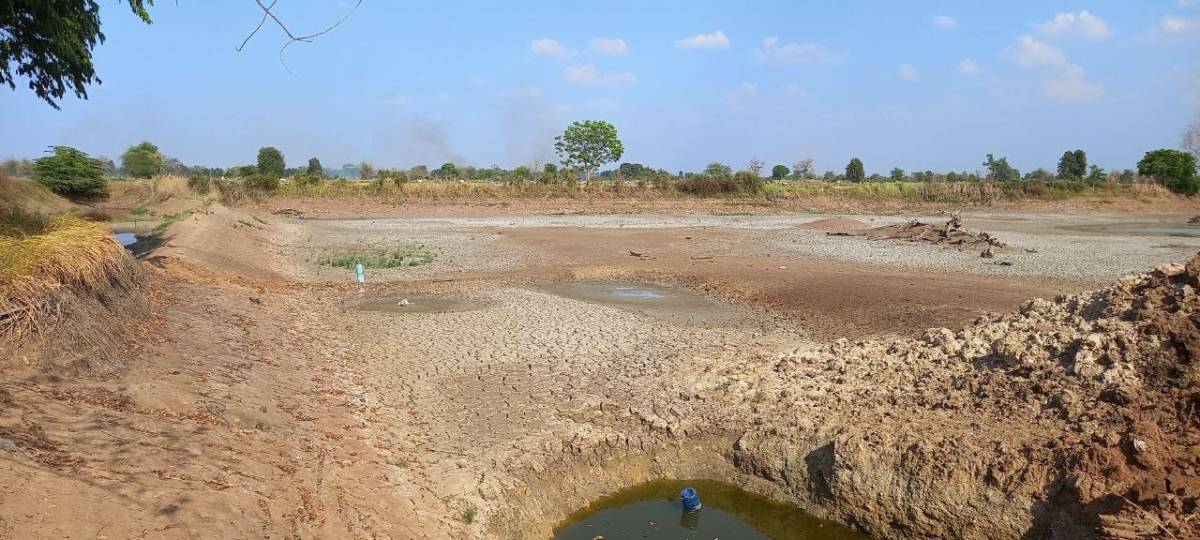
Image: Pond dried up in Banteay Meanchey province.
by Amandine Muret, Chief Partnerships Officer, 1001fontaines, RWSN Member Organisation Am.muret@1001fontaines.com
As Asia grapples with an intense heatwave, exacerbating the already acute lack of access to safe drinking water for vulnerable communities, the call for innovative and resilient water supply solutions becomes increasingly urgent. The World Water Forum, held in Bali from May 18 to 24, brought together governments and experts from around the world, including 1001fontaines, a global NGO distinguished by its two decades of on-the-ground experience in providing safe water to communities in challenging contexts.
A Water Crisis Exacerbated by Climate Change
South and Southeast Asia are currently experiencing record temperatures. In Cambodia, where the mercury has soared to over 40°C several times, levels unprecedented in 170 years, the situation is alarming. This extreme heat wave increases the vital need for drinking water while compromising access to uncontaminated water sources, crucial to meeting this need. In rural areas, the majority of inhabitants still rely on self-supply water solutions, such as wells or ponds – with increasingly intense droughts and floods due to climate change, vulnerable populations see their water sources affected, with impacts on their resilience and health.
The World Bank recently estimated that $36.1 billion would be needed to develop missing water access infrastructure in Asia (source: “Funding a Water-Secure Future: An Assessment of Global Public Spending” report, published in May 2024). Climate change, impacting the accessibility and quality of water resources, requires even larger investments to establish sustainable and efficient supply systems in the face of new constraints, particularly in maintenance and treatment.
In development contexts, where financial and technical resources are limited, and existing service providers already struggle to cover maintenance costs due to low household purchasing power, the idea of having a tap of safe drinking water in every home seems increasingly out of reach. Innovative approaches like those proposed by 1001fontaines appear essential to avoid regression in achieving Sustainable Development Goal 6: ensuring universal access to safe water.
Social Innovation to Address the Vital Need for Safe Drinking Water
For over 20 years, 1001fontaines has been designing and deploying sustainable solutions for access to safe drinking water for vulnerable populations in Asia and Africa. By focusing on the needs of vulnerable communities, the organization emphasizes the quality of the water produced and the strengthening of local capacities through social entrepreneurship.
In concrete terms, 1001fontaines installs decentralized water treatment stations (“Water Kiosks”) and trains local entrepreneurs to deliver the produced drinking water directly to households and schools, all in reusable 20-liter bottles.
This service, offered at an affordable price, now reaches a million consumers daily across rural Cambodian communes, where the model was initiated, while covering its operating costs. After 20 years, 90% of the deployed Water Kiosks are still operational, and consumer satisfaction reflects sustainable behavior change benefiting public health improvement.
Sharing Experiences at the World Water Forum
At the World Water Forum in Bali, 1001fontaines will share the lessons learned from its innovative approach. With operations now expanded to four countries (Cambodia, Madagascar, Vietnam, Bangladesh), the organization has demonstrated the resilience of its model in the face of development and climate change challenges.
Unlike traditional water supply systems, which aim to provide between 50 and 100 liters of water per person, often costly to implement in sparsely populated areas, 1001fontaines focuses on a more targeted consumption, between 1 and 3 liters of safe water per person per day. This cost-effective approach ($15 subsidized per beneficiary) reduces pressure on water resources while offering better quality control. By using reusable bottles delivered directly to homes, the distribution model is less susceptible to infrastructure aging or climate-related damage, with maintenance focused on water treatment facilities.
Another key advantage is adaptability. In Cambodia, 4 regional laboratories monthly monitor water quality at the 330 active sites, allowing the identification of quality changes, often localized and related to the effects of climate change, and enabling the local technical team to implement targeted and low-cost mitigation measures.
Amandine Chaussinand, General Manager of 1001fontaines’ local entity in Cambodia, Teuk Saat 1001, testifies: “We have achieved remarkable results over two decades of operations. We are proud to share them with academic institutions, development financing institutions, and governments at the Forum in Bali because we believe that better consideration of alternative water supply systems, such as bottled water, could accelerate access to safe water for the benefit of populations facing the impacts of climate change.”
Amandine Muret, Chief Partnerships Officer, emphasizes that “Collaboration with local authorities is a key factor in the success of 1001fontaines’ programs, as is the mobilization of development aid to finance infrastructure construction and capacity building, at the heart of the sustainability of the services implemented.”
As the G7 recently announced the creation of a global coalition to address the global water crisis, high-level political dynamics could promote exchanges of successful experiences and stimulate, in the coming years, social innovations in the field of access to safe drinking water. 1001fontaines intends to contribute at its level by continuing to grow its impact.
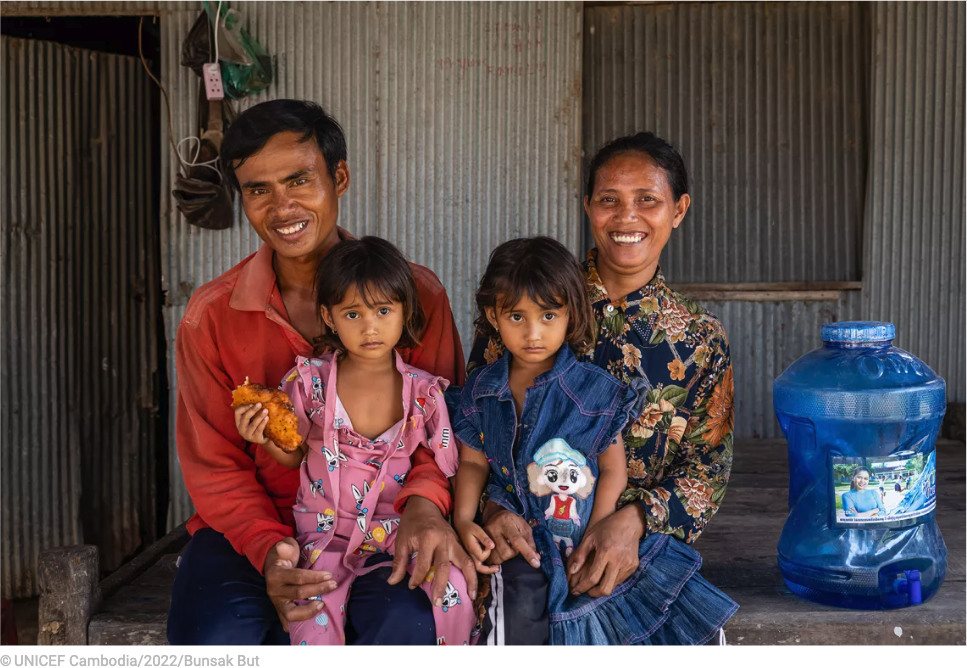
Choum Sophorn poses with her husband and twin four-year-old daughters in her home next to the 20 litre drinking water bottle that is delivered to her home every three days.
Teuk Saat 1001’s entrepreneur stands next to the UV filtration system and holds up some freshly filled bottles, ready to be sealed before delivering directly to customers in Kouk Pou commune.
About: For two decades 1001fontaines have worked to meet the needs of underserved communities through resilient water purification infrastructure and affordable and convenient services. We aim to encourage long-term behavior change and are proud that a million consumers across four countries in Asia and Africa have adopted our safe drinking water solutions.
Our 2030 ambition is to extend our impact by proving the relevance of our safe drinking water solutions in five countries and ensuring all our local partners are on track to reach financial viability at scale.




 Rural Water Supply Network - blog