Timor Leste – a service delivery state of mind

Some experiences from Timor Leste

editor's avatarwater services that last

By Harold Lockwood  –

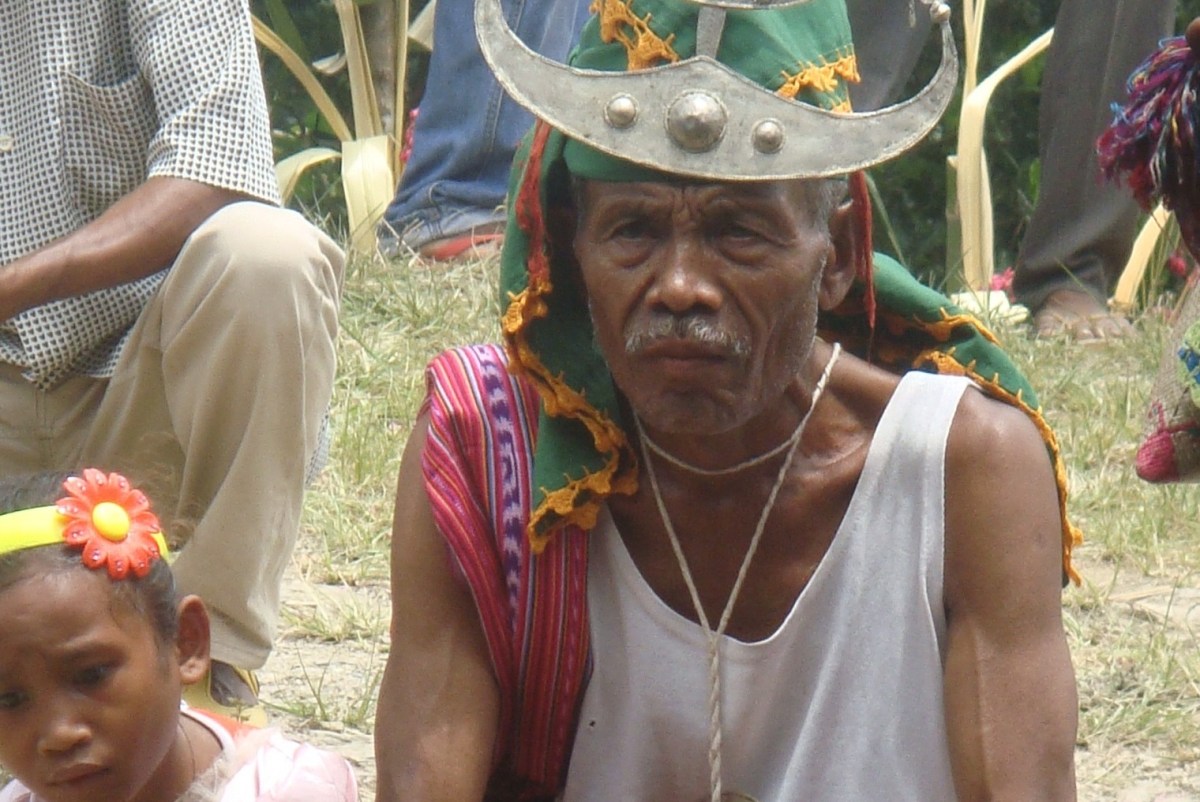
Last week I was in Timor Leste supporting some of the work of WaterAid Australia and its programme in Timor Leste. As this has evolved over the last several years, and with coverage levels increasing, WaterAid Timor-Leste (WATL) has recognised the pressing challenge of maintaining service levels in those communities who have gained first time access to water supply. The Government of Timor-Leste has pledged to meet its Millennium Development Goal (MDG) target to provide 78% of the population with access to a safe water supply by 2015 (75% of the rural population and 86% of the urban population). The JMP update for 2013 records access in 2011 to an improved water source as 69%: 60% rural and 93% urban. As of 2013 steady progress is being made and it has been determined that the MDG for water supply will be met.

View original post 1,491 more words
Self-Supply at Scale: Lessons from rural Bangladesh

Image
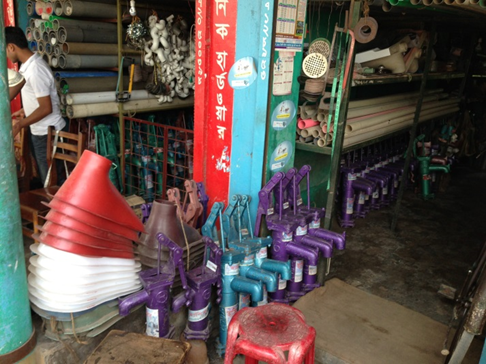
Shops like this one satisfy local demand for new pumps and replacement parts. Pumps, like ipods, come in a range of colors! (photo: J. Annis, 2013)

by Jonathan Annis is a sanitation and innovation specialist with the USAID-funded WASHplus project (www.washplus.org). His views do not represent those of USAID or the U.S. Government.

I recently traveled to southeastern Bangladesh to support WASHplus’s local implementing partner WaterAid as it begins a multi-year project in the coastal belt. The coastal belt is a marshy delta formed by Himalayan sediments transported thousands of miles by an extensive river network that settle as they reach the Bay of Bengal. Surface water is ubiquitous, and flooding—from tidal flows, excessive rainfall, or cyclones—is an annual event. I had never been in an environment so waterlogged.   Continue reading “Self-Supply at Scale: Lessons from rural Bangladesh”

May 8, 2013 Webinar – Removing Barriers to WASH by the RWSN equity and inclusion group

Join the webinar tomorrow

WASHplus's avatarSanitation Updates

The RWSN equity and inclusion group is pleased to announce its latest webinar on Removing Barriers to WASH. If you would like to attend, please inform ShamilaJansz@wateraid.org. For more details, see below:  wateraid-logo

Description: WEDC and WaterAid have developed a new set of ‘Equity and Inclusion in WASH’ learning materials.

We have been collaborating to develop practical training materials for WASH practitioners, to help them analyse and address the problems faced by the most disadvantaged people in accessing WASH services. Extensively field-tested by WaterAid and WEDC in Africa and Asia, the materials are participatory and interactive, and are ideal to facilitate practical collaboration and problem-solving between disabled people and technical service providers. They can be used as stand-alone activities, or as part of a broader training programme. Although rooted in the social model of disability, the scope of the analysis framework has been broadened to encompass exclusion…

View original post 235 more words

Making sanitation and water accessible to people with disabilities in Uganda

by James Kiyimba, WaterAid Uganda

Pascal Emalu is an old man and resident of Agwajua village, Aweelu parish, Morungatuny Sub County of Amuria district which is over 330 km North East of Kampala. He remembers when young, he was very swift and energetic, doing all his household chores with ease. At 63 years now, he finds problems in doing all what he used to do in his youth full stage.

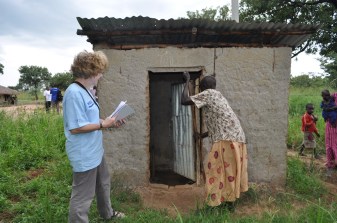
Ijan Janet Norah (old lady) demonstrating to Hazel Johns (WEDC) the challenges she goes through to use a pit latrine Photo: WaterAid / James Kiyimba

“Way back, I could not think of old age as a kind of disability. Now I am vulnerable, I face lots of challenges in squatting to use a latrine,” Pascal says.
Continue reading “Making sanitation and water accessible to people with disabilities in Uganda”

Assessing the potential of solar powered pumping for domestic water supply in Uganda

Update from Uganda on testing the Technology Applicability Framework (TAF) as part of the WASHtech project

sekumapter's avatarWASHTech, THE project (2011-2013)

In Kanungu district of south western Uganda, the Technology Applicability Framework  (TAF) work was used to assess the potential of solar powered water pumping in the country.The exercise involved representatives from the Ministry of Water and Environment, Technical Support Units (TSUs),Kanungu district local governments, local NGOs, research institutions, private sector enterprises and beneficially communities. The assessment was based on the following dimension: social acceptance of the technology in the community, environmental dimension, and affordability of the technology by community members, skills and knowhow.

Solar powered pumping for domestic supply has great potential in Uganda if the following issues are adequately addressed:

  • Scheme operators and beneficially communities should provide adequate security measures to protect solar panels from theft. In addition, communities using solar water powered pumps and bore holes should be able to access loans from banks or financial institutions for replacement of highly expensive scheme components in the event of…

View original post 126 more words