Nearly 30 years ago I began my first steps into a career in Water, Sanitation and Hygiene (WASH) in Guatemala. In the morning mist, there was the dull clank of the school bell. It was an old bombshell that had been dropped on the village at some point during the thirty-year civil war. On that day it was guiding children to lessons. The clothes of the people, particularly the women, were amazing. Incredibly colourful and ornately woven, and each is distinctive to that community.
Today, my job is a different type of weaving, but no less colourful. In my previous post, I described how we, as RWSN and SuSanA, have been working with the Multilateral Development Banks, bilateral aid agencies, NGOs and researchers to weave a new narrative for rural WASH – one of learning from each other to achieve universal and lasting access.
But success doesn’t come from top-down actions only, there also needs to be a meeting with bottom-up energy, experience and initiative. Thanks to the support from SDC and IDB, through the SIRWASH project, we have had the opportunity to connect and listen to what regional practitioners are interested in and find ways to collaborate.
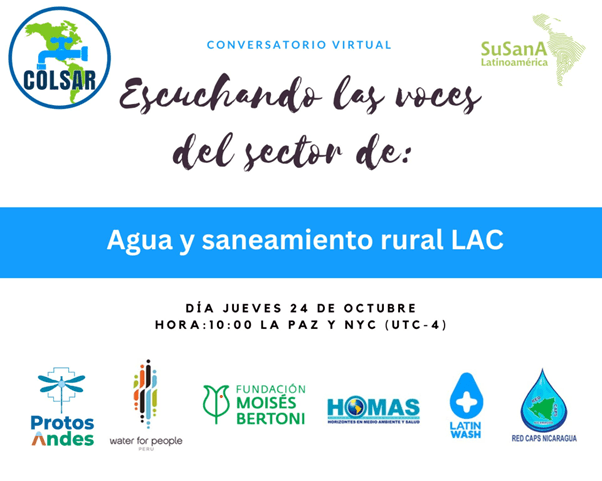
On 24 October, our partner, Lourdes Valenzuela from Aguatuya/SuSanA Latinoamérica co-hosted an online meeting with fellow WASH networks: “Conversatorio virtual: Escuchando las voces del sector de agua y saneamiento rural en Latinoamérica” (Online Conversation: Listening to the Voices of Rural Water and Sanitation Leaders in Latin America)
This 80-minute session, co-hosted with COLSAR, connected experts from diverse backgrounds to identify current sector demands and innovative approaches for improving rural water and sanitation management.
Themes and Objectives
The session, moderated by Marcelo Encalada from LatinWASH, sought to:
Identify essential knowledge areas and skills for strengthening rural water and sanitation services.
Explore digital tools and resources that could improve access to critical knowledge.
Examine the role of digital platforms such as SuSanA and LatinWASH in promoting sustainable solutions.
by Sean Furey, Director – RWSN Secretariat @ Skat Foundation
Rural Water, Sanitation and Hygiene (WASH) is such a local, personal, issue that does global-level exchange make sense?
At first glance, rural areas and communities worldwide seem too diverse for networking and knowledge exchange to be useful or meaningful. What does WASH for isolated hamlets in the Nepalese Himalayas have in common with a fishing village on the Peruvian coast or a small town in northern Nigeria? Quite a lot, it turns out.
When it comes to shear financial clout and convening power, Multi-lateral Development Banks (MDBs) are hard to beat, but even they have had mixed success with rural WASH – but there have been successes and they have recognised that they can learn from each other so that they can provide their client governments with the technical assistance and financial options to deliver sustained improvements. So, last year the relevant focal points from the African (AfDB), Asian (ADB) and Inter-American (IDB) met and agreed on a Call to Action with three priorities:
Information-based decision-making and rural WASH investments and service monitoring.
Institutional strengthening & coordination.
Rural sanitation.
From this, we organised a webinar mini-series drawing on their recommendations for case studies on each topic from each region.
Finding the common threads and bringing them together to make them stronger
This year, we took more steps to build an understanding and appreciation of the solutions that have the potential to transcend the variability of local contexts and be adapted. With growing interest, our colleagues at the World Bank also joined the small group and together we organised a special SIRWASH breakfast meeting and an open session on “Coordinating Rural Water Investments to Promote Security and Stability” with REAL-Water :
The SIRWASH breakfast meeting that followed was in the spirit of collaboration among countries in the global south, using knowledge sharing as a catalyst for innovative and sustainable solutions. It was attended by more than 40 representatives from countries (Haiti, Brazil, Peru, Chile, Nigeria and Uganda), multilateral banks, multilateral and bilateral agencies (SDC, AECID, SIDA, WHO, OAS, UNICEF), NGOs and philanthropists (including, One Drop, Water For People, Avina, Aguatuya, mWater, Global Water Center), as well as networks, partnerships and research (RWSN, SuSanA, WASH Agenda for Change, WASH Funders Group, SIWI, Uptime, the Aquaya Institute).
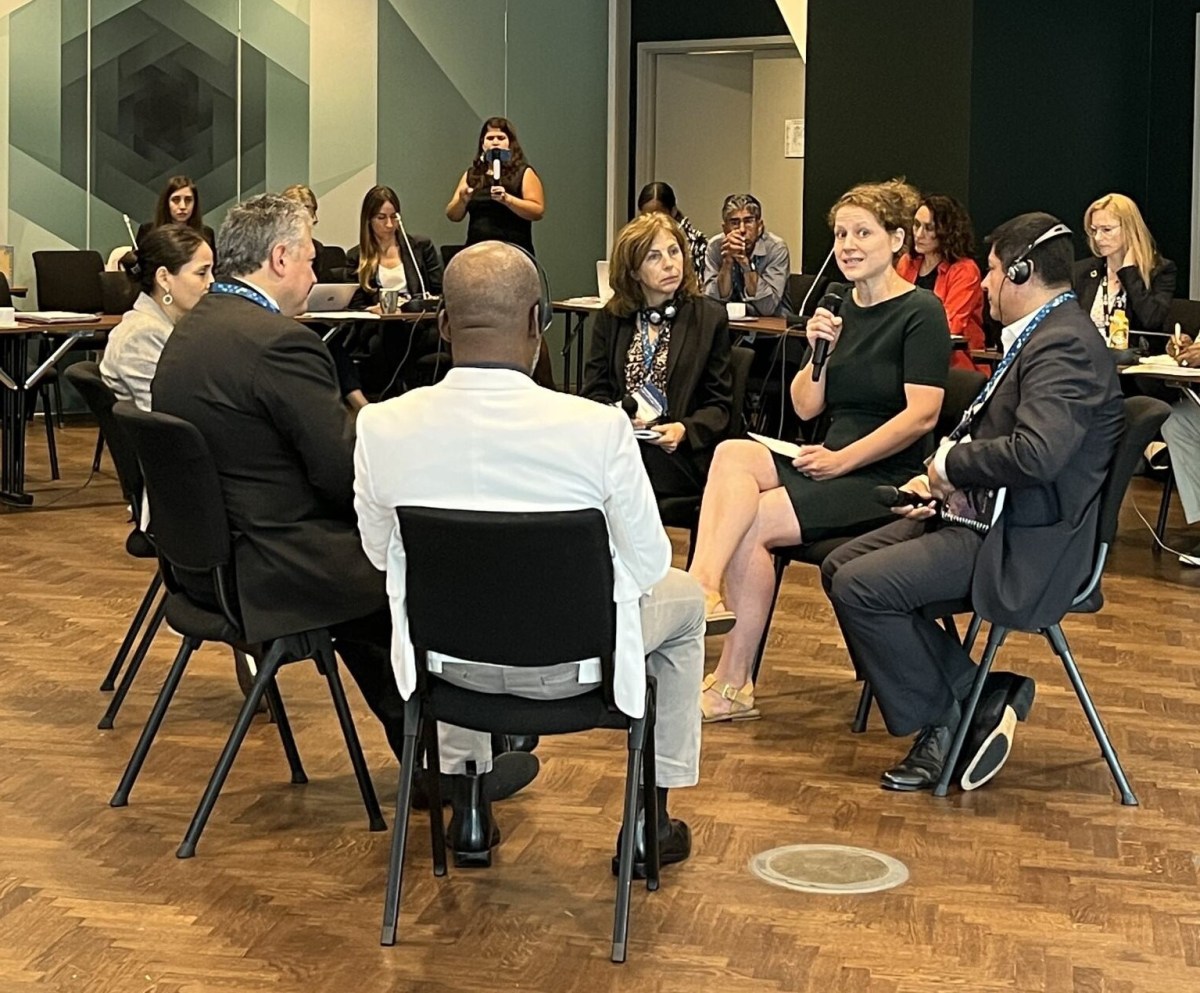
Using the “Fishbowl” method, participants exchanged their perspectives in an open and dynamic way on how strategic partnerships can increase impact in the sector. Discussions focused on two key questions:
1. How can technological innovations in rural WASH information systems be supported to be truly effective in decision making and incentivize scaling up?
2. What are practical solutions to improve the design and implementation of national rural WASH programs so that their benefits are sustained over the long term?
One of the central themes was innovation through sector information systems, a crucial tool for planning and managing water and sanitation services in rural areas. Three countries shared their experiences on how they have adapted and improved these systems:
Haiti highlighted the use of information systems for decision-making;
The importance of institutionalizing information at the national level and ensuring that communities participate in the validation and appropriation of data and decisions was emphasized.
In addition to information systems, the event underscored the need to integrate both technological and social innovations to improve rural services. Social innovations and behavioural change are essential for communities to take ownership of the systems and actively participate in their management and maintenance. Participants agreed that long-term sustainability is about finding the sweet spot between community-ownership/responsibility and external support.
The second critical issue addressed was the sustainability of rural water and sanitation services. Participants stressed that the successful implementation of these services cannot depend solely on initial investments in infrastructure. Innovative mechanisms need to be developed to ensure their financing and continued operation. The examples of Brazil and Nigeria were instructive, both countries demonstrating how the combination of effective governance and innovative financial models can ensure the operational sustainability of services:
Brazil presented its comprehensive implementation of their National Rural Sanitation Program (PNSR).
Nigeria highlighted the ways a results-based SURWASH programme is strengthening institutional capacity.
The Uptime Consortium shared their experiences and successes with Results-based Contracting on rural water service delivery across many contexts.
The discussion emphasized the need for functionality and quality indicators for rural services, linking reliable information to financial incentives for operators. This strategy can enhance the long-term sustainability of these systems. The working group concluded that collaboration is essential to ensure countries have reliable information for decision-making, aimed at improving the quality of rural services.r decision-making aimed at enhancing the quality of services in rural areas.
In the final discussion, consensus was reached on the need to create and maintain an enabling ecosystem for the development and sustainability of rural services. The great opportunity for development partners to join efforts and seek synergies, contributing technical and financial resources to this ecosystem in the countries was highlighted.
The event concluded with a clear call to action: all actors – governments, development banks, cooperation agencies, NGOs, networks and the private sector – must remain committed to financing and strengthening rural water and sanitation services. The MDBs will continue to work together on a concrete action plan to exchange and replicate successful and innovative experiences to ensure universal and quality WASH services in the countries.
Knowledge exchange is not just talk and powerpoint presentations, it is about building connections and trust between individuals and organisations, finding those common interests and encouraging co-creation of new insights and more sustainable solutions.
The symbolic activity organized by One Drop, where participants bonded to represent their intention to work together towards a common goal, was a powerful reminder of the importance of lasting partnerships. This symbolic gesture is just the beginning; it is essential to continue to scale up efforts so that the most vulnerable communities can access quality water and sanitation services in a sustainable and equitable manner.
Top-Down meets Bottom-Up
After this event, our partner Aguatuya convened an online meeting of Latin American WASH networks to encourage bottom-up exchange to complement our high-level approach. But we will follow that thread in the next post…
Many thanks to the large number of people involved, but in particular to Sergio Campos, Manuela Velasquez-Rodriguez and Cristina Mecerreyes at IDB; Diane Arjoon at AfDB, Vivek Raman and Tanya Huizer at ADB, Awa Diagne and Sarah Nedolast at the World Bank, Janine Kuriger at SDC, and to the wonderful RWSN/SuSanA team: Dr Aline Saraiva, Batima Tleulinova, Susanna Germanier, Lourdes Valenzuela, Paresh Chhajed, Chaiwe Sanderse and all the speakers and panellists for the webinars and sessions.
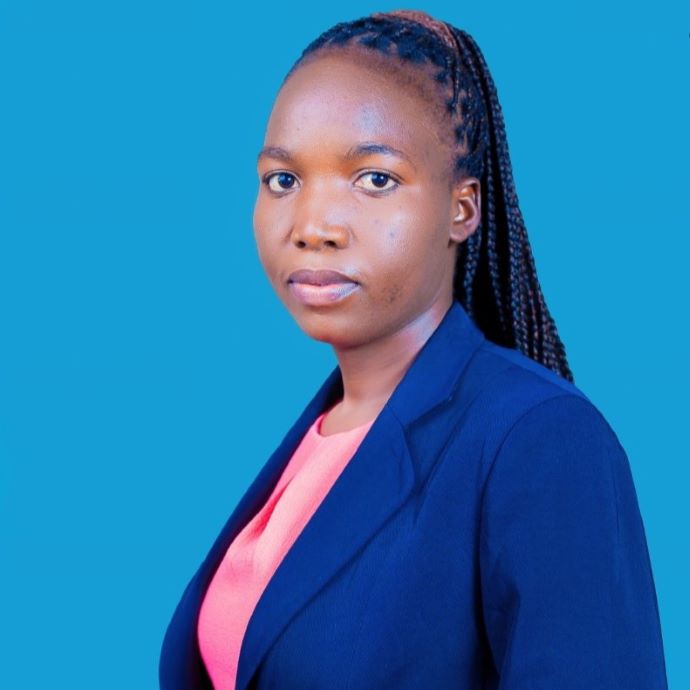
This is a guest blog by Gloria Musopole, who participated as a mentee in the 2024 RWSN Mentoring Programme.
Participating in the RWSN Women in WASH Mentorship Program has been a great experience, offering many opportunities for both personal and professional development. The program provides a platform to connect with seasoned experts in the water sector, learn from their experiences, and gain valuable insights into navigating the challenges and opportunities in the industry. It also creates a space for building networks with fellow participants (both mentors and mentees), encouraging a supportive environment for learning, growth, and collaboration.
When I first joined the program I wasn’t sure what to expect. Looking back, I realise how much I have grown in my leadership abilities and technical skills. I have learned to take on challenges with confidence and approach tasks with a sense of purpose.
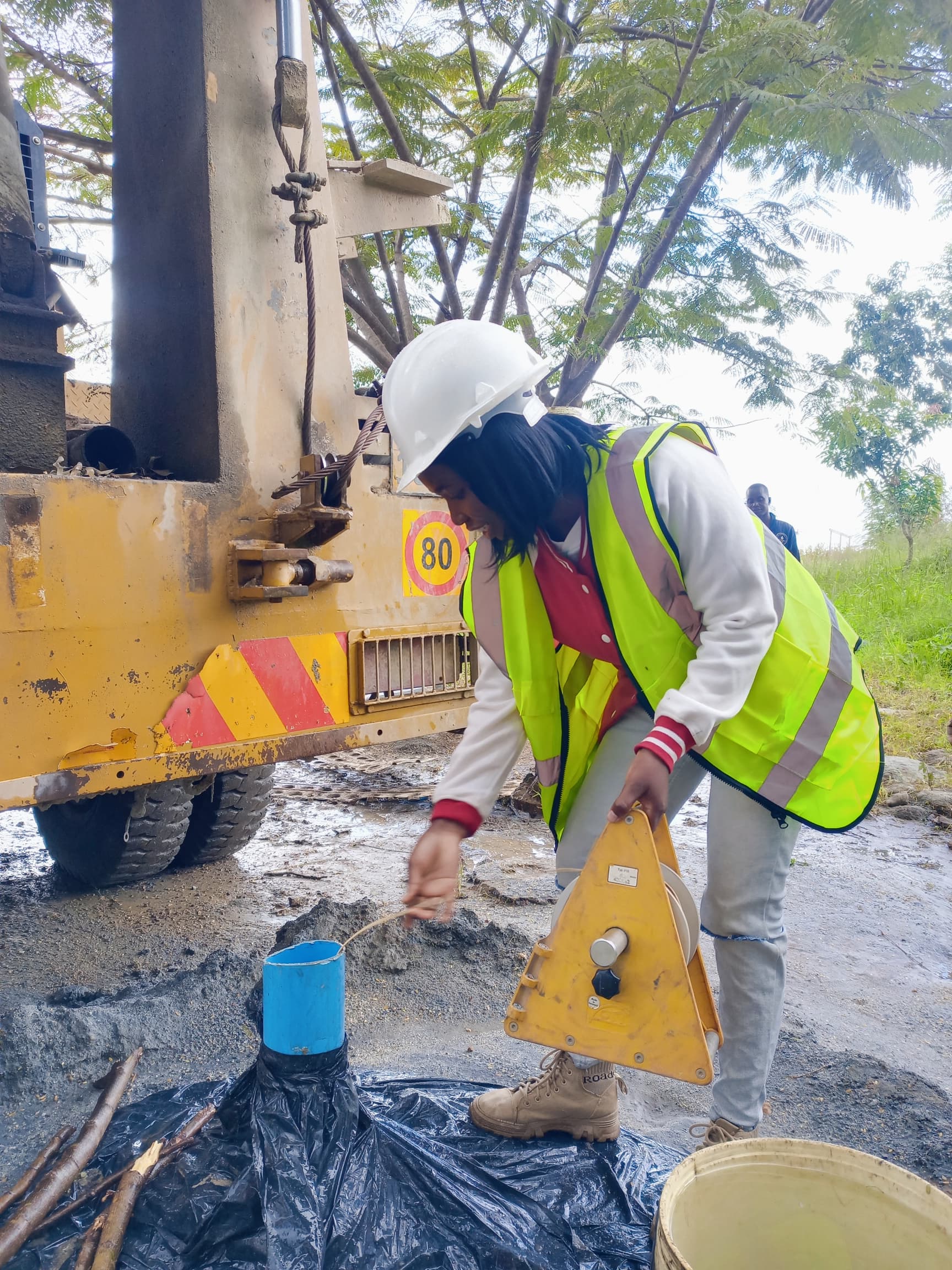
One of the highlights during this program was the opportunity to improve my skills in designing solar powered water supply systems, a field that holds a lot of potential for sustainable solutions in water access. through resources like the Global Water Partnership (GWP) course, I was able to improve my technical knowledge and now I feel more prepared to contribute to innovative projects in this area.
I have also learned the importance of strategic planning and preparation, particularly when it comes to advancing education and career opportunities. Success in competitive spaces, like school and scholarship applications, requires a well thought out plan. This insight is invaluable as I look to further my education and career within the water sector.
The program has also helped me to connect with a network of professionals from different countries, allowing for the exchange of ideas and solutions to common challenges in water sustainability. These connections are not only inspiring but are also a rich resource of knowledge and support for future collaborations.
I would like to extend my appreciation to RWSN and Women in WASH for organising such a life changing and career advancing program. Their dedication to empowering women in the WASH sector is truly inspiring, and I am thankful for the opportunity to be part of this initiative. I look forward to giving back and sharing my experiences with other emerging young professionals. I encourage anyone interested in the WASH sector to seek mentorship opportunities and connect with like-minded individuals.
Special thanks to my mentor, Elon Sooknanan, who generously shared his time and expertise in this journey. Through our sessions, I’ve gained the confidence to face challenges and opportunities head-on with belief and purpose.
Mentor’s Thoughts – Elon Ryan Sooknanan
“In March 2024, I had the privileged opportunity to mentor Gloria for six months through the Rural Water Supply Network (RWSN) mentorship program. Gloria’s experience was not only rich, resourced, and rewarding but truly a transformative one. She has always been persistent, consistent, and passionate about the issues of water, sanitation and hygiene (WaSH) in her community and by extension her country. Our initial conversations revealed a deep, unwavering commitment to making a difference, despite the multiple challenges she faced. As her mentor, I guided, supported, motivated, and inspired her. I shared my knowledge and experiences, and I helped her navigate the pathways of her professional aspirations. Mentoring Gloria has not only enriched her professional journey but has also deepened her understanding of networking and partnership and the critical importance of the 5Cs- culture, communicating, coordinating, collaborating and commitment in the field of WaSH. I look forward to seeing Gloria’s future successes and am grateful for the opportunity to have been part of her transformative journey of learning and growth” – Elon Ryan Sooknanan.
To join RWSN and be informed about the next round of the mentoring programme, please sign up here.




 Rural Water Supply Network - blog