How Women Are Turning Africa’s Water Crisis into an Economic Engine

By Euphresia Luseka In Celebration of Africa Women’s Day 2026
KENYA, JULY 31, 2026

Featured photo: Gilda Giza Rede an Angolan Electromechanical maintenance technician. Rede also represents a new generation of women entering highly technical engineering roles in large-scale water infrastructure. Source, African Development Bank (AfDB).

As the African Union declares 2026 the Year of Water and Sanitation, the continent’s most persistent social burden is being reframed as a productive economic asset; driven by policy innovation, institutional partnerships, and female-led advances in infrastructure, science, and enterprise.

For decades, global development policy viewed African water through the lens of charity and endurance; measuring the billions of unpaid hours women spent carrying water rather than the economic value lost through reduced productivity, constrained livelihoods, and foregone opportunity[i].

As the African Union declares 2026 the Year of Water and Sanitation, that narrative is beginning to shift[ii]. Governments, investors, and Development Finance Institutions (DFIs) are increasingly recognising what many African women leaders have long understood: water is not simply a welfare issue. It is productive infrastructure that underpins agriculture, manufacturing, energy security, public health, and, ultimately, economic growth.

This structural transition is reshaping the sector. The traditional model, centred on public expenditure and development assistance, is giving way to a diversified water economy in which governments, DFIs, commercial investors, technology firms, utilities, and local enterprises collectively finance, deliver, and scale water solutions as illustrated on the figure below.[iii] Within this emerging ecosystem, women are no longer positioned primarily as beneficiaries of water services but as scientists, engineers, entrepreneurs, utility leaders, policymakers, and investors shaping how water is governed, financed, and deployed.

Figure Showing The AU 2026 Shift: How Female Leadership and Blended Finance are Transforming Africa’s Water Economy.

The implications extend well beyond the water sector. Reliable water systems determine agricultural productivity, industrial competitiveness, urban resilience, and countries’ capacity to adapt to climate change.[iv] Investment in water is therefore increasingly recognised not only as a social imperative but as a strategic economic investment.

The women shaping this transition are helping to build a new African water economy where science, policy, entrepreneurship, and finance converge to transform water from a development necessity into a catalyst for inclusive growth.

Some of the Women Building Africa’s Water Economy

This transformation is already visible across the continent through a new generation of scientists, entrepreneurs, and institutional leaders who are changing how water resources are measured, governed, financed, and delivered. As profiled in the 1st African Women in Water and Sanitation Compendium,[v] their work demonstrates that the future of Africa’s water economy will depend not only on physical infrastructure, but on the systems of knowledge, innovation, and governance that make investment possible.[vi]

From satellite-based groundwater mapping in the Sahel to community-led watershed management in The Gambia, circular sanitation enterprises in Senegal, and digital water distribution models in Rwanda, women are building the capabilities required to convert water and sanitation challenges into economic opportunities as elaborated below:

1. Science: Turning Uncertainty into Investable Assets:

      Investment follows information. Nowhere is this more evident than in the Sahel, where advances in satellite hydrology are transforming how groundwater resources are identified, valued, and managed. Among the pioneers is Dr. Fadji Zaouna Maina, a Nigerien Earth scientist and hydrologist at NASA’s Goddard Space Flight Center. Using satellite remote sensing, artificial intelligence, and high-performance computing, she maps deep aquifers across one of the world’s most climate-vulnerable regions. Her work enables governments, utilities, and investors to make more informed decisions on irrigation, water infrastructure, and long-term resource management.

      Continue reading “How Women Are Turning Africa’s Water Crisis into an Economic Engine”
      Mentorship: The Highlight of My WASH Journey

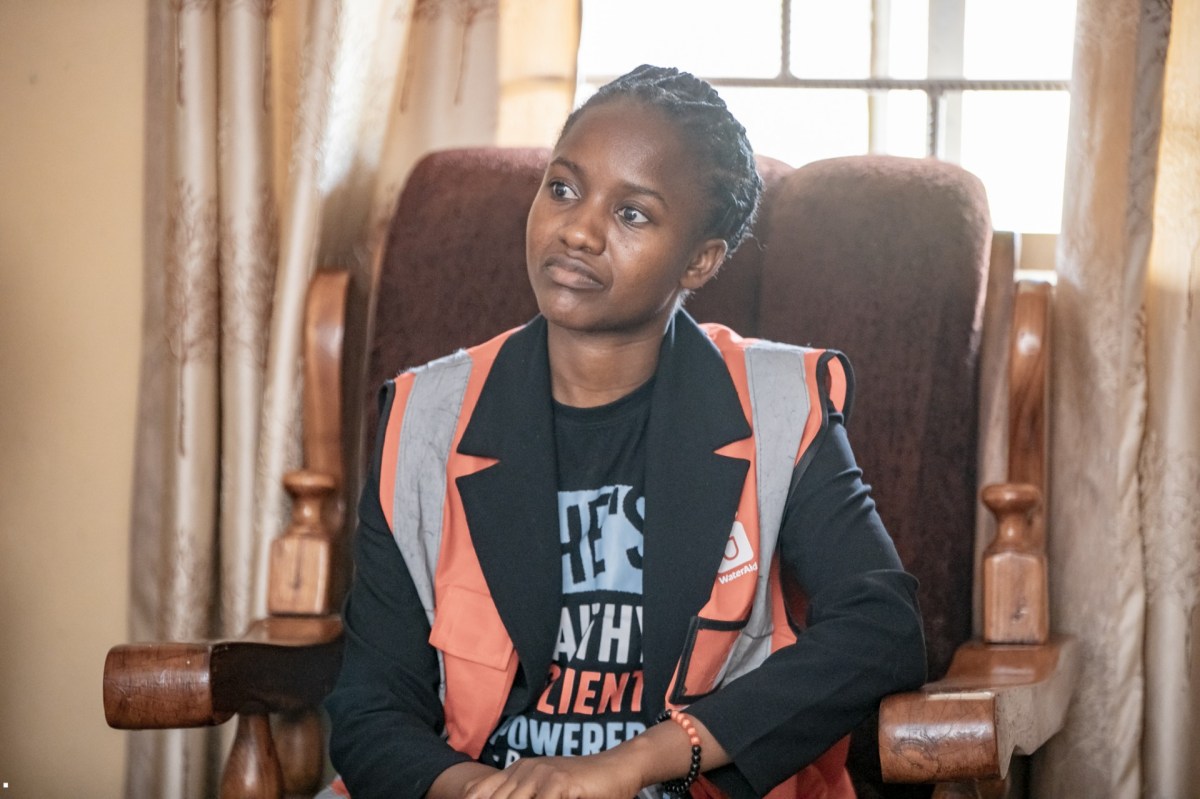
      This is a guest blog by Kachusha Nkosha, who participated as a mentee in the RWSN and Women in WASH 2025 Mentorship Program.

      Being part of the RWSN and Women in WASH Mentoring Programs has been one of the most defining experiences of my professional journey. Having previously mentored in the health sector, I joined the program eager to contribute, but what unfolded went far beyond expectation. It became a season of personal growth, deeper purpose, and renewed conviction in the power of mentorship as a tool for transformation.

      I was privileged to be mentored by Dr. Marie Christine Faye, a woman whose wisdom, humility, and global WASH experience profoundly shaped my outlook. Her mentorship went beyond career guidance; it encouraged reflection, strategic thinking, and a systems approach to leadership. Through her example, I learned that great mentors do not simply provide answers, they create space for discovery, confidence, and courage.

      As a mentor myself, I was paired with two exceptional mentees under the hygiene programming track. One of them, Ms. Samira Nassir, displayed remarkable growth and commitment. Her ability to absorb lessons and translate them into tangible progress was inspiring. Our exchanges were grounded in openness, curiosity, and a shared determination to make a difference. My second mentee faced challenges balancing professional and personal responsibilities, as she was not engaged full-time, but I shared resources that she affirmed were valuable. However, even that experience carried important lessons. I continued to share resources, encouragement, and opportunities, reaffirming that mentorship is not about perfection — it is about planting seeds of belief and resilience that grow in their own time.

      This program validated one of my strongest personal values, the value of supporting others to rise. It reminded me that true leadership is measured not by personal achievement, but by the impact we create in others. This belief has always guided me and was at the heart of my TEDx Talk, where I spoke about the transformative power of mentorship and the ripple effect it creates in communities. The RWSN program gave that philosophy new depth, connecting it to a global community of women equally passionate about change.

      Beyond professional development, this experience strengthened my resolve to continue advancing in the WASH field, particularly in systems strengthening. It inspired me to pursue higher studies and deepen my understanding of how sustainable change is built — not only through projects, but through empowered people, resilient systems, and collaborative leadership.

      Looking ahead, I am more determined than ever to contribute meaningfully at local, regional, and global levels — championing women’s leadership, innovation, and inclusivity within WASH. The RWSN and Women in WASH Mentoring Programs have reaffirmed my belief that when we lift others, we lift ourselves — and when women lead with empathy and vision, entire systems transform.

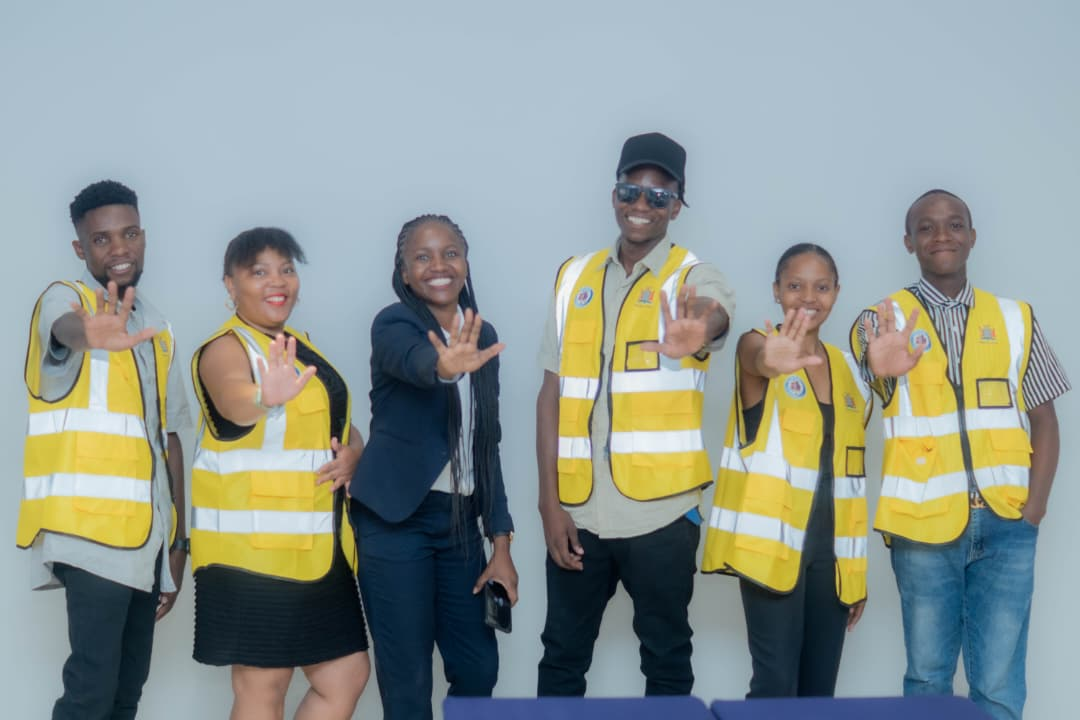
      Photo: Kachusha Nkosha mentoring the youth WASH Ambassadors Club – the first WASH Club in Zambia led by youths.

      To join RWSN and be informed about the next round of the mentoring programme, please sign up here.

      Weaving threads of knowledge and trust across the world – Part 1 (Global Actors)

      by Sean Furey, Director – RWSN Secretariat @ Skat Foundation

      Rural Water, Sanitation and Hygiene (WASH) is such a local, personal, issue that does global-level exchange make sense?

      At first glance, rural areas and communities worldwide seem too diverse for networking and knowledge exchange to be useful or meaningful. What does WASH for isolated hamlets in the Nepalese Himalayas have in common with a fishing village on the Peruvian coast or a small town in northern Nigeria? Quite a lot, it turns out.

      Last year, we were privileged to be approached by the Water Section at the Inter-American Development Bank (IDB), to support them with an exciting programme called Sustainable and Innovative Rural Water, Sanitation and Hygiene (SIRWASH), funded by the Water Section of the Swiss Agency for Development & Cooperation (SDC). They asked us to help strengthen the sharing on rural WASH topics within the Latin America and Caribbean (LAC) region and to encourage South-South exchange between LAC, Africa and Asia. Thanks to our strategic partnership with SuSanA we felt well placed to do this, and a great opportunity for both networks to grow our membership in the LAC region and serve our members there better.

      Multilateral Development Banks – amazing allies

      When it comes to shear financial clout and convening power, Multi-lateral Development Banks (MDBs) are hard to beat, but even they have had mixed success with rural WASH – but there have been successes and they have recognised that they can learn from each other so that they can provide their client governments with the technical assistance and financial options to deliver sustained improvements. So, last year the relevant focal points from the African (AfDB), Asian (ADB) and Inter-American (IDB) met and agreed on a Call to Action with three priorities:

      • Information-based decision-making and rural WASH investments and service monitoring.
      • Institutional strengthening & coordination.
      • Rural sanitation.

      From this, we organised a webinar mini-series drawing on their recommendations for case studies on each topic from each region.

      Finding the common threads and bringing them together to make them stronger

      This year, we took more steps to build an understanding and appreciation of the solutions that have the potential to transcend the variability of local contexts and be adapted. With growing interest, our colleagues at the World Bank also joined the small group and together we organised a special SIRWASH breakfast meeting and an open session on “Coordinating Rural Water Investments to Promote Security and Stability” with REAL-Water :

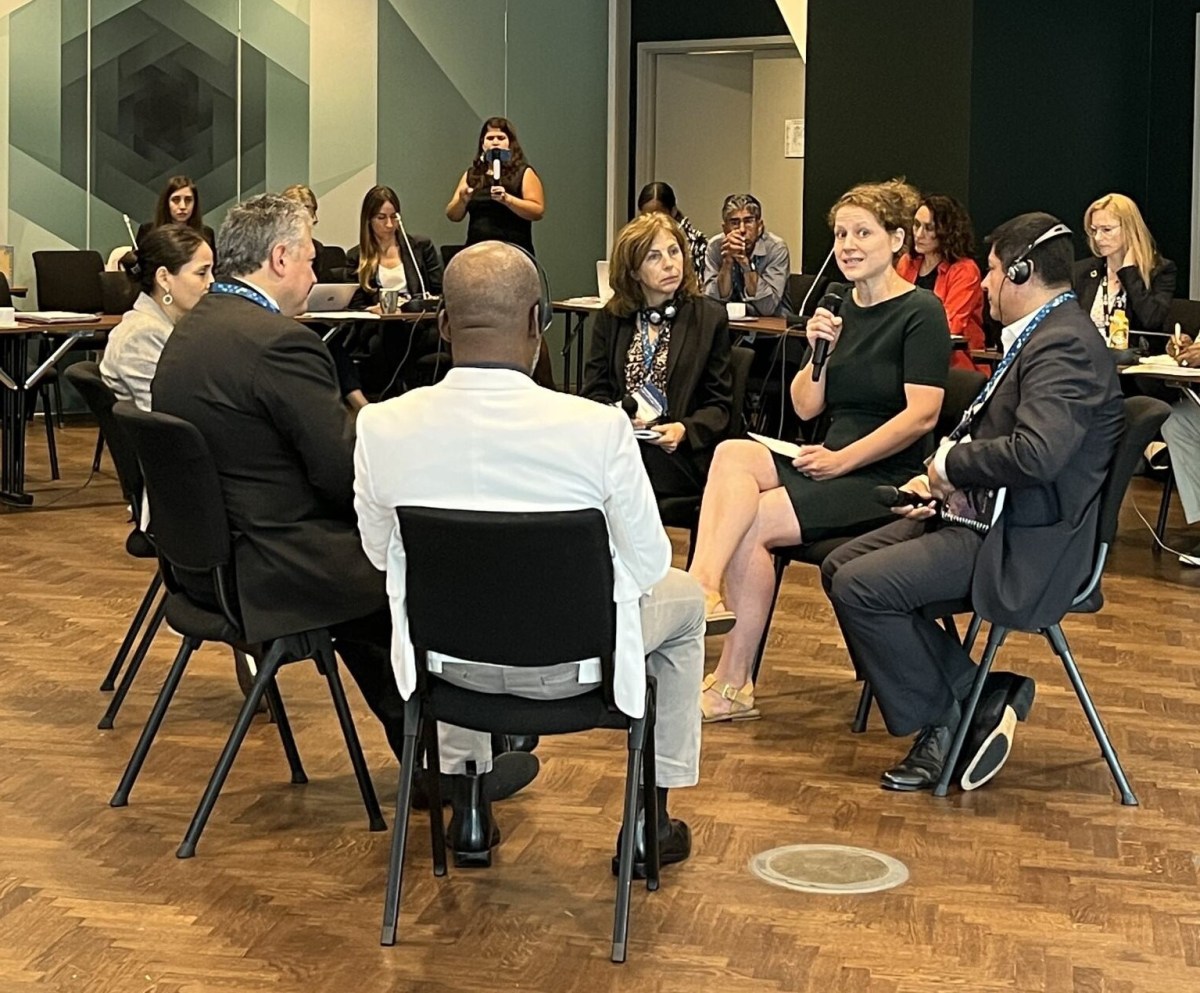
      The SIRWASH breakfast meeting that followed was in the spirit of collaboration among countries in the global south, using knowledge sharing as a catalyst for innovative and sustainable solutions. It was attended by more than 40 representatives from countries (Haiti, Brazil, Peru, Chile, Nigeria and Uganda), multilateral banks, multilateral and bilateral agencies (SDC, AECID, SIDA, WHO, OAS, UNICEF), NGOs and philanthropists (including, One Drop, Water For People, Avina, Aguatuya, mWater, Global Water Center), as well as networks, partnerships and research (RWSN, SuSanA, WASH Agenda for Change, WASH Funders Group, SIWI, Uptime, the Aquaya Institute). 

      Reflections on the SIRWASH Breakfast meeting (source: IDB)

      Using the “Fishbowl” method, participants exchanged their perspectives in an open and dynamic way on how strategic partnerships can increase impact in the sector. Discussions focused on two key questions: 

      1. How can technological innovations in rural WASH information systems be supported to be truly effective in decision making and incentivize scaling up? 

      2. What are practical solutions to improve the design and implementation of national rural WASH programs so that their benefits are sustained over the long term? 

      One of the central themes was innovation through sector information systems, a crucial tool for planning and managing water and sanitation services in rural areas. Three countries shared their experiences on how they have adapted and improved these systems:

      The importance of institutionalizing information at the national level and ensuring that communities participate in the validation and appropriation of data and decisions was emphasized.

      In addition to information systems, the event underscored the need to integrate both technological and social innovations to improve rural services. Social innovations and behavioural change are essential for communities to take ownership of the systems and actively participate in their management and maintenance. Participants agreed that long-term sustainability is about finding the sweet spot between community-ownership/responsibility and external support.

      The second critical issue addressed was the sustainability of rural water and sanitation services. Participants stressed that the successful implementation of these services cannot depend solely on initial investments in infrastructure. Innovative mechanisms need to be developed to ensure their financing and continued operation. The examples of Brazil and Nigeria were instructive, both countries demonstrating how the combination of effective governance and innovative financial models can ensure the operational sustainability of services:

      • Brazil presented its comprehensive implementation of their National Rural Sanitation Program (PNSR).
      • Nigeria highlighted the ways a results-based SURWASH programme is strengthening institutional capacity.
      • The Uptime Consortium shared their experiences and successes with Results-based Contracting on rural water service delivery across many contexts.

      The discussion emphasized the need for functionality and quality indicators for rural services, linking reliable information to financial incentives for operators. This strategy can enhance the long-term sustainability of these systems. The working group concluded that collaboration is essential to ensure countries have reliable information for decision-making, aimed at improving the quality of rural services.r decision-making aimed at enhancing the quality of services in rural areas.

      In the final discussion, consensus was reached on the need to create and maintain an enabling ecosystem for the development and sustainability of rural services. The great opportunity for development partners to join efforts and seek synergies, contributing technical and financial resources to this ecosystem in the countries was highlighted.

      The event concluded with a clear call to action: all actors – governments, development banks, cooperation agencies, NGOs, networks and the private sector – must remain committed to financing and strengthening rural water and sanitation services. The MDBs will continue to work together on a concrete action plan to exchange and replicate successful and innovative experiences to ensure universal and quality WASH services in the countries.

      Knowledge exchange is not just talk and powerpoint presentations, it is about building connections and trust between individuals and organisations, finding those common interests and encouraging co-creation of new insights and more sustainable solutions.

      The symbolic activity organized by One Drop, where participants bonded to represent their intention to work together towards a common goal, was a powerful reminder of the importance of lasting partnerships. This symbolic gesture is just the beginning; it is essential to continue to scale up efforts so that the most vulnerable communities can access quality water and sanitation services in a sustainable and equitable manner.

      Top-Down meets Bottom-Up

      After this event, our partner Aguatuya convened an online meeting of Latin American WASH networks to encourage bottom-up exchange to complement our high-level approach. But we will follow that thread in the next post…


      Many thanks to the large number of people involved, but in particular to Sergio Campos, Manuela Velasquez-Rodriguez and Cristina Mecerreyes at IDB; Diane Arjoon at AfDB, Vivek Raman and Tanya Huizer at ADB, Awa Diagne and Sarah Nedolast at the World Bank, Janine Kuriger at SDC, and to the wonderful RWSN/SuSanA team: Dr Aline Saraiva, Batima Tleulinova, Susanna Germanier, Lourdes Valenzuela, Paresh Chhajed, Chaiwe Sanderse and all the speakers and panellists for the webinars and sessions.