Pastoralists and Water 9 – Reflecting on very rapid land degradation

With our 9th blog on Pastoralists on Water in this series, let me give the floor to Patrick Worms, Senior Science Policy Adviser for the Nairobi-based World Agroforestry Centre, with his reflections on very rapid land degradation. And if you are wondering how this relates to water, do check out our 5th blog – A brief introduction to green water.

By Patrick Worms

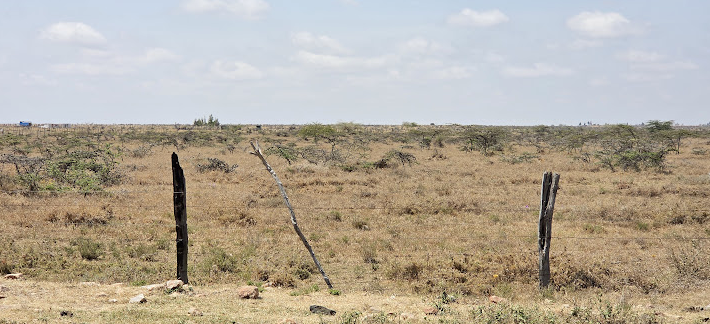
“Last month, I gave keynotes on grazing management and agroforestry at a conference on climate and health I was kindly invited to by Nightingale Wakigera, Maison Ole Kipila and Nathan Uchtmann at Maasai Mara University in Narok, Kenya. I focussed on the very rapid land degradation that typically follows the spread of fencing across the savanna, be it for livestock grazing or to keep wildlife penned into too-small conservation areas.

Maasai Mara may be one of the better places in East Africa to contrast the results of good and bad grazing management: on one side of the fence, you have the vast Serengeti-Maasai Mara ecosystem, where a million-strong wildebeest herd follows the rains and new grass in their massive migration, one of the last ones on the planet; on the other, the creeping fences are privatising the savanna into small enclosures. The resulting contrast couldn’t be greater: swaying, thick grasses on one side; degraded, bare ground and thorny bushes on the other. 

Desertifying, bush-encroached paddock near Narok, Kenya (Source: Patrick Worms)

From the perspective of soil and rangeland health, it doesn’t much matter if your grazers are cows or wildebeest. What matters is the way the grazing is done. An intense, short period of grazing followed by a long rest period is best​. That’s the management style pioneered by lions chivvying migrating herds along in tight bunches in the Serengeti.

Anything else sets the stage for land to degrade, either drying into desert or choking under invasive bush. That is the trouble of most pastures across the world’s semi-arid zones, of many of the smaller African national parks, and of the fenced grazing lands that fringe Kenya’s Mara reserve. Why? When livestock are not moved, they repeatedly graze the ​tastiest plants, manuring the thorny, toxic ones while doing so. The grass doesn’t get rested, and eventually dies from overgrazing.

Heavy bush encroachment on overgrazed paddock near Maasai Mara, Kenya
(Source: Patrick Worms)

But don’t think that removing animals altogether does the trick: grasses evolved to be grazed (they are by far the biggest group of plants that grow from their base, not from their tips). When they’re undergrazed, they eventually die and form a thick thatch that prevents new grass growth from emerging.

Overgrazing and ​u​ndergrazing is killing grasslands around the world, whether​ they’re rangelands geared to livestock production, too-small conservation areas geared to preserving iconic wildlife, or indeed mountain and hillside pastures in temperate areas. Everywhere, bare ground and woody bushland is spreading.

But this is not fate. It’s a choice.

The good news is that managing grasslands well does not require capital, but skill – and a nerdish attention to the health of the soil and rangeland. With livestock, the tools can be as simple as competent herders or cheap, mobile electric fences (if there are lions around, things get more complicated, but still manageable – lions can be scared off by guard dogs, and livestock made invisible in a night enclosure). With wildlife, the tools are salt/mineral licks and boreholes that can be turned on and off.
Pasture enclosed less than 10 years ago, encroachment progressing
(Source: Patrick Worms)

The goals are the same: to ensure high animal impact for very short periods, by imitating the Maasai Mara’s migrating wildebeest herds allowing the savannahs to rest and regrow before being grazing again, typically after the next rains. 

This is how we can regenerate grasslands around the world, by learning the lessons of the Maasai Mara”.

Kettle market in Ewaso Ngiro, Kenya (Source: Patrick Worms=

This is an adaptation of a LinkedIn post by Patrick Worms in August 2025.

Is community management sustainable? Evidence from Northern Pakistan

Blog by Jeff Tan, Aga Khan University – Institute for the Study of Muslim Civilisations (AKU-ISMC). Featured photo: Hunza Valley, Gilgit-Baltistan, Pakistan, Jeff Tan

The limitations of community-based management (CBM), and the conditions for its success, were identified as early as 1990 in a World Bank discussion paper. From very early on, it was recognised that communities needed ongoing external support from donors, NGOs and governments. However, management training, capacity building, technical input, financial assistance, and supportive policy and legislation necessary to create an “enabling environment” for successful community management rarely materialised. This raises a number of questions: Why has this external support not been forthcoming? Why has community management continued to be promoted despite the absence of support and lack of sustainability? Why has there been ‘a reluctance amongst academics and practitioners to challenge the CBM model’?

To answer these questions requires some appreciation of the wider discourse on development and in particular the anti-state rhetoric of neoliberalism that has sought to downsize, decentralise and ultimately bypass government. This has had the effect of fragmenting and hollowing out the state while at the same time prioritising markets and the private sector. Given that there is no profit to be made from delivering water services to low-income households that cannot afford to pay cost-covering tariffs, it is not surprising that previous state failure was replaced by market failure, with the private sector failing to step in to deliver water services.

One obvious solution would have been to address the sources of state failure, specifically underfunding, fragmentation and the loss of technical capacity. Instead of rebuilding state capacities, the distrust of, and ideological aversion to, the state has shifted the responsibility of water services from governments to local communities, built around the narrative of community participation, empowerment and self-help, with communities expected to take responsibility of their circumstances. It is hardly surprising then that community management is seen to enable ‘government officials and donors alike to abdicate responsibility for ensuring long-term sustainable water services’.

The recent turn against community management, not least by the World Bank, shows the persistence of CBM problems. But the Bank’s promotion of “professionalization” of water services as an alternative reflects a failure to examine the underlying tensions and problems in the CBM model and the wider delivery of rural water services, and reinforces an anti-state bias and blind faith in private sector participation. There are three structural tensions in the CBM model that have been noted in the literature and that need to be more cogently articulated.

The first tension is between access to water and cost recovery (a cornerstone to the sustainability of CBM), with low tariffs (to ensure access to water) unable to cover operating costs, let alone major repairs and capital refurbishment. Compounding this is the inability of households to pay already very low tariffs, with irregular, if any, tariff payments or collections.

The second tension is the long-term needs of water services and the short-term horizons of donors and NGOs. Only the state has a sufficiently long-term horizon to provide the indefinite support needed to sustain community management and ensure ongoing water services. But this added burden on the state for this comes at a time when the state in lower middle income countries (LMICs) is severely constrained financially and technically, having had fiscal discipline imposed on it and broken up and hollowed out in the name of decentralisation and localisation. If governments do not have the capacity to provide the so-called “enabling environment” to support community management, as has been the case since 1990, then a model that requires continued external support that is not forthcoming cannot be sustainable, “islands of success” notwithstanding.

Finally, and perhaps most significantly, the funding model for CBM is short-term, project driven (rather than programmatic or cross-sectoral) and fragmented, where the needs of water services are indefinite, with the choice being between reaching a greater number of underserved communities in the short term or serving fewer communities but with longer term support and greater sustainability. Longer-term support is especially needed because communities cannot even finance major repairs let alone capital refurbishment needed at the end of the lifespan of water infrastructure (typically 15-20 years) and to expand services to cater for population growth.

These structural features of CBM can be illustrated in the constraints faced by an otherwise successful delivery of clean drinking water through piped water networks to 459 settlements serving around 48,000 households and over 400,000 people under the Water and Sanitation Extension Programme (WASEP) in Gilgit-Baltistan, northern Pakistan. The challenges of sustaining and scaling up this textbook implementation of community management are reported in the results of a two-and-a-half-year British Academy-funded research involving a large-scale household survey of over 3,000 households, interviews with water management committees and a review of financial records, focus group discussions, an engineering audit and water quality tests.

Unlike qualitative and selective case studies, the combination of quantitative and qualitative analysis here presents important insights into the resilience but also limits of communities in sustaining water services, particularly given weak state capacities and the lack of external support. It also highlights the importance of “hardware” (engineering and water infrastructure) in sustaining water delivery, and best practices in the implementation and delivery of water services that can transcend some of the limitations of the CBM model.

The views and opinions expressed in this blog post are those of the author. They do not necessarily reflect the views of the Rural Water Supply Network (RWSN) or its Executive Committee.

Jeff Tan is a Professor of Political Economy at AKU-ISMC and was Principal Investigator on a British Academy grant on the sustainability and scalability of community water management in Northern Pakistan.

How three male allies are advancing gender equity in Kenya’s water sector

Featured photo: Daily, millions of girls and women in Kenya walk for water, losing time, safety, and opportunity. Photographer: Euphresia Luseka

Blog by Euphresia Luseka, co-lead of the RWSN Leave No-one Behind theme.

The views and opinions expressed in this blog post are those of the author. They do not necessarily reflect the views of the Rural Water Supply Network (RWSN) or its Executive Committee.

A Walk Before Dawn

At five in the morning, Busia County, Kenya is still wrapped in silence. But Jeruto is already walking. Fourteen years old, barefoot, a yellow jerrycan pressed into her hip. Three kilometres to water, three kilometres back.

She knows this path by heart. She also knows it is never safe. Men wait in the shadows. The price of water is sometimes not money but dignity. By the time she returns, the day has already slipped away; half her classes gone, her body exhausted, her hope dimmed.

“I was afraid,” she says. “But what choice did we have?”

This is the  reality of women and girls without drinking water supplies on the premises  every day stolen by the simple act of survival. And yet, here is the cruel paradox; when decisions are made about water, women are nowhere in the room. They carry the heaviest burden but hold the least power. The sector is still led by men.

That irrationality is finally being challenged. In western Kenya, three men, yes, men are ripping up the old rules of water and power. They are saying: enough. Not with platitudes, not with empty gender policies that gather dust, but with radical reforms that change who gets to sit at the table, who gets paid, who gets promoted, who gets heard.

And the truth they have stumbled into is this; Gender equity is not tokenism. It is infrastructure. It is resilience. It is the difference between a girl chained to a jerrycan and a girl being educated.

When Water Becomes Opportunity

The revolution begins small. For Jeruto, it started with the hum of a drilling rig. Just metres from her school gate, the Lake Victoria North Water Works Development Agency (LVNWWDA) sunk a borehole. Water surged from the ground, and with it, time, safety, and dignity returned to her life.

The 3 hours she once lost on the road became minutes. Within a year, girls’ local schools’ attendance had risen by nearly 30 percent.

For Joel Wamalwa, the agency’s CEO, this borehole was not just a piece of engineering. It was a revelation.

“Water unlocks education, strengthens health, reduces risks of violence, and frees women’s time for work and enterprise,” he says. “When women are included in planning and leadership, water systems become not only more equitable but more sustainable.”

Water, he insists, is not only a service. It is a multiplier.

Joel Wamalwa, CEO LVNWWDA says water is a Multiplier, Photographer: Euphresia Luseka

The Paradox of Exclusion

And yet, Joel has spent much of his career staring at a contradiction that borders on absurd. Women carry the heaviest weight of water scarcity rationing supplies, absorbing the stress of breakdowns, managing survival when systems fail. They are the first to wake, the last to sleep, the ones who walk the farthest.

But when utilities gather to make decisions on staffing, on budgets, on infrastructure women are almost invisible.

“We made choices about them without them,” he says quietly. “That was not only unjust. It was inefficient.”

The numbers from Mckinsey back him up. Utilities with gender-diverse leadership are 21 per cent more profitable. Boards with women deliver up to 95 per cent higher returns. For Joel, the conclusion is obvious: “Equity is not compliance. It’s not tokenism. It’s strategy.”

Continue reading “How three male allies are advancing gender equity in Kenya’s water sector”