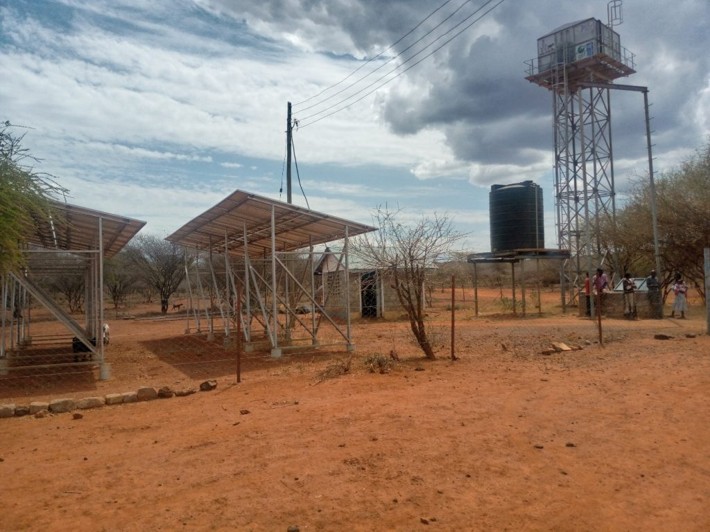
From Declarations to Delivery: The Case for Integrated Implementation Systems in Africa’s 2026 Water Agenda

Blog by Peter Wanyangi & Ida Githu (Dr.), Managing Partner,  EED Advisory.

Africa Water Policy Moment: Converging Programmes, Fragmented Delivery

Africa is experiencing one of its most significant water policy moments in decades. In February 2026, African leaders adopted the African Union’s (AU) Water Vision 2063 and Policy, alongside the declaration of 2026 as the Year of Water and Sanitation. This vision recognizes water and sanitation not only as a social service, but also as catalysts for economic growth, food security, and climate resilience, calling on African governments to “position water as a strategic asset for industrialization, agriculture and energy, and an indispensable enabler of primary national development objectives.”

Within weeks of the AU declaration, the World Bank Group launched the Water Forward Initiative at its Spring Meetings in April 2026. The initiative aims to ‘make water systems investable, scalable, and capable of supporting prosperity at scale’. As World Bank Group President Ajay Banga put it, “Water is foundational to how economies function. When water systems work, farmers produce, businesses operate, and cities attract investment.”

Central to this ‘water policy moment’ is a recognition of the economic value of water and the dependence of other sectors on this critical resource. Indeed, water is said to underpin health, food systems, energy, and an estimated 1.7 billion jobs worldwide.

The question then becomes: how do we ensure that these high-level declarations are delivered to local communities, and particularly rural African communities that remain largely underserved?

This question is especially pertinent given other major development programmes advancing in parallel with the water initiatives across the continent, which are relevant to delivering the economic potential of water but are not necessarily presented as such. For instance, there is the Mission 300 initiative, developed by the World Bank and the African Development Bank, which targets electricity access for 300 million Africans by 2030. There is also the agriculture-focused programme, AgriConnect, also developed by the World Bank and aimed at improving smallholder productivity, food systems, and rural incomes targeting 300 million smallholder farmers globally by 2030, with country compacts already launched in Senegal, Guinea, Ghana and Angola. The physical infrastructure component of AgriConnect recognizes that ‘irrigation, transportation corridors such as roads and railways, and electricity form the backbone of a strong agriculture value chain’. 

While the World Bank/AfDB programmes, along with the African Union’s policy framework, were not designed as a single integrated framework, their implementation realities converge at the community level. Reliable water access underpins irrigation and agricultural productivity; energy is needed to pump, treat, and distribute that water; and water and energy systems both become more viable when anchored in productive agricultural demand. As a result, rural development, and specifically economic outcomes in water, energy, and agriculture, are increasingly interdependent, a practical convergence reflecting the logic of the Water-Energy-Food-Ecosystems nexus.

A useful nexus level implementation lever: PUE & MUS

A conversation at this year’s Energy Access Investment Forum pointed to the convergence of two common yet often unlinked approaches as a low-hanging starting point in delivering these high-level declarations to local communities: Productive Use of Energy (PUE) and Multiple-Use Water Services (MUS). PUE is an increasingly popular approach within the energy sector that refers to the use of energy to create value, be it in the form of productivity or income, employment, or reduced hardship. PUE largely entails using decentralized energy systems (for example, mini-grids and solar home systems) to support income-generating activities. This includes irrigation, agro-processing, cold storage, and small enterprise development. PUE approaches have demonstrated consistent livelihood gains across the region: solar irrigation in Ethiopia has helped over 3,199 households diversify crops and extend cultivation through dry seasons, while solar agro-processing in Uganda has enabled women-led enterprises to reduce post-harvest losses and generate new income streams, with one solar dryer installation alone yielding over US$2,382 in additional income for 90 smallholder women farmers.

Across many African rural contexts, however, mini-grids, a more economical electrification option compared to extension of the main grid, face viability challenges due to limited demand concentrated only in household consumption. Without productive demand, revenue streams remain insufficient for sustainability.

Continue reading “From Declarations to Delivery: The Case for Integrated Implementation Systems in Africa’s 2026 Water Agenda”

Is community management sustainable? Evidence from Northern Pakistan

Blog by Jeff Tan, Aga Khan University – Institute for the Study of Muslim Civilisations (AKU-ISMC). Featured photo: Hunza Valley, Gilgit-Baltistan, Pakistan, Jeff Tan

The limitations of community-based management (CBM), and the conditions for its success, were identified as early as 1990 in a World Bank discussion paper. From very early on, it was recognised that communities needed ongoing external support from donors, NGOs and governments. However, management training, capacity building, technical input, financial assistance, and supportive policy and legislation necessary to create an “enabling environment” for successful community management rarely materialised. This raises a number of questions: Why has this external support not been forthcoming? Why has community management continued to be promoted despite the absence of support and lack of sustainability? Why has there been ‘a reluctance amongst academics and practitioners to challenge the CBM model’?

To answer these questions requires some appreciation of the wider discourse on development and in particular the anti-state rhetoric of neoliberalism that has sought to downsize, decentralise and ultimately bypass government. This has had the effect of fragmenting and hollowing out the state while at the same time prioritising markets and the private sector. Given that there is no profit to be made from delivering water services to low-income households that cannot afford to pay cost-covering tariffs, it is not surprising that previous state failure was replaced by market failure, with the private sector failing to step in to deliver water services.

One obvious solution would have been to address the sources of state failure, specifically underfunding, fragmentation and the loss of technical capacity. Instead of rebuilding state capacities, the distrust of, and ideological aversion to, the state has shifted the responsibility of water services from governments to local communities, built around the narrative of community participation, empowerment and self-help, with communities expected to take responsibility of their circumstances. It is hardly surprising then that community management is seen to enable ‘government officials and donors alike to abdicate responsibility for ensuring long-term sustainable water services’.

The recent turn against community management, not least by the World Bank, shows the persistence of CBM problems. But the Bank’s promotion of “professionalization” of water services as an alternative reflects a failure to examine the underlying tensions and problems in the CBM model and the wider delivery of rural water services, and reinforces an anti-state bias and blind faith in private sector participation. There are three structural tensions in the CBM model that have been noted in the literature and that need to be more cogently articulated.

The first tension is between access to water and cost recovery (a cornerstone to the sustainability of CBM), with low tariffs (to ensure access to water) unable to cover operating costs, let alone major repairs and capital refurbishment. Compounding this is the inability of households to pay already very low tariffs, with irregular, if any, tariff payments or collections.

The second tension is the long-term needs of water services and the short-term horizons of donors and NGOs. Only the state has a sufficiently long-term horizon to provide the indefinite support needed to sustain community management and ensure ongoing water services. But this added burden on the state for this comes at a time when the state in lower middle income countries (LMICs) is severely constrained financially and technically, having had fiscal discipline imposed on it and broken up and hollowed out in the name of decentralisation and localisation. If governments do not have the capacity to provide the so-called “enabling environment” to support community management, as has been the case since 1990, then a model that requires continued external support that is not forthcoming cannot be sustainable, “islands of success” notwithstanding.

Finally, and perhaps most significantly, the funding model for CBM is short-term, project driven (rather than programmatic or cross-sectoral) and fragmented, where the needs of water services are indefinite, with the choice being between reaching a greater number of underserved communities in the short term or serving fewer communities but with longer term support and greater sustainability. Longer-term support is especially needed because communities cannot even finance major repairs let alone capital refurbishment needed at the end of the lifespan of water infrastructure (typically 15-20 years) and to expand services to cater for population growth.

These structural features of CBM can be illustrated in the constraints faced by an otherwise successful delivery of clean drinking water through piped water networks to 459 settlements serving around 48,000 households and over 400,000 people under the Water and Sanitation Extension Programme (WASEP) in Gilgit-Baltistan, northern Pakistan. The challenges of sustaining and scaling up this textbook implementation of community management are reported in the results of a two-and-a-half-year British Academy-funded research involving a large-scale household survey of over 3,000 households, interviews with water management committees and a review of financial records, focus group discussions, an engineering audit and water quality tests.

Unlike qualitative and selective case studies, the combination of quantitative and qualitative analysis here presents important insights into the resilience but also limits of communities in sustaining water services, particularly given weak state capacities and the lack of external support. It also highlights the importance of “hardware” (engineering and water infrastructure) in sustaining water delivery, and best practices in the implementation and delivery of water services that can transcend some of the limitations of the CBM model.

The views and opinions expressed in this blog post are those of the author. They do not necessarily reflect the views of the Rural Water Supply Network (RWSN) or its Executive Committee.

Jeff Tan is a Professor of Political Economy at AKU-ISMC and was Principal Investigator on a British Academy grant on the sustainability and scalability of community water management in Northern Pakistan.