Achieving SDG 6: The Need for Local Centres of WASH Expertise and How to Do It

First published on the CAWST blog, reposted with thanks

The goal: ensure availability and sustainable management of water and sanitation for all by 2030. The task at hand, right now: learn quickly from failure and share lessons learned.

Scaling-up of WASH service coverage will require a focus on both affordable infrastructure and enabling environments. CAWST and the SMART Centre Group are focused on both through capacity development of local providers of WASH products and services. As part of this work, both groups have been following the model of establishing and supporting local centres of WASH expertise. Each centre is unique, housed in an existing in-country organization and provides capacity development services on technical and non-technical WASH solutions and approaches. Between us, we have a combined 22 years of testing this approach. We can unequivocally say that it is a key part of achieving SDG 6, and we have come together to share our key lessons learned:

Lesson 1:  Local WASH centres are worth the long-term investment

  • Long-term follow-up support after training is vital to effective capacity development of an individual, especially in the case of entrepreneurs, who often encounter business challenges.
  • Locally embedded centres can reach people that an external organization cannot: Grounded networks, know-how, and understanding of the context are invaluable and not replicable. Engrained local organisations are a rich source of endogenous best, second best, and worst practices.

CAWST’s Water Expertise and Training (WET) Centre in Afghanistan, housed in the Danish Committee for Aid to Afghan Refugees (DACAAR), was the first WET Centre to become functionally and financially independent, due to high demand for capacity development in the country and an inability of external organizations to supply much of that demand. From 2011-2015, over 1 million community members benefitted from WASH projects implemented by the centre’s 1,378 clients.

Lesson 2:  Create enough critical mass and identify leaders at various levels

  • The commitment of the centre’s personnel is critical, yet challenging. Especially in the context of informal systems within developing countries where personnel turnover is high, developing the capacity of many to ensure enough critical mass of expertise over time.
  • Look for the entrepreneurial spirits and provide long-term coaching. Sustained business is essential: entrepreneurs need to sell their products and services profitably, so they will continue even if the centre ceases to exist – the concept of profit-based-sustainability.

More than a decade ago, the Southern Highlands Participatory Organisation (SHIPO) started accelerating access to WASH products and services by working relentlessly on capacity development and coaching of the private sector. There are now more than 40 small local companies who have produced over 3,000 wells, 11,000 rope hand pumps, and other SMARTechs throughout the country. SHIPO was the first WASH Centre of expertise within the SMART Centre Group. Key to its success has been its focus on market-based technologies and the promotion of (supported) self-supply (household wells).

Lesson 3:  The host organization must meet certain quality standards

  • The local host organization leadership’s commitment to the vision is critical.
  • Look for champions within the host organization – someone with the passion and network to make change happen, situated within an enabling environment (or with the ability to create an enabling environment). A champion must be able to effect change within institutional or structural limitations.
  • A base level of organizational capacity is necessary to develop technical and training capacity.

CAWST’s WET Centre in Zambia, housed in the Seeds of Hope International Partnerships organization, has adopted the model of training existing networks of community sales agents in WASH topics to increase implementation of a range of healthy home products while earning an income.

Lesson 4:  Flexibility is key

  • All stakeholders must share the willingness and ability to be flexible: A WASH centre needs to have an innovative, entrepreneurial spirit. WASH Centres need to be able to adapt to sector needs and trends.
  • Innovation and capacity development -not only in technology, but also in marketing and other business skills- is essential. A centre needs to pursue various channels to generate income, like selling training and consulting support and implementing projects.

In Tanzania, VETA (The Vocational Education and Training Authority) has included the rope pump in its curriculum based on the cooperation they have with the SHIPO SMART Centre. They are also planning to add manual drilling in the near future.

Lesson 5:  Engage with local networks

  • If the centre is represented and active in relevant networks, it will increase legitimacy and business opportunities. Be innovative in how you integrate the centre into these networks – seek to add value and establish a fundamental niche service.
  • Being part of an international network such as WET Centres and SMART Centres increases knowledge exchange, learning from each other and innovation.
  • Linkages to the formal education sector, vocational training, and employment standards (e.g. job profiles) should be made where possible. To support scale-up and sustainability of impact it is critical to get the knowledge and expertise embedded in national (vocational) training curricula.

Locally embedded knowledge and skills as well as pursuing innovative and affordable approaches such as training local private sector actors are essential to reach water and sanitation related development goals. CAWST and the SMART Centre Group will continue to apply these lessons and spread practice in the sector around establishing local education and training centres.


About the authors

The SMART Centre Group is a network of endogenous WASH training centres in Tanzania, Malawi, Mozambique and Zambia, with additional centres starting up in Ethiopia, South Sudan, Niger and Nicaragua. SMART stands for Simple, Market-based, Affordable and Repairable Technologies. SMART Centres train technicians in production and maintenance of SMARTechs and coach entrepreneurs in business skills like marketing so that they can deliver WASH products and services to a range of customers.

CAWST is a Canadian charity and licensed engineering firm that acts as a global centre of expertise in WASH capacity development. CAWST addresses the global need for safe drinking water and sanitation by developing local knowledge and skills on simple, affordable solutions that people can implement themselves. To reach more people and to ensure that knowledge and skills are truly retained locally, CAWST partners with existing in-country organizations to create Water Expertise and Training (WET) Centres that deliver CAWST-like capacity development services of their own. Independently of CAWST, the seven WET Centres across 3 continents have provided services to 658 client organizations whose projects have reached 3.7 million people with better water or sanitation.

Photo credit: CAWST (2018)


Why is Groundwater Data important?

by Dr Fabio Fussi, Università degli Studi di Milano-Bicocca

The role of groundwater data in rural water supply has changed markedly in over the last few year:

6th RWSN Forum in Kampala, 2011: Some pilot projects of groundwater data collection and organization is presented. Uganda is presenting its groundwater atlas, a promising example for other countries.

7th RWSN Forum in Abidjan,  2016: there were entire sessions dedicated to groundwater data collection, mapping, analysis and application, with presentation of country programs from national water institutions, some example of international projects to create continental or world groundwater database (e.g. the groundwater atlas of Africa from the British Geological Survey) and application of groundwater data analysis.

What has raised the interest up to this level? There are several factors:

  • Data collection has become easy, with IT tools available in portable devices and smartphones for water point mapping. The increased availability of information has allowed to use these data to take decision about groundwater development and monitoring.
  • Depletion of groundwater resources (both in quantity and quality) requires the definition of sustainable groundwater development strategies and monitoring the effectiveness and impact of their implementation.
  • International donors have an increased interest to support countries to create groundwater information system, and national water institutions have, in several cases, understood the importance to put effort in this.

This seems a promising path for the future to support an effective and sustainable use of groundwater. However there are critical factors that must be taken into consideration:

  1. An increasing amount of data are available, but still there is lack of control in their quality. National databases are full of information, but limited effort is spent to revise them and depurate from mistakes. If this aspect is not properly considered, the risk of incorrect interpretation is high, leading to the formulation of incorrect strategies.
  2. Despite of the huge amount of information and the availability of powerful tools to process it, the level of data analysis to deepen our understating of groundwater system and give a practical support for complex decisions seems still basic. At this time we need creativity, technical capacity and collaboration between decision makers and scientist to unlock the potential of massive groundwater databases.
  3. An unbelievable amount of information is available, held by national water authorities and organizations involved in groundwater development. Most of this information is in hard copy, almost unused, not yet transformed into numeric database. This task is huge and time consuming, but if we can support it, we avoid the risk to loose relevant data and in they can be easily used to take decisions.

In the coming years the effect of climate change and the increase in water needs (due to population growth and improved living conditions) will lead to a more intense exploitation of groundwater resources, whose feasibility and sustainability must be carefully evaluated by a detailed interpretation of reliable data.

WPDx webinar: Beyond Water Point Mapping: Putting Data to Work for Improved Services

Too often, valuable data sits dormant in PDF reports and excel spreadsheets, never being used to its full potential to improve services.

Join this webinar and learn from people trying to change that. Joining Global Water Challenge will be Applied Predictive Technologies (APT) sharing findings from their Data Dive of the Water Point Data Exchange (WPDx) dataset and WASHNote addressing their recently-authored white paper: “Harnessing Water Point Data to Improve Drinking Water Services.” Akvo will moderate the session, lending their extensive water point data expertise.

By the end of the webinar, you will learn strategies to put your data to work for improved water services.

Register here

Grown-up finance for the rural water sector

The challenge of achieving the SDGs is upon us and with this concrete and short-term objective, the sector is finally taking the issue of financing more seriously, which is a very good thing but not before time. Whilst a few years ago finance was the privilege of a selected few, everyone is now talking about it; however, whether this is a case of better late than never still needs to be proven.

by , re-posted from Aguaconsult with thanks

The challenge of achieving the SDGs is upon us and with this concrete and short-term objective, the sector is finally taking the issue of financing more seriously, which is a very good thing but not before time. Whilst a few years ago finance was the privilege of a selected few, everyone is now talking about it; however, whether this is a case of better late than never still needs to be proven.

Last week, I chaired with interest the RWSN webinars on “grown up finance” for rural water supply. Kelly-Ann Naylor (UNICEF), Catarina Fonseca (IRC WASH), Sophie Trémolet and John Ikeda (World Bank) and Johanna Koehler (Oxford University) gave great presentations and here are my few take aways from the discussions:

The magnitude of the challenge is huge and greater than we probably think. We often hear about the figure of USD 114 billion to achieve SDGs 6.1 and 6.2, but this is only part of the story. This figure covers investment and maintenance of new services, but excludes the crucial maintenance of existing services and the broader sector support.

We know there is a huge funding gap and the current finance model will not fit the bill. Official Development Assistance (ODA) has not increased as much for WASH as it has for other sectors and concessional finance as well as domestic investments only accounts for a fraction of the required investments. The sector has the potential to attract other sources of finance, but we need to take a few steps.

We need to have an honest conversation about the exact magnitude of the challenge at national and district level to support planning and budgeting. This is taking place at national level as part of the SWA process in some countries, but only partially at district level. More robust data on service levels as well as cost of services, which are currently insufficiently researched, can help us in this direction, but we need to move faster.

We need to get better at understanding budgeting processes and supporting strategic multi-year budgeting both at national and district levels. Most countries are not very good at this at the moment and it has to change.

We need to advocate beyond the WASH sector and target more important political decision makers – Ministries of Finance and even the office of the president) to prioritise domestic investment in WASH and increase it through a larger tax base and increasing tariffs. Again, evidence will take us a long way in bringing politicians round the table.

We need to look at other sources of finance, particularly private finance to complement existing funding sources. Making the sector more attractive to private investment will be a necessary first step, but this will hinge on Governments playing a crucial role in strengthening the enabling environment and de-risking the sector. ODA, currently crowding the sector will need to focus on the riskiest segments and leave space for private investments to come in (e.g. stop lending to urban utilities and focus on rural water supply). Assessing sector entities’ performance and risk profile will be a necessary first step.

We need to start experimenting with innovative “blended finance” models, learn from them and adjust. Examples are already out there from Benin, where subsidised concessions are being tested; but also from Kenya and other countries.

After decades of ODA dependency, the WASH sector is slowly opening up to the real world of finance to reach its ambitious targets. This means being transparent and accountable, providing evidence of performance and better understanding what will incentivize the commercial finance world. A huge task ahead and surely a dramatic and positive change in culture!

Photo: Inspecting community-level financial records in Tajikistan (S. Furey)

Declining groundwater levels in Malawi impacting rural water supplies

RWSN member, Muthi Nhlema, has challenged the government of Malawi over how groundwater is used for rural water supplies: 30% of water points are not working across the country and he points to declining groundwater levels being a major factor. Mr Nhlema therefore challenged the wisdom of further drilling and groundwater development, if the use of the water resource is unsustainable.

Read the full article: The Nation, 1 October 2017

RWSN’s Kerstin Danert wins top award

Dr Kerstin DanertSkat Foundation, who is a member of the UPGro Knowledge Broker team and Chairs UPGro’s Programme Coordination Group (PCG) has been given the “Distinguished Associate Award, 2017” by the International Association of Hydrogeologists (IAH) for her outstanding contribution improving the use of groundwater worldwide.

Kerstin has been a driving force behind the Rural Water Supply Network, and in particular the promotion of drilling professionalisation and documentation of manual drilling practices. In addition to working on UPGro, she is currently leading an RWSN collaboration between UNICEF and Skat Foundation on professionalising water well drilling in Africa, which includes capacity development activities in Angola, Burkina Faso and Zambia.

Still barking up the wrong tree? What is the future of community-managed rural water supplies: Join a live webcast from the Water & Health Conference at UNC

Save the date: Tuesday 17 October 2017

  • 07:30 to 08:30 (US Eastern Standard Time) /
  • 13:30-14:30 (Central European Time) /
  • 17:00-18:00 (India Standard Time)

What has happened so far?

The issue of community management of rural water supplies has attracted some interesting debate recently. An RWSN blog post by Ellie Chowns, at that time a researcher at the University of Birmingham, prompted a lively discussion in the RWSN online Sustainable Services and Equality, Non-Discrimination & Inclusion communities.

In parallel to this The Water Institute at UNC, in consultation with RWSN, chose a recent paper by Ellie Chowns as the publication to review for the most recent WaSH Policy Research Digest. This was accompanied by a short literature review written by Harold Lockwood of Aguaconsult, based on work he was doing for the World Bank on a multi-country review of rural water service sustainability.

How you can get involved

The Water & Health Conference at the University of North Carolina is an excellent opportunity to continue this conversation and bring it to an even larger audience. UNC and RWSN will host a one-hour panel discussion and will live stream this as a webcast so that a number of people not attending the conference can take part. Short moderated interventions from panelists will be followed by questions from the audience received both in person and online.  The panel discussion will be designed to bring out diverse points of view (for instance, community management has not worked and should be abandoned vs. that it is still a viable model) but also to explore the nuances of the circumstances under which well-supported community management can be successful.

The panel discussion will also be recorded and made available on the RWSN and The Water Institute at UNC websites.

You can start right away by posting questions to the Sustainable Services community – just send them in an email to ManagementSupport_rwsn@dgroups.org

Unfortunately, the webcast will only be available in English, but questions in other languages can be accepted, if submitted beforehand for translation. Be aware that there will be limited time and a lot of interest so it unlikely that everything can be covered.

Format

Panel:

  • Harold Lockwood, Director, Aguaconsult UK
  • Ellie Chowns, Evaluation and Research Specialist, VSO
  • Eng. Aaron Kabrizi, Director, Ministry of Water and Environment, Uganda
  • Vida Duti, Country Director, IRC Ghana

Moderator: Clarissa Brocklehurst, Adjunct Professor, Water Institute, UNC

Online host: David Fuente, Assistant Professor, School of Earth, Ocean & Environment, University of South Carolina

US: +16465588656,,204142462#  or +16699006833,,204142462#

  • Or Telephone:

Dial (for higher quality, dial a number based on your current location):

US: +1 646 558 8656 or +1 669 900 6833

Webinar ID: 204 142 462

International numbers available: https://uncsph.zoom.us/zoomconference?m=87U9Ga7fnXMIha5ZeJDhjyNMar78REQd

Leo Heller on : Regulation of water and sanitation services

by Léo Heller, UN Special Rapporteur on the human rights to safe drinking water and sanitation

Re-posted from: https://medium.com/@SRWatSan/regulation-of-water-and-sanitation-services-bef44401caf4 

Report A/HRC/36/45, submitted by the Special Rapporteur to the Human Rights Council in September 2017, focuses on the role regulatory frameworks play in the implementation of the human rights to water and sanitation at national level.

art by aicoculturas / anderson augusto

Regulatory frameworks comprise the rules or standards defining how services should be provided to individuals in a given context, and the institutions responsible for monitoring service providers’ compliance with these norms and standards.

The number of States with a regulatory framework for water and sanitation services is increasing and so is the contingent of regulatory actors. However, there is no universal regulatory model. Regulation should be adapted to local circumstances, needs and challenges.

States have interpreted the role of regulation in various ways depending largely on the norms applicable to their particular context and corresponding needs, leading to a range of different institutional arrangements and regulatory models including self-regulation, regulation by contract and regulation by a separate regulatory body.

Being at the interface between policy-makers, service providers and users, while acting as guarantors of accountability, regulatory actors play an essential role in the realisation of the human rights to water and sanitation.

Continue reading “Leo Heller on : Regulation of water and sanitation services”

Still barking up the wrong tree? Community management: more problem than solution

by Dr Ellie Chowns

Received wisdom still suggests that community management is an important component of sustainable water supply in rural areas and small towns. Despite a shift in emphasis “from system to service”, and the idea of “community management plus”, in reality the basic community management model remains standard practice in many countries.  And yet there is plenty of evidence that it is seriously flawed in two key ways.  My own research, a mixed methods study covering 338 water points in Malawi (Chowns 2014, Chowns 2015) demonstrates this clearly.

First, community management is inefficient.  Preventive maintenance is almost never done, repairs are often slow and sub-standard, and committees are unable to collect and save funds.  Average savings are only 2% of the expected level, and only 13% of committees have enough money to buy a single replacement rod.

Equally disappointingly, community management is disempowering. It reinforces existing village power relations, and breeds conflict rather than strengthening social capital.  Often, this conflict is around misuse of funds.  Many committees are defunct; and when they do exist, as one woman said, ‘the committee is higher than the community’ – meaning downward accountability simply doesn’t happen.

There are exceptions, of course, but they are few and far between.  So we need to take off our rose-tinted spectacles and ask why community management is so enduring, despite its failures.

Why does it remain so popular?  Because it’s a fig-leaf for state and donor failure.  Community management enables government officials and donors alike to abdicate responsibility for ensuring long-term sustainable water services.  Instead, they can blame ‘lazy communities’ for ‘lack of ownership’, and suggest that ‘more training is needed’.

I think we need to question the community management model at a more fundamental level. Slight amendments won’t do the job; a more radical re-thinking is required.  Currently, community management transfers responsibility from people with access to finance, skills, and networks (officials & donors) to people with much more limited access to all those things (rural villagers).  This isn’t just ineffective – it’s unfair.

So what might work better?  Here are three suggestions.

  • Build better water points. As a social scientist I am happy to acknowledge that engineering really matters!  There are still far too many poorly-constructed water points being installed.
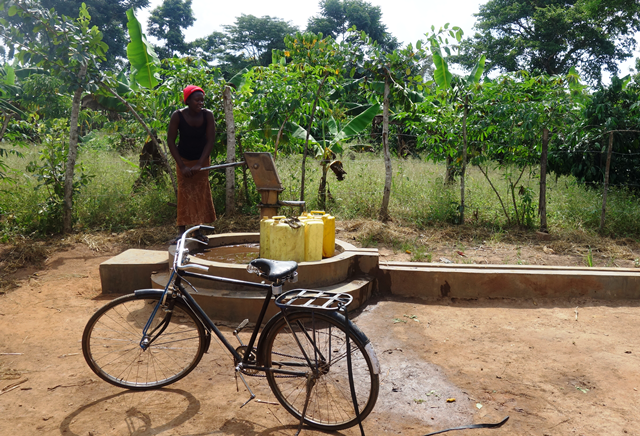
  • It’s superfluous and expensive to train multiple committees of 10-12 people each, when all that is really needed may be one skilled Area Mechanic with a bike, a phone, and (crucially) an effective means of financing his or her work (see next point…)
  • Pay for results. There’s promising evidence in many sectors that, actually, top-down accountability is part of the solution.  Civil society can’t stand in for a dysfunctional state; investment has to help build state capacity.  Funding needs to flow through ministries and districts, not bypass them – but they need to be held to account for performance, too.

Currently, community management remains the dominant model because it works better for agencies and governments than for communities themselves.  In no other public service sector is so much responsibility placed on users.  We don’t expect communities to bear all the recurrent costs of health or education services, so why should we do so for water?

It’s time to acknowledge that community management is both inefficient and disempowering, stop trying to reform it, and look towards replacing it instead.

Dr Ellie Chowns is a Research Associate at the University of Sheffield, working with Professor Frances Cleaver on a project with the Geneva Water Hub: “The everyday politics of participatory water governance: cooperation and conflict in community management”.

photo: Broken Afridev in Malawi (Erich Baumann, Skat/RWSN 2008)