This video highlights steps of using the Technology Applicability Framework (TAF) to assess the potential solar powered water pumping for domestic supply in Kanungu district of south western Uganda
En sortie terrain du 05 au 09 septembre 2012, l’équipe du projet WASHTech Burkina font passer les technologies d’assainissement : VIP et EcoSan à l’épreuve du Technology Applicability Framework (TAF).
L’équipe de recherche a rencontré des partenaires étatiques (Direction Régionale de l’Agriculture et de l’hydraulique du Centre Ouest et l’ONEA), communales ( la commune urbaine de Koudougou) associatives (action Micro-barrage et agro action), des maçons, des artisans, des bénéficiaires de ces technologies, tous engagés qui dans le développement, qui dans la promotion des latrines EcoSan ou VIP.
I mentioned some cool new outputs from IRC’s Ghana programme in my previous post. These factsheets present a rich picture of water services and their governance based on a total survey in our three Triple-S focus districts in Ghana.
The fact sheets aren’t cool due to their content – which is actually rather depressing. What is cool is the technology used for the data collection, the way in which the indicators we used were developed, and the impact that the factsheets are having.
By Lydia Mirembe and Deirdre Casella in Lira, Uganda –
What started off as a commonplace lecture-like meeting in the Lira District Council Hall, ended up in a spirited discussion about a variety of issues around the delivery of water services in a decentralisation framework. Conditional grants for water and sanitation; mobile phones for water; as well as Hand Pump Mechanics Associations (HPMAs) were the key issues under consideration.
As argued several times in this blog, post-construction support is one of the keys to sustainability of rural water supplies. One element of post-construction support is monitoring of aspects such as service levels and the performance of service providers, through which the support providers can better target their assistance. The last few years have seen a boom in efforts to set up information and monitoring systems of rural water supplies in many countries. Some were in first instance a one-off mapping exercise of all water points in a country; others were developed with the aim of regular updating for ongoing monitoring purposes. Particularly, cellphone technology has been instrumental in speeding up this process, as it is used in systems like FLOW (Field Level Operations Watch). A key question that comes back in the discussions on the topic (see for example the excellent discussion on the Rural Water Supply Network’s
Yesterday I read an excellent report on how the water sector in Uganda has managed to build a truly national monitoring system. The report is written by the Rural Water Supply Network – RWSN – and so naturally focuses on the rural sector as it looks back at the detailed steps in the development of a framework which has allowed the sector in Uganda to be able to learn about its own performance and take steps to improve how it functions. It really ‘tells the story’ of what it takes to build such a monitoring system and gives insight into one of the most comprehensive monitoring systems that I know of in sub-Saharan Africa.
RWSN is currently hosting a 3 week discussion on ‘Cost Effective Boreholes’ as part of our Sustainable Groundwater Development Theme. Here are some highlights so far:
It is very interesting to read the inputs so far from Kenya, Zambia, Sudan, Nigeria, Ethiopia and Uganda.
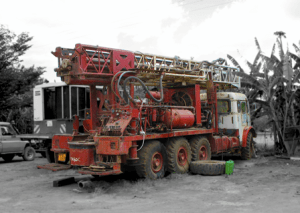
From the discussions so far, it seems that the Kenya and Ethiopia have established regulatory frameworks for water well drilling (thanks Chrispine and Tesfaye). In the Kenyan case, government regulation, which is limited by capacity constraints is augmented by the monitoring of activities by the drillers association. It will be interesting to hear more on this from Chrispine and others in Kenya. In contrast Zambia (thanks Daniel) lacks any regulation with respect to groundwater resources. There is thus no registration of boreholes in the country whatsoever and even drilling records must not be collected. Although a water resources management act was passed in Zambia 2011 it still awaits launch and implementation. Perhaps there are also others with ideas for Zambia. In Sudan, we hear from Harm Bouta about a very fragmented drilling sector with no strict regulations in place, but that there are other initiatives taking place in Sudan from which we could learn more. Continue reading “Realities of water well drilling in Africa: e-discussion highlights so far”
About 1 billion people in rural areas rely on boreholes (mostly fitted with handpumps) for their water supply. Another 300 million in small towns and cities get their domestic water from boreholes.[2]
(c) RWSN/Skat
What is a borehole?
Someone [3] once defined a tree as “a big plant with a stick up the middle”. Using this analogy, a borehole is “a long thin hole in the ground which produces water”. But of course just as trees are a bit more complicated than the definition would suggest, and just as trees come in all shapes and sizes, so too boreholes are more than ‘long thin holes …’. No two boreholes are quite the same.
If I wish to plant a tree and get fruit or timber from it sometime in the future, then I need to choose the right species, plant it in the right place, and nurture it until it becomes established. So too if I want to construct a borehole which will deliver clean water over both the short-term and the long-term, I need to choose its location with care, design it properly and ensure that it is drilled and finished straight and true.
This network of rural water professionals would never argue that services for urban populations are unimportant, or that sanitation and hygiene are less necessary to human health and dignity than water supply. All people regardless of location need both water supply and sanitation services, and to practise good hygiene – in other words urban and rural WASH.
However two global monitoring reports published this year [1],[2] both highlight two serious imbalances in the way the world addresses WASH
According to the UN, at least 740 million people worldwide do not have access to improved water source, and four out of give of those people live in rural areas.
The purpose of this blog is to stimulate debate on this important topic and what can be done to tackle this critical challenge.



 Rural Water Supply Network - blog