SIWI’s World Water Week (WWW) in Stockholm is one of the greatest global gatherings addressing worldwide water challenges and fostering collective action.
WWW 2023 carries particular significance as it builds upon the commitments and outcomes established during the UN 2023 Water Conference. Themed “Seeds of Change – Innovative Solutions for a Water-Wise World”, the event brought together participants from over 150 countries, inviting them to rethink how we manage water, what innovations, ideas, and governance systems exist to tackle water-related challenges. The advantage of having free online participation not only heightened inclusivity but allowed greater global participation and discussions on pivotal water issues.
The Rural Water Supply Network (RWSN)’s Secretariat, members, and supporters participated in the 2023 WWW edition, underscoring their dedication to finding sustainable solutions to the global water crisis. By facilitating meaningful discussions and co-convening three sessions, RWSN had the opportunity to be part of the broader efforts of addressing water-related challenges in rural areas and beyond.
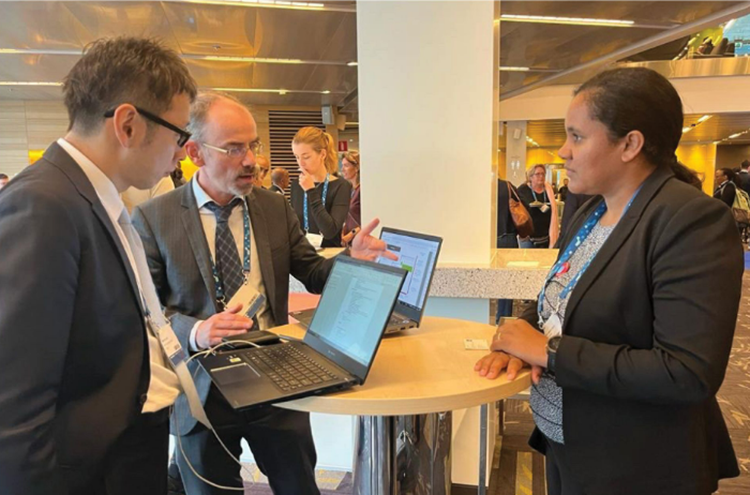
Cover Photo: Satoshi Ishii, Director, Water and Urban Development Sector Office, ADB exchanged views on water initiatives and programs with Sean Furey and Aline Saraiva Okello, PhD from the RWSN Secretariat (Source: ADB, LinkedIn)
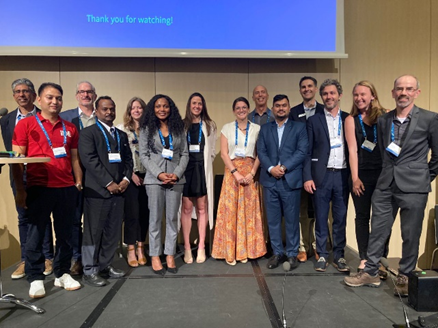
Driving rural water innovation: concept to scale-up. Sunday, 20 Aug, Online and Onsite
Photo credits: A. Saraiva Okello, RWSN
This REAL-Water session brought together innovators aiming to speed up rural water development. Panelists showcased innovations in technology, finance, and management at various stages. Participants explored how these innovations could impact their work and considered the past and future of rural water innovation.
Convenors: Aquaya, Evidence Action, iDE, Imagine H2O, REAL-Water program of USAID, Rural Water Supply Network, Skat Foundation, The Nature Conservancy, UDUMA, Virridy, Water Mission, Water.org
Women for the Future of Water. Building on the Momentum of the UN 2023 Water Conference. Tuesday, 22 August 2023, Online
This session addressed how the workforce of the water and sanitation sector demonstrates a gender imbalance. Different organisations tackle the challenge of gender-imbalance from researching to empowering professional water and sanitation women through networking, mentoring and support at local, national or international levels to address the commitments related to gender in the water sector, made at the UN 2023 Water Conference. Convenors: African Water and SanitationAssociation (AfWASA); International Water Association (IWA); Sustainable Sanitation Alliance (SuSanA); Women for Water Partnership (WfWP); Women in Water & Sanitation Network (WWSN)
Photo: Women’s Mingle. Credits: A. Saraiva Okello / Ellen Greggio
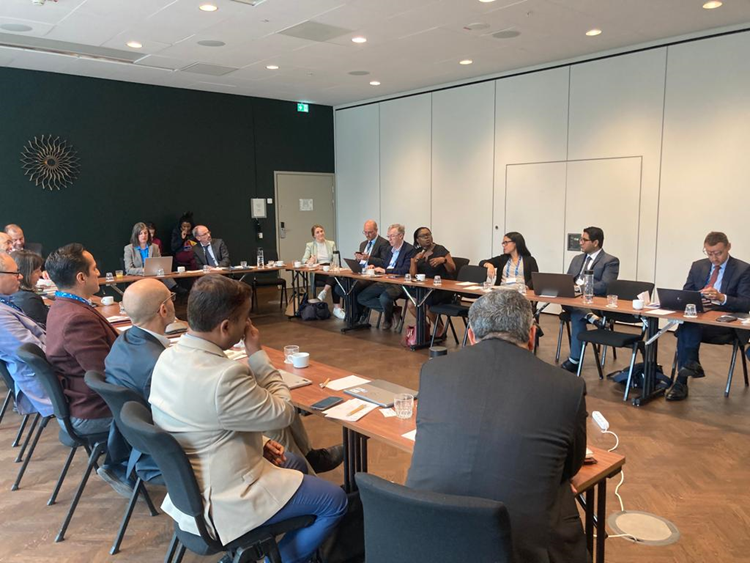
SIRWASH breakfast at the World Water Week 2023.
The SIRWASH programme, led by the Swiss Agency of Development Cooperation (SDC) and the Inter-American Bank (IDB), hosted a side event at World Water Week and brought together prominent leaders and shared advances in monitoring, policy and partnerships.
Some of the topics covered included:
Telemetry for monitoring WASH services in rural areas, by Mr. Edgard Coronel, Monitoring Specialist, National Rural Sanitation Program (PNSR), Peru.
National Rural Sanitation Program: challenges for implementation, by Flavio Marcos Gomes Júnior, National Secretary of Sanitation, Ministry of Cities, Brazil.
Advances and challenges in terms of access to water and sanitation in rural areas of Chile, by Carlos Estévez Valencia, Coordinator of the Water Cabinet, Ministry of Public Works, Chile.
Sergio Campos, Head of the IDB’s Water and Sanitation Division, spoke about the progress being made to encourage and promote exchange between countries in the Southern Hemisphere on water, sanitation and hygiene in rural areas, and the importance of working together with different Multilateral Development Banks -such as the African and Asian Development Banks- to achieve a unified global call to action towards the achievement of SDG 6.
Photo: SIRWASH session during World Water Week 2023. Credit: A. Saraiva Okello
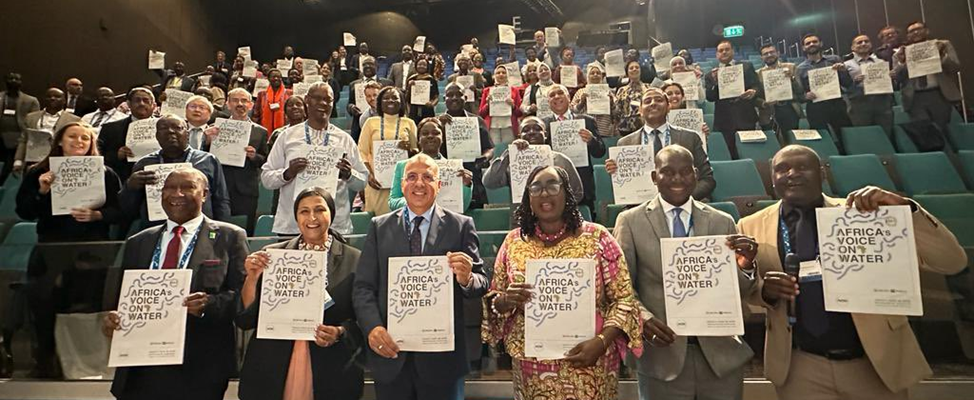
Launch of Africa’s Voice on Water (AVOW)
The African Ministers’ Council on Water (AMCOW) launched the first edition of “Africa’s Voice on Water” a new quarterly bi-lingual publication that brings news and opinion from policy, programmes and research. Sean Furey attended the launch on behalf of RWSN, having co-authored an article on the RWSN “Stop the Rot” campaign and brokered an article on Water Quality Assurance from the REAL-Water programme.
Photo: AMCOW social media account.
Looking ahead
RWSN’s efforts to improve water security in rural areas continue. As a leading global network of professionals in rural water supply, RWSN keeps working diligently towards achieving universal access to sustainable, safe and affordable water for all.
This blog is part of a four-part series covering the presentations given at the 11th Zambia Water Forum and Exhibition. The event, themed “Accelerating Water Security and Sanitation Investments in Zambia: Towards Agenda 2023 through the Zambia Water Investment Programme”, lasted three days.
Our blog series takes a focused look at the presentations and discussions that revolved around “Addressing Rapid Hand Pump Corrosion in Zambia – Stop the Rot!”, which was co-convened by UNICEF and WaterAid, together with Ask for Water GmbH and the RWSN, hosted by Skat Foundation.
Cover Photo: Removal of corroding riser pipe in Hoima District, Uganda in 2012 (source: Larry Bentley). In 2018 the Government of Uganda issued a directive to prevent further use of galvanised iron riser pipes throughout the country.
First session:
History of the Rapid Hand Pump Corrosion Problems in Zambia and Potential Next Steps
In Sub-Saharan Africa (SSA), an estimated 200 million people rely on a handpump for their main source of drinking water. They most likely use about 700,000 handpumps (Danert, 2022). Although the popularity of other technologies is growing, handpumps are likely to remain important in the region for decades to come, particularly in areas that are remote or with low population density. Unfortunately, many handpump services perform poorly or fail prematurely due to technical or installation defects with the borehole or the pump, as well as weaknesses with operation and maintenance or financial constraints.
In Zambia, it has been estimated that handpumps are the main source of drinking water for 19% of the urban and 32% of the rural population. It is worth to highlight that all metallic components that are submerged in water, or move in and out of water will eventually corrode, and so corrosion must be considered as part of the long-term maintenance of water wells with handpumps (or motorised pumps).
About rapid handpump corrosion
Rapid handpump corrosion occurs when aggressive groundwater reacts with galvanised iron (GI) riser pipes and rods of a handpump, and the India Mark II in particular. The materials corrode, with the pumped water becoming bitter in taste, with an unpleasant smell and a rusty colour. This not only renders the water unfit for drinking from a user perspective but also considerably reduces the pump lifespan. In Zambia, the main cause of rapid handpump corrosion is contact between groundwater with a pH of less than 6.5 and GI pipes and rods. However, salinity is also a problem in some parts of the country and can result in rapid corrosion too.
The use of alternative materials to GI, particularly stainless steel (SS) riser pipes and rods and uPVC rider pipes fitted with stainless steel connectors, can prevent rapid handpump corrosion. While rapid handpump corrosion was documented in West Africa in the late 1980’s ((Langenegger, 1989), and actions to prevent it have been taken in some places, the phenomenon still occurs in over 20 countries in sub-Saharan Africa. Zambia, with an estimated 22,000 handpumps in use, serving 32% of the population with their main drinking water supply, is among these countries.
Figure 1: Soil reaction map (pH) map of Zambia, 2014. (Shitumbanuma et all, 2021)
Figure 2: Zambia’s Agro-Ecological Zones (1987) and the 10 Provinces (Makondo & Thomas, 2020)
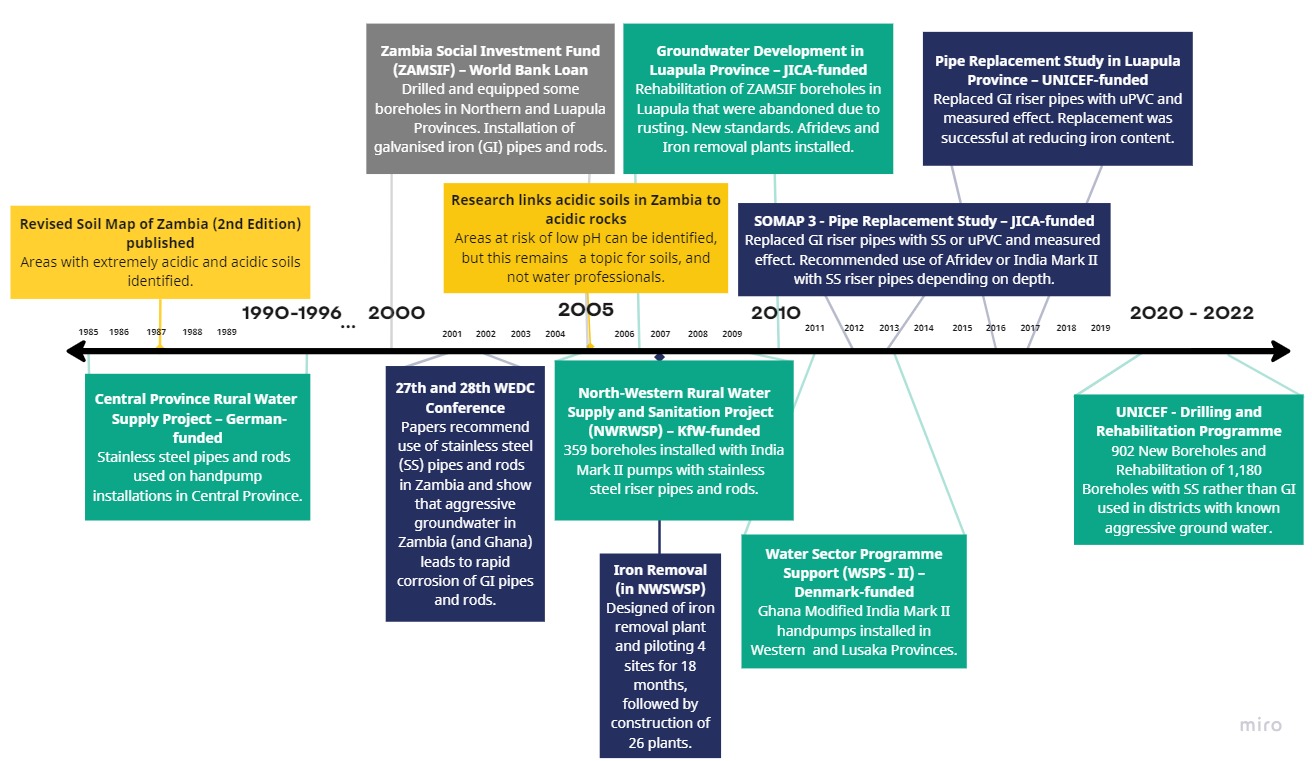
Figure 3: History of efforts in Zambia in relation to rapid handpump corrosion – Overview
In Zambia, while the geographical extent of aggressive water is not fully understood by water sector professionals, it has been documented and explained with respect to soils. A Soil Survey by the Mount Makulu Research Station from 1990 presents the situation clearly, with extreme soil acidity in the north, and soil acidity in the central parts of the country. Further, in Zambia the traditional Chitemene – ‘slash and burn’ – method of cultivation in the high rainfall region has been used since time immemorial to neutralise low pH in soils in order to cultivate crops. Leaching from these highly acidic soils affects the pH of the groundwater.
The problem of rapid corrosion in handpumps in Zambia has been known for more than 30 years (Pitcher, 2001) and is well documented, including in the following:
The Central Province Rural Water Supply Project (CPRWSP) (1985 – 1996) – which installed 564 handpumps with stainless steel riser pipes rather than using GI to prevent rapid corrosion.
The North-Western Province Rural Water Supply and Sanitation Project (2004 – 2009) – over 350 handpumps were installed with stainless steel riser pipes, also in response to the same issue.
In Luapula Province under the Japan International Cooperation Agency (JICA)-supported Groundwater Development Project (2007 – 2010), some Afridev handpumps with uPVC riser pipes were installed. The project rehabilitated existing, corroded handpumps which the community had previously abandoned. Replacing the GI pipes with uPVC stopped the iron problem, indicating that in these boreholes, using iron pipes had been the cause of corrosion. Iron removal plants were also installed on some boreholes.
However, while solutions were implemented at scale in the aforementioned projects in Central and North-Western Provinces, as well as the study in Luapula, the use of GI riser pipes and rods still continued in subsequent projects in the same areas.
Some stepbacks
There was a change in the ministry responsible for drilling works. The period 1985 – 1996 saw borehole drilling under the Department of Water Affairs, while the Department of Infrastructure and Support Services under the Ministry of Local Government and Housing took on this role after it had been created in 1995.
National Guidelines for Sustainable Operation and Maintenance of Handpumps in Rural Areas (MLGH, 2007) includes neither aggressive water as a criterion for handpump selection nor the use of stainless steel riser pipes, and so the use of GI pipes in aggressive water as the cause of the ensuing rapid corrosion was in effect further supported.
Initiatives undertaken in the last 10 years
Under the SOMAP 2 project (2012 – 2013), the JICA-supported programme carried out pipe replacement of GI at 20 sites in four provinces (Luapula, Copperbelt, Central and the North Western) whereby GI pipes were removed, the boreholes flushed and then installed with uPVC pipes. The replaced handpumps performed well without the water turning rusty, and the communities continued to draw water from them, whereas previously they had been abandoned.
UNICEF also carried out pipe replacement in Mansa and Milenge districts of Luapula Province. In the study, India Mark II handpumps GI pipes at 45 sites were replaced with uPVC riser pipes. After the pipe replacement of GI riser pipes, the community used the handpumps that had previously been abandoned, with unsafe water sources being used instead. The pipe replacement study was successful, with the water users returning to previously abandoned boreholes which had clear, rust-free water.
There is some evidence of other projects and organisations starting to use either stainless steel riser pipes, or uPVC riser pipes with stainless steel connectors in their projects, but documentation is limited. While stainless steel riser pipes have been used effectively, there are also some outstanding technical issues – particularly in relation to the removal of narrower diameter riser pipes, which require suitable tools that are not in the standard India Mark II toolkit. Further, the use of uPVC pipes has also been found to be problematic, as they need to be cut on removal and cannot easily be re-threaded. However, at least one NGO in Zambia has been using an alternative, comprising uPVC with stainless steel couplers which is available on the Zambian market. A further complication is that some parts of Zambia appear to exhibit naturally occurring iron. Tests are available to determine whether iron is naturally occurring or a result of corrosion, but there is no comprehensive map to indicate areas at risk of high levels of geogenic iron.
While stainless steel riser pipes have been used effectively, there are also some outstanding technical issues – particularly in relation to the removal of narrower diameter riser pipes, which require suitable tools that are not in the standard India Mark II toolkit. Further, the use of uPVC pipes has also been found to be problematic, as they need to be cut on removal and cannot easily be re-threaded. However, at least one NGO in Zambia has been using an alternative, comprising uPVC with stainless steel couplers which is available on the Zambian market. A further complication is that some parts of Zambia appear to exhibit naturally occurring iron. Tests are available to determine whether iron is naturally occurring or a result of corrosion, but there is no comprehensive map to indicate areas at risk of high levels of geogenic iron. Despite all of the efforts to date, and notwithstanding the widespread nature of rapid handpump corrosion of GI riser pipes and pump rods, the problem still persists in 2023.
Potential Next Steps for GRZ / International Donor Community / Universities
Revise the National Water Policy to include aggressive groundwater in community boreholes
Restrict Types of Handpumps to Certain Regions.
Enact a Law and a Statutory Instrument on Aggressive Groundwater in Community Boreholes.
Incentivise the private sector for provision of corrosion-resistant pipes and rods
Regulation of Quality of Handpumps by Zambia Bureau of Standards.
Standardise Handpumps Used in Zambia.
Further studies and replacement of galvanised iron riser pipes.
Further Research Studies on the phenomenon of naturally occurring iron in ground and surface water and
Research Studies on Saline Water in Western Province
You are invited to access the presentations HERE, along with the session’s concept and the study report: Nkhosi. J and Danert, K. (2023). ‘Stop the Rot: History of the Rapid Handpump Corrosion Problem in Zambia and Potential Next Steps. Action research on handpump component quality and corrosion in sub-Saharan Africa’. Ask for Water GmbH, Skat Foundation and RWSN, St Gallen, Switzerland. https://doi.org/10.13140/RG.2.2.27489.28006.
If you would like to dive deeper into the enriching exploration of water challenges and solutions through the Stop the Rot initiative, visit this page.
About the author:
Javan Nkhosi presenting at ZAWAFE 2023
Javan Nkhosi is a Zambian water professional. He has worked in the rural water sub-sector for more than 25 years on many water supply projects funded by the government, NGOs and donor agencies as a private consultant across Zambia. He has a passion for improving water supply to the unreached areas of rural Zambia. He holds a Diploma in Agricultural Engineering from NRDC, Lusaka, Advanced Diploma in Water Engineering from the Copperbelt University and an MSc in Project Management from the University of Lusaka. He is a Registered Engineer with Engineering Institute of Zambia (EIZ) and also a member of the Association of Consulting Engineers of Zambia (ACEZ) , an affiliate of the International Federation of Consulting Engineers (FIDIC).
References:
Danert, K. (2022) ‘Stop the Rot Report I: Handpump reliance, functionality and technical failure. Action research on handpump component quality and corrosion in sub-Saharan Africa’. Ask for Water GmbH, Skat Foundation and RWSN, St Gallen, Switzerland. https://doi.org/10.13140/RG.2.2.19733.81121
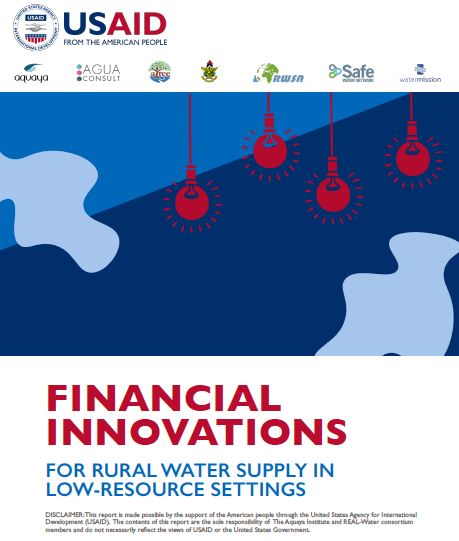
This blog post is part of a series that summarizes the REAL-Water report, “Financial Innovations for Rural Water Supply in Low-Resource Settings,” which was developed by The Aquaya Institute and REAL-Water consortium members with support from the United States Agency for International Development (USAID). The report specifically focuses on identifying innovative financing mechanisms to tackle the significant challenge of providing safe and sustainable water supply in low-resource rural communities. These communities are characterized by smaller populations, dispersed settlements, and economic disadvantages, which create obstacles for cost recovery and hinder the realization of economies of scale.
Financial innovations have emerged as viable solutions to improve access to water supply services in low-resource settings. The REAL-Water report identifies seven financing or funding concepts that have the potential to address water supply challenges in rural communities:
Village Savings for Water
Digital Financial Services
Water Quality Assurance Funds
Performance-Based Funding
Development Impact Bonds
Standardized Life-Cycle Costing
Blending Public/Private Finance
Understanding Blended Public/Private Finance.
Water supply development in low- and middle-income countries has traditionally relied on public or aid funding, rather than commercial financing. “Blended” finance refers to leveraging public funds (e.g., concessional loans or grants from national governments or development banks) to mobilize additional capital from private banks or investment groups (OECD 2019b).
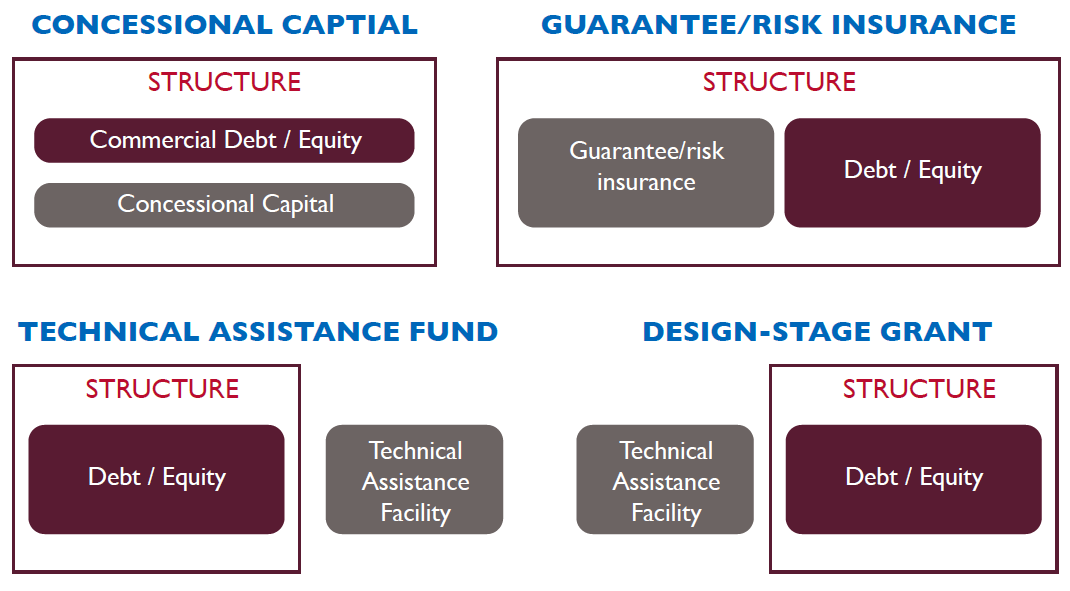
Combining development finance with private investment can assume different structures to reduce risk, employing a range of instruments (e.g., equity, debt, partnerships, technical assistance, grant-funded transaction design, guarantees, or insurance; Figure 1; OECD 2019a; Convergence 2023). The most common blended finance instruments across the development sector from 2018–2019 were direct investments in companies or subsidiaries, loan guarantees, “syndicated” loans, and lines of credit (OECD 2019a). Syndicated loans come from a group of collaborating financial institutions (a loan syndicate) to a single borrower, reducing the risk and buy-in amount needed for each individual group and/or ensuring sufficient specialized expertise. Alternatively, a smaller amount of pure grant funding may be used to support technical assistance or subsidies, with the goal of attracting other investors.
Figure 1. The four most common blended finance structures (adapted from Convergence 2023)
Examples
Although not all water-related “public-private partnerships” leverage public funding to attract commercial finance, these long-term collaborative arrangements among one or more government and private sector entities have been in place for decades in low- and middle-income countries, including throughout Africa, with encouraging results. Overall,
private operators have tended to be more efficient than governments at managing construction, service delivery, and asset maintenance (World Bank Group 2014). One frequently documented benefit among several Sub-Saharan African examples, where private management covers an estimated one-third of small piped water schemes, has been reduction of “non-revenue” water, or water losses for which production costs are never recovered. Among small-scale water providers in Uganda, a private sector participation model led to expanded coverage and financial performance with only modest tariff increases (World Bank Group 2014;Hirn 2013). Active connections tripled over 10 years with tariffs rising less than inflation.
In Madagascar, a host of rural community water user committees and private water operators have signed long-term concession agreements in which a private company invests in the water system to increase household access, generate more revenue, and share profits. This model has been replicated over roughly 15 years with donor support, such as USAID’s Rural Access to New Opportunities in Water, Sanitation, and Hygiene (RANO WASH) activity (Tetra Tech 2021).
Another long-running example of blended finance comes from Benin. Between 2007 and 2017, more than half of Benin’s rural piped water systems transitioned to private operation and maintenance contracts known as “affermages” (Comair, Delfieux, and Dakoure Sou 2021;Migan and Trémolet Consulting 2015). In these agreements, a private operator collects tariffs and then retains a percentage of an agreed-upon price per unit of water sold, turning over the remainder to the contracting authority (Janssens 2011). The initial pilot with 10 private operators successfully rehabilitated all water systems with no additional costs to the customers (World Bank Group 2018); however, subsequent scale-up experience brought a pivot to regional contracts to attract more professional operators. In 2022, a 10-year public-private partnership was formed with a consortium of French companies (Eranove, UDUMA, and Vergnet Hydro) to rehabilitate, extend, and operate rural water systems for 100% customer coverage (Marteau 2022). Public funds will ensure private connections and tariffs remain affordable.
Although some examples (e.g., Madagascar, Benin, Cambodia) have applied blended finance to rural water supply in low- and middle-income countries, it remains at a proof-of-concept stage. Blended finance is possible where rural water provision is more organized and mature and where people pay consistently, justifying lending. This is more likely to be the case in middle-income economies.
Further proof-of-concept is required to evaluate blended financing to drive rural water supply performance. It faces a dual challenge: persuading commercial lenders that water supply represents a lucrative investment opportunity and persuading water service providers to seek loans at rates higher than those routinely offered by development finance institutions.
Blended finance projects create an evidence base for effective public investment and in turn, incentivize the capture of better financial and impact data (Convergence 2019). Objective selection criteria may help “prime” service providers to continue the behaviors and actions that support blended finance (USAID 2022). Building the foundations for blended finance will require a transition period with accompanying public sector support, to allow for a paradigm shift on the part of both borrowers (who face increased pressure to manage operations efficiently) and lenders (who often do not know the market well enough to participate in investment opportunities).
While they take time, these adjustments have taken place in other sectors, most notably energy (IRC n.d.). Pories, Fonseca, and Delmon (2019) detail foundational issues ranging from governmental sector planning and tariff setting to service provider project preparation and financial market distortions. Experiences with the approach will elucidate the degree to which blended finance can work at large scales, but transformation is unlikely to occur rapidly.
Do you want to know more? Access to the complete report on financial innovations for rural water supply in low-resource settings HERE.
The information provided on this website is not official U.S. government information and does not represent the views or positions of the U.S. Agency for International Development or the U.S. Government.
This blog post is part of a series that summarizes the REAL-Water report, “Financial Innovations for Rural Water Supply in Low-Resource Settings,” which was developed by The Aquaya Institute and REAL-Water consortium members with support from the United States Agency for International Development (USAID). The report specifically focuses on identifying innovative financing mechanisms to tackle the significant challenge of providing safe and sustainable water supply in low-resource rural communities. These communities are characterized by smaller populations, dispersed settlements, and economic disadvantages, which create obstacles for cost recovery and hinder the realization of economies of scale.
Financial innovations have emerged as viable solutions to improve access to water supply services in low-resource settings. The REAL-Water report identifies seven financing or funding concepts that have the potential to address water supply challenges in rural communities:
Village Savings for Water
Digital Financial Services
Water Quality Assurance Funds
Performance-Based Funding
Development Impact Bonds
Standardized Life-Cycle Costing
Blending Public/Private Finance
Understanding standardized life-cycle costing
One tool of asset management, life-cycle costing, has been used for many years to account for all costs of a product, system, or program from its inception to disposal (Sherif and Kolarik 1981). “Life-cycle” costs represent the aggregate financial expense of ensuring delivery of adequate, equitable, and sustainable water services to a specified population (Fonseca et al. 2010). Beyond calculations, the approach seeks to mainstream life-cycle considerations into institutional processes. It covers all expenditures, such as hardware, software, operation, maintenance, source water protection, training and planning support, replacement costs, and shifts needed to meet water demand. To accurately assess financing needs, service providers should categorize different types of expenses and quantify the total requirement, as well as when costs and revenues accrue.
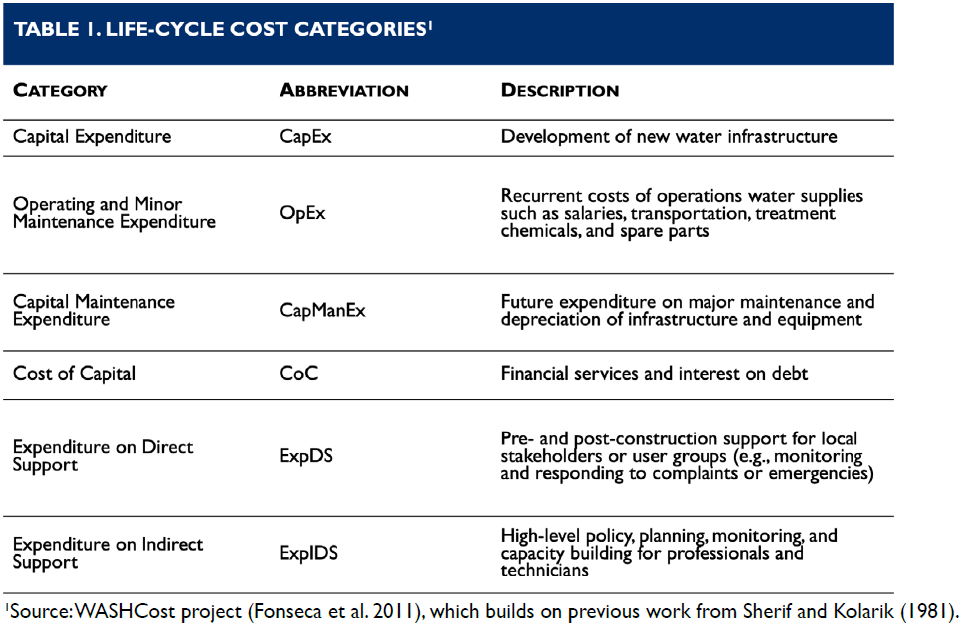
In low-income rural areas, standardizing approaches to life-cycle costing could help to clarify how much and what type of funding might be needed to sustain water supply operations. The WASHCost project from 2008–2013 (Fonseca et al. 2011; 2010) and the State of the Safe Water Enterprises Market study (Dalberg 2017) found that carefully quantifying and ensuring funding for full life-cycle costs (particularly capital maintenance expenditures) is critical to maintaining sustainability. A common framework and step-by-step approach were proposed to quantify and categorize life-cycle costs (Table 1).
Examples
IRC developed and piloted a rural water life-cycle costing approach under the WASHCost project (Veenkant and Fonseca 2019; Table 1), which aimed to capture the full costs of providing adequate services (rather than just the initial cost of infrastructure). The approach can be used to assess water services in rural communities as well as refugee and emergency settlements. Cost categories include construction, implementation, maintenance, and replacement.
The Rural Water Supply Network (RWSN) Directory applies the same life-cycle costing approach to profile a number of rural water service providers, such as 4Ward Development (formerly called Access Development) in Ghana; AguaClara in Honduras, Nicaragua, and India; and the BESIK Programme in Timor-Leste (Deal, Furey, and Naughton 2021). It encourages further discussion on financial analyses that would inform decision-making for public services investment.
An application of the life-cycle costing approach to 14 privately run water schemes in Vietnam highlighted its ability to discern long-term profitability of rural piped water systems, particularly with respect to asset depreciation and capital maintenance (Grant et al. 2020). The analysis pointed to options for improving the schemes’ viability, such as subsidy and tariff adjustments. Another study in rural Andhra Pradesh, India, used life-cycle cost analysis to illustrate how gaps in upfront public investments in 43 villages led to service slippage due to poor operation and maintenance as well as water quality and source sustainability (Reddy et al. 2012). Infrastructure costs were overrepresented at project outset, and actual unit costs were found to be substantially higher than the official norms. In two districts of Amhara, Ethiopia, a 10-year study found that emergency water trucking and treatment costs greatly exceeded pre-planned costs of providing piped water, highlighting the importance of considering climate resilience (Godfrey and Hailemichael 2017).
Marketability
Life-cycle costing is widely used in high-income countries, where staff capacity and data tracking capabilities support completing this exercise on a regular basis. While life-cycle costing studies have been done in low- and middle-income countries, structural gaps in the water supply market prevent the practice from proliferating. More incentives are needed for implementers to track data and align on financial and operational metrics. Monitoring and evaluation web platforms like the Rural Water and Sanitation Information System (SIASAR Global)—now used in 14 countries—could be leveraged to track geocoded asset inventory and financial health (Smets and Serrano 2019).
Do you want to know more? Access to the complete report on financial innovations for rural water supply in low-resource settings HERE.
The information provided on this website is not official U.S. government information and does not represent the views or positions of the U.S. Agency for International Development or the U.S. Government.
If the water sector is going to attain safe water for all then it should deliberately make efforts to move from pilots and projects to systems change and to scale and move from policy development to policy implementation. Potentially innovative finance should focus on funding rural water solutions in an environment with strong institutional frameworks to attain sustainable impact. Building upon the insights of the previous blog under the same title “Service Delivery Management Models, Good Political and Water Governance for Strong Rural Water Systems”, this blog explores the institutional reforms driving a resilient rural water sector. Learn about the significance of Kakamega County Rural Water and Sanitation Corporation (KACRWASCO) activities and other key strategies for achieving scale and long-term sustainability in rural water service provision.
Kakamega County Government Scales Sustainable Rural Water Service Delivery Models
If the water sector is going to attain safe water for all then it should deliberately make efforts move from pilots and projects to systems change and to scale and move from policy development to policy implementation.
In spite of significant investments in Kakamega County’s Rural water supply over the past years, that brought improved access rates, still the water service levels was a big challenge in the Year 2016. Two main challenges existed: (1) Inadequate deteriorating sources and dilapidated infrastructure to meet the demand of the increasing population and (2) Weak institutional capacity to manage the facilities viably.
According to the Kakamega County Water Supply and Urban Sewerage Strategic Plan, (2015-2019) the functionality rates in the county were un-known however 61% of the residents (urban and rural) used improved water sources. Rural water coverage was at 30% according to the Lake Victoria North Water Works Development Agency (LVNWWDA) reports. This meant that 70% of the rural population probably had access to un-improved sources attributing to the county’s slow pace in attaining Sustainable Development Goal 6 (SDG6) then. Despite the existence of the rural water supplies, almost 59% of the functional ones did not perform as per set standards due to lack of professional management.
Some of the institutional arrangements for rural water service delivery were in place however there was need to review the existing ones, to be in tandem with the current water sector devolution dispensation. Using a systemic approach lens it was widely concurred that the technical aspects were not the main constraint to improved water service delivery access rather weak management. Therefore, Sustainable Service Delivery Models emerged as one of the most critical areas to improve in order to respond to the county’s water crisis.
Establishing an Institutional Framework for Resilient Rural Water Management
The Constitution of Kenya 2010 (CoK) Article 43 recognizes that access to safe and sufficient water is a basic human right and assigns under the 4th Schedule the responsibility for water provision and resources management to the county governments in pursuant to article 185 (2), 186 (1) and 187 (2) of the County Governments Act 2012. Further, article 174 (f) of the Constitution provides that one of the objects of devolution is to promote social and economic development and the provision of easily accessible services throughout Kenya. The Water Act 2016 affirms this alongside the National Water Policy 2021 that was being drafted then with clauses on retaining cost recovery principles and ring fencing of the water sector revenue to ensure sustainability. However, the institutional framework for managing the water services delivery in rural areas was still unclear.
Focus on SDMs was fundamental to improving rural water supply sustainability and service levels as it focuses on long-term provision of water services at scale as opposed to the existing discrete one-off community projects. Therefore, a critical determinant of devolution success in Kenya’s Water sector will be how timely the county governments develop and manage resilient systems that are responsive and accountable to public needs. However, Kakamega County still lacked the overall capacity to develop and implement effective institutional framework for SDMs.
The impetus for implementing and scaling promising alternative Service Delivery Management Models from Organisations like SNV was eminent but Scale and Speed proved necessary towards Resilient Rural Water Supplies.
To address these challenges for long term sustainability, from a Systems approach it was imperative that not only should the Service Delivery Management Models be developed but they be anchored on an institutional framework. The USAID KIWASH Project WASH Governance interventions also entailed supporting County Governments systematically improve rural water service delivery through stimulating local government support and political commitment, budget allocations and financing for WASH. Subsequently, the Project’s activities in Kakamega county ambitiously aimed at supporting its County Government establish a legal County Rural Water Service Provider.
The Approach and Process
Section 93 (1), (2) and (3) of the Water Act 2016 provides for Water Service Providers and County Governments to establish different water services delivery options. The County Executive Committee Member (CEC) in-charge of Kakamega Water Department directed adoption of Service Delivery Management options after a situational analysis report by USAID-KIWASH Project on status of targeted rural water supplies including a market research, willingness and ability to pay for water services and commercial viability. This was done concurrently with exchange visits to successful peer WSPs under various SDMs including Nakuru Rural Water and Sanitation Co. and Tachasis Water and Sanitation Company as part of lobbying and awareness creation for legislators to support the process.
Public Consultations and Handover of rural water projects:
The Water Act 2016, section 139 (1)-(6) requires a public consultation on intent to improve water services provision through SDMs. The CECM through the Kakamega County Assembly Legislators on the Water and Environment Committee held 12 public participation exercises across all the sub-counties and entered into negotiations and agreements with asset owners towards establishing a rural water services provider to manage rural service provision affirmed by Section 94 (2)(3).
The CECM with advice from director water services commissioned handing-over of targeted rural water supplies upon a situational assessment, viability analysis and agreed service delivery option. The director of water services provided a comprehensive inventory of all assets and liabilities: human resources, entire infrastructure (hardware and software) customer inventories, cash and bank balances and project history; all the assets and liabilities were evaluated at current values. Handing over tools included earlier registration documents, the deed of hand-over/surrender and Water services regulations.
Management Contracting, Licensing and Operationalisation:
The management model adopted was the Rural Water Service Provider as illustrated in Figure 2 below; the unserved area was large it was necessary to have an entity the county will ensure the right to water is met for the rural communities. USAID-KIWASH Project supported Kakamega County Department of Water to follow due process in forming the Rural WSP with institutional setup, planning and investments and monitoring and evaluation activities. This was important since Section 104 of the County Government Act provides that these plans shall be the basis for all budgeting and spending in the county. No public funds shall be appropriated without a planning framework developed by the county executive committee and approved by the county assembly. In consultation with WASREB Kakamega County Department of Water ensured that they meet all the requirements set out under section 77 (2), (3) and (4) of the Water Act 2016. The Kakamega County Rural Water and Sanitation Corporation Bill 2019 was developed and Kakamega County Rural Water Co (KACRWASCO) was registered as a rural water service provider as a public limited liability company and applied for a license including a proposed tariff from the national regulator (WASREB) to ensure compliance with requirements to keep them accountable and viable in their service provision area. Procedurally a new Management, Board of Directors and staff were acquired. Formation of County Rural WSP.
Figure 2 Illustrating SDM for Formation of County Rural WSP
Investment Planning, Financing and Coordination
Kakamega County Department of Water alongside USAID-KIWASH Project kicked off the process of development of operational policies and plans (County Water Strategies, Water Master Plans, Policies, Monitoring and Evaluation Frameworks, Procurement Guidelines, Consumer Engagement Strategy and CIDP) in accordance to Water Act,2016 Section 94. Additionally, Kakamega County Government allocated targeted subsidy to enable KACRWASCO to meet operation and maintenance costs and increase coverage to rural areas. They also partnered with various Organisations including the Private sector through Acacia Mining on a tripartite agreement to serve 15,000 people and DANCO on leasing of equipment including metres and HDPE pipes and state corporations including Water Sector Trust Fund and Lake Victoria North Water Works Development Agency (LVNWWDA) on financing water infrastructure like tanks, water kiosks and so on . Pursuant to section 94(3) of the Water Act 2016, the County Governments should develop water infrastructure which may be managed a WSPs. Subsequently the county government have invested US$3Million in both urban and rural water sector between 2016-2021.
KACRWASCO ring fences revenues to meet operational and maintenance costs and undertake service expansion against approved annual investment plans and budgets. National and County Government entities, departments, agencies coordinate in the development and provision of rural water services in the County through them. Non state entities consult and coordinate with KACRWASCO through County Government regarding development and provision of rural water services in the County.
Performance Monitoring and Reporting
KACRWASCO continues to ensure they provide accurate and verified monitoring and evaluation key performance data as set out by WASREB. The County Government sits in the BOD and inspects and monitor elements of water services delivery from the monthly status reports to undertake appropriate remedial measures to ensure effective service delivery.
Moving Forward
The activities towards the establishment of KARWASCO resulted to increased Kakamega County’s rural water coverage from 30% to 57% between 2016-2021 with over 569,600 people accessing safely managed drinking water services and an additional 271,984 accessing basic drinking water services. County investments in the WASH sector were at US$26Million during the Financial Year 2016-2022.
When governments deliver services as per the needs of the people they serve, they can increase public satisfaction and reduce costs. New thinking is needed to deliver the benefits of rural water infrastructure investments to eliminate waste given the dwindling water sector funding. Cognizant of the essential central role that rural water supply systems play towards the progressive realization of the right to water and improving livelihoods to alleviate poverty amid limited Water sector funding, it is imperative that professionalization in management of these systems is adopted at scale with speed. Kakamega’s unfunctional rural water projects successfully increased their integration into formal markets, with closer relationships to WSPs like KACWASCO, counties and institutional actors.
Rural Water Sector Funding had consistently lagged investment needs to address system issues; however, when investment was directed towards well-executed projects that improved outcomes for the network crowding in by market actors increased. Better procurement and vendor contracting were two of the primary mid-term levers that supported small capital-expenditure projects make more efficient use of capital that improved water coverage.
WASH sector coordination through the Multistakeholder Kakamega County WASH Forum supported acquisition and equitable allocation of additional investments from the private sector, recoverable grants, growth in WSP revenues and 36 percent increase in county investments in WASH sector. The forum also supported lobbying and advocacy activities on citizen Right to Water and responsibility of both levels of government in ensuring they have access to safe water. They demanded their rights during 2017 national elections campaigns pushing politicians to include access to safe water in their manifestos that support measure their performance. After attending a social accountability briefing session on attaining SDG6 in Kakamega County organised by USAID-KIWASH Project in partnership with the Kakamega County DWENR the County coined a Clarion Call Amatsi Khumukurua word in Luhya dialect meaning Water At The Doorstep. Such strong political will supported increase finance and equitable budget allocation for the water sector
Using a citizen-centric approach to delivering government services was helpful in creating ownership of processes and consumers taking responsibility in giving service feedback, paying water bills, reporting leaks, bursts, vandalism. WASREB has begun the process of disseminating the official guidelines for provision of water services in rural and underserved areas in Kenya. This marks WASREB’s first venture into regulation of services in the rural sector, it will significantly increase the uptake of the SDMs, establishing them as the first official guidance of formalizing water services provision in rural areas.
In closing this blog series, the significance of strong political and administrative governance, transformative partnerships, and adaptive strategies shines through in building a resilient rural water sector. Prioritizing safe water access for all and fostering collaboration pave the way for a sustainable water future, fostering prosperity and inclusivity. Thank you for joining this enlightening journey.
About the author:
Euphresia Luseka is a Water Governance Specialist and Co-Lead of RWSN Leave No-One Behind Theme. She is a seasoned Expert with experience in leadership, strategy development, partnerships and management in WASH sector nationally, regionally and internationally. She has specialised in WASH Public Policy, Business Development Support Strategies and Institutional Strengthening of urban and rural WASH Institutions. Euphresia has several publications and research work in her field.
To unlock the economic potential and alleviate poverty in rural areas, access to improved water access crucial. Building upon the insights of the previous blog under the same title “Politics, Water Governance and Service Delivery Management Models for A Resilient Rural Water Sector”, this blog delves into the transformative power of adaptation and partnerships in addressing the challenges of the rural water sector. Discover how Kakamega County Government adopted Pilot Markets Based Water Service Delivery Management Models, its benefits and lessons.
Transforming Rural Water Management through Partnerships.
Between 2012-2015, SNV Kenya in partnership with Kenya Markets Trust and Adams Smith International designed a participatory action research based innovative programme; the Market Assistance Programme (MAP) that aimed at improving sustainability of rural and small towns’ water supply by engaging private firms. This project used the Making Markets Work for the Poor (M4P) concept in analysing and designing models for post-construction management of water systems.
By addressing capacity of both public and private actors (formal and informal), SNV concluded space for interventions taking a market systems approach could be successful. The approach in Kakamega County included: (1) Market Research on willingness and ability to pay by consumers (2) Commercial Viability Assessments for rural water supplies (3) Modelling Private Public Community Partnerships (PPCPs) and business planning for private firms (4) Procurement, negotiation and contracting of private firms (5) Orientation and capacity building for the lease operator and nurturing relationships (6) Consumer Awareness, (7) Strengthening National and County level evidence-based policy lobbying and advocacy.
Kakamega County selected the Lease Operator Model (Refer to Figure 1 below) where a Water Service Board (Lake Victoria North Water Service Board) engaged a Lease Contract with the main Water Service Provider (WSP) in Kakamega; Kakamega County Water and Sanitation Co. (KACWASCO). The national water regulator (WASREB) approved the framework for water tariff setting and enforcement, while taking into consideration affordability and cost recovery principles. The project created awareness on the pros and cons of adopting Public Private Community Partnership Management Model, oriented KACWASCO on possible business opportunities and models; and supported public authorities (WSB and Kakamega County Government) on participatory and transparent procurement process. KACWASCO provided water services under a licensing regime/revenue payment model in Navakholo Sub- County. KACWASCO was attracted by the potential of increasing their bottom line and public sector investments in infrastructure to strengthen overall profitability.
Figure 1 Illustrating the Lease Operator Model
Results
The facilitated interventions improved sustainability of water services in Navakholo. KACWASCO was able to increase access to water for 8,330 people in underserved and unserved areas of Navakholo by 2015, whilst greater oversight opened the possibility for the county government support to improve services, collect data on performance, and demand accountability from them. Other results included:
Improved Management of Navakholo Rural Water Supplies:
In rural areas, improving management practice of Water Management Committees is key to improving sustainability.
SNV facilitated: (1) legal transformation of the Water Management Committees to Water Users Association (WUAs) to separate governance and management roles, and (2) engagement of KACWASCO Lease Contract that enabled professionalized management towards demand responsive service provision.
Access to Finance for the Lease Operator: During the initial stages of implementing the Lease Contract, financing rehabilitation works to operationalise unfunctional systems was a key issue. If KACWASCO were to borrow from a commercial market (at a high interest rate of 18-21%) notwithstanding the risks, the water tariff had to be increased to ensure the water supplies are commercially viable which would be unaffordable for the poor. MAP designed a water-financing product, using blended subsidy concept, to enable WSPs access market finance.
It is worth noting that taking a market systems approach in the water sector is complicated given the public nature of water. A purely free-market approach was fraught with risks and could lead to inequitable access, meaning careful consideration had to be given to the role of the public sector. SNV first evaluated the rural water sector, highlighting potential for growth in services delivery. Whilst assets were publicly owned and activities regulated by WASREB, there was room for commercial incentives. Profits were generated through tariffs and connection/reconnection fees, creating potential for private sector investment that encouraged the uptake of the water financing product.
Public Sector Capacity Strengthening: The PPP procurement is different from the traditional procurement of good and services, as the payment for the PPP’s is mainly made from the projected revenues of the water systems. A high level of trust, mutual commitment to set objectives and clearly defined incentives for KACWASCO was created.
Policy Advocacy and Support: The entire concept of PPCP and private sector participation was a relatively new concept in the rural water sector. Therefore, the project supported evidence-based policy advocacy and improvements at national and county levels; MAP supported the State Department for Water in developing PPP tools and guidelines and in improving coordination and communication through National PPP Node.
Lessons
The success of any SDM pilot depends a lot on learning and adaptation to provide an effective evidence base for policy and regulatory adjustments. Overall, there was a huge potential for PPPs to improve sustainability, service levels and revenues through operational and managerial efficiencies. Change of mind sets takes time MAP was time bound; the success of the model required strategic continuous engagement of all three groups of stakeholders: the water buyers (users), the water sellers (Lease operator) and the Sector policy and regulations makers (public authorities) to achieve sustainable outcomes. Particularly there was need to support Kakamega County in developing and implementing appropriate legislations, policies, guidelines so that PPPs are fully recognised and adopted to enhance scaling of the model through transparent procurement process and tools, financing, performance monitoring, learning and replication of emerging success of PPCPs, yet such documents take a lot of time and resources to be accented and adopted.
Through these partnerships and improved legislations and policies, the path is paved for understanding the institutional reforms and scaling solutions needed to achieve a sustainable rural water sector, fostering economic growth and improving livelihoods. More on “Scaling Sustainable Models can be found in the Blog 3 of “Politics, Water Governance and Service Delivery Management Models for A Resilient Rural Water Sector”
About the author:
Euphresia Luseka is a Water Governance Specialist and Co-Lead of RWSN Leave No-One Behind Theme. She is a seasoned Expert with experience in leadership, strategy development, partnerships and management in WASH sector nationally, regionally and internationally. She has specialised in WASH Public Policy, Business Development Support Strategies and Institutional Strengthening of urban and rural WASH Institutions. Euphresia has several publications and research work in her field.
Photo: Lumino Containarised Water Project in Kakamega County, Kenya financed on PPP at US$765,000 serving 8,000 Households
Water has a profound bearing on health, human dignity. Inequalities in access to safe rural drinking as an input for economic growth towards alleviating poverty reinforce wider inequalities in opportunities. This blog explores the economic significance of improved water access, its role as a fundamental input for economic growth, and the challenges faced by Kakamega County’s rural water sector.
A Well Governed and Effective Rural Water Sector has Potential to Spur its Economic Growth and Alleviate Poverty Levels
Systemic Challenges in Kakamega’s Rural Water Functionality in the year 2012
Overall and nationally, the strategy for Socially Responsible Commercialisation (SRC) as pioneered by the Water Act of 2002 was successful in urban and peri-urban areas in Kenya but the concept dismally realised its potential in the rural areas where service provision areas are small, water coverage, usage and willingness to pay is low. Towards addressing the challenge, the Community Based Management Model was rolled out with an objective of empowering communities towards enhancing sustainability. There are few cases of the success of the model, Kakamega County faced the following challenges:
Rural Water Knowledge Gap: Kenya’s National Water Services Regulatory Board (WASREB) Impact Report 10 indicated that it is ‘not in a position to provide detailed information on rural areas with regards to rural water supply and sanitation coverage’. This information gap made it impossible to respond to key rural water indicators in Kakamega County and undermined assessing whether investments were translated to impact reflected in increased water coverage. This also explained why despite Kakamega County being predominantly rural, water sector investments were skewed towards the urban water sub-sector that had validated data.
Non-Functionality and Weak Management of Rural Water Supplies: A Water Point Mapping (WPM) Report by SNV Kenya in 2012 revealed that 59% of Kakamega water points had no professional manager. Those managed by voluntary Water Management Committees (WMCs) reported non-compliance, unaccountability and lack of skills in managing and operating the water supplies. This was worrying because in case of a breakdown, the water supplies stood a high risk of complete abandonment. Further 60% of residents in rural areas did not pay for water. The lack of consumer focus and incentives for private sector contributed to the inability to attract alternative financing support. The limited funds, when available from NGOs and public authorities, were depleted in maintenance with no or minimal resources available to expand services to un-served areas.
Equity and Inclusion: The WPM exposed a concern about fair budget allocation and distribution of infrastructure in rural areas. The poor purchased unreliable poor-quality water from vendors at higher rates compared to those with household connections. The glaring evidence that some areas had fewer safe water infrastructure was attributed to politics; areas that voted the government of the day had better allocations.
Understanding the importance of a resilient rural water sector in alleviating poverty sets the foundation for exploring innovative approaches and partnerships in the next blog of “Service Delivery Management Models, Good Political and Water Governance for Strong Rural Water Systems.”
About the author:
Euphresia Luseka is a Water Governance Specialist and Co-Lead of RWSN Leave No-One Behind Theme. She is a seasoned Expert with experience in leadership, strategy development, partnerships and management in WASH sector nationally, regionally and internationally. She has specialised in WASH Public Policy, Business Development Support Strategies and Institutional Strengthening of urban and rural WASH Institutions. Euphresia has several publications and research work in her field.
This blog post is part of a series that summarizes the REAL-Water report, “Financial Innovations for Rural Water Supply in Low-Resource Settings,” which was developed by The Aquaya Institute and REAL-Water consortium members with support from the United States Agency for International Development (USAID). The report specifically focuses on identifying innovative financing mechanisms to tackle the significant challenge of providing safe and sustainable water supply in low-resource rural communities. These communities are characterized by smaller populations, dispersed settlements, and economic disadvantages, which create obstacles for cost recovery and hinder the realization of economies of scale.
Financial innovations have emerged as viable solutions to improve access to water supply services in low-resource settings. The REAL-Water report identifies seven financing or funding concepts that have the potential to address water supply challenges in rural communities:
Village Savings for Water
Digital Financial Services
Water Quality Assurance Funds
Performance-Based Funding
Development Impact Bonds
Standardized Life-Cycle Costing
Blending Public/Private Finance
Understanding Development Impact Bonds
One type of performance-based funding is a development impact bond (DIB), which involves involve a tripartite contract between a service provider, an impact/angel investor (seeking both financial and societal returns), and an outcome sponsor such as a development finance institution or government (Clarke, Chalkidou, and Nemzoff 2019). Moreover, DIB moves some risks from service providers and primary donors to a third-party investor, while rewarding water development outcomes.
For rural water particularly, bond investors would finance a program aimed at achieving a particular outcome or set of outcomes (e.g., extending household water connections), while service providers (e.g., public utility, private company, nongovernmental organization, or partnership) would be responsible for delivery. If and when the outcomes are verified by a third party, then the outcomes funder (e.g., government agency) should repay the social investor. In general, more successful programs give higher returns to investors.
The rationale for involving the impact investor as an intermediary is to plan the arrangement and provide the service provider with the capital required to execute planned activities (Center for Global Development and Social Finance Ltd 2013). DIBs enable development finance to retain a results-based structure without placing all of the risk on service providers themselves; rather, some risk is shifted to the impact investor (USAID and Palladium 2018). Minimizing overall risk requires careful program design, detailed costing of capital requirements and intended outcomes, and selection of a proficient service provider with a good track record of results.
As of 2018, seven DIBs have focused on improving agricultural, education, employment, and health outcomes for people and communities, with nearly $55 million set aside for project outcome payments. If outcome targets are achieved, private investors receive all of their upfront investment back; if the service provider achieves outcomes above prespecified target levels, investors receive interest (up to 7–15%); or, they may lose money if outcomes are not achieved. DIB case studies confirm design challenges (Belt, Kuleshov, and Minneboo 2017; Oroxom 2018; Convergence, Palladum, and Bartha Centre 2018; Kitzmuller et al. 2018). In particular, managing stakeholders’ different perspectives and priorities on funding and contract structures has proven difficult (Clarke, Chalkidou, and Nemzoff 2019).
A pioneering sanitation DIB used in Cambodia offers lessons on the benefits and challenges specific to WASH services (iDE 2022).
As shown in Figure 11, the institutions involved include:
1. USAID as the outcome funder;
2. The Stone Family Foundation as the impact investor; and
3. iDE as the service provider (an international nongovernmental organization that has operated in Cambodia for many years, facilitating uptake of sanitation services in rural areas).
Figure 2: Cambodia sanitation development impact bond structure (Adapted from iDE 2022)
The Cambodian DIB launched in 2019 and will run through 2023, with a maximum of $9.99 million in outcome-based payments from USAID back to the Stone Family Foundation (iDE 2022). The DIB aims to improve rural community sanitation services, especially for the poor and hard-to-reach groups (e.g., women, children, people with disabilities, and older people) across six provinces in Cambodia. Specifically, villages must achieve open-defecation-free status, as a
means of reducing disease burdens and preventing drinking water contamination. Outcome payments can be claimed in tranches (every 6 months) dependent on local village government reports collated and submitted by iDE. To mitigate risks, the financing structure relies on a
detailed operational model embedding the cost of services (plus risk premiums). This exercise envelops not just “core” activities but also a number of “soft” (i.e., enabling or supporting) activities. Activities in the latter category include capacity building, communications, engagement
with local authorities, and sourcing materials.
After the first 18 months, the program had enabled 750 villages (out of the targeted 1,600) to be declared free of open defecation (Morse 2021). From the service provider’s perspective (iDE), the DIB provides implementation flexibility and removes some of the project governance, design, and management burden, thus conserving costs. This flexibility is particularly important given the focus on harder-to-reach villages, which benefit from testing and innovative approaches that can be fine-tuned as the program rolls out.
Scale of dissemination
No DIBs have yet been trialed for rural water services in low- and middle-income countries. Given varied values and structural limitations of water development finance institutions, they may not hold universal appeal. One (in progress) seeks to address sanitation in Cambodia.
To access further information on financial innovations for rural water supply in low-resource settings, you can download the complete report HERE.
The information provided on this website is not official U.S. government information and does not represent the views or positions of the U.S. Agency for International Development or the U.S. Government.
This blog post is part of a series that summarizes the REAL-Water report, “Financial Innovations for Rural Water Supply in Low-Resource Settings,” which was developed by The Aquaya Institute and REAL-Water consortium members with support from the United States Agency for International Development (USAID). The report specifically focuses on identifying innovative financing mechanisms to tackle the significant challenge of providing safe and sustainable water supply in low-resource rural communities. These communities are characterized by smaller populations, dispersed settlements, and economic disadvantages, which create obstacles for cost recovery and hinder the realization of economies of scale.
Financial innovations have emerged as viable solutions to improve access to water supply services in low-resource settings. The REAL-Water report identifies seven financing or funding concepts that have the potential to address water supply challenges in rural communities:
Village Savings for Water
Digital Financial Services
Water Quality Assurance Funds
Performance-Based Funding
Development Impact Bonds
Standardized Life-Cycle Costing
Blending Public/Private Finance
Understanding Performance-based Funding
Many water supply development projects fail due to well-meaning but poorly-executed investments (McNicholl et al. 2019). Repayable water supply investments often risk losses, due to the pervasive challenges of serving low- and middle-income rural settings. Development aid recipients, including governments and water service providers, may face challenges such as limited capacity, oversight, victims of corrupt schemes, or weak governance. These factors can affect the incentives to achieve optimal outcomes. From the funder’s perspective, poor outcomes reinforce high-risk perceptions and may steer resources away from water supply investments. The potential beneficiaries, rural water consumers, suffer the consequences with little opportunity for recourse. As a way to create greater accountability, conditioning financing on verified service delivery has gained increasing attention since the mid-2000s.
How does it work?
Performance-based funding is designed to maximize accountability, transparency, and efficiency of the service provider. Its elements generally include: (a) targets and/or ceilings of repayment, (b) an agreed per-unit payment amount for each output and/or outcome (e.g., new household water connection), and (c) independent verification of results prior to payment disbursement.
Specific performance-based financing instruments include development impact bonds and conditional cash transfers. With conditional cash transfers, cash payments are made directly to needy households to stimulate investment in “human capital” (i.e., the knowledge, skills, and health that people invest in and accumulate throughout their lives to become productive members of society) if they meet predetermined conditions (e.g., periodic health checks or school attendance). Payments can also be structured to incentivize entire communities to achieve a public health or water access goal (Nguyen, Ljung, and Nguyen 2014).
Examples
Encouraging water-related examples have emerged on a limited scale in Asia, Africa, and Latin America, although this approach may not offer advantages under all circumstances
The World Bank established its Global Partnership on Output-based Aid in 2003, renamed in 2019 to the Global Partnership for Results-Based Approaches (World Bank 2022). As of 2022, the Global Partnership portfolio includes 58 individual projects in 30 countries, with more than 12 million verified beneficiaries as well as an array of technical assistance and knowledge activities (World Bank 2022). In Kenya, for example, the national government, World Bank, USAID Development Credit Authority, and Dutch development bank KfW’s Aid on Delivery program support the Water Services Trust Fund of Kenya (Advani 2016). It offers water service providers access to results-based finance to invest in pro-poor water infrastructure, such as urban household connections and public water kiosks. Service providers agree to meet targets for higher consumer consumptions, increased revenue, and reduced water losses.
The UK’s Foreign, Commonwealth, and Development Office (formerly called the Department for International Development) has long led performance-based funding approaches, having supported the Global Partnership since its inception while building its own results-based funding portfolio with more than $2.7 billion invested across 19 programs as of 2016 (Clist 2019). An approximately $135 million performance-based “WASH Results Programme” has been implemented in South Asia from 2013 to 2022 by Plan International, the Sustainable WASH in Fragile Contexts consortium led by Oxfam, and the Sustainable Sanitation and Hygiene for All program led by SNV (Howard and White 2020).
The Uptime Catalyst Facility, created in 2020, piloted a results-based funding approach for post-construction rural water maintenance services. Its design built upon three metrics (reliable waterpoints, water volume, and local revenue) and eventually arrived at a “revenue matching” contract design, with supplementation of user payments and matching for a portion of locally-generated revenue. Service providers implement water services up front and are remunerated for results achieved, using a payment formula. Standardized contracts and performance metrics make the model easily scalable. Expansion to serve several million people is ongoing in African, Asia, and Latin America (McNicholl et al. 2021)
The UK government and USAID support the National Rural Water Supply and Sanitation Programme in Mozambique (Rudge 2019). It links 40% of a nearly $40 million grant to the government of Mozambique to eight performance indicators, including the number of people in rural areas with access to new improved drinking water infrastructure and the percentage of contracts (works and services) procured at district level. The performance-based approach is being tested in 20 districts in two provinces of Mozambique (Nampula and Zambezia). Initial evaluation found key enablers: alignment with government priorities and effective transfer of responsibility and accountability for implementation by the sub-national government. Key challenges included ensuring domestic increases in financing for capital and operational expenses.
The international NGO, East Meets West (aka Thrive Networks), implemented output-based aid programs in Vietnam. With support from the Global Partnership, they carried out a rural water program in Central Vietnam and a separate activity in the Mekong Delta region (Nguyen, Ljung, and Nguyen, 2014).
Various management models were employed, involving private enterprises, provincial authorities, and East Meets West as the service provider. Supported by the Vietnamese National Target Program for Rural Water Supply and Sanitation since 2013, the program successfully achieved its target for new household water connections. It accomplished this by leveraging local investment through partial subsidies to low-income beneficiaries. Customer satisfaction surveys highlighted the benefits of introducing private water operators, including improved performance with fewer water losses and breakdowns.
While performance-based approaches may not be universally superior financing options, they hold promise when targeted outcomes are well defined, service providers have experience and interest in achieving efficiencies, reliable data sources and monitoring systems are in place, funders allow room for innovation to service providers, and costs can be reliably priced to increase cost effectiveness for donors and enhance operating efficiencies by the implementer.
To access further information on financial innovations for rural water supply in low-resource settings, you can download the complete report HERE.
The information provided on this website is not official U.S. government information and does not represent the views or positions of the U.S. Agency for International Development or the U.S. Government.
2023 is racing by all too quickly! But as we enter the second half of the year, let’s look at how rural water professionals are using our the network:
membership of our RWSN LinkedIn group is going wild: 16,795 people! This is up from 12,748 in January (by comparison it took the group 8 years, from 2012 to 2020, to get to over 5,000 members)
Although our Twitter following grew from 4,174 to 4,455 so far this year, engagement is down. Is Twitter dead? For serious exchange, perhaps yes.
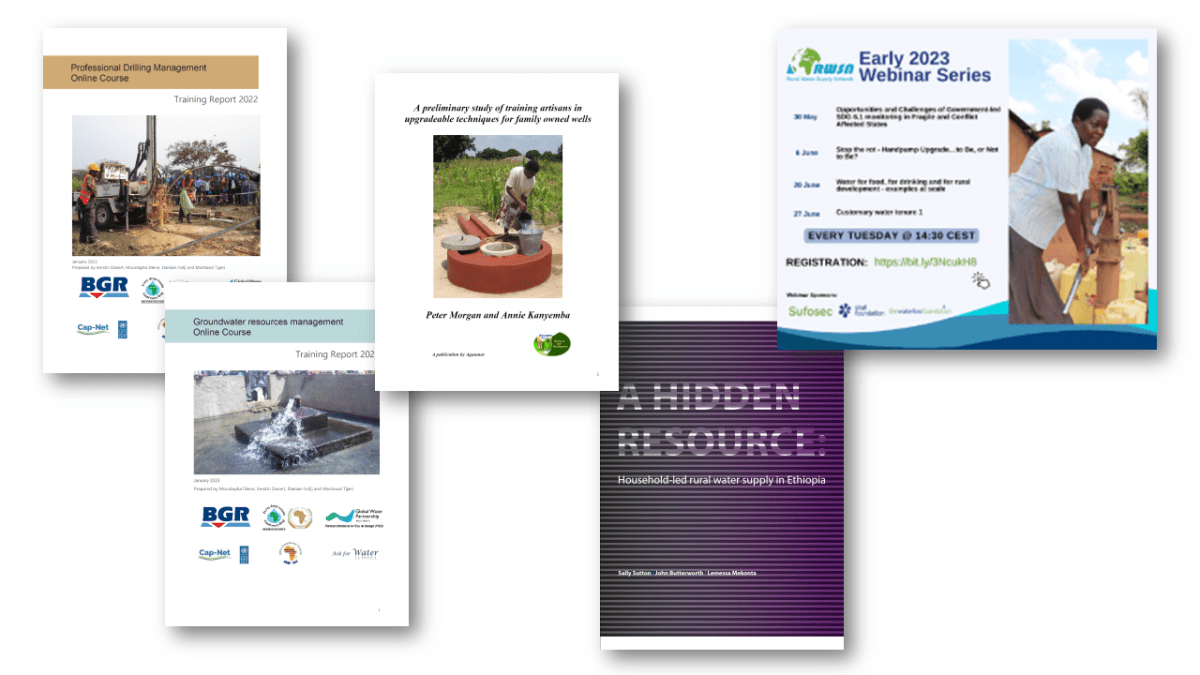
Nearly 10,000 documents were downloaded from the RWSN online library so far this year, and here is the current top ten:
Well, we try and curate a variety of resources that we think are likely to the most useful for rural water operators, regulators, researchers and policy-makers, but it is clear that from our online library of more than a 1,000 reports, books and presentations, what you want from us is practical guidance.
It’s interesting that some the resources above are more than a decade old, but that shows that good advice is timeless. We don’t just hold work from RWSN, but from wherever we can find it, but it is notable that the work of RWSN legends Peter Morgan, Kerstin Danert, Dotun Adekile, Richard Carter, Sally Sutton, John Butterworth, Moustaphe Diene, and Jon Naugle are so prominent in what users download. And thank you to all our authors, reviewers, presenters and members who generate and share such valuable content.
This year we are preparing our RWSN strategy to 2030, the end of the SDGs. So, what practical guidelines or standards are missing from your work that we could work with partners to create?











 Rural Water Supply Network - blog