Lessons from the RWSN webinars

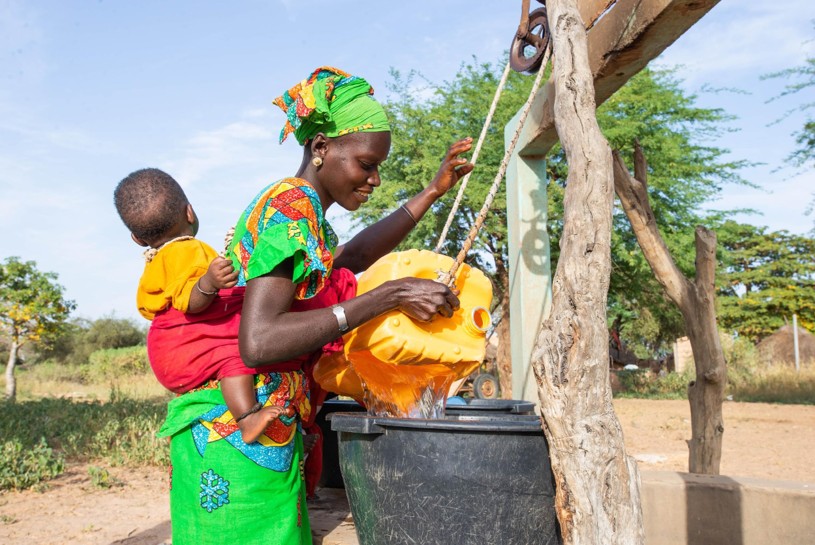
Guest blog by Rebecca Laes-Kushner. Featured photo from RWSN webinar presentation on 29.4.25 (What Drives the Performance of Rural Piped Water Supply Facilities?) by Babacar Gueye from GRET Senegal.

Professionalism. Standards. Systems. These themes are repeated throughout Rural Water Supply Network’s (RWSN) spring and fall 2025 webinar series.

Given the large percentage of boreholes with early failure – within one to two years – improvements in standards and professionalism in borehole drilling are necessary. Drilling association leaders spoke passionately about the need for borehole drillers to professionalize to improve the quality of boreholes, increase accountability, stop illegal drilling and enhance community buy-in, which occurs when standards are enforced and certified materials are used.

George k’Ouma, from the Small Scale Drillers Association of Kenya, said it best: Professionalism isn’t optional.

A tidbit: Small borehole drillers have an advantage over large operations because they have knowledge of the local geology and seasonal changes, which enables better planning and materials selection.

Another area in need of increased professionalism is water management. Professor Kwabena Nyarko, from Kwame Nkrumah University of Science and Technology, Kumasi (KNUST), conducted a study comparing public sector, private sector and community water management in Ghana. Model type was less important than having professional standards and following best practices, including metering, tariffs that covered maintenance costs, efficient collection of tariffs, audits and reporting, digital recordkeeping and training, as well as financial support.

Jose Kobashikawa, head of the Enforcement Directorate for Sunass, the regulatory body for drinking water and sanitation services in Peru, echoed these concepts in his presentation. SUNASS uses a benchmarking tool to evaluate rural providers. Metrics include formality and management (are they registered, do they have a water use license), financial sustainability (do they collect tariffs, what percent of customers are defaulters), and quality of services (is water chlorinated and daily hours of water supply). High performing providers are awarded certificates recognizing their good practices in public management and workshops are held in each region to disseminate best practices.

Focusing on systems is another thread that runs through the varied webinar topics. Systems thinking means designing a scheme for the long-term provision of water. Boreholes must be properly sited. Appropriate materials, such as high quality stainless steel (304/316), need to be selected in order to prevent corrosion, as RWSN’s Stop the Rot initiative details. Handpumps often corrode within months or years instead of lasting a decade. Ayebale Ared, Technical and Social Expert at Welthungerhilfe, shared Uganda’s systemic solution: in 2016 the country banned the use of galvanized iron (GI) risers and rods in all new and rehabilitated handpumps – the first sub-Saharan country to do so. Uganda also requires a water quality analysis be done before materials are selected.

In addition, data collection and use must be embedded in all stages and aspects of water projects.. Dr. Callist Tindimugaya, Commissioner for Water Resources Planning and Regulation in Uganda, collects data from drillers which he then turns into groundwater maps the drillers can then use.

Systems thinking also means including the needs of the entire population in the design, especially women,  who bear the burden of hauling and carrying water. Women – who are killed by crocodiles while washing clothes in rivers, whose skin is irritated by harsh detergents, who find leaning over low wash basins harder as they age, who need to wash bloody clothes and bedsheets separately from the family’s regular laundry when they menstruate. Laundry is barely mentioned in WASH circles but RWSN devoted an entire webinar to the topic. One speaker questioned how the WASH sector would be different if the metric for success was the amount of time women spend collecting water.

Understanding the local culture is critical; psychologists, behaviorists and sociologists can help provide insights. Technical solutions which aren’t accepted by the community will only lead to failure.

The lack of funds to cover maintenance work on wells is well known. Systems thinking means anticipating root causes of funding issues in a community and pre-emptively building a system that attempts to solve those issues. Tariffs are too low to cover maintenance? Then the project needs to determine how sufficient funds will be raised, whether through higher water fees (that may be less affordable to low-income families) or from external sources. The water committee is inefficient at collecting funds? Then training and capacity building need to be part of the project design from the beginning. 

Looking at the bigger picture helps creative ideas flourish: Household rainwater harvesting, replenishing water aquifers through tube recharging, deep bed farming that breaks up the hard pan so water can return to the aquifer, sand dams that filter water and incorporating water management and regreening in the design and construction of roads so crops can grow next to roads. During the laundry webinar, three organizations presented their laundry solutions – devices that save women time, eliminate much of the manual labor, use less water and even offer income-generating opportunities.

The webinars are at times frustrating because we clearly know what needs to be done – yet professionalism, systems thinking and best practices are not always prevalent. More often, though, the webinars are full of insightful information and inspiring stores from experts. The knowledgeable participants, who ask focused, detailed questions, enhance the experience. I look forward to the spring 2026 webinars which are currently being planned.


Rebecca Laes-Kushner is a consultant to NGOs and companies with a social mission, with a particular focus on development issues such as WASH, climate change, supporting SMEs, health care and nutrition. Laes-Kushner Consulting (https://laeskushner.net/) provides research and writing, data analysis, M&E and training services. Rebecca has a Master’s in Public Administration (USA) and a Certificate of Advanced Studies in Development and Cooperation from ETH NADEL in Switzerland.

UNQUALIFIED WATER WORKERS AND FORGED CREDENTIALS: THE HIDDEN CORRUPTION UNDERMINING SDG 6

Photograph 1  Showing a Graduate in Kenya, Source: NTV Kenya

Blog by Euphresia Luseka, co-lead of the RWSN Leave No-one Behind theme.

The views and opinions expressed in this blog post are those of the author. They do not necessarily reflect the views of the Rural Water Supply Network (RWSN) or its Executive Committee.

Fake Qualifications, Real Consequences: The Brenda Sulungai Case

Across Africa, water utilities are expected to be drivers of sustainable development, climate resilience, and digital transformation. Yet beneath this ambition lies a disturbing contradiction: highly complex systems are being operated by staff who, in most cases, lack even the basic credentials to do the job.

Despite major gains in infrastructure and technology investments, Kenya’s water utilities continue to underperform often not due to a lack of funding or innovation, but because of the human capital crisis festering within. I have witnessed strategic plans, technological upgrades, and donor-funded initiatives collapse under the weight of a talent base that was never prepared or licensed.

In July 2025, Brenda Nelly Sulungai a former staff at Nairobi City Water and Sewerage Company (NCWSC), was arraigned in a Kenyan Court, for forgery, uttering a false document, and deceiving a principal to gain employment. The Sulungai case demonstrates that the underlying problem extends far beyond individual misconduct on fraudulent activities, but rather the existing system permits such deception to occur and persist undetected for long. A fundamental breakdown exists in the accountability mechanisms embedded within the Human resources ecosystem of Water Corporations and Utilities.

This blog analyses the technical, legal and operational risks posed by weak certification systems, forgery, and unqualified staffing across Kenya’s water sector. It also proposes a plan for professionalising the sector, building institutional resilience, and restoring public’s vital trust.

The Pervasive Scale of Credential Fraud

“Every academic certificate in Kenya is now questionable. Forgery is happening across all sectors including those critical to life like water and health. We cannot ignore this anymore.”  –Twalib Mbarak, CEO, Ethics and Anti-Corruption Commission (EACC)

This stark statement captures the magnitude of Kenya’s credential fraud crisis as a structural failure that compromises public service integrity at scale as demonstrated in Box 1.

Box 1: Sector-Wide Credential Fraud Uncovered in National Audit

Following a 2022 presidential directive, the Kenya National Qualifications Authority (KNQA), in collaboration with the EACC and the Public Service Commission (PSC), audited academic and professional credentials across 400+ public institutions. Of 47,000 employment records reviewed, over 10,000 (30%) were forged or unverifiable documents. Credential fraud in Water Service Providers (WSPs) flourished under conditions of decentralised recruitment, limited HR oversight, and politicised hiring. Frontline operational roles such as meter readers, plant technicians, lab staff, and revenue officers are especially vulnerable to infiltration by individuals presenting forged or non-accredited certificates. In a coastal county, 5 out of 8; 63% of water treatment technicians lacked formal technical certification highlighting serious lapses in frontline hiring. WSPs such as Nairobi City and Garissa Water & Sewerage Company were cited for fraudulent promotions and appointments. The audit prompted a directive requiring all WSPs to submit comprehensive staff verification reports. EACC investigated over 2,000 public servants for holding fraudulent academic qualifications. In parallel, PSC has flagged more than 1,200 employees with irregular documentation in public institutions, signalling collapse in credential verification and HR governance.

“This is systemic. There are falsified documents even at PhD level, dissertations are downloaded from the internet.” – Dr. David Oginde, Chairperson, EACC

Senior public officials have not minced words. Head of Public Service Felix Koskei has declared the forged qualifications surge a ‘national emergency.’ PSC Chairman, Anthony Muchiri emphasised the urgency of cultural reform, framing the restoration of integrity as both a legal and moral imperative.

Consequently, this is not simply a matter of individual misconduct it points to a systemic failure in verification systems, risk management, and institutional accountability.

The Grave Consequences: Incompetence Endangering Lives and Undermining Progress

The human capital crisis in Kenya’s water sector driven by systemic weaknesses in credential verification, licensing, and staff training is not only an administrative oversight but threatens public health and utility performance.

Improper chlorine dosing, no action on bacteriological alerts and contaminated boreholes link to unqualified personnel, contributing to recurrent outbreaks of waterborne diseases such as cholera and typhoid. Therefore, Water sector HR reforms must be framed not just as a governance issue, but as a public health and national security imperative.

“You cannot digitize your way out of poor staffing. At some point, someone has to operate the system.”

The human resource crisis is also undermining the operational stability and financial viability of Kenya’s WSPs. Underqualified technical staff routinely mismanage complex systems like SCADA and GIS, leading to frequent breakdowns and service disruptions. Poorly trained revenue officers contribute to billing errors, customer dissatisfaction, and 30% revenue leakage crippling reinvestment in maintenance and training. Even as utilities embrace digitisation, adoption is hindered by a lack of skills and internal resistance to change. Without parallel investment in the human capabilities needed to run and sustain infrastructure, digital and capital investments risk failing to deliver impact.

Sustainable transformation requires human capital to be treated as a core infrastructure asset.

Systemic Vulnerabilities and Their Underlying Causes

I. Governance Deficit: Institutional Decay Through Political Capture

Kenya’s water sector suffers from a foundational governance breakdown; WASREB, the national water regulator notes a few WSPs have structured HR policies, indicating systemic weakness. Other gaps include: Outdated job descriptions, Irregular or absent performance reviews and Non-existent competency frameworks.

“Staff appointments in WSPs are frequently driven by tenure, local allegiances, or political alignment rather than technical merit. This erosion of meritocracy is neither incidental nor benign; it is indicative of deliberate political capture.”— Charles Chitechi, President, Water Sector Workers Association of Kenya (WASWAK)

Even WSP BODs that are governance bulwarks, are compromised. Opaque recruitment, undertrained members, and entrenched conflicts of interest have rendered them susceptible to patronage.

This politicisation has real operational costs, including poor service delivery, stagnant capacity, and a rise in credential forgery.

II. Regulatory Void: Absence of Mandatory Professional Licensing

Despite being designated as Kenya’s 16 critical infrastructure sectors, the water sector lacks a national mandatory licensing framework. Unlike medicine or engineering, no statutory barrier prevents an unqualified person from operating a treatment plant. Training institutions exist, including KEWI, NITA, and TVETs, but certification is inconsistent, and unenforced. Most alarming is the absence of a centralised professional registry, allowing forgeries to pass undetected unless exposed by whistleblowers.

Kenya’s current policy approach enables fraud by omission. The lack of a licensing regime is not a gap; it is a deliberate vulnerability.

III. Investment Blind Spot: Human Capital as the Missing Infrastructure

According to WASREB, Kenya’s WSPs spend less than 1% of OPEX on staff training, compared to the 5%-7% benchmark in high-performing WSPs globally. This chronic underinvestment in people creates a compounding deficit: Stagnant skills lead to operational bottlenecks, Low morale drives attrition and disengagement and Poor efficiency increases non-revenue water (NRW).

“You cannot digitize your way out of poor staffing. At some point, someone has to operate the system.”

A study by AfDB found that targeted training investment can lead to 20%-30% efficiency gains. The false economy of skipping training leads to far greater costs through system failures and revenue loss.

These figures make the business case clear. Training is not a cost; it is a strategic investment with measurable returns.

IV. Project Design Fallacy: Infrastructure Without Operators

Despite significant investments in tools such as GIS mapping, NRW audit software, and digital billing systems, Kenya’s utilities remain trapped in underperformance.

From experience, the primary reason infrastructure projects fail is they’re often designed for a workforce that does not yet exist. Few pause to ask: Who will operate, manage, and sustain these systems?

This leads to predictable implementation failures. Development partners often assume that technology adoption is a standalone solution, overlooking the critical human capability gap.

Table 1 Showing Summary of Systemic Failures and Strategic Fixes

Root ProblemUnderlying CauseStrategic Fix
Politicized HR and opaque recruitmentGovernance failureIndependent oversight and merit-based systems
Weak mandatory licensingRegulatory neglectNational framework aligned with global standards
Minimal training investmentFinancial and strategic myopiaMandated 5% OPEX for staff development
Failed technology implementationsIgnored human capacity gapCapacity-first planning and project sequencing

Towards Resilience: Five Strategic Levers to Professionalize Kenya’s Water Sector

Kenya’s water sector is confronting a systemic talent crisis, addressing these challenges requires a structural response anchored in global best practices, informed by local constraints, and focused on long-term institutional resilience. This plan outlines 4 interlocking strategic levers designed to professionalize the sector and establish talent as a core infrastructure asset.

LeverCore InsightPriority ActionsStrategic ShiftExpected Outcome
Proactive Credential VerificationShift from post-hire audits to real-time identity checksIntegrate KNQA/KUCCPS into hiring- Enforce role-based access protocols. Adopt zero-trust frameworksLink credential verification to hiring and promotionsPre-employment fraud prevention; increased hiring integrity
Mandatory Licensing for Technical RolesLegalise role-based licensing to ensure competenceEstablish national licensing board- Align with NQFs- Phase rollout starting with public-facing rolesMake licensing a prerequisite for key technical rolesProfessionalised, accountable workforce
Performance-Driven HR GovernanceReplace tenure-based hiring with performance-linked systemsImplement HR scorecards tied to KPIs- Map skills to close gaps- Link career progression to performanceInstitutionalise meritocracy and depoliticise HRTalent aligned with service outcomes; improved retention
Strategic Learning InvestmentTreat training as core infrastructure, not a cost centreMandate 5% OPEX for learning- Deploy centralized Learning Management System- Align training to operational KPIsMake capacity-building part of financial and project planningTechnically agile, continuously upskilled workforce

Conclusion: Talent Is Infrastructure

Kenya’s water systems are only as effective as the people who plan, operate, and maintain them. As the World Bank warns, weak water institutions can turn climate risks into crises undermining resilience across health, agriculture, and energy systems.

The Brenda Nelly Sulungai case shows credential fraud is not just a governance lapse it’s a national risk multiplier. Amid climate stress and population growth, human error becomes infrastructure failure.

Reform must begin and end with people. Priority actions include:

  • Verifying identities and qualifications through real-time credential checks
  • Mandating professional licensing to close technical regulatory gaps
  • Investing in structured, ongoing training
  • Aligning performance systems with merit-based progression
  • Fostering a culture of accountability, technical rigor, and service

These steps reflect a central truth: talent is infrastructure.

Former President Mwai Kibaki, UNESCO’s Special Envoy for Water in Africa, put it clearly: “We need to commit ourselves to turning actions into real reforms… and together we can make Africa water secure and peaceful.”

Guiding the future of STEM: empowering African women through mentorship

This blog is written by Mercy Hinga, a Water and Sanitation Engineer.

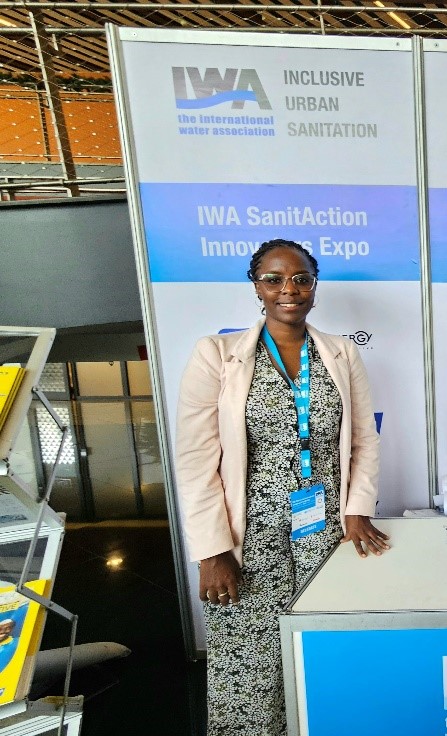
Photo: Attending the International Water Association Sanitation Conference and Expo. Photo Credit: Merch Hinga, 2023

In the dynamic realm of Science, Technology, Engineering, and Mathematics (STEM), mentorship stands as a powerful catalyst in propelling the aspirations of Kenyan women in the water sector towards attaining Sustainable Development Goal 6 (SDG6) – safe water and sanitation for all. Across the continent, where opportunities in the sector remain uneven, mentoring emerges as a beacon of hope, connecting emerging talents with seasoned professionals towards increasing skilled and diverse talent in the water sector.

A significant challenge faced by African women in STEM within the water and sanitation sector is the scarcity of role models and avenues for skill development. Imagine being a young engineer without a senior female mentor to turn to for guidance? This absence profoundly impacts motivation and career aspirations. This encounter motivated me to coordinate numerous meetings connecting a senior female engineer with my fellow graduate female colleagues, offering a platform for connection, guidance, and access to resources that would otherwise remain out of reach.

The impact of mentorship extends beyond personal growth; it shapes the future of STEM in Africa and communities at large. Drawing from personal experience in the Rural Water Supply Network (RWSN) mentorship program, my trajectory was transformed. This mentorship not only encouraged further education but also led to the prestigious Chevening Scholarship, shaping my career advancement. Furthermore, participating in the mentorship project Mentoring future women graduates in STEM in Africa implemented by the University of Plymouth and funded by the Royal Academy of Engineering (RAE) has played a crucial role in shaping my career aspirations in leadership and management. This has been achieved through engaging sessions with my mentor and fellow participants in the program.

While there has been tremendous improvement in the inclusion of women in water utilities, consulting firms, research institutions, and NGOs, it’s crucial to acknowledge that the glass ceiling has not yet been shattered. For instance, less than one in five water workers are women, according to new research by the World Bank’s Water Global Practice. Women are also underrepresented in technical and managerial positions where, in sampled utilities, on average only 23 percent of licensed engineers are women. This is contributing to an ongoing deficiency in the representation of women in both the expansion and leadership aspects of the field. More women need to secure seats at the table where decisions are made to ensure that diverse perspectives shape the future of the water and sanitation sector.

Mentorship plays a pivotal role in breaking barriers, extending its reach from low cadres to mid-level and management positions. To truly shatter the glass ceiling, mentorship programs should not only focus on professional development but also advocate for a conducive work-life balance. It is essential to empower women to enjoy what they do in the sector, fostering an environment where their contributions are not only recognized but also celebrated.

In my opinion, mentorship initiatives should extend beyond traditional hierarchies, creating networks where women can learn from each other at all levels. Establishing women’s networks within the sector provides a platform for sharing experiences, insights, and strategies to navigate challenges. These networks become invaluable sources of support, fostering a sense of community and mutual empowerment.

In conclusion, let us recognize mentorship as a powerful catalyst propelling African women’s engagement and success in the water and sanitation sector. Just as the proverb “it takes a village to raise a child” signifies collective support in nurturing future generations, supporting African women in the water and sanitation sector demands a collective effort. I believe that it is crucial for existing systems to champion and support the talents of women in STEM, fostering an environment where their contributions are not just acknowledged but celebrated, driving progress and innovation in these critical fields.

Mercy Hinga is a Water and Sanitation Engineer specializing in WASH Projects business models and financing. She is also a mentee with the Mentoring future women graduates in STEM in Africa project by the University of Plymouth and funded by Royal Engineering Academy UK.

My experience with the RWSN Mentoring Programme

This is a guest blog by RWSN mentee Margret Mwanza and RWSN mentor Esther Shaylor.

My name is Margret Mwanza, a Zambian who recently completed her Master of Science in Advanced Water Management from Cranfield University in the United Kingdom. As a young professional in the international water and environment sector, I became a member of the Rural Water Supply Network (RWSN) at the start of my MSc program and eventually, I came across the RWSN Mentorship Programme, a journey I embarked on in May 2023. At that point, I was eager to grow in the water sector and expand my professional network. I was interested in the prospect of being paired with a mentor who could guide me in job hunting, networking, career progression, and project management.

I sought to be paired with Esther Shaylor, an Innovation Manager for the UNICEF Sustainable WASH Innovation Hub in Denmark. She has always been a distinguished water and sanitation engineer and a published researcher. Her record in designing and implementing innovative solutions to WASH challenges in resource-poor environments and her systems thinking and people skills made her an ideal mentor for my aspirations.

Our mentorship journey began with a focus on networking. Esther encouraged me to proactively seek opportunities to connect with industry leaders and professionals by utilising platforms such as LinkedIn, participate in events under RWSN, my University, and membership bodies like CIWEM, and IWA, and be on the lookout for events in the industry that would provide this opportunity. The interactions I got from these recommendations not only broadened my professional network but also opened doors to new and exciting opportunities within the sector.

The quest for a fulfilling career in the water sector can be daunting for early-career professionals. My mentor played a crucial role in guiding me through my research thesis by suggesting valuable blogs, such as Ian Ross’s insights on the economics of water, sanitation, and hygiene (WASH) services. Additionally, she assisted me in identifying work and learning opportunities through platforms like Josh Water Jobs and making effective use of LinkedIn connections. To strengthen my professional profile, she suggested I actively participate in CV and cover letter reviews by tapping into the resources offered by the university careers office and seeking input from HR professionals in my previous workplaces. This was coupled with enhancing my branding on various social media platforms, applying the STAR method to articulate my skills and experiences effectively and diligently following up on unsuccessful applications and interviews. Her insights were influential in helping me navigate the competitive job market with confidence.

My mentor was key in helping me define my career goals and develop a strategic plan for professional advancement and career progression. Through honest discussions, we defined areas for personal and professional development and explored potential career paths within both the UK and international water sector. Her guidance enabled me to envision my career path and set achievable goals for achieving professional objectives. Having previously worked on projects in the international WASH sector, my mentor provided some useful tips in project planning, stakeholder engagement, resource allocation, and monitoring and evaluation. These insights equipped me with practical tools and techniques applicable to future projects in the WASH sector. She also advised me to seek training and learning opportunities that would intensify this skill. 

What stood out about Esther was her genuine interest in understanding my life beyond the professional and academic boundaries. She always encouraged me to maintain a social life, make friends, explore the UK, embrace different cultures, find my niche, and take each day as it came. This integrated approach contributed to a more balanced and fulfilling career journey.

As I embark on the next chapter of my career, I carry with me the priceless guidance my mentor rendered to me through the RWSN Mentorship Programme. I am confident that these experiences will serve as a compass, guiding me toward a fulfilling and impactful career in the water sector. The program, timed perfectly with my academic journey, provided the guidance needed to complete my thesis research, complete my MSc program, and secure a job in the industry. The RWSN Mentorship Programme stands as evidence of the transformative power of mentorship in personal and professional development. This has been a journey of growth, learning, and empowerment.

To join RWSN and be informed about the next round of the mentoring programme, please sign up here.

My experience with the RWSN Mentoring Programme

This is a guest blog by RWSN mentee Arra Clarize Jose and RWSN mentor Aline Saraiva Okello, Ph.D.

Overview

I discovered RWSN Mentoring Program as I was browsing career enhancement opportunities online. As a professional with humble experience in the water sector and in the early stage of my career, I always wanted to find a mentor who can help me navigate my profession and share experiences. It was quite difficult at the start of the mentoring program as some of the mentors were already committed to other mentees. The mentee pool is relatively huge but luckily, I connected with Aline, a fellow water professional in the program. The mentoring program unfolded over a six-month duration, focusing on cultivating expertise in water management and engineering, social and management skills, career path guidance, and network building. The agreed-upon mentoring activities were executed within a structured framework that catered to monthly meetings and specific objectives aimed at achieving learning goals.

Learning Goals

We identified the following learning objectives:

  1. Seeking counsel on career paths:
    • Humanitarian/fieldwork for WASH
    • Policy and governance concerning climate change and water
    • Pursuing academia (Master’s Degree)
  2. Building a robust professional network within these domains.
  3. Balancing career and life as a young expert

Mentoring Experience

Aline was the perfect mentor for me as she can relate to my experience. In this career stage, professionals like us are usually thinking about different paths we want to pursue, and with multiple milestones we plan to achieve, we end up being overwhelmed. In reality, such urge and energy to achieve goals may be exhausting and even daunting at times. We shared similar experiences, which made her guidance more relatable and valuable.

Navigating this stage of our careers often feels like juggling multiple possibilities, each with its own set of challenges. Aline’s insights helped me make sense of this complexity. She understood the struggle of balancing aspirations with the practicalities of achieving them.

The mentoring journey with Aline wasn’t just about setting targets and reaching them; it was about finding a balance. She emphasized the importance of pacing oneself, taking one step at a time, and ensuring that the pursuit of goals doesn’t overshadow personal well-being. At the same time, proper planning and diversion of priorities should also be taken into consideration especially when some things are not progressing according to plans and expectations.

Aline’s support and advice highlighted the significance of taking breaks, reassessing priorities, and acknowledging that it’s alright to adjust our plans as we go along. Her wisdom provided a much-needed perspective shift, reminding me that success isn’t solely measured by reaching milestones but also by finding fulfillment and balance in the journey.

The mentoring journey under Aline’s guidance wasn’t merely about professional growth; it was a holistic approach, acknowledging that our careers are only one aspect of our lives. It encouraged a reflection on self-care, personal values, and the importance of staying connected to what truly matters amid the pursuit of career goals.

Outcomes and Progress

The outcomes of the mentoring program are evident, some are listed below:

  1. During the program, I was actively applying for some jobs and scholarships that could open opportunities for me. Noteworthy highlights included the mentor’s insights into CV enhancement and LinkedIn profile refinement, which helped me land some offers from organizations I applied.
  2. I was able to access opportunities/forums such as World Water Week and MOOC courses that helped me increase my knowledge in the water sector.
  3. Learning about taking breaks, reassessing priorities, and being flexible in plans. This shift in perspective highlighted that success isn’t just about milestones but also about finding fulfillment in the journey.

My mentor expressed satisfaction and enthusiasm for our collaborative achievement of all our goals.

In summary, the RWSN mentoring program proved to be highly engaging, educational, interactive, and well-coordinated. Our gratitude extends to the organizers and sponsors for providing this valuable platform.

About the mentee and mentor

Arra Clarize Jose is a chartered civil engineer based in the Philippines, a former Water and Habitat Engineer of International Committee of the Red Cross and currently part of the UK-Med WASH Engineer Register Team. Her professional interests are centered on water engineering and her commitment to WASH (Water, Sanitation, and Hygiene) initiatives reflects her dedication to improving livelihoods and fostering resilient communities, showcasing her as a proactive force in the field of civil engineering and humanitarian aid.

Aline Saraiva Okello is a water expert, with a PhD and MSc in Hydrology and Water Resources from IHE/TU-Delft, Netherlands. Aline is Mozambican, currently living in Kenya, and has a wide experience in consulting, research and entrepreneur capacity in the water sector ranging from water resources management to water supply and sanitation, in both urban and rural spaces. Aline works as the global network manager of the Rural Water Supply Network (RWSN), hosted by the Skat Foundation (Switzerland) and as a short-term consultant to the World Bank Water East Africa Region Practice (Mozambique).

To join RWSN and be informed about the next round of the mentoring programme, please sign up here.

Mon parcours dans le programme de mentorat du RWSN

Ceci est un blog d’une mentorée de RWSN, Awa DIAGNE, et d’un mentor de RWSN, Yves Etienne RAKOTOARISON.

Présentation de la mentorée

Je me nomme Awa Diagne, de nationalité sénégalaise. Je suis actuellement doctorante en première année de thèse à l’université Cheikh Anta Diop de Dakar au Sénégal. J’ai fait une licence en géologie et je me suis spécialisée en hydrogéologie depuis ma première année de Master. Mes recherches ont débuté en 2021 dans le cadre de mon mémoire de Master dont le sujet portait sur l’évaluation du risque sur la santé des teneurs en nitrates et en fluor des eaux souterraines dans les régions de Mbour et Fatick. Actuellement en 2023, mes travaux de thèse sont en cours avec comme sujet de recherche : « Evaluation de la salinité et de la paléo salinité du système aquifère intermédiaire du Paléocène et de l’Eocène dans la zone centrale du bassin arachidier par l’utilisation d’outils isotopique chimique et hydrodynamique dans les régions de Fatick, Thiès, Diourbel et Louga. ». Il s’inscrit dans le cadre d’un projet d’études scientifiques « RAF 7021 » de la Direction de la Gestion et de la Planification des Ressources en Eau du Sénégal (DGPRE) avec l’appui de l’Agence Internationale de l’Energie Atomique (AIEA). Durant mon cursus universitaire, j’ai eu à faire pas mal de formations en ligne et en présentiel et assisté à des colloques universitaires.

Présentation du mentor

Mr Yves Etienne Rakotoarison est un coordonnateur national de projet à RWSN avec plus de 20 ans d’expérience dans le secteur WASH de Madagascar. Pendant 4 ans, avec une équipe de 20 personnes, il a pu aider plus de 700 villages à arrêter la défécation à l’air libre. Il a débuté comme Chef de Projet et occupé le poste de Coordinateur National de Département Wash pour un ONG international pendant 5 ans. Il possède des expériences solides en assainissement en milieu rural et urbain, des projets d’adduction d’eau potable dans différentes zones et surtout dans des zones arides. Il est un pionnier dans l’adoption des solutions innovantes pour faire face au changement climatique.

Pourquoi et comment j’ai intégré le programme de mentorat du RWSN en tant que mentorée ?

Etant jeune chercheure dans le domaine de l’eau et de l’assainissement, j’ai toujours cherché à agrandir mes connaissances dans ce secteur. J’avais besoin d’une personne plus expérimentée que moi avec qui je pourrais échanger. Etant également membre du RWSN, j’ai eu la chance de tomber sur ce programme de mentorat dont les objectifs répondent à mes besoins. J’ai donc suivi le processus pour trouver un mentor au niveau de la plateforme PushFar. Dans un premier temps j’ai pu avoir un mentor qui me correspondait mais qui, malheureusement, était très souvent en voyage et indisponible. Grâce au soutien du secrétariat du RWSN, j’ai pu avoir de nouveau un autre mentor : Mr Yves Etienne Rakotoarison.

Déroulement du mentorat

Après avoir pris contact avec Mr Yves, j’ai établi un calendrier d’activités contenant les jours des réunions ainsi que les thèmes à aborder à savoir : Améliorer mon CV, maitriser le travail de terrain, comprendre davantage le système d’approvisionnement en eau potable en milieu urbain et rural, comprendre comment améliorer l’accès à une eau de bonne qualité aux populations des zones rurales, comprendre comment améliorer les systèmes d’assainissement en milieu urbain et rural, savoir comment entreprendre un projet dans le secteur de l’eau, évaluation et suivi d’un projet dans le secteur WASH, aborder une thèse de manière efficiente, pouvoir allier un travail ou un stage et la rédaction d’une thèse de doctorat, développer mon réseau professionnel, gagner de l’expérience dans le secteur WASH, avoir une bonne stratégie de communication.
Nos échanges se faisaient par appels vidéo sur l’application « WhatsApp » car jugé plus flexible pour nous.
Par soucis de disponibilité, nous avons eu à faire jusque-là que 2 réunions au cours desquels j’ai pu tirer le maximum de conseils et connaissances. Néanmoins, nous comptons poursuivre le mentorat après la fermeture de ce programme.

Dates et durée des réunionsObjectifs et ordre du jourRéalisations
05 août 2023 1 heurePrise    de    contact    et    établissement du calendrier des activités à menerPrésentation du mentor et de la mentorée (parcours professionnels)Disponibilité et fréquence des réunionsPartage de documents (articles scientifiques)
02 Sept 2023 32 minsAborder une thèsePartage de documents (astuces pour bien gérer son temps, exemples et méthodes de gestion du temps, efficience et efficacité au travail, conseils pour rédiger sa thèse)ConseilsComment bien interagir avec mes encadreurs

Conclusions tirées du programme de mentorat

Ce programme de mentorat a été intéressant pour moi dans le sens où j’ai pu bénéficier de précieux conseils de la part de mon mentor. Les documents et articles qu’il a partagés avec moi me permettront respectivement de connaitre les astuces pour mener de manière efficace et efficiente ma thèse et d’enrichir ma documentation.

Je tiens à remercier chaleureusement Mr Yves pour sa disponibilité, sa gentillesse et sa bienveillance envers ma personne et espère qu’on pourra poursuivre nos séances de mentorat.

Merci également au RWSN de nous avoir offert ce programme.

Si vous souhaitez en savoir plus sur notre programme de mentorat et les activités de RWSN, rejoignez notre communauté ici. https://dgroups.org/rwsn

Nurturing Professional Growth in the WASH Sector

by Lisa Mitchell, Senior Director of Learning Services, Global Water Center, re-blogged from the Global Water Center

Mentoring plays an important role in the Global Water Center’s (GWC) strategy to offer ongoing support to our clients. We know that training is just the first step in learning new knowledge and skills. To consolidate new competencies, ongoing support is necessary. Mentors are well placed to provide this support.

This year, GWC trialed a new strategy to support the graduates of our solar powered water systems (SPWS) training: we paired with the Rural Water Supply Network’s (RWSN) Mentoring Program, to offer SPWS alumni mentoring support. We also supported RWSN’s general mentoring stream, so they could extend it to a broader pool of WASH professionals.

As part of these activities, I had the privilege of becoming a mentor to three mentees, from very different corners of the world: India, Côte d’Ivoire, and Switzerland. I believe I learned more from my mentees than they likely learned from me!

I met with the mentees once or twice per month over the last six months. During our exchange, I reviewed my mentees resume, journal submissions, and even a PhD application. We discussed behaviour change and educational theories and considered innovative approaches to their work. From them I learned about a range of topics from measuring the transfer of agrochemicals into groundwater to involving communities in groundwater recharge initiatives. I also discovered new WASH organizations and initiatives.

The beauty of these relationships is that they evolved according to the mentees’ needs. No two meetings were the same, and each meeting brought out new learning and ideas. I also formed a strong relationship with three people I would not have met otherwise, and I’m confident we will continue to support one another in our professional journeys moving forward.

In the coming months we will share the evaluation from the SPWS stream of the mentoring program. For now, I believe that the mentees from this stream of the program gained at least as much as I did from the program.

Interested in becoming a mentor or mentee yourself? Considering signing up for RWSN’s mentoring program. Details of next year’s program will be released in early 2024.

My experience with the RWSN Mentoring Programme

This is a guest blog by RWSN mentee Beatrice Kyomuhendo (Uganda) and RWSN mentor Eng. Cornelius Mpesi (Malawi) who took part in the 2023 RWSN Mentoring Programme.

Mentee’s Thoughts

My name is Beatrice Kyomuhendo, I am a WASH Technical Assistant at The Water Trust in Uganda. The Water Trust is an organization that aims at empowering the poorest rural communities in Uganda by providing clean water and healthy homes for children and their families to thrive.

I found out about RWSN through my supervisor Mr. Enock Obwon Gmuipe who shared information about the RWSN Mentoring Programme. After filling out the application, not knowing what exactly the outcome was going to be, I received an email from Eng. Cornelius Mpesi requesting to be my mentor.

Eng. Cornelius Mpesi is a mechanical and water engineer registered with the Malawi Engineering Institution (MEI) and working with Water Mission. I went through his profile, and I was very surprised at how someone willingly offers to share their knowledge at zero cost. I accepted the request, and we scheduled our first meeting. During the first meeting, we set our targets, objectives, expectations, mode of communication, convenient time for meetings and also signed the mentoring agreement. We were the first mentor and mentee to sign the mentoring agreement.

The most interesting bit of this mentoring programme is that, at the time, we were starting on our first piped water project as an organization and Eng. Cornelius was of great help to me throughout the whole project. The first assignment he gave me was to pick coordinates from our proposed source and where we planned to construct the public stand posts. This is what we used during our classes on Google Earth and EPANET. He took me through pump sizing and solar sizing basing on our project. This made work so interesting as I was always eager to go to the field and practice what we discussed in our previous classes and would also be eager to get back to my mentor with feedback on what transpired in the field.  

Eng. Cornelius has encouraged me to register with the Uganda Institution of Professional Engineers (UIPE) and helped me appreciate and utilize LinkedIn to its full capacity.

I see many benefits in my experience with the RWSN Mentoring Programme:

  • Gained skills in solar sizing, pump sizing
  • Learned to use Google Earth and EPANET
  • Appreciated the use of LinkedIn
  • Was encouraged join the UIPE.
RWSN Mentor Eng. Cornelius Mpesi

Mentor’s Thoughts

I saw the call for mentors and mentees on RWSN LindedIn page since I am a frequent user. I quickly signed up, and as I was searching for profiles of people with similar interests in my field, Beatrice’s profile sparked my interest. I looked through it and thought to myself that there is an opportunity for me to share the little I know with someone who is eager to learn. We linked up and had our first meeting to discuss the areas in which I could help. We communicated frequently through various platforms like WhatsApp, Google Meet and Emails. From the interactions we had, I saw someone who is willing to learn and is very inquisitive. Sometimes she would nudge me with a bunch of questions which I am glad I was able to answer and assist with. This experience helped me to be a better tutor. Knowing something is one thing, but knowing how to explain it to someone so they understand it, is a totally different thing altogether. I am glad I was able to help Beatrice shape her career, and I have no doubt she will take off and keep soaring higher.

To join RWSN and be informed about the next round of the mentoring programme, please sign up here.

My Mentee Journey in the RWSN Mentoring Programme

This is a guest blog by RWSN mentee RAKOTOARIMANANA ZY Harifidy and RWSN mentor Sean Furey who took part in the 2023 RWSN Mentoring Programme.

Who am I?

My name is RAKOTOARIMANANA ZY Harifidy, from Madagascar. Currently, I am a Ph.D. candidate at the Interdisciplinary Center for River Basin Environment (ICRE), University of Yamanashi in Japan. My research focuses on water resources assessment of the Major River Basins in Madagascar (MRBM) in the context of global change. Before coming to Japan, I worked for an NGO involved in the water, sanitation, and hygiene (WASH) sector in Madagascar.

What is the Rural Water Supply Network (RWSN) Mentoring Programme?

I first learned about this program on my LinkedIn while I was searching for a mentorship or fellowship opportunity in the WASH sector. It turned out to be the RWSN Mentoring Programme, which enables professionals in the WASH sector to collaborate, advance their careers, and learn from one another. This program specifically supports mentees who are starting their careers or going through career transitions. It is important to note that this program is free and open to the public for a duration of 6 months. Thanks to the Pushfar platform, I could easily schedule appointment slots, monitor the progress of my mentoring relationship, and engage in online conversations with my mentor. For more information, please visit this website.

How was my experience as a mentee?

My journey as a mentee began when I found Sean Furey, the Director of RWSN Secretariat through the PushFar platform and he accepted my request on 15 May 2023. I am grateful and honored to have him as my mentor. I was in my second year of my doctoral program, uncertain about my next steps, and in need of direction. Therefore, Sean became the guiding hand I was looking for.

My objectives for joining this program were to receive feedback about my research project and to learn from my mentor’s experience and expertise in the WASH sector. I also want to improve my communication skills, particularly in presenting research findings and networking. I would like to get some advice on my future career development. These are my goals from this mentoring process.

During my mentorship, we had five one-on-one meetings scheduled once a month for 1 hour. Sean shared his experience and knowledge about the WASH sector with me. I have learned from his insights and perspectives.

  • 9 June 2023: During our first conversation, I talked about my goals and my expectations for the mentorship program. Upon Sean’s introduction, I was greatly inspired by his professional journey in the WASH sector, which I found to be particularly motivating for young people like me. Since I was uncertain about my post-graduation plans, Sean elucidated various career options for Ph.D. students. He asked about my dream job, which I regarded as a pivotal factor in selecting my career path. He also provided insights and comments related to my research.
  • 23 June 2023: I rehearsed my presentation for the SWAT conference in Denmark alongside Sean. As this marked my first experience at an international conference, I felt somewhat anxious and had concerns about my proficiency in English. Sean provided constructive feedback on how to effectively communicate my research findings to a non-academic audience, offering valuable tips and guidance to enhance my presentation slides for better audience comprehension. Thanks to his advice, my conference presentation was successful. Importantly, I honed both my presentation and networking abilities in the process.
  • 11 August 2023: Sean reviewed my CV and provided valuable guidance for proactive job hunting. He recommended that I prepare two distinct versions of my CV. One focused on my academic achievements, including qualifications, grants, fellowships, awards, research experience, and publications; and the other was tailored for a professional context, emphasizing work experience, responsibilities, deliverables, evidence of teamwork, and engagement within and outside the organization. Sean also emphasized the importance of including a brief motivational paragraph in my CV. Furthermore, he connected me with some amazing African women in the WASH sector so I could look at their career paths.
  • 15 September 2023: We focused on the review and completion of my CV. Sean provided guidance on writing a cover letter and preparing for job interviews. Moreover, he shared his own experiences, including insights from his initial interview and how he secured the job. He recommended that I practice with my friends and lab mates. An additional advantage of having Sean as my mentor is the opportunity to improve my English language skills by conversing with a native speaker.
  • 14 November 2023: In our last meeting, we talked about the results of the mentorship program and exchanged feedback. During this mentorship, I joined the RWSN Young Professionals which is an interesting platform for networking and receiving information about events, seminars, and job opportunities in the WASH sector. I was happy that I joined this program and I decided to keep in contact with my mentor through LinkedIn.

Overall, this mentorship program is a valuable journey for me. I strongly recommend this program to every Ph.D. student and young professional in the WASH sector, who wants to shape their career and personal development. I believe that my participation in this program would have a positive impact on my future career. I forged a strong international contact network. I sincerely thank my mentor, Sean Furey, for his advice, tutelage, and precious time during the program. I am also grateful to the RWSN Secretariat for their support since the beginning of the mentoring program.

My Mentor`s comment

Zy Harifidy Rakotoarimanana is a promising Ph.D. student who is quietly confident and determined to achieve her goals of working for an international organization in a water resource role. Our mentoring calls helpfully focused on specific topics that she chose. Over the course of the mentoring meetings, we explored her career ideas, aspirations, and some possible pathways. Working together on her presentation and CV helped her think about how to communicate clearly to different audiences about herself and her expertise and work. Being in her second year of Ph.D. she still has time to explore and reflect on what she wants from a career, and I encourage her to be brave and persistent! I will be following her career with interest.

To join RWSN and be informed about the next round of the mentoring programme, please sign up here.

Service Delivery Management Models, Good Political and Water Governance for Strong Rural Water Systems (1/3)

Photo: Lumino Containarised Water Project in Kakamega County, Kenya financed on PPP at US$765,000 serving 8,000 Households

Water has a profound bearing on health, human dignity. Inequalities in access to safe rural drinking as an input for economic growth towards alleviating poverty reinforce wider inequalities in opportunities. This blog explores the economic significance of improved water access, its role as a fundamental input for economic growth, and the challenges faced by Kakamega County’s rural water sector.

A Well Governed and Effective Rural Water Sector has Potential to Spur its Economic Growth and Alleviate Poverty Levels

The case for strengthening the Rural Water Sector in Kakamega County, Kenya continues to be solid; across Sub-Saharan Africa, universal access to improved water and basic sanitation could lead to economic gains of 34.7 billion USD per year. The UN calculates a global cost-benefit ratio of 2.0 times more for improved drinking water. Kenya’s development blueprint, Vision 2030, targets a 10% Gross Domestic Product (GDP) growth rate per year from 2012 to 2030. Water plays a fundamental role in enabling this growth as a necessary input for agriculture, manufacturing, blue economy and so on, in fact 78% of jobs globally are dependent on water. Similarly in Kakamega County, Water is an essential resource for economic growth, health and quality of life. Recognizing this, the County Government of Kakamega aims to ensure access to improved water for all by 2030, in line with Sustainable Development Goal six and its current Governor’s Political Manifesto for the year 2022-2027 affirmed and budgeted for in their County Integrated Development Plan 2022-2027; the main planning document guiding Counties development.

Systemic Challenges in Kakamega’s Rural Water Functionality in the year 2012

Overall and nationally, the strategy for Socially Responsible Commercialisation (SRC) as pioneered by the Water Act of 2002 was successful in urban and peri-urban areas in Kenya but the concept dismally realised its potential in the rural areas where service provision areas are small, water coverage, usage and willingness to pay is low. Towards addressing the challenge, the Community Based Management Model was rolled out with an objective of empowering communities towards enhancing sustainability. There are few cases of the success of the model, Kakamega County faced the following challenges:

  • Rural Water Knowledge Gap: Kenya’s National Water Services Regulatory Board (WASREB) Impact Report 10  indicated that it is ‘not in a position to provide detailed information on rural areas with regards to rural water supply and sanitation coverage’. This information gap made it impossible to respond to key rural water indicators in Kakamega County and undermined assessing whether investments were translated to impact reflected in increased water coverage. This also explained why despite Kakamega County being predominantly rural, water sector investments were skewed towards the urban water sub-sector that had validated data.
  • Non-Functionality and Weak Management of Rural Water Supplies: A Water Point Mapping (WPM) Report by SNV Kenya in 2012 revealed that 59% of Kakamega water points had no professional manager. Those managed by voluntary Water Management Committees (WMCs) reported non-compliance, unaccountability and lack of skills in managing and operating the water supplies. This was worrying because in case of a breakdown, the water supplies stood a high risk of complete abandonment. Further 60% of residents in rural areas did not pay for water. The lack of consumer focus and incentives for private sector contributed to the inability to attract alternative financing support. The limited funds, when available from NGOs and public authorities, were depleted in maintenance with no or minimal resources available to expand services to un-served areas.
  •  Equity and Inclusion: The WPM exposed a concern about fair budget allocation and distribution of infrastructure in rural areas. The poor purchased unreliable poor-quality water from vendors at higher rates compared to those with household connections. The glaring evidence that some areas had fewer safe water infrastructure was attributed to politics; areas that voted the government of the day had better allocations.

Understanding the importance of a resilient rural water sector in alleviating poverty sets the foundation for exploring innovative approaches and partnerships in the next blog of Service Delivery Management Models, Good Political and Water Governance for Strong Rural Water Systems.”

About the author:

Euphresia Luseka is a Water Governance Specialist and Co-Lead of RWSN Leave No-One Behind Theme. She is a seasoned Expert with experience in leadership, strategy development, partnerships and management in WASH sector nationally, regionally and internationally. She has specialised in WASH Public Policy, Business Development Support Strategies and Institutional Strengthening of urban and rural WASH Institutions. Euphresia has several publications and research work in her field.

Credits for the Photos: Euphresia Luseka