Lessons from the RWSN webinars

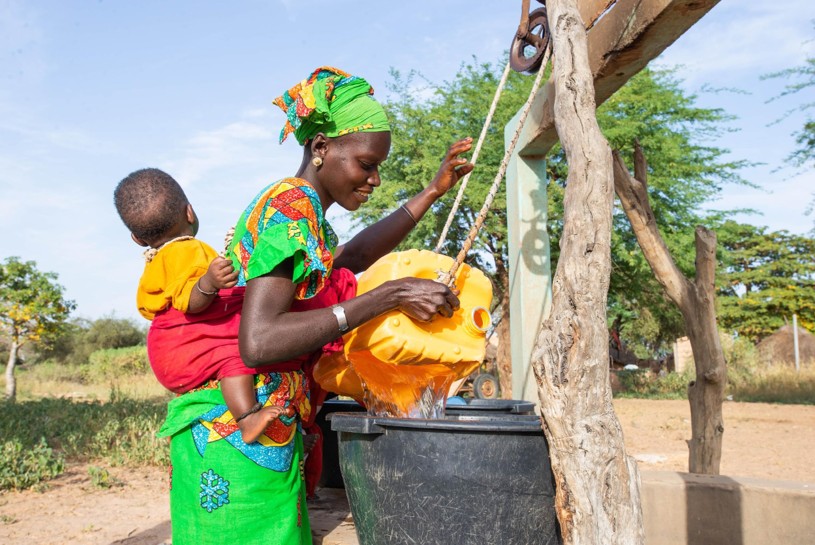
Guest blog by Rebecca Laes-Kushner. Featured photo from RWSN webinar presentation on 29.4.25 (What Drives the Performance of Rural Piped Water Supply Facilities?) by Babacar Gueye from GRET Senegal.

Professionalism. Standards. Systems. These themes are repeated throughout Rural Water Supply Network’s (RWSN) spring and fall 2025 webinar series.

Given the large percentage of boreholes with early failure – within one to two years – improvements in standards and professionalism in borehole drilling are necessary. Drilling association leaders spoke passionately about the need for borehole drillers to professionalize to improve the quality of boreholes, increase accountability, stop illegal drilling and enhance community buy-in, which occurs when standards are enforced and certified materials are used.

George k’Ouma, from the Small Scale Drillers Association of Kenya, said it best: Professionalism isn’t optional.

A tidbit: Small borehole drillers have an advantage over large operations because they have knowledge of the local geology and seasonal changes, which enables better planning and materials selection.

Another area in need of increased professionalism is water management. Professor Kwabena Nyarko, from Kwame Nkrumah University of Science and Technology, Kumasi (KNUST), conducted a study comparing public sector, private sector and community water management in Ghana. Model type was less important than having professional standards and following best practices, including metering, tariffs that covered maintenance costs, efficient collection of tariffs, audits and reporting, digital recordkeeping and training, as well as financial support.

Jose Kobashikawa, head of the Enforcement Directorate for Sunass, the regulatory body for drinking water and sanitation services in Peru, echoed these concepts in his presentation. SUNASS uses a benchmarking tool to evaluate rural providers. Metrics include formality and management (are they registered, do they have a water use license), financial sustainability (do they collect tariffs, what percent of customers are defaulters), and quality of services (is water chlorinated and daily hours of water supply). High performing providers are awarded certificates recognizing their good practices in public management and workshops are held in each region to disseminate best practices.

Focusing on systems is another thread that runs through the varied webinar topics. Systems thinking means designing a scheme for the long-term provision of water. Boreholes must be properly sited. Appropriate materials, such as high quality stainless steel (304/316), need to be selected in order to prevent corrosion, as RWSN’s Stop the Rot initiative details. Handpumps often corrode within months or years instead of lasting a decade. Ayebale Ared, Technical and Social Expert at Welthungerhilfe, shared Uganda’s systemic solution: in 2016 the country banned the use of galvanized iron (GI) risers and rods in all new and rehabilitated handpumps – the first sub-Saharan country to do so. Uganda also requires a water quality analysis be done before materials are selected.

In addition, data collection and use must be embedded in all stages and aspects of water projects.. Dr. Callist Tindimugaya, Commissioner for Water Resources Planning and Regulation in Uganda, collects data from drillers which he then turns into groundwater maps the drillers can then use.

Systems thinking also means including the needs of the entire population in the design, especially women,  who bear the burden of hauling and carrying water. Women – who are killed by crocodiles while washing clothes in rivers, whose skin is irritated by harsh detergents, who find leaning over low wash basins harder as they age, who need to wash bloody clothes and bedsheets separately from the family’s regular laundry when they menstruate. Laundry is barely mentioned in WASH circles but RWSN devoted an entire webinar to the topic. One speaker questioned how the WASH sector would be different if the metric for success was the amount of time women spend collecting water.

Understanding the local culture is critical; psychologists, behaviorists and sociologists can help provide insights. Technical solutions which aren’t accepted by the community will only lead to failure.

The lack of funds to cover maintenance work on wells is well known. Systems thinking means anticipating root causes of funding issues in a community and pre-emptively building a system that attempts to solve those issues. Tariffs are too low to cover maintenance? Then the project needs to determine how sufficient funds will be raised, whether through higher water fees (that may be less affordable to low-income families) or from external sources. The water committee is inefficient at collecting funds? Then training and capacity building need to be part of the project design from the beginning. 

Looking at the bigger picture helps creative ideas flourish: Household rainwater harvesting, replenishing water aquifers through tube recharging, deep bed farming that breaks up the hard pan so water can return to the aquifer, sand dams that filter water and incorporating water management and regreening in the design and construction of roads so crops can grow next to roads. During the laundry webinar, three organizations presented their laundry solutions – devices that save women time, eliminate much of the manual labor, use less water and even offer income-generating opportunities.

The webinars are at times frustrating because we clearly know what needs to be done – yet professionalism, systems thinking and best practices are not always prevalent. More often, though, the webinars are full of insightful information and inspiring stores from experts. The knowledgeable participants, who ask focused, detailed questions, enhance the experience. I look forward to the spring 2026 webinars which are currently being planned.


Rebecca Laes-Kushner is a consultant to NGOs and companies with a social mission, with a particular focus on development issues such as WASH, climate change, supporting SMEs, health care and nutrition. Laes-Kushner Consulting (https://laeskushner.net/) provides research and writing, data analysis, M&E and training services. Rebecca has a Master’s in Public Administration (USA) and a Certificate of Advanced Studies in Development and Cooperation from ETH NADEL in Switzerland.

Financing Maintenance in Last-Mile Contexts: Endowment Funds for Rural Water Sustainability

Featured photo: Ghana, Lucy Parker

Article by Cincotta K. & Nhlema M.

Abstract

Rural water supply systems in low-income settings, particularly in last-mile communities, face chronic sustainability challenges. Financing predictable operation and maintenance (OPEX) remains a persistent gap, with one in four water points in sub-Saharan Africa being non-functional at any given time. While community-based management has been the dominant model for post-construction maintenance, it is increasingly recognized as insufficient, relying on underfunded household tariffs, volunteer committees, and limited technical support. Emerging solutions like results-based financing and professionalized maintenance contracts have shown promise with some securing government financing.  This paper proposes district-level maintenance endowment funds, a mechanism where invested capital generates predictable income, as another option for financing rural water maintenance. These funds would support targeted subsidies, results-based contracting, and accountable, locally governed service delivery aligned with decentralization frameworks. This proposed model is agnostic to the specific management model, whether community-based, professionalized, or hybrid. The focus is on creating a predictable, long-term financing mechanism, particularly for so‑called ‘last-mile’ rural communities: small, dispersed villages, often with fewer than 1,000 people, that are typically excluded from piped water systems due to high per-capita service costs.

Two key arguments frame this proposal: (1) while endowment funds may be initially capitalized by international donors or organizations, over time they reduce dependency on short-term donor cycles by creating a predictable, locally managed revenue stream, and (2) Piloting endowments at the district government level strikes the right balance between being close enough to last-mile communities, accountable to them, and large enough to achieve economies of scale that will ensure financial viability for service provider payments.

THE PROBLEM: Persistent Non-Functionality and Unrealistic Expectations

Across sub-Saharan Africa, one in four rural water systems are non-functional at any given time. These failures are not anomalies, but they reflect a systemic global challenge: the absence of a reliable model for rural water service delivery beyond construction. For decades, community-based management (CBM) has been the dominant approach. It assumes that because communities value water, they will voluntarily manage infrastructure. But the viability of CBM is increasingly being questioned. Tariffs based on affordability rarely cover full maintenance costs, especially in small, dispersed communities, with variable incomes, that are often not prioritized for piped systems. Trained committee members often leave, and access to spare parts or technical support is limited. Volunteer fatigue, lack of retraining, and systemic underinvestment compound the problem.

The expectation that people living in the poorest rural villages must fully fund and manage the long-term maintenance of their own water systems does not align with how water systems are managed anywhere else in the world. In high-income countries, water infrastructure is maintained by trained professionals and supported by stable funding streams, often not limited to water user fees, but supplemented by public financing mechanisms such as property taxes and municipal budgets. The same should hold true, if not more so, in low-resource rural settings. A more realistic, equitable approach is therefore urgently needed.

TRIED AND TESTED SOLUTIONS: Results-Based Financing (RBF) – When Performance Meets Poverty

New RBF models are emerging. Uptime, as an example, is a partnership supporting professionalized rural water service providers that pays providers based on verified uptime. This shifts incentives from reactive repairs to preventive maintenance. Between 2020 and 2022, Uptime supported services for 1.5 million people in seven countries. Governments in countries such as Kenya, Bangladesh, and Zambia are now beginning to adopt performance-based financing approaches like this into their own public financing systems. This has been inspired in part by the evidence generated through philanthropic pilots. Yet, a central limitation remains: these models have demonstrated viability primarily in communities large enough or more “well-off” to generate economies of scale. This makes them financially attractive to service providers, but systematically excludes smaller, remote last-mile communities that are seen as less “bankable”. This is not a critique of performance-based models like Uptime, they are delivering results and proving their value. But it does highlight the need to pilot complementary result-based financing mechanisms that can address the unique realities of last-mile communities. Expecting the world’s poorest to fully finance their own essential services is neither equitable nor realistic. What’s needed is smart, targeted financing, including well-placed subsidies, that reflects the diversity of community capacity and directs public investment where it’s needed most. This is especially critical for last‑mile communities, i.e. remote, low‑density villages where user fees alone can never sustainably cover operating expenses.

This frame of thought, of differential and context-specific financing solutions, borrows from Dorward et al.: “Hanging In, Stepping Up, and Stepping Out.” Most rural households are “Hanging In,” unable to pay without full subsidy. Others can co-finance with support (“Stepping Up”), or engage with market models (“Stepping Out”). This model enables differentiated financing that aligns with real-world capacity. Targeted subsidies are not about dependence; they free up cash for productive use while ensuring reliable services. Importantly, we differentiate between water as a service that must be reliably provided for health and dignity, and water as a productive resource used to generate income. The proposed endowment-backed financing model speaks to the former, guaranteeing essential domestic supply. Other financing tools may be more appropriate for supporting productive uses of water in agriculture or enterprise.

RBF models have proven we know how to make maintenance work. The challenge now is to pilot solutions, such as endowment funds, that can sustainably support these communities where market-based approaches do not reach, thereby ensuring universal access to all.

THE PROPOSAL: District-Level Maintenance Endowment Funds

To close the financing gap, we propose district-managed endowment funds dedicated to rural water maintenance. These funds would invest capital to generate steady income for maintenance costs, insulating service delivery from budget shocks and donor cycles. They would:

  • Provide predictable financing by requiring implementing agencies to allocate a fixed amount, e.g. 10-20% of infrastructure costs, into the fund.
  • Enable targeted subsidies using the Hanging In/Stepping Out framework.
  • Support results-based contracting for professional maintenance providers.
  • Align with decentralization by placing fund management at the district level, while national governments serve as regulators.

This model borrows from urban utility principles where professional service delivery is underpinned by predictable financing and adapts them to rural realities. It does not assume full cost-recovery from users, nor does it treat water as a commodity for profit. Instead, it creates a stable platform for targeted subsidies and professional maintenance services in communities where user fees alone are structurally insufficient.

Continue reading “Financing Maintenance in Last-Mile Contexts: Endowment Funds for Rural Water Sustainability”

Is it the management model or its application?

Blog by Analía Saker, Terra Michaels, and Mohammed Farhaoui, co-leads of the RWSN Sustainable Services Theme. Featured image: Aguaconsult, Peru.

Trends come and go quickly in the WASH sector. When a new concept shows early signs of success, it is often promoted as the next big solution, packaged by development partners, donors, and foundations. These actors, in turn, push governments to adopt the latest approach, frequently triggering wide-reaching reforms with mixed results.

We have seen this cycle play out repeatedly: private sector participation, on-site sanitation, blended finance, carbon credits, and the list goes on. In rural water service delivery, the pattern is even clearer. Municipalities and local governments were once seen as the appropriate service providers. In the 1990s, the spotlight shifted to Community-Based Management (CBM). When the limitations of unsupported CBM systems became apparent, public rural utilities were pushed as a more “professional” solution. Today, Safe Water Enterprises (private companies heavily supported by international donors) are the rising stars.

These shifts are often driven more by the perceived failure of one model than by strong, scalable evidence of success from another. Governments are influenced to adopt new service delivery models, often initiating complex reform processes. Yet, the sector lacks solid evidence to prove that such reforms lead to better performance or more sustainable services.

A recent example comes from Ghana, where a now-concluded USAID-funded study sought to investigate this issue. The research compared three rural water service delivery models for piped schemes, aiming to identify what actually drives performance. This was especially relevant in a context where the Government of Ghana is increasingly backing service provision through the Community Water and Sanitation Agency, acting as a new rural public utility, while development partners strongly advocate for Safe Water Enterprises. Meanwhile, support for the still-widespread CBM model has all but disappeared.

Surprisingly, the study found small performance differences among the models. Performance outcomes were more closely linked to socio-economic context and the service provider practices than to the model itself. Although the findings are specific to Ghana, they raise a broader question: are we focusing on the wrong thing? Perhaps it is not about the model at all, but rather about how it is implemented and whether critical elements like professionalism, regulation, and accountability are in place.

This idea was reinforced in a recent webinar we hosted in April this year, where case studies from across the globe showcased how different models can succeed when implemented well and supported by an enabling environment.

  • Cambodia: Fully private rural providers invest in, operate, and maintain water systems, under government regulation and licensing.
  • Peru: CBM remains the dominant model in rural areas, but the sector is actively working to professionalize and regulate service provision.
  • Morocco: Public utilities manage rural service delivery as an extension of their urban mandates.
  • Senegal: A global best practice in public-private partnerships for rural water service delivery.

These examples show that success is not determined by the management model itself, but by the conditions in which it operates. Instead of chasing the next big trend, we should be focusing our energy and resources on strengthening the elements that matter most, regardless of the model. These include cost-reflective tariffs, regulatory oversight, accountability mechanisms, participation, professionalized staffing, and robust monitoring systems.

Let’s stop asking, “What is the right model?” and start asking, “What makes the model work?”

Join the RWSN Sustainable Services discussion group to continue this conversation.