Sextortion in Kenya: water sector CSOs lead bring down the legislative hammer

Photo 1: Hon.Esther Passaris Tabling the Petition for Amending the Penal Code. Source, Euphresia Luseka

This blog is written by Euphresia Luseka, RWSN Leave No One Behind theme co-lead.

The mood in the room was palpable, Furaha’s eyes were welling up with tears, I felt something rising in my throat. “They threw my water jerrycan away, held me tightly and raped me, taking rounds on me, I screamed but no one heard until I passed out, they then left me for dead and disappeared.” She got consciousness at the hospital.

Strongly appealing to the Government of Kenya Public Petitions Committee at Senate house, Hon.Esther Passaris argued, “Daily, women and girls in Kenya are coerced into sex for basic necessities such as water, employment, education or food. We must redefine sextortion in our laws, providing clear penalties, support systems for victims and measures for accountability to eradicate this blight in our society.”

In many countries, such pervasive incidents are hard to prosecute, partly due to the nature of existing legislation. Nevertheless, activists are relentlessly pressuring authorities by raising awareness on legal protection against sextortion.

Passaris, Women Representative, Nairobi City, has been at the forefront in sextortion solutioning with water sector actors. She tabled to Kenya Parliament a petition for debate; urging amendments to Kenya’s Penal Code to specifically include sextortion as a criminal offense. This legal tool lays details to fight against sexual exploitation in response to instances reported in the Water sector backed by research evidence and increasing lobbying championed by Sareen Malik, Executive Secretary African Civil Society Network for Water and Sanitation (ANEW) and Shivaji Malesi, CEO Kenya Water and Sanitation Network (KEWASNET).

Her petition has gained support from fellow legislators recognising need for stronger legal protection for women and girls.

“It’s a missed opportunity that this was not included in the initial Sexual Offences Bill,” further support came from Member of Parliament (MP) Hon.Jayne Wanjiru, criticising slow progress of protecting women’s integrity in corporate realms.

Sextortion in Kenya Water Sector Hits Tipping Point

Sex is a currency for accessing safe water in Kenya.

World Bank and Kenya Demographic and Health Survey Program confirm 60%-93% of slum households are dependent on informal urban water vendors for their water supply where public utilities fail to deliver. They not only charge high prices, sell low-quality water but also perform unfair water transactions to consumers especially women and girls.

Activists say that this leaves consumers vulnerable to harassment, sexual assault, or abuse. Water fetching is costing time and trauma.

“The tariff is unfair. Most water vendors are male. Sometimes they hike prices intentionally for not submitting to their advances. I am forced to pay more money given the limited options of water sources. They gang up with other men to spank and body shame women who deny them and it’s violating. During overcrowding they rub themselves on us,” Rosemary a Katwekera, Kenya dweller narrates painfully.

Indeed the  Water Governance Facility report  confirms that women may feel pressured to flirt or ‘play along’ with utility workers out of fear of having their connection cut off.

At a crowded water kiosk at Mukuru Kwa Reuben, Melissa affirms the report’s views, “Water is priceless in the ghetto especially during shortages. It is astonishing to see the lengths residents go to fetch leading to STDs, Early marriages and pregnancies. Even boys are affected. Women contract small boys to help them fetch water and sometimes pay them with sex.” Some would say it is the struggle for survival, but it is a normalization of a vice that is eating up our community.”

The price of a basic human right is high. They demand more than just money.

This is rape.

Photo 2: Consumers at Korogocho slum queue for water, Source, Euphresia Luseka

Naming and Shaming Sextortion to End it

Rebecca Root, IBA Southeast Asia Correspondentexplains that various forms of WASH related violence do exist: (a) Sexual violence (rape, assault, molestation, and inappropriate touching); (b) Psychological violence (harassment, sextortion, eve-baiting (public harassment of women by men), bullying or other actions that may cause fear, stressor shame; (c) Physical violence (beating or fighting leading to injury or death); (d) Sociocultural violence (social ostracism, discrimination, political marginalization or social norms that have negative impacts).

One of the most prevalent and silent forms of Water related violence and corruption is sextortion; defined by International Association of Women Judges as abuse of power to obtain a sexual benefit or advantage.

Malesi, informed “The local term for sextortion is ‘water for water’ which means sex for water. The vendors capitalize on socioeconomic vulnerabilities of women and girls to coerce them into sex for water while some women are forced to seduce vendors into sex for water.”

“It’s prevalent in all sectors, all regions, all countries. It affects women from all backgrounds,” details Marie Chêne, head of research and knowledge at Transparency International. She backs this with statistics from a Transparency International Research confirming in Latin America and the Caribbean, one in five people had either experienced sextortion or heard of someone who had. In Zimbabwe, 57% of women admitted being forced into sexual acts for jobs, medical care or schooling. In Jordan, Lebanon and Palestine, almost half of respondents said sextortion occurs occasionally.

Here in Kenya, over 40% of women  have experienced sextortion, finds the Kenya Demographic and Health Survey (KDHS) with Water sector recording an unprecedented number of women reporting being forced to sextortion further affirmed by a KEWASNET study; one out of ten women in Kenya’s informal settlements is a victim of sextortion.

This makes sex the main form of non-monetary bribes in Kenya’s water sector amid a deteriorating economy.

Still there is a Deafening Silence around Sextortion

Research that gathered sextortion voices on water access in Kenya, found out sextortion and sexual harassment was ‘a common phenomenon’ and ‘common knowledge to the residents.’

So why is little or no action taken against it?

Luz Nagle, Scholarship Officer of the IBA Human Rights Law Committee replies, “While many countries have legislation that covers transactional sex or sexual harassment, sextortion is unique in that it’s coercive and involves an abuse of power.” This is why there is still little or no action against it.

Kenya lawyers add the country ranks low on the UN gender inequality index; sextortion is difficult to prosecute as it is undefined in our existing legal framework, women cannot file a complaint and perpetrators cannot be held accountable. Low political will has further frustrated the efforts. Data is scanty with limited research and most victims and survivors do not report cases due to fear of reprisal following disclosure and unawareness on reporting mechanisms.

From personal experience, the fear of reprisal is what stops most people from reporting, there is no incentive for reporting corruption. They taint your image and stigmatise you instead. The justice system is too masculine and very few women leaders support you. Women and the poor suffer most from extortion, they earn the least yet pay the highest percentage of their income in bribes as affirmed by World Bank.

“There’s a lot of shame, social stigma, taboo linked with this kind of offense,” Marie said, adding that in some cases women are forced to marry an abuser or can be fined for adultery.

Measures to bring to light sextortion are desperately important as they are measures to curb the vice. According to Benazir Omotto of Umande Trust and other lobbyists the compounded effects of sex for water need strengthening of the community referral pathways and workplace ethics that links victims and survivors to appropriate support services including legal and financial support. CBOs like Polycom Development Project, Inua dada, Umande Trust have helped in compilation of the women and girls’ narrative as well as providing psycho-social support.

Still, Raising Awareness is not Enough

As Sareen works with water organizations to raise awareness on sextortion, she indicates the lack of belief and resistance to addressing the situation.  

“Sextortion is not only happening at the taps but also corporate environments in higher-income contexts. To tackle it, those affected, who are predominantly women, need to be empowered to report incidents, safeguards should be established and perpetrators must be deterred by penalties,” Nagle asserts.

Meaning, dialogue needs to be sustained around this sensitive issue, to find its way into policy, planning and budgeting to ensure that efforts against the vice are sustained.

For this to happen, Countries must treat Sextortion as they would Corruption.

“Corruption takes place because it’s quid pro quo, it’s abuse of power,” Nagle adds, highlighting that the only difference here is that sexual acts are exchanged instead of money.

Sextortion occurs at the intersection between corruption and sexual exploitation it tends to fall through the cracks and not get addressed by either,” guides Nancy Henry, Senior Advisor, IAWJ.

“When you do not have a name or do not recognize the practice, it is not measured, you do not collect statistics, you do not pass laws or think of strategies to address it including anti-corruption policies so it is invisible,” Marie Chêne, head of research and knowledge, Transparency International.

According to the IBA report ‘Sextortion: A crime of corruption and sexual exploitation’, published in 2020, anti-corruption laws fail to specifically focus on sexual favours and sexual offence laws don’t encompass the corruption component. This means the issue is often dismissed and considered consensual instead.

“Here in Kenya the law does not care because it sees anything other than screaming and fighting as consent,” Millicent a sexual assault survivor told Avaaz.

However, we have progress; the passage of Resolution 10/10 at 10th Conference of States Parties to the UN’s Convention Against Corruption is significant towards recognizing and addressing sexual corruption, including sextortion. It calls on states to raise awareness about the issue and take measures to prevent and prosecute sexual corruption effectively. It is a positive development that can help drive change and accountability in addressing sextortion at a global level. The Water Governance Facility offers a course on water integrity and gender covering sextortion to support authorities including judiciary with knowledge.

Victims petition Kenya legislators to change Law to provide penalties for Sextortion

Photo 3: Malesi making remarks during petitions handover, Source, Euphresia Luseka

Meanwhile, there are ongoing efforts to criminalise sextortion in other ways in Kenya. The Attorney General is under pressure for a bespoke legislation at national level that offers ‘clarity and consistency in defining sextortion and applicable sanctions, according to underlying requirements of the rule of law.

Sustaining the petition, MP Hon.Beatrice Elachi demanded broader implications of the amendment, “Sextortion challenges demand integrating changes across all relevant legislation to end the expectation of sexual favours for professional or personal advancement.”

“Sextortion is a significant infringement of human rights and obstacle to attaining SDG5 on gender equality, and SDG16.6 on accountable governance. By the end of 2024 we aim to have sextortion to be punishable by law in the penal code” Passaris said.

The petition has proposed amendments to the Penal Code, Section 4 and 146, CAP 63, 2024 of the Sexual Offences Act and any other relevant criminal laws.

“Sometimes it is men in positions of power harassing women and sometimes it is women harassing men, all gender need to fight sextortion,” said Hon. Caroli Omondi who took part in drafting the amendments.

This sextortion legal framework will enable adequate prosecution of sextortion cases, raise awareness, strengthen level of women’s participation and involvement in water decision-making structures; providing safe confidential and gender sensitive reporting mechanism that gives victims/survivors access to appropriate support to resources needed as well as empowering women and girls promoting a more just and equitable society for all.

Addressing Asia’s Safe Water Crisis: Innovative Solutions from 1001fontaines

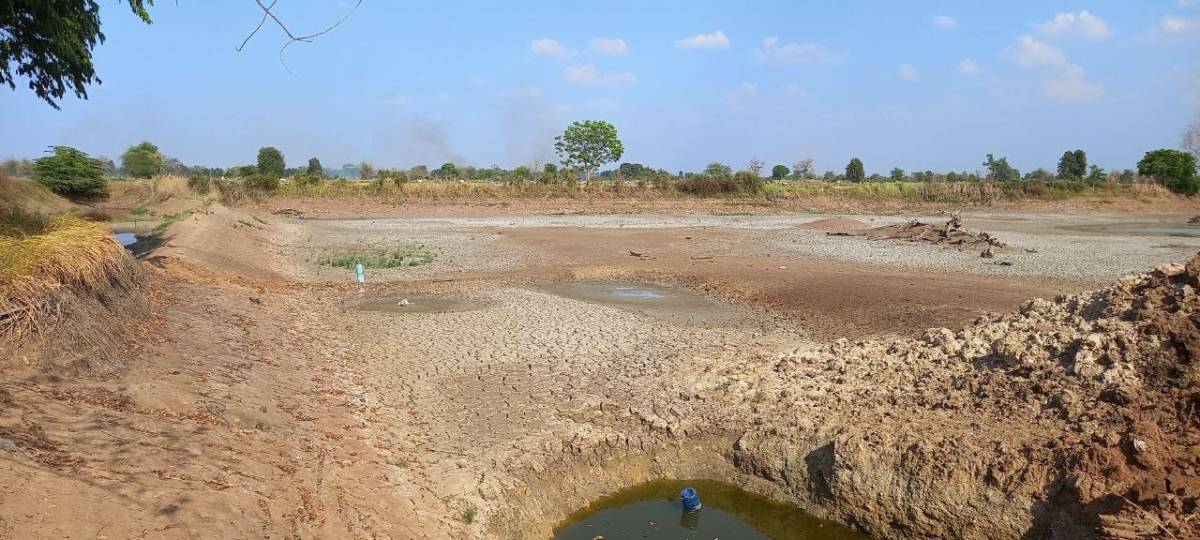
Image: Pond dried up in Banteay Meanchey province.

by Amandine Muret, Chief Partnerships Officer, 1001fontaines, RWSN Member Organisation
Am.muret@1001fontaines.com

As Asia grapples with an intense heatwave, exacerbating the already acute lack of access to safe drinking water for vulnerable communities, the call for innovative and resilient water supply solutions becomes increasingly urgent. The World Water Forum, held in Bali from May 18 to 24, brought together governments and experts from around the world, including 1001fontaines, a global NGO distinguished by its two decades of on-the-ground experience in providing safe water to communities in challenging contexts.

A Water Crisis Exacerbated by Climate Change

South and Southeast Asia are currently experiencing record temperatures. In Cambodia, where the mercury has soared to over 40°C several times, levels unprecedented in 170 years, the situation is alarming. This extreme heat wave increases the vital need for drinking water while compromising access to uncontaminated water sources, crucial to meeting this need. In rural areas, the majority of inhabitants still rely on self-supply water solutions, such as wells or ponds – with increasingly intense droughts and floods due to climate change, vulnerable populations see their water sources affected, with impacts on their
resilience and health.

The World Bank recently estimated that $36.1 billion would be needed to develop missing water access infrastructure in Asia (source: “Funding a Water-Secure Future: An Assessment of Global Public Spending” report, published in May 2024). Climate change, impacting the accessibility and quality of water resources, requires even larger investments to establish sustainable and efficient supply systems in the face of new constraints, particularly in maintenance and treatment.

In development contexts, where financial and technical resources are limited, and existing service providers already struggle to cover maintenance costs due to low household purchasing power, the idea of having a tap of safe drinking water in every home seems increasingly out of reach. Innovative approaches like those proposed by 1001fontaines appear essential to avoid regression in achieving Sustainable Development Goal 6: ensuring universal access to safe water.

Social Innovation to Address the Vital Need for Safe Drinking Water

For over 20 years, 1001fontaines has been designing and deploying sustainable solutions for access to safe drinking water for vulnerable populations in Asia and Africa. By focusing on the needs of vulnerable communities, the organization emphasizes the quality of the water produced and the strengthening of local capacities through social entrepreneurship.

In concrete terms, 1001fontaines installs decentralized water treatment stations (“Water Kiosks”) and trains local entrepreneurs to deliver the produced drinking water directly to households and schools, all in reusable
20-liter bottles.

This service, offered at an affordable price, now reaches a million consumers daily across rural Cambodian communes, where the model was initiated, while covering its operating costs. After 20 years, 90% of the deployed Water Kiosks are still operational, and consumer satisfaction reflects sustainable behavior
change benefiting public health improvement.

Sharing Experiences at the World Water Forum

At the World Water Forum in Bali, 1001fontaines will share the lessons learned from its innovative approach. With operations now expanded to four countries (Cambodia, Madagascar, Vietnam, Bangladesh), the organization has demonstrated the resilience of its model in the face of development and climate change challenges.

Unlike traditional water supply systems, which aim to provide between 50 and 100 liters of water per person, often costly to implement in sparsely populated areas, 1001fontaines focuses on a more targeted consumption, between 1 and 3 liters of safe water per person per day. This cost-effective approach ($15 subsidized per beneficiary) reduces pressure on water resources while offering better quality control. By using reusable bottles delivered directly to homes, the distribution model is less susceptible to infrastructure aging or climate-related damage, with maintenance focused on water treatment facilities.

Another key advantage is adaptability. In Cambodia, 4 regional laboratories monthly monitor water quality at the 330 active sites, allowing the identification of quality changes, often localized and related to the effects of climate change, and enabling the local technical team to implement targeted and low-cost mitigation measures.

Amandine Chaussinand, General Manager of 1001fontaines’ local entity in Cambodia, Teuk Saat 1001, testifies: “We have achieved remarkable results over two decades of operations. We are proud to share them with academic institutions, development financing institutions, and governments at the Forum in Bali because we believe that better consideration of alternative water supply systems, such as bottled water, could accelerate access to safe water for the benefit of populations facing the impacts of climate change.”

Amandine Muret, Chief Partnerships Officer, emphasizes that “Collaboration with local authorities is a key factor in the success of 1001fontaines’ programs, as is the mobilization of development aid to finance infrastructure construction and capacity building, at the heart of the sustainability of the services implemented.”

As the G7 recently announced the creation of a global coalition to address the global water crisis, high-level political dynamics could promote exchanges of successful experiences and stimulate, in the coming years, social innovations in the field of access to safe drinking water. 1001fontaines intends to contribute at its level by continuing to grow its impact.

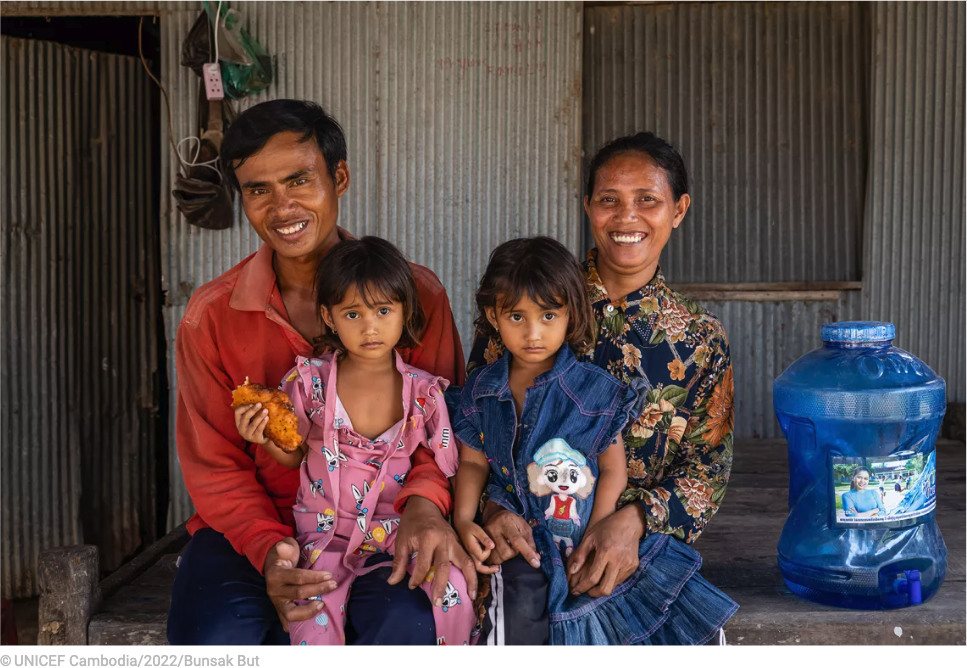
Choum Sophorn poses with her husband and twin four-year-old daughters in her home next to the 20 litre drinking water bottle that is delivered to her home every three days.

Teuk Saat 1001’s entrepreneur stands next to the UV filtration system and holds up some freshly filled bottles, ready to be sealed before delivering directly to customers in Kouk Pou commune.

About: For two decades 1001fontaines have worked to meet the needs of underserved communities through resilient water purification infrastructure and affordable and convenient services. We aim to encourage long-term behavior change and are proud that a million consumers across four countries in Asia and Africa have adopted our safe drinking water solutions.

Our 2030 ambition is to extend our impact by proving the relevance of our safe drinking water solutions in five countries and ensuring all our local partners are on track to reach financial viability at scale.

For more information: www.1001fontaines.com/en/

Addressing Water Challenges in Rural Fiji: The Mission of Save Our Fiji

This blog is written by Patricia Kroes, the founder of Save Our Fiji, which is a non-profit organisation that provides healthy and safe drinking water in the rural areas of Fiji.

Photo Credit: Viniana Bau

Fiji, known for its stunning beaches and pristine waters, is a tropical paradise. However, beyond the tourist destinations lies a harsh reality for many rural communities. In rural communities, access to clean and safe drinking water is a daily struggle for thousands of residents. Save Our Fiji, a non-profit organisation, is dedicated to tackling this pressing issue and ensuring that every individual in rural Fiji has access to clean water. In this blog post, we’ll explore the water challenges prevalent in rural Fiji and delve into the mission of Save Our Fiji in addressing these critical issues.

Water Challenges in Rural Fiji

Rural communities in Fiji encounter numerous obstacles in accessing clean water. Contamination of water sources is a significant concern, stemming from agricultural runoff, improper waste disposal, and inadequate sanitation facilities. This contamination leads to waterborne diseases and poses serious health risks to residents. Additionally, the accessibility of clean water is hindered by the remote locations of many rural communities. Residents often endure long journeys to fetch water, straining their time and energy, particularly for women and children.

Infrastructure shortcomings further compound the water crisis in rural Fiji. The lack of piped water systems and water treatment facilities contributes to unreliable water supply and poor water quality. Moreover, Fiji’s vulnerability to climate change exacerbates the situation, with changing rainfall patterns and extreme weather events affecting water availability and quality. Droughts, floods, and water scarcity are recurrent challenges faced by rural communities.

Continue reading “Addressing Water Challenges in Rural Fiji: The Mission of Save Our Fiji”

Borehole Drilling Supervision Capacity in Zimbabwe

by Joseph T Njanike

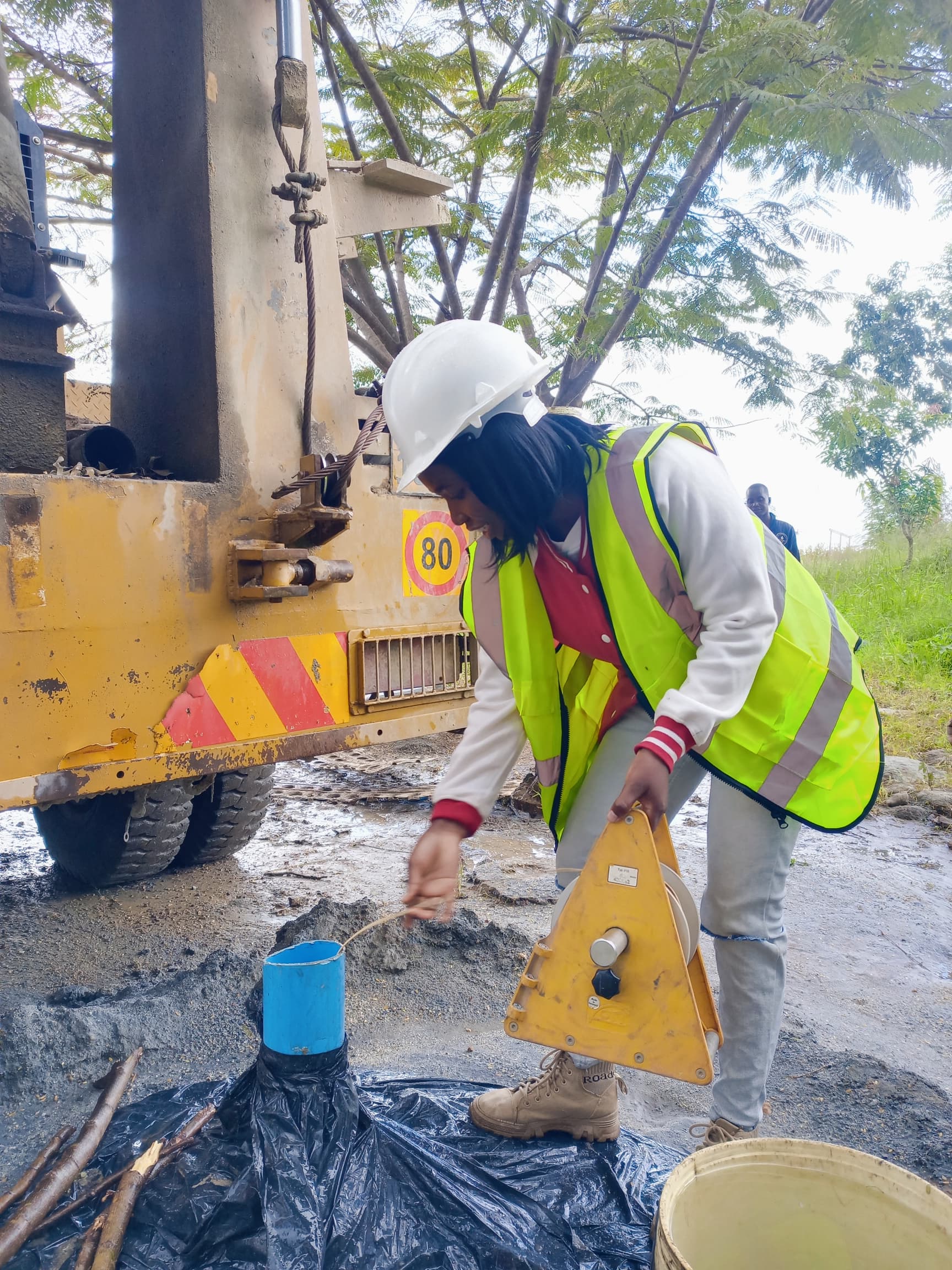
Photo: Supervised Borehole Drilling Project: Collection of Water Samples for Water Quality Analysis at a completed Borehole during the Final Certification Process

As one of the few remaining qualified, experienced, and active drilling supervisors in Zimbabwe, I would like to share experiences on the status of borehole drilling supervision in my country, Zimbabwe.

Drilling Supervision: A Technical Perspective

Rural areas, where the majority of Zimbabweans reside, are mainly serviced through groundwater sources for their water supply needs. The life span for a significant number of boreholes that have invariably become the technology of choice in Zimbabwe has in most cases proved to be short. This has mainly been due to shortcomings bedeviling the drilling and construction process thereby making the professionalisation of the borehole drilling imperative. Borehole drilling supervision, among other factors, is an integral component of the borehole drilling professionalisation process. This requires the hiring of professionals with relevant qualifications and experience to provide adequate supervision of drilling and related operations for the purposes of controlling the quality of work and securing compliance with the design and technical specifications stipulated for the drilling works as well as generating information for making key decisions in terms of on-site design modifications and the final borehole depth. In this context, questions about whether there is sufficient capacity to supervise borehole drilling in Zimbabwe would need some answers.

Professionals have left the country

Most of the qualified hydrogeologists or professionals with a geological background and relevant experience in drilling supervision have migrated to other countries in the Southern Africa region and beyond. This has largely been due to the fact that job opportunities in the groundwater development field in Zimbabwe are scarce.

Continue reading “Borehole Drilling Supervision Capacity in Zimbabwe”

Guiding the future of STEM: empowering African women through mentorship

This blog is written by Mercy Hinga, a Water and Sanitation Engineer.

Photo: Attending the International Water Association Sanitation Conference and Expo. Photo Credit: Merch Hinga, 2023

In the dynamic realm of Science, Technology, Engineering, and Mathematics (STEM), mentorship stands as a powerful catalyst in propelling the aspirations of Kenyan women in the water sector towards attaining Sustainable Development Goal 6 (SDG6) – safe water and sanitation for all. Across the continent, where opportunities in the sector remain uneven, mentoring emerges as a beacon of hope, connecting emerging talents with seasoned professionals towards increasing skilled and diverse talent in the water sector.

A significant challenge faced by African women in STEM within the water and sanitation sector is the scarcity of role models and avenues for skill development. Imagine being a young engineer without a senior female mentor to turn to for guidance? This absence profoundly impacts motivation and career aspirations. This encounter motivated me to coordinate numerous meetings connecting a senior female engineer with my fellow graduate female colleagues, offering a platform for connection, guidance, and access to resources that would otherwise remain out of reach.

The impact of mentorship extends beyond personal growth; it shapes the future of STEM in Africa and communities at large. Drawing from personal experience in the Rural Water Supply Network (RWSN) mentorship program, my trajectory was transformed. This mentorship not only encouraged further education but also led to the prestigious Chevening Scholarship, shaping my career advancement. Furthermore, participating in the mentorship project Mentoring future women graduates in STEM in Africa implemented by the University of Plymouth and funded by the Royal Academy of Engineering (RAE) has played a crucial role in shaping my career aspirations in leadership and management. This has been achieved through engaging sessions with my mentor and fellow participants in the program.

While there has been tremendous improvement in the inclusion of women in water utilities, consulting firms, research institutions, and NGOs, it’s crucial to acknowledge that the glass ceiling has not yet been shattered. For instance, less than one in five water workers are women, according to new research by the World Bank’s Water Global Practice. Women are also underrepresented in technical and managerial positions where, in sampled utilities, on average only 23 percent of licensed engineers are women. This is contributing to an ongoing deficiency in the representation of women in both the expansion and leadership aspects of the field. More women need to secure seats at the table where decisions are made to ensure that diverse perspectives shape the future of the water and sanitation sector.

Mentorship plays a pivotal role in breaking barriers, extending its reach from low cadres to mid-level and management positions. To truly shatter the glass ceiling, mentorship programs should not only focus on professional development but also advocate for a conducive work-life balance. It is essential to empower women to enjoy what they do in the sector, fostering an environment where their contributions are not only recognized but also celebrated.

In my opinion, mentorship initiatives should extend beyond traditional hierarchies, creating networks where women can learn from each other at all levels. Establishing women’s networks within the sector provides a platform for sharing experiences, insights, and strategies to navigate challenges. These networks become invaluable sources of support, fostering a sense of community and mutual empowerment.

In conclusion, let us recognize mentorship as a powerful catalyst propelling African women’s engagement and success in the water and sanitation sector. Just as the proverb “it takes a village to raise a child” signifies collective support in nurturing future generations, supporting African women in the water and sanitation sector demands a collective effort. I believe that it is crucial for existing systems to champion and support the talents of women in STEM, fostering an environment where their contributions are not just acknowledged but celebrated, driving progress and innovation in these critical fields.

Mercy Hinga is a Water and Sanitation Engineer specializing in WASH Projects business models and financing. She is also a mentee with the Mentoring future women graduates in STEM in Africa project by the University of Plymouth and funded by Royal Engineering Academy UK.

Inspire inclusion through mentorship: a collaboration between RWSN and Agenda for Change

Image: An inspiring group of women water and sanitation professionals captured during World Water Week 2023 (L to R): Jane Nabunnya, Bethlehem Mengistu, Helen Pankhurst, Kate Harawa, Alec Shannon, Irene Gai, and Tara Bartnik.

The water and sanitation sectors have historically been male-dominated due to embedded gender and social norms, thereby restricting women’s study and employment in these fields. The lack of women role models has further contributed to the prevalence of men in technical and decision-making roles. While progress has been made in recent years, achieving gender parity in these sectors remains a challenge.

Gender disparities are especially pronounced in leadership roles within water-related career opportunities, such as utilities, ministries, and senior roles in non-governmental institutions. A World Bank study from 2019 conveyed that only 18% of their workers from 64 water and sanitation service providers worldwide were women, and only 23% of engineers and managers in a utility were female. These disparities start at the university level, which is why encouraging more girls to study science, technology, engineering, and mathematics related topics is crucial for untapped talent for the water and WASH sectors.

This is also where mentorship emerges as an effective strategy to help close this gender gap, since it enables professional development, equipping women with the skills required to navigate systemic barriers and collectively level the playing field. As a global network, RWSN has supported an annual mentoring scheme for young water professionals since 2019. This year, we are teaming up with Agenda for Change to offer both a general mentoring track and one specifically for women water and sanitation professionals, encompassing mentors and mentees at any career stage.

Mentorship benefits both mentors and mentees, fostering a win-win situation. The mentor’s role includes active listening skills, offering empathetic understanding to your mentee, and providing clarity on their personal and professional objectives. This dedicated focus on another’s journey fosters personal and professional growth, as seen in the example questions mentees bring (below), ranging from career paths to organizational decisions:

  • Does the student finishing her PhD really want a career in international development or will she achieve much more in her own country?
  • Should the mid-career consultant take over the retiring boss’s company or step away from water consulting completely?
  • How should an NGO manager rebuild and refocus the organisation after COVID?

Sponsorship complements mentorship. While mentorship enhances skills, provides guidance, and offers coaching, sponsorship goes further. The mentor becomes the mentee’s advocate, facilitating connections, and acts as an amplifier. This external facing aspect is equally vital and boosts the mentees access to opportunities.

On Women’s Day (and everyday), it is important that senior women not hinder the progress of those following in their career footsteps. Equally, for men to be subtle champions for women, fostering respect and an openness to learn about invisible barriers they may face. Ultimately, collaborative efforts between genders will continue to ensure continuous flow of talent that benefits us all.

Happy International Women’s Day!


We are thrilled to announce our joint RWSN and Agenda for Change mentorship program in 2024! Applications will open on 14 March 2024.

This year’s programme features three tracks: 

  • Women in WASH (for women only – with traditional and near-peer mentoring tracks)
  • Career Progression (for young professionals of both genders)
  • Solar pumping and groundwater courses alumni (by invitation)

Find more details on the eligibility criteria and on how to apply here: RWSN Mentoring programme – Rural Water Supply Network and here: Agenda for Change Women in WASH mentorship program.

Rural Water Point Functionality: Evidence From Nine Countries in Sub-Saharan Africa and South Asia

by Dr Anna Murray, Deputy Director of Research, The Aquaya Institute

The sustainability of drinking water supply infrastructure remains a challenge in rural areas of low-and middle-income countries. Through this research to identify factors contributing to functionality, we analyzed monitoring data from ten non-governmental organization drinking water supply programs across nine sub-Saharan African and South Asian countries. Data were from 1,805 randomly selected water points, including tap stands, spring protections, rainwater collection systems, and hand pumps.

We found an impressive 92% of sampled water points constructed within the prior year were functional, versus only 79% of those constructed earlier (average 3.5 years, range: 1–12 years old).

Tap stands from piped water systems exhibited 74% lower odds of functioning than boreholes with hand pumps within the older construction sample. This disparity underscores the necessity of considering the suitability and reliability of various water supply systems in rural contexts.

As global efforts to expand piped water services align with international development goals, our results advocate for a nuanced approach. Higher water service levels offer undeniable benefits, but the accompanying technological, institutional, and financial requirements must be carefully weighed. Particularly in rural settings, where challenges of limited resources and infrastructure maintenance persist, comprehensive strategies are essential to mitigate risks and maximize the effectiveness of water supply interventions.


Read the full Open Access paper here:

Murray, A. L., Stone, G., Yang, A. R., Lawrence, N. F., Matthews, H., & Kayser, G. L. (2024). Rural water point functionality estimates and associations: Evidence from nine countries in sub-Saharan Africa and South Asia. Water Resources Research, 60, e2023WR034679. https://doi.org/10.1029/2023WR034679

The dataset is available here.

Photo: An abandoned tap stand. Credit: A. Murray

Mentoring as a pathway toward increasing African women in STEM

This blog is written by Njeri Ngugi, a female Graduate Engineer who finalising her Master’s degree in Environmental and Biosystems Engineering.

Feature image: Njeri Performing routine maintenance on feed chopper, Kenya, 2023. Credit: Njeri Ngugi

“Achieve Gender Equality and empower women and girls” is the stated goal of United Nations Sustainable Development Goal 5 (SDG 5). The UN and Constitution of Kenya, 2010 acknowledges gender equality as a fundamental right and cornerstone of a sustainable, peaceful, and prosperous global community. Gender equality pertains to equal access to health care, legislative representation, economic processes, education and decent work.

I define mentoring as when someone (a mentor), shares their knowledge, skills, and experience with another person (a mentee), to help them to progress. It is a relationship between two people with the goal of professional and personal development.

I believe we all should wear both caps. Seek guidance from those with more knowledge and/or experience whilst guiding others.

The underrepresentation of women in Science, Technology, Engineering, and Mathematics (STEM), particularly in Africa and even in my country Kenya, is a challenge that demands innovative solutions. We continue to face barriers in pursuing STEM careers, ranging from cultural stereotypes to limited access to educational resources amongst others. Mentors serve as living examples that debunk myths and demonstrate that success knows no gender.

Statistics Confirm Power of Mentorship for African Women Engineers

According to a 2021 UNESCO report on Unlocking the Potential of Girls in STEM in Kenya, women make up 35% of students in STEM in higher education worldwide.

I am a Kenyan graduate engineer under the Engineers Board of Kenya (EBK) – the Kenyan statutory body that registers and accredits engineering programs offered by universities. As of January 2024, out of the 21,769 registered graduate engineers in Kenya, only 3,010 are women, representing a paltry 13.8 percent.

“If you cannot see where you are going, ask someone who has been there before.”

J Loren Norris

Over the years, I have sought mentors at various stages of my life and career. I have not only gained knowledge and skills but also obtained invaluable tips about challenges faced and those expected in pursuing my education and career.

There are initiatives across Africa actively mentoring women in STEM. These initiatives are actively working towards bridging the gender gap in STEM fields by providing mentorship, training, networking, and support systems that empower African women to excel and thrive in STEM. They include African Women in Science and Engineering (AWSE), Society of Women Engineers (SWE) Africa, TechWomen Africa, African Women in Agricultural Research and Development (AWARD) and Next Einstein Forum (NEF) Fellows Program. I would like to highlight two more that have transformed my career.

The Institution of Engineers of Kenya (IEK) has a mentorship platform under the Women Engineers Chapter. By linking mentees with established professionals, the mentorship program provides access to a broader range of opportunities, including internships and collaborative projects. Additionally, mentoring enhances personal and professional networks, making job hunting easier when the time comes. Engaging with women engineers has played a pivotal role in boosting my confidence and challenging stereotypes that discourage women from entering and building engineering careers.

I am currently a mentee under Mentoring future women graduates in STEM in Africa implemented by the University of Plymouth and funded by the Royal Academy of Engineering (RAE). My mentor Euphresia Luseka has guided me in career mapping and held me accountable to achieving my goals. She encouraged me to envision myself in leadership roles within STEM. As mentees progress in their careers, they often become mentors themselves, creating a ripple effect that contributes to a sustainable increase in the number of women pursuing and excelling in STEM fields.

African women in STEM should proactively utilize such programs that aim to connect them with experienced mentors, offering support, guidance, and networking opportunities to advance their careers in STEM.

Finding Your Mentor and Grow Towards Your Goals

A mentee must identify what you hope to achieve through mentorship. Clarify your career aspirations, areas for improvement, or specific skills you want to develop. Leverage professional networks, both online and offline, to connect with individuals who align with your goals. LinkedIn and industry associations have been particularly helpful to me. Subsequently, identify potential mentors, initiate contact through a polite and concise message. Express your admiration for their work and articulate why you seek their mentorship.

The mentorship relationship needs to be built and nurtured. Where possible, invest time in building a relationship before formally asking for mentorship. Attend their activities, engage in discussions, or seek advice on specific topics to establish rapport. Define the structure, frequency of meetings, and specific areas you hope to focus on during the mentorship. Open communication is key to a successful mentorship.

Mindfulness in any relationship enhances gratitude and satisfaction, and mentorship is no exception. Explicitly recognizing the four pillars of mentorship (trust, respect, expectation, communication) strengthens the relationship and makes it more effective.

Paying it Forward keeps the Future of Mentorship Bright

In learning you will teach, and in teaching you will learn.

Phil Collins

For women in STEM fields, loneliness can be a major disincentive. Through the connection of women with similar experiences, mentoring fosters a sense of community. This network of support not only advances their career path but also makes the STEM field more diverse and inclusive.

In the quest to increase the number of African women in STEM fields, mentoring serves as a ray of hope. Mentorship programs have the capacity to unleash the full range of creativity and talent present on the continent by establishing a culture of support, encouragement, and direction.

As Our World in Data reveals, it is worth noting that while economic gender disparities are still prevalent and significant, they are now less than they were a few decades ago. As we celebrate the successes of women who have broken barriers in STEM, let us also commit to paying it forward, creating a future where the brilliance of African women in STEM shines as a beacon of progress and inspiration.

About the author:

Njeri Ngugi is a female Graduate Engineer finalising a Master’s degree in Environmental and Biosystems Engineering (Irrigation and Water Resources Engineering) and holds a Bachelor’s degree in Agricultural and Biosystems Engineering. She is registered with the Engineers Board of Kenya (EBK) as an EIA/EA Associate Expert with a passion for Integrated Water Resources Management, Multiple uses of water and the water-food-energy nexus. She is also a mentee with the Engineers Board of Kenya and Mentoring future women graduates in STEM in Africa project by the University of Plymouth and funded by Royal Engineering Academy UK.

USAID REAL-Water Explores the Impact of the Water Quality Assurance Fund on Ghana’s Water Sector Formalization

Read the full article here

Bono and Ahafo Region, Ghana — Ensuring the safety and quality of drinking water supplies is a pressing concern for public health. While urban areas often benefit from established procedures for water quality monitoring, rural regions frequently lack resources and expertise. This article, produced by USAID’s REAL-Water Activity, explores how a rural water innovation is shifting the communal mindset from “water is life” to “safe water is life,” emphasizing the importance of water quality and the heightened expectations for water operators. It also highlights the unique challenge that researchers face in meeting the growing demand for solutions, which often outpaces the rate at which they are able to complete their evaluations. The article elaborates on this “researcher’s dilemma” and its implications.

Related Resources

African children submit demands to governments to be first and fast to firm up climate change action in the water sector

Feature image: Ajoh Majur, 12, uses her body weight to activate a handpump. South Sudan, Photo Credit: Lynsey Addario

Blog by Euphresia Luseka, RWSN Leave No-one Behind Theame Leader

The SDG’s commitment to ‘Leave No One Behind’ means acceleration efforts must focus on reaching the most vulnerable groups; this includes children.

 African children are born and grow in the climate crisis. 

“Present and future generations of children will bear the brunt of the intensifying effects of the climate crisis throughout their lifetime, these impacts are already occurring,” said UNICEF.

UNICEF estimates that one billion children globally are at “extremely high” risk of suffering from impacts of the climate crisis. The need for action has never been more urgent. The climate crisis is a children’s rights crisis.

Since the adoption of the United Nations Convention on Rights of the Child (UNCRC) in 1989, unprecedented gains have been made for children. However, the UN Intergovernmental Panel on Climate Change (2018), Special Report on Global Warming warns the progress risks undermining the escalating climate crisis, which poses an acute threat to children’s survival, development and well-being. 

Short-term Thinking as a Triple Threat of Water-Related Crisis is Endangering the Lives of Africa’s Children

On August 2023, the United Nations Committee on the Rights of the Child affirmed children’s right to a clean, healthy and sustainable environment under General Comment No. 26. During the 2023 Human Rights Council the United Nations High Commissioner for Human Rights Mr.Volker Türk, deplored that despite all the alarm bells going off, leaders were still not acting with the determination required and getting “stuck in the short term”. 

“If this is not a human rights issue, what is?”, he asked.

Africa is facing a water catastrophe. While the climate and water-related shocks are escalating globally, the risks compound most for children in Africa; 40% of Africa’s population was under 15 years old in 2022Children in 98 percent of African countries are at the highest risk from a convergence of three water-related threats: Inadequate water, sanitation, and hygiene; Its related diseases; and Climate hazards. This is most acute in the Central African Republic, Chad, Nigeria, Guinea, Somalia, and Guinea-Bissau making West and Central Africa one of the world’s most water-insecure and climate-impacted regions. 

Continue reading “African children submit demands to governments to be first and fast to firm up climate change action in the water sector”