UNQUALIFIED WATER WORKERS AND FORGED CREDENTIALS: THE HIDDEN CORRUPTION UNDERMINING SDG 6

Photograph 1  Showing a Graduate in Kenya, Source: NTV Kenya

Blog by Euphresia Luseka, co-lead of the RWSN Leave No-one Behind theme.

The views and opinions expressed in this blog post are those of the author. They do not necessarily reflect the views of the Rural Water Supply Network (RWSN) or its Executive Committee.

Fake Qualifications, Real Consequences: The Brenda Sulungai Case

Across Africa, water utilities are expected to be drivers of sustainable development, climate resilience, and digital transformation. Yet beneath this ambition lies a disturbing contradiction: highly complex systems are being operated by staff who, in most cases, lack even the basic credentials to do the job.

Despite major gains in infrastructure and technology investments, Kenya’s water utilities continue to underperform often not due to a lack of funding or innovation, but because of the human capital crisis festering within. I have witnessed strategic plans, technological upgrades, and donor-funded initiatives collapse under the weight of a talent base that was never prepared or licensed.

In July 2025, Brenda Nelly Sulungai a former staff at Nairobi City Water and Sewerage Company (NCWSC), was arraigned in a Kenyan Court, for forgery, uttering a false document, and deceiving a principal to gain employment. The Sulungai case demonstrates that the underlying problem extends far beyond individual misconduct on fraudulent activities, but rather the existing system permits such deception to occur and persist undetected for long. A fundamental breakdown exists in the accountability mechanisms embedded within the Human resources ecosystem of Water Corporations and Utilities.

This blog analyses the technical, legal and operational risks posed by weak certification systems, forgery, and unqualified staffing across Kenya’s water sector. It also proposes a plan for professionalising the sector, building institutional resilience, and restoring public’s vital trust.

The Pervasive Scale of Credential Fraud

“Every academic certificate in Kenya is now questionable. Forgery is happening across all sectors including those critical to life like water and health. We cannot ignore this anymore.”  –Twalib Mbarak, CEO, Ethics and Anti-Corruption Commission (EACC)

This stark statement captures the magnitude of Kenya’s credential fraud crisis as a structural failure that compromises public service integrity at scale as demonstrated in Box 1.

Box 1: Sector-Wide Credential Fraud Uncovered in National Audit

Following a 2022 presidential directive, the Kenya National Qualifications Authority (KNQA), in collaboration with the EACC and the Public Service Commission (PSC), audited academic and professional credentials across 400+ public institutions. Of 47,000 employment records reviewed, over 10,000 (30%) were forged or unverifiable documents. Credential fraud in Water Service Providers (WSPs) flourished under conditions of decentralised recruitment, limited HR oversight, and politicised hiring. Frontline operational roles such as meter readers, plant technicians, lab staff, and revenue officers are especially vulnerable to infiltration by individuals presenting forged or non-accredited certificates. In a coastal county, 5 out of 8; 63% of water treatment technicians lacked formal technical certification highlighting serious lapses in frontline hiring. WSPs such as Nairobi City and Garissa Water & Sewerage Company were cited for fraudulent promotions and appointments. The audit prompted a directive requiring all WSPs to submit comprehensive staff verification reports. EACC investigated over 2,000 public servants for holding fraudulent academic qualifications. In parallel, PSC has flagged more than 1,200 employees with irregular documentation in public institutions, signalling collapse in credential verification and HR governance.

“This is systemic. There are falsified documents even at PhD level, dissertations are downloaded from the internet.” – Dr. David Oginde, Chairperson, EACC

Senior public officials have not minced words. Head of Public Service Felix Koskei has declared the forged qualifications surge a ‘national emergency.’ PSC Chairman, Anthony Muchiri emphasised the urgency of cultural reform, framing the restoration of integrity as both a legal and moral imperative.

Consequently, this is not simply a matter of individual misconduct it points to a systemic failure in verification systems, risk management, and institutional accountability.

The Grave Consequences: Incompetence Endangering Lives and Undermining Progress

The human capital crisis in Kenya’s water sector driven by systemic weaknesses in credential verification, licensing, and staff training is not only an administrative oversight but threatens public health and utility performance.

Improper chlorine dosing, no action on bacteriological alerts and contaminated boreholes link to unqualified personnel, contributing to recurrent outbreaks of waterborne diseases such as cholera and typhoid. Therefore, Water sector HR reforms must be framed not just as a governance issue, but as a public health and national security imperative.

“You cannot digitize your way out of poor staffing. At some point, someone has to operate the system.”

The human resource crisis is also undermining the operational stability and financial viability of Kenya’s WSPs. Underqualified technical staff routinely mismanage complex systems like SCADA and GIS, leading to frequent breakdowns and service disruptions. Poorly trained revenue officers contribute to billing errors, customer dissatisfaction, and 30% revenue leakage crippling reinvestment in maintenance and training. Even as utilities embrace digitisation, adoption is hindered by a lack of skills and internal resistance to change. Without parallel investment in the human capabilities needed to run and sustain infrastructure, digital and capital investments risk failing to deliver impact.

Sustainable transformation requires human capital to be treated as a core infrastructure asset.

Systemic Vulnerabilities and Their Underlying Causes

I. Governance Deficit: Institutional Decay Through Political Capture

Kenya’s water sector suffers from a foundational governance breakdown; WASREB, the national water regulator notes a few WSPs have structured HR policies, indicating systemic weakness. Other gaps include: Outdated job descriptions, Irregular or absent performance reviews and Non-existent competency frameworks.

“Staff appointments in WSPs are frequently driven by tenure, local allegiances, or political alignment rather than technical merit. This erosion of meritocracy is neither incidental nor benign; it is indicative of deliberate political capture.”— Charles Chitechi, President, Water Sector Workers Association of Kenya (WASWAK)

Even WSP BODs that are governance bulwarks, are compromised. Opaque recruitment, undertrained members, and entrenched conflicts of interest have rendered them susceptible to patronage.

This politicisation has real operational costs, including poor service delivery, stagnant capacity, and a rise in credential forgery.

II. Regulatory Void: Absence of Mandatory Professional Licensing

Despite being designated as Kenya’s 16 critical infrastructure sectors, the water sector lacks a national mandatory licensing framework. Unlike medicine or engineering, no statutory barrier prevents an unqualified person from operating a treatment plant. Training institutions exist, including KEWI, NITA, and TVETs, but certification is inconsistent, and unenforced. Most alarming is the absence of a centralised professional registry, allowing forgeries to pass undetected unless exposed by whistleblowers.

Kenya’s current policy approach enables fraud by omission. The lack of a licensing regime is not a gap; it is a deliberate vulnerability.

III. Investment Blind Spot: Human Capital as the Missing Infrastructure

According to WASREB, Kenya’s WSPs spend less than 1% of OPEX on staff training, compared to the 5%-7% benchmark in high-performing WSPs globally. This chronic underinvestment in people creates a compounding deficit: Stagnant skills lead to operational bottlenecks, Low morale drives attrition and disengagement and Poor efficiency increases non-revenue water (NRW).

“You cannot digitize your way out of poor staffing. At some point, someone has to operate the system.”

A study by AfDB found that targeted training investment can lead to 20%-30% efficiency gains. The false economy of skipping training leads to far greater costs through system failures and revenue loss.

These figures make the business case clear. Training is not a cost; it is a strategic investment with measurable returns.

IV. Project Design Fallacy: Infrastructure Without Operators

Despite significant investments in tools such as GIS mapping, NRW audit software, and digital billing systems, Kenya’s utilities remain trapped in underperformance.

From experience, the primary reason infrastructure projects fail is they’re often designed for a workforce that does not yet exist. Few pause to ask: Who will operate, manage, and sustain these systems?

This leads to predictable implementation failures. Development partners often assume that technology adoption is a standalone solution, overlooking the critical human capability gap.

Table 1 Showing Summary of Systemic Failures and Strategic Fixes

Root ProblemUnderlying CauseStrategic Fix
Politicized HR and opaque recruitmentGovernance failureIndependent oversight and merit-based systems
Weak mandatory licensingRegulatory neglectNational framework aligned with global standards
Minimal training investmentFinancial and strategic myopiaMandated 5% OPEX for staff development
Failed technology implementationsIgnored human capacity gapCapacity-first planning and project sequencing

Towards Resilience: Five Strategic Levers to Professionalize Kenya’s Water Sector

Kenya’s water sector is confronting a systemic talent crisis, addressing these challenges requires a structural response anchored in global best practices, informed by local constraints, and focused on long-term institutional resilience. This plan outlines 4 interlocking strategic levers designed to professionalize the sector and establish talent as a core infrastructure asset.

LeverCore InsightPriority ActionsStrategic ShiftExpected Outcome
Proactive Credential VerificationShift from post-hire audits to real-time identity checksIntegrate KNQA/KUCCPS into hiring- Enforce role-based access protocols. Adopt zero-trust frameworksLink credential verification to hiring and promotionsPre-employment fraud prevention; increased hiring integrity
Mandatory Licensing for Technical RolesLegalise role-based licensing to ensure competenceEstablish national licensing board- Align with NQFs- Phase rollout starting with public-facing rolesMake licensing a prerequisite for key technical rolesProfessionalised, accountable workforce
Performance-Driven HR GovernanceReplace tenure-based hiring with performance-linked systemsImplement HR scorecards tied to KPIs- Map skills to close gaps- Link career progression to performanceInstitutionalise meritocracy and depoliticise HRTalent aligned with service outcomes; improved retention
Strategic Learning InvestmentTreat training as core infrastructure, not a cost centreMandate 5% OPEX for learning- Deploy centralized Learning Management System- Align training to operational KPIsMake capacity-building part of financial and project planningTechnically agile, continuously upskilled workforce

Conclusion: Talent Is Infrastructure

Kenya’s water systems are only as effective as the people who plan, operate, and maintain them. As the World Bank warns, weak water institutions can turn climate risks into crises undermining resilience across health, agriculture, and energy systems.

The Brenda Nelly Sulungai case shows credential fraud is not just a governance lapse it’s a national risk multiplier. Amid climate stress and population growth, human error becomes infrastructure failure.

Reform must begin and end with people. Priority actions include:

  • Verifying identities and qualifications through real-time credential checks
  • Mandating professional licensing to close technical regulatory gaps
  • Investing in structured, ongoing training
  • Aligning performance systems with merit-based progression
  • Fostering a culture of accountability, technical rigor, and service

These steps reflect a central truth: talent is infrastructure.

Former President Mwai Kibaki, UNESCO’s Special Envoy for Water in Africa, put it clearly: “We need to commit ourselves to turning actions into real reforms… and together we can make Africa water secure and peaceful.”
From Gaps to Growth: Capacity development in WASH sector

This is a guest blog by RWSN member Kirsten de Vette.

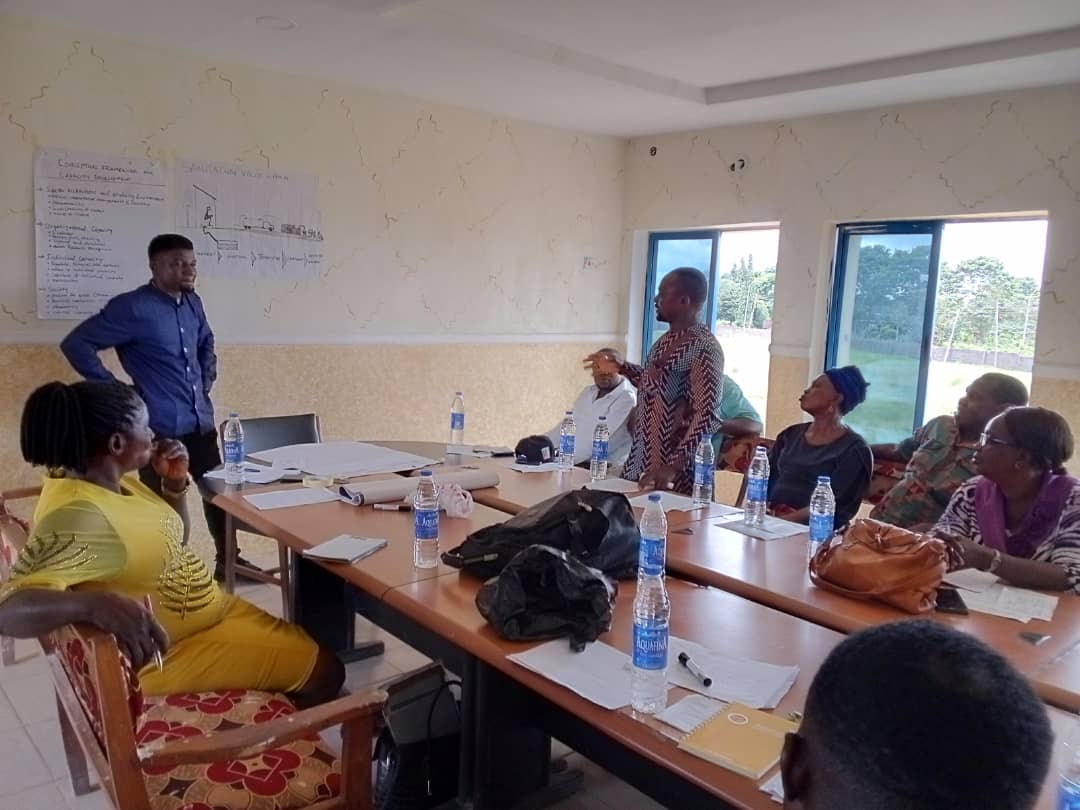
Capacity development plays a pivotal role in fostering sustainable progress towards ensuring availability and sustainable management of water and sanitation for all. This article presents several striking findings stemming from several recent capacity assessments and capacity development reviews I was involved in over the past three years. Tackling these issues will have transformative impact on the water, sanitation, and hygiene and development sectors, whilst the required effort is expected to be relatively low.

Photo 1: WASHPaLS#2: Focus Group Discussion Jigawa Nigeria. Photo credit Nanpet Chuktu

Finding 1: There is misalignment on what capacity means

There are diverse definitions and interpretations of this concept, which can impede effective implementation of interventions. Some speak of institutional capacity (enabling environment and organizational capacity), others speak about individual capacity (skills, competencies, abilities), and others only address the organizational capacity (knowledge management, leadership, systems etc) itself. This has a knock-on effect on what capacity development means. For some it is simply looking at the education of new professionals (i.e. TVET, universities). Others only equate the term capacity development with training, and others may indicate it is strengthening institutions (i.e. systems, policies etc.).

Very few stakeholders interviewed incorporate all four levels of capacity (enabling environment, organizational, individual, and society)[1] in their thinking. Many even seem to neglect the broader issues affecting capacity, such as workforce development and sustainable employment.

On top of this the terms capacity – building, – development and – strengthening are now used interchangeably to describe the process of increasing capacities. In academic literature the first two are explored and do in fact mean something different. The third is used by some to overcome a certain level of tension on the terminology inherited from the history of capacity development (will be described in following blog).

To address this, we need to develop a common understanding among stakeholders in water, sanitation, and or hygiene (perhaps broaden to include all development work) on what capacity means, and what effective capacity development then entails. This will create a solid foundation for future endeavours and collaboration.

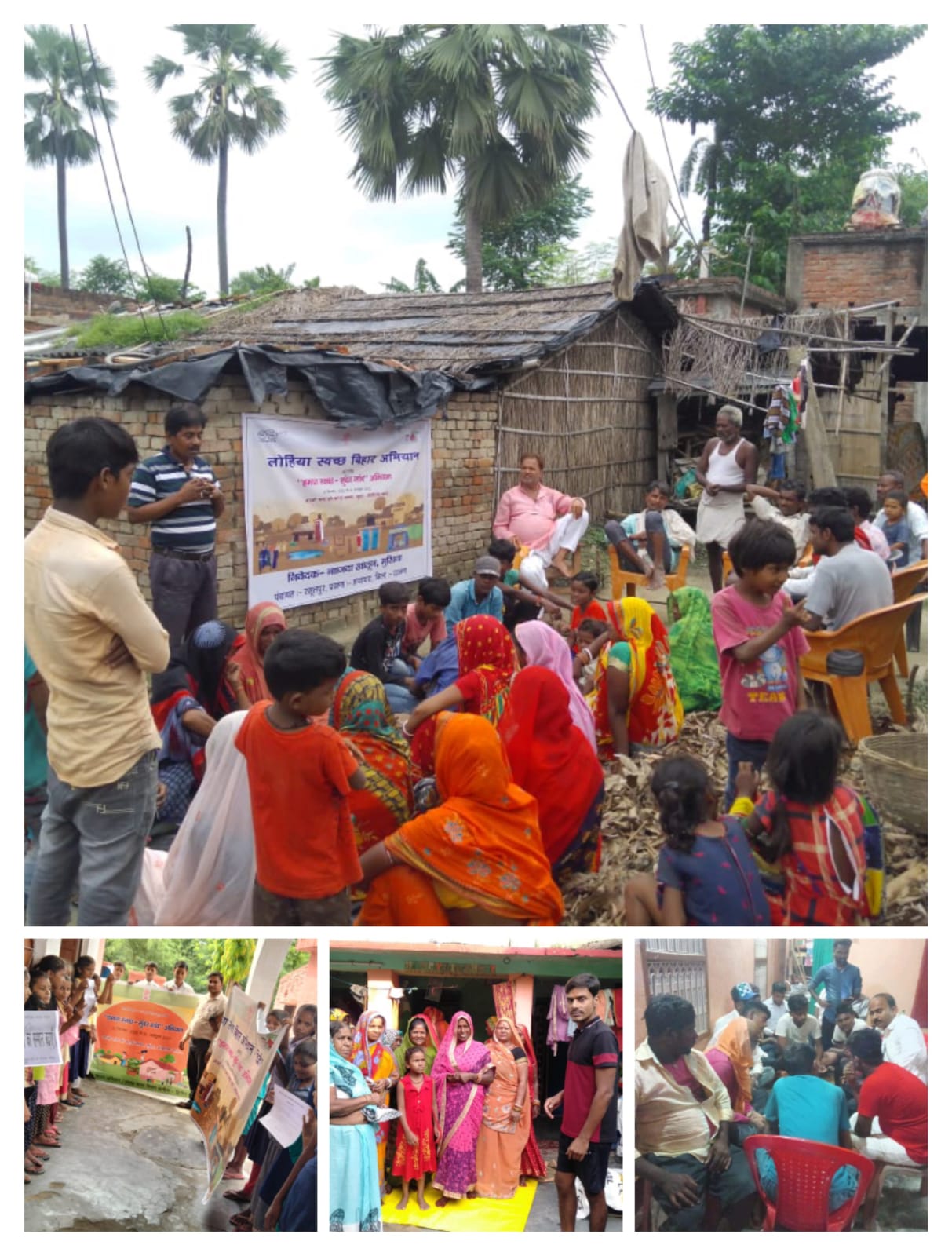
Photo 2: WASHPaLS#2: Field visit Bihar India. Photo credit: Anand Shekhar

Finding 2: Addressing the Job Shortage Dilemma

Strengthening capacity and education alone may not be sufficient if there is a lack of suitable job opportunities. While the importance and shortages of human resources have been identified (IWA, 2014; GLAAS 2012/ 2014/ 2017/ 2022; World Water Development Report, 2016; forthcoming USAID WASHPals#2), the existence or development of corresponding employment opportunities cannot be guaranteed.

The labor market, especially for rural sanitation, is largely reliant on (I)NGOs, or Development partners, who are normally in place on project basis. Where positions are present in the public sector, they are shared with other responsibilities (e.g. water, solid waste, building & constructions and or others) that are of higher priority. The positions in the informal private sector are dependent on demand (and or projects) and often do not (yet) guarantee full-time employment in the long run.

To address this, we need to address sustainable employment, and create avenues for career growth in the sectors. This can be supported by raising awareness about the need for job creation (and investment), but also by developing the proper policies, mandates and incentives that justify stakeholders to create the needed jobs.

Finding 3: Coordination and Communication gaps

There is insufficient coordination and communication among capacity development providers, development partners, and sector actors. The education sector often struggles to meet the needs of the WASH sector, while the sector itself is unable to effectively communicate its requirements. It was also highlighted by several key informant interviews in country studies that INGOs/ development partners working at country level often fail to coordinate (all of) their capacity development efforts (the forthcoming USAID WASHPaLS #2). This results in overlapping interventions in certain regions while leaving others with inadequate support. 

We need to make capacity development a collaborative endeavour. By integrating capacity development (jointly defined as per finding one) and in particular workforce development into the narrative, and into the national review meetings and or Water, Sanitation and or Hygiene plans. But also, by developing a platform for stakeholders to engage in dialogues and share insights on how to develop the needed workforce and supporting structures to deliver the country’s plans. By fostering collaboration and shared responsibility, we can harness the collective expertise and resources to enhance capacity development outcomes.

Photo 3: WASHPaLS#2: Validation workshop, Accra Ghana. Photo credit Bertha Darteh

Finding 4: Persistent challenges in capacity development efforts

Beyond, the higher-level findings (1-3), there are also persistent challenges in capacity development interventions themselves. The most important ones are:

  • Mismatch supply and demand:  This can be caused by focus on what supply has on offer rather than soliciting what the audiences need.
  • Time Constraints and Limited Application: Capacity development initiatives often fall short in allocating sufficient time for participants to fully engage in the learning process and apply acquired knowledge to their work. This issue is compounded when training or workshops disrupt regular duties, compelling participants to tackle additional workload.
  • Narrow Focus and Overemphasis on Training: Capacity development is still frequently equated solely with training. This neglects other ways of (adult) learning that have already been recognized by the education sector and (adult) learning specialists. This limited perspective also fails to address broader aspects such as organizational structures, enabling environments, and societal factors that significantly influence capacity development outcomes.
  • One-Size-Fits-All Approach: Many capacity development efforts suffer from a lack of consideration for the diverse target audiences involved, including politicians, managers, and technicians. Recognizing the unique interests, needs, and learner preferences of each group is pivotal in designing tailored interventions that foster meaningful impact.
  • Unidirectional Learning: Traditional capacity development activities often fail to harness the valuable expertise and input of participants. By disregarding the insights of practitioners and experts during the design and implementation of programs, the potential for an inclusive and collaborative learning environment is undermined.
  • Lack of (long-term) capacity development strategy: Many capacity development efforts lack a comprehensive strategy (also referred to as design) capturing the outcomes, outputs, objectives, audiences, learning methods approaches, actions at the four levels of capacity, and evaluation of the intervention. In addition, and relevant for our sectors with high turnover rates, is strategizing for the retention and utilization of acquired learning and knowledge through knowledge management practices.
  • Insufficient Knowledge of Effective Practices: A lack of information on successful but also failing capacity development practices poses a significant challenge to the advancement of this field. Collecting data on impact and application is essential to identify and share evidence-based strategies, enabling continuous improvement and enhanced effectiveness.

Every capacity development intervention needs to check these points and address them accordingly.

Guiding Principles for Effective Capacity Development:

Building upon the identified four challenges there is a need for overarching guiding principles for effective capacity development.

  1. Time and Application: Allow sufficient time for learning and provide opportunities for participants to apply their knowledge in their work. Consider local governance, mandates, and roles to minimize disruptions and extra workload.
  2. Holistic Approach: Expand the scope of capacity development to address multiple levels of capacity, including individual, organizational, enabling environment, and society. Incorporate diverse learning methods, such as peer-to-peer interactions, virtual tours, mentoring, communities of practice, and working groups.
  3. Tailored Solutions: Recognize the unique interests, needs, and approaches of different target audiences. Develop customized capacity development activities that align with specific requirements.
  4. Engage Specialists: Involve practitioners and experts in the design and implementation of capacity development programs. Their expertise will ensure a comprehensive design that considers different audiences, learning methods, and impact measurement.
  5. Inclusive Learning Environment: Value the input and expertise of participants to create an inclusive and collaborative learning environment.
  6. Evidence-based Approach: Emphasize the importance of measuring impact and collecting effective capacity development practices. This data-driven approach enables continuous improvement and knowledge sharing.
  7. Learning Mindset: Foster a culture of sharing experiences, success stories, failures and lessons learned to encourage ongoing learning and adaptation

Photo 4: WASHPaLS#2: Focus Group Discussions, Bihar India. Photo credit Anand Shekhar

By embracing these guiding principles, stakeholders involved in capacity development can address common errors and enhance the effectiveness of interventions in the water, sanitation, and hygiene sectors. Collaboration, coordination, and a shared vision are paramount in creating sustainable solutions and achieving meaningful impact. Let us, as water professionals and international development professionals, strive for innovative and context-specific approaches to capacity development that foster lasting change.

Do you have additional thoughts, ideas, or guiding principles to add? Reach out to me


Sources:

link to WASHPaLS 2: https://www.globalwaters.org/resources/assets/washpals-2-factsheet 

link to one of Wateraid projects I worked on (the others are internal to WaterAid)

https://washmatters.wateraid.org/publications/capacity-needs-assessment-for-regulators-in-water-sanitation-and-hygiene-how-to-guide

IWA. 2014. An Avoidable Crisis: WASH Human Resource Capacity Gaps in 15 Countries. [online] Available at: <https://iwa-network.org/wp-content/uploads/2015/12/1422745887-an-avoidable-crisis-wash-gaps.pdf&gt;

UN-Water GLAAS. 2022. GLAAS 2021/2022 Survey Data. https://glaas.who.int/glaas/un-water-global-analysis-and-assessment-of-sanitation-and-drinking-water-(glaas)-2022-report

UN-Water GLAAS. 2014. Investing in water and sanitation https://www.unwater.org/publications/un-water-glaas-2014-investing-water-and-sanitation

UN-Water GLAAS. 2012. The challenge of extending and sustaining services  https://www.un.org/waterforlifedecade/pdf/glaas_report_2012_eng.pdf

Lincklaen Arriëns, W. and Wehn de Montalvo, U., 2013. Exploring water leadership. Water Policy, 15(S2), pp.15-41.

UN World Water Development report. 2016. Water and Jobs. https://www.unwater.org/publications/un-world-water-development-report-2016

UNDP, 2008. Capacity Assessment Methodology User’s Guide. [online] Available at: [Accessed 23 February 2021]

About the author: Kirsten de Vette is independent consultant and facilitator working in water, sanitation, and hygiene (related) sectors for over 13.5 years. She is a sociologist with business background who connects people, facilitates knowledge and expertise exchange, facilitates partnerships, collaboration and or change processes and facilitates capacity assessment/ development. Her expertise is in capacity development, stakeholder engagement & facilitation of change processes and learning.

She wrote this blog to share recurring findings across her recent projects in the hope that it may support action in the future. The type of projects this blog is based on is 1) coordinating (or facilitated) the undertaking of capacity assessments at organizational, national and global level and 2) reviewing capacity development efforts (2020-2023). Over 300 grey and white paper reports were reviewed across these projects, 150 people directly interviewed, and 6 country capacity assessments coordinated (with 350 people). The author wants to thank WaterAid and Tetra Tech under USAID WASHPaLS #2 for these assignments and their openness for the findings to be re-used.  To take these learnings forward, she will be approaching key actors in the water, sanitation and hygiene sector to engage on these capacity development principles, and will write follow-up blogs. Stay tuned on her website and on  linkedin  

Strengthening accountability for water


This blog is based on the Accountability for Water action and research programme funded by the William and Flora Hewlett Foundation and managed by the Partnership For African Social and Governance Research (PASGR), supported by Water Witness International, KEWASNET and Shahidi Wa Maji. The full webinar summary is available here.

On 15th December 2022, a global webinar was held to discuss the critical importance of accountability for water. During the webinar, a partnership of organizations led by PASGR and Water Witness presented the findings of their Accountability for Water research program, which aimed to identify specific actions to strengthen accountability in different contexts. The programme partners involved in the research include KEWASNET, Shahidi Wa Maji, WaterAid, Water Integrity Network, End Water Poverty, IRC, and World Bank. Dr Pauline Ngimwa and Dr Muthio Nzau of PASGR introduced the webinar.

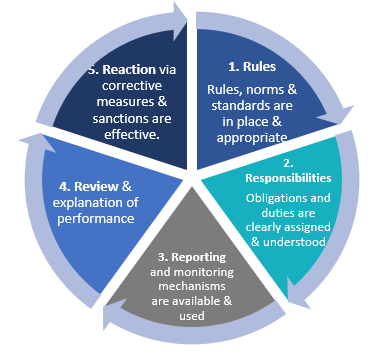
Dr Tim Brewer of Water Witness gave an overview of the research programme which started with the global review of evidence carried out in 2019-2020.  According to this review, 80% of the research papers on accountability found that interventions contributed to improved water, sanitation and hygiene (WASH) services and water resource management (WRM). Common lessons emerged with clear recommendations for action by governments, civil society, donors and others. While a key lesson is that accountability is context specific, an analytical framework based on the “5 Rs of accountability” can be used to identify specific challenges and opportunities within this framework – the ability to review, explain, and report performance against rules, responsibilities, and obligations, and to react constructively to improve performance through sanctions, incentives, or corrective measures.

The review identified a series of knowledge gaps and questions, including gender, donors, government responsiveness, measurement, and civic space. Based on this analysis, 14 Professional Research Fellows (PRF) working in the water sector in Ethiopia, Kenya, Tanzania, Zambia, Liberia, and Zimbabwe from a range of government, civil society and academic institutions investigated accountability issues in their own contexts. The full list of research topics and researchers is at the bottom of this blog.

The following key takeaways for governments, civil society organizations (CSOs), and donors were drawn from a compilation of recommendations from the research projects .Presenters included Dr Firehiwot Sintayehu (Addis Ababa University);  Eunice Kivuva (CESPAD); Chitimbwa Chifunda (WaterAid Zambia), The full list of research topics and researchers at the end of this blog demonstrates the depth and breadth of evidence underlying these recommendations .

Three key takeaways for governments      

  1. Laws, policies and accountability mechanisms are essential to support accountability. However, lack of clarity and consistency between sectors and levels, a lack of knowledge and capacity about the laws and mechanisms, and weak enforcement often undermine these. Therefore, the key recommendations are to: 
    • Harmonise, strengthen, and execute laws and policies for water resources and WASH at national and subnational levels,
    • Strengthen accountability systems and relationships:  mechanisms, standards, regulation, monitoring, stakeholder engagement and enforcement including for the private sector,
    • Build capacity on accountability, develop an accountable outlook and de-politicise accountability systems.
  2. Clear roles and responsibilities and better coordination: Accountability mechanisms are often let down by poor coordination, unclear or conflicting roles and responsibilities and widespread lack of enforcement. Key actions required are to:
    • Clarify institutional roles and responsibilities between actors for WASH and WRM – eliminate conflicts in functions,
    • Separate implementation and regulatory institutions,
    • Strengthen horizontal and vertical institutional and sector coordination across water users through enforceable accountability systems and mechanisms.
  3. Informed engagement with citizens and users: All the researchers found that effective engagement with citizens, citizen groups and water users is essential for accountability but wanting. To address this governments need to:
    • Introduce or strengthen accountability mechanisms such as public hearings and citizen oversight panels,
    • Provide Information, education, and mobilisation for communities ensure access for marginalised groups,
    • Support civil society to vertically integrate social accountability initiatives into decision making at different levels,
    • Support coordination amongst actors to increase the capacity of rural women and marginalised communities to participate in problem analyses and decision-making processes.

Three key takeaways for civil society,

  1. Activate and institutionalise effective citizen oversight mechanisms.  As well as the government actions to strengthen engagement with citizens and water users Civil society organisations need to support this, they should:
    • Advocate for more legally institutionalised avenues of citizen oversight,
    • Ensure that citizens’ monitoring and advocacy initiatives are vertically and strategically integrated in decision making at all levels,
    • Carry out budget tracking throughout the whole cycle from planning to expenditure.
  2. Build capacity, empowerment and organise communities. A very common cause of weak accountability is the low levels of knowledge and capacity of water users about their rights, the laws and responsibilities around water provision and resource management, and how they can use accountability mechanisms. Civil society organisations need to:
    • Build capacity on accountability mechanisms and support their use,
    • Strengthen grassroots user groups and associations to participate in decision making,
    • Support civil society and water users, especially women, to move up the Participation ladder from token participation to active participation,  decision making, and control.
  3. Build on what works, like budget tracking, evidence-based advocacy, litigation. There is growing knowledge about successful strategies for strengthening accountability. This research has helped to strengthen a community of practice on accountability and identify examples that others can learn from. Key lessons for civil society are to:
    • Strike a balance between constructive and critical approaches to advocacy,
    • Bring strong evidence for advocacy,
    • Raise awareness of WASH and WRM issues amongst all stakeholders including citizens, government and development partners.

Four key takeaways for donors and private sector

  1. Support governments and CSOs to strengthen accountability frameworks, monitoring and enforcement. Donors can provide financial and political support for the actions for governments and civil society mentioned above. They need to:
    • Support governments on WASH and WRM accountability actions as above,
    • Support CSO actions as above,
    • Support good governance and democratic space for citizens’ voice. Citizens’ engagement is critical to enhancing accountability,
    • Invest in women’s participation and reaching marginalised people,
    • Strengthen political will for accountability.  Donors can influence government priorities,
    • Invest seriously in sustainability.
  2. Water investments need to go beyond projects. They need to: 
    • Go beyond procedural & financial accountability. For example strengthen basins planning to ensure responsible industrial water use,
    • Support budget tracking through the cycle – budget tracking is an effective tool to improve budget performance,
    • Invest in appropriate technology to support accountable and responsive services, For example digital monitoring of services and water treatment technology to prevent pollution of water resources.
  3. Enhance due diligence. Researchers found examples of very weak accountability in economic uses of water by industrial and agricultural actors. Donors and private investors can help strengthen accountability by requiring:
    • Stronger due diligence of companies in relation to water use,
    • mandatory reporting on water,
    • promoting and enforcing the Polluter pays principle
  4. Be accountable!  Donors are major investors in the water sector but often do not fulfil their commitments. For example in Zambia the WASH sector is 80% funded by Donors but only 29% of that was tracked through the budget.
    • Accountability Mechanisms are needed to enable Governments and CSO to hold Donors accountable for their commitments. 

Discussion and next steps

During the webinar, Sareen Malik from KEWASNET, emphasised the importance of legislation to strengthen accountability mechanisms. NGOs can play an important role to advocate for this and bring stakeholders together in Joint Sector reviews as a critical mechanism for accountability, monitoring and reporting. 

Martin Atela of PASGR reflected on the role of politics in undermining accountability and suggested that political interference can be mitigated by greater clarity on roles and boundaries of ministerial responsibilities. He also emphasized the need to find ways to work with political elites so they see the value in change

Next steps involve joining the community of practice on accountability for water, to continue learning from experience and to advocate for commitments to strengthen accountability.

Research partners are organising an event at the UN Conference on Water 2023: “Where is the accountability”  on Tuesday 21st March, driving a greater emphasis on governance and accountability. This needs to be front and centre of all discussion.

The Research programme is managed by the Partnership for African Social and Governance Research (PASGR) and Water Witness International with financial support from the Hewlett Foundation.

More information about the research is on the website including findings from the global review of evidence, recorded presentations from webinars at World Water Week 2022 in Stockholm, presentations from country specific webinars, and summary briefings of all the research topics. www.accountabilityforwater.org

List of Research topics, Professional Research Fellows and host institutions

Ethiopia

  • Government Dynamics of Accountability in Ethiopia, Mulugeta Gashaw, Water Witness Ethiopia
  • Political Economy Analysis of water governance, Asnake Kefale
  • Risks and opportunities for growth in Ethiopia’s textile and apparel industries,  Esayas Samuel
  • Wastewater management in upstream catchment of ARB, Yosef Abebe, Addis Ababa University and Ministry of Water and Energy
  • Accountability of the One WASH National Programme of Ethiopia, Michael Negash, PSI
  • Towards a sustainable management of faecal sludge: the case of Addis Ababa, Tamene Hailu
  • Alwero Dam governance, Firehiwot Sentayu, Addis Ababa University

Kenya

  • Government Dynamics of Accountability in Kenya, Dr Tiberius Barasa
  • Enhancing coordination for accountability and sustainability in water resources management; a case of Kerio sub-catchment in Baringo rift valley basin. Eunice Kivuva (CESPAD)
  • Kakamega County Water and Sanitation Company, Kenya.  Mary Simiyu, Kakamega Water Service Provider
  • Rural Women and water decisions in Kwale and Kilifi Counties, Felix Brian, KWAHO
  • Strengthening accountability in solid waste management through incentives and penalties in Naivasha, Kenya, Naomi Korir, Sanivation

Tanzania

  • Government Dynamics of Accountability in Tanzania, Dr Opportuna Kweka
  • Assessment of Gender Power Relations and Accountability in Community Based Water Supply Operators in Selected Water Basins of Tanzania, Pitio Ndyeshumba, Institute of Lands
  • Regulatory and Legal Accountability for Water Pollution in Tanzania: The Case of Msimbazi River Basin in Dar es Salaam City, Mwajuma Salum, University of Dar Es Salaam
  • Opportunities and challenges of accountability claiming in Tanzania’s water sector, Dr Parestico Pastory, University of Dodoma

Zambia

  • What makes budget advocacy an effective accountability tool, Bubala Muyove, NGO WASH Forum and Chitimbwa Chifunda, WaterAid Zambia

Zimbabwe

  • Assessing the effectiveness and impact of statutory accountability mechanisms to improve water service provision and catchment management, Mable Murambiwa, Combined Harare Residents Association, Zimbabwe

Liberia

  • Accountability Challenges in The Liberia Water-Supply Sector: LWSC in Robertsport and Kakata, Timothy Kpeh, United Youth for Peace,  Liberia

About the author:  This blog is authored by Louisa Gosling, freelance specialist in accountability, rights and inclusion in WASH, previously working with WaterAid and as chair of RWSN.

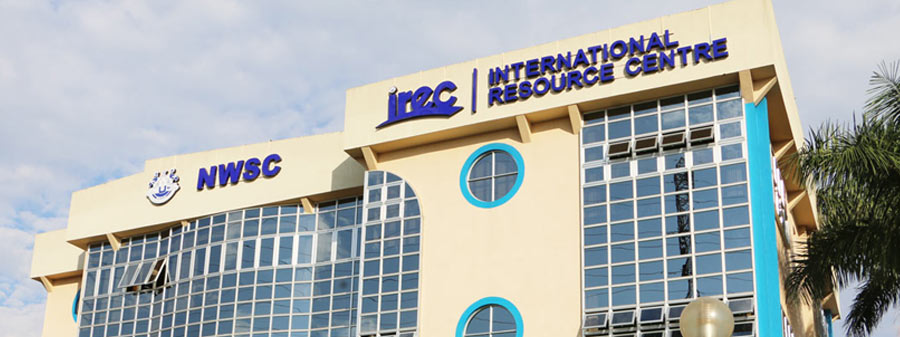
African Water and Sanitation Academy (AWASA): The International Resource Centre (IREC) of NWSC, Kampala, Uganda ; your Hub for Africa

AfWA RELEASE

As part of the implementation of its Business Plan 2018-2022, the African Water Association (AfWA), will be structuring the coordination of all its training activities in the framework of the operationalization of the African Water and Sanitation Academy (AWASA). This will involve setting up a coordination hub headquartered at the International Resource Center (IREC) of the National Water and Sewerage Corporation (NWSC) in Kampala- Uganda, from which training shall be deployed in different Operational training centers managed by its members in the regions such as:

  • Rabat-Morocco, at ONEE’s International Institute for Electricity and Potable Water
  • Ouagadougou-Burkina Faso, at ONEA’s Training Center for Water Works; the National Office for Water and Sanitation
  • Kampala-Uganda, at International Resource Center (IREC) of National Water and Sewerage Corporation (NWSC)

Other centers are in the process of being identified.
To initiate the process of creating AWASA, AfWA Executive Board made the resolution, during the ordinary session held on July 19, 2018 in Kampala- Uganda, to set up a Working Committee led by Professor Hamanth KASAN, President of AfWA Programs Committee. This committee is expected to develop and coordinate all procedures to provide AWASA with an updated Business Plan, identify all partners including universities, centers of excellence in the water and sanitation sector in Africa and in the world, development partners/donors, African water organizations, etc. in order to ensure that AWASA Director’s recruitment process is initiated by December 2018, ensuring the start of AWASA activities by January 2019.

photo credit: NWSC/AfWA

Getting groundwater off the ground

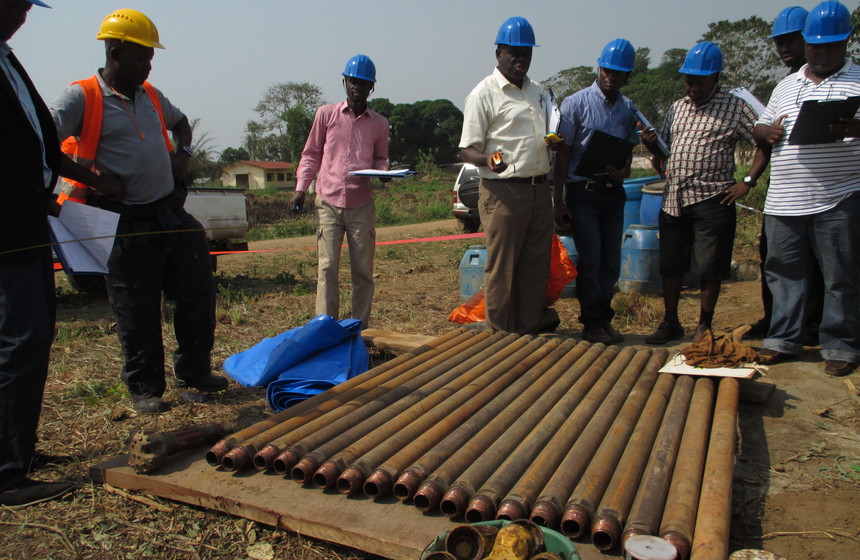
How do we  raise capacity for borehole drilling and its management globally? If everyone is to have access to safe and affordable drinking water by 2030, in line with the UN Sustainable Development Goals, detailed attention is required for the siting, drilling and installation of boreholes in every single project in every country. Alas, this is not always the case. The result is that many boreholes fail within a very short time.

RWSN members are telling us that they want more in-country training.  The article linked below provides some suggestions. Do you have ideas or incentives for government and private enterprises invest in skill development in the groundwater sector, and in the rural water sector at large?

To find out more:

http://www.geodrillinginternational.com/geodrilling/issue/1179329/getting-groundwater-ground

TrainingdrillingsupervisorsinSierraLeonein2014-860x560

Problems need problem-solvers

Capacity Development is one of those buzz-phrases that gets used and abused almost as much as Sustainable Development. Capacity has various definitions, but for me, one of the clearest is:

“Capacity is the ability of individuals, groups, institutions and organizations to identify and solve problems over time”

(Morgan, P. 1993 quoted on p.7 of Capacity development for improved water management, UNESCO-IHE 2009)

A shortage of capacity – the ability to identify and solve problems – is found in rural water supply across the world, from issues like pump corrosion, to lifecycle cost recovery to making the Human Right to Water a reality.

Problems become a lot easier where there are competent champions or – even better – strong teams who are able and willing to do a good job, even in adverse circumstances.

That’s why I have come to the annual meeting of UNDP Cap-Net, – at the invitation of its director, Dr Themba Gumbo. Cap-Net is a global network of capacity development networks that support capacity development in the water sector by providing technical and match-funding support to water-related training courses. The meeting was hosted by the Spanish cooperation agency, AECID, at their exceptional training facility in Cartagena, Colombia.

The main theme of the week was to explore how to use online and ICT methods to deliver courses and support learners. The centre-piece is Cap-Net’s Virtual Campus. The first three courses, which ran successfully earlier this year, were:

The courses work in similar way to a Massive Open Online Course (MOOC), but requires a bit more commitment and if you want to join you have to submit a short CV and letter explaining why you want to do the course.

The meeting was also an opportunity to meet coordinators from some of  Cap-Net’s 22 regional and country networks from all over the world and to explore ideas for developing face-to-face training events. From this I got a lot of ideas and contacts to explore further.

There were other partners there as well, including CAWST, Water Integrity Network (WIN), Global Water Partnership (GWP), Sustainable Energy for All, the UNDP Water Governance Facility at SIWI, Water for People, and SDC Global Programme Water Initiatives so it was good to meet them and find out about the interesting work they are doing.

Another topic, was the potential of serious games, and two examples were presented:

  • Diana Rojas (SDC) presented an mobile game called Aventura Yaku for helping children (and grown-ups!) understand water and ecosystems services.
  • Gareth Lloyd (DHI) presented an online game called Aqua Republica, and we had a group competition on a version developed specifically for Cap-Net. Aiming at an audience of 13-18 year olds, behind the attractive graphics and game play is a direct link to detailed hydrological models in Denmark.

While great for introducing new audiences to the importance of water resources, don’t expect an RWSN game app for rural water any time soon. I’m not convinced that is it the right solution for what we want to do, but I like these initiatives very much.

Over the course of the rest of the week there were presentations and discussions on the importance of innovating and keeping up with the fast evolving ways of engaging new audiences through communications technology – whilst not forgetting the importance of hands-on, face-to-face learning.

As the week ended, I concluded that here are a group of people – and organisations – that RWSN should collaborate with if we are to fulfil our mission of raising the level of quality and professionalism of rural water supply services.

Watch this space…