by Tapio S. Katko, Jarmo J. Hukka, Petri S. Juuti, Riikka P. Juuti and Eric J. Nealer.
Illustrations: Pertti O. Väyrynen. Publisher: IWA Publishing, London.
Is bottled water better for you than tap water? Is the pollution created by wastewater treatment plants a major issue? Is privatisation the best solution for more efficient water use? These are just a few of the myths busted in Dispelling Myths About Water Services.
In any society, water and wastewater systems are of fundamental importance to the development of communities and the well-being of both people and the ecosystem. Unfortunately, this fact has been reinforced by the COVID-19 pandemic, by all manner of natural disasters, and by recent armed conflicts around the world. In such situations, clean water and sanitation are among the first things that need to be organised.
In this book, internationally renowned experts examine 21 common misconceptions regarding water supply and wastewater services, dispelling the myths by drawing on their global insights and avoiding technical jargon, while simultaneously raising questions of concern relating to water services.
Access to clean water and safe sanitation is essential for life. Without it, our time on this planet becomes dangerously short. People do not necessarily think about the challenges relating to water services, but the message is clear: to build sustainable water services, proper rules, accountable and responsive leadership, and well-informed stakeholders are vital, alongside resilient organisations and robust physical systems.
Originally published in Finnish, this English edition has been completely rewritten and includes examples and references from countries across the world. Original illustrations bring the content to life.
Whether you’re a water professional, policy maker, or environmental enthusiast, Dispelling Myths About Water Services helps sort the fact from the fiction regarding our most vital resource: water.
The book is freely available as an e-version: DOI: https://doi.org/10.2166/9781789064162 and a printed copy can be bought as well from the website for 20% off seasonal offer for the printed version by the code “DMAWS25”, Valid until 21st Dec 2025.
Blog by Jeff Tan, Aga Khan University – Institute for the Study of Muslim Civilisations (AKU-ISMC). Featured photo: Hunza Valley, Gilgit-Baltistan, Pakistan, Jeff Tan
The limitations of community-based management (CBM), and the conditions for its success, were identified as early as 1990 in a World Bank discussion paper. From very early on, it was recognised that communities needed ongoing external support from donors, NGOs and governments. However, management training, capacity building, technical input, financial assistance, and supportive policy and legislation necessary to create an “enabling environment” for successful community management rarely materialised. This raises a number of questions: Why has this external support not been forthcoming? Why has community management continued to be promoted despite the absence of support and lack of sustainability? Why has there been ‘a reluctance amongst academics and practitioners to challenge the CBM model’?
To answer these questions requires some appreciation of the wider discourse on development and in particular the anti-state rhetoric of neoliberalism that has sought to downsize, decentralise and ultimately bypass government. This has had the effect of fragmenting and hollowing out the state while at the same time prioritising markets and the private sector. Given that there is no profit to be made from delivering water services to low-income households that cannot afford to pay cost-covering tariffs, it is not surprising that previous state failure was replaced by market failure, with the private sector failing to step in to deliver water services.
One obvious solution would have been to address the sources of state failure, specifically underfunding, fragmentation and the loss of technical capacity. Instead of rebuilding state capacities, the distrust of, and ideological aversion to, the state has shifted the responsibility of water services from governments to local communities, built around the narrative of community participation, empowerment and self-help, with communities expected to take responsibility of their circumstances. It is hardly surprising then that community management is seen to enable ‘government officials and donors alike to abdicate responsibility for ensuring long-term sustainable water services’.
The recent turn against community management, not least by the World Bank, shows the persistence of CBM problems. But the Bank’s promotion of “professionalization” of water services as an alternative reflects a failure to examine the underlying tensions and problems in the CBM model and the wider delivery of rural water services, and reinforces an anti-state bias and blind faith in private sector participation. There are three structural tensions in the CBM model that have been noted in the literature and that need to be more cogently articulated.
The first tension is between access to water and cost recovery (a cornerstone to the sustainability of CBM), with low tariffs (to ensure access to water) unable to cover operating costs, let alone major repairs and capital refurbishment. Compounding this is the inability of households to pay already very low tariffs, with irregular, if any, tariff payments or collections.
The second tension is the long-term needs of water services and the short-term horizons of donors and NGOs. Only the state has a sufficiently long-term horizon to provide the indefinite support needed to sustain community management and ensure ongoing water services. But this added burden on the state for this comes at a time when the state in lower middle income countries (LMICs) is severely constrained financially and technically, having had fiscal discipline imposed on it and broken up and hollowed out in the name of decentralisation and localisation. If governments do not have the capacity to provide the so-called “enabling environment” to support community management, as has been the case since 1990, then a model that requires continued external support that is not forthcoming cannot be sustainable, “islands of success” notwithstanding.
Finally, and perhaps most significantly, the funding model for CBM is short-term, project driven (rather than programmatic or cross-sectoral) and fragmented, where the needs of water services are indefinite, with the choice being between reaching a greater number of underserved communities in the short term or serving fewer communities but with longer term support and greater sustainability. Longer-term support is especially needed because communities cannot even finance major repairs let alone capital refurbishment needed at the end of the lifespan of water infrastructure (typically 15-20 years) and to expand services to cater for population growth.
These structural features of CBM can be illustrated in the constraints faced by an otherwise successful delivery of clean drinking water through piped water networks to 459 settlements serving around 48,000 households and over 400,000 people under the Water and Sanitation Extension Programme (WASEP) in Gilgit-Baltistan, northern Pakistan. The challenges of sustaining and scaling up this textbook implementation of community management are reported in the results of a two-and-a-half-year British Academy-funded research involving a large-scale household survey of over 3,000 households, interviews with water management committees and a review of financial records, focus group discussions, an engineering audit and water quality tests.
Unlike qualitative and selective case studies, the combination of quantitative and qualitative analysis here presents important insights into the resilience but also limits of communities in sustaining water services, particularly given weak state capacities and the lack of external support. It also highlights the importance of “hardware” (engineering and water infrastructure) in sustaining water delivery, and best practices in the implementation and delivery of water services that can transcend some of the limitations of the CBM model.
The views and opinions expressed in this blog post are those of the author. They do not necessarily reflect the views of the Rural Water Supply Network (RWSN) or its Executive Committee.
Jeff Tan is a Professor of Political Economy at AKU-ISMC and was Principal Investigator on a British Academy grant on the sustainability and scalability of community water management in Northern Pakistan.
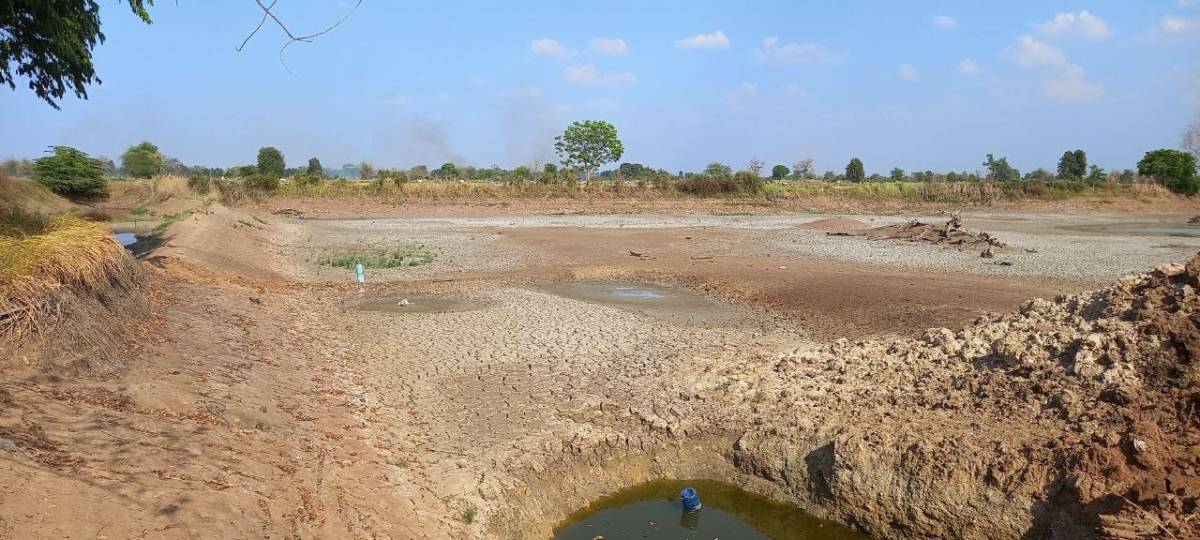
Image: Pond dried up in Banteay Meanchey province.
by Amandine Muret, Chief Partnerships Officer, 1001fontaines, RWSN Member Organisation Am.muret@1001fontaines.com
As Asia grapples with an intense heatwave, exacerbating the already acute lack of access to safe drinking water for vulnerable communities, the call for innovative and resilient water supply solutions becomes increasingly urgent. The World Water Forum, held in Bali from May 18 to 24, brought together governments and experts from around the world, including 1001fontaines, a global NGO distinguished by its two decades of on-the-ground experience in providing safe water to communities in challenging contexts.
A Water Crisis Exacerbated by Climate Change
South and Southeast Asia are currently experiencing record temperatures. In Cambodia, where the mercury has soared to over 40°C several times, levels unprecedented in 170 years, the situation is alarming. This extreme heat wave increases the vital need for drinking water while compromising access to uncontaminated water sources, crucial to meeting this need. In rural areas, the majority of inhabitants still rely on self-supply water solutions, such as wells or ponds – with increasingly intense droughts and floods due to climate change, vulnerable populations see their water sources affected, with impacts on their resilience and health.
The World Bank recently estimated that $36.1 billion would be needed to develop missing water access infrastructure in Asia (source: “Funding a Water-Secure Future: An Assessment of Global Public Spending” report, published in May 2024). Climate change, impacting the accessibility and quality of water resources, requires even larger investments to establish sustainable and efficient supply systems in the face of new constraints, particularly in maintenance and treatment.
In development contexts, where financial and technical resources are limited, and existing service providers already struggle to cover maintenance costs due to low household purchasing power, the idea of having a tap of safe drinking water in every home seems increasingly out of reach. Innovative approaches like those proposed by 1001fontaines appear essential to avoid regression in achieving Sustainable Development Goal 6: ensuring universal access to safe water.
Social Innovation to Address the Vital Need for Safe Drinking Water
For over 20 years, 1001fontaines has been designing and deploying sustainable solutions for access to safe drinking water for vulnerable populations in Asia and Africa. By focusing on the needs of vulnerable communities, the organization emphasizes the quality of the water produced and the strengthening of local capacities through social entrepreneurship.
In concrete terms, 1001fontaines installs decentralized water treatment stations (“Water Kiosks”) and trains local entrepreneurs to deliver the produced drinking water directly to households and schools, all in reusable 20-liter bottles.
This service, offered at an affordable price, now reaches a million consumers daily across rural Cambodian communes, where the model was initiated, while covering its operating costs. After 20 years, 90% of the deployed Water Kiosks are still operational, and consumer satisfaction reflects sustainable behavior change benefiting public health improvement.
Sharing Experiences at the World Water Forum
At the World Water Forum in Bali, 1001fontaines will share the lessons learned from its innovative approach. With operations now expanded to four countries (Cambodia, Madagascar, Vietnam, Bangladesh), the organization has demonstrated the resilience of its model in the face of development and climate change challenges.
Unlike traditional water supply systems, which aim to provide between 50 and 100 liters of water per person, often costly to implement in sparsely populated areas, 1001fontaines focuses on a more targeted consumption, between 1 and 3 liters of safe water per person per day. This cost-effective approach ($15 subsidized per beneficiary) reduces pressure on water resources while offering better quality control. By using reusable bottles delivered directly to homes, the distribution model is less susceptible to infrastructure aging or climate-related damage, with maintenance focused on water treatment facilities.
Another key advantage is adaptability. In Cambodia, 4 regional laboratories monthly monitor water quality at the 330 active sites, allowing the identification of quality changes, often localized and related to the effects of climate change, and enabling the local technical team to implement targeted and low-cost mitigation measures.
Amandine Chaussinand, General Manager of 1001fontaines’ local entity in Cambodia, Teuk Saat 1001, testifies: “We have achieved remarkable results over two decades of operations. We are proud to share them with academic institutions, development financing institutions, and governments at the Forum in Bali because we believe that better consideration of alternative water supply systems, such as bottled water, could accelerate access to safe water for the benefit of populations facing the impacts of climate change.”
Amandine Muret, Chief Partnerships Officer, emphasizes that “Collaboration with local authorities is a key factor in the success of 1001fontaines’ programs, as is the mobilization of development aid to finance infrastructure construction and capacity building, at the heart of the sustainability of the services implemented.”
As the G7 recently announced the creation of a global coalition to address the global water crisis, high-level political dynamics could promote exchanges of successful experiences and stimulate, in the coming years, social innovations in the field of access to safe drinking water. 1001fontaines intends to contribute at its level by continuing to grow its impact.
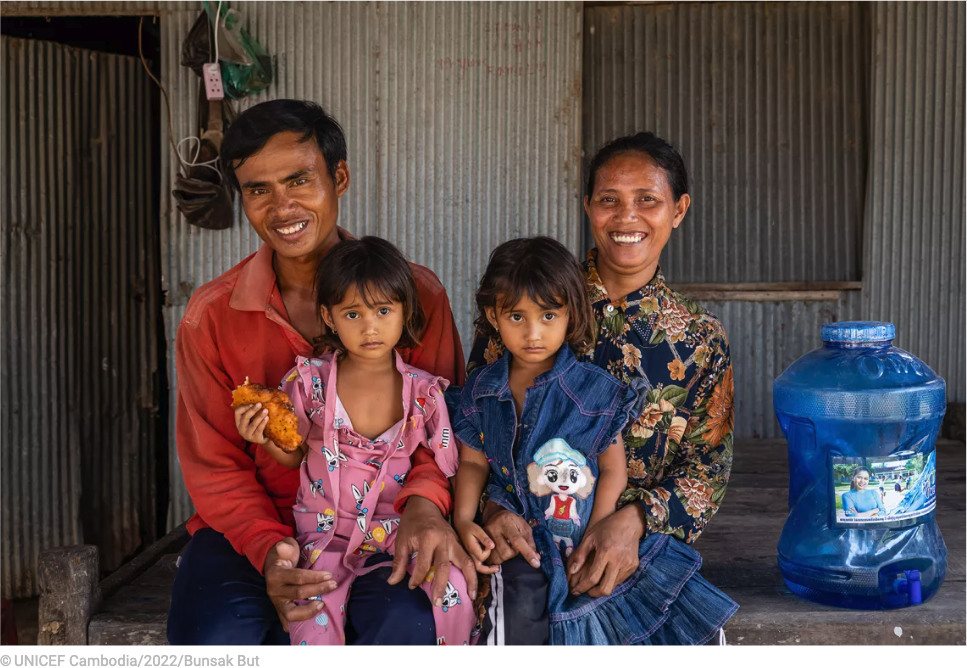
Choum Sophorn poses with her husband and twin four-year-old daughters in her home next to the 20 litre drinking water bottle that is delivered to her home every three days.
Teuk Saat 1001’s entrepreneur stands next to the UV filtration system and holds up some freshly filled bottles, ready to be sealed before delivering directly to customers in Kouk Pou commune.
About: For two decades 1001fontaines have worked to meet the needs of underserved communities through resilient water purification infrastructure and affordable and convenient services. We aim to encourage long-term behavior change and are proud that a million consumers across four countries in Asia and Africa have adopted our safe drinking water solutions.
Our 2030 ambition is to extend our impact by proving the relevance of our safe drinking water solutions in five countries and ensuring all our local partners are on track to reach financial viability at scale.
UNICEF estimates that one billion children globally are at “extremely high” risk of suffering from impacts of the climate crisis. The need for action has never been more urgent. The climate crisis is a children’s rights crisis.
Since the adoption of the United Nations Convention on Rights of the Child (UNCRC) in 1989, unprecedented gains have been made for children. However, the UN Intergovernmental Panel on Climate Change (2018), Special Report on Global Warming warns the progress risks undermining the escalating climate crisis, which poses an acute threat to children’s survival, development and well-being.
Short-term Thinking as a Triple Threat of Water-Related Crisis is Endangering the Lives of Africa’s Children
On August 2023, the United Nations Committee on the Rights of the Child affirmed children’s right to a clean, healthy and sustainable environment under General Comment No. 26. During the 2023 Human Rights Council the United Nations High Commissioner for Human Rights Mr.Volker Türk, deplored that despite all the alarm bells going off, leaders were still not acting with the determination required and getting “stuck in the short term”.
“If this is not a human rights issue, what is?”, he asked.
Africa is facing a water catastrophe. While the climate and water-related shocks are escalating globally, the risks compound most for children in Africa; 40% of Africa’s population was under 15 years old in 2022. Children in 98 percent of African countries are at the highest risk from a convergence of three water-related threats: Inadequate water, sanitation, and hygiene; Its related diseases; and Climate hazards. This is most acute in the Central African Republic, Chad, Nigeria, Guinea, Somalia, and Guinea-Bissau making West and Central Africa one of the world’s most water-insecure and climate-impacted regions.
by Afsana Afrin Esha, REACH Research Associate and PhD student at Durham University, re-blogged from REACH
Every year, the southwestern coastal zone of Bangladesh faces weather-related disasters, worsening a perpetual drinking water crisis. Cyclone Sidr in 2007 and Cyclone Aila in 2009 caused widespread destruction. While people were still recovering, Cyclone Amphan caused heavy damage to infrastructure and contamination. Saltwater intrusion due to cyclones and storm surges is having devastating consequences on groundwater and freshwater resources. Different water treatment options and alternative strategies are being applied by the local government institutions, NGOs and aid agencies, whilst informal or small water service providers too, are on the rise, addressing critical gaps in public investments in the rural water sector. However, in the face of rising climatic changes along with other socio-political factors, water shortages persist. In this short piece, I portray the effects of disaster on drinking water sources to understand the nuances of climate resilience.
This year we are celebrating 30 years since the Rural Water Supply Network was formally founded. From very technical beginnings as a group of (mostly male) experts – the Handpump Technology Network- we have evolved to be a diverse and vibrant network of over 13,000 people and 100 organisations working on a wide range of topics. Along the way, we have earned a reputation for impartiality, and become a global convener in the rural water sector.
RWSN would not be what it is today without the contributions and tireless efforts of many our members, organisations and people. As part of RWSN’s 30th anniversary celebration, we are running a blog series on rwsn.blog, inviting our friends and experts in the sector to share their thoughts and experiences in the rural water sector.
This is a guest blog by RWSN Member Lilian Pena P. Weiss based in Washington DC, USA.
I started working in the rural water sector in 2002, in my very first assignment with the World Bank, when I was part of a team assessing the social and environmental impacts of rural water systems in the dry northeast part of Brazil. As a recent engineering graduate, I was very much focused on the infrastructure – but I quickly learned that sustainable rural water services need to take into account a lot more than that. I remember vividly exchanging with the rural users on how to organise the community associations for managing water services, discussions on tariffs, Operation & Maintenance, and support from local governments amongst others. Since there, I never stopped working on delivering rural water services
In the early 2000s in Latin America, I worked on many projects in rural water services to indigenous and Afro-Latin communities that had been financed by the Inter-American Development Bank and the World Bank. Through those, I gained a better understanding of how these communities value water, the related cultural connections, and their willingness to have and pay for better services! This underlined the importance of working on the social side, especially behavior change and communications to make rural water services sustainable. At the time, the Demand-Responsive Approach (DRA) was the mantra with rural water practitioners! Some of the lessons learned from my engagement with Indigenous communities in Latin America and the Caribbean were later captured in this publication.
Around 2010, we started to develop a joint rural water information system, SIASAR, with Honduras, Nicaragua and Panama, which has since turned into a rural water platform across 14 national or subnational governments, from Costa Rica and Uganda to Kyrgyzstan. Developing SIASAR has been one of the most interesting and rewarding initiatives of my professional career so far; we worked hand in hand with multiple countries to develop – from scratch – a new governance and structured information system that focused on service delivery and sustainability with active participation from local users up to central governments harmonized across a wide range of countries.
It was around 2012 that I became involved in the Rural Water Supply Network. At the time, I was co-chairing the internal rural water thematic group of the World Bank together with my colleague Miguel Vargas. The interactions with the RWSN I believe were a win-win for us and for them. The RWSN with its powerful outreach and strong presence in Africa could deepen our dialogue and understanding of how to reach the last mile in rural water supply and give us the opportunity to exchange lessons and initiatives with so many institutions working on the same topic. At the same time, the World Bank’s global perspective also helped the RWSN to expand beyond Africa.
Later in 2015, I was fortunate to join the World Bank’s team in Vietnam, to lead a new generation of rural water projects where financing was fully based on results. It was fascinating to evolve our dialogue from delivering tanks and connections to really focusing on ‘how can we make sure these systems will deliver 24/7, reliably, with O&M cost recovery and sustain over the years? The work started in Vietnam has scaled up globally; this blog gives a good overview of the lessons learned from this approach in Vietnam. To date that the World Bank has supported more than 20 programs for results in the water sector globally.
Although so much progress has been achieved in rural water over the last 20 years, from an old top-down, infrastructure-based approach, to the evolution of the CBO-based models with institutionalized backstopping support, and growing Private Sector Participation, the challenges ahead remain complex. Not only do we need to continue working to ‘leave no one behind’,we also need to promote better and more efficient levels of service (ie. household connections, 24/7 supply, financial sustainability, etc). Moreover, climate change and its impacts on water security are perhaps the greatest challenge for this decade. Rural systems and their water sources are naturally more vulnerable to extreme climate events. The role of Development Partners, including the RWSN, become increasingly important to work with Governments, rural water practitioners, academia, and the private sector to develop and deploy effective solutions and advocate for the necessary funding to ensure universal, sustainable and climate resilience rural water services.
About the author: Lilian Pena P. Weiss is a Lead Water Supply and Sanitation specialist at the World Bank, based in Washington DC, USA. She has been working for over 20 years with World Bank operations, in Latin America countries, in East Asia and more recently in South Asia. She has led over 20 World Bank-financed investment projects in the water and sanitation sector, mostly focused on the rural water and sanitation sector. Lilian has also worked with water sector reforms, institutional strengthening of water utilities, environmental sanitation topics, community-driven development (CDD), results-based approaches and water security. She was the co-chair of the World Bank’s Rural Water Thematic Group from 2012 to 2015. Lilian is a Brazilian national, civil engineer, has a master in water resources management and environmental technology, and has a MBA in financial management.
Did you enjoy this blog? Would you like to share your perspective on the rural water sector or your story as a rural water professional? We are inviting all RWSN Members to contribute to this 30th anniversary blog series. The best blogs will be selected for publication. Please see the blog guidelines here and contact us (ruralwater[at]skat.ch) for more information. You are also welcome to support RWSN’s work through our online donation facility. Thank you for your support.
Photo credits:
Inauguration ceremony of a new water system in Panama. Photo credit: Lilian Pena P. Weiss.
SIASAR information system. Each point represents a rural community and the colour defines the status of rural water services.
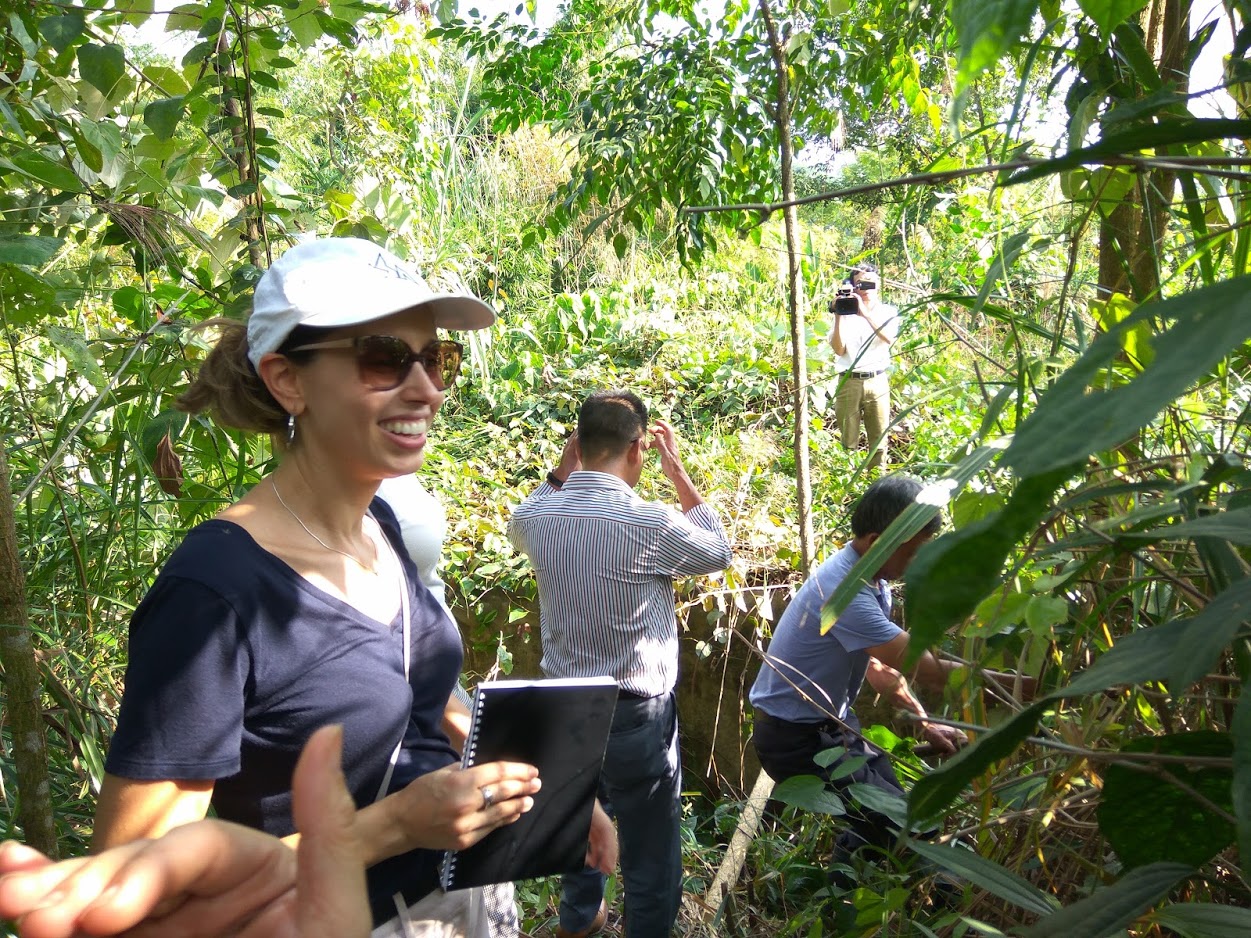
Visiting a rural water source in Vietnam. Photo credit: Lilian Pena P. Weiss.
1. More accurate and granular analysis of climate risk is needed to increase relevance of climate information
2. Metrics for monitoring climate resilience in water systems are critical to track progress and inform investments for water security
3. New institutional models that improve water security will be critical for climate resilience
The REACH programme has been partnering with RWSN since 2015.
Water security and climate resilience are interlinked.
This may seem like a simple statement, but in reality it is a complex relationship. Water security and climate resilience are both about managing risks – from water-related issues and climate-related hazards, respectively – to achieve better outcomes for all sectors of society. There are intuitive relationships at large scales, but underlying them are complexities shaped by the environment, and our interactions with it.
Climate change headlines often focus on temperature increases. These changes will be significant and have severe impacts as highlighted by the heatwaves in recent weeks in North America, Pakistan and India. These increases in temperature come with dramatic changes to our weather, in turn affecting the complex water systems that are essential to so much of our lives and our planet. Floods and droughts are the most visceral example of this impact, which also receive regular coverage on the news. But climate change is affecting water security for humans and ecosystems in many more subtle ways.
Climate change is impacting our drinking water supplies. There is a limit to how much capacity they have to absorb weather extremes, especially for smaller systems. Heavy rainfall is linked to many major waterborne outbreaks in developed countries. A major drought led to severe water rationing in Cape Town in 2018, nearly causing the city’s taps to run dry, known as Day Zero. The report highlights that for smaller water systems that people outside cities rely on the impact of weather is often less clear, but the evidence is that there is limited climate resilience.
Water quality varies with weather. Rainfall increases the mobility of faecal contamination, with different types of system more vulnerable to heavy rainfall, exposing the users to diseases such as typhoid. Without reliable water supplies, people use a range of water sources to meet their water needs year-round, trading off risks between reliable water supplies that might be saline or expensive, with seasonal but unsafe water sources. Climate change will increase weather extremes leading to increased contamination and less reliability.
Fresh water scarcity is increasing. Industrialisation and urbanisation are increasing both the demand for fresh water and its pollution, with toxic compounds that are difficult to remove. Climate change is amplifying these threats by reducing the availability of reliable water, increasing salinity, especially in coastal areas, and changing river flows that flush saline and polluted water. Reduced river flows from changing rainfall patterns will increase exposure to pollution for those who rely on river water for washing and bathing, and increase saline intrusion from the coast. Building resilience requires better management of fresh water resources to reduce the increasing contamination that is making water harder to treat.
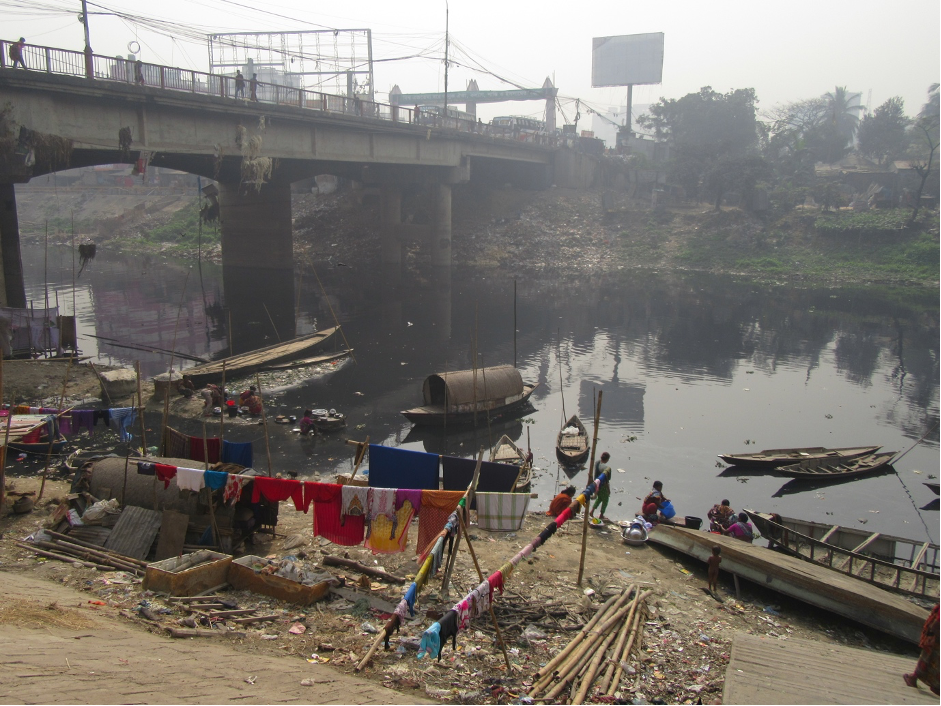
Women using river water for washing in Dhaka, Bangladesh. Credit: Sonia Hoque
To build the adaptive capacity of water systems to cope with changes in climate, climate information needs to be available to water managers at the appropriate spatial and temporal scale. Ensembles of global climate models provide useful information about global climate, but analysis is needed to identify the relevant climate models that best capture local climate. More investment is needed to provide the tools that water managers need to make informed decisions to increase climate resilience, such as accurate projections at local scales and seasonal forecasting based on understanding of local climate drivers. The information needed varies for different users, but is critical to build resilience for managers of small water systems, reservoirs, and basins.
The report synthesises six years of interdisciplinary research by the REACH team across Sub-Saharan Africa and South Asia. Collaborations in our Water Security Observatories have allowed us to understand how water security risks are experienced, how inequalities are created and reproduced with new policies, and how new tools and science can support better decision making. The report highlights the impact the REACH programme has achieved with funding from the Foreign, Commonwealth & Development Office (FCDO), in partnership with UNICEF, for the benefit of millions of people. It concludes with three recommendations for to advance water security for climate resilience:
More accurate and granular analysis of climate risk is needed to increase relevance of climate information
Metrics for monitoring climate resilience in water systems are critical to track progress and inform investments for water security
New institutional models that improve water security will be critical for climate resilience
Climate change will increasingly affect water availability and quality, with devastating consequences for the most vulnerable. Improving water security is critical to build resilience to the changing climate.
Please join us for this Future Climate for Africa webinar by climate change expert Neil Hart.
Friday 17 March 2017, 11:00-12:00 (London, GMT); 13:00-14:00 (Johannesburg)
Climate modelling is a key tool in tackling the effects of climate change. Future Climate for Africa is a research programme that aims to generate fundamentally new climate science, and to ensure that this new science has an impact on human development across Africa. The UMFULA research team is using climate models to try and improve information about the future climate of central and southern Africa. Their aim is to provide decision-makers with the best possible scientific knowledge on how rainfall, temperatures and associated conditions like drought are likely to change in the region in the next 5-40 years. The researchers also seek to help decision-makers understand which aspects of the future climate are simply uncertain – and to explore the implications for investments in development planning and infrastructure that could endure for decades ahead.
This webinar by Neil Hart of the University of Oxford will explore in brief some of the research questions that the FCFA teams are pursuing in central and Southern Africa. This webinar is not for climate specialists but for anyone who is interested in how they could be using climate change information to make more climate-resilient development decisions.
Dr Hart will explain in brief and in layperson’s terms how climate models project as clear a view of the future climate as possible, but are often misunderstood or used incorrectly. He will debunk some common misunderstandings about climate models. The seminar will use illustrations from what we already understand about central and southern Africa and discuss the implications for making climate-informed decisions.
Dr Hart will cover the basics in 15 minute or less then open the discussion for participant questions and answers.
Read Dr Hart and his colleagues’ contribution to the report Africa’s climate.
by Delgollage Senevirathne, Assistant General Manager (Sociologist) at the National Water Supply & Drainage Board (NWSDB), Sri Lanka.
(8) The social consequences of failure to control excessive ground water extraction
There are many instances where excessive groundwater extraction affects the availability of groundwater for other users leading to social consequences. Over extraction of ground water from a plot of land has a negative impact on the use of groundwater from the adjacent land users in case of simultaneous extractions are affected. If one party continuously extracts groundwater it will impact the aquifer and will become unsustainable in recharge levels.
In Sri Lanka, there is no legal provision to control use/ extraction of groundwater in terms of quantity and quality parameters. Hence there is a need to introduce controlling legislation to manage the groundwater resources which is impacting on social consequences. Continue reading “Social Dimension of Water Resource Management in Sri Lanka – Part 5”






 Rural Water Supply Network - blog