
This is a guest blog by Daniel W. Smith, a Water & Sanitation Advisor at the Center for Water Security, Sanitation, and Hygiene at USAID in Washington, DC.
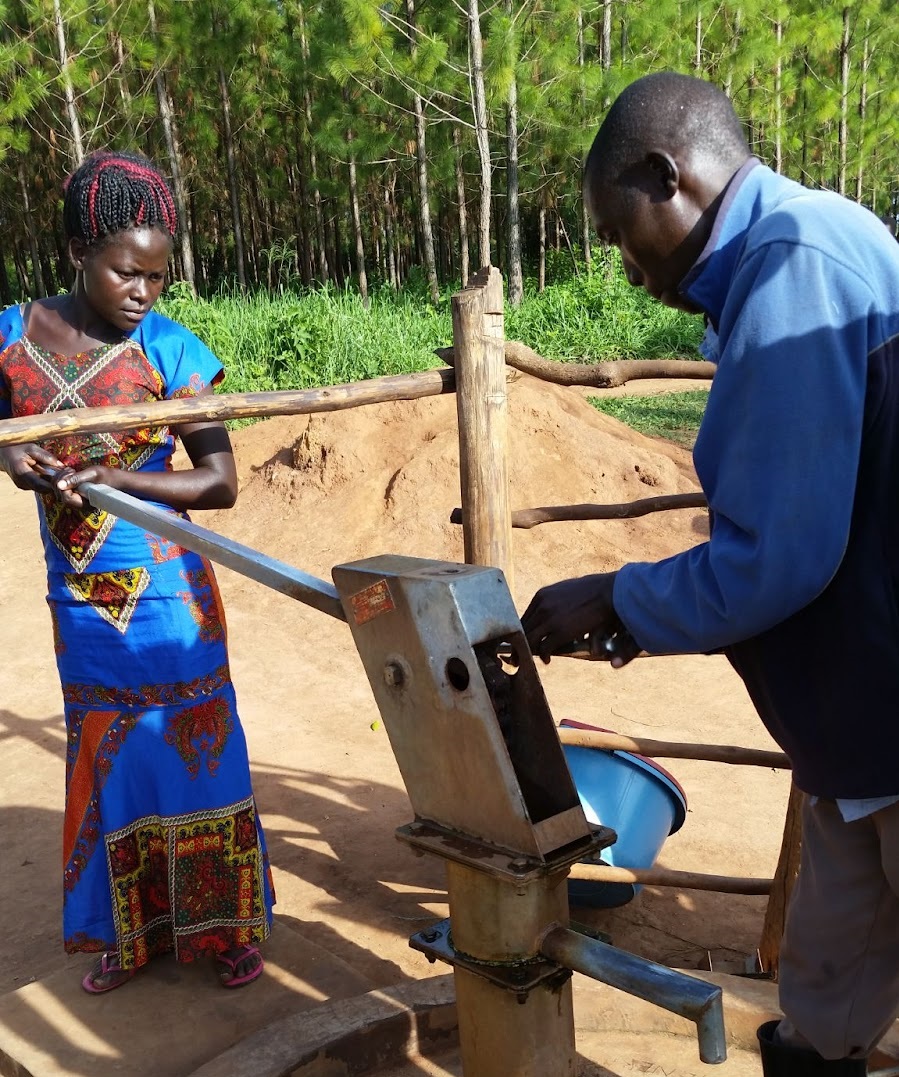
Photo: A handpump mechanic performs preventive maintenance in Uganda
(Photo: Daniel W. Smith)
If you measure something, how do you know that someone else would get the same result? This is a fundamental question in many fields including medicine and psychology, but it is rarely considered in rural water supply.
This problem became painfully apparent during a recent study of professionalizing handpump maintenance in Uganda conducted by the Program for Water, Health, and Development at the Stanford Woods Institute for the Environment and International Lifeline Fund. Our data collection team had a seemingly straightforward instruction: Count a handpump as functional if it provides water. But different data collectors interpreted the instruction differently. Some would count a handpump as functional even if it took a long time to get a little water. Others counted handpumps in a similar condition as nonfunctional. We needed a clearer, more reliable procedure to ensure that handpump functionality measured by different people would be comparable.
Continue reading “Measuring water point functionality is trickier than you’d think. Here’s how we tried to make it more reliable in Uganda.”
 Rural Water Supply Network - blog