Weaving threads of knowledge and trust across the world – Part 1 (Global Actors)

by Sean Furey, Director – RWSN Secretariat @ Skat Foundation

Rural Water, Sanitation and Hygiene (WASH) is such a local, personal, issue that does global-level exchange make sense?

At first glance, rural areas and communities worldwide seem too diverse for networking and knowledge exchange to be useful or meaningful. What does WASH for isolated hamlets in the Nepalese Himalayas have in common with a fishing village on the Peruvian coast or a small town in northern Nigeria? Quite a lot, it turns out.

Last year, we were privileged to be approached by the Water Section at the Inter-American Development Bank (IDB), to support them with an exciting programme called Sustainable and Innovative Rural Water, Sanitation and Hygiene (SIRWASH), funded by the Water Section of the Swiss Agency for Development & Cooperation (SDC). They asked us to help strengthen the sharing on rural WASH topics within the Latin America and Caribbean (LAC) region and to encourage South-South exchange between LAC, Africa and Asia. Thanks to our strategic partnership with SuSanA we felt well placed to do this, and a great opportunity for both networks to grow our membership in the LAC region and serve our members there better.

Multilateral Development Banks – amazing allies

When it comes to shear financial clout and convening power, Multi-lateral Development Banks (MDBs) are hard to beat, but even they have had mixed success with rural WASH – but there have been successes and they have recognised that they can learn from each other so that they can provide their client governments with the technical assistance and financial options to deliver sustained improvements. So, last year the relevant focal points from the African (AfDB), Asian (ADB) and Inter-American (IDB) met and agreed on a Call to Action with three priorities:

  • Information-based decision-making and rural WASH investments and service monitoring.
  • Institutional strengthening & coordination.
  • Rural sanitation.

From this, we organised a webinar mini-series drawing on their recommendations for case studies on each topic from each region.

Finding the common threads and bringing them together to make them stronger

This year, we took more steps to build an understanding and appreciation of the solutions that have the potential to transcend the variability of local contexts and be adapted. With growing interest, our colleagues at the World Bank also joined the small group and together we organised a special SIRWASH breakfast meeting and an open session on “Coordinating Rural Water Investments to Promote Security and Stability” with REAL-Water :

The SIRWASH breakfast meeting that followed was in the spirit of collaboration among countries in the global south, using knowledge sharing as a catalyst for innovative and sustainable solutions. It was attended by more than 40 representatives from countries (Haiti, Brazil, Peru, Chile, Nigeria and Uganda), multilateral banks, multilateral and bilateral agencies (SDC, AECID, SIDA, WHO, OAS, UNICEF), NGOs and philanthropists (including, One Drop, Water For People, Avina, Aguatuya, mWater, Global Water Center), as well as networks, partnerships and research (RWSN, SuSanA, WASH Agenda for Change, WASH Funders Group, SIWI, Uptime, the Aquaya Institute). 

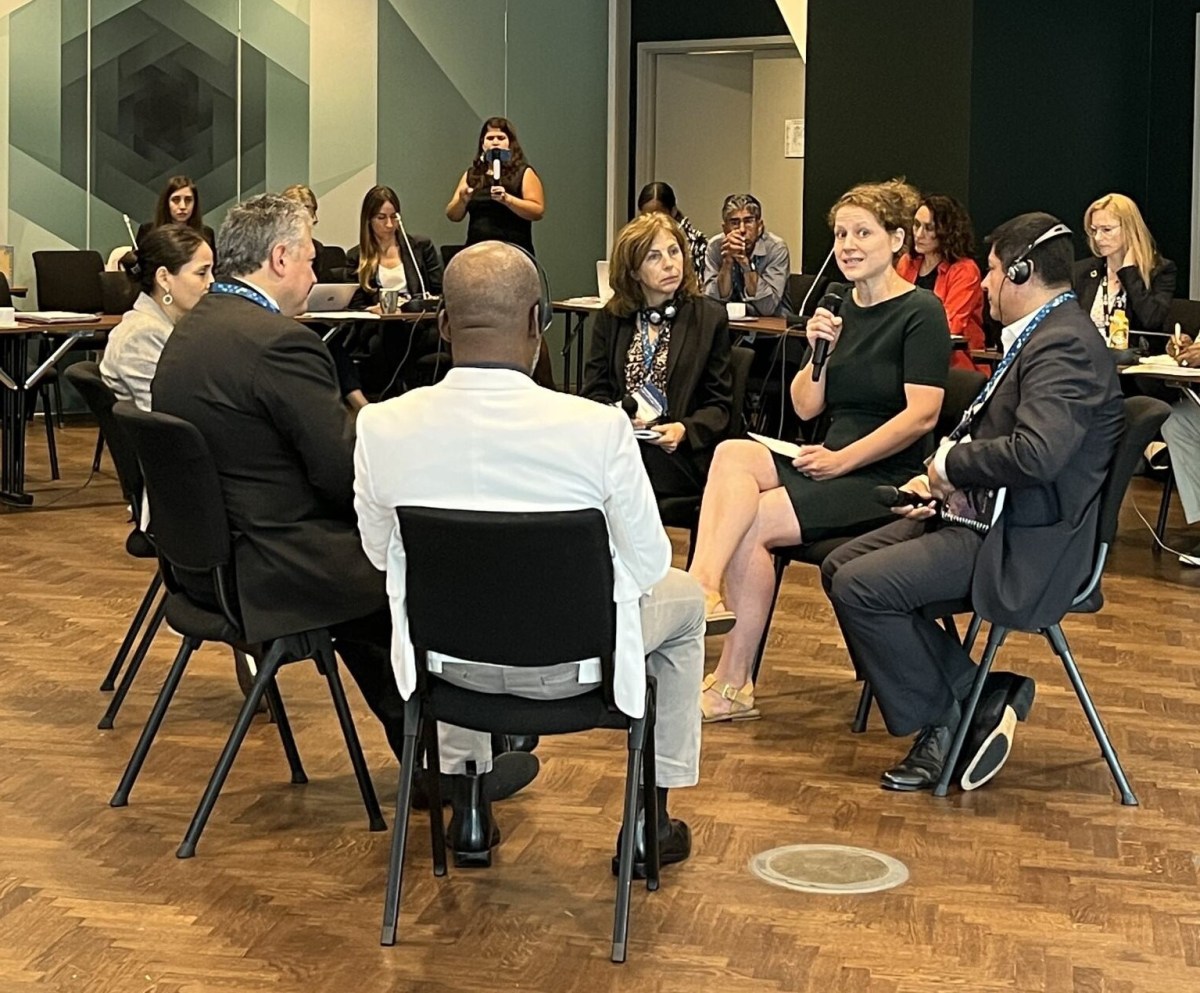
Reflections on the SIRWASH Breakfast meeting (source: IDB)

Using the “Fishbowl” method, participants exchanged their perspectives in an open and dynamic way on how strategic partnerships can increase impact in the sector. Discussions focused on two key questions: 

1. How can technological innovations in rural WASH information systems be supported to be truly effective in decision making and incentivize scaling up? 

2. What are practical solutions to improve the design and implementation of national rural WASH programs so that their benefits are sustained over the long term? 

One of the central themes was innovation through sector information systems, a crucial tool for planning and managing water and sanitation services in rural areas. Three countries shared their experiences on how they have adapted and improved these systems:

The importance of institutionalizing information at the national level and ensuring that communities participate in the validation and appropriation of data and decisions was emphasized.

In addition to information systems, the event underscored the need to integrate both technological and social innovations to improve rural services. Social innovations and behavioural change are essential for communities to take ownership of the systems and actively participate in their management and maintenance. Participants agreed that long-term sustainability is about finding the sweet spot between community-ownership/responsibility and external support.

The second critical issue addressed was the sustainability of rural water and sanitation services. Participants stressed that the successful implementation of these services cannot depend solely on initial investments in infrastructure. Innovative mechanisms need to be developed to ensure their financing and continued operation. The examples of Brazil and Nigeria were instructive, both countries demonstrating how the combination of effective governance and innovative financial models can ensure the operational sustainability of services:

  • Brazil presented its comprehensive implementation of their National Rural Sanitation Program (PNSR).
  • Nigeria highlighted the ways a results-based SURWASH programme is strengthening institutional capacity.
  • The Uptime Consortium shared their experiences and successes with Results-based Contracting on rural water service delivery across many contexts.

The discussion emphasized the need for functionality and quality indicators for rural services, linking reliable information to financial incentives for operators. This strategy can enhance the long-term sustainability of these systems. The working group concluded that collaboration is essential to ensure countries have reliable information for decision-making, aimed at improving the quality of rural services.r decision-making aimed at enhancing the quality of services in rural areas.

In the final discussion, consensus was reached on the need to create and maintain an enabling ecosystem for the development and sustainability of rural services. The great opportunity for development partners to join efforts and seek synergies, contributing technical and financial resources to this ecosystem in the countries was highlighted.

The event concluded with a clear call to action: all actors – governments, development banks, cooperation agencies, NGOs, networks and the private sector – must remain committed to financing and strengthening rural water and sanitation services. The MDBs will continue to work together on a concrete action plan to exchange and replicate successful and innovative experiences to ensure universal and quality WASH services in the countries.

Knowledge exchange is not just talk and powerpoint presentations, it is about building connections and trust between individuals and organisations, finding those common interests and encouraging co-creation of new insights and more sustainable solutions.

The symbolic activity organized by One Drop, where participants bonded to represent their intention to work together towards a common goal, was a powerful reminder of the importance of lasting partnerships. This symbolic gesture is just the beginning; it is essential to continue to scale up efforts so that the most vulnerable communities can access quality water and sanitation services in a sustainable and equitable manner.

Top-Down meets Bottom-Up

After this event, our partner Aguatuya convened an online meeting of Latin American WASH networks to encourage bottom-up exchange to complement our high-level approach. But we will follow that thread in the next post…


Many thanks to the large number of people involved, but in particular to Sergio Campos, Manuela Velasquez-Rodriguez and Cristina Mecerreyes at IDB; Diane Arjoon at AfDB, Vivek Raman and Tanya Huizer at ADB, Awa Diagne and Sarah Nedolast at the World Bank, Janine Kuriger at SDC, and to the wonderful RWSN/SuSanA team: Dr Aline Saraiva, Batima Tleulinova, Susanna Germanier, Lourdes Valenzuela, Paresh Chhajed, Chaiwe Sanderse and all the speakers and panellists for the webinars and sessions.

Sharing experiences of data flows in water and sanitation – some reflections from AGUASAN Workshop 2018

A perspective on the 2018 AGUASAN Workshop: “Leveraging the data revolution Informed decision-making for better water and sanitation management” June 25th to 29th 2018, Spiez, Switzerland

AGUASAN Workshop: “Leveraging the data revolution Informed decision-making for better water and sanitation management” June 25th to 29th 2018, Spiez, Switzerland 

Update 24/08/2018: Read the AGUASAN event report

AGUASAN is the Swiss Community of Practice for water and sanitation that has been running since 1984 and comprises regular meetings through the year and an annual week-long workshop focused on a specific topic, which this year was around role of data in decision-making in water and sanitation services. Around 40 participants attended at a really great training facility in Spiez, in central Switzerland. They came, not just from Swiss organisations, but from a wide range of partners (many who are active RWSN members). There were participants from Bangladesh, Tajikistan, Mozambique, Peru, Thailand, Mali, Pakistan, Benin, Egypt, Mongolia, the UK, South Africa, US and many more.

The structure of the event mixed up presentations with “Clinical Cases” group work focused on real-world case studies and challenges where participants could advise representatives from those organisations:

Different aspects issues around data use in water and sanitation were introduced through a good range of engaging presentations:

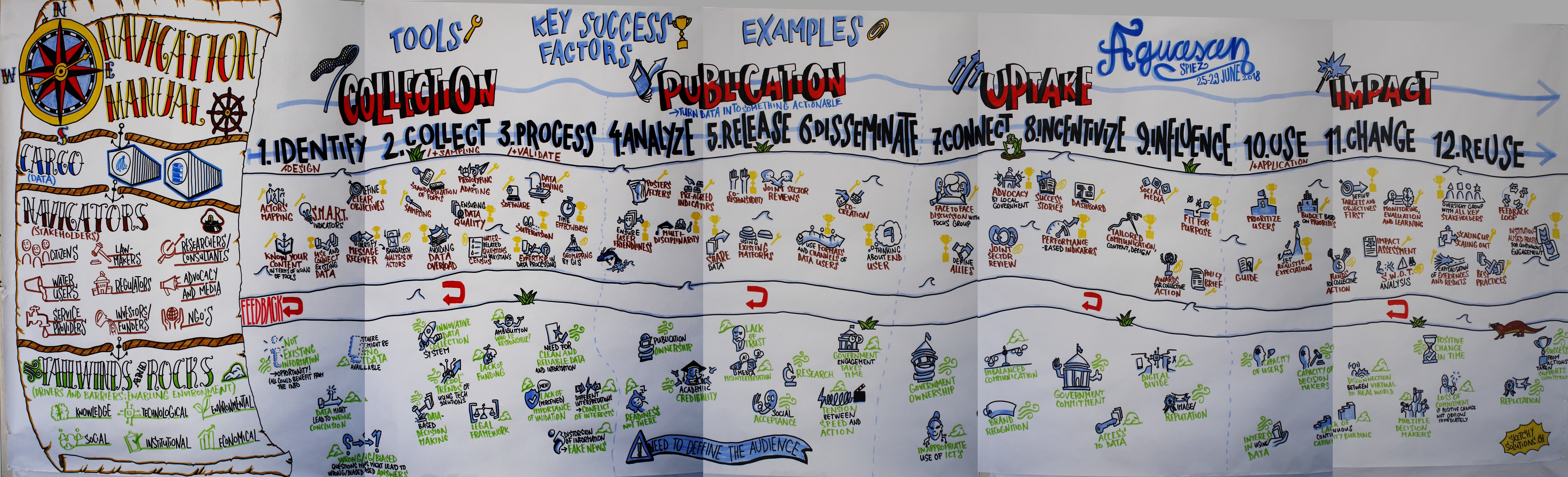
AGUASAN workshops aim to come out with useful output and what was proposed was a practical guideline that pulled together they key points from the presentations and discussions, around a common framework, which was beautifully illustrated on the wall of the plenary room at the end:


aguasan.jpg
Preliminary result of the AGUASAN workshop: the “Navigator manual” (click/tap to expand) designed by Filippo Buzzini (Sketchy Solutions)


I was not completely convinced by the linear conceptual framework that was proposed because what I have observed previously, and came out in the discussion and presentations, is that WASH systems are generally messy, non-linear processes. However, what was clear is that good quality monitoring, mapping and data is a critical “fuel” for driving positive feedback loops for short-term operational decision-making and longer term learning and adaptation cycles.

aguasan.jpg
A not-so-pretty graphical summary by your correspondent (click/tap to expand).

Despite Skat’s long association with the AGUASAN workshop this was my first workshop and I enjoyed it, and found it useful to have the opportunity to have a few days away from the distractions of emails, to focus on one topic with knowledgeable colleagues from all over the world and all over the WASH sector. The field trips also took us to explore some of Switzerland fascinating water history and modern challenges.

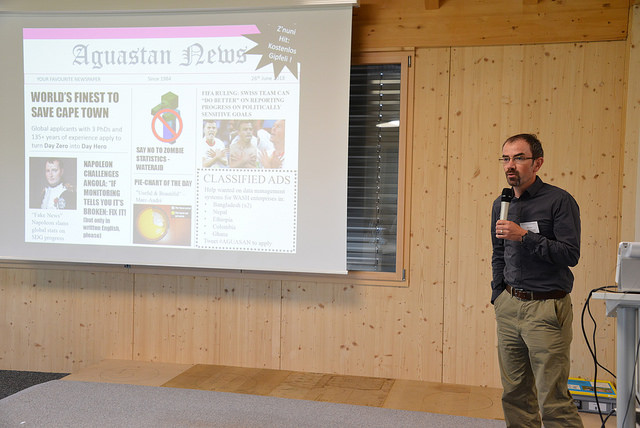
29323801718_3e5594b0cc_z.jpg
Your correspondent giving a lighthearted recap of key learning points (and Swiss World Cup win against Serbia) from Day 1 (Photo. J. HeeB)

Tandi Erlmann, Johannes Heeb and the Cewas team did a great job with the facilitation and event design and also thanks to SDC for their continued financial and thematic support to the event. As well as good for networking – it was also a good international crowd to be around with the World Cup going on!

The final report will be published on www.aguasan.ch where you can find outputs from previous workshops. Most of the presentations and background documents can be on the SDC ResEau website.  Photos from the event can be found here on Flickr.

Below are my sketch-notes of some of the presentations (click/tap to enlarge):

“Monitoring & Data for Rural Water Supplies” (click/tap to open PDF version)


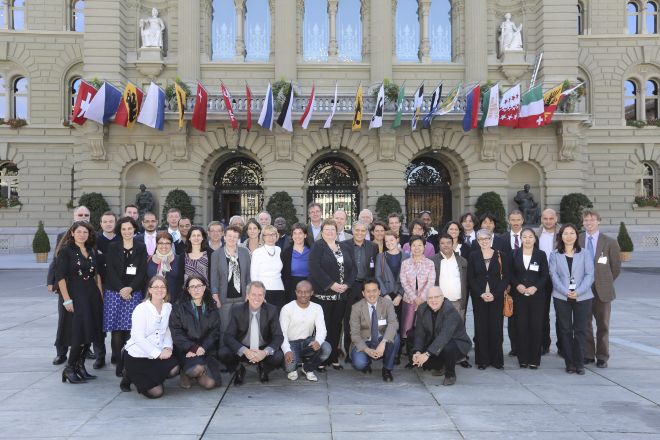
Photos: Johannes Heeb (Cewas) – Main Image: group shot of workshop participants

In Memoriam: Abdul Motaleb

It is with great sadness that we have been informed that Mr Abdul Motaleb (61) passed away in the night of 30 April 2017.

Motaleb had over 36 years experience in the Water Supply and Environmental Sanitation Sector in Bangladesh and was widely liked and respected figure in the Bangladesh WASH sector.

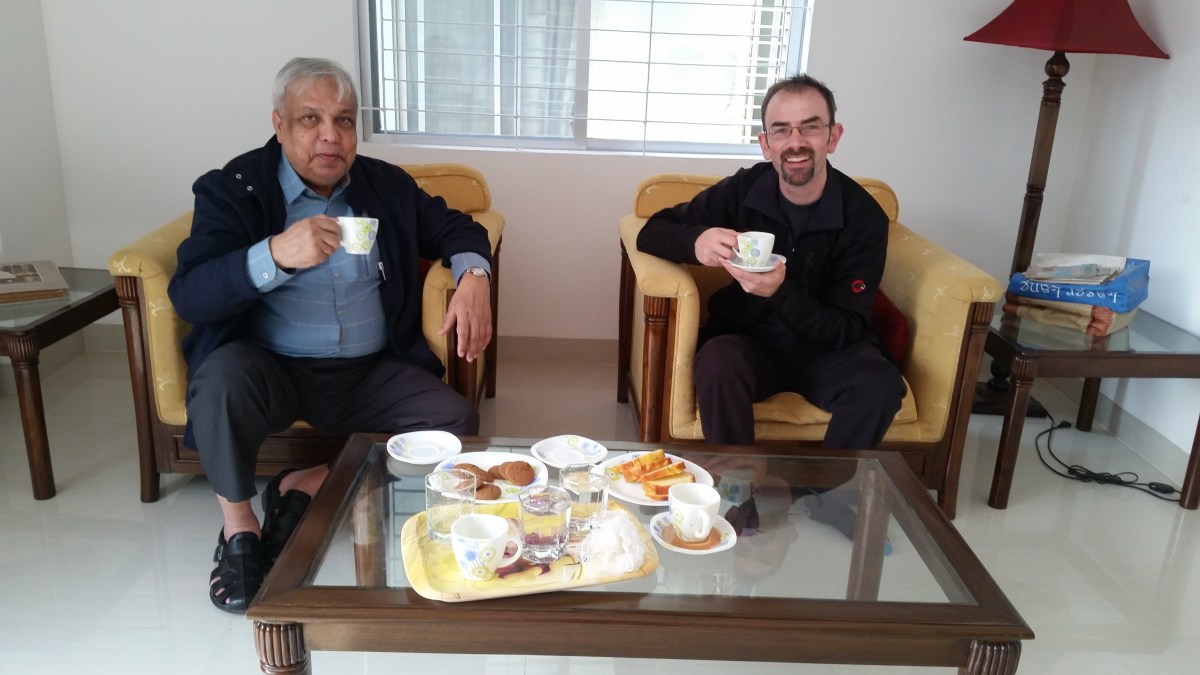
photo: Abdul Motaleb and Sean Furey, in Dhaka, February 2017 (photo: Md. Nurul Osman – with thanks)

It is with great sadness that we have been informed that Mr Abdul Motaleb (61) passed away in the night of 30 April 2017.

Motaleb had over 36 years experience in the Water Supply and Environmental Sanitation Sector in Bangladesh and was widely liked and respected figure in the Bangladesh WASH sector.

He graduated from the Bangladesh University of Engineering and Technology (BUET). Dhaka in 1979 with a BSc in Water Resource Engineering and later in his career went on to gain a MSc in Sanitatary Engineering at the International Institute for Infrastructure, Hydraulic and Environmental Engineering (IHE) Delft, the Netherlands.

During his long career he worked for M/S Associated Consulting Engineers, the Department for Public Health Engineering (DPHE), King Abdul Aziz University, Jeddah, World Bank/UNDP, Swiss Agency for Development and Cooperation (SDC), Danish International Development Agency (DANIDA), and most recently the World Bank Group and as a freelance consultant.

Among his many works and achievements, it was on the topic of handpumps where he seemed to get most pleasure – from his involvement in the development of the Tara to his expertise with the Jibon Deepset and the No. 6 – handpumps on which tens of millions of people today in Bangladesh depend every day. He was a long standing member of HTN, later RWSN, and was an active contributor to the RWSN Groundwater group.

Abdul Motaleb inspecting a HYSAWA handpump installation near Khulna, SW Bangladesh, February 2017 (Photo: Sean Furey)

I had the pleasure of working with Motaleb from January onwards this year on an end-phase review assignment for SDC and we spent 10 intense days together in south-western coastal Bangladesh, with the staff of the HYSAWA Trust Fund.  He was utterly charming and humble, with a deep well of knowledge and experience. I could not have wished for a better colleague and in a very short space of time we became firm friends.

He will be greatly missed.

Sean Furey, RWSN Secretariat / Skat


Selected Publications

  • Technical Paper on Monitoring and Regeneration of Production Wells in Bangladesh. A paper presented by Abdul Motaleb (DPHE) and Drs. G.J.deWit (IWACO) at the seminar for Civil Engineering Division at the 34th Annual Convention of the Institute of Engineers, 1990 Dhaka Bangladesh.
  • Monitoring the Tara pump: An assessment of Functioning, Social Acceptability and O&M system. A report published by UNDP/World Bank Water and Sanitation Program RWSG-SA Dhaka
  • Quarterly Notes on Danida funded DPHE Handpump Training and Monitoring Program based on project implementation experiences published by UNDP/World Bank Water and Sanitation Program RWSG-SA Dhaka. Altogether 14 (Fourteen) HTMP Notes were prepared during 1993-1997.
  • Technology Development Never Stops-A story of Jibon Deepset Handpump Tubewell in Bangladesh. Paper presented in HTN Workshop on Civil Society and Government Partnership in Rural Water Supply, Hyderabad, India, 2000.
  • Village Organizations become Development Partners. Paper presented in 26th WEDC Conference, Dhaka 2000.
  • SODIS – An Arsenic Mitigation Option. Paper published in 26th WEDC Conference, Dhaka-2000.
  • SORAS –  A Simple Arsenic Removal Process. Paper published in 26th WEDC Conference, Dhaka-2000.
  • Total Sanitation Approach and Practice. A case study in Watsan Partnership Project (WPP). This paper presented in 19 AGUASAN WORKSHOP 2003 on This shit drama-Are there ways out? held in Switzerland organized by SKAT during June 23-27, 2003.
  • Arsenic Mitigation: Action Research Findings based on project implementation experiences in Watsan Partnership Project and published by Swiss Agency for Development and Cooperation (SDC) in Bangladesh in June 2003.


Problems need problem-solvers

Capacity Development is one of those buzz-phrases that gets used and abused almost as much as Sustainable Development. Capacity has various definitions, but for me, one of the clearest is:

“Capacity is the ability of individuals, groups, institutions and organizations to identify and solve problems over time”

(Morgan, P. 1993 quoted on p.7 of Capacity development for improved water management, UNESCO-IHE 2009)

A shortage of capacity – the ability to identify and solve problems – is found in rural water supply across the world, from issues like pump corrosion, to lifecycle cost recovery to making the Human Right to Water a reality.

Problems become a lot easier where there are competent champions or – even better – strong teams who are able and willing to do a good job, even in adverse circumstances.

That’s why I have come to the annual meeting of UNDP Cap-Net, – at the invitation of its director, Dr Themba Gumbo. Cap-Net is a global network of capacity development networks that support capacity development in the water sector by providing technical and match-funding support to water-related training courses. The meeting was hosted by the Spanish cooperation agency, AECID, at their exceptional training facility in Cartagena, Colombia.

The main theme of the week was to explore how to use online and ICT methods to deliver courses and support learners. The centre-piece is Cap-Net’s Virtual Campus. The first three courses, which ran successfully earlier this year, were:

The courses work in similar way to a Massive Open Online Course (MOOC), but requires a bit more commitment and if you want to join you have to submit a short CV and letter explaining why you want to do the course.

The meeting was also an opportunity to meet coordinators from some of  Cap-Net’s 22 regional and country networks from all over the world and to explore ideas for developing face-to-face training events. From this I got a lot of ideas and contacts to explore further.

There were other partners there as well, including CAWST, Water Integrity Network (WIN), Global Water Partnership (GWP), Sustainable Energy for All, the UNDP Water Governance Facility at SIWI, Water for People, and SDC Global Programme Water Initiatives so it was good to meet them and find out about the interesting work they are doing.

Another topic, was the potential of serious games, and two examples were presented:

  • Diana Rojas (SDC) presented an mobile game called Aventura Yaku for helping children (and grown-ups!) understand water and ecosystems services.
  • Gareth Lloyd (DHI) presented an online game called Aqua Republica, and we had a group competition on a version developed specifically for Cap-Net. Aiming at an audience of 13-18 year olds, behind the attractive graphics and game play is a direct link to detailed hydrological models in Denmark.

While great for introducing new audiences to the importance of water resources, don’t expect an RWSN game app for rural water any time soon. I’m not convinced that is it the right solution for what we want to do, but I like these initiatives very much.

Over the course of the rest of the week there were presentations and discussions on the importance of innovating and keeping up with the fast evolving ways of engaging new audiences through communications technology – whilst not forgetting the importance of hands-on, face-to-face learning.

As the week ended, I concluded that here are a group of people – and organisations – that RWSN should collaborate with if we are to fulfil our mission of raising the level of quality and professionalism of rural water supply services.

Watch this space…


RWSN March Headlines

2015 Early Webinar Series + Rainwater Harvesting

What is a webinar? It is an online presentation where you can hear a presenter, watch their slides and have the opportunity to ask questions. If you cannot attend the live event, a recording is usually posted online.

RWSN has started 2015 with a series of ten webinars about groundwater, self-supply approaches and equality.  Presenters from more than 15 different organisations, working in over 15 countries are sharing their practical experiences and research findings.  Participants will have the opportunity to ask questions, and meet others with similar interests. You can register for one, or several webinars by following the link:  http://tinyurl.com/RWSN2015A

Continue reading “RWSN March Headlines”

Looking through GLAAS

by Johan Gély, Swiss Development Cooperation (SDC)

2nd UN-Water GLAAS Evaluation Meeting in Bern 2nd and 3rd October 2012

Background

The UN-Water Global Analysis and Assessment of Sanitation and Drinking-water (GLAAS) monitors the inputs, and processes and their outputs (e.g. policies, investments, human resources) that influence the provision and sustainability of drinking-water, sanitation and hygiene (WASH) systems and services.  Following publication of a proof-of-concept report in 2008, GLAAS published two full reports in 2010 and 2012 – the latter covering 74 countries and 24 external support agencies. GLAAS is generally acknowledged as having gained itself a specific niche within the global WASH monitoring landscape.

It is an important tool for the SDC Global program Water initiatives as it is part of an important and logical sequence of work/partnership which combine the global water and sanitation data acquisition (Joint Monitoring Program – JMP), the data analyze/assessment (GLAAS) and the sector global advocacy (Sanitation and Water for All – SWA).

Meeting Outcomes

1) It is a low cost and high quality global monitoring product and process.
2) It allows us to unify forces to lobby for a water goal in the Post 2015 goals.
3) Water Quality should be included in the future water goals and reported by JMP and GLAAS.
4) We should strengthen alignment with national monitoring systems.
5) We need to improve link with others global, regional and national monitoring systems.
6) The presence of new actors (from emerging states) should be reinforced in the future.

Documents

UN-Water GLAAS 2012 report – Approach and Main findings

UN-Water GLAAS – A brief history and rationale 

For further information on GLAAS, please contact Bruce Gordon or Johan Gély.