This is a guest blog by Faith Lilian Kuloba, who participated as a mentee in the RWSN Mentorship Programme 2024.
My name is Faith Lilian Kuloba, a Ugandan currently pursuing an MSc in Water and Wastewater Processes at Cranfield University. My journey to this point began during my time as an Assistant Water Resources Engineer at Water Access Consulting, when my supervisor encouraged me to join the Rural Water Supply Network (RWSN).
About a year later, while reading one of RWSN’s monthly email updates, I found the 2024 Mentorship Programme for Career Development. Although I wasn’t sure what to expect, I applied with optimism, and I was honoured to be selected.
Shortly after submitting my application, I was paired with my mentor, Rodolfo Bezerra Nóbrega, a lecturer and researcher in the water and environmental sector. His extensive experience in research and academia made him the perfect guide.
At the time, I was eager to advance my career through further studies. I had already applied for several master’s programmes without success, and my family was experiencing financial strain, making the prospect of funding my education even more uncertain. When I shared my career goals and challenges with Rodolfo, he committed to guiding me through the process.
Applying for a master’s degree can feel overwhelming, but Rodolfo provided exceptional mentorship. He helped me identify the right programmes, advised me on suitable universities, and taught me how to search for scholarships including how to reach out to universities about funding opportunities. He supported me in reviewing scholarship requirements, refining my CV to UK standards, and learning how to write strong, structured essays. He also assisted with interview preparation.
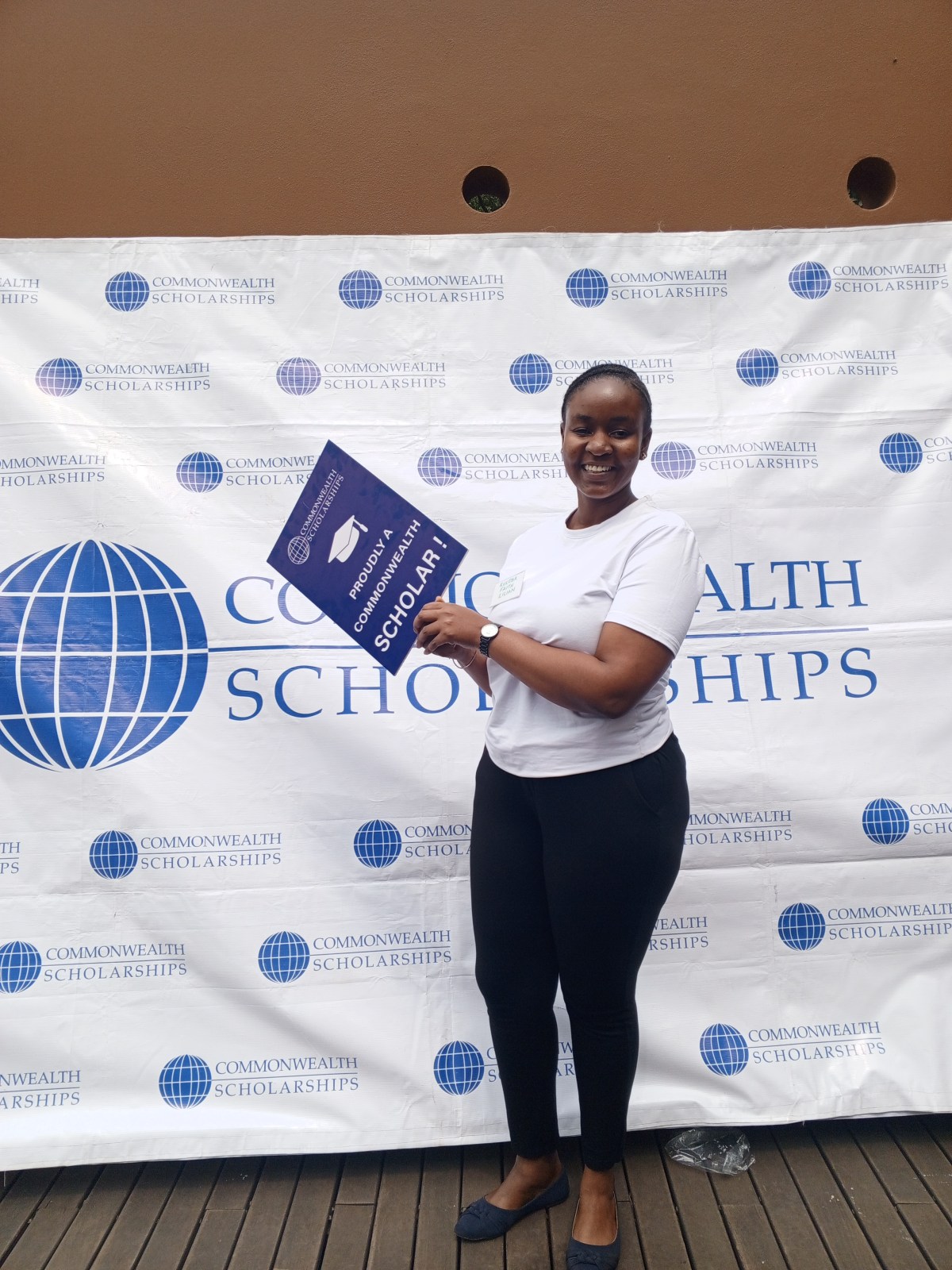
Earlier this year, I was honoured to received the Commonwealth Shared Scholarship, which has allowed me to begin my masters programme at Cranfield University.
This mentorship programme has been truly transformative. Without Rodolfo’s support, encouragement, and skill, I would not be where I am today. Just a year ago, I was unsure how I would finance my studies and now I am in the UK pursuing the master’s degree I always hoped for.
My sincere thanks go to RWSN and the Skat Foundation for organising this mentorship programme. It is an outstanding professional initiative that empowers women in WASH to grow, learn, and advance their careers. I am deeply grateful for the knowledge, confidence, and opportunities it has given me.
To join RWSN and be informed about the next round of the mentoring programme, please sign up here.
This is a guest blog by Esther Lydia Akol, who participated as a mentee in the RWSN and Women in WASH 2025 Mentorship Program.
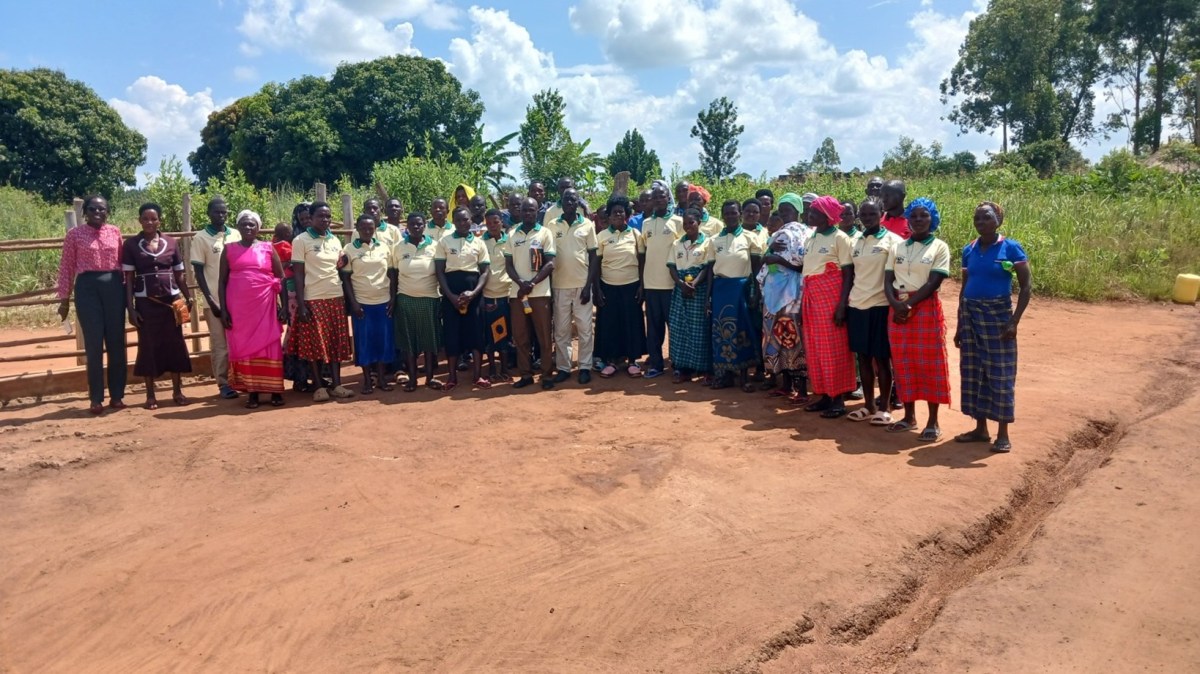
Photo: Esther (Mentee) with Community Water users after an Exchange Learning visist on Water Point Sustainability in Uganda
When I joined the RWSN and Women in WASH Mentorship Programs in April 2025, I hoped to grow professionally and expand my network. What I didn’t expect was a six-month journey that would challenge my thinking, deepen my confidence, and transform the way I approach leadership in rural water, sanitation, and hygiene (WASH). From meaningful conversations with my mentor to new global opportunities, these programs has shown me that mentorship is not just guidance; it is a ripple effect that strengthens communities, builds leadership, and fuels sustainable change.
My name is Esther Lydia Akol, a Ugandan WASH professional with The Water Trust. I joined the mentorship program to grow professionally, expand my network, and strengthen my leadership in promoting sustainable and inclusive rural water systems. Coordinated by the Rural Water Supply Network (RWSN) and Agenda for Change, the programs pair emerging professionals with experienced mentors to foster leadership, learning, and collaboration. It is more than a capacity-building effort; it is a platform for women to find their voices, share experiences, and lead change in communities and organizations.
Discovering Strength in Shared Experience
My mentor, Elon Ryan Sooknanan (PMP, MSc(Eng), MBA), brought a wealth of experience and a genuine spirit of guidance. Our monthly conversations went beyond technical discussions; they explored how sustainability, equity, and innovation intersect to make WASH initiatives more effective and inclusive. Through his mentorship, I learned to communicate with clarity, set achievable goals, and adopt a systems approach to rural water challenges.
Perhaps the most transformative lesson was realizing that mentorship is a two-way flow. While I learned from my mentor’s experiences, I also shared reflections from my work in Uganda’s rural communities. Together, we explored how local realities inform global strategies and how personal growth strengthens professional impact.
During this period, my mentor introduced me to Transformations Leeds (UK), a charity offering apprenticeship and coaching programmes in leadership. I was awarded a one-year apprenticeship and an additional six-month coaching opportunity focused on leadership, sustainable solutions, and climate change. Alongside this, he shared resources on scholarships and WASH knowledge platforms, which I continue to explore to expand my learning and global perspective. This experience demonstrated that mentorship often extends far beyond formal programme sessions, opening doors to lasting professional growth and collaboration.
Bridging Knowledge, Confidence, and Community
Beyond one-on-one mentoring, the RWSN and Women in WASH Mentorship Programs connected me with a diverse community of professionals committed to improving the sustainability and inclusivity of WASH services. Peer-learning sessions and resource-sharing platforms provided spaces for dialogue, reflection, and practical problem-solving.
What stood out most was the sense of community. Our mentor created a WhatsApp group for all the mentees he was mentoring, connecting us with WASH professionals from different regions and countries. Each participant brought a unique perspective, yet we shared a common determination to make a difference. Stories of resilience from across the globe reminded me that collaboration is one of the most powerful tools for advancing rural water supply.
Lessons That Will Flow Forward for me
Reflecting on this journey, I carry forward lessons that will guide my WASH and community development work:
Mentorship multiplies impact. Guiding others strengthens leadership, knowledge-sharing, and the sustainability of development efforts.
Diversity enhances problem-solving. Global exchanges between mentors and mentees bridge context-specific and universal challenges.
Confidence grows through support. Having someone believe in your potential helps dismantle self-doubt and nurtures leadership courage.
Networks are transformative. The mentoring programs connected me to a vibrant community of practitioners who continue to inspire collaboration.
Gender equity drives sustainability. Empowering women in WASH leadership fosters inclusive, resilient, and community-driven systems.
A Call to Future Mentees and Mentors
To women joining future mentorship cycles: embrace every session, challenge, and conversation with openness and curiosity. Ask questions, share your story, and listen deeply to others. The RWSN and Women in WASH Mentorship Programs’ true strength lies in mutual learning, where every perspective contributes to shaping a more inclusive and resilient WASH sector.
To professionals considering mentorship: your experience and time are powerful investments in the next generation of WASH leaders. Mentorship is not about having all the answers; it is about guiding reflection, nurturing curiosity, and helping others grow in confidence and skill. Every shared insight strengthens a global community working toward sustainable rural water services.
Conclusion: When Women Lead, WASH Thrives
Participating in the RWSN and Women in WASH Mentorship Programs has been deeply transformative. It reaffirmed that sustainable water supply is not only about infrastructure—it is about people, relationships, and shared learning.
As I continue my work in Uganda, I carry the lessons of mentorship: the power of connection, the strength of collaboration, and the hope that when women lead, communities thrive. Every act of guidance creates ripples of change, ripples that sustain clean water, dignity, and opportunity for all.
About the author:
Esther Lydia Akol is a WASH Officer with The Water Trust in Uganda. She is passionate about sustainable WASH solutions, gender equity, and empowering rural communities to build resilient rural water systems.
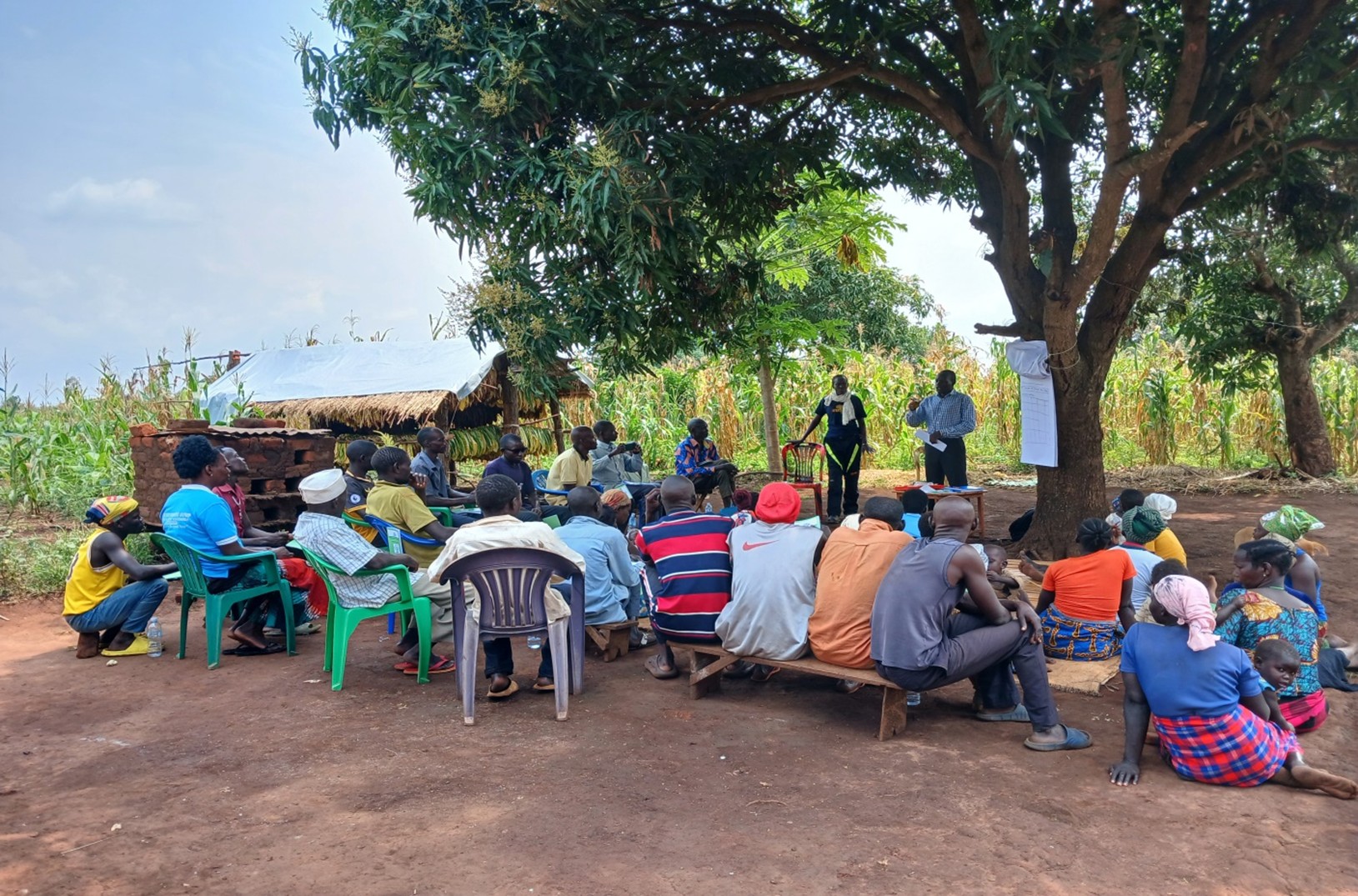
Photo: Esther (Mentee) facilitating a community WASH Committee Meeting in Uganda
To join RWSN and be informed about the next round of the mentoring programme, please sign up here.
This is a guest blog by Kachusha Nkosha, who participated as a mentee in the RWSN and Women in WASH 2025 Mentorship Program.
Being part of the RWSN and Women in WASH Mentoring Programs has been one of the most defining experiences of my professional journey. Having previously mentored in the health sector, I joined the program eager to contribute, but what unfolded went far beyond expectation. It became a season of personal growth, deeper purpose, and renewed conviction in the power of mentorship as a tool for transformation.
I was privileged to be mentored by Dr. Marie Christine Faye, a woman whose wisdom, humility, and global WASH experience profoundly shaped my outlook. Her mentorship went beyond career guidance; it encouraged reflection, strategic thinking, and a systems approach to leadership. Through her example, I learned that great mentors do not simply provide answers, they create space for discovery, confidence, and courage.
As a mentor myself, I was paired with two exceptional mentees under the hygiene programming track. One of them, Ms. Samira Nassir, displayed remarkable growth and commitment. Her ability to absorb lessons and translate them into tangible progress was inspiring. Our exchanges were grounded in openness, curiosity, and a shared determination to make a difference. My second mentee faced challenges balancing professional and personal responsibilities, as she was not engaged full-time, but I shared resources that she affirmed were valuable. However, even that experience carried important lessons. I continued to share resources, encouragement, and opportunities, reaffirming that mentorship is not about perfection — it is about planting seeds of belief and resilience that grow in their own time.
This program validated one of my strongest personal values, the value of supporting others to rise. It reminded me that true leadership is measured not by personal achievement, but by the impact we create in others. This belief has always guided me and was at the heart of my TEDx Talk, where I spoke about the transformative power of mentorship and the ripple effect it creates in communities. The RWSN program gave that philosophy new depth, connecting it to a global community of women equally passionate about change.
Beyond professional development, this experience strengthened my resolve to continue advancing in the WASH field, particularly in systems strengthening. It inspired me to pursue higher studies and deepen my understanding of how sustainable change is built — not only through projects, but through empowered people, resilient systems, and collaborative leadership.
Looking ahead, I am more determined than ever to contribute meaningfully at local, regional, and global levels — championing women’s leadership, innovation, and inclusivity within WASH. The RWSN and Women in WASH Mentoring Programs have reaffirmed my belief that when we lift others, we lift ourselves — and when women lead with empathy and vision, entire systems transform.
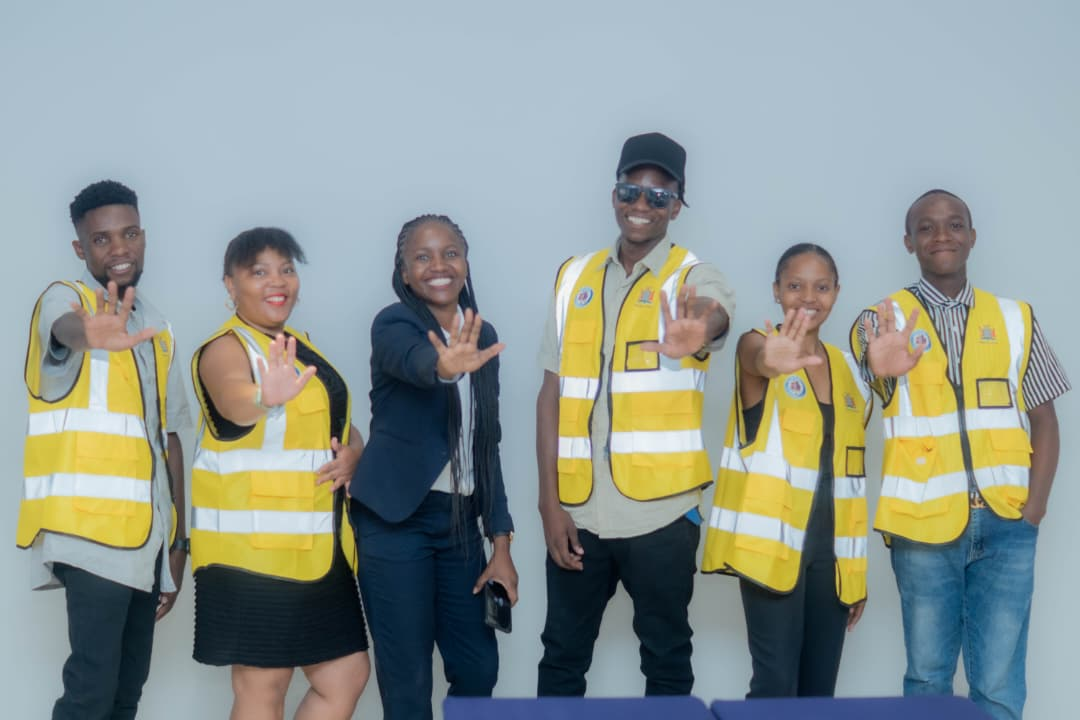
Photo: Kachusha Nkosha mentoring the youth WASH Ambassadors Club – the first WASH Club in Zambia led by youths.
To join RWSN and be informed about the next round of the mentoring programme, please sign up here.
By Jackson Wachira, Masresha Taye, Hussein Wario and Nancy Balfour
“In this fourth blog in the series, I hand over to Jackson Wachira, Masreesha Taya, Hussein Wario and Nancy Balfour who have a thought-provoking blog for us concerning water supplies in the Horn of Africa. It begs us to ask whether the findings from this research in Ethiopia and Kenya could change perceptions about how water development is affecting pastoralist communities?” Dr Kerstin Danert
This blog was originally published by Supporting Pastoralism and Agriculture in Recurrent and Protracted Crises (SPARC) on this webpage in August 2024.
In recent years, parts of the Horn of Africa have seen large investments in the water, sanitation and hygiene sector, or ‘WASH’ as a way to build resilience to droughts. In Kenya alone, investments by civil society organisations increased by over 200% between 2017 and 2019, with a significant proportion focusing on drylands.
WASH investments come in many forms and shapes. They include the drilling of new boreholes and rehabilitation of old ones, installation of diesel and solar power systems, water resource management, water trucking, improved sanitation and ‘capacity building’.
For many development actors, the premise is that WASH investments such as these enhance the resilience of dryland communities against shocks, including climate-induced shocks such as drought.
But are investments in new water supplies in the drylands a solution, or part of the problem?
Ongoing SPARC* research in Marsabit, Northern Kenya and the Somali region of Ethiopia unpacks some nuances around water development. Interviewing community members, resource managers, elders, and both governmental and non-governmental individuals who are actively engaged in water development led us to striking findings. While the establishment of new water supplies has generally enhanced people’s access to water, overall these new investments have eroded – rather than enhanced – the resilience of pastoral communities.
Camels drinking from a trough. Credit: Masresha Taye.
Settlement and depleting resources
First, water supply systems, including deep boreholes, have led to increased settlement in areas which pastoralists traditionally reserve for dry-season grazing. Discussions with communities revealed that, while new water supplies have enhanced access to water, particularly for women and children who are designated water collectors for the family, they have also attracted other communities who frequently access these resources. Overuse of these crucial ‘fallback’ grazing areas – which pastoralists reserve for livestock in non-rainy seasons – has led to overgrazing, increasing pastoralists’ exposure to drought. Settlement has also affected the pasture reserves and seed banks around villages where water supplies are installed.
Moreover, the frequent movement of large numbers of livestock has created tension and multiple incidents of conflict between host and incoming communities. Local communities view water points as vulnerable targets for livestock raids, which heightens their sense of insecurity.
In many cases, communities shared with us that they had not been adequately consulted about the new water sources, and their unpopularity has led to backlash. In one area, due to the absence of community consultation, a civil society organisation was prevented from installing power to a borehole by the community who thought doing so would open up the area to new settlements. We also observed cases of water sources being destroyed by local communities, who feared such developments would attract outsiders to come and settle.
Overlapping water management regimes
Secondly, water developers’ failure to adequately integrate traditional water management structures undermines the success of projects.
Among Kenyan Borana communities, for instance, there is a person responsible for managing community water resources in ways that ensure cleanliness and fair access to all community members, including those migrating from other regions. This person, known as the aba erega, still helps manage water supplies today, but they have been overshadowed by newer Water Management Committees, which have become a key condition for partners investing in new water supplies.
The role of the Water Management Committee includes collecting fees that ostensibly go into repairing and maintaining new water supplies. However, most of the water supplies we visited were described by communities as highly unreliable, often breaking down a few months after they have been installed. The result has been widespread contestation among water users, who blame committee members for embezzling community funds while overseeing water systems that do not serve them when they need them most. Due to the high unreliability of many water systems in these areas, communities revert to walking long distances to access water, heavily impacting human and animal health, particularly during drought. By contrast, traditional water supplies run by indigenous water management appear to be much more reliable.
Poor quality
The third key issue which SPARC research uncovered is the poor quality of most of the new water supplies. In many areas, communities stated that they experience severe diarrhoea and stomach pains when they consume water from some boreholes because of high salinity, which affects both the people and the livestock that rely on them. The result is that water sources are often not used. In Ethiopia’s Somali region, for example, the government has developed deep boreholes in areas previously devoid of water supplies – but after initial enthusiasm, pastoralists have switched to traditional water sources due to health concerns.
The issue with salinity is recognised by government water offices, and some actors have attempted to address this challenge by installing desalination plants. However, possibly due to their complex nature, the desalination plans are not operating effectively, with one community contending that their plant worked well for a short time, before starting to discharge water that was even more saline.
Reimagining water resilience in the drylands
The provision of clean water for people and livestock is critical for the resilience of dryland communities. Yet the current approach of free-for-all investment focused only on the number of new water supplies and number of people reached often serves to undermine, rather than enhance, pastoralists’ resilience to shocks.
What does effective pastoralist water development look like? Our research suggests some ways forward. Efforts should be made to adequately integrate traditional governance mechanisms in the management of water supplies; failure to do so enhances social fragmentation and conflict. And urgent action needs to be taken to desalinate the toxic water that communities in these regions continue to consume every day, and improve desalination technologies so they are easier for communities to repair themselves.
Perhaps most importantly, development actors must acknowledge that mobile pastoralism remains the key adaptation strategy for pastoralist communities in the Horn of Africa. Water development projects must take the threats of settlement around water sources, and its attendant problems, seriously if they want to contribute to building resilience in the drylands.
The research for was carried out under SPARC-funded programme carried out by the Centre for Research and Development in Drylands (CRDD) and Masresha Taye (independent researcher) in collaboration with the Centre for Humanitarian Change. Findings from the research will be published in a Technical Report and Policy Brief on SPARC website in May 2025. A photo essay on the same is available here. A video presentation of the findings was recorded at World Water Week 2024 and available here
The UN WWDR 2026 shall serve as a vital resource, illustrating how global trends and phenomena are reshaping gender dynamics in societies around the world. The interplay between conflict, migration, and gender equity in WASH reveals stark realities. In regions afflicted by conflict and instability, women’s safety and access to essential services are severely compromised.
The plight of women in conflict zones is further exacerbated by migration. Women and girls face an increased risk of sexual and gender-based violence during conflicts. Yet, amid these challenges, women remain indispensable agents of change—actively participating in peace-building, conflict resolution, and post-conflict reconstruction. This resilience highlights the need to recognize and harness women’s potential for positive transformation in their communities.
Migration and its intersection and climate change also alters traditional gender roles and expectations, as families adapt to new environments; it presents opportunities for economic independence and education, empowering them to challenge restrictive gender norms. Still Migrant women often encounter exploitation, discrimination, and limited access to resources, underscoring the urgent need to address these barriers.
Corruption emerges as another formidable barrier to WASH and gender equity. It restricts women’s access to essential services and undermines their participation in leadership and decision-making processes, as demonstrated in weaponisation of water. U.N. Women has called for urgent action to protect Sudanese women and girls, emphasizing the need for accountability in addressing high levels of sexual violence and exploitation. “We cannot let Sudan become a forgotten crisis,” asserts U.N. Women’s Addou, highlighting the critical necessity for action in conflict-affected regions.
On my blog on Diversity in Water sector leadership I emphasise the concerning underrepresentation of women. A World Bank report highlights that less than 18% of the workforce in water utilities are women and that two-thirds of sanitation leaders are white according to a FLUSH LLC publication that I co-authored. This systemic inequity reflects deeper societal structures, suggesting that without diverse leadership, the water sector risks stagnation and failure in meeting SDG6 targets.
As the waves of time crash upon the shore of progress, a mighty force is rising. These waves carry the strength of female leaders, revolutionising the Water Sanitation and Hygiene (WASH) sector. To mark another milestone in the pursuit of a sustainable future, the upcoming United Nations World Water Development Report (UN WWDR 2026), will shine a spotlight on a critical yet oft-overlooked aspect of the global water crisis: the inextricable link between gender and water, illuminating a path towards a more sustainable and equitable future. UNWWDR 2026 is not merely an echo of problems, but an inspiring melody of change, empowerment, and sustainable future.
Alongside the progress, we also confront persistent gaps. Gaps that threaten to undermine our hard-won achievements, forming a path that recognizes the interconnected nature of WASH-related challenges and the need for inclusive solutions.
Terms like sex and gender may seem straightforward but their nuances hold profound implications for how we perceive and address WASH and gender issues. UNICEF definesSex as the biological and physical differences between women and men while Gender as socially constructed differences in attributes and opportunities associated with being a woman, man, girl, or boy and to the social interactions and relations between women and men. Woman refers to biological females according to UNOHCR. In my view this affirms the gap in the context of WASH statistics where WASH data is often disaggregated by sex, but rarely disaggregated by gender.
Imagine a world where the simple act of accessing safe WASH does not dictate one’s ability to attend school, earn an income, or live a life free from danger. A world where our mothers, sisters, and daughters are not disproportionately burdened with the responsibility of fetching water, but are empowered managers and change agents in WASH initiatives. For more than two billion people around the globe, particularly women and girls, this is a distant reality. The latest stark metrics reveal a concerning reality: despite progress, millions of women and girls worldwide still lack access to safe WASH services, hindering their empowerment, health, and economic opportunities. This world, although still a distant reality, is one we must strive for, beginning with a deep understanding of the water-gender nexus.
The gendered impact of inadequate WASH access is not just a reflection of biological differences, but a manifestation of socially constructed disparities. It serves as a stark reminder that water is not just a women’s issue – it’s a human issue and Graph 1 below illustrates these realities.
Graph 1 Proportion of households in which women, men, girls and boys are primarily responsible for water collection, by country, selected surveys where at least 10% of households collect water, 2012–2022 (%) Source UNICEF and WHO, 2023
UN Water’s dictum concurs and aptly captures that “Water is a human right, not a privilege,” this blog series embodies a bold commitment to upholding the rights of all.
The upcoming UN WWDR for 2026, aims to bridge this chasm by placing gender equity at the heart of WASH management and sustainability discussions. It stands as a pivotal blueprint for understanding the critical nexus between water and gender, presenting an urgent call to action for policymakers, practitioners, and stakeholders dedicated to fostering an inclusive, equitable, and water-secure world. By weaving together, a rich narrative of data, case studies, and expert insights, the report shall transcend mere enumeration of challenges to celebrate the resilience and ingenuity of women who are at the forefront of change within the WASH sector. It shall compellingly argue that embedding gender equality and social inclusion into water policy and practice is not just a moral imperative but a pragmatic necessity for achieving all SDGs especially SDG 5 and 6. Statistical evidence revealing the extensive failures of undervaluing women’s expertise in WASH management will be juxtaposed with success stories of women-led interventions that have illuminated pathways towards peace, prosperity, and sustainability. As the report critically examines the barriers that women and girls face in accessing safe WASH, it shall highlight the detrimental impacts of gender disparities in decision-making roles, pushing the narrative beyond mere awareness to active transformation. With a focus on fostering gender-responsive approaches in the WASH sector, the UN WWDR 2026 shall serve not only as a repository of insightful analysis but as a clarion call for disruptive change, intended to inspire dialogue and galvanize global commitment towards a future where equitable access to safe WASH is a universal reality.
Nearly 30 years ago I began my first steps into a career in Water, Sanitation and Hygiene (WASH) in Guatemala. In the morning mist, there was the dull clank of the school bell. It was an old bombshell that had been dropped on the village at some point during the thirty-year civil war. On that day it was guiding children to lessons. The clothes of the people, particularly the women, were amazing. Incredibly colourful and ornately woven, and each is distinctive to that community.
Today, my job is a different type of weaving, but no less colourful. In my previous post, I described how we, as RWSN and SuSanA, have been working with the Multilateral Development Banks, bilateral aid agencies, NGOs and researchers to weave a new narrative for rural WASH – one of learning from each other to achieve universal and lasting access.
But success doesn’t come from top-down actions only, there also needs to be a meeting with bottom-up energy, experience and initiative. Thanks to the support from SDC and IDB, through the SIRWASH project, we have had the opportunity to connect and listen to what regional practitioners are interested in and find ways to collaborate.
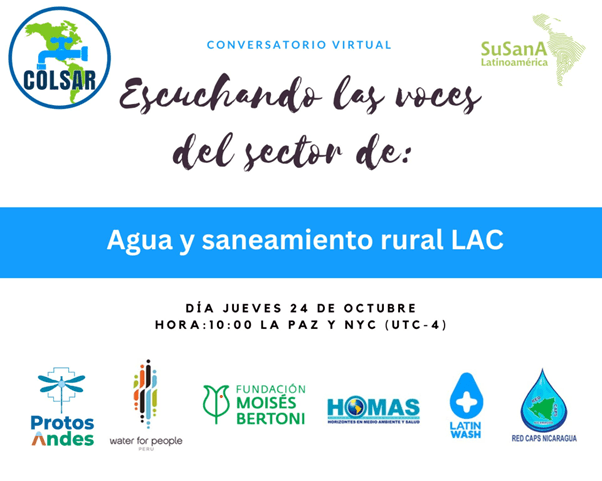
On 24 October, our partner, Lourdes Valenzuela from Aguatuya/SuSanA Latinoamérica co-hosted an online meeting with fellow WASH networks: “Conversatorio virtual: Escuchando las voces del sector de agua y saneamiento rural en Latinoamérica” (Online Conversation: Listening to the Voices of Rural Water and Sanitation Leaders in Latin America)
This 80-minute session, co-hosted with COLSAR, connected experts from diverse backgrounds to identify current sector demands and innovative approaches for improving rural water and sanitation management.
Themes and Objectives
The session, moderated by Marcelo Encalada from LatinWASH, sought to:
Identify essential knowledge areas and skills for strengthening rural water and sanitation services.
Explore digital tools and resources that could improve access to critical knowledge.
Examine the role of digital platforms such as SuSanA and LatinWASH in promoting sustainable solutions.
This is a guest blog by Gloria Musopole, who participated as a mentee in the 2024 RWSN Mentoring Programme.
Participating in the RWSN Women in WASH Mentorship Program has been a great experience, offering many opportunities for both personal and professional development. The program provides a platform to connect with seasoned experts in the water sector, learn from their experiences, and gain valuable insights into navigating the challenges and opportunities in the industry. It also creates a space for building networks with fellow participants (both mentors and mentees), encouraging a supportive environment for learning, growth, and collaboration.
When I first joined the program I wasn’t sure what to expect. Looking back, I realise how much I have grown in my leadership abilities and technical skills. I have learned to take on challenges with confidence and approach tasks with a sense of purpose.
One of the highlights during this program was the opportunity to improve my skills in designing solar powered water supply systems, a field that holds a lot of potential for sustainable solutions in water access. through resources like the Global Water Partnership (GWP) course, I was able to improve my technical knowledge and now I feel more prepared to contribute to innovative projects in this area.
I have also learned the importance of strategic planning and preparation, particularly when it comes to advancing education and career opportunities. Success in competitive spaces, like school and scholarship applications, requires a well thought out plan. This insight is invaluable as I look to further my education and career within the water sector.
The program has also helped me to connect with a network of professionals from different countries, allowing for the exchange of ideas and solutions to common challenges in water sustainability. These connections are not only inspiring but are also a rich resource of knowledge and support for future collaborations.
I would like to extend my appreciation to RWSN and Women in WASH for organising such a life changing and career advancing program. Their dedication to empowering women in the WASH sector is truly inspiring, and I am thankful for the opportunity to be part of this initiative. I look forward to giving back and sharing my experiences with other emerging young professionals. I encourage anyone interested in the WASH sector to seek mentorship opportunities and connect with like-minded individuals.
Special thanks to my mentor, Elon Sooknanan, who generously shared his time and expertise in this journey. Through our sessions, I’ve gained the confidence to face challenges and opportunities head-on with belief and purpose.
Mentor’s Thoughts – Elon Ryan Sooknanan
“In March 2024, I had the privileged opportunity to mentor Gloria for six months through the Rural Water Supply Network (RWSN) mentorship program. Gloria’s experience was not only rich, resourced, and rewarding but truly a transformative one. She has always been persistent, consistent, and passionate about the issues of water, sanitation and hygiene (WaSH) in her community and by extension her country. Our initial conversations revealed a deep, unwavering commitment to making a difference, despite the multiple challenges she faced. As her mentor, I guided, supported, motivated, and inspired her. I shared my knowledge and experiences, and I helped her navigate the pathways of her professional aspirations. Mentoring Gloria has not only enriched her professional journey but has also deepened her understanding of networking and partnership and the critical importance of the 5Cs- culture, communicating, coordinating, collaborating and commitment in the field of WaSH. I look forward to seeing Gloria’s future successes and am grateful for the opportunity to have been part of her transformative journey of learning and growth” – Elon Ryan Sooknanan.
To join RWSN and be informed about the next round of the mentoring programme, please sign up here.
This blog post is part of a series that summarizes the REAL-Water report, “Financial Innovations for Rural Water Supply in Low-Resource Settings,” which was developed by The Aquaya Institute and REAL-Water consortium members with support from the United States Agency for International Development (USAID). The report specifically focuses on identifying innovative financing mechanisms to tackle the significant challenge of providing safe and sustainable water supply in low-resource rural communities. These communities are characterized by smaller populations, dispersed settlements, and economic disadvantages, which create obstacles for cost recovery and hinder the realization of economies of scale.
Financial innovations have emerged as viable solutions to improve access to water supply services in low-resource settings. The REAL-Water report identifies seven financing or funding concepts that have the potential to address water supply challenges in rural communities:
Village Savings for Water
Digital Financial Services
Water Quality Assurance Funds
Performance-Based Funding
Development Impact Bonds
Standardized Life-Cycle Costing
Blending Public/Private Finance
Understanding Blended Public/Private Finance.
Water supply development in low- and middle-income countries has traditionally relied on public or aid funding, rather than commercial financing. “Blended” finance refers to leveraging public funds (e.g., concessional loans or grants from national governments or development banks) to mobilize additional capital from private banks or investment groups (OECD 2019b).
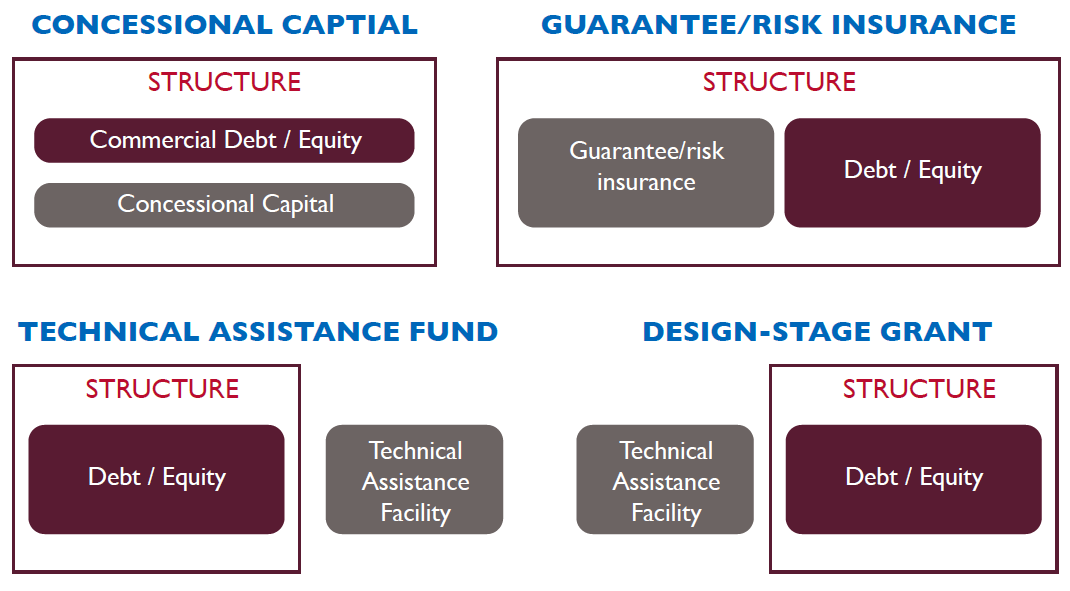
Combining development finance with private investment can assume different structures to reduce risk, employing a range of instruments (e.g., equity, debt, partnerships, technical assistance, grant-funded transaction design, guarantees, or insurance; Figure 1; OECD 2019a; Convergence 2023). The most common blended finance instruments across the development sector from 2018–2019 were direct investments in companies or subsidiaries, loan guarantees, “syndicated” loans, and lines of credit (OECD 2019a). Syndicated loans come from a group of collaborating financial institutions (a loan syndicate) to a single borrower, reducing the risk and buy-in amount needed for each individual group and/or ensuring sufficient specialized expertise. Alternatively, a smaller amount of pure grant funding may be used to support technical assistance or subsidies, with the goal of attracting other investors.
Figure 1. The four most common blended finance structures (adapted from Convergence 2023)
Examples
Although not all water-related “public-private partnerships” leverage public funding to attract commercial finance, these long-term collaborative arrangements among one or more government and private sector entities have been in place for decades in low- and middle-income countries, including throughout Africa, with encouraging results. Overall,
private operators have tended to be more efficient than governments at managing construction, service delivery, and asset maintenance (World Bank Group 2014). One frequently documented benefit among several Sub-Saharan African examples, where private management covers an estimated one-third of small piped water schemes, has been reduction of “non-revenue” water, or water losses for which production costs are never recovered. Among small-scale water providers in Uganda, a private sector participation model led to expanded coverage and financial performance with only modest tariff increases (World Bank Group 2014;Hirn 2013). Active connections tripled over 10 years with tariffs rising less than inflation.
In Madagascar, a host of rural community water user committees and private water operators have signed long-term concession agreements in which a private company invests in the water system to increase household access, generate more revenue, and share profits. This model has been replicated over roughly 15 years with donor support, such as USAID’s Rural Access to New Opportunities in Water, Sanitation, and Hygiene (RANO WASH) activity (Tetra Tech 2021).
Another long-running example of blended finance comes from Benin. Between 2007 and 2017, more than half of Benin’s rural piped water systems transitioned to private operation and maintenance contracts known as “affermages” (Comair, Delfieux, and Dakoure Sou 2021;Migan and Trémolet Consulting 2015). In these agreements, a private operator collects tariffs and then retains a percentage of an agreed-upon price per unit of water sold, turning over the remainder to the contracting authority (Janssens 2011). The initial pilot with 10 private operators successfully rehabilitated all water systems with no additional costs to the customers (World Bank Group 2018); however, subsequent scale-up experience brought a pivot to regional contracts to attract more professional operators. In 2022, a 10-year public-private partnership was formed with a consortium of French companies (Eranove, UDUMA, and Vergnet Hydro) to rehabilitate, extend, and operate rural water systems for 100% customer coverage (Marteau 2022). Public funds will ensure private connections and tariffs remain affordable.
Although some examples (e.g., Madagascar, Benin, Cambodia) have applied blended finance to rural water supply in low- and middle-income countries, it remains at a proof-of-concept stage. Blended finance is possible where rural water provision is more organized and mature and where people pay consistently, justifying lending. This is more likely to be the case in middle-income economies.
Further proof-of-concept is required to evaluate blended financing to drive rural water supply performance. It faces a dual challenge: persuading commercial lenders that water supply represents a lucrative investment opportunity and persuading water service providers to seek loans at rates higher than those routinely offered by development finance institutions.
Blended finance projects create an evidence base for effective public investment and in turn, incentivize the capture of better financial and impact data (Convergence 2019). Objective selection criteria may help “prime” service providers to continue the behaviors and actions that support blended finance (USAID 2022). Building the foundations for blended finance will require a transition period with accompanying public sector support, to allow for a paradigm shift on the part of both borrowers (who face increased pressure to manage operations efficiently) and lenders (who often do not know the market well enough to participate in investment opportunities).
While they take time, these adjustments have taken place in other sectors, most notably energy (IRC n.d.). Pories, Fonseca, and Delmon (2019) detail foundational issues ranging from governmental sector planning and tariff setting to service provider project preparation and financial market distortions. Experiences with the approach will elucidate the degree to which blended finance can work at large scales, but transformation is unlikely to occur rapidly.
Do you want to know more? Access to the complete report on financial innovations for rural water supply in low-resource settings HERE.
The information provided on this website is not official U.S. government information and does not represent the views or positions of the U.S. Agency for International Development or the U.S. Government.
If the water sector is going to attain safe water for all then it should deliberately make efforts to move from pilots and projects to systems change and to scale and move from policy development to policy implementation. Potentially innovative finance should focus on funding rural water solutions in an environment with strong institutional frameworks to attain sustainable impact. Building upon the insights of the previous blog under the same title “Service Delivery Management Models, Good Political and Water Governance for Strong Rural Water Systems”, this blog explores the institutional reforms driving a resilient rural water sector. Learn about the significance of Kakamega County Rural Water and Sanitation Corporation (KACRWASCO) activities and other key strategies for achieving scale and long-term sustainability in rural water service provision.
Kakamega County Government Scales Sustainable Rural Water Service Delivery Models
If the water sector is going to attain safe water for all then it should deliberately make efforts move from pilots and projects to systems change and to scale and move from policy development to policy implementation.
In spite of significant investments in Kakamega County’s Rural water supply over the past years, that brought improved access rates, still the water service levels was a big challenge in the Year 2016. Two main challenges existed: (1) Inadequate deteriorating sources and dilapidated infrastructure to meet the demand of the increasing population and (2) Weak institutional capacity to manage the facilities viably.
According to the Kakamega County Water Supply and Urban Sewerage Strategic Plan, (2015-2019) the functionality rates in the county were un-known however 61% of the residents (urban and rural) used improved water sources. Rural water coverage was at 30% according to the Lake Victoria North Water Works Development Agency (LVNWWDA) reports. This meant that 70% of the rural population probably had access to un-improved sources attributing to the county’s slow pace in attaining Sustainable Development Goal 6 (SDG6) then. Despite the existence of the rural water supplies, almost 59% of the functional ones did not perform as per set standards due to lack of professional management.
Some of the institutional arrangements for rural water service delivery were in place however there was need to review the existing ones, to be in tandem with the current water sector devolution dispensation. Using a systemic approach lens it was widely concurred that the technical aspects were not the main constraint to improved water service delivery access rather weak management. Therefore, Sustainable Service Delivery Models emerged as one of the most critical areas to improve in order to respond to the county’s water crisis.
Establishing an Institutional Framework for Resilient Rural Water Management
The Constitution of Kenya 2010 (CoK) Article 43 recognizes that access to safe and sufficient water is a basic human right and assigns under the 4th Schedule the responsibility for water provision and resources management to the county governments in pursuant to article 185 (2), 186 (1) and 187 (2) of the County Governments Act 2012. Further, article 174 (f) of the Constitution provides that one of the objects of devolution is to promote social and economic development and the provision of easily accessible services throughout Kenya. The Water Act 2016 affirms this alongside the National Water Policy 2021 that was being drafted then with clauses on retaining cost recovery principles and ring fencing of the water sector revenue to ensure sustainability. However, the institutional framework for managing the water services delivery in rural areas was still unclear.
Focus on SDMs was fundamental to improving rural water supply sustainability and service levels as it focuses on long-term provision of water services at scale as opposed to the existing discrete one-off community projects. Therefore, a critical determinant of devolution success in Kenya’s Water sector will be how timely the county governments develop and manage resilient systems that are responsive and accountable to public needs. However, Kakamega County still lacked the overall capacity to develop and implement effective institutional framework for SDMs.
The impetus for implementing and scaling promising alternative Service Delivery Management Models from Organisations like SNV was eminent but Scale and Speed proved necessary towards Resilient Rural Water Supplies.
To address these challenges for long term sustainability, from a Systems approach it was imperative that not only should the Service Delivery Management Models be developed but they be anchored on an institutional framework. The USAID KIWASH Project WASH Governance interventions also entailed supporting County Governments systematically improve rural water service delivery through stimulating local government support and political commitment, budget allocations and financing for WASH. Subsequently, the Project’s activities in Kakamega county ambitiously aimed at supporting its County Government establish a legal County Rural Water Service Provider.
The Approach and Process
Section 93 (1), (2) and (3) of the Water Act 2016 provides for Water Service Providers and County Governments to establish different water services delivery options. The County Executive Committee Member (CEC) in-charge of Kakamega Water Department directed adoption of Service Delivery Management options after a situational analysis report by USAID-KIWASH Project on status of targeted rural water supplies including a market research, willingness and ability to pay for water services and commercial viability. This was done concurrently with exchange visits to successful peer WSPs under various SDMs including Nakuru Rural Water and Sanitation Co. and Tachasis Water and Sanitation Company as part of lobbying and awareness creation for legislators to support the process.
Public Consultations and Handover of rural water projects:
The Water Act 2016, section 139 (1)-(6) requires a public consultation on intent to improve water services provision through SDMs. The CECM through the Kakamega County Assembly Legislators on the Water and Environment Committee held 12 public participation exercises across all the sub-counties and entered into negotiations and agreements with asset owners towards establishing a rural water services provider to manage rural service provision affirmed by Section 94 (2)(3).
The CECM with advice from director water services commissioned handing-over of targeted rural water supplies upon a situational assessment, viability analysis and agreed service delivery option. The director of water services provided a comprehensive inventory of all assets and liabilities: human resources, entire infrastructure (hardware and software) customer inventories, cash and bank balances and project history; all the assets and liabilities were evaluated at current values. Handing over tools included earlier registration documents, the deed of hand-over/surrender and Water services regulations.
Management Contracting, Licensing and Operationalisation:
The management model adopted was the Rural Water Service Provider as illustrated in Figure 2 below; the unserved area was large it was necessary to have an entity the county will ensure the right to water is met for the rural communities. USAID-KIWASH Project supported Kakamega County Department of Water to follow due process in forming the Rural WSP with institutional setup, planning and investments and monitoring and evaluation activities. This was important since Section 104 of the County Government Act provides that these plans shall be the basis for all budgeting and spending in the county. No public funds shall be appropriated without a planning framework developed by the county executive committee and approved by the county assembly. In consultation with WASREB Kakamega County Department of Water ensured that they meet all the requirements set out under section 77 (2), (3) and (4) of the Water Act 2016. The Kakamega County Rural Water and Sanitation Corporation Bill 2019 was developed and Kakamega County Rural Water Co (KACRWASCO) was registered as a rural water service provider as a public limited liability company and applied for a license including a proposed tariff from the national regulator (WASREB) to ensure compliance with requirements to keep them accountable and viable in their service provision area. Procedurally a new Management, Board of Directors and staff were acquired. Formation of County Rural WSP.
Figure 2 Illustrating SDM for Formation of County Rural WSP
Investment Planning, Financing and Coordination
Kakamega County Department of Water alongside USAID-KIWASH Project kicked off the process of development of operational policies and plans (County Water Strategies, Water Master Plans, Policies, Monitoring and Evaluation Frameworks, Procurement Guidelines, Consumer Engagement Strategy and CIDP) in accordance to Water Act,2016 Section 94. Additionally, Kakamega County Government allocated targeted subsidy to enable KACRWASCO to meet operation and maintenance costs and increase coverage to rural areas. They also partnered with various Organisations including the Private sector through Acacia Mining on a tripartite agreement to serve 15,000 people and DANCO on leasing of equipment including metres and HDPE pipes and state corporations including Water Sector Trust Fund and Lake Victoria North Water Works Development Agency (LVNWWDA) on financing water infrastructure like tanks, water kiosks and so on . Pursuant to section 94(3) of the Water Act 2016, the County Governments should develop water infrastructure which may be managed a WSPs. Subsequently the county government have invested US$3Million in both urban and rural water sector between 2016-2021.
KACRWASCO ring fences revenues to meet operational and maintenance costs and undertake service expansion against approved annual investment plans and budgets. National and County Government entities, departments, agencies coordinate in the development and provision of rural water services in the County through them. Non state entities consult and coordinate with KACRWASCO through County Government regarding development and provision of rural water services in the County.
Performance Monitoring and Reporting
KACRWASCO continues to ensure they provide accurate and verified monitoring and evaluation key performance data as set out by WASREB. The County Government sits in the BOD and inspects and monitor elements of water services delivery from the monthly status reports to undertake appropriate remedial measures to ensure effective service delivery.
Moving Forward
The activities towards the establishment of KARWASCO resulted to increased Kakamega County’s rural water coverage from 30% to 57% between 2016-2021 with over 569,600 people accessing safely managed drinking water services and an additional 271,984 accessing basic drinking water services. County investments in the WASH sector were at US$26Million during the Financial Year 2016-2022.
When governments deliver services as per the needs of the people they serve, they can increase public satisfaction and reduce costs. New thinking is needed to deliver the benefits of rural water infrastructure investments to eliminate waste given the dwindling water sector funding. Cognizant of the essential central role that rural water supply systems play towards the progressive realization of the right to water and improving livelihoods to alleviate poverty amid limited Water sector funding, it is imperative that professionalization in management of these systems is adopted at scale with speed. Kakamega’s unfunctional rural water projects successfully increased their integration into formal markets, with closer relationships to WSPs like KACWASCO, counties and institutional actors.
Rural Water Sector Funding had consistently lagged investment needs to address system issues; however, when investment was directed towards well-executed projects that improved outcomes for the network crowding in by market actors increased. Better procurement and vendor contracting were two of the primary mid-term levers that supported small capital-expenditure projects make more efficient use of capital that improved water coverage.
WASH sector coordination through the Multistakeholder Kakamega County WASH Forum supported acquisition and equitable allocation of additional investments from the private sector, recoverable grants, growth in WSP revenues and 36 percent increase in county investments in WASH sector. The forum also supported lobbying and advocacy activities on citizen Right to Water and responsibility of both levels of government in ensuring they have access to safe water. They demanded their rights during 2017 national elections campaigns pushing politicians to include access to safe water in their manifestos that support measure their performance. After attending a social accountability briefing session on attaining SDG6 in Kakamega County organised by USAID-KIWASH Project in partnership with the Kakamega County DWENR the County coined a Clarion Call Amatsi Khumukurua word in Luhya dialect meaning Water At The Doorstep. Such strong political will supported increase finance and equitable budget allocation for the water sector
Using a citizen-centric approach to delivering government services was helpful in creating ownership of processes and consumers taking responsibility in giving service feedback, paying water bills, reporting leaks, bursts, vandalism. WASREB has begun the process of disseminating the official guidelines for provision of water services in rural and underserved areas in Kenya. This marks WASREB’s first venture into regulation of services in the rural sector, it will significantly increase the uptake of the SDMs, establishing them as the first official guidance of formalizing water services provision in rural areas.
In closing this blog series, the significance of strong political and administrative governance, transformative partnerships, and adaptive strategies shines through in building a resilient rural water sector. Prioritizing safe water access for all and fostering collaboration pave the way for a sustainable water future, fostering prosperity and inclusivity. Thank you for joining this enlightening journey.
About the author:
Euphresia Luseka is a Water Governance Specialist and Co-Lead of RWSN Leave No-One Behind Theme. She is a seasoned Expert with experience in leadership, strategy development, partnerships and management in WASH sector nationally, regionally and internationally. She has specialised in WASH Public Policy, Business Development Support Strategies and Institutional Strengthening of urban and rural WASH Institutions. Euphresia has several publications and research work in her field.












 Rural Water Supply Network - blog