This is a guest blog by Faith Lilian Kuloba, who participated as a mentee in the RWSN Mentorship Programme 2024.
My name is Faith Lilian Kuloba, a Ugandan currently pursuing an MSc in Water and Wastewater Processes at Cranfield University. My journey to this point began during my time as an Assistant Water Resources Engineer at Water Access Consulting, when my supervisor encouraged me to join the Rural Water Supply Network (RWSN).
About a year later, while reading one of RWSN’s monthly email updates, I found the 2024 Mentorship Programme for Career Development. Although I wasn’t sure what to expect, I applied with optimism, and I was honoured to be selected.
Shortly after submitting my application, I was paired with my mentor, Rodolfo Bezerra Nóbrega, a lecturer and researcher in the water and environmental sector. His extensive experience in research and academia made him the perfect guide.
At the time, I was eager to advance my career through further studies. I had already applied for several master’s programmes without success, and my family was experiencing financial strain, making the prospect of funding my education even more uncertain. When I shared my career goals and challenges with Rodolfo, he committed to guiding me through the process.
Applying for a master’s degree can feel overwhelming, but Rodolfo provided exceptional mentorship. He helped me identify the right programmes, advised me on suitable universities, and taught me how to search for scholarships including how to reach out to universities about funding opportunities. He supported me in reviewing scholarship requirements, refining my CV to UK standards, and learning how to write strong, structured essays. He also assisted with interview preparation.
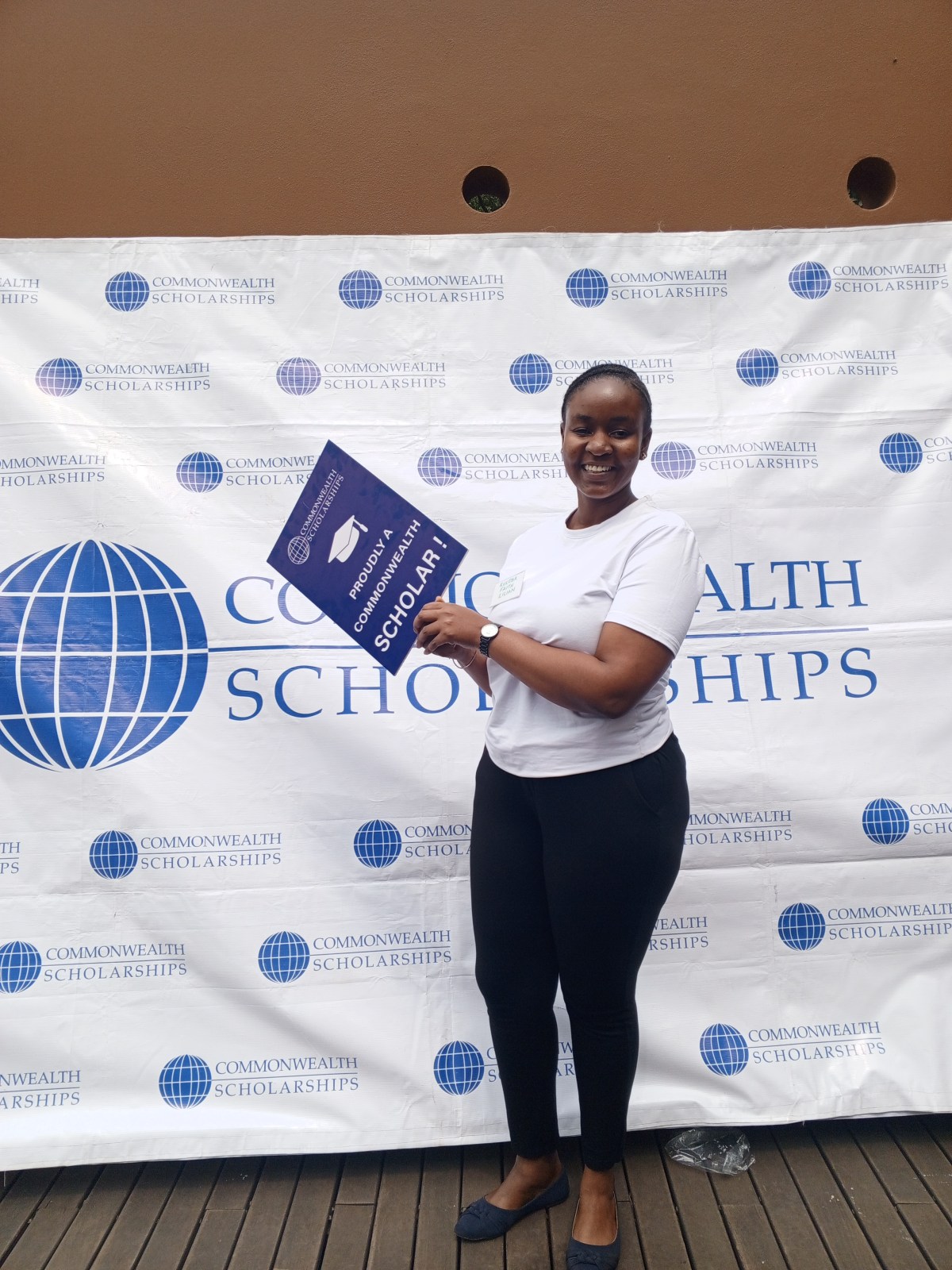
Earlier this year, I was honoured to received the Commonwealth Shared Scholarship, which has allowed me to begin my masters programme at Cranfield University.
This mentorship programme has been truly transformative. Without Rodolfo’s support, encouragement, and skill, I would not be where I am today. Just a year ago, I was unsure how I would finance my studies and now I am in the UK pursuing the master’s degree I always hoped for.
My sincere thanks go to RWSN and the Skat Foundation for organising this mentorship programme. It is an outstanding professional initiative that empowers women in WASH to grow, learn, and advance their careers. I am deeply grateful for the knowledge, confidence, and opportunities it has given me.
To join RWSN and be informed about the next round of the mentoring programme, please sign up here.
This is a guest blog by Esther Lydia Akol, who participated as a mentee in the RWSN and Women in WASH 2025 Mentorship Program.
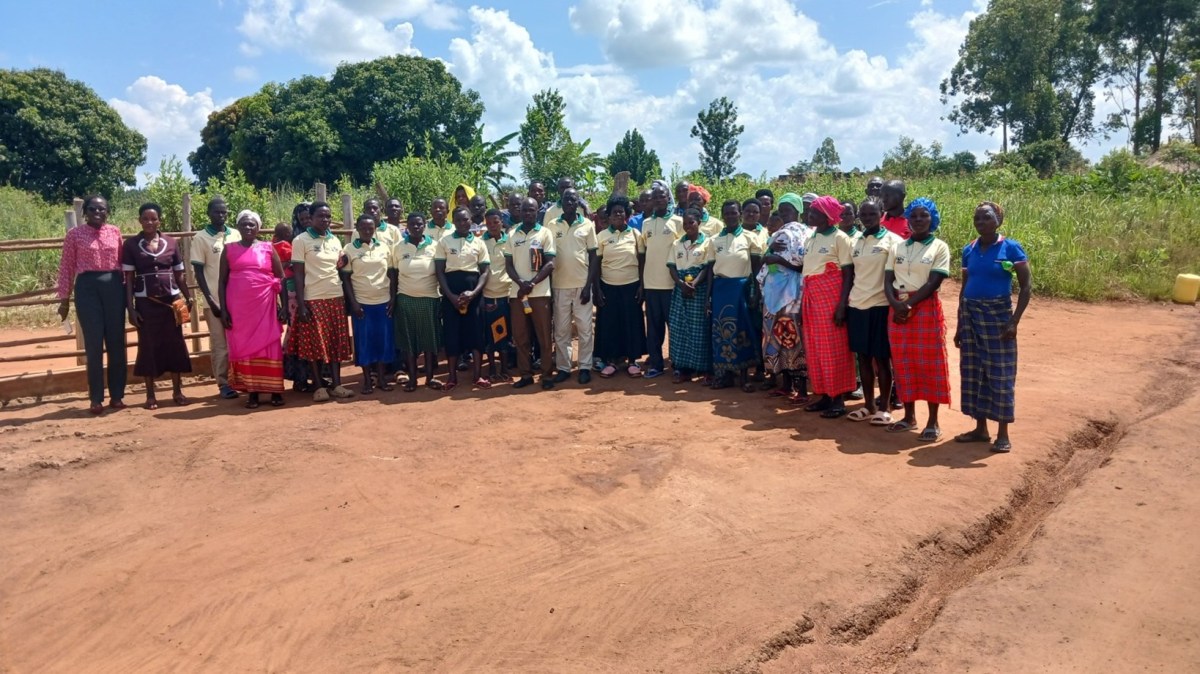
Photo: Esther (Mentee) with Community Water users after an Exchange Learning visist on Water Point Sustainability in Uganda
When I joined the RWSN and Women in WASH Mentorship Programs in April 2025, I hoped to grow professionally and expand my network. What I didn’t expect was a six-month journey that would challenge my thinking, deepen my confidence, and transform the way I approach leadership in rural water, sanitation, and hygiene (WASH). From meaningful conversations with my mentor to new global opportunities, these programs has shown me that mentorship is not just guidance; it is a ripple effect that strengthens communities, builds leadership, and fuels sustainable change.
My name is Esther Lydia Akol, a Ugandan WASH professional with The Water Trust. I joined the mentorship program to grow professionally, expand my network, and strengthen my leadership in promoting sustainable and inclusive rural water systems. Coordinated by the Rural Water Supply Network (RWSN) and Agenda for Change, the programs pair emerging professionals with experienced mentors to foster leadership, learning, and collaboration. It is more than a capacity-building effort; it is a platform for women to find their voices, share experiences, and lead change in communities and organizations.
Discovering Strength in Shared Experience
My mentor, Elon Ryan Sooknanan (PMP, MSc(Eng), MBA), brought a wealth of experience and a genuine spirit of guidance. Our monthly conversations went beyond technical discussions; they explored how sustainability, equity, and innovation intersect to make WASH initiatives more effective and inclusive. Through his mentorship, I learned to communicate with clarity, set achievable goals, and adopt a systems approach to rural water challenges.
Perhaps the most transformative lesson was realizing that mentorship is a two-way flow. While I learned from my mentor’s experiences, I also shared reflections from my work in Uganda’s rural communities. Together, we explored how local realities inform global strategies and how personal growth strengthens professional impact.
During this period, my mentor introduced me to Transformations Leeds (UK), a charity offering apprenticeship and coaching programmes in leadership. I was awarded a one-year apprenticeship and an additional six-month coaching opportunity focused on leadership, sustainable solutions, and climate change. Alongside this, he shared resources on scholarships and WASH knowledge platforms, which I continue to explore to expand my learning and global perspective. This experience demonstrated that mentorship often extends far beyond formal programme sessions, opening doors to lasting professional growth and collaboration.
Bridging Knowledge, Confidence, and Community
Beyond one-on-one mentoring, the RWSN and Women in WASH Mentorship Programs connected me with a diverse community of professionals committed to improving the sustainability and inclusivity of WASH services. Peer-learning sessions and resource-sharing platforms provided spaces for dialogue, reflection, and practical problem-solving.
What stood out most was the sense of community. Our mentor created a WhatsApp group for all the mentees he was mentoring, connecting us with WASH professionals from different regions and countries. Each participant brought a unique perspective, yet we shared a common determination to make a difference. Stories of resilience from across the globe reminded me that collaboration is one of the most powerful tools for advancing rural water supply.
Lessons That Will Flow Forward for me
Reflecting on this journey, I carry forward lessons that will guide my WASH and community development work:
Mentorship multiplies impact. Guiding others strengthens leadership, knowledge-sharing, and the sustainability of development efforts.
Diversity enhances problem-solving. Global exchanges between mentors and mentees bridge context-specific and universal challenges.
Confidence grows through support. Having someone believe in your potential helps dismantle self-doubt and nurtures leadership courage.
Networks are transformative. The mentoring programs connected me to a vibrant community of practitioners who continue to inspire collaboration.
Gender equity drives sustainability. Empowering women in WASH leadership fosters inclusive, resilient, and community-driven systems.
A Call to Future Mentees and Mentors
To women joining future mentorship cycles: embrace every session, challenge, and conversation with openness and curiosity. Ask questions, share your story, and listen deeply to others. The RWSN and Women in WASH Mentorship Programs’ true strength lies in mutual learning, where every perspective contributes to shaping a more inclusive and resilient WASH sector.
To professionals considering mentorship: your experience and time are powerful investments in the next generation of WASH leaders. Mentorship is not about having all the answers; it is about guiding reflection, nurturing curiosity, and helping others grow in confidence and skill. Every shared insight strengthens a global community working toward sustainable rural water services.
Conclusion: When Women Lead, WASH Thrives
Participating in the RWSN and Women in WASH Mentorship Programs has been deeply transformative. It reaffirmed that sustainable water supply is not only about infrastructure—it is about people, relationships, and shared learning.
As I continue my work in Uganda, I carry the lessons of mentorship: the power of connection, the strength of collaboration, and the hope that when women lead, communities thrive. Every act of guidance creates ripples of change, ripples that sustain clean water, dignity, and opportunity for all.
About the author:
Esther Lydia Akol is a WASH Officer with The Water Trust in Uganda. She is passionate about sustainable WASH solutions, gender equity, and empowering rural communities to build resilient rural water systems.
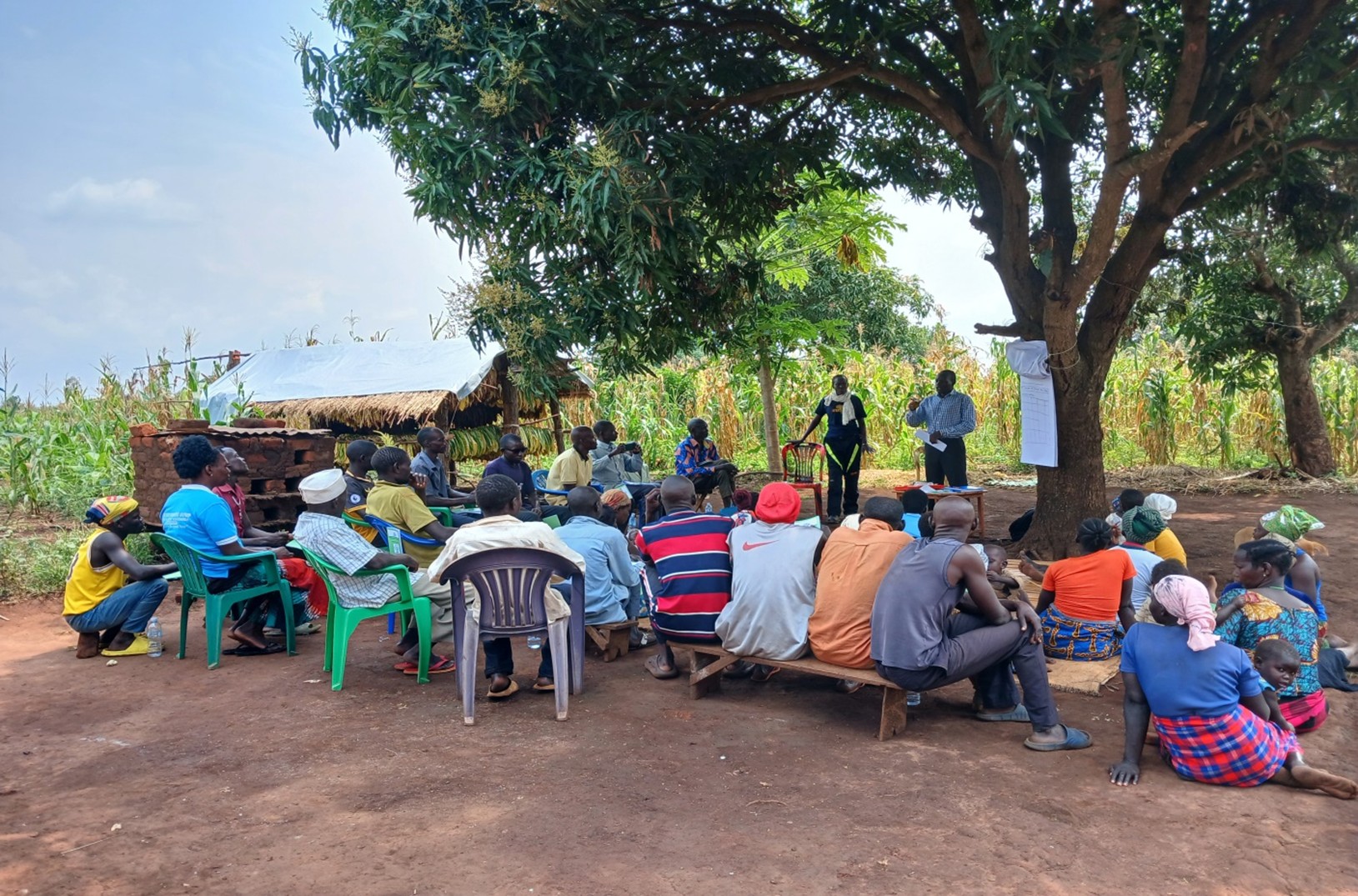
Photo: Esther (Mentee) facilitating a community WASH Committee Meeting in Uganda
To join RWSN and be informed about the next round of the mentoring programme, please sign up here.
This is a guest blog by Kachusha Nkosha, who participated as a mentee in the RWSN and Women in WASH 2025 Mentorship Program.
Being part of the RWSN and Women in WASH Mentoring Programs has been one of the most defining experiences of my professional journey. Having previously mentored in the health sector, I joined the program eager to contribute, but what unfolded went far beyond expectation. It became a season of personal growth, deeper purpose, and renewed conviction in the power of mentorship as a tool for transformation.
I was privileged to be mentored by Dr. Marie Christine Faye, a woman whose wisdom, humility, and global WASH experience profoundly shaped my outlook. Her mentorship went beyond career guidance; it encouraged reflection, strategic thinking, and a systems approach to leadership. Through her example, I learned that great mentors do not simply provide answers, they create space for discovery, confidence, and courage.
As a mentor myself, I was paired with two exceptional mentees under the hygiene programming track. One of them, Ms. Samira Nassir, displayed remarkable growth and commitment. Her ability to absorb lessons and translate them into tangible progress was inspiring. Our exchanges were grounded in openness, curiosity, and a shared determination to make a difference. My second mentee faced challenges balancing professional and personal responsibilities, as she was not engaged full-time, but I shared resources that she affirmed were valuable. However, even that experience carried important lessons. I continued to share resources, encouragement, and opportunities, reaffirming that mentorship is not about perfection — it is about planting seeds of belief and resilience that grow in their own time.
This program validated one of my strongest personal values, the value of supporting others to rise. It reminded me that true leadership is measured not by personal achievement, but by the impact we create in others. This belief has always guided me and was at the heart of my TEDx Talk, where I spoke about the transformative power of mentorship and the ripple effect it creates in communities. The RWSN program gave that philosophy new depth, connecting it to a global community of women equally passionate about change.
Beyond professional development, this experience strengthened my resolve to continue advancing in the WASH field, particularly in systems strengthening. It inspired me to pursue higher studies and deepen my understanding of how sustainable change is built — not only through projects, but through empowered people, resilient systems, and collaborative leadership.
Looking ahead, I am more determined than ever to contribute meaningfully at local, regional, and global levels — championing women’s leadership, innovation, and inclusivity within WASH. The RWSN and Women in WASH Mentoring Programs have reaffirmed my belief that when we lift others, we lift ourselves — and when women lead with empathy and vision, entire systems transform.
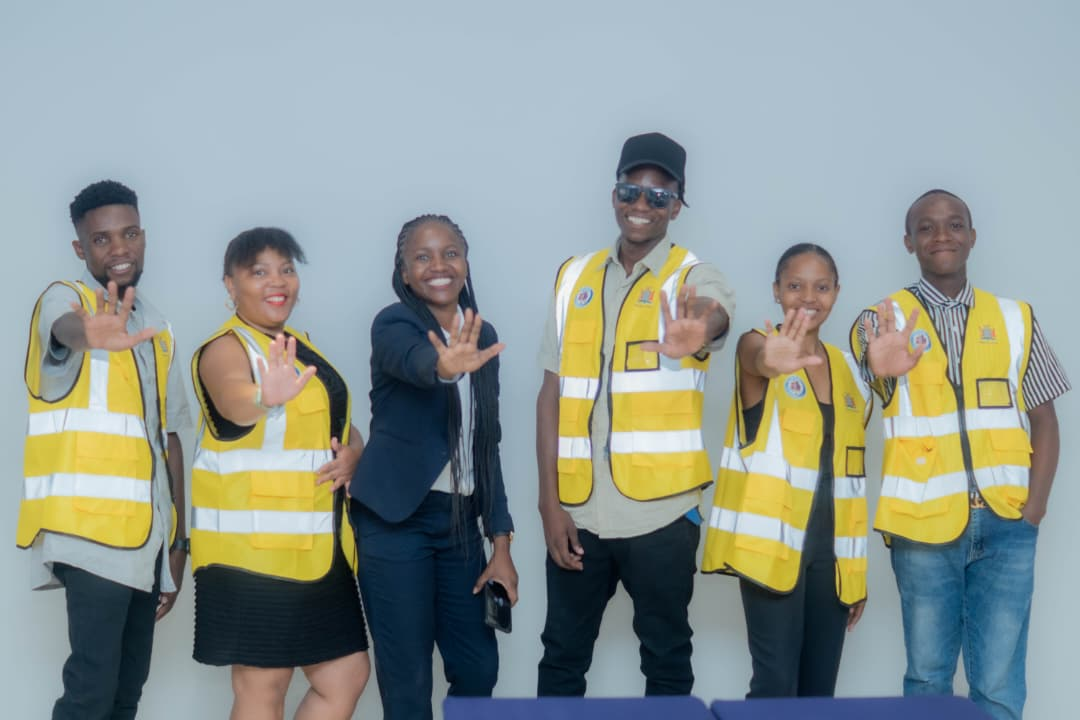
Photo: Kachusha Nkosha mentoring the youth WASH Ambassadors Club – the first WASH Club in Zambia led by youths.
To join RWSN and be informed about the next round of the mentoring programme, please sign up here.
Professionalism. Standards. Systems. These themes are repeated throughout Rural Water Supply Network’s (RWSN) spring and fall 2025 webinar series.
Given the large percentage of boreholes with early failure – within one to two years – improvements in standards and professionalism in borehole drilling are necessary. Drilling association leaders spoke passionately about the need for borehole drillers to professionalize to improve the quality of boreholes, increase accountability, stop illegal drilling and enhance community buy-in, which occurs when standards are enforced and certified materials are used.
George k’Ouma, from the Small Scale Drillers Association of Kenya, said it best: Professionalism isn’t optional.
A tidbit: Small borehole drillers have an advantage over large operations because they have knowledge of the local geology and seasonal changes, which enables better planning and materials selection.
Another area in need of increased professionalism is water management. Professor Kwabena Nyarko, from Kwame Nkrumah University of Science and Technology, Kumasi (KNUST), conducted a study comparing public sector, private sector and community water management in Ghana. Model type was less important than having professional standards and following best practices, including metering, tariffs that covered maintenance costs, efficient collection of tariffs, audits and reporting, digital recordkeeping and training, as well as financial support.
Jose Kobashikawa, head of the Enforcement Directorate for Sunass, the regulatory body for drinking water and sanitation services in Peru, echoed these concepts in his presentation. SUNASS uses a benchmarking tool to evaluate rural providers. Metrics include formality and management (are they registered, do they have a water use license), financial sustainability (do they collect tariffs, what percent of customers are defaulters), and quality of services (is water chlorinated and daily hours of water supply). High performing providers are awarded certificates recognizing their good practices in public management and workshops are held in each region to disseminate best practices.
Focusing on systems is another thread that runs through the varied webinar topics. Systems thinking means designing a scheme for the long-term provision of water. Boreholes must be properly sited. Appropriate materials, such as high quality stainless steel (304/316), need to be selected in order to prevent corrosion, as RWSN’s Stop the Rot initiative details. Handpumps often corrode within months or years instead of lasting a decade. Ayebale Ared, Technical and Social Expert at Welthungerhilfe, shared Uganda’s systemic solution: in 2016 the country banned the use of galvanized iron (GI) risers and rods in all new and rehabilitated handpumps – the first sub-Saharan country to do so. Uganda also requires a water quality analysis be done before materials are selected.
In addition, data collection and use must be embedded in all stages and aspects of water projects.. Dr. Callist Tindimugaya, Commissioner for Water Resources Planning and Regulation in Uganda, collects data from drillers which he then turns into groundwater maps the drillers can then use.
Systems thinking also means including the needs of the entire population in the design, especially women, who bear the burden of hauling and carrying water. Women – who are killed by crocodiles while washing clothes in rivers, whose skin is irritated by harsh detergents, who find leaning over low wash basins harder as they age, who need to wash bloody clothes and bedsheets separately from the family’s regular laundry when they menstruate. Laundry is barely mentioned in WASH circles but RWSN devoted an entire webinar to the topic. One speaker questioned how the WASH sector would be different if the metric for success was the amount of time women spend collecting water.
Understanding the local culture is critical; psychologists, behaviorists and sociologists can help provide insights. Technical solutions which aren’t accepted by the community will only lead to failure.
The lack of funds to cover maintenance work on wells is well known. Systems thinking means anticipating root causes of funding issues in a community and pre-emptively building a system that attempts to solve those issues. Tariffs are too low to cover maintenance? Then the project needs to determine how sufficient funds will be raised, whether through higher water fees (that may be less affordable to low-income families) or from external sources. The water committee is inefficient at collecting funds? Then training and capacity building need to be part of the project design from the beginning.
Looking at the bigger picture helps creative ideas flourish: Household rainwater harvesting, replenishing water aquifers through tube recharging, deep bed farming that breaks up the hard pan so water can return to the aquifer, sand dams that filter water and incorporating water management and regreening in the design and construction of roads so crops can grow next to roads. During the laundry webinar, three organizations presented their laundry solutions – devices that save women time, eliminate much of the manual labor, use less water and even offer income-generating opportunities.
The webinars are at times frustrating because we clearly know what needs to be done – yet professionalism, systems thinking and best practices are not always prevalent. More often, though, the webinars are full of insightful information and inspiring stores from experts. The knowledgeable participants, who ask focused, detailed questions, enhance the experience. I look forward to the spring 2026 webinars which are currently being planned.
Rebecca Laes-Kushner is a consultant to NGOs and companies with a social mission, with a particular focus on development issues such as WASH, climate change, supporting SMEs, health care and nutrition. Laes-Kushner Consulting (https://laeskushner.net/) provides research and writing, data analysis, M&E and training services. Rebecca has a Master’s in Public Administration (USA) and a Certificate of Advanced Studies in Development and Cooperation from ETH NADEL in Switzerland.
The views and opinions expressed in this blog post are those of the author. They do not necessarily reflect the views of the Rural Water Supply Network (RWSN) or its Executive Committee.
A Walk Before Dawn
At five in the morning, Busia County, Kenya is still wrapped in silence. But Jeruto is already walking. Fourteen years old, barefoot, a yellow jerrycan pressed into her hip. Three kilometres to water, three kilometres back.
She knows this path by heart. She also knows it is never safe. Men wait in the shadows. The price of water is sometimes not money but dignity. By the time she returns, the day has already slipped away; half her classes gone, her body exhausted, her hope dimmed.
“I was afraid,” she says. “But what choice did we have?”
This is the reality of women and girls without drinking water supplies on the premises every day stolen by the simple act of survival. And yet, here is the cruel paradox; when decisions are made about water, women are nowhere in the room. They carry the heaviest burden but hold the least power. The sector is still led by men.
That irrationality is finally being challenged. In western Kenya, three men, yes, men are ripping up the old rules of water and power. They are saying: enough. Not with platitudes, not with empty gender policies that gather dust, but with radical reforms that change who gets to sit at the table, who gets paid, who gets promoted, who gets heard.
And the truth they have stumbled into is this; Gender equity is not tokenism. It is infrastructure. It is resilience. It is the difference between a girl chained to a jerrycan and a girl being educated.
When Water Becomes Opportunity
The revolution begins small. For Jeruto, it started with the hum of a drilling rig. Just metres from her school gate, the Lake Victoria North Water Works Development Agency (LVNWWDA) sunk a borehole. Water surged from the ground, and with it, time, safety, and dignity returned to her life.
The 3 hours she once lost on the road became minutes. Within a year, girls’ local schools’ attendance had risen by nearly 30 percent.
For Joel Wamalwa, the agency’s CEO, this borehole was not just a piece of engineering. It was a revelation.
“Water unlocks education, strengthens health, reduces risks of violence, and frees women’s time for work and enterprise,” he says. “When women are included in planning and leadership, water systems become not only more equitable but more sustainable.”
Water, he insists, is not only a service. It is a multiplier.
Joel Wamalwa, CEO LVNWWDA says water is a Multiplier, Photographer: Euphresia Luseka
The Paradox of Exclusion
And yet, Joel has spent much of his career staring at a contradiction that borders on absurd. Women carry the heaviest weight of water scarcity rationing supplies, absorbing the stress of breakdowns, managing survival when systems fail. They are the first to wake, the last to sleep, the ones who walk the farthest.
But when utilities gather to make decisions on staffing, on budgets, on infrastructure women are almost invisible.
“We made choices about them without them,” he says quietly. “That was not only unjust. It was inefficient.”
The UN WWDR 2026 shall serve as a vital resource, illustrating how global trends and phenomena are reshaping gender dynamics in societies around the world. The interplay between conflict, migration, and gender equity in WASH reveals stark realities. In regions afflicted by conflict and instability, women’s safety and access to essential services are severely compromised.
The plight of women in conflict zones is further exacerbated by migration. Women and girls face an increased risk of sexual and gender-based violence during conflicts. Yet, amid these challenges, women remain indispensable agents of change—actively participating in peace-building, conflict resolution, and post-conflict reconstruction. This resilience highlights the need to recognize and harness women’s potential for positive transformation in their communities.
Migration and its intersection and climate change also alters traditional gender roles and expectations, as families adapt to new environments; it presents opportunities for economic independence and education, empowering them to challenge restrictive gender norms. Still Migrant women often encounter exploitation, discrimination, and limited access to resources, underscoring the urgent need to address these barriers.
Corruption emerges as another formidable barrier to WASH and gender equity. It restricts women’s access to essential services and undermines their participation in leadership and decision-making processes, as demonstrated in weaponisation of water. U.N. Women has called for urgent action to protect Sudanese women and girls, emphasizing the need for accountability in addressing high levels of sexual violence and exploitation. “We cannot let Sudan become a forgotten crisis,” asserts U.N. Women’s Addou, highlighting the critical necessity for action in conflict-affected regions.
On my blog on Diversity in Water sector leadership I emphasise the concerning underrepresentation of women. A World Bank report highlights that less than 18% of the workforce in water utilities are women and that two-thirds of sanitation leaders are white according to a FLUSH LLC publication that I co-authored. This systemic inequity reflects deeper societal structures, suggesting that without diverse leadership, the water sector risks stagnation and failure in meeting SDG6 targets.
“Gender equality is a fundamental human right and an obvious question of equity and fairness. But it is also a necessary foundation for sustainable development and a peaceful, prosperous world.” – Beate Trankmann, UNDP Resident Representative
However, the intersection of WASH reveals profound challenges that hinder the potential of women and girls in achieving equitable and sustainable development, within the realms of WASH. Cecilia Sharp, UNICEF Director of WASH and CEED, explains this by informing that “unsafe water, toilets, and handwashing at home robs girls of their potential, compromises their well-being, and perpetuates cycles of poverty.” She added, “responding to girls’ needs in the design and implementation of WASH programmes is critical to reaching universal access to WASH and achieving gender equality and empowerment.”
Since the emergence of gendered thinking in WASH in 1970s, the dialogue surrounding gender equity has evolved including a dedicated SDG 5 that envisions a world where gender equality is achieved and all women and girls are empowered. It targets the eradication of discrimination and violence against women, child marriage and female genital mutilation, and the recognition of unpaid care work. Furthermore, it emphasizes the necessity for women’s participation in decision-making and access to sexual and reproductive health services.
Water Scarcity and Gender Inequality: Exploring the Hidden Costs of a Thirsty World
The intersection of WASH and gender unveils unique challenges that disproportionately burden women and girls. As demonstrated on Graph 2 below, Research reveals that when water sources are not easily accessible, women and girls aged 15 and older assume the primary responsibility for water collection in 70% of households—an alarming statistic that starkly contrasts with the 30% of households where men share this burden. This reality not only highlights the entrenched gender roles but also raises critical questions about the time and energy expended by women and girls, which could otherwise be invested in education, employment, or health.
This multifaceted vulnerability contributes to a staggering increase in mortality rates among women and girls.
Brightening the Horizon: Positive Trends in Gender Recognition in WASH Initiatives
“In the landscape of gender recognition, a nuanced narrative unfolds—one that, while acknowledging persistent challenges, also celebrates the transformative strides women are making within the water sector.”
The forthcoming UN WWDR 2026 stands as a beacon of hope, poised to spotlight the remarkable achievements of women in this vital field. By illuminating their contributions and sharing success stories, the report shall aim not just to honour past accomplishments but to ignite inspiration in future generations of women aspiring to carve out their own paths in WASH careers. This acknowledgment is not merely celebratory; it is a critical step toward fostering gender equity in a sector that has historically marginalized female voices.
Senegal, for instance, has shown remarkable strides between 2015 and 2020, as highlighted in the 2022 SDG Gender Index by Equal Measures 2030. They improved on undernourishment (SDG2) and drinking water (SDG6). The Senegalese government, since adopting the Beijing Declaration, has actively championed gender equality. The introduction of a parity law for elected institutions in 2010 has positioned Senegal as a global leader, boasting one of the highest proportions of women parliamentarians in West Africa. This progressive move places Senegal fourth in Africa concerning gender parity in its legislative assembly. Complementing these efforts, the government has ratified several international conventions to bolster women’s rights and developed a National Strategy for Gender Equity (SNEEG 2016-2026), to ensure equitable participation of both genders in decision-making and access to resources.
Such positive trends in gender recognition in WASH, have spilled into the political arena particularly women’s activism; Hon. Anne Désirée Ouloto—dubbed ‘Maman Bulldozer’ lead transformative efforts in WASH initiatives in Côte d’Ivoire. Presiding over a monumental US$1.2 billion investment in sanitation and drainage in Greater Abidjan, her work exemplifies the profound impact of female leadership in WASH sector.
Moreover, Women are not just participating but breaking barriers, challenging norms and stepping into leadership roles, shaping policies, and driving change by making their voice heard. Indonesia’s Retno Marsudi, who serves as the first UN Special Envoy on Water, exemplifies the vital role women play in global discourse on water issues.




 Rural Water Supply Network - blog