
Blog by Peter Wanyangi & Ida Githu (Dr.), Managing Partner, EED Advisory.
Africa Water Policy Moment: Converging Programmes, Fragmented Delivery
Africa is experiencing one of its most significant water policy moments in decades. In February 2026, African leaders adopted the African Union’s (AU) Water Vision 2063 and Policy, alongside the declaration of 2026 as the Year of Water and Sanitation. This vision recognizes water and sanitation not only as a social service, but also as catalysts for economic growth, food security, and climate resilience, calling on African governments to “position water as a strategic asset for industrialization, agriculture and energy, and an indispensable enabler of primary national development objectives.”
Within weeks of the AU declaration, the World Bank Group launched the Water Forward Initiative at its Spring Meetings in April 2026. The initiative aims to ‘make water systems investable, scalable, and capable of supporting prosperity at scale’. As World Bank Group President Ajay Banga put it, “Water is foundational to how economies function. When water systems work, farmers produce, businesses operate, and cities attract investment.”
Central to this ‘water policy moment’ is a recognition of the economic value of water and the dependence of other sectors on this critical resource. Indeed, water is said to underpin health, food systems, energy, and an estimated 1.7 billion jobs worldwide.
The question then becomes: how do we ensure that these high-level declarations are delivered to local communities, and particularly rural African communities that remain largely underserved?
This question is especially pertinent given other major development programmes advancing in parallel with the water initiatives across the continent, which are relevant to delivering the economic potential of water but are not necessarily presented as such. For instance, there is the Mission 300 initiative, developed by the World Bank and the African Development Bank, which targets electricity access for 300 million Africans by 2030. There is also the agriculture-focused programme, AgriConnect, also developed by the World Bank and aimed at improving smallholder productivity, food systems, and rural incomes targeting 300 million smallholder farmers globally by 2030, with country compacts already launched in Senegal, Guinea, Ghana and Angola. The physical infrastructure component of AgriConnect recognizes that ‘irrigation, transportation corridors such as roads and railways, and electricity form the backbone of a strong agriculture value chain’.
While the World Bank/AfDB programmes, along with the African Union’s policy framework, were not designed as a single integrated framework, their implementation realities converge at the community level. Reliable water access underpins irrigation and agricultural productivity; energy is needed to pump, treat, and distribute that water; and water and energy systems both become more viable when anchored in productive agricultural demand. As a result, rural development, and specifically economic outcomes in water, energy, and agriculture, are increasingly interdependent, a practical convergence reflecting the logic of the Water-Energy-Food-Ecosystems nexus.
A useful nexus level implementation lever: PUE & MUS
A conversation at this year’s Energy Access Investment Forum pointed to the convergence of two common yet often unlinked approaches as a low-hanging starting point in delivering these high-level declarations to local communities: Productive Use of Energy (PUE) and Multiple-Use Water Services (MUS). PUE is an increasingly popular approach within the energy sector that refers to the use of energy to create value, be it in the form of productivity or income, employment, or reduced hardship. PUE largely entails using decentralized energy systems (for example, mini-grids and solar home systems) to support income-generating activities. This includes irrigation, agro-processing, cold storage, and small enterprise development. PUE approaches have demonstrated consistent livelihood gains across the region: solar irrigation in Ethiopia has helped over 3,199 households diversify crops and extend cultivation through dry seasons, while solar agro-processing in Uganda has enabled women-led enterprises to reduce post-harvest losses and generate new income streams, with one solar dryer installation alone yielding over US$2,382 in additional income for 90 smallholder women farmers.
Across many African rural contexts, however, mini-grids, a more economical electrification option compared to extension of the main grid, face viability challenges due to limited demand concentrated only in household consumption. Without productive demand, revenue streams remain insufficient for sustainability.
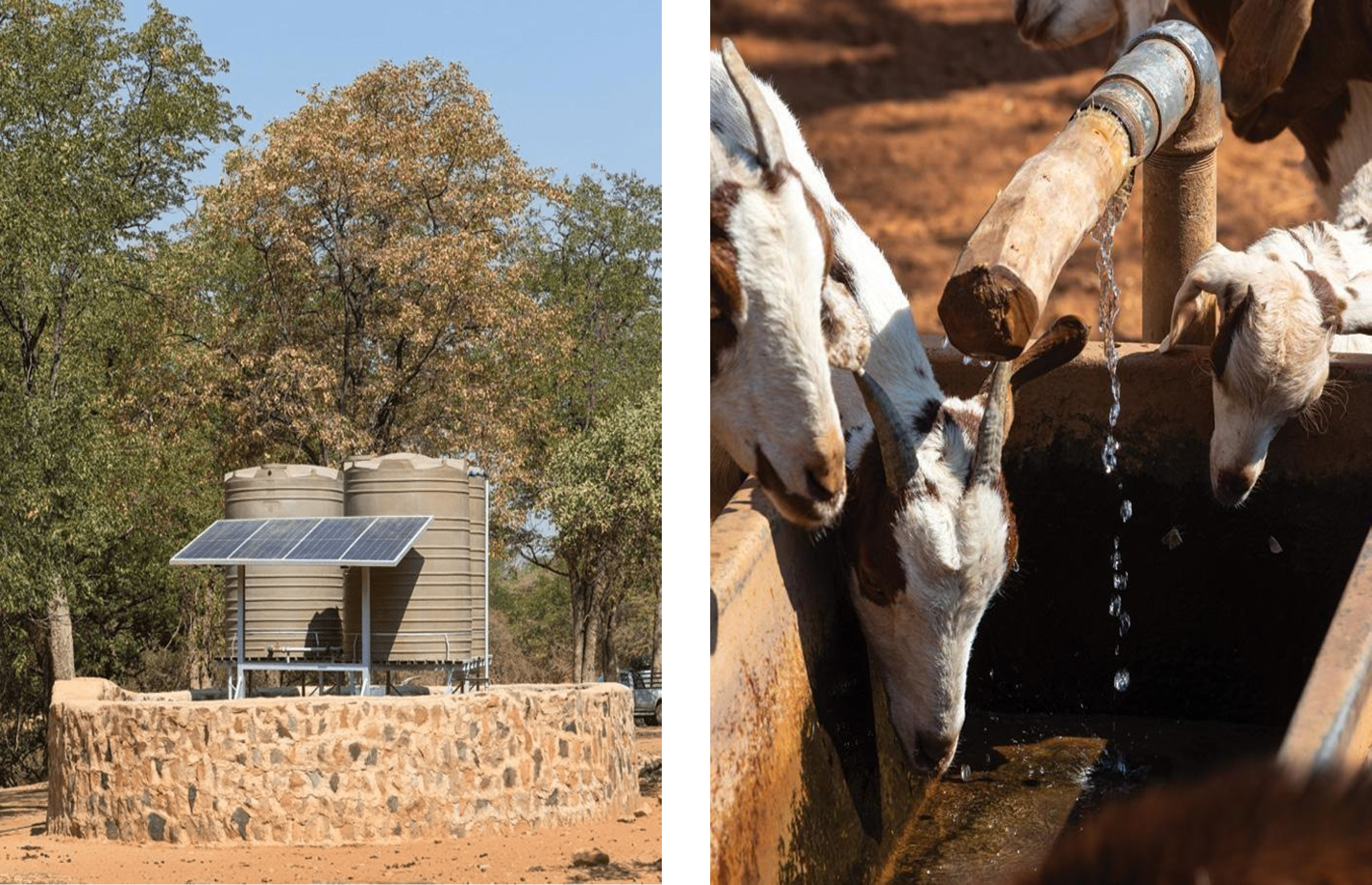
This is where MUS comes in. This common water sector approach aims to supply communities with water for both domestic needs (for example, drinking, cooking, washing, and sanitation) and productive activities (such as farming, livestock, and enterprise). Evidence from MUS outcomes is increasingly consistent on the value of MUS to long-term sustainability of water systems: comparative research in Nepal found that 87.5% of MUS systems surveyed remained fully functional or required only minor repair, compared to 56.8% of conventional single-use domestic systems. This sustainability differential is linked to stronger local ownership and revenue generation enabled by productive water use.
Linking PUE and MUS, it is arguable that water systems built for MUS can provide the missing anchor loads required for the economic viability of rural mini-grids. A borehole supporting domestic use, livestock, and irrigation creates steady productive demand that improves mini-grid viability. At the same time, electrified water access enables irrigation and enterprise development. This creates a mutually reinforcing system where water and energy infrastructure co-develop productive rural economies, leading to a convergence of outcomes and impacts for water, energy and agricultural programs.
The need for convergence in institutional design
This convergence in MUS and PUE outcomes, however, requires convergence in institutional design. Unfortunately, though, water, energy, and agriculture remain fragmented across many African countries. Planning, financing, and project implementation are done through separate institutional systems. Further, fragmentation in delivery persists because institutional incentives are structured around sector-specific results. Ministries are evaluated, funded, and held accountable through separate results frameworks. Financing from development partners typically flows through sectoral envelopes – water budgets, energy budgets, and agriculture budgets – each with its own conditionalities and reporting requirements. This architecture creates strong incentives to deliver within sectors and disincentives cross-sector coordination, which requires more negotiation, more time, and different accountability structures than sector-siloed delivery.
The consequence of this fragmentation is that, even where sectoral targets are met, integrated rural development outcomes remain under-realized. Irrigation schemes are expanded without guaranteed energy for pumping; rural electrification programmes prioritize household connections without necessarily being anchored by productive uses; water infrastructure is delivered without structured financing systems for operations and maintenance, leading to gradual deterioration and eventual failure of service performance.
This fragmentation is most visible in the national compacts delivered by governments in response to Mission 300, Water Forward, and Agriconnect. Energy compacts, available for 30 African countries, are almost entirely siloed with barely any references to water resource governance, agricultural productive use, or cross-sector coordination mechanisms. Water Forward Compacts, available for 7 African countries, are more nexus aware – more so on the water-agriculture nexus, as evidenced by the inclusion of institutional coordination mechanisms compared to energy, which is more of an operational input than a strategic integration priority. Senegal’s Water Compact stands out as one of the more sophisticated compacts with direct reference to the country’s AgriConnect Compact, noting that the two Compacts operate as two sides of a single national strategy—the Water Compact securing the resource while the AgriConnect Compact optimizes its productive use. The Compact also acknowledges the dual purposes of the country’s various dams (that is, irrigation and hydropower generation). This level of convergence in national policy documents provides the necessary backing for PUE and MUS integration that would strongly anchor rural development in energy, water and agriculture.
Conclusion
Embedding PUE and MUS as a recommended mandatory co-design requirement in rural water, energy, and agricultural investments presents a critical and practical lever for convergence in institutional design. This may take different forms including:
- With lessons from Senegal, for example, Water Forward, Mission 300, and AgriConnect National Compacts should adopt a WEFE nexus outlook, which would set the tone on institutional convergence at a policy level. This would consequently trickle down to specific project design.
- Given the cross-sectoral nature of the African Union’s (AU) Water Vision 2063 and Policy, a unified monitoring and evaluation framework tracked and reported through African Ministers’ Council on Water (AMCOW) continental oversight mechanisms could be useful. This would shift accountability from sector-specific access counts toward integrated community-level outcomes: jobs created, incomes generated, enterprises sustained, and sustained service delivery.
Such a shift matters because current development frameworks and programmes are justified not simply as infrastructure expansion efforts, but as pathways to jobs, productivity, and economic transformation, outcomes that depend on system-level functionality across sectors, not isolated infrastructure delivery.
We currently have the necessary policy window to effect this shift. The design of the Africa Water Vision 2063 Implementation Plan is currently underway, with AMCOW’s sub-regional consultations on the First Implementation Plan 2026–2033 ongoing across Africa as of mid-2026. These consultations convene ministers, technical experts, and development partners to define actionable priorities, financing frameworks, and institutional mechanisms. Further, most countries in the region are currently drafting their Water Forward and AgriConnect compacts, presenting the opportunity for national-level institutional convergence. This window presents an opportunity to define an integrated approach to rural development. May it not pass us!
About the Authors:
Dr. Ida Githu is Managing Partner at EED Advisory, a Pan-African Consulting Company that focuses on WASH, energy, and climate change. She has extensive experience in WASH sector assessments across Africa and has previously worked with the World Bank Group.
Peter Wanyangi is a climate finance and governance researcher and a columnist with Business Daily Africa. He brings a cross-sectoral lens to the intersection of green finance, community leadership and climate-resilient development in Africa.
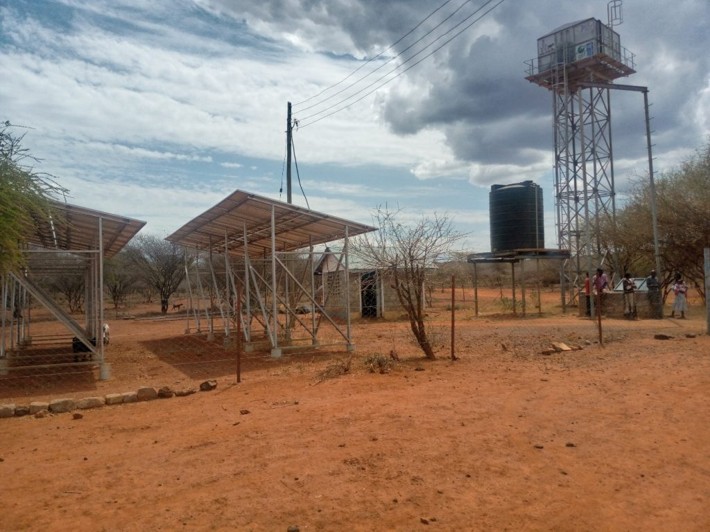
Featured image: Sun of hope: How a solar-powered water project is transforming lives in Baringo documents the Multiple-Use Water Services (MUS) approach, using a solar-powered borehole for both domestic and productive (livestock and gardening) activities, along with leveraging the solar power to light the water point. Credit: Africa Uncensored

 Rural Water Supply Network - blog