How three male allies are advancing gender equity in Kenya’s water sector

Featured photo: Daily, millions of girls and women in Kenya walk for water, losing time, safety, and opportunity. Photographer: Euphresia Luseka

Blog by Euphresia Luseka, co-lead of the RWSN Leave No-one Behind theme.

The views and opinions expressed in this blog post are those of the author. They do not necessarily reflect the views of the Rural Water Supply Network (RWSN) or its Executive Committee.

A Walk Before Dawn

At five in the morning, Busia County, Kenya is still wrapped in silence. But Jeruto is already walking. Fourteen years old, barefoot, a yellow jerrycan pressed into her hip. Three kilometres to water, three kilometres back.

She knows this path by heart. She also knows it is never safe. Men wait in the shadows. The price of water is sometimes not money but dignity. By the time she returns, the day has already slipped away; half her classes gone, her body exhausted, her hope dimmed.

“I was afraid,” she says. “But what choice did we have?”

This is the  reality of women and girls without drinking water supplies on the premises  every day stolen by the simple act of survival. And yet, here is the cruel paradox; when decisions are made about water, women are nowhere in the room. They carry the heaviest burden but hold the least power. The sector is still led by men.

That irrationality is finally being challenged. In western Kenya, three men, yes, men are ripping up the old rules of water and power. They are saying: enough. Not with platitudes, not with empty gender policies that gather dust, but with radical reforms that change who gets to sit at the table, who gets paid, who gets promoted, who gets heard.

And the truth they have stumbled into is this; Gender equity is not tokenism. It is infrastructure. It is resilience. It is the difference between a girl chained to a jerrycan and a girl being educated.

When Water Becomes Opportunity

The revolution begins small. For Jeruto, it started with the hum of a drilling rig. Just metres from her school gate, the Lake Victoria North Water Works Development Agency (LVNWWDA) sunk a borehole. Water surged from the ground, and with it, time, safety, and dignity returned to her life.

The 3 hours she once lost on the road became minutes. Within a year, girls’ local schools’ attendance had risen by nearly 30 percent.

For Joel Wamalwa, the agency’s CEO, this borehole was not just a piece of engineering. It was a revelation.

“Water unlocks education, strengthens health, reduces risks of violence, and frees women’s time for work and enterprise,” he says. “When women are included in planning and leadership, water systems become not only more equitable but more sustainable.”

Water, he insists, is not only a service. It is a multiplier.

Joel Wamalwa, CEO LVNWWDA says water is a Multiplier, Photographer: Euphresia Luseka

The Paradox of Exclusion

And yet, Joel has spent much of his career staring at a contradiction that borders on absurd. Women carry the heaviest weight of water scarcity rationing supplies, absorbing the stress of breakdowns, managing survival when systems fail. They are the first to wake, the last to sleep, the ones who walk the farthest.

But when utilities gather to make decisions on staffing, on budgets, on infrastructure women are almost invisible.

“We made choices about them without them,” he says quietly. “That was not only unjust. It was inefficient.”

The numbers from Mckinsey back him up. Utilities with gender-diverse leadership are 21 per cent more profitable. Boards with women deliver up to 95 per cent higher returns. For Joel, the conclusion is obvious: “Equity is not compliance. It’s not tokenism. It’s strategy.”

Continue reading “How three male allies are advancing gender equity in Kenya’s water sector”

UNQUALIFIED WATER WORKERS AND FORGED CREDENTIALS: THE HIDDEN CORRUPTION UNDERMINING SDG 6

Photograph 1  Showing a Graduate in Kenya, Source: NTV Kenya

Blog by Euphresia Luseka, co-lead of the RWSN Leave No-one Behind theme.

The views and opinions expressed in this blog post are those of the author. They do not necessarily reflect the views of the Rural Water Supply Network (RWSN) or its Executive Committee.

Fake Qualifications, Real Consequences: The Brenda Sulungai Case

Across Africa, water utilities are expected to be drivers of sustainable development, climate resilience, and digital transformation. Yet beneath this ambition lies a disturbing contradiction: highly complex systems are being operated by staff who, in most cases, lack even the basic credentials to do the job.

Despite major gains in infrastructure and technology investments, Kenya’s water utilities continue to underperform often not due to a lack of funding or innovation, but because of the human capital crisis festering within. I have witnessed strategic plans, technological upgrades, and donor-funded initiatives collapse under the weight of a talent base that was never prepared or licensed.

In July 2025, Brenda Nelly Sulungai a former staff at Nairobi City Water and Sewerage Company (NCWSC), was arraigned in a Kenyan Court, for forgery, uttering a false document, and deceiving a principal to gain employment. The Sulungai case demonstrates that the underlying problem extends far beyond individual misconduct on fraudulent activities, but rather the existing system permits such deception to occur and persist undetected for long. A fundamental breakdown exists in the accountability mechanisms embedded within the Human resources ecosystem of Water Corporations and Utilities.

This blog analyses the technical, legal and operational risks posed by weak certification systems, forgery, and unqualified staffing across Kenya’s water sector. It also proposes a plan for professionalising the sector, building institutional resilience, and restoring public’s vital trust.

The Pervasive Scale of Credential Fraud

“Every academic certificate in Kenya is now questionable. Forgery is happening across all sectors including those critical to life like water and health. We cannot ignore this anymore.”  –Twalib Mbarak, CEO, Ethics and Anti-Corruption Commission (EACC)

This stark statement captures the magnitude of Kenya’s credential fraud crisis as a structural failure that compromises public service integrity at scale as demonstrated in Box 1.

Box 1: Sector-Wide Credential Fraud Uncovered in National Audit

Following a 2022 presidential directive, the Kenya National Qualifications Authority (KNQA), in collaboration with the EACC and the Public Service Commission (PSC), audited academic and professional credentials across 400+ public institutions. Of 47,000 employment records reviewed, over 10,000 (30%) were forged or unverifiable documents. Credential fraud in Water Service Providers (WSPs) flourished under conditions of decentralised recruitment, limited HR oversight, and politicised hiring. Frontline operational roles such as meter readers, plant technicians, lab staff, and revenue officers are especially vulnerable to infiltration by individuals presenting forged or non-accredited certificates. In a coastal county, 5 out of 8; 63% of water treatment technicians lacked formal technical certification highlighting serious lapses in frontline hiring. WSPs such as Nairobi City and Garissa Water & Sewerage Company were cited for fraudulent promotions and appointments. The audit prompted a directive requiring all WSPs to submit comprehensive staff verification reports. EACC investigated over 2,000 public servants for holding fraudulent academic qualifications. In parallel, PSC has flagged more than 1,200 employees with irregular documentation in public institutions, signalling collapse in credential verification and HR governance.

“This is systemic. There are falsified documents even at PhD level, dissertations are downloaded from the internet.” – Dr. David Oginde, Chairperson, EACC

Senior public officials have not minced words. Head of Public Service Felix Koskei has declared the forged qualifications surge a ‘national emergency.’ PSC Chairman, Anthony Muchiri emphasised the urgency of cultural reform, framing the restoration of integrity as both a legal and moral imperative.

Consequently, this is not simply a matter of individual misconduct it points to a systemic failure in verification systems, risk management, and institutional accountability.

The Grave Consequences: Incompetence Endangering Lives and Undermining Progress

The human capital crisis in Kenya’s water sector driven by systemic weaknesses in credential verification, licensing, and staff training is not only an administrative oversight but threatens public health and utility performance.

Improper chlorine dosing, no action on bacteriological alerts and contaminated boreholes link to unqualified personnel, contributing to recurrent outbreaks of waterborne diseases such as cholera and typhoid. Therefore, Water sector HR reforms must be framed not just as a governance issue, but as a public health and national security imperative.

“You cannot digitize your way out of poor staffing. At some point, someone has to operate the system.”

The human resource crisis is also undermining the operational stability and financial viability of Kenya’s WSPs. Underqualified technical staff routinely mismanage complex systems like SCADA and GIS, leading to frequent breakdowns and service disruptions. Poorly trained revenue officers contribute to billing errors, customer dissatisfaction, and 30% revenue leakage crippling reinvestment in maintenance and training. Even as utilities embrace digitisation, adoption is hindered by a lack of skills and internal resistance to change. Without parallel investment in the human capabilities needed to run and sustain infrastructure, digital and capital investments risk failing to deliver impact.

Sustainable transformation requires human capital to be treated as a core infrastructure asset.

Systemic Vulnerabilities and Their Underlying Causes

I. Governance Deficit: Institutional Decay Through Political Capture

Kenya’s water sector suffers from a foundational governance breakdown; WASREB, the national water regulator notes a few WSPs have structured HR policies, indicating systemic weakness. Other gaps include: Outdated job descriptions, Irregular or absent performance reviews and Non-existent competency frameworks.

“Staff appointments in WSPs are frequently driven by tenure, local allegiances, or political alignment rather than technical merit. This erosion of meritocracy is neither incidental nor benign; it is indicative of deliberate political capture.”— Charles Chitechi, President, Water Sector Workers Association of Kenya (WASWAK)

Even WSP BODs that are governance bulwarks, are compromised. Opaque recruitment, undertrained members, and entrenched conflicts of interest have rendered them susceptible to patronage.

This politicisation has real operational costs, including poor service delivery, stagnant capacity, and a rise in credential forgery.

II. Regulatory Void: Absence of Mandatory Professional Licensing

Despite being designated as Kenya’s 16 critical infrastructure sectors, the water sector lacks a national mandatory licensing framework. Unlike medicine or engineering, no statutory barrier prevents an unqualified person from operating a treatment plant. Training institutions exist, including KEWI, NITA, and TVETs, but certification is inconsistent, and unenforced. Most alarming is the absence of a centralised professional registry, allowing forgeries to pass undetected unless exposed by whistleblowers.

Kenya’s current policy approach enables fraud by omission. The lack of a licensing regime is not a gap; it is a deliberate vulnerability.

III. Investment Blind Spot: Human Capital as the Missing Infrastructure

According to WASREB, Kenya’s WSPs spend less than 1% of OPEX on staff training, compared to the 5%-7% benchmark in high-performing WSPs globally. This chronic underinvestment in people creates a compounding deficit: Stagnant skills lead to operational bottlenecks, Low morale drives attrition and disengagement and Poor efficiency increases non-revenue water (NRW).

“You cannot digitize your way out of poor staffing. At some point, someone has to operate the system.”

A study by AfDB found that targeted training investment can lead to 20%-30% efficiency gains. The false economy of skipping training leads to far greater costs through system failures and revenue loss.

These figures make the business case clear. Training is not a cost; it is a strategic investment with measurable returns.

IV. Project Design Fallacy: Infrastructure Without Operators

Despite significant investments in tools such as GIS mapping, NRW audit software, and digital billing systems, Kenya’s utilities remain trapped in underperformance.

From experience, the primary reason infrastructure projects fail is they’re often designed for a workforce that does not yet exist. Few pause to ask: Who will operate, manage, and sustain these systems?

This leads to predictable implementation failures. Development partners often assume that technology adoption is a standalone solution, overlooking the critical human capability gap.

Table 1 Showing Summary of Systemic Failures and Strategic Fixes

Root ProblemUnderlying CauseStrategic Fix
Politicized HR and opaque recruitmentGovernance failureIndependent oversight and merit-based systems
Weak mandatory licensingRegulatory neglectNational framework aligned with global standards
Minimal training investmentFinancial and strategic myopiaMandated 5% OPEX for staff development
Failed technology implementationsIgnored human capacity gapCapacity-first planning and project sequencing

Towards Resilience: Five Strategic Levers to Professionalize Kenya’s Water Sector

Kenya’s water sector is confronting a systemic talent crisis, addressing these challenges requires a structural response anchored in global best practices, informed by local constraints, and focused on long-term institutional resilience. This plan outlines 4 interlocking strategic levers designed to professionalize the sector and establish talent as a core infrastructure asset.

LeverCore InsightPriority ActionsStrategic ShiftExpected Outcome
Proactive Credential VerificationShift from post-hire audits to real-time identity checksIntegrate KNQA/KUCCPS into hiring- Enforce role-based access protocols. Adopt zero-trust frameworksLink credential verification to hiring and promotionsPre-employment fraud prevention; increased hiring integrity
Mandatory Licensing for Technical RolesLegalise role-based licensing to ensure competenceEstablish national licensing board- Align with NQFs- Phase rollout starting with public-facing rolesMake licensing a prerequisite for key technical rolesProfessionalised, accountable workforce
Performance-Driven HR GovernanceReplace tenure-based hiring with performance-linked systemsImplement HR scorecards tied to KPIs- Map skills to close gaps- Link career progression to performanceInstitutionalise meritocracy and depoliticise HRTalent aligned with service outcomes; improved retention
Strategic Learning InvestmentTreat training as core infrastructure, not a cost centreMandate 5% OPEX for learning- Deploy centralized Learning Management System- Align training to operational KPIsMake capacity-building part of financial and project planningTechnically agile, continuously upskilled workforce

Conclusion: Talent Is Infrastructure

Kenya’s water systems are only as effective as the people who plan, operate, and maintain them. As the World Bank warns, weak water institutions can turn climate risks into crises undermining resilience across health, agriculture, and energy systems.

The Brenda Nelly Sulungai case shows credential fraud is not just a governance lapse it’s a national risk multiplier. Amid climate stress and population growth, human error becomes infrastructure failure.

Reform must begin and end with people. Priority actions include:

  • Verifying identities and qualifications through real-time credential checks
  • Mandating professional licensing to close technical regulatory gaps
  • Investing in structured, ongoing training
  • Aligning performance systems with merit-based progression
  • Fostering a culture of accountability, technical rigor, and service

These steps reflect a central truth: talent is infrastructure.

Former President Mwai Kibaki, UNESCO’s Special Envoy for Water in Africa, put it clearly: “We need to commit ourselves to turning actions into real reforms… and together we can make Africa water secure and peaceful.”

From overseeing drilling operations to supervising them for the client: field realities from Uganda

By Ayebale Ared (Welthungerhilfe)

With this blog, I would like to share a few short reflections from my experiences overseeing and supervising drilling activities over the past ten years, both from the contractor’s and the INGO/client’s perspectives.

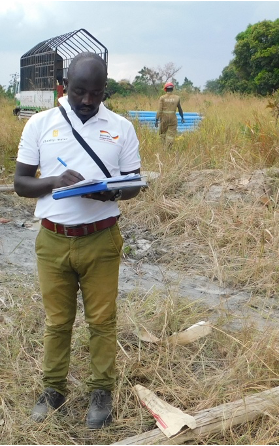
Figure 1: Ayebale Ared on the field (Welthungerhilfe)

From the drilling contractor’s side – overseeing drilling operations

I was fortunate to work with a drilling firm that prioritized quality, accountability, and training. The work culture encouraged flexibility, allowing us to try out different drilling methodologies. One of the most valuable aspects was the emphasis on real-time logging and decision-making based on live site observations. As the overseer of the drilling operations, I had to be physically present in the field, equipped with a laptop, drilling logs, a handheld GPS, a tape measure, a V-notch Weir, a dip meter, an E.C & a pH meter, and a camera, to support real time supervision and technical decisions as drilling progressed.

There was no remote oversight; everything was site-based and collaborative. Communication within the team was strong both for daily updates and for collectively addressing any issues that had financial or technical implications.

Figure 2 (above) Sample box containing drill cuttings (Source: Ayebale Ared)

However, there were limitations.

At the time, our machinery could not compete for larger contracts, particularly those requiring the drilling of production boreholes with casing diameters larger than 5″ internal diameter (ID). While we successfully drilled several open-hole design boreholes, which are suitable for handpumps these cannot be upgraded to accommodate technologies such as solar-powered water systems (SPWS) due to initial design constraints.

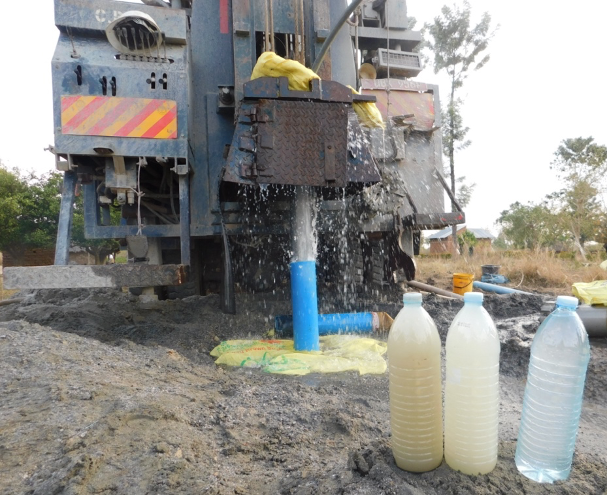
Figure 3 (above) Water Sampling during borehole development showing decreasing turbidity (Source: Ayebale Ared)

From the Client’s Side (INGO) – supervising drilling

Switching to the client’s side offered me the opportunity to work with a range of drilling firms year after year. By then, I had completed the Rural Water Supply Network (RWSN) Professional Drilling and Borehole Management course (2019), and I was actively applying the knowledge in the field. I have worked with drillers with different equipment, resulting in more efficient drilling, constructing cased, rather than open holes. I also have had the chance to mentor and train new supervisors in professional supervision practices, proper borehole logging, and how to make sound real-time decisions at the site.

However, not all experiences have been positive

Remote, or part time supervision is common with a bigger percentage of the drilling firms I have worked with, often resulting in decisions made by drillers to minimize cost rather than address real-time field conditions which are not supervised in the field by the client. Some drilling firms opt for untrained, inexpensive overseers, which undermines the quality of work. As an example, many have no idea what real time logging is but just write a number of pipes and send short video clips to their bosses in office who make remote decisions. This usually becomes a challenge with the client’s supervisor ends up being painted bad as “a bad guy”. Without a qualified client supervisor on-site, the narrative of events can shift dramatically. I’ve observed poor siting practices, with boreholes positioned near anthills or trees leading to complex drilling challenges and post-installation issues such as silting, root intrusion, and compromised water quality. This has been subsequently verified through borehole video inspections and microbial tests. Additionally, poor gravel packing techniques have led to bridging, and inadequate borehole development has left screens poorly cleaned and functioning below standard.

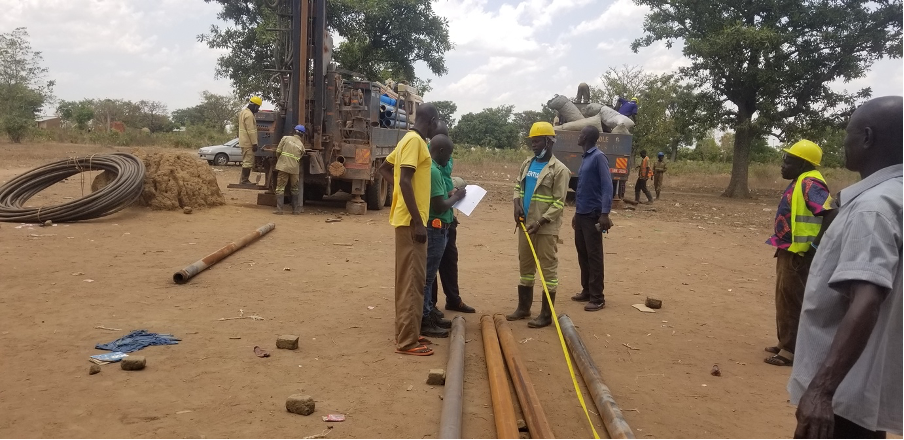
Figure 4 (above) Measuring drill pipe lengths (Source: Ayebale Ared)

These reflections underline the critical importance of professional supervision, well-trained personnel, good oversight by the drilling contractor, and appropriate on-site decision-making throughout the drilling process.

I hope these insights are helpful as we continue to improve and uphold quality in our water supply interventions.

Ayebale Ared has over 10 years of experience in the water sector, specializing in WASH programs, borehole drilling, and rehabilitation in Uganda. He has worked on both the contractor and client sides, gaining a well-rounded perspective on best and worst drilling supervision experiences and practices

Pastoralists and Water 4 – Are new water supplies in the Horn of Africa drylands the solution for pastoralists’ resilience or part of the problem?

By Jackson Wachira, Masresha Taye, Hussein Wario and Nancy Balfour

“In this fourth blog in the series, I hand over to Jackson Wachira, Masreesha Taya, Hussein Wario and Nancy Balfour who have a thought-provoking blog for us concerning water supplies in the Horn of Africa. It begs us to ask whether the findings from this research in Ethiopia and Kenya could change perceptions about how water development is affecting pastoralist communities?” Dr Kerstin Danert

This blog was originally published by Supporting Pastoralism and Agriculture in Recurrent and Protracted Crises (SPARC) on this webpage in August 2024. 

In recent years, parts of the Horn of Africa have seen large investments in the water, sanitation and hygiene sector, or ‘WASH’ as a way to build resilience to droughts. In Kenya alone, investments by civil society organisations increased by over 200% between 2017 and 2019, with a significant proportion focusing on drylands. 

WASH investments come in many forms and shapes. They include the drilling of new boreholes and rehabilitation of old ones, installation of diesel and solar power systems, water resource management, water trucking, improved sanitation and ‘capacity building’. 

For many development actors, the premise is that WASH investments such as these enhance the resilience of dryland communities against shocks, including climate-induced shocks such as drought. 

But are investments in new water supplies in the drylands a solution, or part of the problem? 

Ongoing SPARC* research in Marsabit, Northern Kenya and the Somali region of Ethiopia unpacks some nuances around water development. Interviewing community members, resource managers, elders, and both governmental and non-governmental individuals who are actively engaged in water development led us to striking findings. While the establishment of new water supplies has generally enhanced people’s access to water, overall these new investments have eroded – rather than enhanced – the resilience of pastoral communities. 

Camels drinking from a trough. Credit: Masresha Taye.

Settlement and depleting resources 

First, water supply systems, including deep boreholes, have led to increased settlement in areas which pastoralists traditionally reserve for dry-season grazing. Discussions with communities revealed that, while new water supplies have enhanced access to water, particularly for women and children who are designated water collectors for the family, they have also attracted other communities who frequently access these resources. Overuse of these crucial ‘fallback’ grazing areas – which pastoralists reserve for livestock in non-rainy seasons – has led to overgrazing, increasing pastoralists’ exposure to drought. Settlement has also affected the pasture reserves and seed banks around villages where water supplies are installed.

Moreover, the frequent movement of large numbers of livestock has created tension and multiple incidents of conflict between host and incoming communities. Local communities view water points as vulnerable targets for livestock raids, which heightens their sense of insecurity.

In many cases, communities shared with us that they had not been adequately consulted about the new water sources, and their unpopularity has led to backlash. In one area, due to the absence of community consultation, a civil society organisation was prevented from installing power to a borehole by the community who thought doing so would open up the area to new settlements. We also observed cases of water sources being destroyed by local communities, who feared such developments would attract outsiders to come and settle. 

Overlapping water management regimes

Secondly, water developers’ failure to adequately integrate traditional water management structures undermines the success of projects.

Among Kenyan Borana communities, for instance, there is a person responsible for managing community water resources in ways that ensure cleanliness and fair access to all community members, including those migrating from other regions. This person, known as the aba erega, still helps manage water supplies today, but they have been overshadowed by newer Water Management Committees, which have become a key condition for partners investing in new water supplies.

The role of the Water Management Committee includes collecting fees that ostensibly go into repairing and maintaining new water supplies. However, most of the water supplies we visited were described by communities as highly unreliable, often breaking down a few months after they have been installed. The result has been widespread contestation among water users, who blame committee members for embezzling community funds while overseeing water systems that do not serve them when they need them most. Due to the high unreliability of many water systems in these areas, communities revert to walking long distances to access water, heavily impacting human and animal health, particularly during drought. By contrast, traditional water supplies run by indigenous water management appear to be much more reliable.

Poor quality

The third key issue which SPARC research uncovered is the poor quality of most of the new water supplies. In many areas, communities stated that they experience severe diarrhoea and stomach pains when they consume water from some boreholes because of high salinity, which affects both the people and the livestock that rely on them. The result is that water sources are often not used. In Ethiopia’s Somali region, for example, the government has developed deep boreholes in areas previously devoid of water supplies – but after initial enthusiasm, pastoralists have switched to traditional water sources due to health concerns. 

The issue with salinity is recognised by government water offices, and some actors have attempted to address this challenge by installing desalination plants. However, possibly due to their complex nature, the desalination plans are not operating effectively, with one community contending that their plant worked well for a short time, before starting to discharge water that was even more saline. 

Reimagining water resilience in the drylands

The provision of clean water for people and livestock is critical for the resilience of dryland communities. Yet the current approach of free-for-all investment focused only on the number of new water supplies and number of people reached often serves to undermine, rather than enhance, pastoralists’ resilience to shocks. 

What does effective pastoralist water development look like? Our research suggests some ways forward.  Efforts should be made to adequately integrate traditional governance mechanisms in the management of water supplies; failure to do so enhances social fragmentation and conflict. And urgent action needs to be taken to desalinate the toxic water that communities in these regions continue to consume every day, and improve desalination technologies so they are easier for communities to repair themselves. 

Perhaps most importantly, development actors must acknowledge that mobile pastoralism remains the key adaptation strategy for pastoralist communities in the Horn of Africa. Water development projects must take the threats of settlement around water sources, and its attendant problems, seriously if they want to contribute to building resilience in the drylands.

The research for was carried out under SPARC-funded programme carried out by the Centre for Research and Development in Drylands (CRDD) and Masresha Taye (independent researcher) in collaboration with the Centre for Humanitarian Change. Findings from the research will be published in a Technical Report and Policy Brief on SPARC website in May 2025. A photo essay on the same is available here. A video presentation of the findings was recorded at World Water Week 2024 and available here

* SPARC refers to the six-year programme entitled Supporting Pastoralism and Agriculture in Recurrent and Protracted Crises

Getting infrastructure quality right from the outset – a series of checklists for WASH Funders (and Grantees)

Dr Kerstin Danert, Ask for Water Ltd, Edinburgh, Scotland

High-quality infrastructure design and construction is not the only important concern in relation to rural water supply services, but provides a solid basis. Poor quality infrastructure jeopardises everything that follows – including it the maintenance, and management of the service, and even being able to collect user fees.

There are many reasons why infrastructure ends up not meeting the standards needed. And for the last two decades, the Rural Supply Network (RWSN) has emphasised ensuring that boreholes are properly drilled and completed – with a range of guidance and training materials now widely available – and (I am pleased to know) used!

However, we were mainly writing (or making short films) for people that are implementing projects. With the most recent publication we are addressing a different audience – FUNDERS OF WATER SUPPLY INFRASTRUCTURE.  You may ask yourself why?

Unfortunately, not all funding agencies have the policies in place, nor the checks and balances that consistently foster high-quality infrastructure – whether initial construction and installation, or rehabilitation.  And to make matters worse, well-intentioned policies can actually have negative unintended consequences. Low-per capita investment costs are a case in point – they can be set too low.

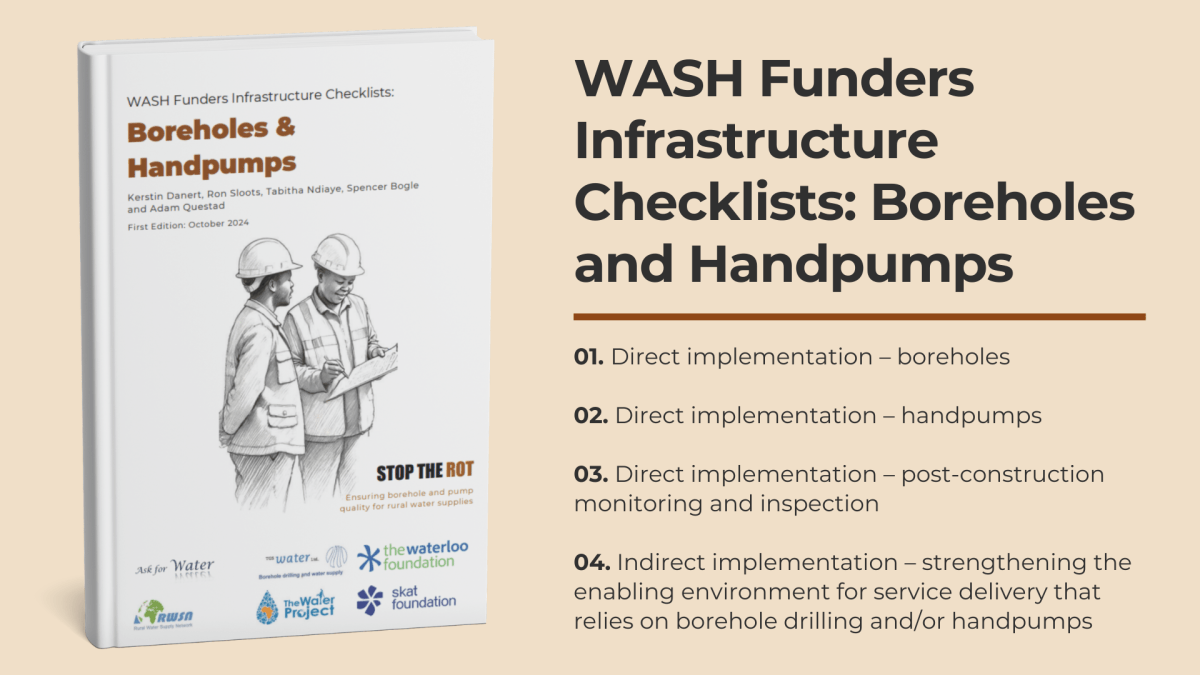
At the end of 2024, RWSN published the WASH Funders Infrastructure Checklists: Boreholes and Handpumps. They start off by recognising that when it comes to infrastructure quality, a number of things can go wrong. Grantees may simply not have the procedures in place, or the capacity to consistently ensure quality or they may not follow suitable contracting procedures. National standards may be lacking, or grantees may cut corners in order to meet Funder requests for an (unrealistic) low budget or fast schedules.

We have developed a series of four checklists – each providing guidance for WASH funders, whether financing direct implementation or systems strengthening activities. We have tried to make the checklists accessible even for those without a detailed knowledge of groundwater, drilling or handpumps. Each checklist is intended to help funders to reflect on their policies and procedures and/or those followed by the respective grantees. 

Please take a look – and do get back to us through ask@ask-for-water.ch with comments feedback.  We would like to keep improving this guidance in the future!

The WASH Funders Checklists were developed under the RWSN Initiative Stop the Rot.

Weaving threads of knowledge and trust across the world – Part 1 (Global Actors)

by Sean Furey, Director – RWSN Secretariat @ Skat Foundation

Rural Water, Sanitation and Hygiene (WASH) is such a local, personal, issue that does global-level exchange make sense?

At first glance, rural areas and communities worldwide seem too diverse for networking and knowledge exchange to be useful or meaningful. What does WASH for isolated hamlets in the Nepalese Himalayas have in common with a fishing village on the Peruvian coast or a small town in northern Nigeria? Quite a lot, it turns out.

Last year, we were privileged to be approached by the Water Section at the Inter-American Development Bank (IDB), to support them with an exciting programme called Sustainable and Innovative Rural Water, Sanitation and Hygiene (SIRWASH), funded by the Water Section of the Swiss Agency for Development & Cooperation (SDC). They asked us to help strengthen the sharing on rural WASH topics within the Latin America and Caribbean (LAC) region and to encourage South-South exchange between LAC, Africa and Asia. Thanks to our strategic partnership with SuSanA we felt well placed to do this, and a great opportunity for both networks to grow our membership in the LAC region and serve our members there better.

Multilateral Development Banks – amazing allies

When it comes to shear financial clout and convening power, Multi-lateral Development Banks (MDBs) are hard to beat, but even they have had mixed success with rural WASH – but there have been successes and they have recognised that they can learn from each other so that they can provide their client governments with the technical assistance and financial options to deliver sustained improvements. So, last year the relevant focal points from the African (AfDB), Asian (ADB) and Inter-American (IDB) met and agreed on a Call to Action with three priorities:

  • Information-based decision-making and rural WASH investments and service monitoring.
  • Institutional strengthening & coordination.
  • Rural sanitation.

From this, we organised a webinar mini-series drawing on their recommendations for case studies on each topic from each region.

Finding the common threads and bringing them together to make them stronger

This year, we took more steps to build an understanding and appreciation of the solutions that have the potential to transcend the variability of local contexts and be adapted. With growing interest, our colleagues at the World Bank also joined the small group and together we organised a special SIRWASH breakfast meeting and an open session on “Coordinating Rural Water Investments to Promote Security and Stability” with REAL-Water :

The SIRWASH breakfast meeting that followed was in the spirit of collaboration among countries in the global south, using knowledge sharing as a catalyst for innovative and sustainable solutions. It was attended by more than 40 representatives from countries (Haiti, Brazil, Peru, Chile, Nigeria and Uganda), multilateral banks, multilateral and bilateral agencies (SDC, AECID, SIDA, WHO, OAS, UNICEF), NGOs and philanthropists (including, One Drop, Water For People, Avina, Aguatuya, mWater, Global Water Center), as well as networks, partnerships and research (RWSN, SuSanA, WASH Agenda for Change, WASH Funders Group, SIWI, Uptime, the Aquaya Institute). 

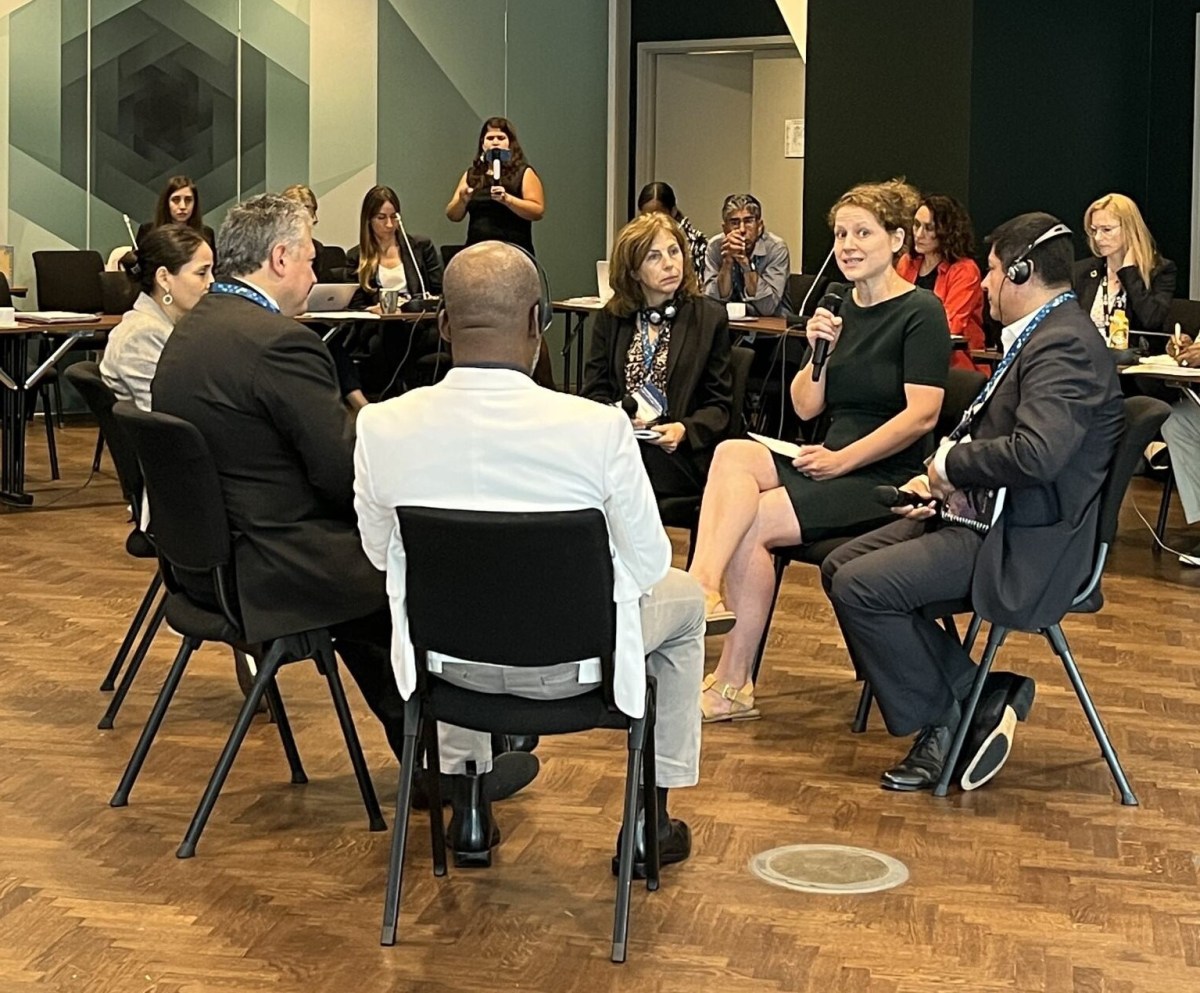
Reflections on the SIRWASH Breakfast meeting (source: IDB)

Using the “Fishbowl” method, participants exchanged their perspectives in an open and dynamic way on how strategic partnerships can increase impact in the sector. Discussions focused on two key questions: 

1. How can technological innovations in rural WASH information systems be supported to be truly effective in decision making and incentivize scaling up? 

2. What are practical solutions to improve the design and implementation of national rural WASH programs so that their benefits are sustained over the long term? 

One of the central themes was innovation through sector information systems, a crucial tool for planning and managing water and sanitation services in rural areas. Three countries shared their experiences on how they have adapted and improved these systems:

The importance of institutionalizing information at the national level and ensuring that communities participate in the validation and appropriation of data and decisions was emphasized.

In addition to information systems, the event underscored the need to integrate both technological and social innovations to improve rural services. Social innovations and behavioural change are essential for communities to take ownership of the systems and actively participate in their management and maintenance. Participants agreed that long-term sustainability is about finding the sweet spot between community-ownership/responsibility and external support.

The second critical issue addressed was the sustainability of rural water and sanitation services. Participants stressed that the successful implementation of these services cannot depend solely on initial investments in infrastructure. Innovative mechanisms need to be developed to ensure their financing and continued operation. The examples of Brazil and Nigeria were instructive, both countries demonstrating how the combination of effective governance and innovative financial models can ensure the operational sustainability of services:

  • Brazil presented its comprehensive implementation of their National Rural Sanitation Program (PNSR).
  • Nigeria highlighted the ways a results-based SURWASH programme is strengthening institutional capacity.
  • The Uptime Consortium shared their experiences and successes with Results-based Contracting on rural water service delivery across many contexts.

The discussion emphasized the need for functionality and quality indicators for rural services, linking reliable information to financial incentives for operators. This strategy can enhance the long-term sustainability of these systems. The working group concluded that collaboration is essential to ensure countries have reliable information for decision-making, aimed at improving the quality of rural services.r decision-making aimed at enhancing the quality of services in rural areas.

In the final discussion, consensus was reached on the need to create and maintain an enabling ecosystem for the development and sustainability of rural services. The great opportunity for development partners to join efforts and seek synergies, contributing technical and financial resources to this ecosystem in the countries was highlighted.

The event concluded with a clear call to action: all actors – governments, development banks, cooperation agencies, NGOs, networks and the private sector – must remain committed to financing and strengthening rural water and sanitation services. The MDBs will continue to work together on a concrete action plan to exchange and replicate successful and innovative experiences to ensure universal and quality WASH services in the countries.

Knowledge exchange is not just talk and powerpoint presentations, it is about building connections and trust between individuals and organisations, finding those common interests and encouraging co-creation of new insights and more sustainable solutions.

The symbolic activity organized by One Drop, where participants bonded to represent their intention to work together towards a common goal, was a powerful reminder of the importance of lasting partnerships. This symbolic gesture is just the beginning; it is essential to continue to scale up efforts so that the most vulnerable communities can access quality water and sanitation services in a sustainable and equitable manner.

Top-Down meets Bottom-Up

After this event, our partner Aguatuya convened an online meeting of Latin American WASH networks to encourage bottom-up exchange to complement our high-level approach. But we will follow that thread in the next post…


Many thanks to the large number of people involved, but in particular to Sergio Campos, Manuela Velasquez-Rodriguez and Cristina Mecerreyes at IDB; Diane Arjoon at AfDB, Vivek Raman and Tanya Huizer at ADB, Awa Diagne and Sarah Nedolast at the World Bank, Janine Kuriger at SDC, and to the wonderful RWSN/SuSanA team: Dr Aline Saraiva, Batima Tleulinova, Susanna Germanier, Lourdes Valenzuela, Paresh Chhajed, Chaiwe Sanderse and all the speakers and panellists for the webinars and sessions.

Functionality of water supply handpumps in Cameroon (Central Africa): a review of data from 310 councils

Handpumps have revolutionized access to safe and reliable water supplies in Sub-Saharan African countries, particularly in rural areas. They constitute a healthy and viable alternative solution when surface water is contaminated. Danert (2022) estimates that 200 million people in sub-Saharan depend on 700,000 handpumps to supply themselves with drinking water.

Unfortunately, many handpumps service face performance issues or premature failure due to technical or installation defects in the borehole or pump, operational and maintenance weaknesses, or financial constraints (World Bank, 2024). Statistics on the functionality of handpumps in Cameroon are very sparse and dispersed with very little data available. However, some studies show that 25% to 32% of handpumps in Cameroon are inoperative (RWSN, 2009; Foster et al., 2019).

Previous reviews of handpumps functionality data in Cameroon have been conducted, including RWSN (2009) and Foster et al. (2019). However, these estimations were based on partial data and thus may not reflect the situation in the country as a whole. In addition, the number of handpumps installed each year is constantly increasing, and there is a need to update functionality data. Thus the interest of the study.

The methodological approach used in this study was based on online searches. To do so, we searched, collected, and analyzed relevant data from the 310 Councils Development Plan (CDP) that had been collected from 2010 to 2022. Information sources included data sets and documents available online through the data portals of the National Community-Driven Development Program (PNDP).

Overall, based on the data analysed, the number of handpumps used as the main source of drinking water supply in Cameroon is 20,572, of which 9,113 are installed in modern wells and 11,459 in boreholes. Approximately 8.2 million people in Cameroon rely on a handpump for their main drinking water supply, which is equivalent to 36.8% of the population of Cameroon. Findings indicates that one in three handpumps in Cameroon is non-functional, which in 2022 was roughly equivalent to 6,724 inoperative water points. To put this in perspective, this number is about 33% of the total number of handpumps, enough to supply 2.7 million people, assuming 400 inhabitants per handpumps. According to this estimate, it is about 44.8 billion CFA francs, or 66.8 million USD, was invested in the construction of water points that are immobilized and do not generate any benefit (improved health, nutrition, or education).

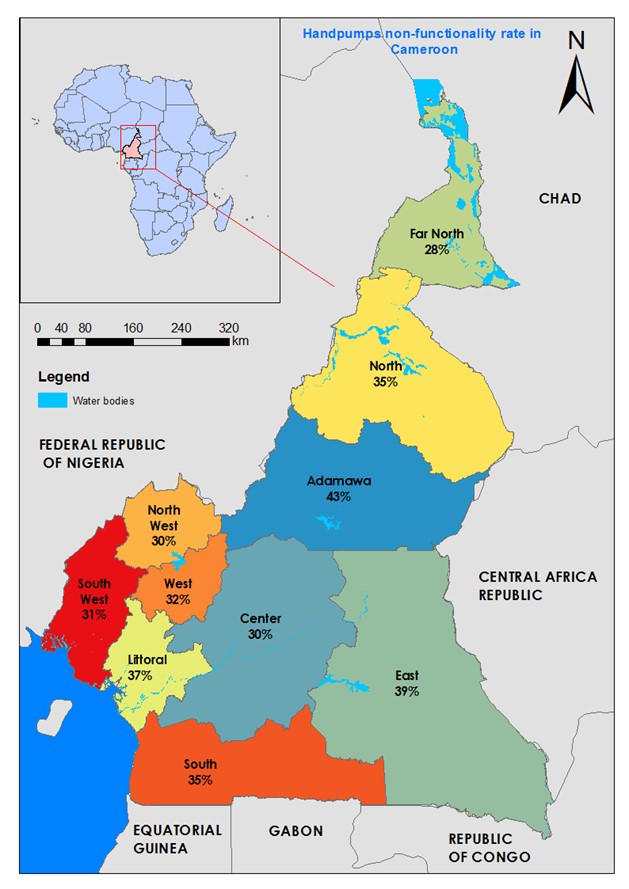
Figure 1 presents estimations of non-functionality in the ten regions of Cameroon. This figure shows that the region that had the highest level of non-functional handpumps is the Adamawa region (43%), followed by the East region (39%), the Littoral (37%), the North (35%), the South (35%), the West (32%), the South West (31%), the Center (30%), the North West (30%), and the Far North (28%).

Figure 1 | Handpump functionality rate for Cameroon

The handpumps, like the Community Based Management, seem not to have given the expected results. The fact that some handpumps fail prematurely seems to indicate that technical defects (poor quality components and rapid corrosion) contribute to handpump failure and underperformance. Further, this review notes that questions related to the quality of handpump material and the corrosion of handpumps have not been sufficiently taken into account in the various research studies in Cameroon and Sub-Saharan Africa. Thus, Future research should focus on physical audits of handpumps, and handpump rehabilitation campaigns in order to shed light on these issues. Finally, preventing rapid corrosion of handpumps through regulations should be implemented in order to improve the performance of handpumps. Regulations may be implemented at the national, regional, or local levels, and it is advised to employ a pH threshold of less than 6.5 as a corrosion risk indication. Once they are more precisely defined, additional risk factors such as salinity, chloride, and sulphate levels can be added.

About the author:

Victor Dang Mvongo, MSc is a PhD Student at the University of Dschang (Cameroon) and an independent consultant in WASH. He conducted the work featured in this blog at the Faculty of Agronomy and Agricultural Sciences.

Further reading:

Mvongo D.V, Defo C (2024) Functionality of water supply handpumps in Cameroon (Central Africa). Journal of water, sanitation and Hygiene for development. https://doi.org/10.2166/washdev.2024.085

References:

Danert, K. (2022) Halte aux dégradations Rapport I : Fiabilité, fonctionnalité et défaillance technique des pompes à motricité humaine. Recherche-action sur la corrosion et la qualité des composants des pompes à motricité humaine en Afrique subsaharienne. Ask for Water GmbH, Skat Foundation et RWSN, St Gallen, Suisse.

Foster, T., Furey, S., Banks, B. & Willets, J. 2019 Functionality of handpump water supplies: a review of data from sub-Saharan Africa and the Asia-Pacific region. International Journal of Water Resources Development 36 (5): 855–69. https://doi.org/10.1080/07900627.2018.1543117

RWSN 2009 Handpump data, selected countries in sub-Saharan Africa. RWSN, St Gallen, Suisse. https://www.ruralwater-supply.net/_ressources/documents/default/203.pdf

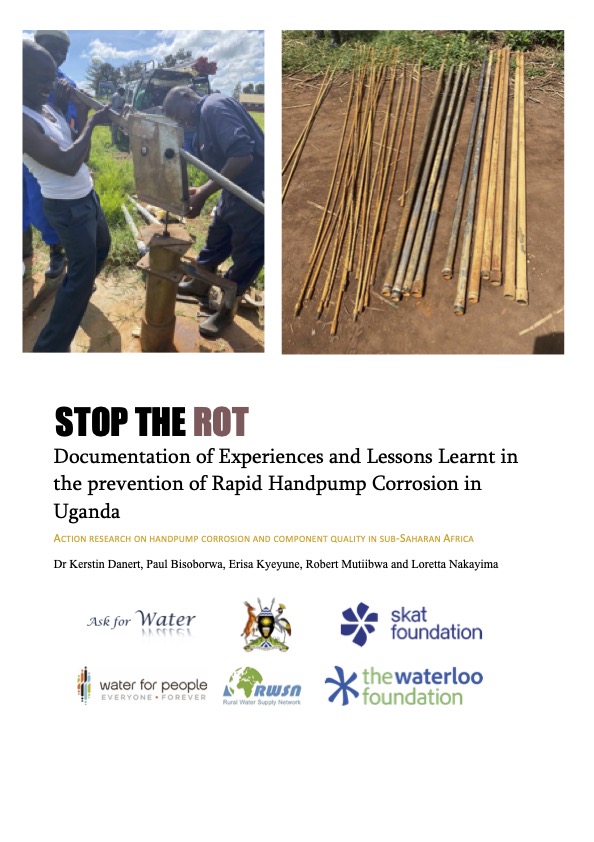
Stop the Rot: Uganda

Documentation of Experiences and Lessons Learnt in the prevention of Rapid Handpump Corrosion in Uganda

Report by Kerstin Danert, Paul Bisoborwa, Erisa Kyeyune, Robert Mutiibwa and Loretta Nakayima

The full report is available here.

About 67% of the population of rural Uganda rely on a handpump, and, according to the Ministry of Water and Environment (MWE) database, the country currently has an asset base of over 63,000 handpumps. While there is a policy shift towards piped supplies (including using solar-driven pumps), handpumps will remain important in providing water to Uganda’s rural population for the foreseeable future. The U2 and U3 (known elsewhere as the India Mark II and Mark III), as well as the Uganda 3 Modified Pump (U3M) are the standardised pumps used in the country.

The rapid corrosion of submerged handpump riser pipes and rods has been well documented in Uganda, with over a dozen reports, and studies, including academic publications on the subject. When handpumps corrode, the red, badly-tasting water of the supply is often rejected and sources abandoned, with users returning to more distant and contaminated supplies. Rapid corrosion also leads to premature failure of the supply as riser pipes leak or even break completely. It is widely accepted that galvanised iron (GI) riser pipes and rods corrode in aggressive groundwater where pH levels are low (<6.5). High levels of salinity and high chloride concentrations are also highly corrosive.

In recognition of the widespread corrosion problem in Uganda, in 2016 MWE issued a letter suspending the use of galvanised iron riser pipes. Despite the fact that rapid corrosion is a problem in at least 20 countries in sub-Saharan Africa (plus Sudan), Uganda is one of the very few countries to have taken affirmative action to address the issue.

This short study, funded by The Waterloo Foundation, set out to document Uganda’s experience and lessons learnt in preventing rapid corrosion. It is intended to provide insights and recommendations for Uganda and other countries. The in-country study was undertaken in October/November 2023, and comprised interviews with 55 stakeholders from government, suppliers, NGOs, drillers and handpump mechanics as well as a review of select documentation and analysis of quantitative data collected in 16 districts by the NGO Water for People. As well as discussing with stakeholders based in Kampala, the study involved visits to Mityana, Kibaale, Kyegegwa, Mubende, Kamwenge and Masindi Districts, including some observations of components and handpump removal.

The study has found qualitative evidence that the suspension of use of GI pipes on handpump installations in Uganda has had an overall positive effect on reducing the phenomenon of handpump corrosion in the country. It took a few years for stakeholders to adjust to the suspension, including availing alternative materials and determining which grades of stainless steel to be used. In the early years, there were issues of availability and supply of alternatives, gaps in information among some stakeholders alongside cost concerns. Initially, some organisations installed grade 202 stainless steel, which was also found to corrode rapidly. In addition to stainless steel pipes, uPVC (with uPVC connectors) and uPVC pipes with stainless steel connectors are used.

While most stakeholders seem to be aware of the suspension of GI riser pipes and rods, this does not seem to be fully adhered to, with some district local governments, NGOs and communities apparently still installing GI on new installations or for replacements. The study witnessed “mixed” installations comprising GI, and stainless steel (which also sometimes appeared to comprise different grades). Such installations risk creating problems through galvanic corrosion, a phenomenon whereby dissimilar metals submerged in water increase corrosion.

The study concludes with a number of recommendations as summarised below:

Studies and research

  • Explore reasons why some stakeholders are not adhering to the suspension of GI riser pipes and pump rods and how to effectively overcome these barriers.
  • Undertake analysis of quantitative data including MWE Management Information System (MIS) data on shallow wells and boreholes (including their functionality status/due for decommissioning). Quantify the extent to which handpumps with corroding GI components have been replaced in the country, and also estimate the cost and human capacity implications of replacing poorly functioning or abandoned sources as a result of corrosion. 
  • Monitor installations to determine if there are any problems with corrosion of the water tank and cylinder when connected to a stainless steel pipe as a result of galvanic corrosion or poor installation, and consider checking for the release of contaminants, including lead.
  • Clarify maximum installation depths for alternative materials through testing, and communicate this clearly to all stakeholders through written guidance (discussed below).
  • Developa short document (and film) on what users can measure and inspect directly. This could support stakeholders in assuring quality.
  • Undertake further research on the relationships between pH, salinity, other water quality parameters and the quality of the galvanising (particularly the thickness of the galvanising).
  • Explore alternatives to the nationwide suspension of GI, such as lifting the suspension locally based on very clear, scientifically robust criteria in relation to pH and salinity.
  • The appropriateness of the discontinuation of funding for shallow wells should be further studied and reviewed for appropriateness.

Recommended actions for Uganda

  • Support quality assurance efforts by updating the Uganda Standard Specifications for the India Mark deepwell and shallow well handpumps, referred to in Uganda as the U2 and U3 pumps.
  • Develop a certification mechanism for the suppliers of handpumps/components to ensure quality and include labelling requirements to help consumers identify appropriate parts.
  • Raise awareness and improve knowledge of (i) the GI suspension, and the rationale behind it, (ii) how to determine whether iron in water is naturally occurring or caused by corrosion, (iii) appropriate alternatives (iv) key issues with respect to grades of stainless steel and depth limitations and (v) identifying appropriate parts. Written guidance should be provided.
  • Provide training for handpump mechanics and handpump installers across the country on the correct handling of the uPVC and stainless-steel alternatives currently available on the market in Uganda, and ensure that they have the appropriate toolkits to handle these materials.
  • Incorporate inspection of handpump component quality and installation in post-construction monitoring by government, NGOs, the Uganda Drilling Contractors Association (UDCA) and funding agencies.
  • Continue to engage with and support innovations such as the Handpump Improvement Project.
  • MWE, in collaboration with NGOs and District Local Governments should find ways of supporting poor and vulnerable communities with ongoing corrosion problems to replace GI pipes and rods.

Lessons for other countries

Based on the experiences of Uganda, key lessons for other countries that are considering taking affirmative action to address rapid handpump corrosion are:

  • Undertake an in-country study to document the extent of the problem and any efforts that may have been undertaken to address it in the past. If rapid handpump corrosion is found to be a widespread problem in the country, and is related to GI installed in aggressive groundwater, consider suspending the use of GI – carefully considering the pros and cons of a nationwide or more localised suspension as well as the feasibility of using alternative parts.
  • Prior to any suspension, undertake extensive and transparent stakeholder consultation, taking on board concerns and developing a suitable timeline. Provide user-friendly guidance on alternative materials and their handling. In advance of any suspension, ensure that all stakeholders are informed of it, and are made aware of any implications for programmes and budgets.
  • Government should either refer to suitable international standard specifications, update national standard specifications or (as an interim measure) provide clear guidance regarding alternative materials, components and dimensioning that should be used. Evaluation is needed to ensure that materials are safe for contact with drinking water. Guidance should include information on depth limitations and material handling.
  • Document the process of suspension, and monitor adherence, as well as challenges faced by organisations and communities, and consider how to adapt programmes and policies to enable changes to be effective.
  • Ensure that handpump mechanics and others across the country are trained in the correct handling of the alternatives to GI. They should also be provided with appropriate toolkits for handling the stainless-steel and uPVC pipe materials.
  • The responsible line ministry should work with the agency responsible for standards to ensure the importation of quality handpump components and consider certification of suppliers.

The full report is available here.

Sextortion in Kenya: water sector CSOs lead bring down the legislative hammer

Photo 1: Hon.Esther Passaris Tabling the Petition for Amending the Penal Code. Source, Euphresia Luseka

This blog is written by Euphresia Luseka, RWSN Leave No One Behind theme co-lead.

The mood in the room was palpable, Furaha’s eyes were welling up with tears, I felt something rising in my throat. “They threw my water jerrycan away, held me tightly and raped me, taking rounds on me, I screamed but no one heard until I passed out, they then left me for dead and disappeared.” She got consciousness at the hospital.

Strongly appealing to the Government of Kenya Public Petitions Committee at Senate house, Hon.Esther Passaris argued, “Daily, women and girls in Kenya are coerced into sex for basic necessities such as water, employment, education or food. We must redefine sextortion in our laws, providing clear penalties, support systems for victims and measures for accountability to eradicate this blight in our society.”

In many countries, such pervasive incidents are hard to prosecute, partly due to the nature of existing legislation. Nevertheless, activists are relentlessly pressuring authorities by raising awareness on legal protection against sextortion.

Passaris, Women Representative, Nairobi City, has been at the forefront in sextortion solutioning with water sector actors. She tabled to Kenya Parliament a petition for debate; urging amendments to Kenya’s Penal Code to specifically include sextortion as a criminal offense. This legal tool lays details to fight against sexual exploitation in response to instances reported in the Water sector backed by research evidence and increasing lobbying championed by Sareen Malik, Executive Secretary African Civil Society Network for Water and Sanitation (ANEW) and Shivaji Malesi, CEO Kenya Water and Sanitation Network (KEWASNET).

Her petition has gained support from fellow legislators recognising need for stronger legal protection for women and girls.

“It’s a missed opportunity that this was not included in the initial Sexual Offences Bill,” further support came from Member of Parliament (MP) Hon.Jayne Wanjiru, criticising slow progress of protecting women’s integrity in corporate realms.

Sextortion in Kenya Water Sector Hits Tipping Point

Sex is a currency for accessing safe water in Kenya.

World Bank and Kenya Demographic and Health Survey Program confirm 60%-93% of slum households are dependent on informal urban water vendors for their water supply where public utilities fail to deliver. They not only charge high prices, sell low-quality water but also perform unfair water transactions to consumers especially women and girls.

Activists say that this leaves consumers vulnerable to harassment, sexual assault, or abuse. Water fetching is costing time and trauma.

“The tariff is unfair. Most water vendors are male. Sometimes they hike prices intentionally for not submitting to their advances. I am forced to pay more money given the limited options of water sources. They gang up with other men to spank and body shame women who deny them and it’s violating. During overcrowding they rub themselves on us,” Rosemary a Katwekera, Kenya dweller narrates painfully.

Indeed the  Water Governance Facility report  confirms that women may feel pressured to flirt or ‘play along’ with utility workers out of fear of having their connection cut off.

At a crowded water kiosk at Mukuru Kwa Reuben, Melissa affirms the report’s views, “Water is priceless in the ghetto especially during shortages. It is astonishing to see the lengths residents go to fetch leading to STDs, Early marriages and pregnancies. Even boys are affected. Women contract small boys to help them fetch water and sometimes pay them with sex.” Some would say it is the struggle for survival, but it is a normalization of a vice that is eating up our community.”

The price of a basic human right is high. They demand more than just money.

This is rape.

Photo 2: Consumers at Korogocho slum queue for water, Source, Euphresia Luseka

Naming and Shaming Sextortion to End it

Rebecca Root, IBA Southeast Asia Correspondentexplains that various forms of WASH related violence do exist: (a) Sexual violence (rape, assault, molestation, and inappropriate touching); (b) Psychological violence (harassment, sextortion, eve-baiting (public harassment of women by men), bullying or other actions that may cause fear, stressor shame; (c) Physical violence (beating or fighting leading to injury or death); (d) Sociocultural violence (social ostracism, discrimination, political marginalization or social norms that have negative impacts).

One of the most prevalent and silent forms of Water related violence and corruption is sextortion; defined by International Association of Women Judges as abuse of power to obtain a sexual benefit or advantage.

Malesi, informed “The local term for sextortion is ‘water for water’ which means sex for water. The vendors capitalize on socioeconomic vulnerabilities of women and girls to coerce them into sex for water while some women are forced to seduce vendors into sex for water.”

“It’s prevalent in all sectors, all regions, all countries. It affects women from all backgrounds,” details Marie Chêne, head of research and knowledge at Transparency International. She backs this with statistics from a Transparency International Research confirming in Latin America and the Caribbean, one in five people had either experienced sextortion or heard of someone who had. In Zimbabwe, 57% of women admitted being forced into sexual acts for jobs, medical care or schooling. In Jordan, Lebanon and Palestine, almost half of respondents said sextortion occurs occasionally.

Here in Kenya, over 40% of women  have experienced sextortion, finds the Kenya Demographic and Health Survey (KDHS) with Water sector recording an unprecedented number of women reporting being forced to sextortion further affirmed by a KEWASNET study; one out of ten women in Kenya’s informal settlements is a victim of sextortion.

This makes sex the main form of non-monetary bribes in Kenya’s water sector amid a deteriorating economy.

Still there is a Deafening Silence around Sextortion

Research that gathered sextortion voices on water access in Kenya, found out sextortion and sexual harassment was ‘a common phenomenon’ and ‘common knowledge to the residents.’

So why is little or no action taken against it?

Luz Nagle, Scholarship Officer of the IBA Human Rights Law Committee replies, “While many countries have legislation that covers transactional sex or sexual harassment, sextortion is unique in that it’s coercive and involves an abuse of power.” This is why there is still little or no action against it.

Kenya lawyers add the country ranks low on the UN gender inequality index; sextortion is difficult to prosecute as it is undefined in our existing legal framework, women cannot file a complaint and perpetrators cannot be held accountable. Low political will has further frustrated the efforts. Data is scanty with limited research and most victims and survivors do not report cases due to fear of reprisal following disclosure and unawareness on reporting mechanisms.

From personal experience, the fear of reprisal is what stops most people from reporting, there is no incentive for reporting corruption. They taint your image and stigmatise you instead. The justice system is too masculine and very few women leaders support you. Women and the poor suffer most from extortion, they earn the least yet pay the highest percentage of their income in bribes as affirmed by World Bank.

“There’s a lot of shame, social stigma, taboo linked with this kind of offense,” Marie said, adding that in some cases women are forced to marry an abuser or can be fined for adultery.

Measures to bring to light sextortion are desperately important as they are measures to curb the vice. According to Benazir Omotto of Umande Trust and other lobbyists the compounded effects of sex for water need strengthening of the community referral pathways and workplace ethics that links victims and survivors to appropriate support services including legal and financial support. CBOs like Polycom Development Project, Inua dada, Umande Trust have helped in compilation of the women and girls’ narrative as well as providing psycho-social support.

Still, Raising Awareness is not Enough

As Sareen works with water organizations to raise awareness on sextortion, she indicates the lack of belief and resistance to addressing the situation.  

“Sextortion is not only happening at the taps but also corporate environments in higher-income contexts. To tackle it, those affected, who are predominantly women, need to be empowered to report incidents, safeguards should be established and perpetrators must be deterred by penalties,” Nagle asserts.

Meaning, dialogue needs to be sustained around this sensitive issue, to find its way into policy, planning and budgeting to ensure that efforts against the vice are sustained.

For this to happen, Countries must treat Sextortion as they would Corruption.

“Corruption takes place because it’s quid pro quo, it’s abuse of power,” Nagle adds, highlighting that the only difference here is that sexual acts are exchanged instead of money.

Sextortion occurs at the intersection between corruption and sexual exploitation it tends to fall through the cracks and not get addressed by either,” guides Nancy Henry, Senior Advisor, IAWJ.

“When you do not have a name or do not recognize the practice, it is not measured, you do not collect statistics, you do not pass laws or think of strategies to address it including anti-corruption policies so it is invisible,” Marie Chêne, head of research and knowledge, Transparency International.

According to the IBA report ‘Sextortion: A crime of corruption and sexual exploitation’, published in 2020, anti-corruption laws fail to specifically focus on sexual favours and sexual offence laws don’t encompass the corruption component. This means the issue is often dismissed and considered consensual instead.

“Here in Kenya the law does not care because it sees anything other than screaming and fighting as consent,” Millicent a sexual assault survivor told Avaaz.

However, we have progress; the passage of Resolution 10/10 at 10th Conference of States Parties to the UN’s Convention Against Corruption is significant towards recognizing and addressing sexual corruption, including sextortion. It calls on states to raise awareness about the issue and take measures to prevent and prosecute sexual corruption effectively. It is a positive development that can help drive change and accountability in addressing sextortion at a global level. The Water Governance Facility offers a course on water integrity and gender covering sextortion to support authorities including judiciary with knowledge.

Victims petition Kenya legislators to change Law to provide penalties for Sextortion

Photo 3: Malesi making remarks during petitions handover, Source, Euphresia Luseka

Meanwhile, there are ongoing efforts to criminalise sextortion in other ways in Kenya. The Attorney General is under pressure for a bespoke legislation at national level that offers ‘clarity and consistency in defining sextortion and applicable sanctions, according to underlying requirements of the rule of law.

Sustaining the petition, MP Hon.Beatrice Elachi demanded broader implications of the amendment, “Sextortion challenges demand integrating changes across all relevant legislation to end the expectation of sexual favours for professional or personal advancement.”

“Sextortion is a significant infringement of human rights and obstacle to attaining SDG5 on gender equality, and SDG16.6 on accountable governance. By the end of 2024 we aim to have sextortion to be punishable by law in the penal code” Passaris said.

The petition has proposed amendments to the Penal Code, Section 4 and 146, CAP 63, 2024 of the Sexual Offences Act and any other relevant criminal laws.

“Sometimes it is men in positions of power harassing women and sometimes it is women harassing men, all gender need to fight sextortion,” said Hon. Caroli Omondi who took part in drafting the amendments.

This sextortion legal framework will enable adequate prosecution of sextortion cases, raise awareness, strengthen level of women’s participation and involvement in water decision-making structures; providing safe confidential and gender sensitive reporting mechanism that gives victims/survivors access to appropriate support to resources needed as well as empowering women and girls promoting a more just and equitable society for all.

Borehole Drilling Supervision Capacity in Zimbabwe

by Joseph T Njanike

Photo: Supervised Borehole Drilling Project: Collection of Water Samples for Water Quality Analysis at a completed Borehole during the Final Certification Process

As one of the few remaining qualified, experienced, and active drilling supervisors in Zimbabwe, I would like to share experiences on the status of borehole drilling supervision in my country, Zimbabwe.

Drilling Supervision: A Technical Perspective

Rural areas, where the majority of Zimbabweans reside, are mainly serviced through groundwater sources for their water supply needs. The life span for a significant number of boreholes that have invariably become the technology of choice in Zimbabwe has in most cases proved to be short. This has mainly been due to shortcomings bedeviling the drilling and construction process thereby making the professionalisation of the borehole drilling imperative. Borehole drilling supervision, among other factors, is an integral component of the borehole drilling professionalisation process. This requires the hiring of professionals with relevant qualifications and experience to provide adequate supervision of drilling and related operations for the purposes of controlling the quality of work and securing compliance with the design and technical specifications stipulated for the drilling works as well as generating information for making key decisions in terms of on-site design modifications and the final borehole depth. In this context, questions about whether there is sufficient capacity to supervise borehole drilling in Zimbabwe would need some answers.

Professionals have left the country

Most of the qualified hydrogeologists or professionals with a geological background and relevant experience in drilling supervision have migrated to other countries in the Southern Africa region and beyond. This has largely been due to the fact that job opportunities in the groundwater development field in Zimbabwe are scarce.

Continue reading “Borehole Drilling Supervision Capacity in Zimbabwe”