Seawater intrusion – a challenge for the 21st century

This is a guest blog by Ramon Brentführer, which was originally published in GeoDrilling International. You can read the original article here.

Coastal zones have always formed focal points for human settlement and economic activity. Globally, some 37% of the world’s population lives within 100 km of the coast and two-thirds of the world’s cities are here with an extraordinary population growth. Water demand is rising and this is especially the case for coastal zones. Whereas China is considered to be the hotspot of this development with a projected population of about 200 million inhabitants in low elevation areas in 2030, the coastal area of India, Bangladesh, Indonesia and Vietnam also experience strong population growth. Furthermore, the population growth rates in Africa are estimated to be the highest worldwide, especially in countries of Western Africa. Moreover, changing lifestyles, agricultural expansion and economic development boost the demand for water in coastal areas. The growing need for water is a good business opportunity for drilling companies that drill wells for domestic, agricultural or industrial customers.

However, heavy groundwater abstraction in coastal zone is prone to problems: The vicinity of the water resources to the ocean represents a risk of salinization. When freshwater is abstracted from a well close to the coastline, seawater might intrude into the aquifer. The new publication “Groundwater Management in Coastal Zones” gives practitioners a guideline to evaluate risks and a scope for action in such sensible hydrogeological conditions and the dynamic physical and social environment of coastal zones.

2_Fig1

Seawater intrusion is not a future scenario – it is already reality in several regions worldwide. In Tianjin, one of the most rapidly developing and water scarcest regions in China, already 400 000 people were affected by salinity problems and 8000 irrigation wells were shut down. Some farmers continued to use groundwater for irrigation, which resulted in soil salinization and a reduction of farm yields by up to 60%. Dar es Salaam is one of Africa’s fastest growing urban centers. The city with currently 4.1 million inhabitants, is expected to reach more than 10 million inhabitants by 2030. Only half of the population is served with piped water. The remainder of the population, mostly living in informal and low-income settlements obtains its water from up to 10 000 unauthorized boreholes from the shallow aquifer under the city. This has caused seawater intrusion where chloride concentrations exceed the WHO drinking water standard of 250 mg/l. On the Balearic Island of Mallorca, the tourism industry has grown extensively with almost 10 million visitors in the year 2015, which is more than 10 times its number of residents. The high water demand in the dry summer month and the high permeability of the aquifers caused seawater intrusion. The list of cases for seawater intrusion is long and the reasons and drivers for seawater intrusion are divers and often interconnected.

Therefore, a sustainable groundwater management in a coastal zone is difficult but not impossible. A crucial pre-condition is the good understanding of the groundwater system, which requires a well-designed monitoring network. Experiences from different regions in the world have shown that there is an inadequate monitoring and lack of groundwater information. This includes static data, like aquifer properties, but also dynamic data like groundwater recharge and abstraction rates. A well-designed monitoring system and database form a further prerequisite for the enforcement of regulatory instruments like well licensing and abstraction permits. Another condition for a sustainable groundwater management is good governance. Groundwater governance is negotiated (formally or informally) between various actors and embedded in regional and local power relations. Therefore, the information about groundwater´s role in a regions economic development, cross-sectoral coordination and legislative enforcement is necessary to create good governance. Traditional command-and control-approaches generally fail to solve complex groundwater issues such as over-extraction. Consequently, integral and participatory approaches constitute the state-of-the-art in groundwater management. Therefore all relevant stakeholders, like water users, public administration, political groups, and financing institutions as well as scientific institutions and the private sector, should participate in the decision making process.

Different management approaches and solutions have been developed to tackle the challenge of a sustainable groundwater management. In South Downs in England or on the Pacific Island of Kiribati an optimized abstraction strategy prevents elevated groundwater salinity by monitoring and a limitation of the abstraction to available resources. An innovative approach for demand control measures has been tested in Oman, where the pumps of agricultural groundwater users were equipped with prepaid metering system. The principal aim should always be, to keep the demand for water as low as possible. Alternative complementary water resources like treated wastewater or desalination are emerging technologies . In some cases, the economic development of megacities has become so immense that water has to be transferred from other basins like in the city of Tianjin in China. Additional engineering approaches are physical or hydraulic barriers. In Los Angeles, treated wastewater is induced into coastal-near boreholes to create a hydraulic pressure .and hinder seawater to intrude into the aquifer.The application of these approaches depends very much on the local physical and social conditions but should be embedded in the two already mentioned preconditions: understanding of the groundwater system and good groundwater governance with an efficient and strong institutional framework. The limited capacity of groundwater systems to meet water demand needs a rethinking of water supply, which should be based on innovative solutions and a diversification of water sources. Water availability should be a guiding principle in economic development and spatial planning, and the focus should be not only be on direct human needs but also on the health of ecosystems. This balancing act will be a delicate one in many coastal regions, but it will have to be faced in order to meet the challenges brought by the rapid changes of the 21st century.

About the author

Ramon Brentführer is policy advisor for groundwater management in development cooperation at the Federal Institute for Geoscience and Natural Resources. He is a geologist and holds a master’s degree in integrated water resources management. Ramon is a co-author of the publication “Groundwater Management in Coastal Zones”.


Integrity risks in professional borehole drilling: preventing corruption paves the way to sustainable infrastructure

This is a guest RWSN blog by Justine Haag and Marian Ryan of the Water Integrity Network. 

Integrity risks can be high in professional borehole drilling projects, particularly the risk of corruption, but too often such risks are brushed over or not even acknowledged. Some of these risks have been discussed in previous blog posts. This blog discusses in more detail some of the reasons underlying the importance of addressing corruption in professional borehole drilling.

Corruption contributes to poor delivery of groundwater development projects and is a factor of the failure of  15–30% of newly built wells within one year of construction (UNICEF/Skat 2016).

The good news is that by acknowledging and addressing integrity risks from the earliest project stages, WASH managers in both government and NGOs can take steps to prevent these risks and ensure sustainable infrastructure.

Let’s be real: corruption adds up

Across the world, a great deal of money goes into the drilling of boreholes, At the local level, while it might appear at first glance that the money lost to corruption on small borehole drilling projects in rural or remote locations is limited, even insignificant, the impacts are certainly not. Corruption results not only in wasted money, but, all too often, in sub-standard delivery of projects. This, in turn, results in downstream social, economic and environmental impacts.

From a purely financial perspective, corruption in groundwater development projects may result in inflated costs which undermine the financial sustainability of the project. Equally, corruption in decision-making processes may result in technical choices that ignore community needs, disregarding the local socio-cultural or economic context.

It may also mean that already-limited funds are not used where they are most needed. In many cases corruption means those with power and influence can pay to get improved services, while the most vulnerable are left behind.

When local users don’t see the promised results or services from their duty bearers, mistrust may grow. This can complicate other interventions in the water and sanitation sectors. Poor service delivery may also mean that communities resort to informal systems which may offer lesser guarantees in terms of quality and safety.

Corruption in borehole drilling projects also undermines health and security. Private operators who benefit from favoritism may not be subject to regulations and oversight, resulting in poor-functioning and ultimately decaying, unsustainable infrastructure and water systems.

Ultimately, corruption can threaten food, water, and energy security, greatly impacting the poorest residents.

All project phases are vulnerable to corruption

Corruption can take place at a number of points in the project lifecycle.

The tendering process is well known for posing a high risk of corruption: project owners may demand or receive bribes for awarding bids. They may exclude bids for spurious reasons in order to favour particular bidders. Bidders may organize as cartels, manipulate prices, or block smaller bidders through intimidation. A previous blog post examined how these practices serve to deter experienced professional consultants and drilling contractors from the bidding process, threatening the quality and sustainability of project infrastructure.

But corruption risks exist throughout the project life-cycle:

  • Regulatory environment: Corruption can weaken the rules of the tendering process, and weaken sanctions for misconduct. Corruption in licensing can also improperly restrict who can drill and where. Corruption can also result in biases in who water is allocated to.
  • Planning: Corruption at the planning level may result in services being provided to certain groups and not to others.
  • Financial management: Corruption here can take the shape of falsified accounts in local budgets, or funds which are embezzled or allocated to “ghost” drilling sites or the villages of family or friends.
  • Project design: Corruption in project design can take the form of design specifications being rigged to favor certain companies, such as those with higher-capacity rigs.
  • Construction: Corruption in the construction phase can result in poor-quality work and/or the use of poor quality materials, the bribing of officials to ignore it, and fraudulent invoicing and documentation.
  • Post-construction: the post-construction operation and maintenance phase is critical in the delivery of sustainable and effective services. Corruption in the operation and maintenance of groundwater systems can, for example, include nepotism in the appointment of staff, and the appointment of poorly qualified consultants and contractors. Lack of community input into the well’s operation can allow such corruption to flourish.

Promoting integrity benefits the community – and all stakeholders

It is possible to prevent these dangers from taking hold by building barriers to corruption throughout the project life cycle and by promoting integrity and planning ahead to close gaps where corruption can arise.

Promoting integrity from the start adds value by fostering transparency, accountability, and participation among the project’s stakeholders. Just as corruption has a wide impact, promoting integrity and anti-corruption can support each stakeholder’s efforts across the value chain. When we anticipate and avoid corruption risks, we reduce the likelihood of failure of wells and water points, decaying infrastructure, and disrupted water services.

Where can I start?

Project owners and WASH managers in government institutions or NGOs can take advantage of existing tools to promote integrity and prevent corruption to help ensure successful, professional borehole drilling projects which result in sustainable infrastructure and benefit local communities.

RWSN’s Code of Practice for Cost Effective Boreholes emphasizes the role of greater professionalism in ensuring that projects achieve optimum value for money invested over the long term. The UNICEF Guidance Note on Professional Water Well Drilling is a valuable resource for following professional standards in borehole drilling, including costing, procurement and contracting, siting of wells, and supervision of water well drilling.

Key first steps:

  • Establish procedures for key risk areas like procurement and accounting, and make sure procedures are followed by providing training and support to all stakeholders (such as authorities, bidders, regulators, project monitors, utility accounting staff).
  • Clarify budgets and responsibilities, and ensure this information is easily available to the public.
  • Set up monitoring processes, for tendering, construction, and O&M. Social monitoring, including local users or stakeholders, can be particularly helpful and ensure more independence in the process.
  • Ensure institutional responsibility for long-term operations or properly functioning infrastructure over the entire lifecycle.
  • Consult water users and water-user associations in decision-making.


More tools:

Integrity pact : The Integrity Pacts help to ensure that contracting parties in a water project abstain from offering, accepting, or demanding bribes; monitor adherence to the contract and compliance with procurement legislation; and enable the placement of sanctions on any parties breaching the pact.

Integrity, Quality, and Compliance for Project Managers : This set of simple project management tools and templates helps improve project management and address common integrity issues from planning through operations, specifically in water-related programmes.

About the authors

Justine Haag coordinates WIN’s West Africa Programme and is in charge of the Capacity Development portfolio, ensuring the mainstreaming of water integrity tools and methodologies in the water sector at global, national, and local levels. She has over 10 years of international experience with water practitioners, working mainly on WASH and IWRM initiatives carried out with multilateral and bilateral aid organizations. She is keen to support participatory processes with a broad range of actors, following her conviction that institutional stakeholders and end users have common values and can reach consensus.

Marian Ryan is a freelance writer and editor specialized in health, international development, and water integrity. She collaborates regularly with the Water Integrity Network to write about and promote integrity Tools.

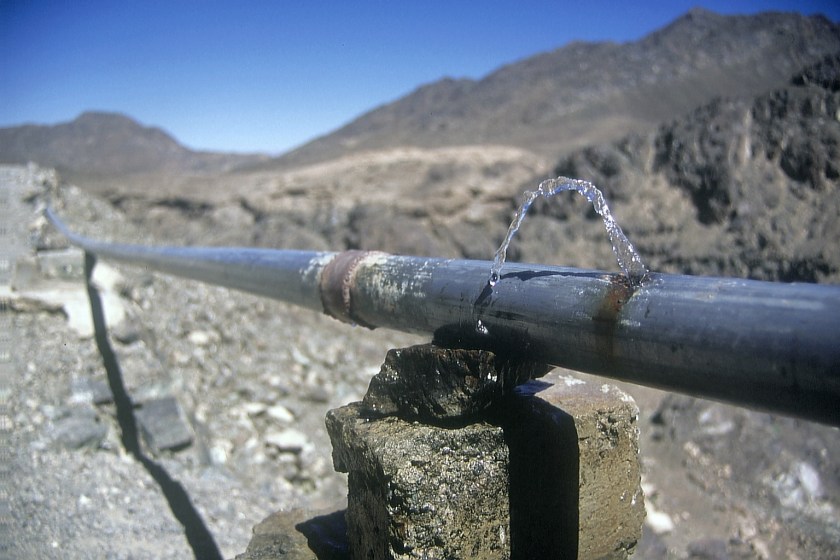
Photo credit: Joost Butenop, WIN photo competition 2009. Uncontrolled diversion of water from surrounding villages, Western Pakistan.Joost_Butenop

The rise of the off-grid city?

Adrian Healy reports on the findings of research undertaken in Lagos on the proliferation of domestic boreholes. This article was originally published in GeoDrilling International, and can be read here.

The conventional model of urban development focuses on centralised water service provision, where the state ensures a supply of water through storage and treatment plants and a grid of interconnected pipelines. Yet in many of our fastest growing cities, particularly in Africa and parts of Asia, this model is being turned on its head. Here, households, and business users, are increasingly turning to an ‘off-grid’ model, where they take responsibility for their own water supply. Nowhere is this more true than in the thriving megalopolis of Lagos in Nigeria, which serves as an example to practitioners around the world.

The public supply of water is estimated to reach no more than one in ten households living in Lagos State and, with a rapidly rising population, that proportion is changing every day. Despite their best efforts, the city authorities struggle to keep up with the pace of change, hampered further by an ageing infrastructure. In the absence of a reliable and convenient supply of water, it is perhaps little wonder that those who are able to secure their own water supplies do so. The result is a proliferation of domestic boreholes, as households seek to tap the accessible groundwater reserves beneath their feet. Whilst the actual number of domestic boreholes is unknown the possible numbers are staggering. Lagos State Water Corporation suggests that there may be anything up to 200,000 such boreholes in the State. Separately, a 2017 survey of 539 households living in Lagos State found that 51% reported owning their own borehole, with a further 36% reported that they shared a private borehole with other families[1].

The rise in the numbers of domestic boreholes is typically explained as a failure of the government to supply water to households. The public network often does not reach new housing developments and, where it does reach, failures of supply are commonplace. What is less often remarked on is the role played by a thriving drilling industry, fuelled by innovation and new entrants. Certainly, the development of new technologies, often imported from the oil industry or from abroad, has played a major role in driving the establishment of the borehole-drilling industry in Lagos. As costs of entry have fallen, increasing numbers of new companies have started up, offering cheap construction methods which are affordable by more and more households. Together, these factors are driving the evolution of a city that relies on off-grid water infrastructures.

This rise of the off-grid city has, in many ways, enabled the continuous expansion of Lagos as a major economic centre. For those who can afford their own borehole it has also delivered peace of mind as well as health and economic benefits, at least in the short-term. Questions though are now being asked as to the longer-term implications of this, particularly by the more professional members of the drilling and groundwater community. They point to the rise of poorly constructed boreholes as prices and drilling standards fall. They worry that this may lead to widespread contamination of the groundwater, whilst also reporting falling water tables in many areas, leading to fears of over-abstraction and the potential for saline intrusion.

Understanding whether these worries are well-founded is hampered by the lack of any system for monitoring either the quality or the amount of water being abstracted from the aquifers. State Government proposals to require owners of domestic boreholes to register these have foundered on the fear that this will be a front for the taxing of private water supplies. At the same time, our research indicates that the broader population is relaxed about the upward trend in boreholes, regarding the supply of groundwater as infinite (Figure 1). However, attitudes towards the quality of that water are more mixed, with around half concerned for the future. Evidence as to whether these beliefs are well-placed is currently lacking and requires longer-term data collection, particularly in terms of the amount of ground water available. Our research into levels of e-coli found in 40 groundwater sources demonstrates that residents’ caution about quality is well-founded (Figure 2). However, again, longer term monitoring is required if we are to better understand the risks of contamination over time.

Figure 1: Residents’ perceptions of groundwater exploitation in Lagos

lagos1

Figure 2


Conclusions

In Lagos, as in many other cities, the rise of the off-grid city is due to a mix of social, economic, political and hydrogeological factors. Attempts to overcome the water gap though public provision alone are struggling with the sheer scale of investment required and speed of change in population. The rise of private provision of water supplies has fuelled the growth of the city and, in turn, has been fuelled by a rising tide of prosperity. Yet there are real concerns that the sheer proliferation of boreholes and unregulated abstraction may be storing up problems for the future. So what are the answers? Certification and licensing approaches will certainly help, but only if there is both the will and means to enforce them. Improving knowledge and awareness through education and training, both of the wider public and amongst new contractors, will also help. In the short term it may be that we need to find new mechanisms to monitor the health of our aquifers if we are not to encounter longer-term crises. Drilling contractors can be at the forefront of this exercise, helping to ensure the resilience and durability of the off-grid city.

Acknowledgements

Dr. Adrian Healy, is a Research Fellow at Cardiff University. His research focuses on themes of urban resilience to shocks and hazards. He gratefully acknowledges the support of all his colleagues involved in the RIGSS project, particularly Prof. Moshood Tijani (University of Ibadan), Prof. Ibrahim Goni (University of Maiduguri) and the British Geological Survey. Financial support was provided by NERC-GCRF ‘Building Resilience’ grant (NE/P01545X/1). Further information on the issues of domestic borehole development in Nigeria can be found here.

Figure 2 is reproduced with thanks to Dr. Kirsty Upton and the British Geological Survey, who prepared the original version.


[1] https://www.cardiff.ac.uk/__data/assets/pdf_file/0003/1090650/Perspectives_of_households_in_Lagos.pdf


Attracting the best: Why some experienced consultants and drilling contractors are no longer willing to work for district local government

This is the third in a series of four blogs entitled Professional Borehole Drilling: Learning from Uganda written by Elisabeth Liddle, and a RWSN webinar in 2019 about professional borehole drilling. It draws on research in Uganda by Liddle and Fenner (2018). We welcome your thoughts in reply to this blog below.

Several recent reports have raised concerns over the quality of the boreholes that are being sited and constructed in rural sub-Saharan Africa (UNICEF/Skat, 2016, Bonsor et al., 2015; Anscombe, 2011; Sloots, 2010). If high-quality boreholes are to be sited and constructed, skilled experienced personnel are needed to conduct this work. Recent research in Uganda, highlights that a number of the most experienced consultants and drilling contractors in Uganda (those who have been in business for fifteen – twenty years) are no longer willing to bid for district local government contracts (Liddle and Fenner, 2018). This is concerning, given that district local government projects accounted for 68% of new deep boreholes drilled in the financial year 2016/17 (MWE, 2017).

In this blog I outline why these consultants and drilling contractors are no longer willing to work for districts.

1. Low prices


A number of the consultants and drilling contractors interviewed are simply dissatisfied with the prices that district local governments are willing to pay compared to that of non-governmental organisations (NGOs). The consultants interviewed, for example, stated that districts are typically willing to pay UGX 1 million – UGX 2 million (US $276 – $552[1]) for siting and supervision, while NGOs are typically willing to pay UGX 2.5 million – UGX 3.5 million (US $691 – $967) for the same work. The price districts are willing to pay is reportedly not realistic, and as a result, these consultants would have to take shortcuts in their work. The same issues were reported among the drillers who are no longer willing to work for the district local governments. These consultants and drillers are not willing to undertake sub-standard water points for communities, take shortcuts in their work, nor tarnish the reputation of their companies.

2. Misuse of ‘lump sum, no-water-no-pay’ payment terms


As explained in blog “Turnkey contracts for borehole siting and drilling”, drilling under a turnkey contract was found to be common during this research: 26 of the implementing agencies interviewed in Uganda (n = 29), for example, were procuring the private sector for the implementation work, 19 of whom were using turnkey contracts for the siting and drilling work and paying the driller via lump sum, no-water-no-pay payment terms. Typically, under these combined ‘lump sum, no-water-no-pay’ payment terms, if a borehole is unsuccessful (is dry or low-yielding), the driller is not paid. If the borehole is successful, the driller should be paid the full lump sum price, regardless of the costs incurred on-site. A number of districts, however, are deviating from lump sum, no-water-no-pay payment term norms. Instead of paying the full lump sum as they should do, they are only paying for the actual work done and materials used (known as BoQ payment or admeasurement payment in Uganda). While this may be specified in the driller’s contract, it is concerning given that the whole premise behind lump sum no-water-no-pay payment terms is that, while drillers will lose money on unsuccessful boreholes, they will be able to recover these costs from the full lump sums they are paid for the successful boreholes. Without full lump sum payment, drillers are unable to their losses..

3. Bribes during the bidding process


Demands for bribes are reportedly common when bidding for district local government contracts. When a bribe is demanded, consultants and drillers struggle to account for this cost: if they account for this in their quote, their quote will be too high, thus, they will not win the contract. If, however, they do not account for the price of the bribe in their quote, the consultant or driller will then need to recover this cost at some stage, usually through taking shortcuts on-site. If consultants and drillers do not want to take shortcuts in their work they will not bid.

4. Late payment


Receiving the full payment from districts for completed works can be challenging, with several drilling contractors reporting that in some cases, they had to wait over a year to receive their full payment. This makes business difficult; it is much easier to only work for NGOs who are known for paying on time.

The following quotes help to exemplify the above issues:

“But I tell you, for the last few years I have not bided for a district job because the bidding process is just so silly. You know, they will already know who is going to win the contract before they even advertise…And the terms and conditions in the contract are very unfavourable to the driller… So I have not drilled for the district for the last five years as there is no guarantee that they will pay us, this is not a viable business model for us…They only pay on time 50% of the time. Even when the borehole is successful, they will say, oh we don’t have any money, we’ll have to pay in next quarter. Sometimes this has gone on for a whole year. It was with a district that it took 14 months for me to be paid once… The guarantee of receiving payment is frustrating” (Drilling Contractor).

“I strongly believe bidding is just a procedure for most projects. In most cases the districts are giving contracts after they [the bidder] has paid them for the contract. So, say it is a contract for 100 million, they will want 20 million during bidding. This problem is with district, not NGOs, not the ministry… So I have stopped drilling for districts, it was too expensive” (Drilling Contractor).

“I don’t like working for the district. To be honest they are simply corrupt. It is very hard to get a contract from them, you’ve often got to bribe to simply get the contract. They’ll always ask for extra money. It is disturbing. If you don’t agree to pay them, they will find a way of explaining why you did not get the contract” (Consultant).

Districts are now beginning to notice this issue as well, as explained by one district water officer below:

“So many of them [drillers] are so business orientated that even during the time of bidding they under quote so they can win the contract…now because of that they have made serious drillers pull out of district work as they cannot win government contracts. Most of the serious drillers are now dealing with NGOs because they know the procurement process is much more transparent and they will be able to get the money that they need to do a good job. But for local government, they cannot. So we have lost some really good drillers because of this, because they cannot compete and most times most local government want to select the lowest bidder… So we have a big challenge here because we don’t want government to lose money by selecting the more expensive driller but this means the really high quality ones have left district work” (District Water Office).

These quotes highlight the long-term consequences for district local governments who are known for engaging in practices such as paying low prices, offering unfavourable payment terms, soliciting bribes, and making late payments. Finding solutions to these problems is essential to ensure that experienced consultants and drilling contractors are willing to support district work going forward.

What do you think?

So what do you think? Do you have experiences of unrealistically low prices (or the opposite), unfavourable payment terms, bribery in the procurement process or late payments. Or can you share any particularly promising practices with us? You can respond below by posting in the reply below, or you can join the live webinar on the 14th of May (register here).

References

Anscombe, J.R. (2011). Quality assurance of UNICEF drilling programmes for boreholes in Malawi. Lilongwe, Malawi: Ministry of Agriculture Irrigation and Water Development, Government of Malawi, Available from http://www.rural-water-supply.net/en/resources/details/509

Bonsor, H.C., Oates, N., Chilton, P.J., Carter, R.C., Casey, V., MacDonald, A.M., Etti, B., Nekesa, J., Musinguzi, F., Okubal, P., Alupo, G., Calow, R., Wilson, P., Tumuntungire, M., and Bennie, M. (2015). A Hidden Crisis: Strengthening the evidence base on the current failure of rural groundwater supplies, 38th WEDC International Conference, Loughborough University, UK, 2014, Available from https://wedc-knowledge.lboro.ac.uk/resources/conference/38/Bonsor-2181.pdf

Liddle, E.S. and Fenner, R.A. (2018). Review of handpump-borehole implementation in Uganda. Nottingham, UK: BGS (OR/18/002). https://nora.nerc.ac.uk/id/eprint/520591/

MWE (2017) Sector Performance Report 2017, Ministry of Water and Environment, Government of Uganda, Available from https://www.mwe.go.ug/sites/default/files/library/SPR%202017%20Final.pdf

Sloots, R. (2010). Assessment of groundwater investigations and borehole drilling capacity in Uganda. Kampala, Uganda: Ministry of Water and Environment, Government of Uganda, and UNICEF, Available from http://www.rural-water-supply.net/en/resources/details/133

UNICEF/Skat (2016). Professional water well drilling: A UNICEF guidance note. St Gallen, Switzerland: Skat and UNICEF, Available from http://www.rural-water-supply.net/en/resources/details/775

[1] May 2017 exchange rate.

Photos

photo #1: “Bidding process poster on display in a District Procurement Office” (Source: Elisabeth Liddle).

Acknowledgements

This work is part of the Hidden Crisis project within the UPGro research programme – co-funded by NERC, DFID, and ESRC.

The fieldwork undertaken for this report is part of the authors PhD research at the University of Cambridge, under the supervision of Professor Richard Fenner. This fieldwork was funded by the Ryoichi Sasakawa Young Leaders Fellowship Fund and UPGro: Hidden Crisis.

Thank you to those of you from Makerere University and WaterAid Uganda who provided logistical and field support while I was conducting the interviews for this report (especially Dr Michael Owor, Felece Katusiime, and Joseph Okullo from Makerere University and Gloria Berochan from WaterAid Uganda). Thank you also to all of the respondents for being eager and willing to participate in this research.

Understanding the invisible: Uganda’s efforts to increase access to detailed groundwater data

This is the second in a series of four blogs entitled Professional Borehole Drilling: Learning from Uganda written by Elisabeth Liddle, and a RWSN webinar in 2019 about professional borehole drilling. It draws on research in Uganda by Liddle and Fenner (2018). We welcome your thoughts in reply to this blog below. [Note: The original blog was revised on 03 April 2019 to correct an inaccurate representation of the situation].

While access to improved water sources has steadily increased across rural sub-Saharan Africa, several studies have raised concerns over the extent to which these sources are able to provide safe and adequate quantities of water over the long term (Foster et al., 2018; Kebede et al., 2017; Owor et al., 2017; Adank et al., 2014). Borehole design and siting are essential to ensure that the subsequent water point will continue to provide safe and adequate quantities of water. Access to detailed and accurate groundwater information can greatly aid siting and borehole design (UNICEF/Skat, 2016; Carter et al., 2014).

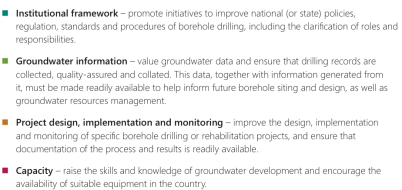
Skat Foundation and UNICEF have been key advocates for increasing access to detailed groundwater data including the recent guidance note which pointed out that ‘groundwater information’ is essential when seeking to improve the quality of borehole implementation in low- and middle-income countries (see Figure 1; UNICEF/Skat, 2016). In this blog I provide some insights into the ways in which Uganda has sought to increase access to groundwater data is recent years.

pic1

pic2

pic3

Fig. 1: Six areas of engagement for increasing drilling professionalism (Skat/UNICEF, 2016).

Groundwater resource mapping in Uganda

Significant steps have been taken in recent years to increase access to detailed groundwater data in Uganda. Much of this began in 2000 when the Directorate of Water Resources and Management (DWRM) within the Ministry of Water and the Environment (MWE) began a nationwide groundwater mapping project. Using data sourced from the borehole completion reports that drilling contractors are required to submit every quarter, DWRM has developed are series of maps for each district. These include:

  1. Water source location map, underlain by a geology map.
  2. Recommended water source technology map (technology recommendation is based on main water strike depth and yield information).
  3. Hydrogeological condition map – includes 4 sub-maps:
    • inferred first water strike depth[1],
    • inferred main water strike depth[2],
    • inferred thickness of overburden[3], and
    • inferred static water level depth[4].
  4. Groundwater quality map: highlights areas where water quality is expected to be problematic.
  5. Groundwater potential – Drilling success rate map: combines expected yield success rate[5] coupled with expected water quality conditions.

Tindimugaya (2004) explains these maps in greater detail, along with the ways in which such maps can help the implementation process. An example of these maps for Kibaale district is available on the MWE’s website.

This mapping work is ongoing, however, by May 2017 DWRM had mapped 85% of Uganda’s districts. The magnitude of these maps and the level of detail they capture is remarkable. These maps have become a great asset for district local governments, non-governmental organisations, and others responsible for water point siting and construction.

Ongoing challenges

While Uganda has made remarkable progress in recent years with their groundwater mapping efforts, there have been several challenges along the way (Liddle and Fenner, 2018), mostly related to data accuracy. When interviewing those in Uganda for this research, there were reports that in some (but not all) cases, inaccurate data is submitted. When looking at why inaccurate data is sometimes submitted, two key issues were noted:

  1. There often isn’t a qualified consultant on site full-time for drilling supervision. While it is the drilling contractor’s responsibility to have a member of staff recording the drilling log, an independent supervisor should also keep a log and check the driller’s log for accuracy before this is submitted to DWRM. Without full-time supervision, however, this cannot happen. Furthermore, even with full-time supervision, if the supervisor is not a hydrogeologist, it is unlikely that they will be keeping accurate and detailed logs.
  2. The lump sum no-water-no-pay payment terms via which Ugandan drillers are often paid (see blog “Turnkey contracts for borehole siting and drilling”). When these contract terms are used, to be paid, drillers need to prove that they have drilled a successful borehole; as a result, there were reports of drillers exaggerating a given borehole’s yield in order to be paid. Skewing data in this way is concerning, as not only will these boreholes struggle to provide adequate quantities of water post-construction, but this high-yield data is then entered into the drilling log database and used to produce the hydrogeological maps. Increasing the quality of drilling supervision and ensuring data is not skewed in this way is essential if the accuracy of DWRM’s maps is to increase going forward.

Overall, Uganda has made remarkable progress over the past two decades in increasing the level of groundwater information available in-country. There are very few examples in the African continent comparable to what Uganda has achieved! As noted above, the resultant maps have become a great asset for district local governments, non-governmental organisations, and others responsible for water point siting and construction.

Increasing the accuracy of borehole completion reports is an essential next steps for Uganda. Furthermore, other countries should be aware of these challenges as they embark on their own mapping exercises and ensure necessary measures are in place to prevent these problems in their own contexts.

What do you think?

So what do you think? Do you have experiences of collecting and collating groundwater data, or using groundwater maps? Is this something that should be started in your country? You can respond below by posting in the reply below, or you can join the live webinar on the 14th of May (register here).

[1]‘Expected first water strike depth’ = the depth at which a driller is likely to first encounter groundwater. In most cases the driller will need to continue drilling past this point if the borehole is to be able to provide sufficient quantities of water for users.

[2] ‘Expected main water strike depth’ = the depth at which a driller is likely to find the main aquifer that will be able to provide sufficient quantities of water for users.

[3] Overburden refers to the unconsolidated material that overlays the bedrock. The ‘expected overburden thickness’ map highlights the expected depth of this unconsolidated material across Uganda.

[4] ‘Expected static water level’ = the expected groundwater depth without any pumping disturbance.

[5] ‘Yield success’ refers to a borehole being able to sustain a pumping rate of 500 litres/hour. If a borehole can sustain this pumping rate, it is considered successful in regards to yield.

References

Adank, M., Kumasi, T.C., Chimbar, T.L., Atengdem, J., Agbemor, B.D., Dickinson, N., and Abbey, E. (2014). The state of handpump water services in Ghana: Findings from three districts, 37th WEDC International Conference, Hanoi, Vietnam, 2014, Available from https://wedc-knowledge.lboro.ac.uk/resources/conference/37/Adank-1976.pdf

Carter, R., Chilton, J., Danert, K. & Olschewski, A. (2014) Siting of Drilled Water Wells – A Guide for Project Managers. RWSN Publication 2014-11 , RWSN , St Gallen, Switzerland, Available from http://www.rural-water-supply.net/en/resources/details/187

Foster, T., Willetts, J., Lane, M. Thomson, P. Katuva, J., and Hope, R. (2018). Risk factors associated with rural water supply failure: A 30-year retrospective study of handpumps on the south coast of Kenya. Science of the Total Environment,, 626, 156-164, Available from https://www.sciencedirect.com/science/article/pii/S0048969717337324

Kebede, S., MacDonald, A.M., Bonsor, H.C, Dessie, N., Yehualaeshet, T., Wolde, G., Wilson, P., Whaley, L., and Lark, R.M. (2017). UPGro Hidden Crisis Research Consortium: unravelling past failures for future success in Rural Water Supply. Survey 1 Results, Country Report Ethiopia. Nottingham, UK: BGS (OR/17/024), Available from https://nora.nerc.ac.uk/id/eprint/516998/

Liddle, E.S. and Fenner, R.A. (2018). Review of handpump-borehole implementation in Uganda. Nottingham, UK: BGS (OR/18/002), Available from https://nora.nerc.ac.uk/id/eprint/520591/

Owor, M., MacDonald, A.M., Bonsor, H.C., Okullo, J., Katusiime, F., Alupo, G., Berochan, G., Tumusiime, C., Lapworth, D., Whaley, L., and Lark, R.M. (2017). UPGro Hidden Crisis Research Consortium. Survey 1 Country Report, Uganda. Nottingham, UK: BGS (OR/17/029), Available from https://nora.nerc.ac.uk/id/eprint/518403/

Tindimugaya, C. (2004). Groundwater mapping and its implications for rural water supply coverage in Uganda. 30th WEDC International Conference, Vientiane, Lao PDR, 2004. Available from https://wedc-knowledge.lboro.ac.uk/resources/conference/30/Tindimugaya.pdf

UNICEF/Skat (2016). Professional water well drilling: A UNICEF guidance note. St Gallen, Switzerland: Skat and UNICEF. Available from http://www.rural-water-supply.net/en/resources/details/775

Acknowledgements

This work is part of the Hidden Crisis project within the UPGro research programme – co-funded by NERC, DFID, and ESRC.

The fieldwork undertaken for this report is part of the authors PhD research at the University of Cambridge, under the supervision of Professor Richard Fenner. This fieldwork was funded by the Ryoichi Sasakawa Young Leaders Fellowship Fund and UPGro: Hidden Crisis.

Thank you to those of you from Makerere University and WaterAid Uganda who provided logistical and field support while I was conducting the interviews for this report (especially Dr Michael Owor, Felece Katusiime, and Joseph Okullo from Makerere University and Gloria Berochan from WaterAid Uganda). Thank you also to all of the respondents for being eager and willing to participate in this research.

Photo: “Groundwater Supply Technology Options map on display in the Kayunga District Water Office” (Source: Elisabeth Liddle).

Turnkey contracts for borehole siting and drilling

This is the first in a series of four blogs entitled Professional Borehole Drilling: Learning from Uganda written by Elisabeth Liddle, and a RWSN webinar in 2019 about professional borehole drilling. It draws on research in Uganda by Liddle and Fenner (2018). We welcome your thoughts in reply to this blog below.

Drilling under a ‘turnkey contract’ has become increasingly common across sub-Saharan Africa. Recent research in Uganda by Liddle and Fenner (2018) found turnkey contracts to be the most common contract type when the private sector provides new rural handpump-boreholes, although this has not always been the case. In this blog we provide an overview of what turkey contracts are, why they are being used in Uganda, and the benefits and challenges associated with their use in Uganda.

What is a turnkey contract they and why are they being used in Uganda?

Under a turnkey contract a drilling contractor is responsible for both the siting and the drilling/installation work. Turnkey contracts are paid via ‘lump sum no-water-no-pay’ payment terms. If the borehole is successful, the driller will be paid the full lump sum price, regardless of the costs incurred on-site. If, however, the borehole is unsuccessful (dry or low-yielding), the driller will not be paid at all.

Turnkey contracts rose to prominence in Uganda in the mid-2000s as implementing agencies (District Local Governments and Non-Governmental Organisations) became increasingly frustrated with the number of unsuccessful boreholes that were being drilled when consultants were conducting the siting work. Because the consultant was telling the driller where to drill, if the borehole was unsuccessful, the implementing agency had to pay the driller for all the work done and materials used, i.e. according to a Bill of Quantities (BoQ). Unsuccessful boreholes were blamed on the quality of the consultants’ siting work, with briefcase consultants (meaning those with no formal geology or hydrogeology training) having flooded the market. Because of the low prices they offered, coupled with a lack of regulation, these consultants were gaining siting contracts.

Paying for unsuccessful boreholes was challenging and it was becoming difficult for District Local Governments to meet their targets for new safe water sources. Project managers were being made to look inept. Moreover, political leaders failed to understand that some unsuccessful boreholes were a common part of drilling, hence, if a driller was paid for an unsuccessful borehole, politicians saw this as corrupt. Some district water officers were even threatened with jail.

The solution found was to remove the consultant and hand over all of the responsibility for finding water to the driller. If the driller then drilled an unsuccessful borehole, they would not be paid as they were the ones responsible for siting the borehole. The risk of finding water of an inadequate yield fell squarely on the driller.

Benefits and challenges of turnkey contract use

Turnkey contracts have greatly simplified the procurement and contract management process for project managers in Uganda. Under turnkey contracts, implementing agencies only need to procure and manage a drilling contractor. Furthermore, as the amount the drilling contractor will be paid if the borehole is successful is determined during the tender process, there are no surprise costs for the implementing agency. Additionally, under the no water, no pay payment terms, agencies do not have to directly spend any money on unsuccessful boreholes; money is only being spent on boreholes that are declared successful.

While turnkey contracts have notable benefits, several concerns were raised among those interviewed in Uganda as to the quality of the work:

  • Siting based on ease of finding water: under turnkey contracts, drilling contractors need to find sufficient water in order to be paid. Consequently, it was widely reported that drilling contractors are siting boreholes where it is easy to find water, for example, in valleys, or near swamps or riverbanks. Not only are drilling contractors extremely likely to find water in these areas, hence be paid, but they will often drill to a much shallower depths than their lump sum cost estimate was based on. A greater margin can therefore be made in these areas. Boreholes situated in such areas, however, are vulnerable to pollution. While a borehole may pass water quality tests immediately after drilling, the water may be unsafe for human consumption in the rainy months as surface pollutant transport and leaching rates increase or in several years’ time as pollutants accumulate in these areas. Furthermore, community access may be limited, especially in rainy months when these areas may be vulnerable to flooding.
  • Short-cuts on-site: under no-water-no-pay payment terms, drilling contractors need to save money wherever possible so they can recover the losses that they make on unsuccessful boreholes. To save money, it was reported that certain drilling contractors in Uganda are known for:
  • Using low quality and/or hydrogeologically inappropriate materials, for example, galvanised iron rising mains rather than stainless steel in acidic groundwaters. Galvanised iron rising mains are 4-5 times cheaper than stainless steel. When galvanised iron rising mains are used in acidic groundwaters (which are common in Uganda), red/brown coloured water, unfit for human consumption is extremely likely (Casey et al., 2016).
  • Using inappropriate materials for the borehole design, for example, using 5″ casing when a 6/6.5″ open-hole borehole[1] has been drilled as 5″ casing is cheaper than 6/6.5″. To prevent the 5″ casing from falling into the 6/6.5″ open-hole, drilling contractors heat the base and stretch this to fit on top of the open area. 42% of drilling contractors interviewed (n = 14) admitted to this practice. While some see this as a clever trick, others were concerned that silt will accumulate in these boreholes over time, due to gaps between the casing and the consolidated rock and/or cracks that form in the thinly stretched areas of the casing. Such siltation will not only wear the handpump parts down, but it may also lead to appearance problems from the users’ perspective as this silt enters the water supply.
  • Stopping drilling at the first water strike. A great deal of money can be saved here; in Ethiopia, for example, drilling to 50 metres instead of 60 metres reduces the drilling cost by 13% (Calow et al., 2012). If the borehole does not penetrate the main aquifer, however, the quantity of water available post-construction may be problematic, even if the borehole passes the pumping test.
  • Skewing the pump test data or cutting the pump test time short to mask low-yielding, unsuccessful sites. These boreholes will inevitably be low-yielding post-construction, or in worst case, dry.

The need for drilling contractors to take the above shortcuts in Uganda is exacerbated by the fact that, in many cases, the lump sum contractors are paid for drilling a successful borehole is too low in the first instance. Furthermore, supervision by a trained hydrogeologist is rare.

Where to from here for turnkey contracts?

Opinions on whether turnkey contracts should continue to be used in Uganda differ among different actors: the majority of implementing agencies in Uganda believe the use of turnkey contracts should continue, while consultants and the Ministry of Water and the Environment (MWE) believe that they should cease, given the quality of work concerns outlined above.

MWE went so far to release a directive in January 2017 discouraging the use of turnkey contracts, instead stating that split contracts, one for siting (awarded to a hydrogeologist/consultant) and one for drilling/installation (awarded to a drilling contractor) be used going forward. Opinions among drilling contractors themselves seemed impartial; most do not mind working under turnkey contracts, they simply ask that the lump sum prices implementing agencies are willing to pay for successful boreholes increase in the future so they are not forced to take shortcuts on-site.

What do you think?

So what do you think? Do you have experiences of turnkey contracts for borehole drilling, or other practices that you would like to share. You can respond below by posting in the reply below, or you can join the live webinar on the 14th of May (register here).

References

Calow, R., MacDonald, A., and Cross, P. (2012). Corruption in rural water supply in Ethiopia. In J. Plummer (Ed.), Diagnosing Corruption in Ethiopia: Perceptions, realities and the way forward for key sectors (pp 121-179). Washington DC, USA: World Bank. Available from https://www.odi.org/sites/odi.org.uk/files/odi-assets/publications-opinion-files/8555.pdf

Casey, V., Brown, L., Carpenter, J.D., Nekesa, J., and Etti, B. (2016). The role of handpump corrosion in the contamination and failure of rural water supplies. Waterlines, 35(1), 59-77. Available from https://www.developmentbookshelf.com/doi/full/10.3362/1756-3488.2016.006

Liddle, E.S. and Fenner, R.A. (2018). Review of handpump-borehole implementation in Uganda, Nottingham, UK: BGS (OR/18/002). Available from https://nora.nerc.ac.uk/id/eprint/520591/

[1] Boreholes may be ‘fully-cased’ or ‘open-hole’. If a borehole is ‘fully-cased’ the entire vertical is cased, with screens in the water bearing layers. If the borehole is ‘open-hole’, however, only the unconsolidated areas of the vertical borehole are cased – the remaining consolidated rock is left ‘open’ (no casing or screens).

Acknowledgements

This work is part of the Hidden Crisis project within the UPGro research programme – co-funded by NERC, DFID, and ESRC.

The fieldwork undertaken for this report is part of the authors PhD research at the University of Cambridge, under the supervision of Professor Richard Fenner. This fieldwork was funded by the Ryoichi Sasakawa Young Leaders Fellowship Fund and UPGro: Hidden Crisis.

Thank you to those of you from Makerere University and WaterAid Uganda who provided logistical and field support while I was conducting the interviews for this report (especially Dr Michael Owor, Felece Katusiime, and Joseph Okullo from Makerere University and Gloria Berochan from WaterAid Uganda). Thank you also to all of the respondents for being eager and willing to participate in this research.

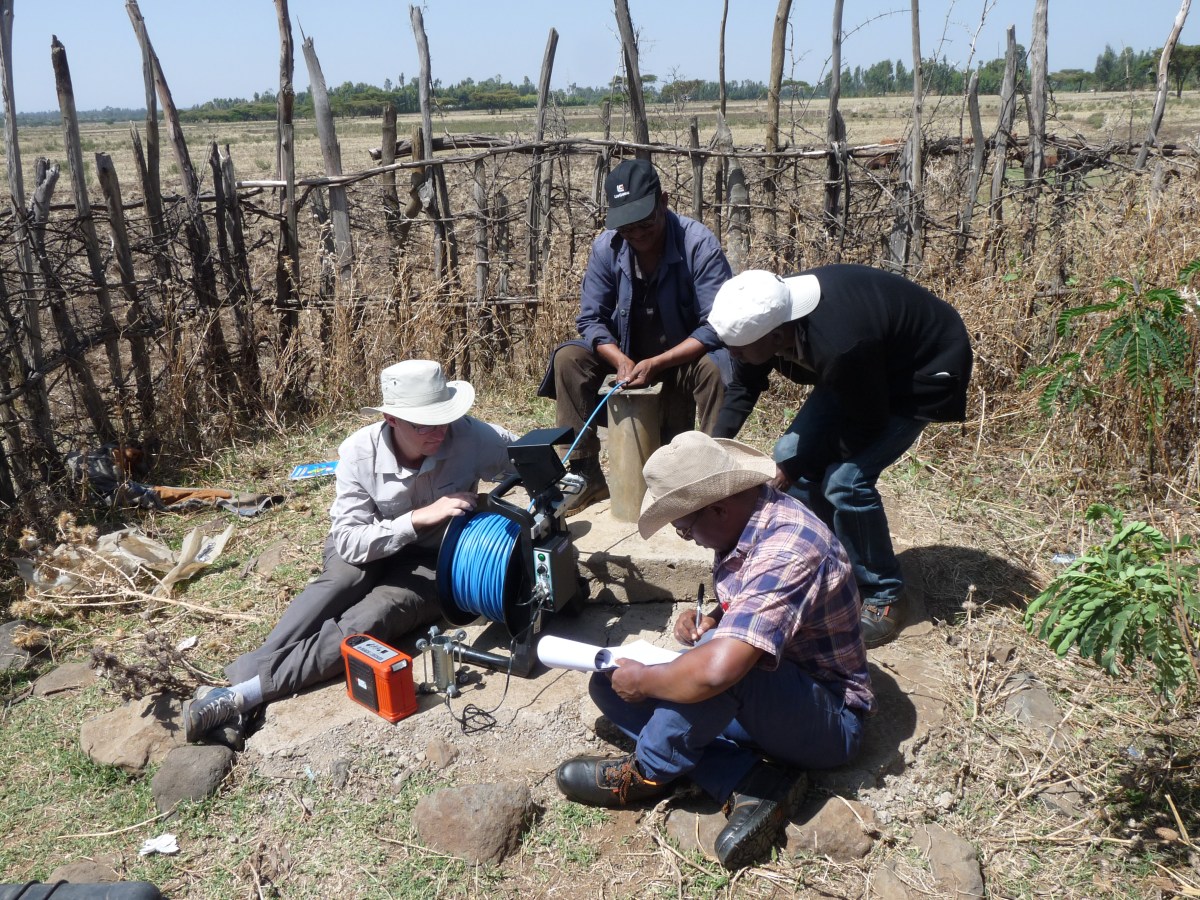
Photo: “Hidden Crisis team members using a CCTV camera to undertake downhole observations of the borehole construction of a community borehole” (Source: ‘BGS © NERC. UPGro Hidden Crisis Project.’)

Les contrats clés en main pour l’implantation et le forage de puits d’eau

Il s’agit du premier d’une série de quatre blogs intitulée ‘Le forage professionnel de puits d’eau: Apprendre de l’Ouganda” de Elisabeth Liddle et d’un webinaire en 2019 sur le forage de puits professionnel. Cette série s’appuie sur les recherches menées en Ouganda par Liddle et Fenner (2018). Nous vous invitons à nous faire part de vos commentaires en réponse à ce blog ci-dessous.

Les forages réalisés dans le cadre d’un “contrat clé en main ” sont devenus de plus en plus courants dans toute l’Afrique subsaharienne. Des recherches récentes menées en Ouganda par Liddle et Fenner (2018) ont montré que les contrats clés en main sont le type de contrat le plus courant lorsque le secteur privé fournit de nouveaux forages pour des pompes manuelles en milieu rural, bien que cela n’ait pas toujours été le cas. Dans ce blog, nous donnons un aperçu de ce que sont les contrats clé en main, pourquoi ils sont utilisés en Ouganda, et les avantages et les défis associés à leur utilisation en Ouganda.

Qu’est-ce qu’un contrat clé en main et pourquoi ces contrats sont-ils utilisés en Ouganda ?

Dans le cadre d’un contrat clé en main, un entrepreneur en forage est responsable à la fois de l’implantation et des travaux de forage et d’installation. Les contrats clés en main sont payés par le biais de modalités de paiement au forfait, c’est-à-dire “pas d’eau, pas de paiement “. Si le forage est fructueux, le foreur recevra la totalité du prix au forfait, quels que soient les coûts engagés sur place. Toutefois, si le forage est infructueux (forage à sec ou à faible rendement), le foreur ne sera pas payé du tout.

Les contrats clés en main ont pris de l’importance en Ouganda au milieu des années 2000 lorsque les agences d’exécution (autorités locales de district et Organisations Non Gouvernementales) devenaient de plus en plus frustrées par le nombre de forages infructueux réalisés lorsque les consultants effectuaient les travaux d’implantation de forages. Comme le consultant indiquait au foreur l’endroit où forer, si le forage échouait, l’agence de mise en œuvre devait payer le foreur pour tous les travaux effectués et les matériaux utilisés, c’est-à-dire selon un cahier des charges. L’échec des forages était imputé à la qualité du travail d’implantation des consultants ; de fait, les « consultants à mallette » (c’est-à-dire ceux qui n’avaient pas de formation officielle en géologie ou en hydrogéologie) avaient inondé le marché. En raison des bas prix qu’ils offraient et de l’absence de réglementation, ces consultants parvenaient à remporter des contrats d’implantation de forage.

Payer pour des forages infructueux était donc un problème, et il était devenu difficile pour les autorités locales de district d’atteindre leurs objectifs en matière de nouvelles sources d’eau potable. Les chefs de projet passaient pour incompétents. De plus, les responsables politiques ne comprenaient pas qu’un nombre de forages infructueux faisait partie intégrante du travail de forage ; par conséquent, si un foreur était payé pour un forage infructueux, les responsables politiques le considéraient comme corrompu. Certains responsables des services de l’eau au niveau du district ont même été menacés de prison.

La solution trouvée a été de retirer le consultant et de confier toute la responsabilité de la recherche de l’eau au foreur. Si le foreur forait alors un puits infructueux, il ne serait pas payé, car c’est lui qui était responsable de l’implantation du trou de forage. Le foreur prenait également tous les risques associés à un rendement d’eau inadéquat.

Avantages et défis de l’utilisation de contrats clés en main

Les contrats clés en main ont grandement simplifié le processus de passation de marché et de gestion de contrat pour les responsables de projets en Ouganda. Dans le cadre de contrats clés en main, les maitres d’ouvrage n’ont qu’à sélectionner et gérer un entrepreneur en forage. En outre, étant donné que le montant payé à l’entrepreneur si le forage est fructueux est déterminé au cours du processus d’appel d’offres, il n’y a pas de coûts imprévus pour le maitre d’ouvrage. De plus, en vertu des modalités de paiement « pas d’eau, pas de paiement », les organismes n’ont pas à dépenser directement de l’argent pour des forages infructueux ; l’argent n’est dépensé que pour des forages qui sont déclarés fructueux.

Bien que les contrats clés en main présentent des avantages notables, les chercheurs se sont entretenus avec plusieurs personnes en Ouganda qui se sont dites préoccupées par la qualité du travail :

  • Le choix du site est fonction de la facilité à trouver de l’eau: Dans le cadre de contrats clés en main, les entrepreneurs de forage doivent trouver suffisamment d’eau pour être payés. De multiples entretiens ont confirmé que les entrepreneurs en forage forent des puits là où il semble plus facile de trouver de l’eau, par exemple dans les vallées ou près des marécages ou des rivières. Non seulement les entrepreneurs de forage sont extrêmement susceptibles de trouver de l’eau dans ces zones, donc d’être payés, mais ils forent souvent à des profondeurs beaucoup moins profondes que celles sur lesquelles leur estimation forfaitaire de coûts était basée. Une marge plus importante peut donc être réalisée dans ces conditions. Les forages situés dans ces zones sont toutefois vulnérables à la pollution. Bien qu’un forage puisse passer les tests de qualité de l’eau immédiatement après avoir été foré, l’eau peut être impropre à la consommation humaine pendant les mois pluvieux en raison de l’augmentation du transport des polluants de surface et des taux de lixiviation ou, après plusieurs années, du fait de l’accumulation des polluants dans ces zones. En outre, l’accès des communautés à ces puits peut être limité, en particulier pendant les mois pluvieux où ces zones peuvent être vulnérables aux inondations.
  • Le bricolage pour faire des économies: En vertu des modalités de paiement « pas d’eau, pas de paiement »,, les entrepreneurs de forage doivent économiser dans la mesure du possible afin de pouvoir amortir les pertes qu’ils ont subies. Pour économiser de l’argent, il a été rapporté que certains entrepreneurs de forage en Ouganda sont connus pour les pratiques suivantes :
  • L’utilisation de matériaux de mauvaise qualité et/ou qui ne sont pas appropriés qux conditions hydrogéologiques, par exemple, des conduites montantes en fer galvanisé plutôt qu’en acier inoxydable dans les eaux souterraines acides. Les conduites montantes en fer galvanisé sont 4 à 5 fois moins chères que l’acier inoxydable. Lorsque des conduites montantes en fer galvanisé sont utilisées dans les eaux souterraines acides (qui sont courantes en Ouganda), une eau de couleur rouge/brune impropre à la consommation humaine est fort probable (Casey et al., 2016).
  • L’utilisation de matériaux inappropriés pour la conception du forage, par exemple, l’utilisation d’un tubage de 5 pouces lorsqu’un forage ouvert de 6/6,5 pouces[1] a été foré, car le tubage de 5 pouces est moins cher que celui de 6/6,5 pouces. Pour éviter que le tubage de 5 pouces ne tombe dans le trou ouvert de 6/6,5 pouces, les foreurs en chauffent la base et l’étirent pour l’ajuster au dessus de la zone ouverte. 42 % des entrepreneurs en forage interrogés (n = 14) ont admis avoir recours à cette pratique. Alors que certains y voient une bonne astuce, d’autres craignent que de la vase ne s’accumule dans ces forages avec le temps, en raison de l’espace entre le tubage et la roche consolidée et/ou des fissures qui se forment dans les zones les plus tendues du tubage. Un tel envasement use non seulement les pièces de la pompe à main, mais peut également entraîner des problèmes d’apparence du point de vue de l’utilisateur lorsque la vase pénètre dans l’alimentation en eau potable.
  • Arrêter de forer lorsqu’on rencontre de l’eau pour la première fois: On peut économiser beaucoup d’argent ainsi ; en Ethiopie, par exemple, forer à 50 mètres au lieu de 60 mètres réduit le coût du forage de 13% (Calow et al., 2012). Toutefois, si le forage ne pénètre pas dans l’aquifère principal, la quantité d’eau disponible après la construction peut être problématique, même si le forage passe l’essai de pompage.

3) Interférer avec les données d’essai de la pompe ou raccourcir le temps d’essai de la pompe

Cela permet de masquer les sites à faible rendement et les sites infructueux. Ces forages seront inévitablement à faible rendement après construction ou, dans le pire des cas, à sec.

La nécessité pour les foreurs d’avoir recours aux pratiques ci-dessus en Ouganda est exacerbée par le fait que, dans de nombreux cas, le forfait auquel les foreurs sont payés pour un forage réussi n’est pas assez élevé. De plus, la supervision par un hydrogéologue qualifié est rare.

Que faire en ce qui concerne les contrats clés en main ?

Les contrats clés en main devraient-ils continuer à être utilisés en Ouganda ? Les avis diffèrent d’un acteur à l’autre : la majorité des maitres d’ouvrage en Ouganda estiment que le recours aux contrats clés en main devrait se poursuivre, tandis que les consultants et le Ministère de l’eau et de l’environnement estiment qu’ils devraient cesser, au vu des problèmes de qualité des travaux décrits ci-dessus.

Le Ministère de l’eau et de l’environnement est allé jusqu’à publier une directive en janvier 2017 décourageant l’utilisation de contrats clés en main, et préconisant plutôt que les contrats subdivisés, un pour le choix du site (attribué à un hydrogéologue/consultant) et un pour le forage et l’installation (attribué à un entrepreneur en forage) soient dorénavant utilisés. Les opinions des foreurs eux-mêmes semblent impartiales ; la plupart d’entre eux ne s’opposent pas à l’idée de travailler dans le cadre de contrats clés en main ; ils demandent simplement à ce que les prix forfaitaires que les maitres d’ouvrage soient prêts à payer pour des forages réussis augmentent dans le futur, pour qu’ils ne soient pas obligés de prendre de bricoler pour faire des économies sur place.

Qu’en pensez-vous?

 Alors, qu’en pensez-vous? Avez-vous de l’expérience en matière de contrats clés en main pour forer des puits d’eau, ou d’autres pratiques que vous aimeriez partager ? Vous pouvez répondre ci-dessous en postant un commentaire, ou vous pouvez participer au webinaire en direct le 14 mai (inscriptions ici)

Références

Calow, R., MacDonald, A., and Cross, P. (2012). Corruption in rural water supply in Ethiopia. In J. Plummer (Ed.), Diagnosing Corruption in Ethiopia: Perceptions, realities and the way forward for key sectors (pp 121-179). Washington DC, USA: World Bank. Available from https://www.odi.org/sites/odi.org.uk/files/odi-assets/publications-opinion-files/8555.pdf

Casey, V., Brown, L., Carpenter, J.D., Nekesa, J., and Etti, B. (2016). The role of handpump corrosion in the contamination and failure of rural water supplies. Waterlines, 35(1), 59-77. Available from https://www.developmentbookshelf.com/doi/full/10.3362/1756-3488.2016.006

Liddle, E.S. and Fenner, R.A. (2018). Review of handpump-borehole implementation in Uganda, Nottingham, UK: BGS (OR/18/002). Available from https://nora.nerc.ac.uk/id/eprint/520591/

[1] Les trous de forage peuvent être ” entièrement tubés ” ou ” ouverts “. Si un trou de forage est ” entièrement tubé “, toute la partie verticale est tubée, avec des grilles dans les couches d’eau. Toutefois, si le trou de forage est ” ouvert “, seules les zones non consolidées du forage vertical sont tubées – le reste de la roche consolidée est laissé à l’état “ouvert ” (pas de tube ni de grilles).

Un pouce équivaut à 2,54 cm (note du traducteur).

Remerciements

Ce travail fait partie du projet Hidden Crisis du programme de recherche UPGro – cofinancé par le NERC, le DFID et l’ESRC.

Le travail de terrain entrepris pour ce rapport fait partie de la recherche doctorale des auteurs à l’Université de Cambridge, sous la supervision du Professeur Richard Fenner. Ce travail sur le terrain a été financé par le Ryoichi Sasakawa Young Leaders Fellowship Fund et UPGro : Hidden Crisis.

Merci à ceux d’entre vous de l’Université de Makerere et de WaterAid Ouganda qui m’ont apporté un soutien logistique, y compris sur le terrain, pendant que je menais les entretiens pour ce rapport (en particulier le Dr Michael Owor, Felece Katusiime et Joseph Okullo de l’Université Makerere et Gloria Berochan de WaterAid Uganda). Merci également à tous les répondants d’avoir été enthousiastes et disposés à participer à cette recherche.

Photo: ” Les membres de l’équipe Hidden Crisis utilisent une caméra de CCTV pour l’observation du fond de puits de la construction d’un forage communautaire ” (Source: ‘BGS © NERC. UPGro Hidden Crisis Project.’)


Professional Water Wells Drilling: Country Assessments of the Sector – UPDATED!

From 2003 to date, assessments of borehole drilling sector cost-effectiveness and professionalism have been undertaken for the following countries:

Do you know of other national assessments of borehole drilling sector cost-effectiveness and professionalism, perhaps in your own country? If so, please share in the comments below.

Update 21 August 2018

Key points:

  • “Turn-key” contracts should not be used, instead implementing agencies should procure an independent consultant for drilling and supervision and pay drillers for drilling/installation work done.
  • The research supports the guidance set out Danert K., Gesti Canuto J. (2016) Professional Water Well Drilling. A UNICEF Guidance Note  , Unicef , Skat Foundation http://www.rural-water-supply.net/en/resources/details/775

Favouring Progress: Yemen’s Water Scarcity Dilemma of the 21st Century

Our RWSN Guest blogger Muna Omar takes a critical look at the issue of dwindling water supply in Yemen’s capital city

The population of Sana’a, the capital city of Yemen, depend on deep wells that are usually dug to a maximum depth of 200 meters for their drinking water. The wells draw on a cretaceous sandstone aquifer northeast and northwest of the city, with a third of the wells operated by the state-owned Sana’a Local Corporation for Water Supply and Sanitation drilled to 800 to 1,100 meters. The combined output the corporation’s wells barely meet 35% of needs of Sana’a growing population which includes displaced people, asylum seekers, refugees and other newcomers.

Public piped water delivery is once every 40 days to some houses, while others don’t receive piped water at all. Sana’a’s population is thus supplied either by small, privately owned networks, hundreds of mobile tankers and water from people’s own private wells. As water quality has degenerated, privately owned kiosks that use a water filtration method to purify poor-quality groundwater have spread in Sana’a and other towns. Many people rely on costly water that is provided by private wells supplying tankers. These tankers don’t really consider appropriate cleaning, so the quality of the water is questionable.

Despite the challenges with pumping due to a shortage of fuel and with rising prices, private well owners are trying to capture the remains of the valuable groundwater resources before their neighbours do. Coupled with the on-going war, drought sees Yemen facing a major water crisis. Water table data is based on old research which can be challenging to verify now. Given the data and the current severe situation as water use exceeds aquifer recharge, it is estimated that the water table drops by approximately 2-6 feet annually.

Although Sana’s groundwater is probably the best water in Yemen, it is considered below acceptable standards for human consumption as water infrastructure has been damaged by warplanes and the sanitation workers went on strike because they didn’t get their salary. The latter left plenty of garbage on the streets that led to contamination of drinking water supplies. Meanwhile wastewater began to leak out into irrigation canals and contaminate drinking water supplies. Inadequate attention to groundwater pollution has directly affected the quality of Sana’a’s drinking water supplies.

It Yemen, as a whole, it is estimated that about 14.5 million people don’t have sustainable access to clean drinking water. Inadequate water supply has affected the country with the worst outbreak of cholera in the human history. Over 1 million suspected cases of cholera have been reported in Yemen from 27 April 2017 to present day. Other water-borne diseases include a recent peak in diphtheria that reached 1,795 probable cases with 93 Associated Deaths and a case fatality rate (CFR) of 5.2% by 19 May 2018.

Yemen’s water problem is not only immediate with groundwater resources under pressure as never before to meet not only drinking water needs, but also demands for irrigation. In Yemen, the pressures of climate change, demographic change and the on-going conflict place an immense burden on professionals working in the country. The enormity of the urgent needs mean that water resources management is neglected, despite being absolutely essential for the future of Yemen’s population.

Sana’a groundwater resources are significantly depleted in many areas and acknowledged globally as one of the world’s scarcest water supplies. Sana’a may be the first capital city in the world to run out of water. Looking forwards, how can the country produce more food, raise farmer incomes and meet increase water demands if there is less water available?

Clearly, there are several interrelated aspects contributing to the current water crisis in Sana’a specifically and Yemen in general, and the population has to innovate to find solutions. Future supply options include pumping desalinated water from the Red Sea over a distance of 250 km, over 2,700 meter-high mountains into the capital, itself located at an altitude of 2,200 meters. However, the feasibly of this is questionable with the enormous pumping cost would push the price of water up to $10 per cubic meter. Other options to supply Sana’a from adjacent regions are fraught due to water rights.

Groundwater data is the critical foundation for water managers to both prevent problems and formulate solutions. Data is lacking in many of Yemen’s groundwater basins. Even heavily used basins have no record of how much groundwater was withdrawn and remains in the aquifers, where it was pumped from? Nor are adequate data available on groundwater quality or aquifer characteristics. Furthermore, while the drought and other cutbacks on surface water supplies are motivating groundwater users to drill new or deeper wells in increasing numbers despite the fact that well owners don’t know how their aquifer is doing and so can’t anticipate changes. There is lack of data on private wells.

Lack of groundwater data in Yemen is not the result of ignorance about its importance, but is rather the victim of chronic underfunding and politics, which have been exacerbated by the on-going conflict. The war has made it almost impossible to measure and manage groundwater development and secure its long-term sustainability.

Having just completed the online course on “Professional drilling management” led by Skat Foundation, UNICEF, and the United Nations Development Programme Cap-Net, I have learned about the need to develop our knowledge in this regard. The course highlighted important immediate and long-term actions for Yemen:

  • Raise awareness within Yemen of the groundwater issues faced by the country.
  • Find practical ways to better understand groundwater, regulate its extraction, introduce control mechanisms and engage with the local population to develop effective actions.
  • Build capacity of government, NGOs, consultants, policy makers and beneficiaries through training in groundwater management.
  • Invest in building rain-water harvesting facilities in rural areas so the people don’t have to walk miles to collect water.
  • Invest in re-building infrastructure alongside improving water resources management.

Muna Omar is an Ethiopian refugee and a young water professional, living and working in Sana’a, undertaking monitoring and evaluation of humanitarian programmes in the water, sanitation and hygiene (WASH), health and nutrition sectors such as a cholera-response project, and an executive assistant with a local NGO.

This article was first published in GeoDrilling International and is reproduced with permission and thanks.

Three common myths about solar-powered water pumping

By Andrew Armstrong (Water Mission), RWSN co-lead for Sustainable Groundwater Development

Solar pumping is the trendiest technology in rural water supply today. Policy-makers and practitioners are eager to better understand its benefits and limitations and the private sector is responding with a variety of product offerings. Much of this interest is motivated by the Sustainable Development Goal to increase water service levels in the most remote areas. A more compelling driver is that rural water users are willing to pay for service that is accessible near or within their homes. There is currently no more promising technology for meeting these expectations in off-grid settings than solar pumping. Despite this high interest and the fact that solar pumping technology has been around for decades, a great deal of misinformation is being propagated.

This post aims to address a few of the most common misconceptions.

Myth #1: Solar pumping is too complicated and not appropriate for remote, rural settings

The most common barrier to adoption of solar pumping is misunderstanding of its complexity and applicability. The technology is often avoided because of perceived technical and management challenges, which are in fact common to any rural water supply system. In reality, the design and installation processes associated with solar pumping are no more complicated than other motorized pumping schemes. Operation and maintenance is more straightforward than with handpumps and generator powered schemes which, as indicated in recent evaluations published by UNICEF and the Global Solar and Water Initiative, likely leads to higher functionality and reliability rates.

Solar pumps are applicable across the same head and flow profiles as grid- and generator-powered pumps, and most solar pumping equipment available today is essentially “plug and play”. External power backup for periods of low sunlight are rarely necessary if water demand is estimated and storage is sized appropriately. In addition, current off-the-shelf computer software tools simplify equipment selection and automatically consider daily and seasonal weather and solar irradiation fluctuations when estimating water outputs.

The high capital cost of solar pumping equipment often brings its large-scale applicability into question. However, the life-cycle cost benefits of solar pumping are well documented and are within and on the lower end  of IRC’s WASHCost benchmark ranges for piped schemes and boreholes fitted with handpumps. There is no fuel cost associated with solar pumps, and the cost of maintaining power generation equipment is greatly reduced because solar modules have no moving parts and long functional lifespans. Furthermore, the cost of solar modules, which represent the most expensive element of a solar pumping scheme, continues to decrease at a rapid rate.

graph1
Click here to read about the advantages of solar pumps compared to alternative technologies commonly utilized in remote, rural settings.

Myth #2: All solar powered water pumping equipment is created equal

Equipment manufacturers have taken advantage of demand and have flooded the market with solar pumping products of all varieties and price tags. Unfortunately, many are of poor quality and likely to fail in a fraction of the lifespan of higher priced, higher quality equipment. Low-quality products seldom come with warranties covering the first few years of operation during which failures are most likely to occur. Uninformed customers often fall into the trap of choosing cheaper equipment without considering that low-quality equipment fails quicker and costs more to maintain in the long-term. This results in solar pumping schemes which were expected to function for years failing and being abandoned after a few months in operation. The best way to guard against this is to stick with brands that have a proven track record for durability and reliability, even if it costs more up-front. It is also important to verify that products adhere to internationally-recognized certification and testing standards.

Another related challenge is that imitation spare parts for major brands are easier to find than authentic ones. Logos and barcodes can be forged such that it becomes difficult to detect if a part is counterfeit. This issue can be resolved by sourcing products from trusted dealers with good technical support capacity. The private sector can also have a positive influence on product quality. By providing local dealers with exclusive access to advanced training and support networks, major manufacturers can incentivize sales of quality equipment. In fact, some solar pumping suppliers such as Bluezone Malawi  are choosing to base their business model solely on high-quality products.

Myth #3: Scaling-up solar powered water pumping will lead to widescale depletion of groundwater aquifers

There is concern that solar pumps, because they can operate automatically whenever the sun shines, could pose a long-term threat to groundwater resources. It is true that exploitation of groundwater paired with low or misunderstood aquifer recharge can lead to potentially irreversible depletion, and there is a deficiency of good hydrogeological data in countries where the most interest is being placed on solar pumping. However, abstraction technology is just one of many factors that influence aquifer sustainability and solar pumping should not be devalued because of potential risks which can be mitigated. It is also important to note that the risk of groundwater depletion due to over abstraction with solar pumps depends on the application. Domestic supply withdrawals, in comparison to agriculture and protracted emergency applications, are likely to have negligible impacts.

Below are some actions that can be taken to mitigate the risk of groundwater depletion:

  • Proper borehole development and pump sizing to safe yield – Ensures solar pumps are physically incapable of depleting aquifers. A good resource for this is the RWSN/UNICEF Guidance Note on Professional Water Well Drilling. Simple control measures such as float valves and switches can also be employed to prevent wasting.
  • Better groundwater monitoring alerts authorities to potential risk areas. Many countries successfully employ remote monitoring systems (see, for example, the USGS’s National Groundwater Monitoring Network. Read more here.
  • Water pricing in the form of tariff collections and abstraction charges enables sustainable and equitable allocation of groundwater resources, but requires sound management built on transparency and accountability. Prepaid water metering technologies may also play a role.

Further resources

Resources are available to equip rural water professionals with knowledge and skills and stop the spread of misinformation about solar pumping. Of note:

In order to generate rich discussion and continue raising awareness of existing resources around solar pumping, the RWSN Sustainable Groundwater Development theme will host a three-week e-discussion from 28 May to 15 June 2018. For more information or to participate in the e-discussion, join the RWSN Sustainable Groundwater Development DGroup.

(Photo credits: Water Mission)