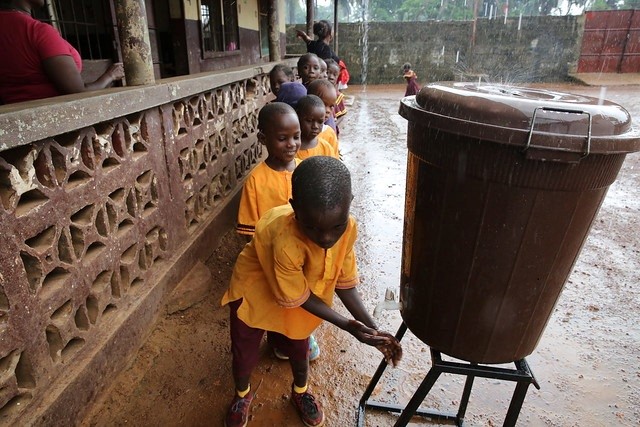
Leaving no one behind in rural areas is about more than drinking water supplies

‘Leaving No One Behind’ – what do these words actually mean, and what are the implications for us rural water practitioners, as well as those funding the programmes and projects that we implement?

Word from the RWSN Chair: Kelly Ann Naylor UNICEF, Co-author: Dr Kerstin Danert, RWSN Sustainable Groundwater Development Theme Leader in the latest RWSN Update (June 2019)

The theme of the 2019 World Water Day, the United Nations World Water Development Report the World Water Week in Stockholm and the early 2019 RWSN webinar series was ‘Leaving No One Behind’. What do these words actually mean, and what are the implications for us rural water practitioners, as well as those funding the programmes and projects that we implement?

Leave No One Behind’ is stated in the UN General Assembly Resolution 70/1 entitled: Transforming our world: the 2030 Agenda for Sustainable Development.  Leave no one behind calls upon us to find out who has been excluded from service provision, decision-making and development; to find out why; to explore what can be done and to take action to ensure that people who have been marginalised in the past are included now, and in the future.  Secondly, it is about joining hands across disciplines and ‘development themes’ to address gaps.

Let me try to illustrate the first point with a fictitious example: “Country X has witnessed rapid economic growth over the last two decades, leading to substantial improvements in the wealth and living standards of people in three of the country’s five regions. Meanwhile, the lives of the majority of people in the other two, predominantly rural regions have barely changed over fifty years. A sizable proportion of the population there are still living in extreme poverty and have no safety net. The gap in wealth between different parts of the country has widened, and, to make matters worse, the poorest people in the poorest regions have little voice, or influence in decision-making at national level. Leave no one behind calls upon government and partners, as well as funders to understand why these two regions have remained marginalised, to explore what can be done to address the imbalance, and to take action. Addressing spatial (geographical) inequalities as shown in the above example is just one example of taking action to leave no one behind. Depending on the context, inequalities manifest themselves in many dimensions, including, but not limited to gender, ability, age, ethnicity, cast and remoteness. There may also be overlaps. 

The second point, about joining hands and working across development themes is well illustrated in the interlinked Sustainable Development Goals (SDGs).  Water, Sanitation and Hygiene (WASH) practitioners may focus on SDG 6 – Clean Water and Sanitation, but drinking water is directly embedded within SDG 1 – No Poverty (basic services), SDG 5 – Gender Equality (time spent on unpaid domestic and care work and women in managerial positions) and SDG 4 – Quality Education (WASH in schools). These are all just as important as SDG 6.

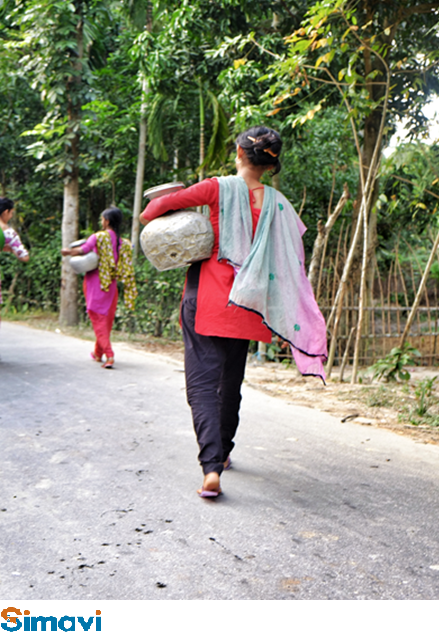
This point was also highlighted in a recent evaluation of the Rural Water Supply programme of UNICEF: if we are to ensure that no one is left behind and fundamentally tackle rural poverty, we, as rural water practitioners need to consider move beyond the confines of drinking water and ‘the WASH world’. To transform people’s lives, water infrastructures need to cater for a wider spectrum of rural needs – domestic supply, household gardens, rural businesses and rural transformation as well as drinking water. We must address gender issues so that women and children no longer ‘do the work of a pipe’ as they spend large parts of their lives hauling water over long distances. We must ensure that people with disabilities are able to meet their water needs and lead dignified lives.

By the end of 2019, UNICEF will publish new guidance on equity in WASH. We hope that this will not only contribute to the efforts that you are already undertaking, but that it can inspire you to do even more to address inequalities. In the meantime, start asking questions about who is being left behind, as well as why and what can be done. Moreover, consider reaching out to colleagues and friends working on rural transformation, gender transformation, nutrition and education to see if there are ways that you can work together to leave no one behind in rural areas. 

New JMP report offers fresh insights into rural water progress and challenges

The new JMP report is out with WASH data up to 2017! This is an initial look at some key points relating to rural water supply

The WHO/UNICEF Joint Monitoring Programme (JMP) is one of the central data and analysis resources for the WASH sector and each new report and data update is generally grabbed eagerly by WASH data geeks, like me.

This being RWSN, I’m specifically interested in rural water supply and what I present below is a hasty digest of some key facts and figures in the latest 2019 JMP report specifically relating to rural drinking water access.

I’m sure other WASH bloggers will also add the analysis, but I found the stuff on inequalities very interesting and useful. Some things that jumped out at me include:

  • What can we learn from Paraguay, Morocco and other countries that have made good progress?
  • Rural water supply challenges are not just about Sub-Saharan Africa: Papua New Guinea, the Solomon Islands, Fiji, Jamaica, Nicaragua and others are going backwards; and in terms of absolute numbers of people, China, India, Indonesia and Pakistan still have millions of rural people
  • Lower wealth quintiles often get left behind, but not always.
  • The new 3 elements of “Safely Managed” water are interesting and highlight an urgent need for systematic water quality monitoring – which a new RWSN Topic this year, as part of the Mapping & Monitoring Theme, thanks to our friends at the University of North Carolina.

Global Headline Facts & Figures

Here are some nuggets that will doubtless be seen in powerpoint presentations, funding proposals and journal papers over the coming year:

  • “2000-2017: Rural coverage of safely managed services increased from 39% to 53%. The gap between urban and rural areas decreased from 47 to 32 percentage points.”
  • “In 2017: 5.3 billion people used safely managed services. An additional 1.4 billion used at least basic services. 206 million people used limited services, 435 million used unimproved sources, and 144 million still used surface water.”
  • “46 out of 132 countries are on track to achieve ‘nearly universal’ basic water services by 2030, but rural areas and the poorest wealth quintiles have furthest to go”
  • “The greatest increase was recorded in Sub-Saharan Africa, where a quarter of the current population has gained access to at least basic drinking water since 2000”
  • In 2017: Eight out of ten people still lacking even basic services lived in rural areas. Nearly half lived in Least Developed Countries
  • “207 million people still used sources where water collection exceeded 30 minutes. Two thirds (135 million) of these people lived in countries in Sub-Saharan Africa but six out of eight SDG regions contained at least one country where >10% of the population used limited water services in 2017. The burden of water collection falls disproportionately on women.”

The report also reminds us that WASH is not just about SDG6, there are direct and indirect references in:

  • SDG 1.4 (No Poverty) its indicator 1.4.1 “Proportion of population living in households with access to basic services (including access to basic drinking water, basic sanitation and basic handwashing facilities)”
  • SDG 4.a (Education) and its indicator: 4.a.1 Proportion of schools with access to… (e) basic drinking water, (f) single-sex basic sanitation facilities, and (g) basic handwashing facilities
  • SDG 3.8 (Health) and its indicator on proportion of health care facilities with basic WASH services.

Since the emergence of SDG6.1 there has been a question about what “Safely Managed” water means. Well now there is some data available of the three elements chosen by the JMP team:

  • “Accessible on premises”
  • “Available when needed”
  • “Free from contamination”

However, there is only data for 14 countries for all three of these, but from those: “Between 2000 and 2017, water quality in rural areas improved from 42% to 53% free from contamination”

Regional/Country Progress and inequalities

Without doubt, the rural water supply star country is Paraguay: “Paraguay increased rural coverage of basic water from 53% to 99% and reduced the gap between richest and poorest by over 40 percentage points.”

Elsewhere:

  • “In almost all countries, service levels are higher in urban areas than in rural areas, but different patterns of inequality are observed.”
  • “In Latin America and the Caribbean, 12% of the rural population lacked basic water services in 2017, compared to 29% in 2000”
  • “In Haiti rural basic water coverage has increased among the richest but decreased among the poorest thereby widening the gap between them”
  • “In Nicaragua, rural basic water coverage has decreased among both groups.”
click to expand

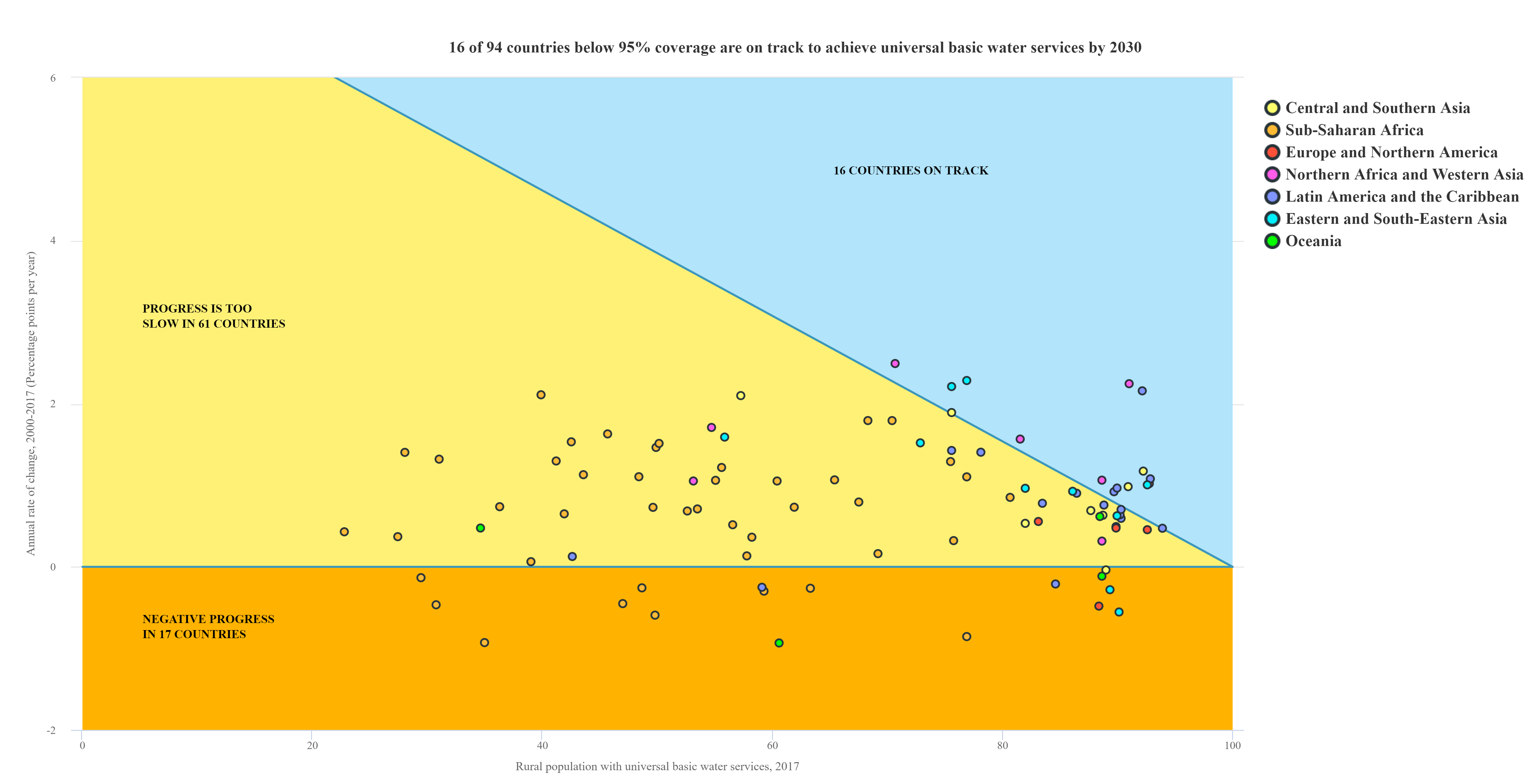
Country progress to achieving Basic Rural Water Coverage by 2030 (figure above):

  • 16 countries on track, including: Morocco, Tajikistan, Lao PDR, Myanmar, Azerbaijan, Iraq, El Salvador, Kazakhstan, India, Vietnam, Tunisia, Brazil, Lithuania, Suriname, Panama. The most progress is being made by Morocco (+2.5%/year)
  • 61 countries are making progress, but too slowly.  The best progress is being made by Afghanistan and Mozambique (+2.1%/year)
  • 17 countries are going backwards, including: Iran, Fiji, Malaysia, North Korea, Serbia, Jamaica, Comoros, Gambia, Lesotho, Nicaragua, Guinea, Zimbabwe, Djibouti, Burkina Faso, Chad, Equatorial Guinea, Solomon Island. The biggest declines have been in Burkina Faso, Comoros and the Solomon Islands (-0.9%/year).

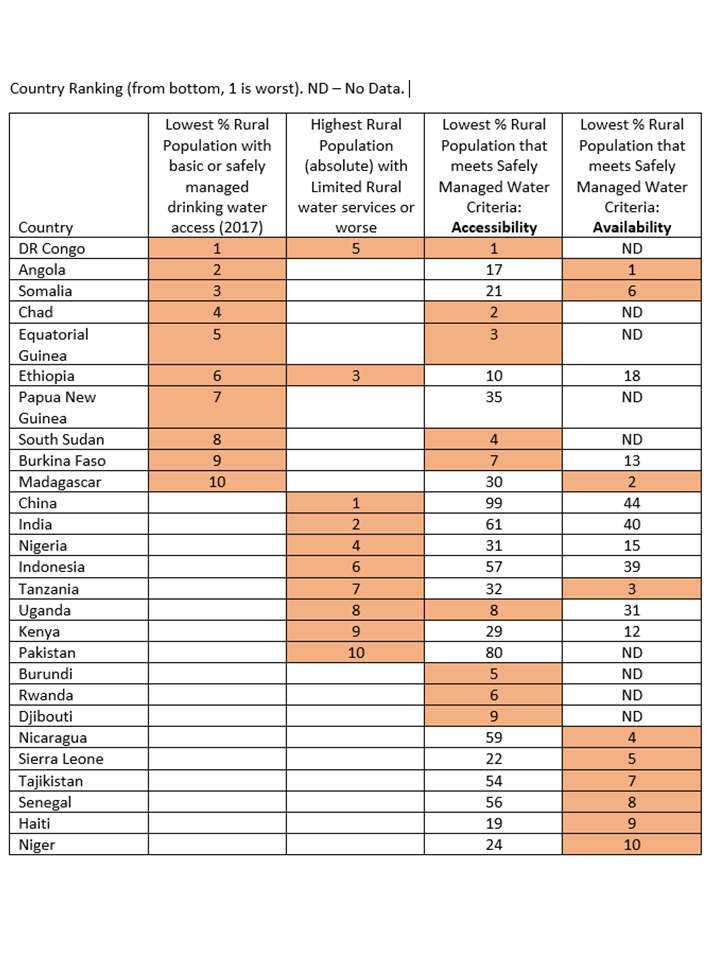
Which countries have the biggest rural water supply challenges?

The JMP data can examine this question in different ways – and a few new ones too. This is a quick-and-dirty dive into the data to look at which countries are struggling and should be given priority:

A column on water quality/contamination criteria is not included because the aggregated data for rural water is not available – and in many cases probably doesn’t exist.

These are just a few highlights, please take the time to read the report and explore the data portal.

An Empowering Drop in the Bucket – A women’s journey on International Women’s Day

Author: Sara Ahrari, Programme Manager at Simavi. 

March marks two significant internationally celebrated days for those of us working in the sector. On 8th March we celebrate International Women’s Day #IWD and on 21st March we cherish the World Water Day #WWD. So, it would be good to reflect once again on how exactly WASH is critical to the health and empowerment of women and girls throughout their life.

Let us imagine that you are a girl born to a economically challenged family in a village in the so called developing world where you and your family do not have access to safe water and sanitation.

If you are lucky enough to survive the first 5 years of your life and not die from diarrhoea or other water-borne diseases, the chances are very high that you are already walking a few hours per day to fetch water for your family and you are taking care of your younger siblings.

Then when the time comes for you to go to school, if your family does not have to prioritise your brothers’ education to yours, and if there is a school to attend, you may actually enrol at one. The chances are still very high that you have to walk a good half an hour to fetch water before going to school and answer the call of nature in the open since your school does not have any (functional) toilet. You probably get harassed and experience gender based violence during these visits.Slide6.JPG

Then sometimes when you are between 9 to 12 years old, one day you feel a lot of pain in your lower tummy and suddenly feel that you have wet yourselves. Embarrassed to death, when you finally can find a private corner, you notice the blood in your underwear and think you are going to die. Terrified you tell your older sister or friend and if you can overcome the shame, maybe you tell even your mother, only to learn that although you will not die, you will be going through this pain and embarrassment every month for what seems to be the rest of your life. You will be given a cloth or two, to manage your period. Of course, finding water to wash them and a private place to properly dry them would still be a challenge. You miss school either because you have a lot of pain, which you don’t know how to manage, or you or your family don’t want to risk getting embarrassed because of the blood on your clothes, or simply because there is no toilet or water at school where you can change your cloth or pads! Even in some countries, you might also end up staying in a shed during your period since you will be considered unclean!

Getting your period, is also considered start of your womanhood, and your family might start thinking that it is about time to marry you off, either to reduce the costs or to avoid that you start misbehaving or simply because that’s how it works. Of course you would not get any education about your reproductive system, nor for instance how to avoid unwanted pregnancies. If you are not married off, you will be told to avoid the boys!

By the time that you are 15 years old, the chances are very high that you are pregnant. If you are married and pregnant, you need the permission and money from your husband or his family to go for your check-ups. Mind you, you probably need to bring your own water in a bucket to the health centre, which you have to walk quite a distance to get to. And mind you, when you are pregnant, you need to use the washroom more often, but of course there is no toilet in public places or even health centres. By the way, your family might think that these visits don’t worth the trouble and you are better off with a traditional birth attendant, who usually does not have any hygienic place to do the check-ups nor have water to wash her hands with, even when you are delivering your baby!

Untitled.png

And, if you are not married and pregnant, you can forget about going to the health center since the staff will not even talk to you. You probably end up with a traditional birth attendant who wouldn’t mind performing illegal abortion, and again have not washed her hands, when she puts them inside you or uses other terrifying unclean objects to perform an abortion. As you can guess, the chances that you actually survive this one, is very low.

Anyway, throughout your reproductive age, you probably would be pregnant pretty much every year. Of course you would not be able to get the rest or support you need during this time and have to still do most of the unpaid work around the house, without anyone recognising or appreciating it.

You may at some point in life also start doing some paid work to support your family. However, whenever someone at household gets sick or you have your period, you probably have to miss going to work and thereby your income. Talking about income, you are the one who would prioritise investing it in sanitation, whereas for your husband it comes as his 8th or 9th priority, but unfortunately it is often not you who decides what happens with your income, so still no toilet for your family.

When you lose your husband or your father, you probably will not inherit anything from them and all the assets would go to male member of your family. Often if you don’t have sons, or even when you do have them, this means that you need to rely on their mercy for food and shelter.

All these situations can get worse if you are living with any type of disability, or HIV/AIDS, or in places where there is too much or too little water, or if you are from a minority or displaced group.

Yet, generation after generation you have been the source of inspiration and driver of change within your family, community and throughout the world and your resilience and agency has brought the mankind where we are today.

Slide9.JPG

And of course, while WASH programmes alone cannot tackle underlying causes of the barriers women and girls face through their life cycle, by fulfilling women and girls basic needs for access to water and sanitation, they can be the first step in the right direction. On the other hand, WASH programmes when designed and implemented in a gender responsive and transformative way can provide the opportunity to move beyond this and also address women and girls’ strategic needs, such as participation in decision-making processes within their family and communities and thereby contributing to their physical, political, socio-cultural and economic empowerment.

The article is inspired by a panel discussion with Sara Ahrari convened by WaterAid Canada, UNICEF and RESULTS Canada during International Development Week 2019 in Ottawa.


Pipe dream or possible: Reaching the furthest behind first in WASH sector?

By Sara Ahrari (Simavi) RWSN Theme Leader for the Leave no one behind Theme.

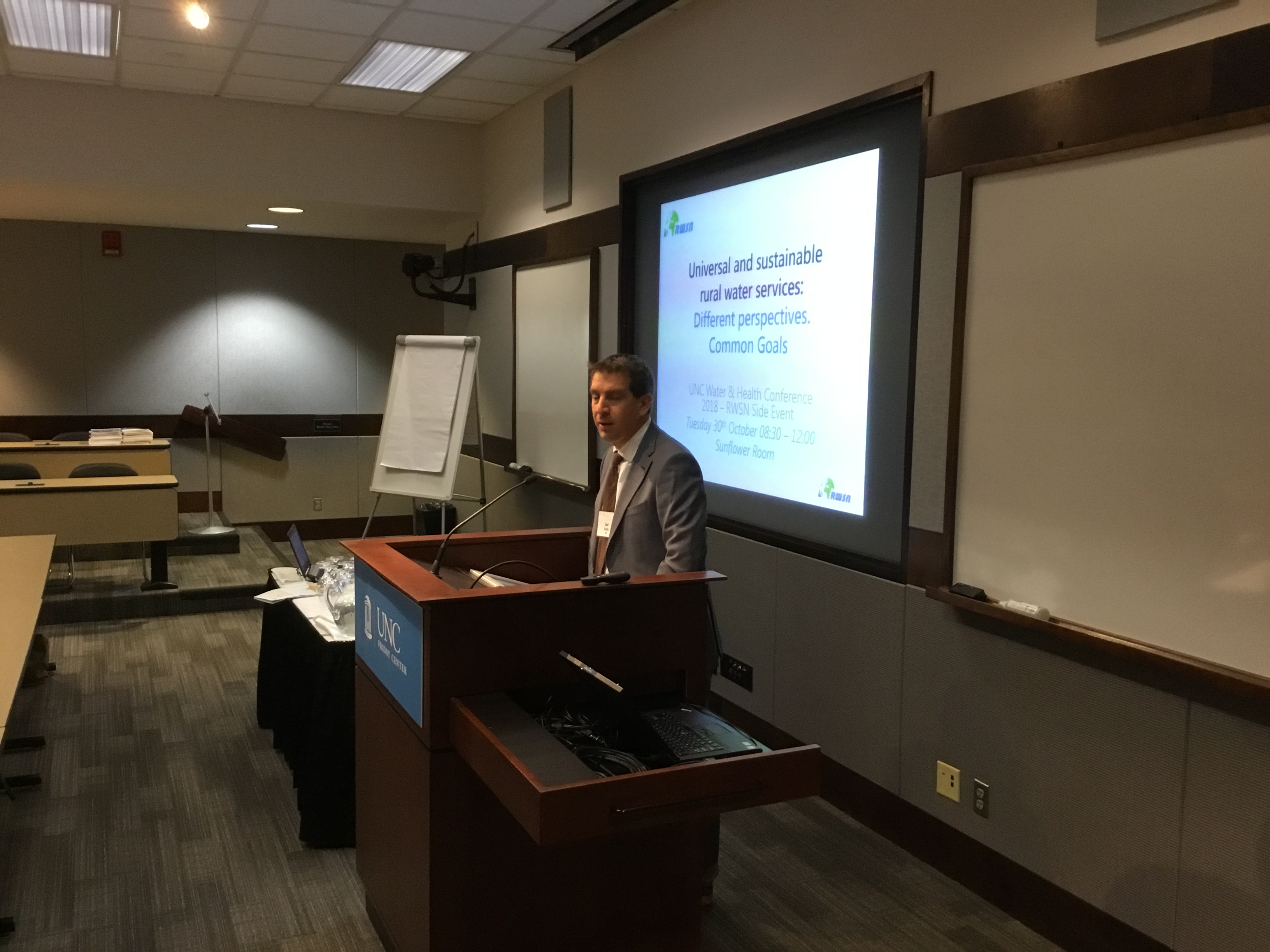
Simavi’s Programme Manager, Sara Ahrari, moderated a side event during the UNC Water and Health Conference on 1 November 2018. This event was convened by Simavi, Wateraid, Rural Water Supply Network (RWSN),London School of Hygiene and Tropical Medicine (LSHTM) and World Vision (WV). The purpose of this section was to reflect jointly on “who are left behind” from “Use of” and “Participation in decision making processes related to” WASH services, “what are the barriers for their inclusion” and “what can be done and what roles can different WASH stakeholder play to accelerate their inclusion”.

The session started with a short introduction to “Leave No One Behind” Concept in the WASH sector. Afterwards the participants were divided into groups to focus on a specific scenario related to multiple exclusion factors facing by different personas. Initially 8 personas were defined (for elaborated description of the personas, please click here) but based on the number of participants and their interests only 6 personas were discussed in the groups.

The groups were asked to work through the following process to come to recommendations (in form of a pitch) on how “Leave No One Behind” can be reached for the persona in their scenario:

  • Illustrate using mind map technique draw the barriers faced by the persona as a group
  • Inspire list anything that inspires them as individuals (people, products, programmes, services, innovations, insights, etc.).
  • Selection come up with as many ideas/ solutions/ practical recommendation to address the barriers faced by the persona, then cluster all the ideas and select one idea as a group to further work on it
  • Sketching draw a storyboard using pictures representing the idea or recommendation, who will be impacted by the idea, what would be their experience, the way idea would be rolled out. Prepare your pitch.
  • Pitch The idea to the plenary in one minute.

After the group work a Ms. Ellen Greggio presented Wateraid experience on using Washington Indicators on disability in their monitoring including the challenges and insights that application of such tool might entail.

Key results of the group exercise

Group 1-Mariette: who lives on daily wages and is a member of WASH committee.


The mind mapping exercise had led to identification of poverty, no support at household when husband is away, time constrain, lack of community support and lack of government support as main barriers faced by Mariette. The selected solutions were:

  • Share responsibilities: train more members of the committee to be able to do repair work, make sure roles are divided properly and backed up.
  • Increase awareness among community members/users: to pay their WASH costs (which are affordable) so that the repair work can be paid for; other support in forms of other incentives (i.e. help with the children) and manage expectations
  • Create a safe platform for everyone to share the experiences and challenges.

An interesting discussion which took place during the group exercise was selection of the “right” person for the committee and “dividing the roles”. While very valid points, one should be careful that defining “right” as people who have time to participate can lead to “leaving those who can’t afford to participate behind”. Also when dividing the roles, it is important to make sure that dominating community role (namely men being the decision maker and women doing the work) will not influence the decision making process. The group pitch can be seen here.

Group 2- Sharon: A young girl living with HIV/AIDS who produces & sells low cost sanitary napkin.

The participants indicated that Sharon is disempowered due to stigma and lack of access to education, has limited voice, suffers from trauma due to loss of her parents and lack of institutionalized support for the poor. The suggested solutions included:

  • Improved access to WASH services: City authorities, utilities and local government need to ensure that proper pro-poor WASH policies and services are available, provide subsidized tariffs, access to affordable sanitation and hygienic products. Advocacy organisations can influence policies to ensure that this will take place.
  • Increased learning opportunities: NGOs, faith-based organisations or vocational training institutes can provide skill and entrepreneurship training as well as scholarships.
  • Enhanced link to social services: Government of NGOs can create youth homes, facilitate peer support and mentorship (female, people with HIV/AIDS and business mentorships).

The group pitch can be seen here.

Group 3- Maria: :A visually impaired girl who is sent out to city to live with her aunt in slum area and earn income through begging on streets.

The main barrier identified for this persona was her visual impairment which in her situation causes dependency on family and strangers for support, poverty, lack of accessible WASH service and transport, unsafe and non-trustworthy environment at home and outside, which leads to mental health problems feeling as a burden and stress.

The group concluded that if Maria can be provided access to school and kept at school, many of these barriers would be overcome. This means that schools need to have inclusive education as well as access to safe sanitation and water. Schools also can facilitate “Eye vision test” and promote measures for preventable visual impairments not to occur. There should be also safe transport to and from school. Also the care-givers (aunt or her family) need to be supported to have increased income. Depending on the country, public awareness raising needs to be done on right to education, children’s right and disability rights. Legal protection and safety nets supports need to be provided to families with people with disabilities. The people with disability also need to be empowered and equipped with skills and knowledge which allows them to live an independent life.
The final pitch of the group can be seen here.

Group 4- Bilegt: A nomad man whose source of water is diminishing and has no access to proper sanitation.

The group had identified the following barriers:

  • Environmental: harsh environment due to increased effect of climate change and scarcity of water resources.
  • Social/cultural: due to challenges, there is increased migration to the cities which for Bilegt it means losing “his sense of being” and social support system.
  • Political: limited political voice and influence of population, conflict with companies, no investment in hydrogeological survey.
  • Economic: limited access to financial resources, loss of traditional income generating activity.
  • Physical: difficulty of access due to mobility.

An integrated understanding of solutions, combining bottom-up (socially inclusive) and top-down (sustainable solutions) approaches would be needed according to the group to remove these barriers. The group pitch can be see here.

Group 5- Ruksana: A 15 years old girl without forearms who is pregnant with her 2nd child.

The group identified the main barriers faced by Ruksana to be poverty, lack of support from family or community members, lack of education/trainings, disability, limited availability and distance from water sources, insecure feeling when using the latrine, social stigma inside and outside, married as a child and child pregnancy. The solution thought by group were:

  • Technological: Accessible toilets with locks which can be operated by people with disability, technology to support mobility, household access to safe drinking water (i.e. through filters).
  • Services: Accessible education/skill building centres with appropriate courses and technology for people with disability, identification & support by local government, regular follow up/ home visit by government/community health workers, optional services to deliver safe water.
  • Health: family planning methods (cycle beads), regular home visits by health workers.
  • Social Engagement & awareness: Awareness raising among different stakeholders (community leaders, men, local government, etc.).
  • Economic development: Increased livelihood options at the community level.

The group identified access to water and family planning option as priority to improve Ruksana’s situation.
You can see the pitch the group presented here.

Group 6- Amin: A district engineer in charge of WASH service delivery with insufficient resources, needing to prioritise different areas within the district.

Amin’s challenges were found to be rooted in legal, financial, knowledge, political barriers at the national level and cultural, knowledge, communication and financial at the community level. Lack of transparency and proper coordination between these two levels were also identified as a barrier. The solutions suggested by the group were:

  •  Encourage private sector financial investment.
  • Dedicated structural leadership support to district level staffs.
  • District management support in communication and planning.
  • Town halls communicating plans to the communities.
  • Capacity building at all levels.
  • Relationship building based on trust.
  • Cultivating demands and grassroots community planning.
  • Transfer of power & decision making rights from national to district and lower levels.

The group’s pitch can be seen here.

Reflection and way forward

The side event had brought together participants from the different background and organisations, namely NGOs, knowledge institutes and government. As we have defined “Active contribution of the participants and lots of ideas not to leave anyone behind” as one of the success indicators for this event, we can say that it a very successful event thanks to the energetic and engaged participants.

We still hope to receive more stories of success (or constructive failures) and increased collaboration on “Leave No One Behind” and to “Reach the Furthest Behind First”. The conveners will continue to promote the dialogue on the topic in different platforms, in particular RWSN “Leave No One Behind” discussion group.

Participants’ feedback

Lena Bunzenmeyer, Global WASH Advisor, CAWST: “ I truly enjoyed the participatory session and I definitely learned a lot. It was by far my favourite session of the entire conference! Would it be possible to get a copy of the PowerPoint presentation that went along with the session? I’d like to bring it up at CAWST as an example of both participatory learning (we love learning new techniques from others!) and also how to approach the topic of inclusive WASH services. Thank you again for your excellent facilitation!”

Reposted with thanks from Simavi; the original blogpost is available here:  https://simavi.org/long-read/pipe-dream-or-possible-reaching-the-furthest-behind-first-in-wash-sector/

Photo credits: Tom Flunder

RWSN at the UNC Water and Health Conference: Where Science Meets Policy

The Water and Health Conference: Where Science Meets Policy, organized by the Water Institute at the University of North Carolina (UNC), is one of the most important conferences for WaSH professionals. This year the conference has not only explored the interactions between drinking water supply, sanitation, hygiene, water resources and public health, but put also a strong emphasis on rural water supply in developing countries. Researchers, practitioners and policy-makers had the chance to present and lively debate

by Sandra Fuerst and Sean Furey (Skat Foundation)

The Water and Health Conference: Where Science Meets Policy, organized by the Water Institute at the University of North Carolina (UNC), is one of the most important conferences for WaSH professionals. This year the conference has not only explored the interactions between drinking water supply, sanitation, hygiene, water resources and public health, but put also a strong emphasis on rural water supply in developing countries. Researchers, practitioners and policy-makers had the chance to present and lively debate on following topics:

  • Measuring Progress Toward Sustainable Development Goal (SDG) Targets
  • Water Scarcity
  • Rural Water Supply
  • WaSH Equity and Inclusion
  • WaSH in Emergencies

At this year’s conference, the RWSN and its partners have convened two side events, providing water professionals an interactive space for engaging on cutting-edge topics of rural water supply. These sessions translated the “virtual RWSN DGroups into real life discussion groups” as Stef Smits (IRC), the chair of the first side event, phrased it. The participating water experts shared their experiences and developed exciting ideas with their peers for challenging rural water contexts.

Universal and Sustainable Rural Water Services: Different Perspectives, Common Goals

In the first side event, participants were invited to understand two major concepts to apply them later through group discussions in a case study of an WaSH implementation organisation, HYSAWA, Bangladesh, presented by their Managing Director, Md. Nural Osman.

Md. Nurul Osman (HYSAWA)

Sara Ahrari presented the NGO perspective of how organisations, like Simavi, use monitoring and data systems to promote Social Accountability and the holding duty-bearers to account when it comes to the Human Rights to Water and Sanitation. Miguel Vargas-Ramirez from the World Bank and Ellen Greggio from WaterAid presented then the development partner perspective on how data and monitoring can be used to raise the capacity of governments and service providers to deliver sustainable rural WaSH services, particularly rural water supply. This included on-going work to develop benchmarks for rural water service delivery, which WaterAid is testing in Myanmar.

After the break, Elisabeth Liddle from Cambridge University, and Prof. Rob Hope from Oxford University, gave the research perspective on how data and monitoring is enabling them to generate deeper insights into why rural water supply systems fail and how to develop new ways of making them more sustainable.

After the concepts have been introduced, the participants applied them in smaller groups to the HYSAWA case study in Bangladesh. This case study was presented by HYSAWA (Hygiene, Sanitation and Water Supply) to come up with suggestions and advice on how his organisation can improve the quality and sustainability of their rural WaSH interventions. The audience debated questions around:

  • Who is responsible for monitoring and data collection? Who is accountable and feels responsible for what? Those who design the system?
  • Who is responsible for the service provision of water in rural areas? And who needs to be hold accountable for that?
  • What are the drivers to feeling responsible?
  • What are the services that needs to be done?
  • How do the processes need to be managed?

Stef Smits (IRC)

Stef Smits summarised the debates during this session on three levels:

Who? The answer that communities and local governments should be accountable for the service provision of water in rural areas seemed to be too easy as in fact it is not clear at all. The role of service providers in many contexts is not very well defined, also not in legal terms. Accountability is often spread over several layers. For example, minor operation and maintenance (O&M) services can be done on community level, while major O&M services can be provided through public services. Then the levels of accountability also need to be differentiated between service provider and service authority. This first differentiation will help to define who is responsible for what and will help the service authority to hold the service provider accountable. As soon as the roles of different stakeholders are clearly defined, it can be defined more specifically who needs to collect the data. The collection of data then needs to be spread over different levels, from household, community, service provider to authority level.

What? The debate started around the functionality of rural water supply devices and has shown that there is not a simple answer of ‘yes’ or ‘no’ to functionality. Functionality needs to be distinguished between functional devices and functional services (i.e. O&M services). This led to the question how functionality should be measured and which other indicators should be taken into account. Should we bring water quality in as an indicator? Clearly, financial indicators are necessary. As the trend to use indicators and monitoring tools is increasing among service providers and governments in rural areas, it becomes increasingly necessary to define clear indicators for universal rural water services. Based on that development, we can start to understand rural water as a systemic issue.

How? The identified need to define clear indicators on different levels, raised the question of how the process of developing monitoring and evaluation (M&E) systems should be managed. Even though governments were identified to lead this process, NGOs could support to trigger it. However, if a NGO has developed a working M&E systems, it cannot be simply handed over from a NGO to the government, without a well-planned transition phase. It also needs to be taken into account who “the government” is and on which level the government operates. Data and M&E systems will at the end always need a sector development approach.

Pipe Dream or Possible: Reaching the Furthest Behind First in the WASH Sector? – RWSN Side Event 2

The second side event was convened by RWSN (Simavi, Wateraid) with London School of Hygiene & Tropical Medicine and World Vision. During this session, the participants developed human-centred solutions for “Reaching the Furthest Behind First” and “Leaving No One Behind” in the WASH sector.

I7.jpg

The participants worked in several groups on different case studies of extremely vulnerable people (i.e. disabled pregnant child) that are exposed to extreme hazards in their environment (i.e. arsenic contamination of groundwater).

In several steps, the participants developed possible solutions based on their field of expertise: In a first step, they illustrated the social, cultural, physical, political and legal barriers that the imaginary persona faced, regarding their social inclusion. Then they created inspirational ideas of possible solutions to these barriers. The different options were heavily discussed before choosing one or more solutions. To illustrate the actions and stakeholders needed to implement these solutions, a story board was created by each group. Finally, the persona, storyboard and possible solution were presented in pitches to all participants.

IMG_20181101_111922-v2


The two side events have been great examples of how the RWSN works as its best: “Taking concrete examples and bring them together with key concepts from research and practice. This is the richness that RWSN provides: Linking practical questions with conceptional frameworks (Stef Smits)”.

UN-Water report: SDG6 on Water and Sanitation will not be achieved by 2030 at current rates of progress

UN-Water has released a new report on Water and Sanitation ahead of the High-level Political Forum for Sustanainable Development (HLPF) which presents, for each target, the latest data available for the Sustainable Development Goal (SDG) 6 global indicators. The report seeks to inform discussions among Member States during the HLPF (9 July -18 July 2018) in New York. The HLPF Forum will review progress especially on G6, G7, G11, G12, G15 and G17; you can see the Official Programme here.

The key message of this report is that the world will miss the SDG6 targets by 2030 at current rates of progress. It also highlights that only 50 percent of countries have comparable baseline estimates for most SDG 6 global indicators, making it difficult to track progress. It is essential to “harmonize methods and standards”, and establish a common understanding of how to assess Means of Implementation (MoI) across SDG 6. In addition to this report, UN-Water has also set up a webpage with examples of countries sharing their experiences.

RWSN had provided some comments on the draft report which was made available by UN-Water earlier this year. By and large these comments still hold – you can find out about what we said here and our take on how the report addresses sustainability of services, accountability, self-supply, capacity development, water and energy, groundwater and public participation.

So, what does the final report say? It compiles data and information available on the SDG6 Targets, including:

  • Target 6.1: Achieve access  to  safe  and  affordable  drinking  water: There are still 844 million people who lack access to basic water services, and 2.1 billion people who lack water that is accessible, available when needed and free from contamination. The report highlights that extending access to safe drinking water for all is a “huge challenge” that will not be achieved if there is no increase in “investment from governments and other sources” and a “strengthening in institutional arrangements” for managing and regulating drinking water.
  • Target 6.2: Achieve access to sanitation and hygiene and end open defecation: There are still 2.3 billion people who lack access to basic sanitation services, and 4.5 billion people who lack safely managed sanitation services. Only 27 per cent of the population in least developed countries has access to soap and water for handwashing. Extending universal access to sanitation and hygiene won’t be achieved if there is not an increase in “investment and a strengthening of the capacity of local and national authorities” for managing and regulating sanitation systems.
  • Target 6.3: Improve water quality, wastewater treatment and safe reuse: Freshwater pollution is prevalent and increasing in many parts of Latin America, Africa and Asia. The lack of water quality monitoring in many parts of the world does not allow for an exact global estimate of water pollution.
  • Target 6.4: Increase water-use efficiency and ensure freshwater supplies: Nowadays more than 2 billion people live in countries experiencing high water stress. The agriculture sector is the largest user of freshwater; it uses 70 per cent of global water withdrawals. In the report, some techniques to save water have been presented like “increasing productivity of food crops”, “improving water management practices and technologies”, “growing fewer water intensive crops in water scarce regions”, “reducing food loss and waste”, and “importing food grown from water rich countries”.
  • Target 6.5: Implement integrated   water   resources   management   (IWRM)   including    transboundary    cooperation: While all countries have at least started implementing various aspects of IWRM, only modest progress has been made in terms of implementing a fully integrated approach. The average national proportion of transboundary basins covered by an operational arrangement is only 59 per cent.
  • Target 6.6: Protect and restore water-related ecosystems: current baseline data of the indicator “do not allow for a proper picture of the state of freshwater ecosystems”, which is why further detailed data including “quantitative, geospatial and qualitative” data are necessary.

The report also looks at the targets related to the means of implementation of SDG6:

  • Target 6.a: Expand international cooperation and capacity-building: 80 per cent of Member States have insufficient finance to meet national WASH targets. The current indicator based on ODA (Official Development Assistance) does not reflect all elements of the target. That is why it is necessary to complement with additional information relating to “capacity development, human resources and other elements”.
  • Target 6.b: Support stakeholder participation: In order to empower marginalized groups and sustainable service delivery, “local communities have to participate in water and sanitation management”. But even if the current indicator monitors the existence of policies and procedures for local community participation, it does not show if “the participation is genuine or meaningful”. This links to the recent report published by our partners End Water Poverty,  Coalition Eau, Watershed Empowering Citizens Consortium, the Water Supply and Sanitation Collaborative Council (WSSCC) and with the support of Sanitation and Water for All (SWA), on accountability mechanisms for SDG6, and which was the focus of a recent RWSN webinar in English and Spanish.

In conclusion, the UN-Water report focuses on the enablers of the SDG6, highlighting that:

  • “Inequalities must be eliminated”. It is important to have data in order to identify disadvantage and provide services to groups like women, children, poor, indigenous people and rural communities.  You can find some recent RWSN webinars on Making Water Work for Women, and Making Rights Real for rural communities here.
  • “Private financing, promoting blended finance and microfinance” should be developed in order to optimize domestic and public finance. You can see a recent RWSN webinar on “grown up” finance for rural water here.

Photo credit: World Bank

Why does accountability matter for sustainable water services?

By Louisa Gosling, WaterAid and Meleesa Naughton, RWSN Secretariat

RWSN has been exploring the question of accountability for sustainable rural water services over the past few months through an e-discussion, a workshop, and webinars in French, English, and Spanish.

What is accountability?

Accountability is a new topic for the Leave no one behind Theme of RWSN, and one that is difficult to translate in other languages: there is no direct translation of accountability in French and Spanish, for instance – we translated it as ‘responsibility’.  In the e-discussion, we initially defined social accountability as ‘an approach that refers to the extent and capacity of citizens to hold the state and service providers accountable, and make them responsive to needs of citizens and beneficiaries’. But through the e-discussion and in particular the webinar, we also heard of initiatives that seek to empower citizens to hold not only service providers (direct accountability) and governments (indirect accountability) for water services, but also donors.

So who should be held accountable for what?

The definition proposed by Catarina Fonseca of IRC, who presented some preliminary findings from a recent study during one of the RWSN webinars, is perhaps more appropriate: she defined accountability as ‘those who are responsible, accept responsibility for their actions and omissions and accept that they are called upon to give an account of why and how they have acted or failed to act.’

While accountability is often a bottom-up process in practice, with citizens and citizens’ organisations seeking to hold  service providers, governments and donors to account, duty-bearers also have an obligation to put in place effective accountability mechanisms that lead to actionable change. The study Catarina presented showed that accountability mechanisms for SDG6 for service providers and governments are often not available in many countries, and that when they exist, they are not effective and not systematic due to the lack of financing, lack of monitoring data and reporting, and limited participation of civil society organisations.

What about donors’ accountability? According to Susan Davis from Improve International, most foundations do not prioritize evaluation of WASH projects post-implementations, which impedes learning and improving accountability for the end-users. Moreover, when they do conduct evaluations, they may not share the results – or have no incentive to share results showing poor performance of WASH services. Susan proposed a WASH donor accountability scorecard which would foster a culture of accountability and transparency through virtuous competition amongst donors to disclose the results of evaluations.

The e-discussion and the webinars highlight a range of different aspects of accountability. It is encouraging to see that this topic is gaining a higher profile in the water sector. Other recent discussions include a thinkshop on social accountability in the water sector recently held in Tanzania, and the recent expert consultation for the upcoming report by the UN Special Rapporteur for the Human Rights to Water and Sanitation. Greater understanding and application of this principle are essential for achieving SDG 6.

Resources

Photo credit: Simone D. McCourtie / World Bank  


Responding to UN-Water SDG6 synthesis on water and sanitation

by Sean Furey, Skat Foundation/RWSN Secretariat Director

UN Water, the body that coordinates water issues across the United Nations, is currently running a consultation in its draft report: “SDG 6 Synthesis Report 2018 on Water and Sanitation”. You can read the report and add give your feedback. Below are some comments that I have posted in the dialogue section:

Continue reading “Responding to UN-Water SDG6 synthesis on water and sanitation”

RWSN members’ inputs on social accountability are helping Human Rights Special Rapporteur report to UN General Assembly

RWSN Secretariat Director, Sean Furey, took part in a consultation meeting on accountability in relation to Human Rights to Water and Sanitation.

by Sean Furey, Skat/RWSN Secretariat

What does ‘accountability’ mean to you? When it comes to the Human Rights to Water and Sanitation what progress has been made to ensure that Duty Bearers (Governments) are accountable to their Rights Holders (Citizens)?

Such legalistic sounding terms can seem distant from the needs of family in rural Mongolia or fast-growing city in India, but the Human Rights to Water and Sanitation form the legal back-bone to which signatory governments (which is nearly all of them) have to comply.

Léo Heller, the UN Special Rapporteur of the Human Rights to Water & Sanitation, has been running an open consultation on his forthcoming report to the UN General Assembly, which is focusing on the principle of accountability. I was honoured to be invited to attend a meeting in Geneva on 14 & 15 May on behalf of RWSN.

Like his predecessor, Catarina de Albuquerque , Prof. Heller has been collaborating with the network to engage with rural water supply practitioners so that he can communicate the global issues to those working on national and local implementation and policy, and likewise learn from the those who working to making Human Rights a reality at a practical level. This included the recent e-discussion on Social Accountability.

In his draft report, Prof. Heller drew points from this discussion, particularly regarding the accountability of non-governmental organisations:

“Participants [of the RWSN e-discussion] discussed that accountability is enhanced when reducing dependence on external funds, and through ensuring meaningful participation of citizens in all process relating to water, sanitation and hygiene processes.”

The principle of accountability as a core human rights principle does not have a set and agreed definition. The three dimensions that were used to frame the discussion were:

  1. “Responsibility” which means “what” Duty Bearers are accountable for; “who” carries out the duties; and “how” those WASH service responsibilities are done.
  2. “Answerability” is need for public officials to communicate what they are doing and why and how decisions have been taken. This is important because governments, as the Duty Bearers, are required to demonstrate the “progressive realisation”, which means maximising available resources to ensure universal access to safe water, sanitation and hygiene.
  3. “Enforceability” is about making sure that there are the mechanisms in place to ensure that rules and laws are enforced, and that there is a fair and accessible means for complaints and conflict resolution.

A lot of the discussion focused on factors and barriers to effective accountability, such as corruption and the lack of protection for whistle-blowers. It was also highlighted that civil society, and civil society organisations (CSOs), have a vital role to play in holding governments to account – not least where responsibility has been delegated to private sector service providers, community management or self-supply.

In the wide-ranging discussion it was clearer that there are lots of threats to accountability, not least because it involves changing power dynamics, which will be resisted by those in power. Defining clear roles and responsibilities is critical for accountability, which is why those are who are to be held accountable have an interest to keep such things vague.

“The fight for Human Rights is against human wrongs”

For rural water supply – as for rural issues generally in low and middle-income countries – a key problem is that formal legal processes and agencies, such as courts and lawyers, are often physically distant, expensive and not trusted. So where does that leave traditional social or religious mechanisms for conflict resolution? Do those working to extend a rights based approach work with these structures (at the risk of entrenching existing discrimination) or try to extend legal and judicial mechanisms?

What is clear is that these issues around accountability, rights and justice are not unique or special for rural water supply, or even for WASH, so it was great that in this meeting we had representatives from outside the sector, who highlighted, for example, the strong links between the Human Rights for Water and Sanitation with other Rights, including housing, food and dignity.

To keep up to date with this discussion and for opportunities to submit your ideas and experiences, follow Léo on Twitter.

20180515_122720 (2)
UN Special Rapporteur, Léo Heller (centre) with representatives from WASH and human rights organisations and networks (including RWSN, SIWI, Water Integrity Network, KEWASNET, End Water Poverty, Coalition Eau and WSSCC)


To find out more have a look at these RWSN resources:

E-discussion synthesis & publications:

Webinar Recordings:

New 2018 RWSN webinar series (April 3rd – June 5th, 2018)

Mark your calendars! RWSN is delighted to announce its 2018 series of 10 webinars dedicated to rural water services, April 3 -June 5, in English, French, Spanish and/or Portuguese!

To attend any of the webinars, please register here by April 2nd: http://bit.ly/2prrVf3

We will hear from more than 20 organisations on a range of topics, including:

· A special double session with the WHO/ UNICEF Joint Monitoring Programme to find out how you can make the most of the JMP data, and how countries nationalise SDG6 targets and indicators (May 2nd and May 29th);

· The challenges specific to sustainable and safe water supply in peri-urban areas and small towns, with a focus on the urban poor (April 17th and 24th);

· Practical ways of financing to reduce corruption in the sector (April 3rd), and to improve social accountability for better rural water services (May 8th);

· A discussion on community-based water point management (April 10th), and a radio show-style session showcasing experiences with capacity strengthening for professional drilling (June 5th);

· A debate on water kiosks (May 15th), and the role of self-supply and local operator models for universal access in rural areas (May 22nd).

To find out more about the session topics, dates and times, see here: http://www.rural-water-supply.net/en/news/details/66

To attend any of the webinars, please register here by April 2nd: http://bit.ly/2prrVf3