Dr Kerstin Danert, Ask for Water Ltd, Edinburgh, Scotland
High-quality infrastructure design and construction is not the only important concern in relation to rural water supply services, but provides a solid basis. Poor quality infrastructure jeopardises everything that follows – including it the maintenance, and management of the service, and even being able to collect user fees.
There are many reasons why infrastructure ends up not meeting the standards needed. And for the last two decades, the Rural Supply Network (RWSN) has emphasised ensuring that boreholes are properly drilled and completed – with a range of guidance and training materials now widely available – and (I am pleased to know) used!
However, we were mainly writing (or making short films) for people that are implementing projects. With the most recent publication we are addressing a different audience – FUNDERS OF WATER SUPPLY INFRASTRUCTURE. You may ask yourself why?
Unfortunately, not all funding agencies have the policies in place, nor the checks and balances that consistently foster high-quality infrastructure – whether initial construction and installation, or rehabilitation. And to make matters worse, well-intentioned policies can actually have negative unintended consequences. Low-per capita investment costs are a case in point – they can be set too low.
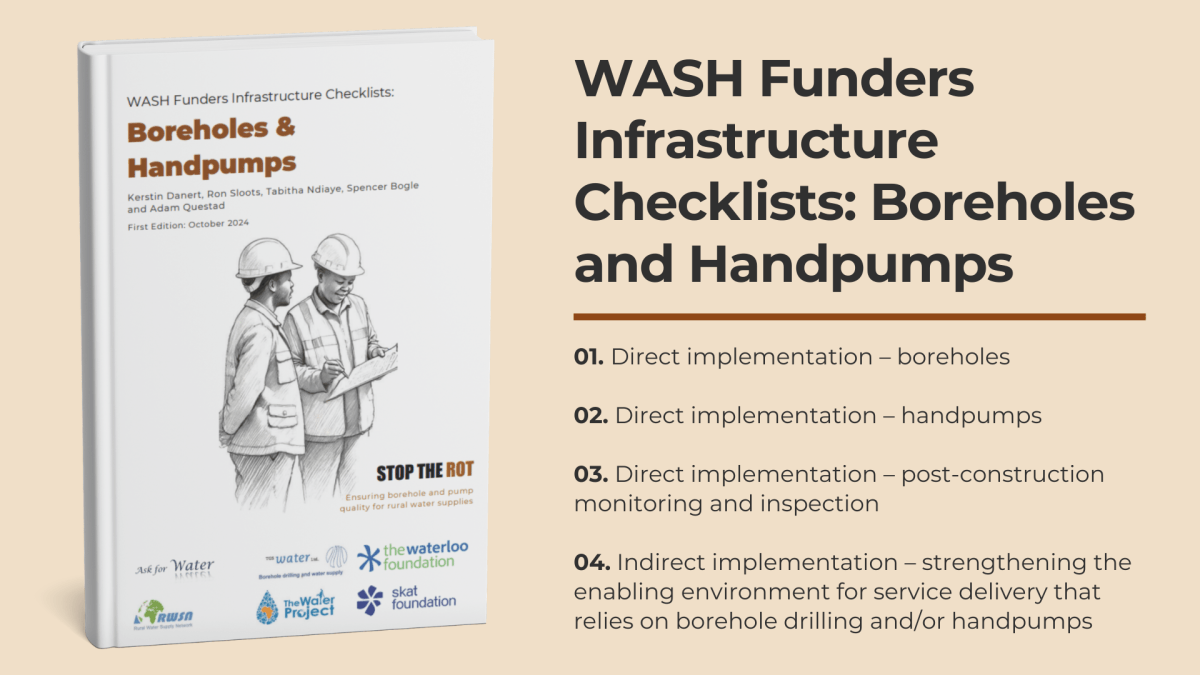
At the end of 2024, RWSN published the WASH Funders Infrastructure Checklists: Boreholes and Handpumps. They start off by recognising that when it comes to infrastructure quality, a number of things can go wrong. Grantees may simply not have the procedures in place, or the capacity to consistently ensure quality or they may not follow suitable contracting procedures. National standards may be lacking, or grantees may cut corners in order to meet Funder requests for an (unrealistic) low budget or fast schedules.
We have developed a series of four checklists – each providing guidance for WASH funders, whether financing direct implementation or systems strengthening activities. We have tried to make the checklists accessible even for those without a detailed knowledge of groundwater, drilling or handpumps. Each checklist is intended to help funders to reflect on their policies and procedures and/or those followed by the respective grantees.
Please take a look – and do get back to us through ask@ask-for-water.ch with comments feedback. We would like to keep improving this guidance in the future!
The WASH Funders Checklists were developed under the RWSN Initiative Stop the Rot.
Handpumps have revolutionized access to safe and reliable water supplies in Sub-Saharan African countries, particularly in rural areas. They constitute a healthy and viable alternative solution when surface water is contaminated. Danert (2022) estimates that 200 million people in sub-Saharan depend on 700,000 handpumps to supply themselves with drinking water.
Unfortunately, many handpumps service face performance issues or premature failure due to technical or installation defects in the borehole or pump, operational and maintenance weaknesses, or financial constraints (World Bank, 2024). Statistics on the functionality of handpumps in Cameroon are very sparse and dispersed with very little data available. However, some studies show that 25% to 32% of handpumps in Cameroon are inoperative (RWSN, 2009; Foster et al., 2019).
Previous reviews of handpumps functionality data in Cameroon have been conducted, including RWSN (2009) and Foster et al. (2019). However, these estimations were based on partial data and thus may not reflect the situation in the country as a whole. In addition, the number of handpumps installed each year is constantly increasing, and there is a need to update functionality data. Thus the interest of the study.
The methodological approach used in this study was based on online searches. To do so, we searched, collected, and analyzed relevant data from the 310 Councils Development Plan (CDP) that had been collected from 2010 to 2022. Information sources included data sets and documents available online through the data portals of the National Community-Driven Development Program (PNDP).
Overall, based on the data analysed, the number of handpumps used as the main source of drinking water supply in Cameroon is 20,572, of which 9,113 are installed in modern wells and 11,459 in boreholes. Approximately 8.2 million people in Cameroon rely on a handpump for their main drinking water supply, which is equivalent to 36.8% of the population of Cameroon. Findings indicates that one in three handpumps in Cameroon is non-functional, which in 2022 was roughly equivalent to 6,724 inoperative water points. To put this in perspective, this number is about 33% of the total number of handpumps, enough to supply 2.7 million people, assuming 400 inhabitants per handpumps. According to this estimate, it is about 44.8 billion CFA francs, or 66.8 million USD, was invested in the construction of water points that are immobilized and do not generate any benefit (improved health, nutrition, or education).
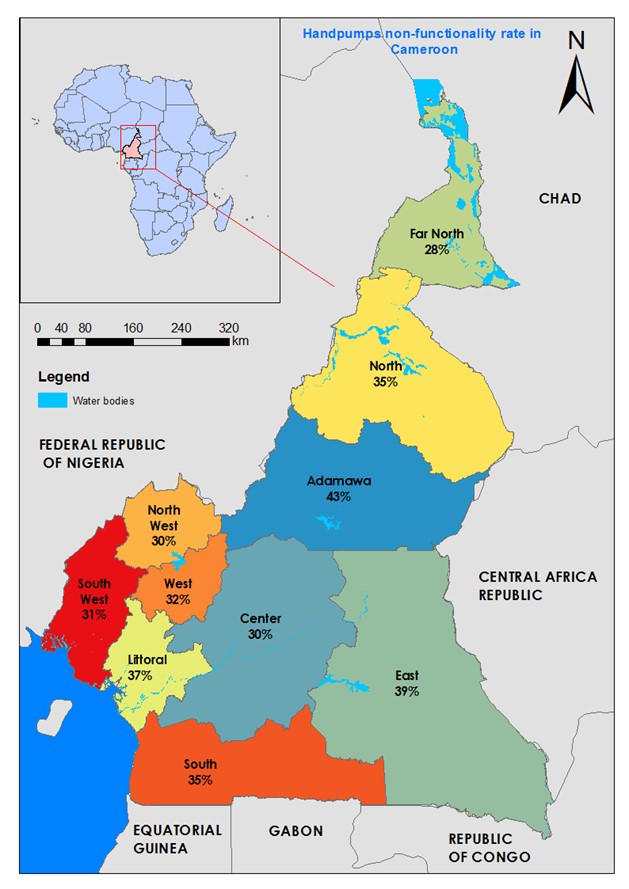
Figure 1 presents estimations of non-functionality in the ten regions of Cameroon. This figure shows that the region that had the highest level of non-functional handpumps is the Adamawa region (43%), followed by the East region (39%), the Littoral (37%), the North (35%), the South (35%), the West (32%), the South West (31%), the Center (30%), the North West (30%), and the Far North (28%).
Figure 1 | Handpump functionality rate for Cameroon
The handpumps, like the Community Based Management, seem not to have given the expected results. The fact that some handpumps fail prematurely seems to indicate that technical defects (poor quality components and rapid corrosion) contribute to handpump failure and underperformance. Further, this review notes that questions related to the quality of handpump material and the corrosion of handpumps have not been sufficiently taken into account in the various research studies in Cameroon and Sub-Saharan Africa. Thus, Future research should focus on physical audits of handpumps, and handpump rehabilitation campaigns in order to shed light on these issues. Finally, preventing rapid corrosion of handpumps through regulations should be implemented in order to improve the performance of handpumps. Regulations may be implemented at the national, regional, or local levels, and it is advised to employ a pH threshold of less than 6.5 as a corrosion risk indication. Once they are more precisely defined, additional risk factors such as salinity, chloride, and sulphate levels can be added.
About the author:
Victor Dang Mvongo, MSc is a PhD Student at the University of Dschang (Cameroon) and an independent consultant in WASH. He conducted the work featured in this blog at the Faculty of Agronomy and Agricultural Sciences.
Further reading:
Mvongo D.V, Defo C (2024) Functionality of water supply handpumps in Cameroon (Central Africa). Journal of water, sanitation and Hygiene for development. https://doi.org/10.2166/washdev.2024.085
References:
Danert, K. (2022) Halte aux dégradations Rapport I : Fiabilité, fonctionnalité et défaillance technique des pompes à motricité humaine. Recherche-action sur la corrosion et la qualité des composants des pompes à motricité humaine en Afrique subsaharienne. Ask for Water GmbH, Skat Foundation et RWSN, St Gallen, Suisse.
Foster, T., Furey, S., Banks, B. & Willets, J. 2019 Functionality of handpump water supplies: a review of data from sub-Saharan Africa and the Asia-Pacific region. International Journal of Water Resources Development 36 (5): 855–69. https://doi.org/10.1080/07900627.2018.1543117
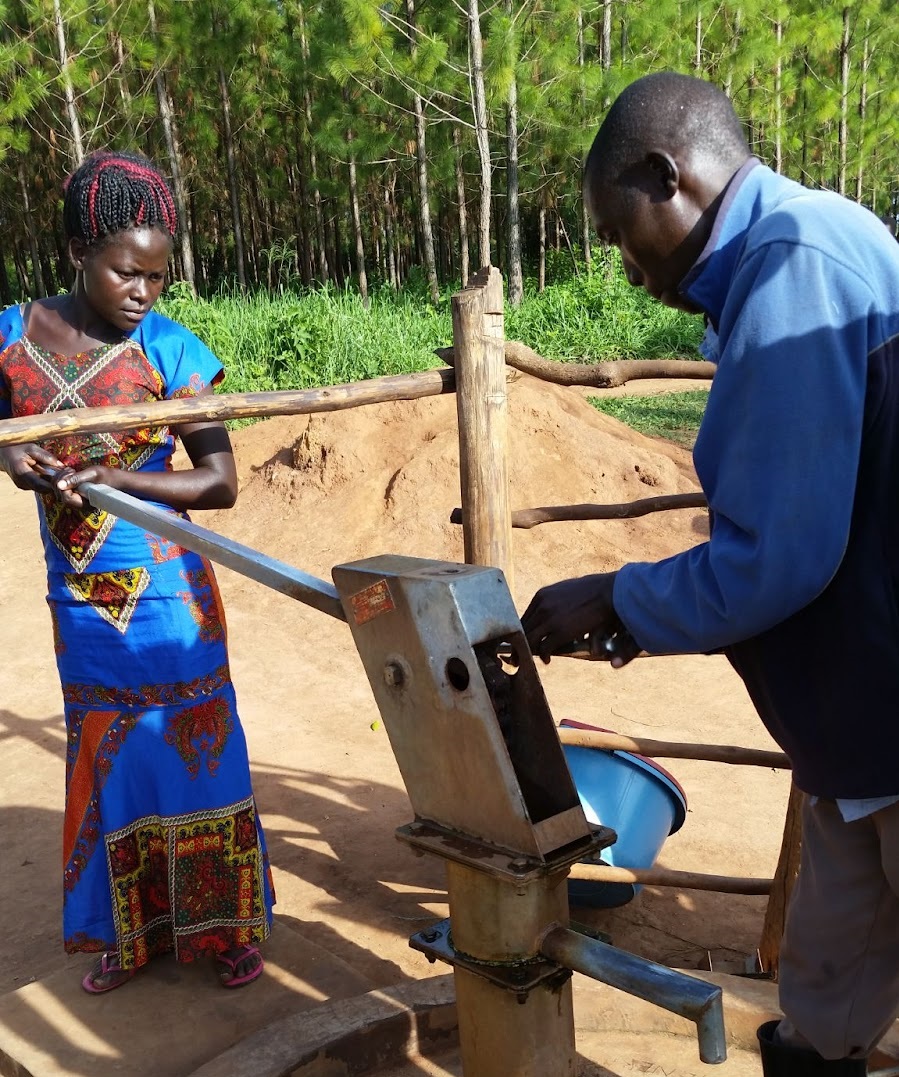
About 67% of the population of rural Uganda rely on a handpump, and, according to the Ministry of Water and Environment (MWE) database, the country currently has an asset base of over 63,000 handpumps. While there is a policy shift towards piped supplies (including using solar-driven pumps), handpumps will remain important in providing water to Uganda’s rural population for the foreseeable future. The U2 and U3 (known elsewhere as the India Mark II and Mark III), as well as the Uganda 3 Modified Pump (U3M) are the standardised pumps used in the country.
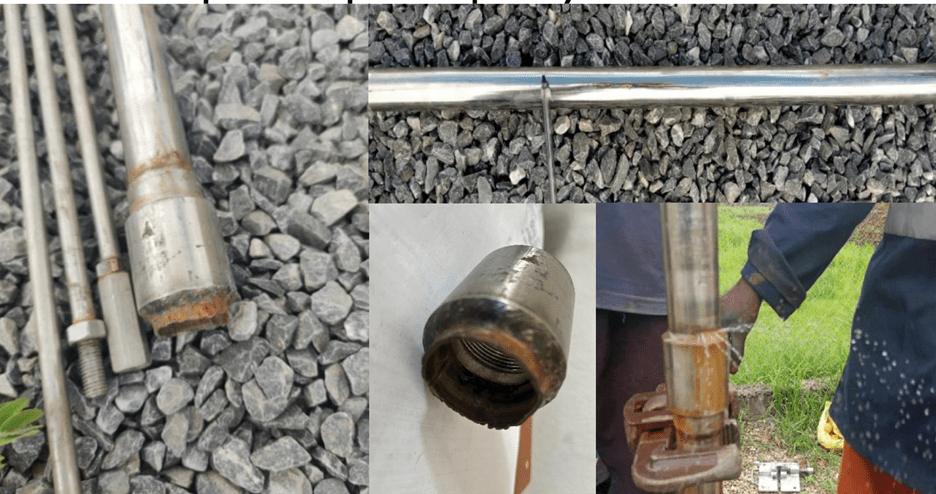
The rapid corrosion of submerged handpump riser pipes and rods has been well documented in Uganda, with over a dozen reports, and studies, including academic publications on the subject. When handpumps corrode, the red, badly-tasting water of the supply is often rejected and sources abandoned, with users returning to more distant and contaminated supplies. Rapid corrosion also leads to premature failure of the supply as riser pipes leak or even break completely. It is widely accepted that galvanised iron (GI) riser pipes and rods corrode in aggressive groundwater where pH levels are low (<6.5). High levels of salinity and high chloride concentrations are also highly corrosive.
In recognition of the widespread corrosion problem in Uganda, in 2016 MWE issued a letter suspending the use of galvanised iron riser pipes. Despite the fact that rapid corrosion is a problem in at least 20 countries in sub-Saharan Africa (plus Sudan), Uganda is one of the very few countries to have taken affirmative action to address the issue.
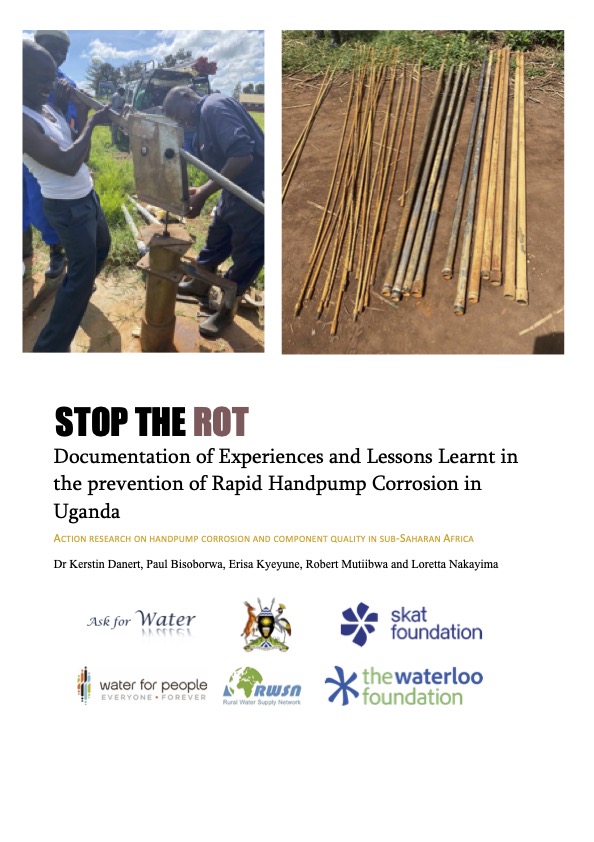
This short study, funded by The Waterloo Foundation, set out to document Uganda’s experience and lessons learnt in preventing rapid corrosion. It is intended to provide insights and recommendations for Uganda and other countries. The in-country study was undertaken in October/November 2023, and comprised interviews with 55 stakeholders from government, suppliers, NGOs, drillers and handpump mechanics as well as a review of select documentation and analysis of quantitative data collected in 16 districts by the NGO Water for People. As well as discussing with stakeholders based in Kampala, the study involved visits to Mityana, Kibaale, Kyegegwa, Mubende, Kamwenge and Masindi Districts, including some observations of components and handpump removal.
The study has found qualitative evidence that the suspension of use of GI pipes on handpump installations in Uganda has had an overall positive effect on reducing the phenomenon of handpump corrosion in the country. It took a few years for stakeholders to adjust to the suspension, including availing alternative materials and determining which grades of stainless steel to be used. In the early years, there were issues of availability and supply of alternatives, gaps in information among some stakeholders alongside cost concerns. Initially, some organisations installed grade 202 stainless steel, which was also found to corrode rapidly. In addition to stainless steel pipes, uPVC (with uPVC connectors) and uPVC pipes with stainless steel connectors are used.
While most stakeholders seem to be aware of the suspension of GI riser pipes and rods, this does not seem to be fully adhered to, with some district local governments, NGOs and communities apparently still installing GI on new installations or for replacements. The study witnessed “mixed” installations comprising GI, and stainless steel (which also sometimes appeared to comprise different grades). Such installations risk creating problems through galvanic corrosion, a phenomenon whereby dissimilar metals submerged in water increase corrosion.
The study concludes with a number of recommendations as summarised below:
Studies and research
Explore reasons why some stakeholders are not adhering to the suspension of GI riser pipes and pump rods and how to effectively overcome these barriers.
Undertake analysis of quantitative data including MWE Management Information System (MIS) data on shallow wells and boreholes (including their functionality status/due for decommissioning). Quantify the extent to which handpumps with corroding GI components have been replaced in the country, and also estimate the cost and human capacity implications of replacing poorly functioning or abandoned sources as a result of corrosion.
Monitor installations to determine if there are any problems with corrosion of the water tank and cylinder when connected to a stainless steel pipe as a result of galvanic corrosion or poor installation, and consider checking for the release of contaminants, including lead.
Clarify maximum installation depths for alternative materials through testing, and communicate this clearly to all stakeholders through written guidance (discussed below).
Developa short document (and film) on what users can measure and inspect directly. This could support stakeholders in assuring quality.
Undertake further research on the relationships between pH, salinity, other water quality parameters and the quality of the galvanising (particularly the thickness of the galvanising).
Explore alternatives to the nationwide suspension of GI, such as lifting the suspension locally based on very clear, scientifically robust criteria in relation to pH and salinity.
The appropriateness of the discontinuation of funding for shallow wells should be further studied and reviewed for appropriateness.
Recommended actions for Uganda
Support quality assurance efforts by updating the Uganda Standard Specifications for the India Mark deepwell and shallow well handpumps, referred to in Uganda as the U2 and U3 pumps.
Develop a certification mechanism for the suppliers of handpumps/components to ensure quality and include labelling requirements to help consumers identify appropriate parts.
Raise awareness and improve knowledge of (i) the GI suspension, and the rationale behind it, (ii) how to determine whether iron in water is naturally occurring or caused by corrosion, (iii) appropriate alternatives (iv) key issues with respect to grades of stainless steel and depth limitations and (v) identifying appropriate parts. Written guidance should be provided.
Provide training for handpump mechanics and handpump installers across the country on the correct handling of the uPVC and stainless-steel alternatives currently available on the market in Uganda, and ensure that they have the appropriate toolkits to handle these materials.
Incorporate inspection of handpump component quality and installation in post-construction monitoring by government, NGOs, the Uganda Drilling Contractors Association (UDCA) and funding agencies.
Continue to engage with and support innovations such as the Handpump Improvement Project.
MWE, in collaboration with NGOs and District Local Governments should find ways of supporting poor and vulnerable communities with ongoing corrosion problems to replace GI pipes and rods.
Lessons for other countries
Based on the experiences of Uganda, key lessons for other countries that are considering taking affirmative action to address rapid handpump corrosion are:
Undertake an in-country study to document the extent of the problem and any efforts that may have been undertaken to address it in the past. If rapid handpump corrosion is found to be a widespread problem in the country, and is related to GI installed in aggressive groundwater, consider suspending the use of GI – carefully considering the pros and cons of a nationwide or more localised suspension as well as the feasibility of using alternative parts.
Prior to any suspension, undertake extensive and transparent stakeholder consultation, taking on board concerns and developing a suitable timeline. Provide user-friendly guidance on alternative materials and their handling. In advance of any suspension, ensure that all stakeholders are informed of it, and are made aware of any implications for programmes and budgets.
Government should either refer to suitable international standard specifications, update national standard specifications or (as an interim measure) provide clear guidance regarding alternative materials, components and dimensioning that should be used. Evaluation is needed to ensure that materials are safe for contact with drinking water. Guidance should include information on depth limitations and material handling.
Document the process of suspension, and monitor adherence, as well as challenges faced by organisations and communities, and consider how to adapt programmes and policies to enable changes to be effective.
Ensure that handpump mechanics and others across the country are trained in the correct handling of the alternatives to GI. They should also be provided with appropriate toolkits for handling the stainless-steel and uPVC pipe materials.
The responsible line ministry should work with the agency responsible for standards to ensure the importation of quality handpump components and consider certification of suppliers.
By Victor Dang Mvongo, MSc, a PhD student at the University of Dschang (Cameroon) and an independent consultant in WASH. He conducted the work featured in this blog at the Faculty of Agronomy and Agricultural Sciences.
Handpumps, the most common rural water supply equipment in sub-Saharan Africa, are a symbol of the sustainability issue facing rural water services. According to Macarthur (2015), handpumps are a lifesaver for 184 million people living in rural sub-Saharan Africa. Sub-Saharan African statistics on handpumps’ functionality indicate that 36% of them are broken, with country-level rates varying from 10% to 65% (RWSN 2009).
In Cameroon, little data are available on the functionality of the handpump. However, Deal and Furey (2019) estimate that 32% of handpumps are non-functional. Thus, for the impacted rural areas, this means that the anticipated returns on investment—better health, nutrition, and education—are jeopardized. In order to mobilize the necessary national and international efforts in the region, this study intends to give local information on the functionality of handpumps in the Mvila Division (Southern Region of Cameroon).
This blog is part of a four-part series covering the presentations given at the 11th Zambia Water Forum and Exhibition. The event, themed “Accelerating Water Security and Sanitation Investments in Zambia: Towards Agenda 2023 through the Zambia Water Investment Programme”, lasted three days.
Our blog series takes a focused look at the presentations and discussions that revolved around “Addressing Rapid Hand Pump Corrosion in Zambia – Stop the Rot!”, which was co-convened by UNICEF and WaterAid, together with Ask for Water GmbH and the RWSN, hosted by Skat Foundation.
If you measure something, how do you know that someone else would get the same result? This is a fundamental question in many fields including medicine and psychology, but it is rarely considered in rural water supply.
Photo: A handpump mechanic performs preventive maintenance in Uganda (Photo: Daniel W. Smith)
If you measure something, how do you know that someone else would get the same result? This is a fundamental question in many fields including medicine and psychology, but it is rarely considered in rural water supply.
This problem became painfully apparent during a recent study of professionalizing handpump maintenance in Uganda conducted by the Program for Water, Health, and Development at the Stanford Woods Institute for the Environment and International Lifeline Fund. Our data collection team had a seemingly straightforward instruction: Count a handpump as functional if it provides water. But different data collectors interpreted the instruction differently. Some would count a handpump as functional even if it took a long time to get a little water. Others counted handpumps in a similar condition as nonfunctional. We needed a clearer, more reliable procedure to ensure that handpump functionality measured by different people would be comparable.
I am sorry to inform you of the passing of Dr. Otto Langenegger, who peacefully left us on 19 February, 2023 surrounded by his family, aged 84.
Dr Langenegger was the pioneer of rapid handpump corrosion. His seminal publications in 1989 and 1994 set the foundation for all that followed in trying to understand and address this phenomenon.
In his eulogy, he was poignantly referred to as a “nomad around water”. He grew up, in humble surroundings, close to Lake Constance in eastern Switzerland, the youngest of six siblings.
His thirst for discovering and learning could not be quenched by his apprenticeship as a radio technician in Winterthur. He was a through-and-through scientist and researcher, moving between subjects throughout his life, and building on the learning from one area as he branched into another. Together with his wife Dorothea, he moved to work in Canada for several years, from where he was able to, amongst other experiences, be part of an expedition to the Arctic, an exposure that he relished for the rest of his life.
Dr. Langenegger and his wife, with their two sons Urs and Thomas, moved back to Switzerland, and he completed his first PhD at the University of Bern in 1973. But he was soon on the move again, this time to Ethiopia, where he worked as a Hydrogeologist with the Christoffel Mission. He was fascinated by the people and culture, and was saddened to have to leave in 1976 due to the difficult political situation at the time.
Dr. Langenegger was not long back in Switzerland, before heading off to Africa in 1981, initially to Ghana, where he worked for the World Bank on the pioneering water well drilling and handpump installation project of its time in West Africa. This position, and the subsequent assignment based out of Abidjan, took him to Burkina Faso, Cote d’Ivoire, Ghana, Mali and Niger.
As a keen observer and compassionate man, Dr Langenegger was both intrigued and appalled by the ‘red water’ problem, coupled with corroding and failing handpumps that he observed in many parts of West Africa during his field work. And so, he set out to understand the causes. Initially using his own allowances to test water quality, he diligently researched this issue. One of his colleagues from the time told me that he stayed in the cheaper hotel in Kumasi – saving money for testing, and filling the bathtub with his tests. He also had his wife, Dorothea, cook plantain with different concentrations of iron-rich water from the rapidly corroding handpumps to see what happened to them. They changed colour.
Anyone working on handpump corrosion is familiar with Otto Langenegger’s seminal publications (1989 and 1994), which have provided the foundation for all that has followed on this topic. His second PhD was in fact on Handpump Corrosion.
After returning to Switzerland in 1989, Dr. Langenegger set up his private consultancy practice, working out of his home in Gais, Appenzell. Overlooked by snow-capped Alpstein mountains, his interest in water found an outlet in learning about the blue coloured snow, high on the slopes. And so once again, this through-and-through researcher set about observing, measuring and interpreting. I would say that Dr. Langenegger’s, keen interest and thirst for knowledge in relation to water was insatiable.
It was 2019 that Dr. Langenegger, who would soon to be known to me by the informal address simply as Otto, contacted me. He had found my own report on Rapid handpump corrosion in Burkina Faso and beyond and wanted to know more. Otto was both disgusted that the corrosion problem had not been fully addressed (after more than 30 years), but was also pleased that it was at least being looked at again. Unbeknown to me previously, he lived just a few stops along the train line from St. Gallen where I am based!
Otto had been out of touch with the water supply world in Africa for a long time, but had, now and then, searched for what may have followed on from his work on handpump corrosion. And so he was aware of the presentation entitled ‘New signs of an old Problem’ at the WaTer Conference in Oklahoma in 2015 by Vincent Casey, Lawrence Brown and Jake Carpenter.
Over the last two and a half years that Otto and I were able to share, he followed all of the ongoing efforts and work to address rapid handpump corrosion – the issue which he has pioneered in the 1980s. He was delighted to be able to talk about the subject, and, researcher that he was, always asked such pertinent questions and put forward ideas.
Throughout his long illness, and even as he grew weak towards the end of his magnificent life, he always wanted to hear the latest news. His delight to hear that the corroding handpumps in Ghana had been replaced in the 1990s is something that will always remain with me. “It was not all for nothing” he remarked, fist in the air, referring to his efforts over 30 years ago.
Dr. Otto Langenegger will be much missed. May he Rest in Peace.
He leaves behind a large family:
Urs and Marika Langenegger-Bohse with their children Tabea, Dominik and Eliane.
Thomas and Anita Langenegger Vogel, with their children Samuel, Jonas, Elias, Rahel and Salome.
In 1983, I moved to live and work in Ghana – some 40 years ago now. Back then, I was the regional supervisor on the 3000 Well Maintenance Unit in Southern and Central Ghana which was funded by the German Development Service under the Rural Water Supply programme. The project was a pioneer of its time, and included drilling boreholes alongside the installation and testing of handpumps in six of Ghana’s regions, as well as the Nanumba district, Northern Region.
We initially installed India Mark II and Moyno pumps, before dropping the Moyno due to technical problems. However, we soon realised that the India Mark II pumps faced corrosion issues. Investigation and testing (as documented by Langennegger, 1989 and Langenegger, 1994) found that the Galvanised Iron components (rods and riser pipes), when installed in water with low pH, had a propensity to rapidly corrode – leading to discolouration of the water and affecting taste, but also causing the pumps to fail prematurely as the rods broke and riser pipes developed cracks and holes and even fell into the borehole. The envisaged idea of maintenance by communities, with assistance from mechanics who could reach villages by motorcycle, was simply not feasible with such installations. Another significant issue related to corrosion of hand pump parts was the water contamination and bad taste of the water. As a result, the water coloured the food and therefore caused the population to stop using the borehole water and forced them to go back to unsafe water sources
We, therefore, had to seek alternatives. This involved field testing and collaborating with the Materials Testing Institute of the University of Darmstadt.
We looked into replacing the galvanised iron components with stainless steel. To ensure the pipes were light, we considered using 3 – 3.5 mm thick pipes, and used a threading that at the time was used in the drilling industry , known as the “rope thread”. Although Atlas Copco had patented this threading type at the time, it was later manufactured in India after the Atlas Copco design period (patent) ended.
Figure 1: Rope thread (Claus Riexinger)
The pump rods presented some challenges as well, since the AISI Stainless Steel grade 316 that we were using was subject to breakage, including the threaded parts. In collaboration with our partners at the University of Darmstadt, we were able to find ways to make this grade of stainless steel more elastic by adding 2-3 % Molybdenum. Other issues with the rods related to the use of rolled thread, which we learned was more durable than cut thread. Incorporating these materials and techniques, we were able to reduce the rod diameter from 12 mm down to 10.8mm, resulting in lighter rods which did not corrode. The only drawback was that the threads could not be cut in the field, but this was not such an issue, as there was no need to cut them when they were installed, or upon maintenance.
Figure 2: Pump installation (Claus Riexinger)
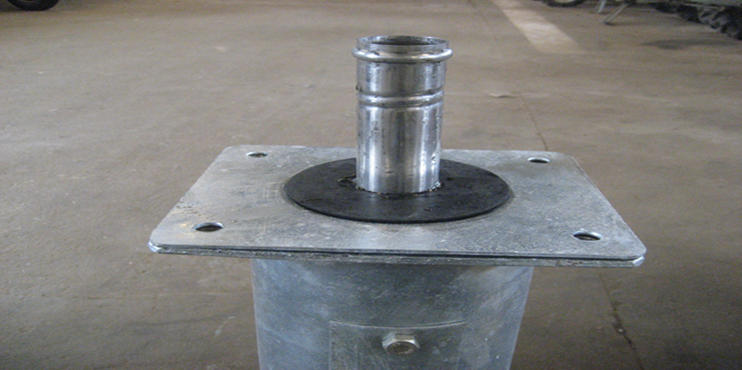
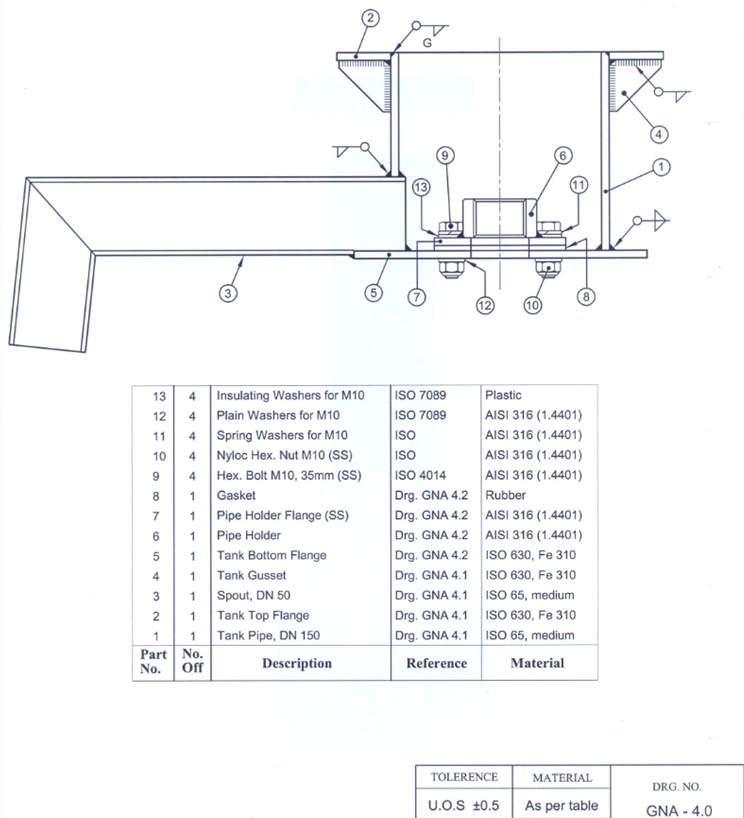
After switching to stainless steel riser pipes, we encountered another issue: -galvanic corrosion between the pipe and the water tank. This type of corrosion occurs when two dissimilar materials come into contact in solution. It was yet another challenge! Fortunately, we were able to solve this problem by replacing the existing flange with a new one made of stainless steel with an insulating gasket, into which the riser pipe could be screwed and prevent any further galvanic corrosion.
Figure 3: Ghana Modified India Mark II Handpump – water tank, spout and flange
After conducting extensive testing and collaborating with the University of Darmstadt over a period of around 4 years, we managed to solve the problem of rapid corrosion of handpumps in Ghana. The improved pump design came to be known as the Ghana Modified India Mark II, and was officially adopted by the Government of Ghana in the 1990s. Its specifications can be downloaded here.
Designing and publishing the specifications for a new pump is one thing, but the other is ensuring that these are adhered to. A series of meetings with government, donors, and NGOs working in the water sector in the 1990s, led to the agreement to no longer use Galvanised Iron. All stakeholders were on board with the change.
Of particular importance was the tremendous support and buy-in of the major donor at the time – KfW (Germany). They agreed to pay for the increased costs of the Ghana Modified Pump on new installations, which at the time was about three times more expensive than the version using Galvanised Iron. KfW also supported the rehabilitation and replacement of the pumps that had previously been installed using Galvanised Iron. As a result, we were able to remove and replace the corroded installations systematically, rather than addressing the issue in a piecemeal manner.
It is estimated that over 4,500 Ghana Modified India Mark II handpumps had been installed in Ghana by the time I left the 3000 Well Maintenance Unit in 1992. Anecdotally, I would say that 90% were working, and of the 10% out of use, they were down for maintenance/repair.
KfW took this design to Cameroon, while Danida took it to Burkina Faso and Zambia. I am not fully aware of what happened next, but I do know that ensuring the quality of stainless steel was a problem in Burkina Faso.
I am very pleased to see that Ghana Modified India Mark II handpumps are now available through the Rural Water Supply Network (RWSN), and hope that these can be of use to other countries that are struggling to overcome the rapid handpump corrosion problem.
Figure 4: Example factory inspection Modified India MKII (Claus Riexinger)
However, I have a work of caution too. Although specifications, standards, and clear procurement documents are essential, they are rendered meaningless in the absence of inspection. During my time with the 3000 Well Maintenance Unit and later as an independent consultant, I traveled to India and other places for pre-shipment inspections. I also oversaw the rejection of consignments from India and Europe due to poor quality or manufacturing mistakes. And so, I urge all of you involved in handpump procurement and installation to make sure that you ensure the quality, especially through inspection and material testing.
About the author: Claus Riexinger is a rural WASH expert and freelance consultant with over forty years of experience in development cooperation with Government organisations, private companies, and development agencies mainly in Botswana, Lesotho, Malawi, Germany, India, Tanzania, and Ghana.
This year we are celebrating 30 years since the Rural Water Supply Network was formally founded. From very technical beginnings as a group of (mostly male) experts – the Handpump Technology Network- we have evolved to be a diverse and vibrant network of over 13,000 people and 100 organisations working on a wide range of topics. Along the way, we have earned a reputation for impartiality, and become a global convener in the rural water sector.
RWSN would not be what it is today without the contributions and tireless efforts of many our members, organisations and people. As part of RWSN’s 30th anniversary celebration, we are running a blog series on rwsn.blog, inviting our friends and experts in the sector to share their thoughts and experiences in the rural water sector.
This is a guest blog by RWSN Member Jaime Aguirre, based in Bilbao, Spain.
EMAS is the Spanish acronym for “Escuela móvil del agua y saneamiento” meaning Mobile School of Water and Sanitation; the acronym was coined in the 1980´s in Bolivia by Wolfgang Buchner, supported by a group of volunteers.
The main mission of EMAS is to teach families how to obtain clean water by themselves. “Hand-on learning” is the most optimal way to learn these techniques.
The EMAS WaSH scheme include various Do-It-Yourself technologies like the EMAS manual pump, manual well drilling up to 90 metres, water storage tanks, and VIP toilets among others. All technologies have been in constant development since the 1990’s. They have been implemented in more than 25 countries, mostly in Latin America and Africa. The RWSN library hosts documentation and assessments of the use of EMAS technologies in Uganda, Sierra Leone, Panama and Bolivia amongst others.
The goal of EMAS technologies is to provide access to clean water and sanitation through training of local technicians and beneficiaries. These trainings are compact courses where over several weeks all techniques are demonstrated and practiced. In a long term, all facilities can be maintained by the user due to the technology’s simplicity. The result:
Improved access to clean drinking water for the world’s rural populations combined with simple sanitary facilities, thus preventing the spread of infectious diseases and reducing mortality rates.
Increased quality of life, e.g. by eliminating laborious water-hauling, thus saving women and children time and enabling small farming operations.
The trained well builders are self-sufficient and independent, and can, if necessary, receive repeated advising and training.
Sustainability: The wells and water facilities are very affordable. Experience has shown that the owners maintain the facilities quite well, which results in long service lives. Any repairs that may be needed are usually easy to complete.
All materials needed for these repairs can be obtained locally.
The materials and methods are environmentally responsible and most of the steps are performed manually.
The withdrawal of moderate amounts of water and its disciplined use have no negative impact on the environment or groundwater levels.
Improved opportunities for people to stay in their home regions permanently.
The EMAS hand pump is the key component of the EMAS-technologies because it is capable of pumping water vertically up to 50 m. While other hand pumps have higher resistance to intensive or even inappropriate use (many times when the pump is being used by a whole community), the EMAS pump is designed mainly for household use. EMAS pumps have a long service life since any repairs that may be needed are usually easy to complete by the user.
Video-instructions can be viewed on a YouTube channel which counts about 15.000 followers with some videos having over 700.000 views.
Sometimes adaptions of the technologies have to be made or are even necessary in some countries due to material availability.
As of now, approximately 70.000 EMAS wells have been drilled worldwide. The majority have been financed by the families or beneficiaries. Since the 1980’s, worldwide more than 100 trained technicians have created a micro enterprise offering WASH services to their community. EMAS technologies have been implemented in over 25 countries through cooperations with various local and international organizations (e.g. PAHO (Pan American Health Organization) ). As a result of the cooperation with Welthungerhilfe more than 3.000 EMAS wells have been drilled in Sierra Leone.
EMAS aims to partner with organizations which include WASH in their programmes and also wish to implement the mentioned technologies trough training projects in WASH. Projects should include follow-up and support to trained WASH technicians to help them in becoming SMEs. Many cases show that workers of SMEs create their own company and serve other regions which have high demand for WASH services.
An EMAS learning page will be launched shortly in order to share all experiences in various countries and also facilitate all available material. This webpage will also target users with technical skills who wish to learn more about the technologies.
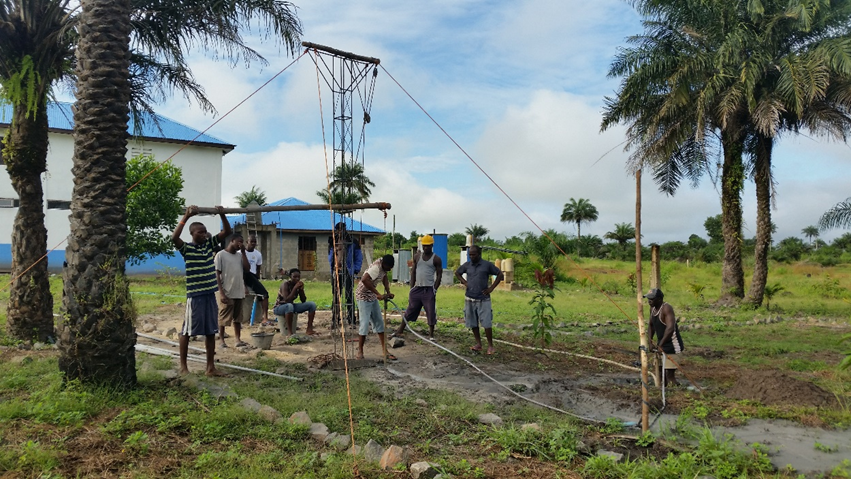
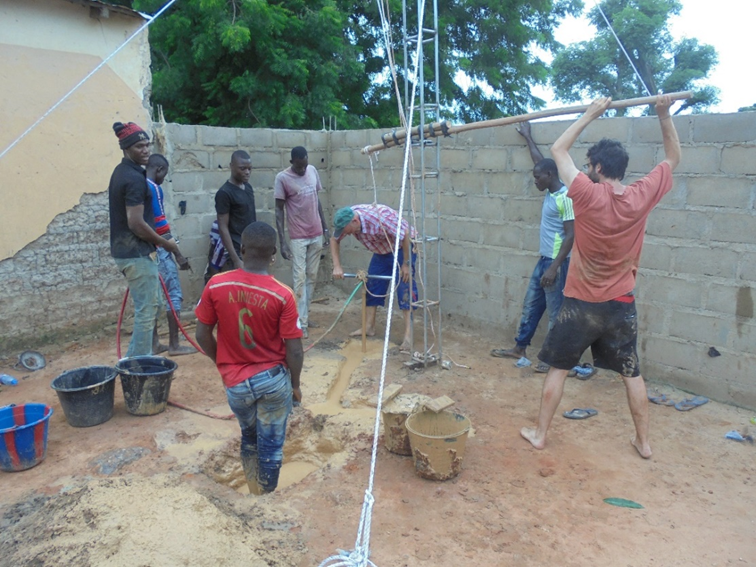
Drilling a well in Sierra Leona WASH Center
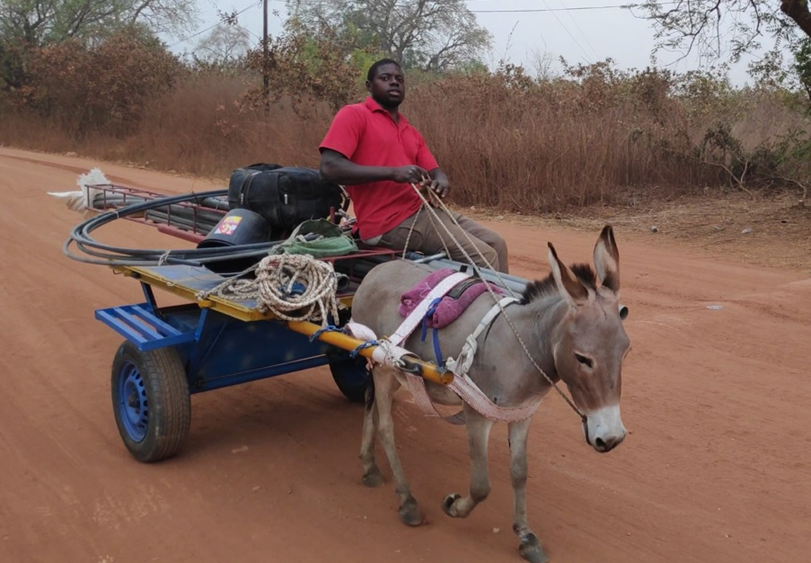
Amadou, EMAS technician from Senegal going with his drilling equipment to make a new well
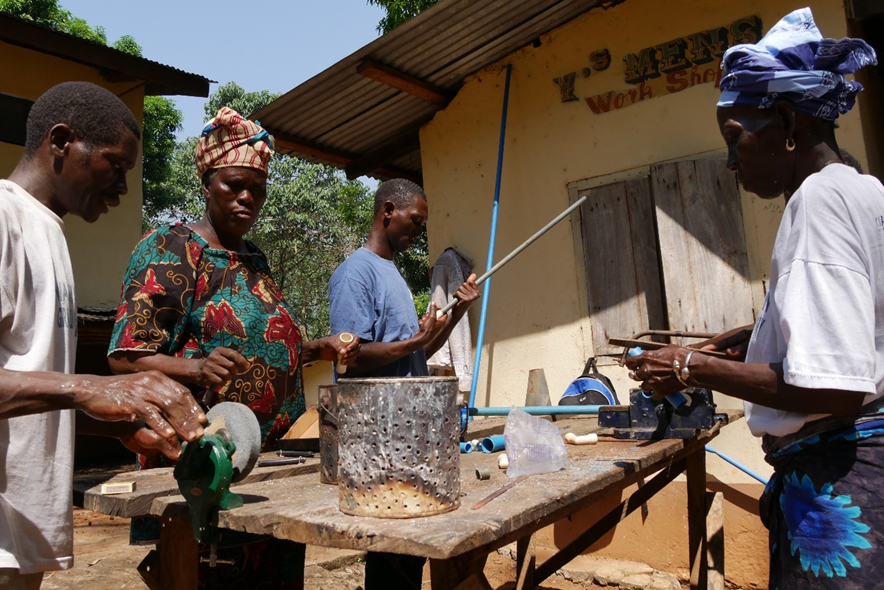
Training of EMAS pump making at Sierra Leone
Drilling training at Mali
EMAS systems including rainharvesting, underground tank, bomba manual, toilet, shower and sink
About the Author: Jaime Aguirre is originally a mechanical engineer who acted many years as design engineer in the wind energy sector. After some disappointing experiences with the implementation of high-tech WaSH technologies he joined in 2014 voluntarily an EMAS training in Bolivia. Since then, he has permanently been engaged in providing training together with German based NGO EMAS-International e.V. In 2015 he initiated the Spanish NGO TADEH in Bilbao, Spain which provides training in EMAS Self Supply technologies worldwide.
Did you enjoy this blog? Would you like to share your perspective on the rural water sector or your story as a rural water professional? We are inviting all RWSN Members to contribute to this 30th anniversary blog series. The best blogs will be selected for publication. Please see the blog guidelines here and contact us (ruralwater[at]skat.ch) for more information. You are also welcome to support RWSN’s work through our online donation facility. Thank you for your support.
Currently, about half a billion people, in sub-Saharan Africa (SSA), equivalent to half of the population, rely on protected and unprotected groundwater point sources for their main drinking water supplies. With the expected increases in rainfall variability due to climate change, sustainable groundwater sources will be evermore important in supporting resilience in the future.
Access to safe, reliable water supplies in low-income countries, particularly in rural areas has been improved through handpumps, which provide a viable alternative to contaminated surface water, open wells and unprotected springs.
Three new reports from the ‘Stop the Rot’ initiative published in March 2022 examine handpump reliance, rapid corrosion, the quality of handpump components and supply chains in SSA. The research looked specifically at the main public domain handpumps – the India Mark Pump, and the Afridev Pump, and also drew on learnings from the Zimbabwe Bush Pump.
Using the most recent data published by the World Health Organization (WHO) and the United Nations Children’s Fund (UNICEF) through the Joint Monitoring Programme (JMP), the ‘Stop the Rot’ research estimates that almost 200 million people in SSA (18.5% of the total population) rely on handpumps to provide them with their main drinking water supply (Figure below). Further, an estimated 700,000 handpumps are in use in SSA. Meanwhile, 23% of the SSA population still rely on unsafe and distant water sources, of which many could benefit from a handpump. At least for a generation, if not much longer, handpumps are here to stay.
Estimated proportion of the total population relying on handpumps for their main drinking water supply
Despite their merits, criticism has been directed towards handpumps. Limited ability to transport large quantities of water, coupled with a lack of storage capacity at the home, means that water from handpumps is usually fetched on a daily basis. Handpumps have also made the headlines: in 2010, an estimated two out of three handpumps in SSA were working; a decade later it was estimated to have only improved to three out of four.
A handpump breaks down for a specific technical reason (such as the breakage of the chain, an O-ring failing or corroded riser pipes), but its repair depends on the ability of the users, often a community, to raise funds, organise a mechanic and source spare parts. In turn, these depend on other factors within the locality and country, including the available services support mechanisms by governments, NGOs and the private sector. When water services fail, there are negative impacts on health and other human development gains, not to mention the burden on users of finding alternative sources. These may be distant, overcrowded, or contaminated.
A sizeable drop in handpump functionality in the first one to two years after installation is a common occurrence, and represents a premature technical failure. Something went wrong with the engineering – such as the borehole siting, design and/or construction, pump quality or installation, or the pump use – or there was vandalism or theft. Alternatively, the installation may have been rejected by the users from the outset due to its location, or the appearance or taste of the water.
The series of three ‘Stop the Rot’ publications draw attention to rapid handpump corrosion, whereby aggressive groundwater destroys the galvanising layer and so galvanised iron (or poor-quality stainless steel) riser pipes and pump rods essentially rot in the ground at a very fast rate (see Figures below). The term ‘aggressive’ refers to the ability of the groundwater to corrode, disintegrate and deteriorate materials it is in contact with, and includes, but is not limited to acidity is one type of pump.
This phenomenon has been known about since the 1980s. However, this new study finds evidence of rapid corrosion in in at least 20 SSA countries. A related problem is the quality of handpump components. The research draws attention to long supply chains from manufacture to installation, shows that component quality is not consistent and that there is limited guidance on quality assurance, and that in many cases, procedures are lacking.
The study proposes the establishment of an action group of key organisations involved in Rural Water Supplies in SSA, and handpumps in particular, to join hands and take a lead in tackling the challenge. Many actions are needed at international, national and local level. These including raising awareness of the extent that handpumps are used in SSA, which will continue into the future. There is need for sensitization regarding the ongoing rapid corrosion issue, and how it can be addressed alongside incentives for doing so. There is also the need to invest in updating handpump specifications, improving quality assurance mechanisms and strengthening procurement procedures and practice.
The full set of research reports can be downloaded in English and French. There is also a 20 minute presentation available here, and a recording of the RWSN webinar involving the presentation and discussions is available here.
This is a shortened version of a blog that was originally published by PLOS Latitude.







 Rural Water Supply Network - blog