Quand les systèmes d’adduction d’eau tombent en panne…

Ceci est un blog de la Fondation PRACTICA, Organisation membre du RWSN.

Pourquoi la gestion des actifs est importante pour résoudre les problèmes des systèmes d’approvisionnement en eau potable?

La couverture mondiale des infrastructures hydrauliques répond-elle à l’Objectif de développement durable (ODD) 6 : « Garantir l’accès à l’eau et à l’assainissement pour tous » ? Il serait formidable de pouvoir répondre à cette question par un « oui » confiant. Nous devrions célébrer nos progrès vers cet ODD grâce aux efforts institutionnels consentis et à l’augmentation du nombre de systèmes d’adduction en eau. Cependant, ce n’est pas si simple… Lorsqu’un système d’approvisionnement est construit, des efforts continus sont nécessaires pour maintenir l’accès à l’eau. Les derniers rapports (2014) du Népal montrent que seulement 50% des systèmes d’approvisionnement en eau du pays fonctionnent encore. Cela implique que la plupart des habitants des zones rurales n’ont toujours pas accès à ce liquide vital, ou sont confrontés à de sérieuses contraintes. 

Problèmes les plus courants des systèmes

Les défis liés au fonctionnement des systèmes d’approvisionnement en eau sont multiples. L’un des principaux problèmes est l’accent mis sur la construction des infrastructures. Pour que les systèmes fonctionnent à long terme, il est essentiel de planifier les (futurs) coûts qui seront nécessaire pour maintenir le système en état de marche. Cependant, la stratégie est souvent orientée vers une réflexion à court terme et la résolution des problèmes lorsqu’ils apparaissent.

 « Lorsque le système d’eau tombe en panne…, on cherche des fonds pour le réparer. »

Une autre pratique courante consiste à surdimensionner les systèmes d’eau lors de leur conception. Or, pendant la phase de conception, il n’y a souvent pas d’informations fiables sur le marché et l’équilibre entre les revenus et les dépenses est régulièrement négligé. Cela empêche une planification précise et conduit à des conceptions qui ne correspondent pas à la situation réelle. Souvent, les systèmes sont plus larges que nécessaire, cela entraîne une complexité opérationnelle accrue et des coûts d’entretien plus élevés que pour les plus petits systèmes.

« Certains systèmes sont donc conçus pour échouer dès le début ».

De plus, il n’y a souvent pas assez d’argent mis de côté par les communautés locales pour entretenir ou réparer les systèmes en temps opportun. Les connaissances sur pourquoi et comment les systèmes tombent en panne et quand certaines pièces doivent être remplacées avant qu’elles ne fuient, s’érodent ou s’usent, font souvent défaut.

« Avec des niveaux élevés de non-fonctionnalité et de faibles niveaux de service, il est clair que les actifs d'eau ruraux ne sont pas gérés de manière adéquate. C'est également un symptôme de l'accent mis sur l'accès ‘pour la première fois’, qui doit se déplacer vers une prestation de services à long terme. Il est nécessaire que les acteurs du secteur rural de l'eau suivent l’exemple d'autres industries plus professionnalisées, et commencent à adopter des pratiques de gestion d'actifs » (Boulenouar, 2014).

L’Alliance WASH a uni ses efforts

Depuis 2019, l’Alliance internationale WASH a travaillé sur le développement d’outils de gestion des actifs pour améliorer la gestion et l’entretien des systèmes d’eau ruraux et périurbains. Le Népal a été sélectionné pour le projet pilote. Les sorties se composent d’une méthodologie complète et d’outils numériques pour la gestion des actifs des systèmes d’adduction en eau ruraux. Ce projet offre une occasion unique d’améliorer la durabilité des services d’approvisionnement en eau. Les ressources sont développées en prenant en comptes les capacités et besoins des utilisateurs.

Développement de logiciel sur mesure

La gestion des actifs des infrastructures n’est pas un concept nouveau, elle est discutée depuis les années 80 en Europe et l’intérêt pour cette approche ne cesse de croître. Il est couramment appliqué à toutes sortes d’infrastructures publiques (ponts, routes, réseaux d’égouts). Plusieurs cabinets spécialisés proposent leurs services sur ce sujet et une gamme de formations est disponible. En outre, des logiciels commerciaux sont disponibles. Cependant, la majorité a été développée dans une perspective occidentale. Cela a abouti à des progiciels très complets, mais aussi très complexes. Ils sont trop complexes pour être utilisés par les comités locaux d’usagers et les prestataires de services dans les zones rurales ou (péri-)urbaines des pays en développement. Outre les compétences élevées requises pour travailler avec ces packages, leurs coûts excessifs les rendent totalement hors de portée des comités locaux d’utilisateurs de l’eau ou des prestataires de services.

Dans notre prochain blog, les composantes d’un plan de gestions des actifs, le processus de mise en œuvre et son rôle dans l’amélioration de la gestion financière seront abordés.

Ce document a été développé par la Fondation Practica en tant que membre de WASH Alliance International, partenaire du WASH SDG Consortium. L’auteur principal du blog est Aldo Zamarroni Peralta, soutenu par un certain nombre de collègues de l’Alliance Internationale WASH. Les photos ont été prises par le Centre pour le développement urbain intégré (CIUD), Népal. Pour plus d’information veuillez contacter: office@practica.org

Référence: Boulenouar, J. (2014). Gestion des actifs d’infrastructure : un élément clé pour soutenir les services d’eau en milieu rural.
Cuando los sistemas de agua potable se rompen …

Esta entrada fue realizada por PRACTICA Foundation como miembro de la organización RWSN.

La importancia del manejo de activos en los sistemas de agua potable en el contexto del desarrollo

Debemos de preguntarnos si la cobertura de agua potable en el mundo satisface el Objetivo de Desarrollo Sostenible (ODS) 6: “Agua limpia y saneamiento para todos”. Sería increíble poder contestar con un confiado “si” y tomando en cuenta todos los esfuerzos institucionales y el incremento en el numero de sistemas de agua en el mundo deberíamos estar celebrando nuestro progreso con respecto a este ODS.

Sin embargo, la respuesta no es tan sencilla. Cuando un sistema de agua potable es construido, también se requiere un esfuerzo continuo para mantener el agua fluyendo. Por ejemplo, el ultimo reporte (2014) de Nepal muestra que solo el 50% de los sistemas de agua en aquel país se encuentran funcionando actualmente. Esto implica que la gran mayoría de las comunidades rurales todavía no cuentan con acceso al agua o padecen severas restricciones. Ejemplos de estas restricciones son el solamente recibir agua por determinados periodos de tiempo, o que la calidad del agua sea tan baja que no pueda ser destinada al consumo humano.

Los problemas mas comunes en los sistemas de agua potable

Los desafíos a los que se enfrentan los gerentes de sistemas de agua potable son multifacéticos.

Uno de ellos es la gran atención que se le pone solamente a la fase constructiva. Una vez que el sistema esta construido se tiende a olvidar el esfuerzo continuo para operar y darle mantenimiento al sistema.  En el largo plazo, resulta mejor tener un plan solido en el cual se consideren todos los costos. Sin embargo, en la mayoría de los casos la estrategia recae en una visión de corto plazo, en la que los problemas se solucionarán solo cuando ocurran.

‘Cuando el sistema de agua falla…, entonces uno va y busca dinero para repararlo o cambiar la pieza’

Otro problema común es el sobredimensionamiento de los sistemas. Este problema se debe a la falta de información proveniente desde la perspectiva de los usuarios y a la falta de un balance entre las entradas y las salidas hablando en términos monetarios. Esto ocasiona que los diseños no correspondan con la situación real de las localidades. Resultando en sistemas que son mas costosos y complejos de operar. 

‘Algunos sistemas están entonces diseñados para fallar desde el momento en el que comienza su construcción’

Además, en el sistema no se cuenta con la planeación requerida para llevar acabo las actividades de mantenimiento, con miras a poder prevenir las refacciones que se van a necesitar.

‘Con altos niveles de falla y bajo nivel de servicio, es claro que los sistemas de agua potable en las comunidades rurales carecen de información. Esto es un síntoma inequívoco de solamente enfocarse en construir, sin preocuparse por finalizar un sistema que pueda ser funcional mucho tiempo. Dicho esto, surge una necesidad en el sector rural de profesionalizar la construcción de infraestructura siguiendo la metodología de manejo de activos (Boulenouar, 2014)’.

Los esfuerzos conjuntos de la alianza WASH

Desde 2019, la Alianza WASH Internacional ha estado trabajando en Nepal en la implementación de un proyecto piloto. En el cual los productos consisten en el desarrollo de una metodología y conceptualización de herramientas digitales para el manejo de activos en pequeños y medianos sistemas de agua. Este proyecto representa una oportunidad única para mejorar la sostenibilidad a largo plazo de los sistemas. La metodología incluye considerar a todos los actores involucrados, sus necesidades y sus capacidades en la conceptualización de las herramientas.

Desarrollo de las herramientas digitales en el contexto del desarrollo

El manejo de activos relacionados con la infraestructura no es un concepto nuevo, surgió en 1980 en Europa. Comúnmente se aplica a todo tipo de infraestructura pública como son puentes, autopistas, vías ferroviarias, etc. Existiendo una gran variedad de firmas especializadas que ofrecen sus servicios en la capacitación sobre este tema. A la par de una gran variedad de software que se encarga del manejo de activos en tiempo real.

Sin embargo, la gran mayoría de las herramientas se han desarrollado sin considerar las necesidades rurales. Esto resulta en programas muy completos, pero muy complicados de utilizar. Se convierten en obsoletos, pues los usuarios tienden a abandonar su uso.

En nuestro siguiente blog abordaremos los principales componentes de un plan de manejo de activos, el proceso de implementación y el rol que juega en la mejora de las finanzas de un sistema de agua potable.

Este documento fue realizado por Practica Foundation como miembro de la Alianza WASH, parte del consorcio WASH SDG. La información fue escrita por Aldo Zamarroni Peralta, con apoyo de los colegas de la Alianza WASH Internacional. Las fotografías han sido provistas por el Centro Integrado de Desarrollo Urbano (CIUD) ubicado en Nepal. Para más información por favor contactar: office@practica.org: y https://www.practica.org

Referencia: Boulenouar, J. (2014). Infrastructure asset management: a key building block for sustaining rural water services. 

When water systems break down…

This is a guest blog by RWSN Member Organisation PRACTICA Foundation.

Why Asset Management is important to solve water systems’ problems in the development context.

Does world-wide water infrastructure coverage fulfil the Sustainable Development Goal (SDG) 6: “Ensure access to water and sanitation to all”? It would be great to answer this question with a confident ‘yes’ and considering the institutional efforts made and the increase in the number of water systems, we should be celebrating our progress towards this SDG. However, it is not that simple. When a water system is built, ongoing efforts are required to keep water flowing. For example, the latest reports (2014) from Nepal show that only 50% of the water systems in country are functioning well. This implies that most people in rural areas still do not have access to this vital liquid or face serious constraints. For example, receiving water only for a limited number of hours per day and/or water of a poor quality.

Most common water systems’ problems

Challenges related to the functioning of water systems are multi-faceted. One mayor issue is the strong focus on infrastructure construction. Once water systems have been built it is easy to forget about the continuous efforts required for operation and maintenance. In the long run, it is essential to have a solid planning on (future) costs needed to keep the system working. However, often the strategy is leaning toward short-term thinking and solving challenges when they appear.

 ‘When the water system breaks down…, one seeks funds to repair it.’

Another common practice is to over-size water systems while designing them. During the design phase there is often no reliable information from the consumers’ perspective and the balance between income and expenditure is neglected. This hinders accurate planning and leads to designs that are a ‘mismatch’ with the actual situation. Often, systems are bigger than necessary, which results in increased operational complexity and higher costs than smaller systems would require.

‘Some systems are thus designed to fail from the very beginning’.

Furthermore, there is not enough money set aside by the local communities to timely maintain or repair the systems. The knowledge on why and how systems break down and when certain parts need to be replaced before they leak, erode, or wear out, is often also lacking.

‘With high levels of non-functionality and low levels of service, it is clear that rural water assets are not being adequately managed. It is also a symptom of the current focus on first-time access, which needs to shift to a focus on long term service delivery. There is a need for actors within the rural water sector to follow other infrastructure-heavy and professionalized industries, and start adopting asset management practices’ (Boulenouar, 2014).

The WASH Alliance joined efforts

Since 2019, the WASH Alliance International has been working on the development of Asset Management Tools to improve the management and maintenance of rural and peri-urban water systems. Nepal has been selected for the pilot project. The outputs consist of a comprehensive methodology and digital tools for asset management of small/medium-sized rural water systems. This project provides a unique opportunity to improve the long-term sustainability of water service provision. In the development of the resources, the whole spectrum of users, their needs and capacities are being considered.

Tailor-made software development for the development context

Improving asset management of infrastructure is not a new concept, it has been discussed since the 1980s in Europe and the interest for this approach is still growing. It is commonly applied to all kinds of public infrastructure (bridges, railways, roads, sewer systems). Several specialized firms offer their services on this topic and a range of trainings are available nowadays. Also, commercial software is readily available on the market.

However, the majority has been developed from a Western perspective. This has resulted in very complete, but also very complex software packages. They are too challenging to be used by local Water User Committees and service providers in rural or (peri) urban settings in developing countries. Next to the high skill set required to work with these packages, their excessive costs make them completely out of reach for local water user committees or service providers.

In our next blog, the components of an AM plan, the implementation process and its role in improving the financial management of water systems will be addressed.

This document was developed by Practica Foundation as a member of the WASH Alliance International, partner of the WASH SDG Consortium. The blog’s lead author is Aldo Zamarroni Peralta, supported by a number of colleagues from WASH Alliance International. For more information please contact: office@practica.org

Reference: Boulenouar, J. (2014). Infrastructure asset management: a key building block for sustaining rural water services. Photo credit: CIUD, Nepal


NEW! Rural Water 2021 + RWSN Blue Pages / Pages Bleues

We are delighted that announce the launch today of “Rural Water 2021” and the “RWSN Blue Pages / Pages Bleues”, which you can download now from the RWSN website: https://www.rural-water-supply.net/en/resources/details/944

Continue reading “NEW! Rural Water 2021 + RWSN Blue Pages / Pages Bleues”

Self-supply: why I wrote the book

by Dr Sally Sutton, SWL Consultants, on her new book “Self-supply: Filling the gaps in public water supply provision” available to buy, or free to download from Practical Action Publishing from 15 February 2021.

Moving from deserts to humid lands

After 14 years working as a hydrogeologist in the deserts of the Middle East on traditional water supplies and wellfield construction, I moved to sub-Saharan Africa, which presented a whole new challenge.

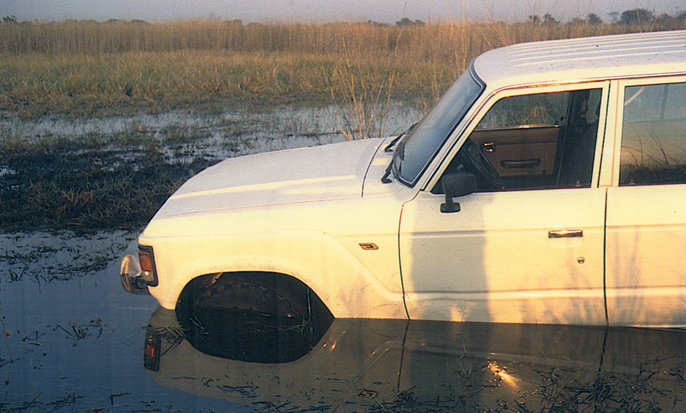
The easier availability of water was the most obvious difference – sometimes too much so (see photo)- but other important ones were the low quality of water and scattered population.

New challenges – Large areas with accessible groundwater and sparse populations – water, water everywhere but not a drop to drink.
Continue reading “Self-supply: why I wrote the book”

Crowding-in Commercial Financing to Water Supply and Sanitation Utilities

This is a guest blog by RWSN Members Lance Morrell and Michael Ashford.

Achieving SDG6, clean water, and sanitation for all by 2030 requires estimated investments of US$114 billion per year. The present value of the total investment needed is US$1.7 trillion, and these estimates do not include costs of operation and maintenance. At three times current levels, this far exceeds the financing capacity of the entire public sector and donor community, combined.  

We in the development community need new tools and approaches to address this gap. Using donor and public funds to “crowd-in” private investment can help. USAID’s recently announced Private-Sector Engagement (PSE) Policy, for example, recognizes the urgency of using development funding to attract private sector capital into development of infrastructure and services around the world. Similarly, USAID’s Water, Sanitation and Hygiene Finance (WASH-FIN) program is developing and piloting specific interventions to increase private and public investment in WASH. The World Bank’s Public-Private Infrastructure Advisory Facility (PPIAF) is another important source of information and successes on how to leverage the public and donor sectors’ financial power to increase private investment in public infrastructure and services. In all cases, the policies and prescriptions call for the use of market-based approaches as the only sustainable path to sustainably support communities in achieving development and humanitarian outcomes.

While “billions and trillions” of capital for WASH feels overwhelming, outside of 20th century Soviet-style economies, public infrastructure was never meant to be financed, funded, and operated with public resources alone. Commensurate with the growing financing gaps, there is today a glut of private sector capital looking for reliable investments that meet their investment criteria. Globally, pension funds, insurance companies, sovereign wealth funds and commercial banks hold approximately US$100 trillion in assets. In this light, the global financial system is out of balance, and the challenge is to attract private capital and other types of private sector participation into the water and sanitation sector. Development professionals, working with their government counterparts, must now “put skin in the game” without sacrificing the broader objective of shared, public benefits and economic growth.

Changing Project Funding to Crowd-In Private Investments

If the private sector has the capital needed to expand and improve the performance of the WASH sector, why haven’t governments been able to access it? How do we crowd-in the private sector?

The first step is to stop crowding-out private investment with donor funds. Governments and donors crowd-out private investors by providing grants or ill-designed concessional financing against which the private sector cannot compete. Financing and funding are products that banks and donors, respectively, want recipients to “buy;” the price is the interest rate. Free or cheap money from donors is not something private capital can beat.

There are numerous real-world examples of crowding-out in development, which follow the same basic scenario: Donor X works with a government to develop a project that will use public and donor funds to attract commercial financing to the project. In order to attract – or crowd-in – the commercial financing, government will work with financiers to understand their concerns and design appropriate risk mitigating measures. To crowd-in the private sector, the project designers require time to develop both the demand and the supply side. As this project preparation is proceeding and nearing agreement, Donor Y approaches the government and offers grant financing for 100 percent of the cost of the project, and crowds-out the private sector.

In contrast, as USAID’s PSE policy emphasizes, governments must engage and collaborate with the private sector, and the private sector must be allowed to manage its level of risk and to earn a reasonable profit. Adhering to an enterprise-driven development model, USAID and other donors are aiming to play a catalytic role in achieving results, rather than fully funding and managing the majority of its projects. The PSE model recognizes that the private sector represents nearly 90 percent of the direct foreign investment to developing countries, and the model represents a strategic approach through which USAID would consult and collaborate with the private sector for greater scale, sustainability and effectiveness. Under this approach, USAID will attract, or crowd-in, the private investors.

Increasing Government Commitment

Government is the key stakeholder in attracting private sector financing to the WASH sector. To effectively express these commitments, government officials need to understand the benefits and costs of the WASH sectorfrom the perspective of commercial finance. Some of the potential policies and actions include the following, with the commitment type identified in parentheses:

  • Sharing capital costs or providing limited guarantee of recovery of capital costs (lump sum);
  • Guaranteeing continuous payments during project performance to recover capital costs overtime or sharing in expected revenue from tariffs to cover financing costs (revenue flows);
  • Indirect market development by requiring improved operational performance of the utility, whether publicly or privately owned, to reduce expenses and increase revenue, so the utility can enter into direct lending arrangements (regulatory enforcement);
  • Contractually transferring asset management of utilities, if owned by government, through performance-based contracting with private sector service providers (give up control of asset).

Developing a business relationship between governments, utilities and commercial lenders takes time and patience, and the path forward should be gradual to allow all parties to develop trust and confidence. For example, commercial lenders could start with financing smaller projects that enhance revenue for the utility, such as new or upgraded water meters or increasing customer connections. If the utility then dedicates the additional revenue attributable to the project to the private investor, the private investor’s and utility’s interests align around ensuring performance during operation. After the loan is paid off, the additional revenue accrues back to the utility. Once the utility passes this kind of test with private investors, it can expand follow-on borrowing to finance further extensions of the water supply system –again using new cash flow that is “ring-fenced” to repay next the loan.  Meanwhile, scarce public funds are protected and can be used for projects which have high economic value but low financial viability, such as a new sewage treatment system. Overall, the goal is to create more incentives for private capital to partner with donors and government toward shared development goals.

About the authors

  • Lance Morrell is a financial specialist with more than 35 years of professional experience, and is the Founder and Managing Director of FEI Consulting;
  • Michael Ashford is senior clean energy and infrastructure professional with more than 20 years of experience, and is the Global Practice Lead for the Water, Energy, and Sustainable Cities practice at Chemonics International.

This blog post represent the views of the authors and does not necessarily represent the views of Chemonics. Photo credit: Gerardo Pesantez / World Bank.

RWSN/ REACH consultancy opportunities: your questions answered

On 30.11.2020 RWSN advertised two consultancies in partnership with the University of Oxford under the REACH programme (deadline for applications: 8th January 2020). The Terms of Reference for the consultancies are below:

We have received a number of questions in relation to these consultancies which we would like to respond here, to so that all applicants can refer to them.

  1. Q: In the Terms of Reference, the essential qualification and age limit is not mentioned. Please inform us so that we know the eligibility criteria.

A: There are no essential (university) qualifications or age limit for these positions. All essential requirements are detailed in the ToRs.

2. Q: Kindly send to me necessary forms or information to enable me apply

A: You can download details via  https://rural-water-supply.net/en/news/details/86  or here: https://reachwater.org.uk/about-reach/jobs/

3. Q: Is the offered position as “Researcher – Global Diagnostic on Rural Water Services” intended for one person? Or otherwise, could an organisation like the one I am part of apply?

A: Our thinking is that this is better suited to an individual, who can focus on the task rather than it being fragmented across a team. However, we are open to more creative solutions.

4. Q: I am interested in submitting an application to one of the consultancy opportunities for the global diagnostic of rural water service providers under the REACH programme. Now before I go any further I would like to get a better understanding of the programme and this assignment. By rural water service providers, do you mean (a) community members that have been trained to repair hand pumps (b) water utility companies, public and/ or private and/ or (c) rural water supply and sanitation units under the district or local authority?

A. The first point we need to clarify is that the proposed consultancy for the diagnostic of rural water supply providers is global in nature, and that arrangements will likely differ depending on the countries that are chosen for the study. For RWS providers to be considered, there would need to be some data related to basic operational and financial performance available to enable comparison between rural water service providers within and between countries. This would therefore  probably mean that community members could not be considered, but rather (public and/or private) service providers with adequate data and scope of operations. This could mean for instance in the rural water supply and sanitation units under the district or local authority, or water utilities if they operate in rural areas. One of the first tasks under the consultancy will be to propose a typology of service providers (see activity 2 in the ToRs) that would enable us to determine exactly who/ which type of organisations we should target with the diagnostic.

5. Q: I have a question on one requirement in the desired experience section. In the sentence, “Experience in advanced data analytics, mapping and modelling, including GIS”: 1. Is there a specific model that RWSN would like the prospective consultant to use or can the  prospective consultant select a model of their choice? 2. Are there parameters that RWSN would like the prospective consultant to use or can the prospective consultant select parameters they think would be informative to the study? 

A. 1.       There is no specific software that we would recommend to use for data analytics, mapping and modelling, and GIS but we would prefer that the consultant uses open-source software (e.g. QGIS) as we will not support the costs related to licenses for private software.

2.       We would recommend that the prospective consultant thinks about potential parameters for data analytics, mapping and modelling as part of his/her proposal.

6. Q. Could you please clarify the following:

  1. Geographic scope  – the TOR and clarifications point to a global study, but the TOR highlights REACH’s work in Africa and Asia. Is the study likely to focus on Sub-Saharan Africa and South Asia, or is the intention to gather examples of RWS providers from a much wider group of countries (including those in Eastern Europe given the reference to that consultancy).
  2. Survey scope – can you clarify what the scope of the surveys is likely to be? Our assumption is that this would be online surveys of rural water service providers only (e.g. no household surveys, or attempting to survey service users). Is this correct?
  3. Definition of advanced analytics – Do you have any examples of what you mean by ‘advanced analytics’? It may be challenging to get a high number of responses and in-depth answers to an online survey (particularly as the number of eligible RWS is unknown) which would limit the complexity of any analysis and/or modelling that would be possible.
  4. Intensity of inputs – an earlier clarification was that the thinking of RWSN/REACH was this consultancy was best suited to an individual. Given that, the timeline, the scope of the project, and the budget available to you envisage that this will be (more or less) a full time role?

A.

  1. The intention is to gather examples of RWS from a wide group of countries/ geographies, not restricted to SSA and South Asia.  
  2. The survey is intended to be conducted remotely / online (no household or service user survey). The Marketing consultant will support this exercise to ensure that there is a wide variety of RWS providers who respond to the survey; responsibility for data collection and analysis remains with the diagnostic Consultant.
  3. Advanced analytics: as you said this will depend on the quality of data collection, which is a risk we are hoping to mitigate through the Marketing consultant. For your proposal you could perhaps suggest what you might be able to do given ideal/ less than ideal data.
  4. Intensity of inputs: the intensity of outputs for this consultancy will depend on the level of experience of the consultant/ team.

We will continue answering your questions here as they come along. Any questions can be addressed to ruralwater[at]skat[dot]ch.

(Photo credit: REACH)

Les populations rurales peuvent-elles payer pour l’eau en temps de crise ?

Les co-auteurs de ce blog invité sont le Professeur Rob Hope (REACH Programme) et le Dr Guy Hutton (UNICEF). Une version de ce blog an anglais est disponible sur le site web du programme REACH.

Rendre l’eau potable abordable pour les populations rurales a toujours été un défi. La COVID-19 exerce des pressions urgentes sur les gouvernements, les prestataires de services et les utilisateurs d’eau en milieu rural qui ont des besoins prioritaires en eau pour se laver les mains à la maison, dans les écoles et dans les établissements de santé.

Le 23 juin, le programme REACH et l’UNICEF ont organisé un webinaire en partenariat avec le RWSN afin de présenter de nouvelles données sur l’évolution de la demande et des revenus de l’eau, et d’étudier comment mesurer l’accessibilité économique de l’eau dans le but d’améliorer les réponses politiques et programmatiques. Le webinaire complet est accessible ici.

pic 2

Nous avons identifié cinq leçons clés que nous présentons ci-dessous, en réponse à la question: Les populations rurales peuvent-elles payer pour l’eau en temps de crise ?

Leçon 1 – Cela est possible. L’expérience de la République centrafricaine (RCA) a mis en évidence un modèle de prestation de services professionnels qui a permis de fournir des services d’eau fiables pendant de nombreuses années à échelle, malgré la guerre civile et la stagnation économique. Des pays comme l’Inde sont en train d’étendre une plateforme de suivi pour améliorer les réponses, soutenue par des prestataires de services gouvernementaux établis sur place.

Leçon 2C’est plus difficile en temps de crise. Les pays sans données et sans réseau de prestataires de services responsabilisés sont confrontés à des choix plus difficiles. L’approvisionnement en eau, imposé par la loi, les politiques et la réglementation, est limité en l’absence de prestataires de services déjà établis au niveau local. Les prestataires informels, tels que les vendeurs, peuvent desservir des populations éloignées en temps normal, mais leur capacité à fournir de l’eau pendant la pandémie de la COVID-19 est limitée en raison des restrictions de voyage. Les règles doivent rester souples.


Leçon 3 – Les populations pauvres sont les plus vulnérables. Les données mondiales ont illustré les coûts plus élevés que payent les groupes aux revenus les plus faibles au Ghana, au Cambodge, au Pakistan et en Zambie, ainsi que les coûts importants liés au temps passé à transporter de l’eau, qui sont plus élevés pour les déciles aux revenus les plus faibles. La conception de tarifs mensuels plutôt que volumétriques peut éviter une contrainte de revenu liée à l’augmentation de l’eau pour les besoins d’hygiène. Les inondations et les sécheresses présentent un risque supplémentaire important. Le suivi des données est ainsi un outil clé permettant de fournir une alerte précoce pour cibler les ressources afin de limiter les dommages.

Leçon 4 – Assurer un financement durable. Une eau fiable peut coûter moins d’un dollar par personne et par an. Mais cela nécessite une subvention pour les prestataires de services locaux et les utilisateurs d’eau ont besoin d’un soutien pour maintenir les services en fonctionnement. Une large proportion des populations rurales ne paie pas l’eau aujourd’hui par choix ou en raison d’inégalités. Il a été noté que les gouvernements ne peuvent pas se permettre de ne pas assurer l’accès à l’eau pour les populations. Mais une “eau gratuite” causerait plus de tort, mettant en péril la capacité des prestataires à fournir et à maintenir des services pour tous. Il s’agit là de choix difficiles et les décisions dépendront du contexte.

Leçon 5 – Mieux reconstruire. La COVID-19 a mis en évidence les faiblesses connues de l’ approvisionnement en eau en milieu rural. Investir dans des prestataires de services locaux et responsabilisés est un élément clé de toute stratégie de durabilité. Les écoles et les établissements de santé sont au cœur de ce vaste réseau de services et constituent une priorité essentielle. Ces institutions partagent souvent des infrastructures hydrauliques avec les communautés rurales, et  pourraient constituer un élément central et stratégique de l’approvisionnement en eau pour tous.

pic3

Le webinaire s’est déroulé en deux parties sur une durée d’une heure et demie. Tout d’abord, un aperçu du débat et des caractéristiques de l’accessibilité financière par le professeur Rob Hope (Université d’Oxford), présenté par Alice Chautard avant les présentations du Dr Guy Hutton (UNICEF), Andrew Armstrong (Université d’Oxford)et le Dr Sonia Hoque (Université d’Oxford). Cette présentation a été suivie par une session de questions-réponses facilitée par Alice Chautard. Le webinaire complet est accessible ici.

Si vous avez des questions ou des commentaires, n’hésitez pas à nous écrire : reach@water.ox.ac.uk et vous pouvez nous trouver sur Twitter @REACHWater @UNICEFWater @RuralWaterNet. Crédits photo: Mary Musenya Sammy et Cliff Nyaga.

External support programs to improve rural drinking water service sustainability: a systematic review

This is a guest blog by Meghan Miller. Meghan is completing her PhD in the Department of Environmental Sciences and Engineering at the University of North Carolina at Chapel Hill and has conducted both her masters and doctorate research through The Water Institute.

The Water Institute recently published a systematic review on external support programs (ESPs) that target rural, often community-managed water systems. ESPs are of vital importance to long-term functionality and sustainability of rural drinking water service, as all water systems fail eventually and rural water committees can lack the resources and/or capacity to rehabilitate the systems independently.

The purpose of the systematic review was to determine how ESPs in low-, medium- and high-income countries are described and measured. The aims of the analysis were to: create a typology of ESP activities based on ESPs for rural drinking water systems; identify barriers to ESP access and implementation; and determine how ESPs effect the sustainability of rural water systems.

So what do external support programs do?

The types of ESP activities described in the literature were: technical assistance, financial assistance, monitoring and regulation, communication and coordination, administrative assistance, capacity-building, and creation of policies and enforcement of regulations. Technical assistance, financial assistance, and capacity-building were described in the majority of publications included (66%, 57%, and 53% respectively).

Need for a typology of activities and precise language

The language used to describe ESPs was not consistent between publications about low-, middle-, and high-income countries. When ESP activities go underreported, knowledge transfer is limited and support for ESPs is reduced. Communication and coordination between ESP providers is further limited by inconsistent and imprecise language. We identified twenty-one terms that were used to describe ESPs. Some terms imply that support occurs at specific phases or with specific actors. Post-construction support, for example, assumes that projects have a single construction event. The terminology should reflect how and when support is provided. The better ESP terminology is defined, the better we can compare ESPs in different settings.

External support was the most commonly used term (27% of publications) and we propose using the term “external support programs” to describe the continued support for water systems. Based on our analysis we propose the following definition for ESPs: “the set of activities provided by NGOs, government, private and community-based entities to community-member managers to ensure continued safe operation of a drinking water system.”

What are the barriers to external support programs?

Barriers to ESPs were grouped into six categories: inadequate resources, inadequate ESP support, restrictive policies, lack of communication and coordination, little access to ESPs, and insufficient training of water system managers. The barriers to ESP varied by country income classification. Lack of communication within ESPs and between ESPs and stakeholders was most frequently mentioned in publications about high-income countries (36% of the publications); lack of communicate was often characterized by unclear roles and responsibilities, lack of trust between ESPs and stakeholders, inability to resolve disputes and misunderstanding of local context. Insufficient training of staff and insufficient resources for ESP wa identified as the most common barriers to ESP in publications about low and lower-income countries (57% and 45% of publications respectively).

Little comprehensive monitoring and assessment of ESPs

Twenty studies evaluated the effects of ESPs on water service levels. Most publications described ESP activities but did not undertake data collection to assess the programs. Without a rigorous assessment of ESPs, it is difficult to identify the most effective components of ESPs. Proper monitoring requires that stakeholders understand the activities and models implemented by ESP providers. Presence of ESPs and access to spare parts were used as the indicators of ESP activity by studies assessing the effect of ESPs on households and water systems. Better monitoring would include indicators that measure the six types of ESP activities, such as the frequency and attendance rate of water committee training events. Indicators should also measure the effectiveness of different providers – these outcome indicators should be developed according to the type and purpose of the ESP. Additional assessments of ESPs will help stakeholders identify which ESP activities and models promote sustainability. Support programs can then incorporate those that promote sustainability.

Majority of publications report on ESPs for point sources

The majority of publications addressed ESPs for point sources. The focus on point sources ignores water sources in community institutions and the implementation of more complex water systems. Community institutions, such as schools and health care facilities, have different water use characteristics and management structures than community drinking water systems and support to these community institutions will require adaptations to existing ESPs. Piped water systems, compared to point sources, are more complex, have larger one-time repair costs, typically require repairs more frequently, may require specialist technicians, and may require more expensive parts. Descriptions of ESPs in community settings and for more complex systems will improve knowledge about how ESPs for can be adapted to better serve community needs.

Further reading

The full article is available as:

Miller, M., Cronk, R., Klug, T., Kelly, E.R., Behnke, N., Bartram, J., 2019. External support programs to improve rural drinking water service sustainability: A systematic review. Sci. Total Environ. 670, 717–731. https://doi.org/10.1016/j.scitotenv.2019.03.069

Figure: Model of the variables that affect and are affected by external support programs based on data from quantitative and qualitative evaluations of external support programs and review of the literature. Plus signs represent a positive relationship and negative signs represent a negative relationship. The dashed lines represent relationships that have been identified in the literature, but were not assessed in the ESP evaluations. Credit: Authors.


Rural water supply is changing. Be part of it.

The Rural Water Supply International Directory that is available to download from today aims to track the organizations and businesses fostering this change.

by Philip T. Deal, University of Oklahoma, USA

The Sustainable Development Goals are pushing the water and sanitation community to reach higher than ever before. After decades of fighting for the human right to water, universal coverage is the next, challenging summit to climb. “Access to an improved source” has been upgraded to “safely managed drinking water” – a standard that requires continuous service, good water quality, increasing coverage, and affordability. Considering that rural infrastructure often lags behind when compared with urban environments, accomplishing this standard can sometimes feel more like a cliff than a mountain. For these reasons, rural water supply requires new ideas – experimentation – innovation.

The 2019 RWSN directory of rural water supply services

The The 2019 RWSN directory of rural water supply services, tariffs, management models and lifecycle costs that is available to download (and in French) from today aims to track the organizations and businesses fostering this change. These entities are the catalysts to novel service delivery and management models. Some offer minor changes to technology or accountability mechanisms that increase functionality. Some create new financing opportunities that were not previously accessible. Some create a complex management system to maintain water systems over large geographical areas. Some could potentially fail. All are valuable.

The cases described in the Directory are meant to foster growth, learning, and inspiration. The successes, challenges, and failures depicted by one organization could spark a solution for another across the continent. Financing and life cycle cost discussions could become more transparent, uniform, and clear across borders. Networking opportunities and connections become easier – there may even be a neighboring WASH partner nearby that fits your needs!

This new Directory is intended to be an annual compilation. Current cases can be updated with new developments and research. Other innovations and businesses can be added. If a future reader thinks some other information should be included, there’s potential for expansion. We are open to your input.

Questions to Consider

When reviewing the cases within this directory, I would encourage any reader to think on the following questions:

  • What are some common management traits that you observe? What is similar or different when compared to traditional water and sanitation models?
  • What are the most striking innovations that can be observed?
  • What role does each case hold in their water and sanitation ecosystem? What are their responsibilities, and for what are they dependent upon others?
  • Which cases seem more conducive to scaling up?
  • What life cycle costs do various organizations consider their responsibility? What costs should realistically be expected to be covered by tariffs?
  • How would an organization react if international or support funding were reduced or lost? What would be the ramifications to the customers or beneficiaries?
  • What monitoring schemes seem to be effective in maintaining quality water services?
  • What information or data would you be interested in evaluating for these programs?

Bio – Philip T. Deal

At the end of 2015, I began my doctoral research on service delivery models at the University of Oklahoma. My first significant reference was, “Supporting Rural Water Supply”, by Lockwood and Smits (2011), which has often guided my thought process. Understanding how various management models can improve, disrupt, or maintain the status quo for water service has become a focus of my efforts. I want to know if each case is really sustainable, if there is measurable impact, and if equity is truly equal when applying these models.

Since I began, I have had the opportunity to investigate these types of questions in partnership with Water4 and Access Development in Ghana. You may notice this case was not yet included in the directory. This is because I have wanted to give excellent, data supported answers before I do. The team involved has been working diligently to measure and evaluate the level of service provided, the associated life cycle costs, and the effectiveness or their company. Keep an eye out in the next year for these results in multiple studies.

I would encourage all who would like to be a part of the directory in the future to do similar investigations. Challenge your assumptions and dig into the details. Determine what is working and what should be changed. Put resources into evaluating your organization. Then, be honest about it. It is not an easy or glorious task, but it keeps us accountable.

If you do not know where to start – RWSN is a great place to begin. Connect with experts, practitioners, and researchers that can provide excellent guidance. Sean Furey reached out for help on the Directory project in the fall of 2018 through a Dgroup discussion. Since agreeing to participate, I have had the opportunity to grow my knowledge base and network.  We hope this directory will offer the same opportunity to innovative and budding organizations across the world.