Les co-auteurs de ce blog invité sont le Professeur Rob Hope (REACH Programme) et le Dr Guy Hutton (UNICEF). Une version de ce blog an anglais est disponible sur le site web du programme REACH.
Rendre l’eau potable abordable pour les populations rurales a toujours été un défi. La COVID-19 exerce des pressions urgentes sur les gouvernements, les prestataires de services et les utilisateurs d’eau en milieu rural qui ont des besoins prioritaires en eau pour se laver les mains à la maison, dans les écoles et dans les établissements de santé.
Le 23 juin, le programme REACH et l’UNICEF ont organisé un webinaire en partenariat avec le RWSN afin de présenter de nouvelles données sur l’évolution de la demande et des revenus de l’eau, et d’étudier comment mesurer l’accessibilité économique de l’eau dans le but d’améliorer les réponses politiques et programmatiques. Le webinaire complet est accessible ici.
Nous avons identifié cinq leçons clés que nous présentons ci-dessous, en réponse à la question: Les populations rurales peuvent-elles payer pour l’eau en temps de crise ?
Leçon 1– Cela est possible.L’expérience de la République centrafricaine (RCA) a mis en évidence un modèle de prestation de services professionnels qui a permis de fournir des services d’eau fiables pendant de nombreuses années à échelle, malgré la guerre civile et la stagnation économique. Des pays comme l’Inde sont en train d’étendre une plateforme de suivi pour améliorer les réponses, soutenue par des prestataires de services gouvernementaux établis sur place.
Leçon 2 – C’est plus difficile en temps de crise. Les pays sans données et sans réseau de prestataires de services responsabilisés sont confrontés à des choix plus difficiles. L’approvisionnement en eau, imposé par la loi, les politiques et la réglementation, est limité en l’absence de prestataires de services déjà établis au niveau local. Les prestataires informels, tels que les vendeurs, peuvent desservir des populations éloignées en temps normal, mais leur capacité à fournir de l’eau pendant la pandémie de la COVID-19 est limitée en raison des restrictions de voyage. Les règles doivent rester souples.
Leçon 3 –Les populations pauvres sont les plus vulnérables. Les données mondiales ont illustré les coûts plus élevés que payent les groupes aux revenus les plus faibles au Ghana, au Cambodge, au Pakistan et en Zambie, ainsi que les coûts importants liés au temps passé à transporter de l’eau, qui sont plus élevés pour les déciles aux revenus les plus faibles. La conception de tarifs mensuels plutôt que volumétriques peut éviter une contrainte de revenu liée à l’augmentation de l’eau pour les besoins d’hygiène. Les inondations et les sécheresses présentent un risque supplémentaire important. Le suivi des données est ainsi un outil clé permettant de fournir une alerte précoce pour cibler les ressources afin de limiter les dommages.
Leçon 4 – Assurer un financement durable. Une eau fiable peut coûter moins d’un dollar par personne et par an. Mais cela nécessite une subvention pour les prestataires de services locaux et les utilisateurs d’eau ont besoin d’un soutien pour maintenir les services en fonctionnement. Une large proportion des populations rurales ne paie pas l’eau aujourd’hui par choix ou en raison d’inégalités. Il a été noté que les gouvernements ne peuvent pas se permettre de ne pas assurer l’accès à l’eau pour les populations. Mais une “eau gratuite” causerait plus de tort, mettant en péril la capacité des prestataires à fournir et à maintenir des services pour tous. Il s’agit là de choix difficiles et les décisions dépendront du contexte.
Leçon 5 – Mieux reconstruire. La COVID-19 a mis en évidence les faiblesses connues de l’ approvisionnement en eau en milieu rural. Investir dans des prestataires de services locaux et responsabilisés est un élément clé de toute stratégie de durabilité. Les écoles et les établissements de santé sont au cœur de ce vaste réseau de services et constituent une priorité essentielle. Ces institutions partagent souvent des infrastructures hydrauliques avec les communautés rurales, et pourraient constituer un élément central et stratégique de l’approvisionnement en eau pour tous.
Le webinaire s’est déroulé en deux parties sur une durée d’une heure et demie. Tout d’abord, un aperçu du débat et des caractéristiques de l’accessibilité financière par le professeur Rob Hope (Université d’Oxford), présenté par Alice Chautard avant les présentations du Dr Guy Hutton (UNICEF), Andrew Armstrong (Université d’Oxford)et le Dr Sonia Hoque (Université d’Oxford). Cette présentation a été suivie par une session de questions-réponses facilitée par Alice Chautard. Le webinaire complet est accessible ici.
Si vous avez des questions ou des commentaires, n’hésitez pas à nous écrire : reach@water.ox.ac.uk et vous pouvez nous trouver sur Twitter @REACHWater @UNICEFWater @RuralWaterNet. Crédits photo: Mary Musenya Sammy et Cliff Nyaga.
This is a guest blog by RWSN Young Professional Uyoyoghene U. Traoré, geologist and freelance consultant in water and environment. This article was originally published in GeoDrilling international and is reposted with thanks. You can read the original article here.
Groundwater accounts for over 97% of the world’s fresh water with over two million people depending on it for their Survival. In Africa, it is estimated that groundwater provides over 75% of the population with a drinking water supply, and has been said to be essential in securing equitable water access for the rural and urban poor around the world. It has been established that groundwater has a major role to play in achieving the Sustainable Development Goal (SDG) for drinking water. Though very important, groundwater is not properly captured in national or international monitoring. As an unseen resource, it is easily forgotten, making it undervalued and not properly managed.
As an entry point towards the progressive and effective management of groundwater, I undertook a study on the challenges of water well drillers and drillers association in six countries – Angola, Burkina Faso, Mozambique, Nigeria, Uganda and the United State of America was carried out. I tried to understand groundwater issues within these countries from the perspective of drillers themselves. Drillers are in direct contact with the resource, and some have recognised the importance of having a drillers association.
As at the time of the study (2019) only three water well drillers association exist and were active only in Nigeria, Uganda and the USA. In the case of the others (inactive), there is an informal working group in Angola, an organised body in Burkina-Faso and Mozambique. Where they exist, drillers associations were an entry point to support national, international and local partners in groundwater management, were able to advocate and lobby for sustainable policies and realistic contracts. They also sensitised the public on the resource and helped reduce the presence of unqualified drillers from the sector.
In the study, I identified eight main challenges for water well drillers, namely – capacity, contracts and standards, procurement, finance and payment, corruption, data, logistics, and the availability of spare parts. I also learned about the advantages and disadvantages of having an association, as well as what makes them successful or not. A lack of clarity with respect to groundwater policies, and a lack of capacity by national institutions to implement policies or engage in groundwater monitoring was apparent in four (Angola, Burkina Faso, Mozambique and Nigeria) of the six countries.
So, what did the study reveal?
With the exception of the USA, there is a lack of capacity of drillers and national institutions in the countries studied. Drillers often lack the capacity to drill water wells in a sustainable way. In most of the cases, this is due to the absence of dedicated training institutions on groundwater issues or the inability of organised drillers association to engage in the development of its members.
Poor contract management, lack of transparency and corruption in procurement processes were mentioned. These have adversely affected the quality of drilled wells leading to a short lifespan of these wells. “Turn- key contracts” (Burkina Faso & Uganda), “No water no pay principle” (Mozambique & Nigeria) and “the gentleman’s agreement” (Angola) are some forms of poor contract identified. The client passes all, or most of the risk of finding water to the drillers – even in places where good groundwater resources are not easy to find.
Delayed payments by clients poses danger to the long-term viability of drillers’ businesses. This is a particular challenge in countries where the government is the major client (Angola, Burkina Faso, Mozambique and Uganda).
The absence or lack of groundwater data means underestimation of prices of drilling in certain terrains as well as drilling with uncertainty. The USA and Uganda are the only two countries with some form of groundwater data.
Drillers associations struggle to sustain themselves on a long term due to lack of finance resulting from low membership. In Mozambique and Burkina Faso for example, some drillers still do not see the need for an association while, there is no dedicated member to run the informal working group in Angola.
It was noted that there is a lack of transparency in existing associations except the USA. Leadership find it difficult and costly to be accountable to members and non-members alike.
Except for the USA, and more recently Uganda, the associations have not been able to engage in continuous capacity building, or training programs for its members. This has been identified as mainly being a result of lack of funds.
A major concern observed is the future of groundwater. In all six countries studied, it was found that there are very few or no young professionals in the field. This indeed put the future of groundwater development at a very high risk. In addition, very few women were observed to be in the profession.
From my work, I have two sets of recommendations:
In the short term, it is imperative that drillers association in other countries be investigated. Prioritise the establishment of drillers associations in countries where there are none and support rekindling inactive ones. The capacity of drillers and national institutions should be strengthened – advocate for compulsory internship programs on a continuous basis. Also, develop school curriculum on water with emphasis on ground water. Create a global platform for young professionals dedicated to training, learning, including internships with local firms.
In the long term, there is need to create a global platform for drillers, experts and institutions working on groundwater water issues in collaboration with existing institutions to learn and share best practices. Develop in study and exchange programmes, including creating mechanisms for international internships and volunteering.
I hope, that my study will help to inspire developmental organisation, funders, national institutions and above all drillers themselves to recognise the importance of using professional drillers and to support, and collaborate with water well drillers associations.
The study was carried out by Uyoyoghene U. Traoré as a volunteer for the Rural Water Supply Network (RWSN) under its 2018-2023 young professional engagement strategy. The full study can be downloaded here.
Srilekha is a young professional from India with a focus on WASH and Sexual Reproductive Health and Rights (SRHR) advocacy with indigenous tribal women and girls.
Advocacy through art with rural communities
She is driven by her close experience with how in poor, rural areas, discussions on gender, menstrual hygiene and women’s health take a back seat. In many of her activities, she is using art to demystify taboos with adolescents and youth.
An example of what this type of approach can lead to is the story of two young girls – Zeba and Anjum – who made a model of a uterus with Gulmohar flowers during an art session that Srilekha conducted. The red colour symbolizes power, strength and period blood whereas the blooming flower represents good health.
Another art project of Srilekha links to the flagship campaign of the Central Government of India, Swachh Bharat Abhiyan, which promised to bring ‘Comprehensive Sanitation and Hygiene’ amongst people in rural India. However, the wall writings on Swachh Bharat Abhiyan have been speaking about toilet construction and cleanliness only. There were no wall writings about menstruation to encourage people to challenge the taboo. So, Srilekha mobilised artists and communities for a ‘menstruation matters’ mural project. You can read more about this project in her blog here.
Engaging local government and global platforms in period talk
Whereas engaging with communities is at the heart of her work, she also recognises the importance of government leadership. In 2019, she curated a campaign called Freedom to Bleed during the Independence Day in India. She convinced a local politician to help young girls actually experience freedom and independence from the stigma of blood. They reached out to more than 1000 women and girls in a week. The man speaking in the opening scene of the video below is the first political leader who ever spoke about periods in that constituency.
Srilekha is also dedicated to elevating stories from grassroots levels to as many people and platforms as possible. Through her #PeriodsPeCharcha (Let’s Talk Periods) campaign she addressed issues of indigenous remote communities in Jharkhand, a state in eastern India. In this video, she talks about menstrual hygiene challenges faced by young girls in the area.
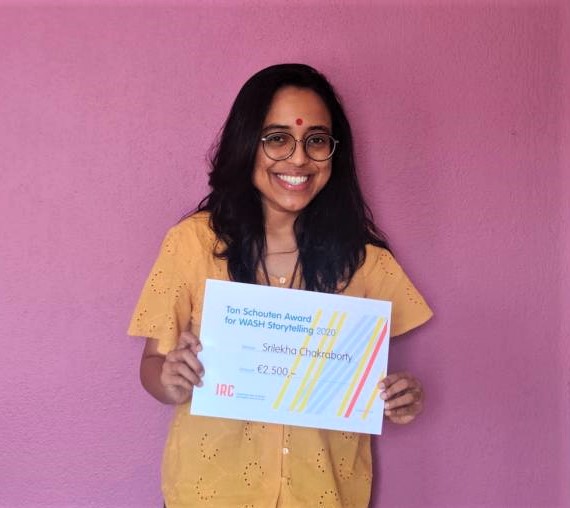
About winning the Ton Schouten Award for WASH storytelling
In the words of our selection committee members – Vida Duti, Liduin Schouten, Sean Furey and Dave Trouba – Srilekha seems to do her communications work purely driven by passion and heart to help others, she naturally focuses on social inclusion and uses a wide variety of channels and forms of communication, from social media messages to videos and blogs.
In the words of Srilekha? See this video or read her response below it.
It is interesting that I win this award in a time that is technically one of the darkest of all we have seen as a generation. This award comes to me as a hope that there is a lot of work that is left to do and the show must go on! It will help me continue my fight on the ground.
I would like to thank all the organisations and mentors and the community people who supported me throughout my journey and made me someone worthy to receive this award, I am honoured and it will take some time to sink in.
While there’s a lot of fund-crunch that civil society organisations at the grassroots level are going through and projects on women’s health are receiving a severe blow, I wish to use this award money to reach out to the most vulnerable section of adolescents and youth and keep creating more art, storytelling and workshops on menstruation. Because periods don’t stop for pandemics and neither should our activism. – says Srilekha.
What’s next?
We received a rich and inspiring selection of candidates, whom we’re hoping to continue to be in touch with throughout the year. Keep an eye on this page dedicated to all things Ton Schouten Award for information about the award and updates on the work of talented young communicators in the WASH community. Srilekha has shared some great ideas about what she is planning to invest her award prize in. We will also share updates on her activities on this page. So stay tuned.
This is a guest blog by RWSN Member Rajan Pandey, WASH and Environment Expert in Nepal.
Colleagues and I have devised a “C” line diagram similar to the “F” diagram the global WASH community uses during ODF campaigns to identify transmission routes for feces.
A group of WASH volunteers here in Nepal prepared this for free use. Anyone around the world can use it or improve/ contextualize it as well to suit their need. Please free free to share feedback with Rajan Pandey as a comment to this blog.
Posted on WaterAid blog on 1 May 2020 in Equality, inclusion and human rights, re-posted on RWSN blog on 4 May 2020. Authors: Louisa Gosling, Naomi Carrard, Hannah Neumeyer and Virginia Roaf.
WaterAid/ James Kiyimba
Empowering and increasing the dignity of marginalised and vulnerable people will help us emerge from the COVID-19 crisis with healthier societies and revitalised opportunities for development and peace. Louisa Gosling, Naomi Carrard, Hannah Neumeyer and Virginia Roaf outline how applying the principles of human rights can save lives now and in the future.
The virus does not discriminate, but its impacts – and our responses – do.
– UN Secretary-General António Guterres.
We are all doing our best to minimise the impact of the coronavirus pandemic. Overwhelmingly, the response across the world has been to reduce transmission through distancing, handwashing and strengthening public health systems. We know water supply, sanitation and hygiene (WASH) are central to the COVID-19 response. So how can human rights help?
A human rights lens reveals unexpected opportunities as we respond to the current crisis and plan for the future. Applying the human rights principles – equality and non-discrimination, participation, transparency, accountability and sustainability – deepens WASH responses to COVID-19, helping to both protect everyone now and build more equitable and sustainable societies.
What we do now will shape the post-COVID world and our resilience to future threats, whether climate change or other health crises.
Equality and non-discrimination
The risks COVID-19 presents are not borne equally. We are seeing evidence of this all over the world. Older people, people with health problems, people living in inadequate housing (especially those in dense settlements without access to basic services), homeless people, migrant workers, and those who have to go out to work every day to survive or who are fulfilling a necessary if undervalued role such as care work or street cleaning – all are at higher risk of contracting the virus because they are less able to protect themselves with good hygiene and physical distancing. They are also most severely affected by distancing or lockdown provisions, with eked-out livelihoods vanishing or curtailed.
People who cannot afford to pay their water and sanitation bills risk losing essential services. Independent UN human rights experts have called on governments to prohibit disconnections and to extend continuous access to water for people who don’t already have it. Governments are obliged to ensure access to services. They must intervene so that service providers continue to deliver, and do not face financial challenges in doing so. This is no small feat, given the breadth and diversity of public, private and community water and sanitation services providers, but reinforcing the recognition of these basic services as public services is critical for the realisation of human rights.
As with many areas of development, women – despite their central role – are often ignored or marginalised in decisions, so their needs and the specific risks they face are not considered. But many organisations are researching and documenting the widespread gendered implications of the pandemic and response measures. Gender justice should be central in the WASH response, and there is a growing imperative for collaboration with women’s organisations and leaders to find ways to do this.
Human rights to water and sanitation (and other rights) demand that our response to COVID-19 addresses these inequalities. They promote and protect the voices of people who are discriminated against, marginalised and vulnerable, and ensure responses to the virus proactively include them.
Collaboration between WASH actors and organisations representing the rights of marginalised groups – including those focused on disability, age, slum dwellers, prisoners, children or women – brings new understanding and action that ensures inclusive water and sanitation services. Innovative solutions are already emerging from such collaboration, making hygiene messaging and handwashing facilities accessible for people with disabilities, and relevant to diverse populations in challenging settings.
WaterAid Papua New Guinea
WaterAid Papua New Guinea has provided loud hailers, inks and papers for printing awareness-raising materials, supporting local health authorities in preparedness for COVID-19.
Participation
The AIDS and Ebola epidemics taught the importance of engaging with affected communities. Building trust between government and civil society is critical for suitability, effectiveness and sustainability of responses, to ensure the smooth flow of accurate and helpful information and to avoid indirect or unintended harm.
Physical distancing measures are creating more barriers for many and reducing participation and voice, particularly where participatory processes now rely on the internet. There is a proven gender digital divide, exacerbated by poverty. For example, OECD data indicate that, globally, women are 26% less likely than men are to have a smartphone (70% less likely in South Asia and 34% in Africa).
National coordination mechanisms (such as WASH clusters) should include civil society and organisations representing different sections of the population. This can help governments identify vulnerable people and put in place measures that effectively support those who would otherwise be left behind.
Transparency and access to information are intrinsically linked to participation. If information is not accurate or well-understood by the intended recipients, it has no value. Further, while clear and consistent messaging is important to reinforce behaviour change, it should be tailored to differing contexts. How can people living in informal settlements or remote rural areas respond to ‘wash your hands’ messaging if they don’t have a secure, on-plot supply of water?
To reach the most marginalised people we need to be creative, and to communicate in local languages through a range of channels that are appropriate for the places and people concerned. For example, many countries use radio, such as Tanzania, Rwanda and Nepal, where jingles are even broadcast by loud-hailers to communities without FM coverage. Sign language and braille can be used to reach people with hearing or visual impairments.
And in South Africa residents in informal settlements are monitoring water and sanitation access during the COVID-19 crisis, sharing the data with city authorities and the media. This initiative has already resulted in improved service delivery and new channels of collaboration with city authorities.WaterAid Bangladesh
A man reads awareness-raising messages through a loud hailer around a community in Bangladesh.
Accountability
Accountability between governments, civil society and development agencies is as critical in a crisis as ever. We are seeing unprecedented funds raised and distributed in response to COVID-19, but how these funds will be used and accounted for is not always clear.
Accountability is essential for minimising corruption and for achieving services that are equitable, sustainable and high quality. This is important both for the emergency procurement and distribution of benefits in the immediate response to COVID-19, and for the long-term sustainability of WASH services.
Unfortunately, accountability mechanisms and relationships in WASH are often weak. Civil society networks must be able to advocate for transparency and accountability in the WASH response to this crisis, to monitor how much of the funding made available for the pandemic is invested with human rights considerations and for the sustainable development of WASH services. There may be more opportunities because the pandemic has raised the profile of WASH, which can create space for WASH actors to contribute to broader accountability initiatives. An example linking WASH to the coalition on peace building and state building in Sierra Leone demonstrates this potential.
Governments are also accountable for the way they are imposing containment measures that limit people’s ability to go out, to work, to fetch water and to use toilets. In many countries we are seeing excessive force used to ensure compliance with lockdown, criminalising people who must leave their home to meet basic needs. This violates human rights and can be detrimental to reducing the spread of the virus if it creates fear and destroys trust between government and communities, as learned from the HIV response. In moments of disaster response the values of open government can come under intense pressure – but can also meaningfully contribute to better outcomes where there is strong cooperation and trust between the authorities and the people.
Sustainability
Poor sustainability and service levels are already a huge barrier to the realisation of people’s rights to water and sanitation, often due to weak systems. These can be strengthened or weakened by the way in which we respond to this pandemic.
Sustainability is a human rights principle – we must not lose progress that has been made. The hope for the post-COVID-19 world – if we use human rights to guide us – is to be in a stronger position than before. This means improved access to water and sanitation for vulnerable and marginalised people; that we more deeply understand how to eliminate inequalities; and that we are more prepared for future health risks and the inevitable impacts of climate change.
How we emerge from COVID-19
The COVID-19 pandemic will have profound and long-lasting impacts on how we all live, work and relate to each other. We are still barely able to imagine the immensity of economic and social change that will emerge.
Human rights put people centre-stage. Empowering and increasing the dignity of people who are currently marginalised and vulnerable will help us emerge from this crisis with healthier societies and revitalised opportunities for development and peace. Human rights principles must guide our responses and will lead us to better, more inclusive, more sustainable results, protecting and saving lives now, and in the future.
Louisa Gosling is WaterAid’s Senior WASH Manager for Accountability and Rights, Naomi Carrard is Research Director at Institute for Sustainable Futures – University of Technology Sydney, Hannah Neumeyer is Head of Human Rights at WASH United and Virginia Roaf is Senior Advisor at Sanitation and Water for All.
This blog is the result of collaboration involving WaterAid, Sanitation and Water for All, Institute for Sustainable Futures – University of Technology Sydney, WASH United, End Water Poverty, Kewasnet, Rural Water Supply Network, Water Youth Network, Hope Spring Water, Simavi and Water Integrity Network.
Authors: Louisa Gosling, Naomi Carrard, Hannah Neumeyer and Virginia Roaf.
“Always eccentric, often controversial; always authentic, often misunderstood; Paul was never boring. He enjoyed challenging the status quo and stirring things up.”
by Dr Peter Harvey, Chief – Water, Sanitation & Education Centre, UNICEF Supply Division
When I first met Paul twenty-odd years ago at a WEDC Conference, he was (surprise, surprise!) talking about handpumps. I was immediately captivated by his passion and imagination.
Always eccentric, often controversial; always authentic, often misunderstood; Paul was never boring. He enjoyed challenging the status quo and stirring things up. He sometimes upset people by his exaggerations (e.g. the ‘spare parts free handpump’) and his repeated promotion of everything ‘blue’ but none of this was in the interest of ego or self-gain. He was passionately committed to improving the well-being of those living in the poorest communities in rural Africa, and he was convinced the water sector could do so much better.
He believed passionately that handpumps should not breakdown often and that the prevailing statistic of one-third of non-operational pumps in sub-Saharan Africa was unacceptable. He was frustrated by the apparent insanity of doing the same thing over and over and expecting different results. He recently quoted the car manufacturer Henry Ford, who said that if he had asked people what they wanted, they would have said faster horses, highlighting how people tend to stick to what they know. He believed in the power of innovation and that no one should have to make do with inferior products or services.
A professional hydrogeologist, Paul’s passion was rural water supply. He lived and worked for extensive periods in Burkina Faso, Mauritania, Mozambique, Angola and Kenya, before returning to the Netherlands to set up the FairWater Foundation https://www.fairwater.org/. Despite his scientific training, he was, in many ways, an engineer at heart. He loved technology and the intricacies of engineering design. Among his numerous inventions were the Kisii Water Filter, the Afripump, the Water Donkey, the Beers Piston, Handpump Leasing, the Ribbon-and-Bead Pump (an improved version of the rope pump), and, of course, the Blue Pump and Blue Zones.
On one memorable occasion he jumped onto the table in a Nairobi bar and sat on a small plastic stool with a hole cut in it. “Look, the EasyShit!” he announced. That particular sanitation invention didn’t take off but actually made a lot of sense for the old and infirm. I had the pleasure of meeting him on many occasions to put the world to rights and ‘imagineer’ all sorts of solutions from bizarre soap alternatives to a submersible pump design based on the capillary action of plants (that one didn’t take off either!).
He was never afraid to have a daft idea. It would be much worse to have none at all. When he was diagnosed with cancer, Paul remained as positive as ever. Even when his leg was amputated in 2015, he was more focused on tinkering to make improvements to his prosthetic leg than feeling sorry for himself. His mobility was affected, but not his passion, nor his ability to post controversial contributions to the RWSN D-group!
I spoke to him shortly before his death and he told me of how his own story evolved. When he first worked in Africa 35 years ago, he would see a broken handpump and think ‘that’s a shame, a broken pump’. It took him many years to look at a broken pump and see the bigger picture behind it of suffering, dependency, self-interest and corruption. He was frustrated that many charitable endeavours were more focused on giving money to feel good than to do actual good.
His was a call for us to wake up and connect the dots: to look beyond technology, to the systems and behaviours that create dependency; to not be afraid to discard them and develop new blueprints for truly sustainable water services. He didn’t have all the answers, but he certainly provided some, and he never gave up searching for more.
The day before he passed away, he sent me a message: “We live and learn, a fascinating growing process, essential in life… Maybe that is why I hate so much if things do not develop, it is directly opposing the roots of life; innovation should always be there!”
Paul brought much colour to my life, as well as the many, many people in the communities he served over decades. I will miss him greatly and I am privileged to have called him a friend.
He was a keen flyer and had many tales of bush flying in Africa; I like to think he is now soaring high above us through the ‘blue zone’.
Pete Harvey
P.S. For those of you who may be interested, in future the Bluepump will continue to be manufactured and promoted on a non-profit basis by Join the Pipe https://join-the-pipe.org/eng/, the first social network of tap-water drinkers.
Photo: Paul at home in Amsterdam, 2018 (P. Harvey)
The “No chance for Corona” comic is currently being translated into more than 25 languages
by Kerstin Bandsom, Welthungerhilfe
Although children and adolescents rarely fall seriously ill with COVID-19, they are nevertheless extremely affected by the pandemic. Instead of playing outside, going to school, doing sports and meeting friends, they are now locked up with their parents all day, often in very confined spaces. In addition, they are worried about their family, their friends and themselves. Together, Welthungerhilfe and WASH United want to ensure that children and adolescents understand why their normal lives are being so drastically restricted and what they can do to protect themselves, their family and their friends from Corona. To this end, we have worked closely with an expert from the Institute for Hygiene and Environmental Medicine, Charité Universitätsmedizin Berlin to develop a comic strip that can be used around the world to educate children and adolescents between the ages of 10 and 14 about Corona.
The “No chance for Corona” comic is currently being translated into more than 25 languages and is available for download here . On 13 April, the comic will also be available as an educational video to reach even more children and adolescents. The comic can be used, reproduced and disseminated for non-commercial purposes without limitation. Changes to the comic are not permitted. You are encouraged to use the comic and video as widely as possible. Contact: info@welthungerhilfe.de
Aucune chance pour le Corona
Bien que les enfants et les jeunes tombent rarement malades du COVID-19, ils sont néanmoins extrêmement touchés par la pandémie. Au lieu de jouer dehors, d’aller à l’école, de faire du sport et de rencontrer leurs amis, ils sont désormais confinés avec leurs parents toute la journée. De plus, ils s’inquiètent pour leur famille, leurs amis et eux-mêmes. Avec son partenaire WASH United, la Welthungerhilfe veut s’assurer que les enfants et les jeunes comprennent pourquoi leur vie habituelle est considérablement restreinte et ce qu’ils peuvent faire pour se protéger, ainsi que leur famille et leurs amis, contre le Corona. Pour cela, nous avons travaillé en étroite collaboration avec un expert, de l’Institut d’hygiène et de médecine environnementale, Charité Universitätsmedizin Berlin, afin de mettre au point une bande dessinée générique. Celle-ci pourra être utilisée dans le monde entier pour sensibiliser les enfants et les jeunes de 10 à 14 ans au Corona. La bande dessinée “Aucune chance pour le Corona” est actuellement en cours de traduction dans plus de 25 langues et peut être téléchargée ici. Le 13 avril, la bande dessinée sera également disponible sous forme de vidéo éducative afin. La bande dessinée peut être utilisée, reproduite et diffusée à des fins non commerciales sans limitation. L’utilisation commerciale de la bande dessinée est interdite. Les modifications de la bande dessinée ne sont pas autorisées. Nous souhaitons vous encourager à utiliser la bande dessinée et la vidéo aussi largement que possible. Veuillez partager la ressource par
This is a guest blog by Priya Nath (RWSN Theme Leader) and Louisa Gosling (RWSN Chair). It is reposted from the WaterAid blog with thanks. The original post is available here.
The poorest and least powerful sections of all societies are likely to be worst affected in crises, but we can work to alleviate inequalities through our response. Priya Nath and Louisa Gosling highlight how our emergency response to the coronavirus pandemic can mitigate new and existing vulnerabilities among people affected.
Handwashing with soap is the first line of defence in tackling the COVID-19 pandemic. Yet inequalities abound in access to water, sanitation and hygiene (WASH), services, and following the advice to wash your hands with soap regularly is not as easy for some as it may sound.
Years of experience and evidence show that income, economic context and landlessness; age, disability and health status; geographical location; and ethnicity, race, religion and gender all play huge roles in determining whether individuals, households and communities have appropriate, available, affordable and accessible WASH. At WaterAid, we have committed to tackling inequalities in all aspects of WASH access.
The way we approach the current extraordinary global health crisis can be no different. Tackling new and existing inequalities must be central to our emergency response to coronavirus. During the global COVID-19 pandemic, life-saving clean water for hygiene, safe sanitation and basic healthcare is more critical than ever. And delivering equitable, empowering WASH responses for all is fundamental.
In our support of COVID-19 responses through WASH we are both drawing on what we already know and learning new ways to reach the most marginalised and the most burdened.
What we already know about tackling inequalities in WASH and emergency contexts
1. Gender inequality is exacerbated in health emergencies and economic crises, so must be tackled in all response efforts
As schools close and families head into lockdown, domestic chores and caring responsibilities increase greatly. At the same time, increased calls for washing hands, as well as for cleaning and sanitising, multiply the need for water. Because of gender divisions of labour, it is women and girls who will have to collect this extra water, perform more labour and do more caring for people who become sick.
For the 29% of people who do not have water inside their home, the additional long journeys to water sources caused by increased demand for water will mean more chances of contact with others at waterpoints or kiosks. And for many it will mean spending more of their already scarce resources on buying water at an unaffordable cost.
WaterAid/ Ronny Sen
Women queue up to collect water from the common water source in Anna Nagar Basti, Hyderabad, India.
Meanwhile, an estimated 70% of the global health and social care workforce are women. As the coronavirus pandemic spreads, these frontline workers face increased pressure and exposure to the virus, often with little personal protective equipment. This in the context of two out of every five healthcare facilities globally lacking handwashing facilities, and 55% in least developed countries lacking basic water supplies.
Health crises also increase risks of violence and harassment of frontline health workers, particularly women nurses. Amid the Ebola outbreak in the Democratic Republic of Congo, for example, the World Health Organization documented attacks on more than 300 healthcare facilities in 2019, leaving six workers and patients dead and 70 wounded.
During times of enforced isolation and closure of many public facilities, women and girls’ ability to manage menstruation can be compromised in communities and households. Finding a clean and private space to change and wash while remaining indoors for much of the time with their family, and accessing menstrual materials and water, can be difficult.
Finally, isolation measures, the inability to access previous social support systems and increases in financial and other stresses are increasing the risks of violence against women everywhere (download report PDF). Although not directly connected to WASH, this has implications for women’s ability to access essential services, and must be factored into our response, to ensure people’s safety and security when accessing WASH and other services.
People with chronic health issues, such as HIV, or other health conditions are dealing with increased fear of acquiring COVID-19, while often already experiencing social stigma and exclusion based on their health status. In an environment where misconceptions around HIV transmission or general discrimination might already prevent them from using communal WASH facilities, crises have the potential to exacerbate the situation, making handwashing and maintaining treatments even harder. Additionally they face the real risk of disruption to essential life-saving services, and concerns over whether they will be able to access treatment for COVID-19 on an equal basis to others.
More than a billion people globally live with disabilities, the rates higher in low-income countries and among those living in poverty or belonging to ethnic minorities. Once again, the health and social inequalities they already face are intensified in crises. For someone with a physical impairment, accessing clean water frequently can be a challenge because of distance, inaccessible infrastructure or reliance on others.
People with disabilities are often already isolated from the outside world, missing out on public health campaigns geared towards people who move around. And public health and information campaigns are rarely targeted to their specific requirements. Those who rely on a carer to help them with daily tasks face either the risk of added exposure to the virus through their carer, or an inability to get the help they need more than ever in challenging times.
WaterAid/ Ahmed Jallanzo
Reuben J. Yankan, Director of the Disable Camp 17th Street Community, who is visually impaired, is helped down the steps from a public toilet by Timothy Kpeh.
Equally, public health messaging and calls to stay inside are hard to follow for people who have little or no access to WASH facilities; those who rely on daily wages to survive; those living in densely populated informal settlements or refugee camps; and street dwellers. This puts them at greater risk of not only COVID-19, but also harsh punishment by authorities. For example, we are already seeing a response that includes clearance of informal markets and housing in the name of ‘sanitisation’ in some places. The Ebola crisis in Monrovia in 2014 set a precedent for quarantining entire informal settlements that were deemed a ‘health risk’. This a deep injustice.
Our response efforts can mitigate both existing and new vulnerabilities
While the poorest and least powerful are likely to be worst affected in crisis situations, we can work to alleviate the inequality through our response:
Support governments and other WASH actors to deliver the human right to water and sanitation as a central part of response efforts, provided in a way that is non-discriminatory and accessible to all.
Develop crisis responses alongside the affected communities rather than for them, to ensure solutions meet cultural, social and religious challenges. Disability rights, women’s rights and indigenous rights groups, to name a few, are best placed to help us shape our response in a way that is empowering, does no harm and responds to real requirements.
Tackle and confront any discrimination and stigmatisation in response efforts, related to factors such as age, gender, race, ethnicity, socio-economic status, livelihood type and caste. We must closely monitor our messaging, images and approaches to ensure they are not inadvertently fuelling discrimination.
Promote collection of water, cleanliness of water and sanitation facilities and practising of hygiene as the responsibility of all – not just women.
Recognise the obligations and responsibility of government and sector actors to respond; do not make this an issue of individual action or responsibility.
Ensure we are collecting and disaggregating data to understand differing impacts on all parts of the population. At minimum age, disability, gender and location disaggregation is needed.
As initial responses, including ours, rely heavily on visual and mass media public communications, it is vital that these are respectful and do no harm. Our list of actions to take and avoid can help.
Do: Use images and messaging that show responsibility for hygiene behaviours can be equally distributed.
Ensure images are gender balanced.
Include males in images of household & community hygiene practices to show collective responsibility.
Don’t
Do not reinforce gender or other stereotypes – i.e. do not show only women doing washing, cleaning or looking after children.
Do: Frame messaging that builds community spirit, support and collective action.
Use terms like ‘us’, ’we, ‘together as a community’, ‘altogether we can, etc.
Use images that show people helping each other.
Demonstrate sector/government response and duties, not just individual responsibility.
Don’t
Do not focus only on individualistic messages, which reinforce individualistic responses and actions.
Do not use emotional triggers such as shame, guilt or fear – we have a responsibility to avoid promoting further hysteria or blame.
Avoid emotional or negative language.
Do: Portray people in all their diversity.
Communities are made up of women, men, children, people with impairments, people of different ethnic or religious identifies, etc – reflect this reality in your communications to improve uptake.
Don’t
Do not blame or associate individual factors such as gender, ethnicity, religion, age, impairment, health or poverty status with reasons for infection or contagion.
Avoid messaging, images or implementation approaches that unintentionally stigmatise, ostracise or cause abuse for certain people.
Do: Acknowledge and respond to the diverse needs of communities.
Demonstrate how assistive devices can be used.
Demonstrate solutions that are relevant in low-income settlements, in rural and water scarce areas.
Avoid blanket approaches that suggest that everyone can change behaviours without any specific adaptations.
Do not direct messaging or responsibility for ‘change of behaviour’ at one group of people, e.g. mothers, instead talk about parents caring for children.
Do not misrepresent the number of people who have a clean water supply or access to soap.
Do: Adapt communications to suit different target groups.
Consider the communication and learning abilities of all people, including people with visual, hearing and intellectual impairments.
Plan channels for information to reach all, especially those doing caring duties, sanitation work, etc.
Takeaway materials can reinforce messages and make up for some short-term memory loss among older people or people with disabilities.
These should be easy to read, large script, high contrast between text and paper, on non-glare/glossy paper, in local languages/dialects, highly visual.
Don’t
o not exclude anyone. Not being inclusive of all can lead to fear, shame and blame.
Do not portray informal settlements or slum areas as ‘vectors of disease’, or poorer areas of the city as being unable to keep clean. This reinforces stigma and increases the chance of a negative reaction. For example, there have already been cases of informal housing being cleared in the name of ‘sanitisation’. The solution lies in guaranteeing adequate and safe levels of service for all, rather than reinforcing stigma towards certain parts of the population.
Do: As part of our do no harm approach, do a risk assessment before and throughout communications campaigns
Monitor backlash on social media, such as racist comments and immediately delete as needed.
Check that it does not amplify or put blame on one group (or if audience is interpreting it that way).
List who is likely to miss out on the communication because of language, ability, culture or gender, and come up with strategies for how they could be included.
Don’t
Do not ostracise or promote ‘calling out’ of people or parts of the population. This may encourage vigilante tactics or backlash.
Avoid terms such as ‘victim’, ‘infecting’ or ‘spreading to others’.
Do not tolerate any racist, bigoted or blaming comments on social media and have a strategy for monitoring these.
Follow us on our journey through the response
As we support community, national and global responses to the coronavirus pandemic, we need to draw on what we already know, keep learning from others and ultimately improve the way in which response work reaches and addresses the needs of the most marginalised, the most burdened and those further away from life-saving clean water for hygiene, safe sanitation and basic healthcare.
At WaterAid, we are putting these principles into action, applying them to our COVID-19 response efforts, details of which you can read in this blog. We look forward to sharing lessons and challenges along the way.
Priya Nath is Equality, Inclusion and Rights Advisor and Louisa Gosling is Senior WASH Manager – Accountability and Rights, both at WaterAid UK.
A novel coronavirus emerged in Wuhan, China in late 2019. The novel coronavirus, SARS-CoV-2 (or COVID-19), is believed to have originated in bats, and has rapidly progressed to a global pandemic that has infected hundreds of thousands of individuals (1, 2).
Author: Dr. Michael B. Fisher, University of North Carolina at Chapel Hill. Acknowledgement to Dr. Mark Sobsey for critical review and input.
Ensuring adequate water, sanitation, and hygiene measures is essential to controlling the spread of COVID-19 (1), but much remains unknown with respect to the optimizing and quantifying the impacts of WaSH interventions and best practices in combating the current COVID-19 pandemic.
Water and Hygiene
Adequate hand and personal hygiene prevent COVID-19 transmission. Handwashing with soap (3) or alcohol-based hand sanitizer (4) is an effective means to disrupt transmission, along with social distancing, identification and isolation of cases, contact tracing and follow-up, etc. Adequate quantities of available water are essential to maintaining hand hygiene and personal hygiene (5). While these universal prevention measures are well-known, the relative impact of hand hygiene as compared to other infection prevention and control measures such as social distancing, surface disinfection, etc., as a means of slowing COVID-19 transmission has not yet been characterized. However, the availability of water and cleaning products such as soap and chlorine are essential for basic hygiene and infection prevention measures such as hand washing, surface disinfection, and laundry, and should be regarded as universal prerequisites for effective control of the COVID-19 pandemic and other outbreaks (1).
Waterborne transmission has not been documented, and the survival of COVID-19 in water remains unknown (but the virus is thought to persist for hours to days); however, WHO advises that waterborne transmission is unlikely based on available evidence for other similar viruses, and current best practices for safe management of drinking water should be sufficient during the COVID-19 outbreak (1). In addition to direct waterborne transmission, person-to-person transmission may be a concern at communal water sources, where crowding may lead to direct and indirect contact between individuals. Guidelines for practicing appropriate social distancing while accessing communal water sources have not yet been developed, but general social distancing and hand hygiene guidelines may be applicable here as well. The extent to which communal water sources may be hotspots for person-to-person COVID-19 transmission is currently unknown.
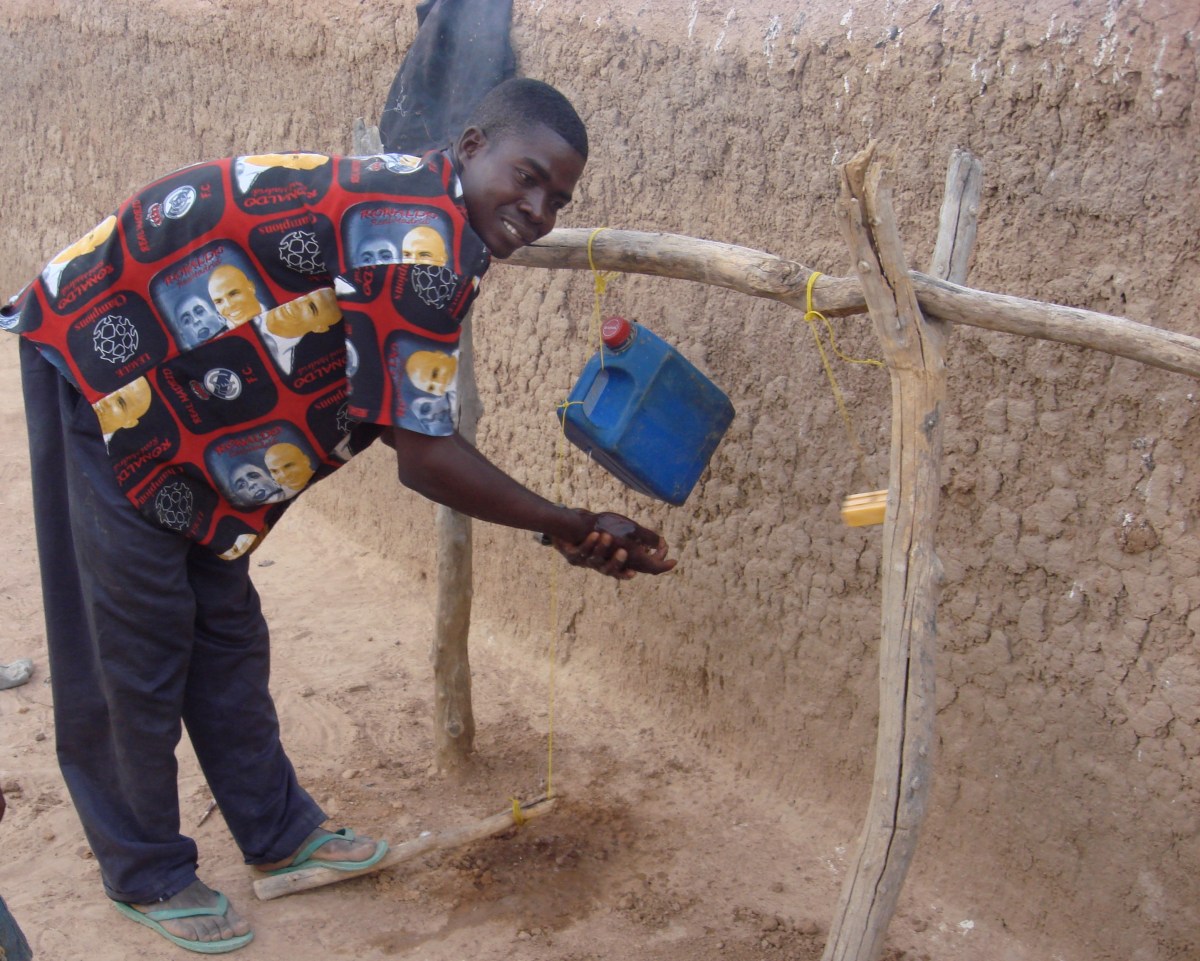
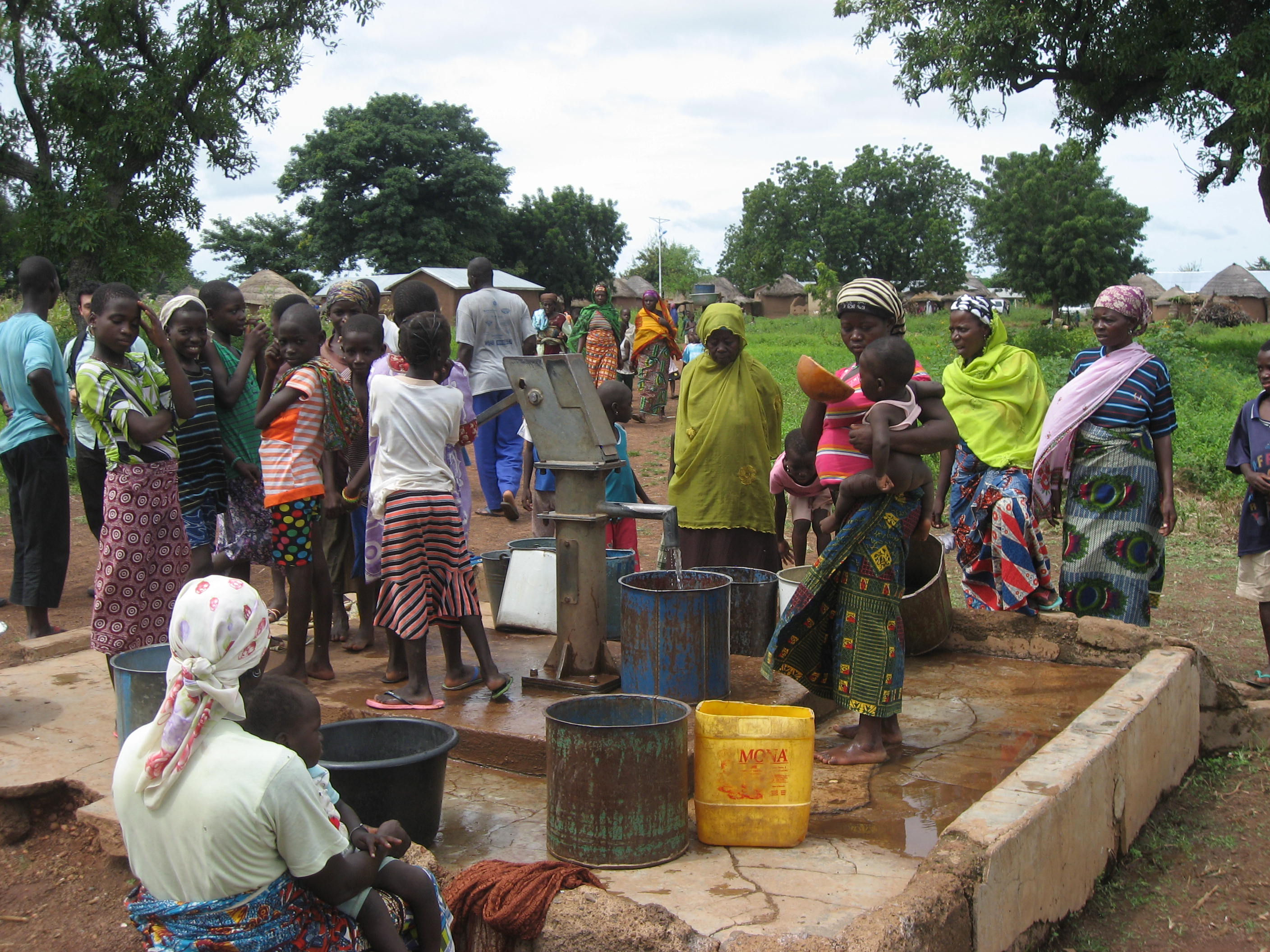
Northern Ghana, between 2011 and 2014
Surface disinfection
The persistence of COVID-19 on surfaces and hands under different environmental conditions is being actively studied. Available evidence suggests that the virus can likely persist and remain infectious for up to 3 days on many surfaces (6). Chlorine rapidly inactivates COVID-19 and other viruses on contact. Current recommendations indicate that a dilute chlorine solution (e.g. 0.1% free chlorine, which can be prepared by adding one part household bleach [~5% free chlorine] to 49 parts water- i.e. 20 mL of bleach per liter, 7) or a 70% ethyl alcohol solution can be used for surface disinfection at least once per day (1, 8). However, further validation of best practices for optimal surface disinfection and optimal cleaning frequencies to prevent COVID-19 transmission may be useful to review and/or refine this guidance.
Sanitation
COVID-19 RNA has been detected in the feces of infected individuals (9), but it is not yet known whether infectious virus is also shed in feces. Furthermore, the survival of COVID-19 in feces and wastewater has not yet been characterized. To date, transmission of the virus via feces/wastewater has not been documented, and risk of transmission by this pathway is believed to be relatively low (10). Current WHO recommendations on safe management of human excreta are therefore currently deemed sufficient for preventing fecal-oral transmission of COVID-19. However, where sanitation facilities are shared between known COVID-19 cases and those without symptoms, additional precautions may be warranted- specifically, the facilities should be disinfected at least twice daily by a trained worker wearing suitable personal protective equipment (PPE, 1). Furthermore, adequate plumbing of flush toilets is needed to prevent backflow and/or aerosolization of excreta, which may contribute to COVID-19 transmission by aersosols (1). Where these recommendations are not implemented, the extent to which unsafe management of excreta may contribute to COVID-19 transmission has not yet been quantified. Furthermore, the extent to which sanitation workers may be at risk from transmission of COVID-19 through the feces of infected persons likewise remains unknown. The use of PPE and frequent handwashing should reduce risks to sanitation workers; where latrines that may contain excreta from infected individuals must be emptied, hydrated lime may be added to disinfect the excreta prior to emptying (1).
While available evidence is sufficient to reinforce the need for adequate water, sanitation, hygiene, and cleaning services and methods to prevent COVID-19 transmission in homes, communities, and health care facilities, many important questions still remain unanswered.
How is your organization confronting the current COVID-19 pandemic?
Are you involved in work to answer any of these WaSH-related questions?
What next steps are needed to inform efforts by rural water supply implementers and rural environmental health professionals to combat the current coronavirus pandemic?
What additional monitoring activities (if any) are needed for an effective COVID-19 response where you work?
Mansoor Ali, an active early member of the Hanpump Technology Network (HTN), recently passed on.
Main Photo: 5 June, 2003: HTN Meeting at Durban – Vishwas, Raj, Mansoor (R K Daw)
by Raj Kumar Daw
Summer, 1973, Groundwater Surveys & Development Agency – GSDA, Pune had just been created and was acquiring its drilling rigs. The founding Director of GSDA, Dr. Venkataraman, constantly raided the NGOs for whatever he could get. He sent me word that he was coming to Vadala. I was trying my first attempt at rehabilitating an abandoned bore well adjacent to our workshop. The work had gone well. Dr. Venkataraman arrived, passing through Geological Investigation Team, Ahmednagar, headed at that time by Sarma Nidamarthy. Sarma had sent two of his staff with Dr. Venkataraman. Gautam and Mansoor.




 WaterAid Bangladesh



 Rural Water Supply Network - blog