Scotland’s place in achieving water for society – including all

This is a guest blog by Ben McIntosh-Michaelis, a RWSN Young Professional who submitted this entry as part of the RWSN@WWW competition. For more information on RWSN’s support to Young Professionals, please see here.

Living in Scotland we often think that everyone here has access to safe water. In reality, this is not quite the case. Despite not being perfect, we are still good at managing our water. Because of this, Scotland is heavily involved in Water, Sanitation And Hygiene (WASH) projects worldwide.

In Scotland’s cities and towns, naturally occurring water sources cannot meet demand. In order to maintain a supply of water for society, which is of sufficient quantity and of good quality, common civil infrastructure is key. By and large, Scotland has a well-developed infrastructure for supplying and removing water. Therefore, water for society is a reality, at least in the urban areas.

Many water supplies in Scotland are managed by a national body, Scottish Water. This goes a long way in ensuring that everyone is included when water is supplied for society. However, rural water supplies in Scotland are not managed by the national body, meaning that ca. 500,000 people on private water supplies (using boreholes or stream water for instance) are not covered by the same infrastructure and quality controls. As the research from the Citizen’s Advice Bureau Scotland suggests, this situation means that safe water for all isn’t a reality even here in Scotland.

Huge variations in geology and landscape in Scotland means that the water quality varies from location to location. The result is that these small and individual sources require a bespoke set of technical steps to clean the water. But as you can appreciate, this is extremely costly and often not a realistic approach.

Development of a standard system which can be used to treat water from sources with significant variations in flowrate requirements and water quality is challenging. Many of the standard, tried and tested technologies used to treat these sources require a lot of electricity, high levels of maintenance, and replacement of parts. This is expensive to manage, and it also places people living in rural areas at risk of being supplied with untreated water if a piece of equipment stops functioning. This section of society may become excluded from the quality water supply for society.

Better mechanisms for implementing new systems and technologies in areas where traditional systems can be unreliable and expensive are needed in Scotland. This is in terms of policies held by those responsible for infrastructure obtainment and providing independent analysis about which products will be suitable. As stated by the Citizen’s Advice Bureau Scotland, “more needs to be done to improve the quality of information available to consumers, and signposting needs to be improved to ensure those that need it can access it.”

From a global perspective, water for society – including all, means that the impacts of climate change and economic practices should be considered when discussing Scotland’s place in society. Steps are being taken by the Scottish Government to include these considerations, many of which relate directly to water (information can be found on the Scottish Government’s website).

As well as Scottish Government involvement, Scottish society engages in international development; from school groups, to charities, universities, student groups and businesses, there are a wide range of projects and affiliations. Many of these projects relate to or involve water. During my own engagement as a student and as a professional engineer working in Southern Africa, I have observed that many of these activities are unregulated and are based on random connections between people in Scotland and around the world. On the one hand, this is great because there are so many ways in which people in Scotland can get involved. On the other hand, many of the projects are untargeted, and do not focus on the needs of the people they are supposed to be helping. The lack of coordination means that there is a lot of replication of projects, sometimes a lack of qualified experts on board, and a lack of a best practice principle.

For Scottish society to engage healthily in international development, including the WASH field, greater coordination and regulation of projects is required. Young people in particular need to be made more aware of the issues surrounding voluntourism in order to curb the harm caused by this practice.

The importance of being properly qualified to do a job must be highlighted, to everyone. My work in the rural water sectors in Scotland and in Southern Africa suggests to me that a cultural shift is required. Just because a water infrastructure project is in a rural area – whether in Scotland or Southern Africa – doesn’t mean it can be hastily implemented or without the necessary technical input. Water for all of society must include those living in even the most remote areas, and the infrastructure, expertise and business models need to be adapted to help meet the needs of these communities to ensure no one is left behind.

More resources

If you are interested in finding out more about rural water supplies in Scotland, and the comparison with other countries (specifically Eastern Europe / Ethiopia), please see this RWSN webinar from 2018, or check out this presentation.

About the author

Ben won the Vision in Business for the Environment of Scotland (VIBES) Hydro Nation Challenge in 2016 for the design of the Afridev Hi-Lift (a handpump retrofit adaptation unit that allows water to be lifted to a head). Later, upon completion of his engineering Masters, he started work for the Climate Justice Fund Water Futures Program (CJF WFP) based at the University of Strathclyde, gaining experience working in Malawi’s Southern region alongside BASEflow, a local Malawian organisation. He currently works for Clean Water Wave, an Edinburgh based Community Interest Company which is developing the low energy, no chemical Clean Aqua For Everyone (CAFE) water treatment system.


World Bank: Understanding the “new rurality” in Latin America and what it means to the water and sanitation sector

by Malva Baskovich and Berenice Flores Arias Uijtewaal, re-blogged from the World Bank

Despite the urbanization trends seen in Latin American and Caribbean (LAC), it seems that the rural population in LAC is decreasing in relative terms. In 2001, official figures indicated that 125 million people in LAC resided in rural areas representing 24% of the total LAC population. In 2013, this value decreased to 21% (130 million out of a total population of 609 million inhabitants), and it is estimated that by 2030, the rural population will decrease to represent 16.5% of the total (CEPAL, 2014).

“There is a ‘new rurality’ in Latin America, and it is  critical to be aware of its distinctive features  in view of designing and implementing sustainable WSS institutional reforms and investment projects in rural areas.” — this is an important preliminary finding of the World Bank’s Water Global Practice’s Rural Water Security and Sanitation (WSS) Advisory Services and Analytics (RWSS ASA) Program, currently ongoing in the LAC region. The Program aims to contribute towards the design and implementation of rural WSS projects in the region by gathering, systematizing, and disseminating learning on innovations and solutions to RWSS challenges in the region.

The ‘new rurality’ message is that we, development practitioners, may need to revise—or update—our conventional understanding of the rural LAC context. This is particularly true in view of the SDG Agenda, which calls for the design and implementation of sustainable institutional reforms that consider the changes in the social, economic, and political spheres, as well as confronts the threats of climate change. Ultimately, as the report states, ”achieving sustainable outcomes of reform in the WSS sector hinges on a deeper understanding of the total institutional logic of the sector and this includes understanding the societal rules that are defined by the local country context and political economy realities”. And, as we continue to bridge the gap in water, sanitation, and hygiene in LAC, and as we near the deadline for the achievement of SDG6, the focus will indispensably increasingly fall on rural areas. Better understanding the new rurality is also fundamental to ensure adequate funding and resource allocation to rural communities to achieve universal access.

According to JMP (2016), rural LAC has seen large increases in improved drinking water coverage since 1990, driven by an expansion of piped water on premises. While coverage of piped water on premises is high in South America (89%), it is considerably lower in rural Central America and Mexico (27%) and rural Caribbean (38%). Rural improved sanitation coverage in LAC increased from 36% to 64% between 1990 and 2015. Comparatively few households share sanitation facilities in South America but sharing of an improved facility is more widespread in the Caribbean and Central America and Mexico, where it is practiced by at least 10% of the population.

To learn more about the ‘new rurality’, the Program is addressing two important questions: what has not changed in rural LAC’s WSS sector? And, what has changed?   

What has not changed in the WSS sector in rural LAC? Unfortunately, a lot. While urban WSS performance rates are on the increase, the same trend is not witnessed outside of the urban circle, and inequalities persist. According to the JMP (2015) 14.1% of the rural LAC population lack access to a basic drinking water service (compared to 1.9% of the urban population) and 8.5 million people relied on surface water for drinking. In the same year, only 68.4% of the rural population used a basic sanitation service (compared to 90% of the urban population) and 18 million people in rural LAC still practiced open defecation.

SIASAR data (July 2019) indicates that of the 10,370 registered water communities in this database, 71% have a water service sustainability index (ISSA) category D, indicating reduced sustainability of water services. Underling factors include the lack of governance, uneven public resources distribution to support WSS community organizations, deterioration of infrastructure, poor water quality, weak community management models, poor operation and maintenance practices, weaknesses of service providers and local governments to afford external support to community organizations, among other governance and political economy challenges.

Rural LAC’s weak sector governance and management leads to persistent ineffective strategies to achieve adoption of hygiene practices and behavioral change, especially in fostering healthy hygiene attitudes and practices such as hand washing with soap and the adequate disposal of excreta, among others. Insistent social conflicts over the ownership and shared use of water, tend to be more acute as there is a growing scarcity in water. The lack of disinfection of drinking water systems also remains a chronic weakness at the regional level; it is estimated that less than 50% of rural LAC communities perform this practice, primarily due to the lack of infrastructure and elements needed for water chlorination. For example, in Colombia, only 12% of the rural population had access to some form of treated water, in Peru less than 1% of rural households access chlorinated water. In short, it is safe to say that universal access to quality and sustainable WSS services remains a challenge in rural areas.

However, there is also a long list of factors that have changed the WSS sector’s rural panorama—among others due to urbanization, increased knowledge on climate change impact, and various social changes—and these must be understood and considered when designing and developing adequate sector reform. Stay tuned for the upcoming blog (part 2) to learn more.

More on the World Bank Water Blog

The World Bank is a member of the RWSN Executive Steering Committee and co-leads the RWSN Themes on Sustainable Services and Mapping & Monitoring.

And the winner is…

This year, RWSN is offering the chance for a young professional to attend Stockholm World Water Week.

From 25 June- 9 July 2019, we ran a competition to find a young professional with a knack for communicating complex topics to broad audiences, social media –savviness, and a passion for working on water issues at the local level. Their mission: to attend and disseminate the information relevant to young people to RWSN members via our social media accounts, online communities and blog – but also to share their story or experience in relation to the Theme of World Water Week: Water for Society – Including all.

We received over 20 entries from all over the world, from Cambodia to Peru via South Africa – all of them really inspiring from some amazing young people from around the world.

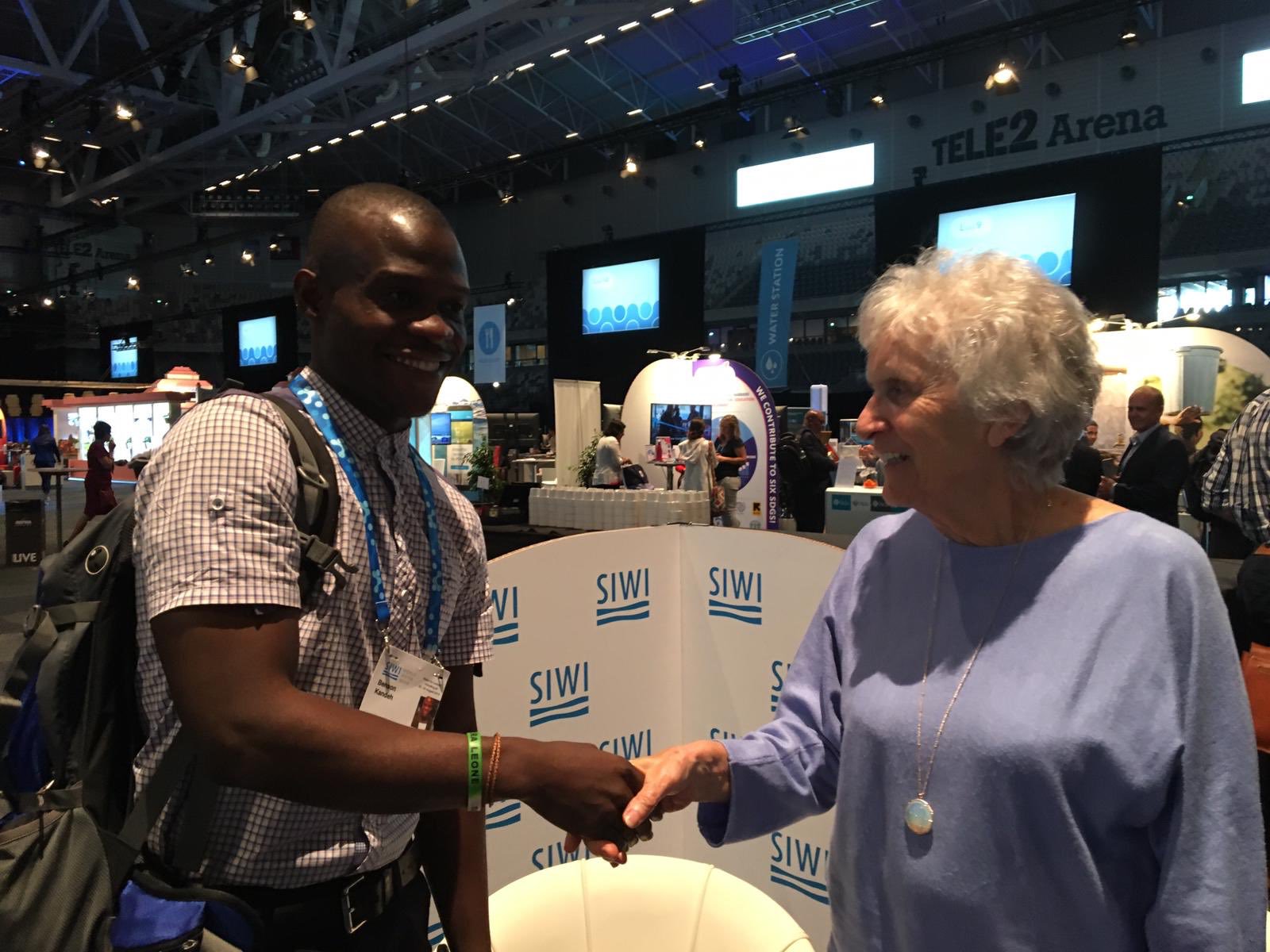
And the winner is… Mr Benson Kandeh, from Sierra Leone!

The jury thought that Benson demonstrated creativity and commitment through his social media posts highlighting his day-to-day work as a young professional in Sierra Leone, working on self-supply in remote areas to provide water for all. He shared videos and photos of his work, and also wrote a summary story post explaining his views on what ‘Water for Society – including all’ means to him.

Benson’s reaction on winning RWSN’s World Water Week competition:

After reading the email stating the result and me being the winner, I was shocked! It was like a dream! I am very thankful and excited to share my efforts, while learning from other international participants and water professionals. This opportunity will help increase my knowledge of the water sector and apply it in my professional activities in rural water supply in my country, Sierra Leone.

Benson will be reporting from World Water Week and sharing his perspectives with our members through our blog and social media account. He will also share his experience with World Water Week attendees through a talk at the RWSN booth (C10) on “Providing safe water for all in Sierra Leone: experience of a young professional” (day and time tbc). If you are in Stockholm, call by our booth to meet him!

Thank you to all the participants who took the time and effort to enter this competition. There were so many interesting stories, and we will share a few of our top entries here on the RWSN blog in the lead-up to Stockholm World Water Week.

For more information on RWSN’s activities for Young professionals, please see here. We thank the Swiss Development Cooperation for making this support possible.


Introducing our new RWSN member organisation: Red de Jóvenes por el Agua Centroamérica

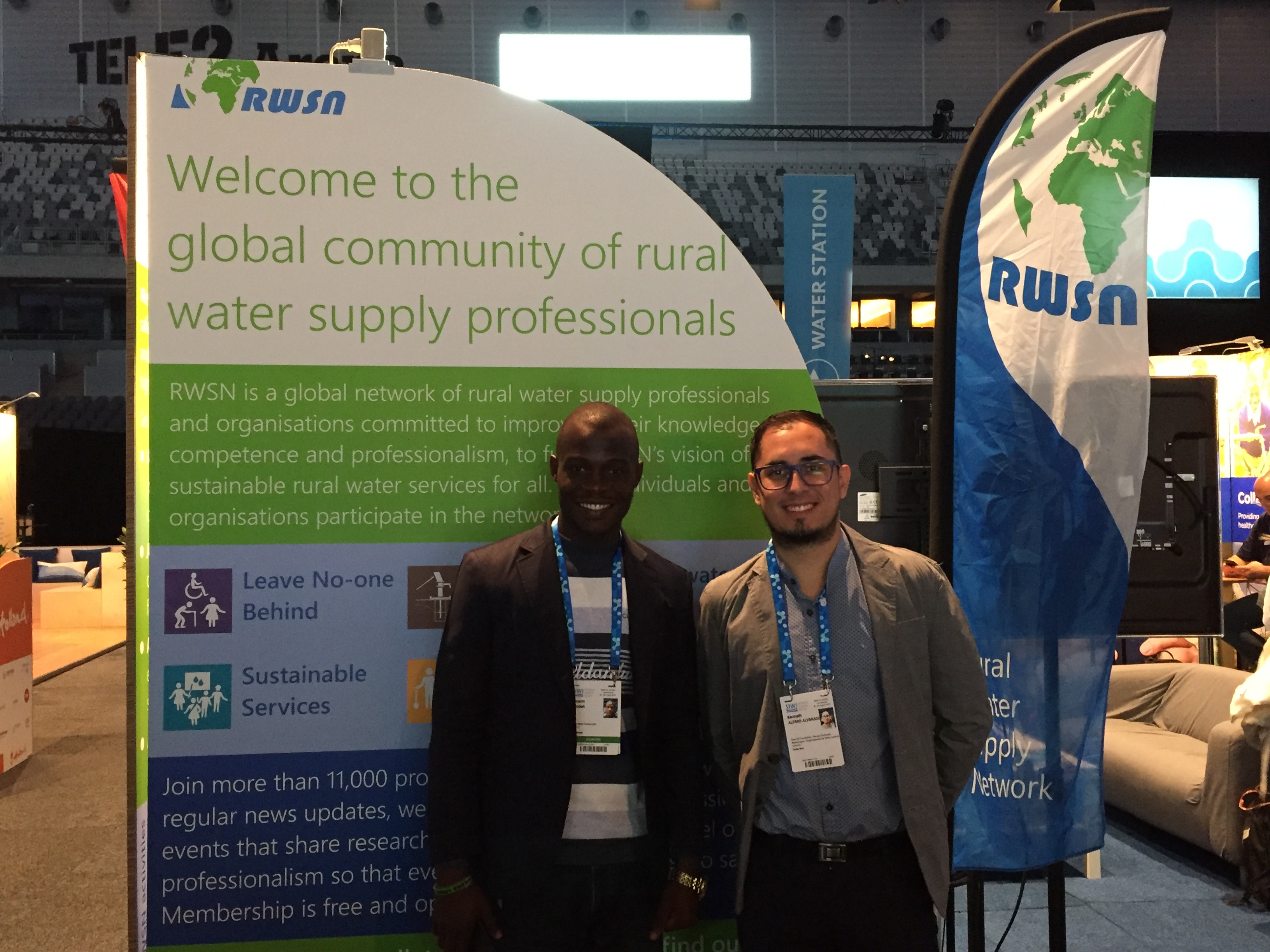
This is a guest blog by Kenneth Alfaro Alvarado about our new RWSN member organisation Red de Jóvenes por el Agua Centroamérica (Youth Water Network for Water Central America) and its activities at LatinoSan in April 2019, which were supported by RWSN. For more information on RWSN’s support for Young Water Professionals, please see here.

From April 1-5 2019, the Red de Jóvenes por el Agua Centroamérica (Youth Network for Water in Central America, also known as RJxA CA) held a Water and Sanitation Week in Costa Rica, which included our participation on the 5th Latinosan Conference and our 3rd Regional Meeting.

RJxA CA is a regional platform with representation in Costa Rica, Nicaragua, Panamá, Honduras, El Salvador, Guatemala, and Belice. Our network promotes the involvement of young people in Integrated Water Resources Management, by strengthening the capacities of young people, political advocacy, environmental education and volunteering. We are also committed to the realisation of the Sustainable Development Goals, especially SDG6. In the network, each country has its own working areas; in Costa Rica, the focus is on Rural Water Supply and Management.

Activities at the 5th LatinoSan conference

During the first day of Latinosan, we had the opportunity to meet and exchange experiences with a group of representatives from the Rural Water Supply and Management sector. We encourage the involvement of young people in the rural water supply and sanitation sector; some of our members are leaders in this sector.

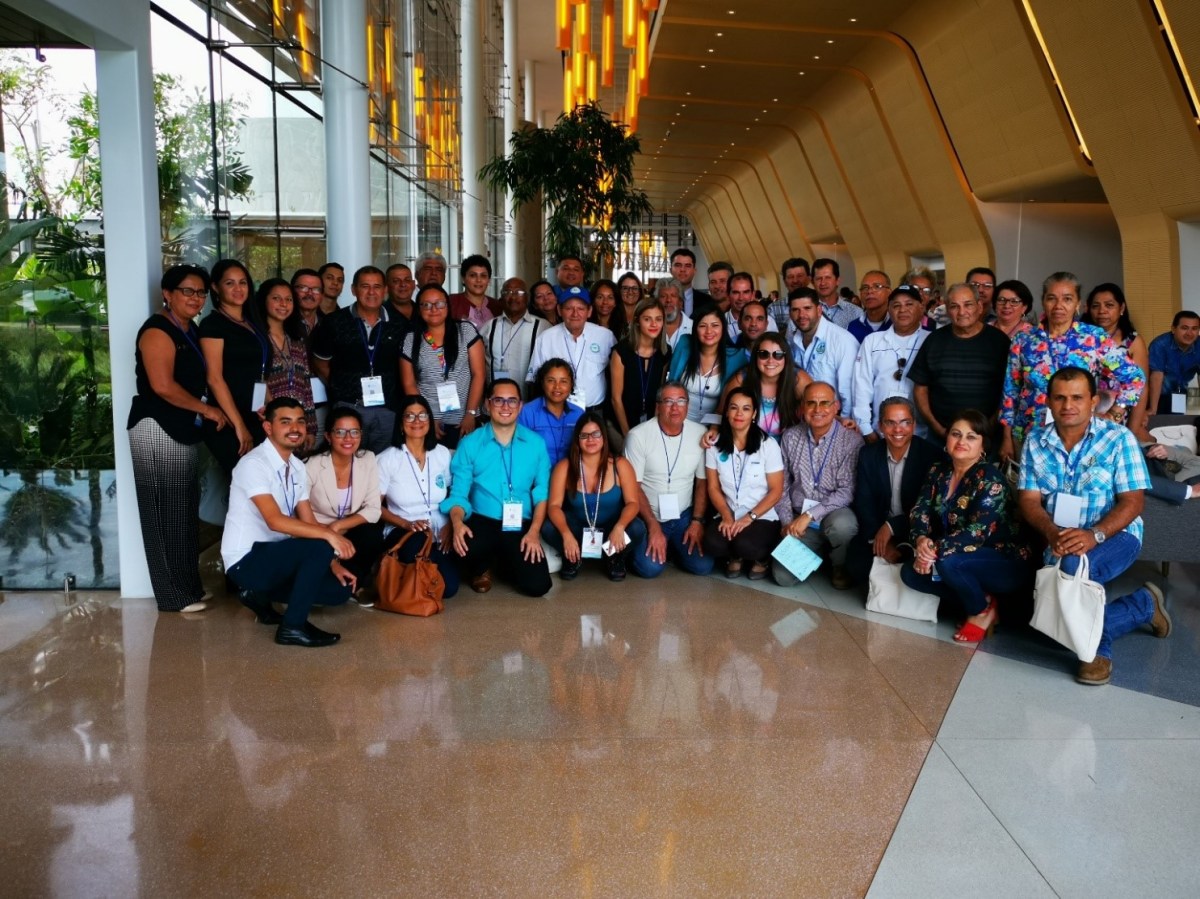
red1

Youth members of the RJxA CA  network and Rural Water Supply Managers. Photo credit: Kenneth Alfaro

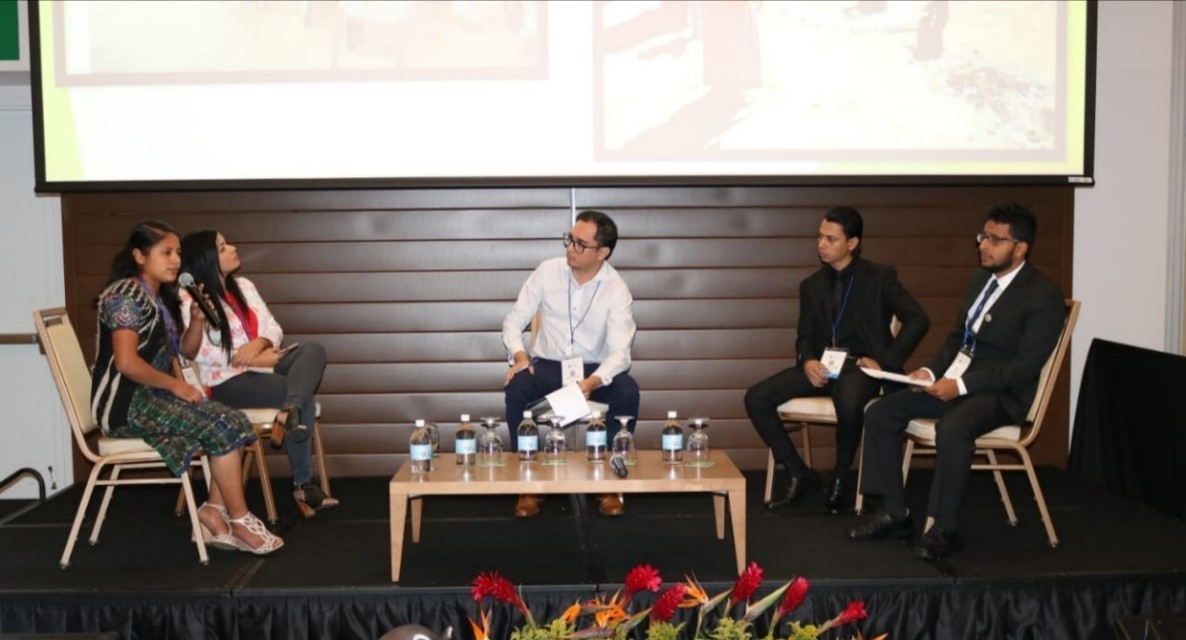
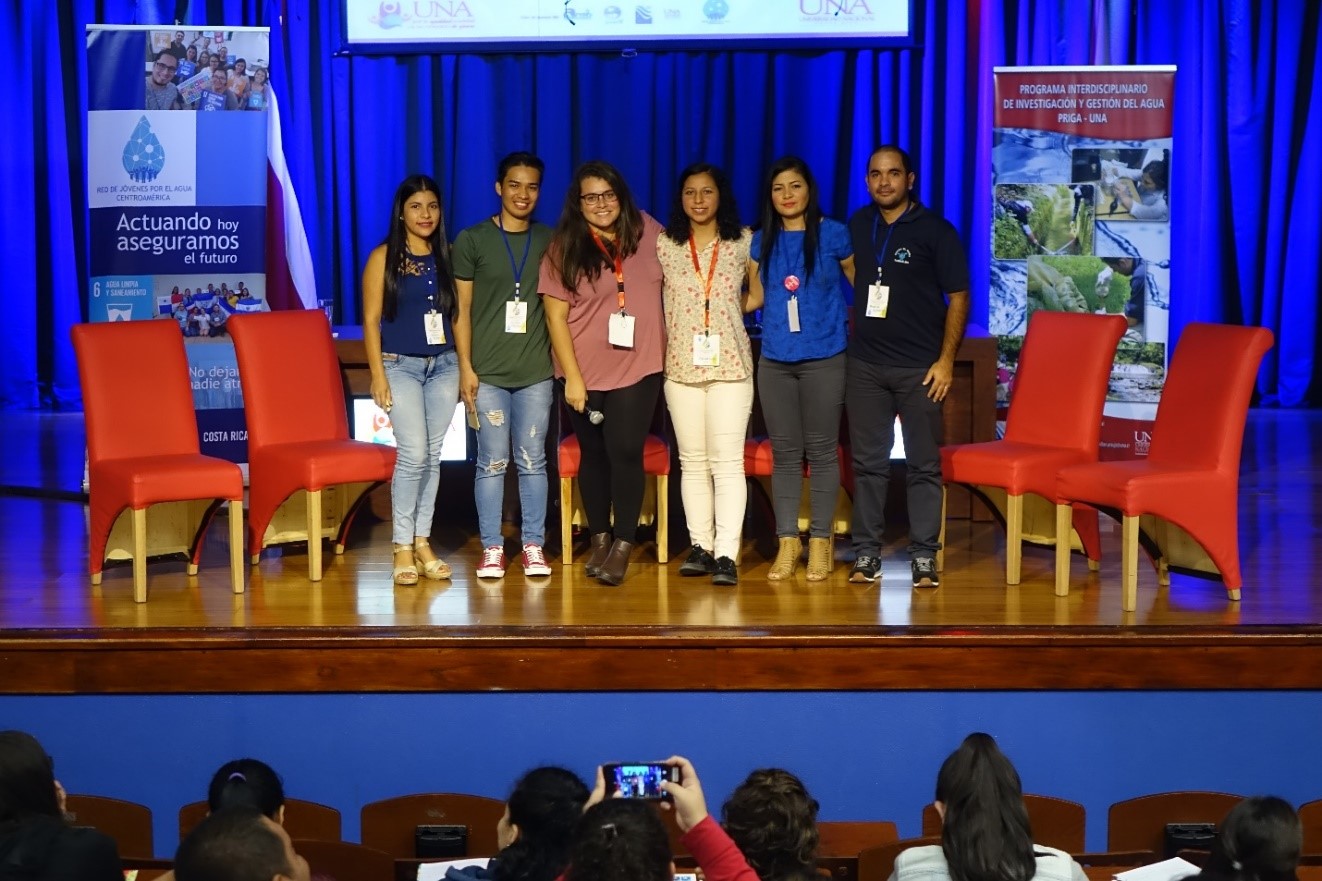
During the second day , we organised a session dedicated to “Young Professionals of Sanitation” that I had the opportunity to moderate, thanks to the support of the Costa Rican Institute of Aqueducts and Sewerage (AyA) and COSUDE. We listened to the experiences of 4 young people from Costa Rica, Guatemala, Honduras and Perú, all of them working and implementing projects in the rural sanitation sector.

red2

Panelists at the Young Professionals of Sanitation session. Photo credit: Douglas Montano

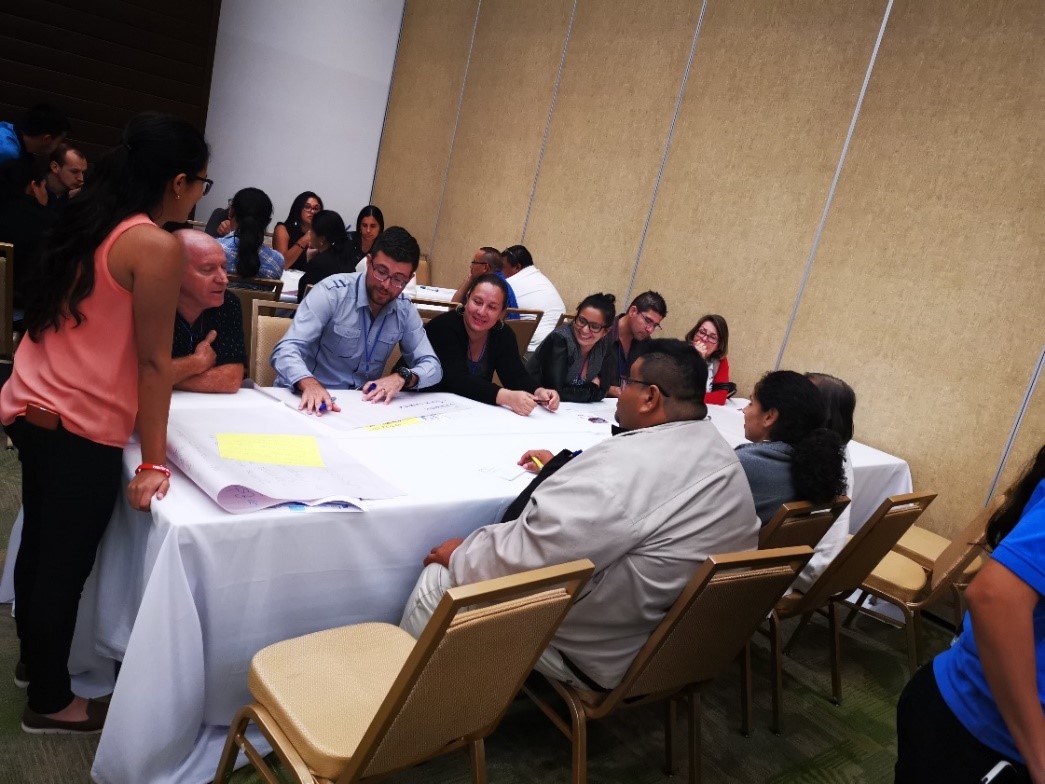
We also supported the session “Community management of water and sanitation as a model for accelerating the closing of the urban-rural divide” organized by the Avina Foundation and the Latin American Confederation of Community Organizations for Water and Sanitation Services (CLOCSAS) ; we facilitated a workshop using the “World Café” methodology in order to extract ideas from the participants. Some of the main ideas that emerged from the session included the need to improve communications with all institutions, that funds for projects be better administrated, and to take into account spatial aspects in order to better plan for the future use of water.

red3

Discussions during the session “Community management of water and sanitation as a model for accelerating the closing of the urban-rural divide” . Photo credit: Kenneth Alfaro


Activities during the 3rd Regional Meeting and 2nd National Costa Rica Encounter of the Youth Network for Water Central America

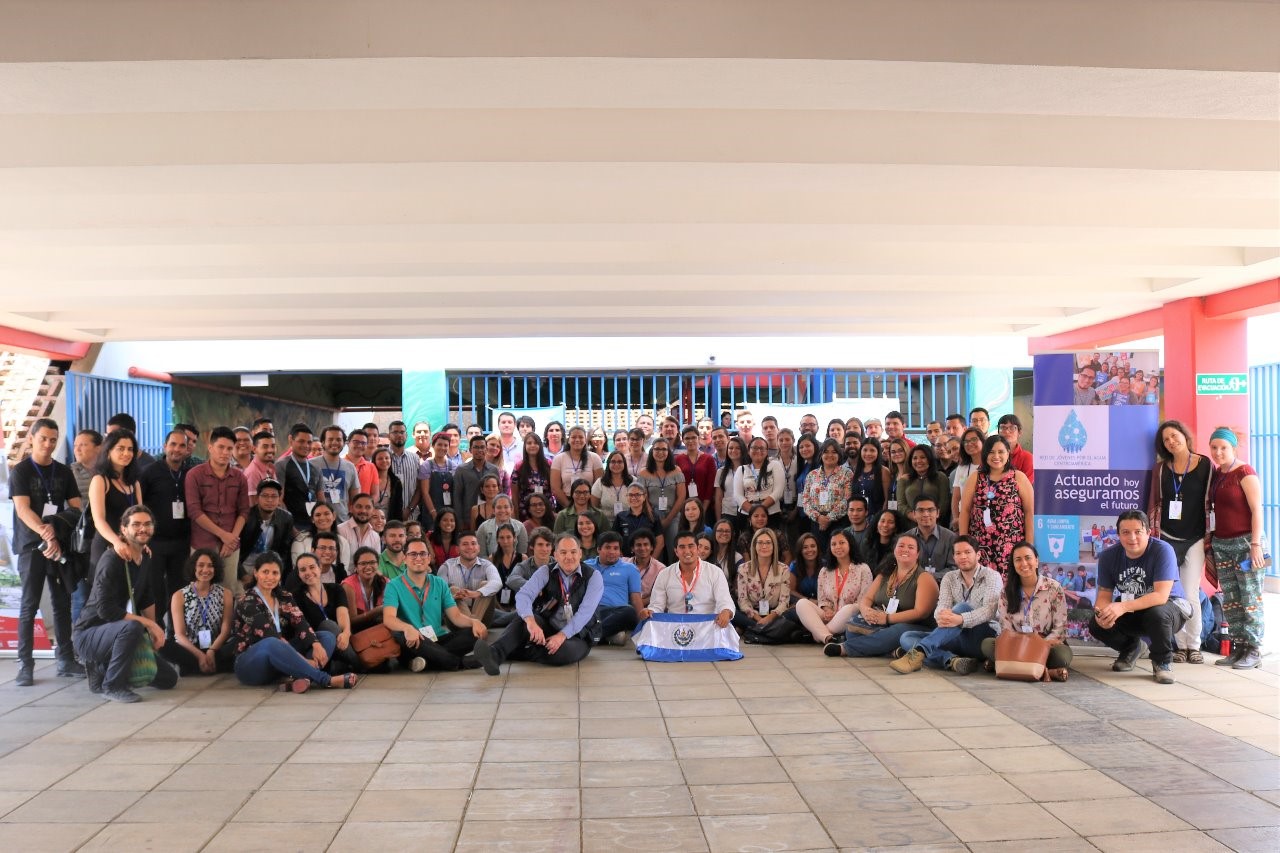
The 3rd Regional Meeting was held at the National University of Costa Rica, located in the province of Heredia, with the participation of more than 130 young people from over Central America and other Latin American countries on April 4th, 2019.

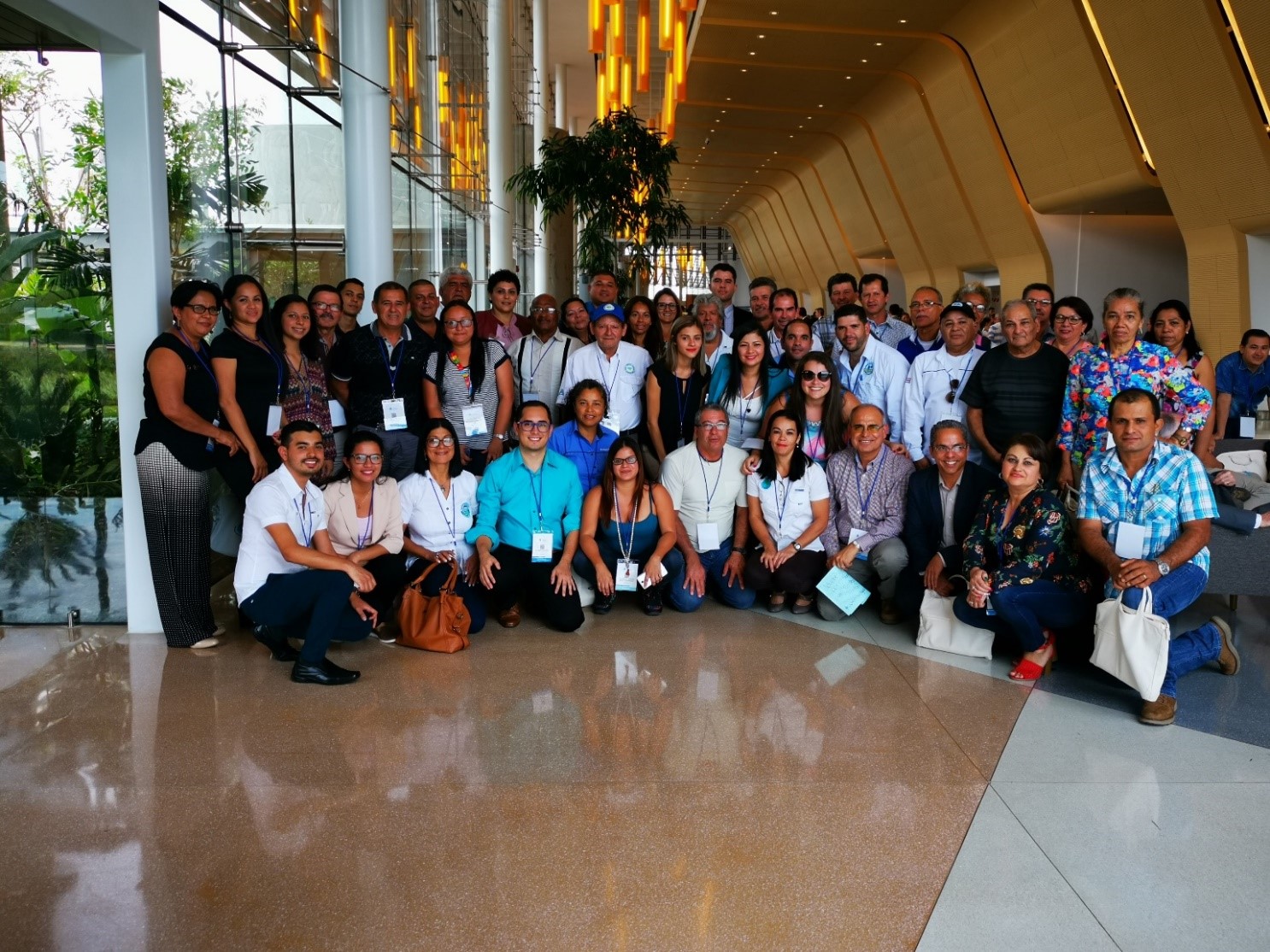
red4

Group photo of the 3rd Regional Meeting and 2nd National Encounter of Costa Rica of the Youth Network for Water Central America. Photography: Kenneth Alfaro

This event begun with a panel called “Youth and Community Water Management“, moderated by Geisel Sánchez, national coordinator of Costa Rica. The panel included the participation of Karen Guzmán (administrator of the Sierpe Rural Aqueduct in the Osa region, Puntarenas), Ricardo González Chávez (administrator of the Rural Aqueduct of El Mora de Turrialba, Cartago), Gabriel Villalobos and Mónica Romero (members of the Board of Directors of the Milano Rural Aqueduct in Siquirres, Limón), and Dariana Dávila, of Honduras. All are leaders in their communities and with their experiences, they sent a message of motivation to those present, about the need for young people to get involved in community processes and to contribute from their experience, enthusiasm and ideas to the gaps in the management of drinking water in the country and in the Central American region.

red5Opening panel participants. Photo credit: Douglas Montano
At the end of the day, we read and approved our youth declaration, which was built based on the results of a Virtual Consultation we conducted in march 2019. The Declaration on “Youth Acting for Sanitation to Not Leave Anyone Behind” was adhered to by 190 young people.

We call upon governments to act upon the following three most important requests:

  • To implement spaces of participation for all civil society sectors, including youth, as actors in decision-making.
  • To implement accountability mechanisms that must be accessible, inclusive and transparent to allow us to measure the fulfillment of the SDG6. These mechanisms should be consulted and validated to ensure their relevance and efficiency.
  • To strengthen Community Organisations of water and sanitation services in every country because they play an important role in ensuring drinking water and basic sanitation, especially in rural areas.


Tour to the San José de la Montaña Communal Aqueduct

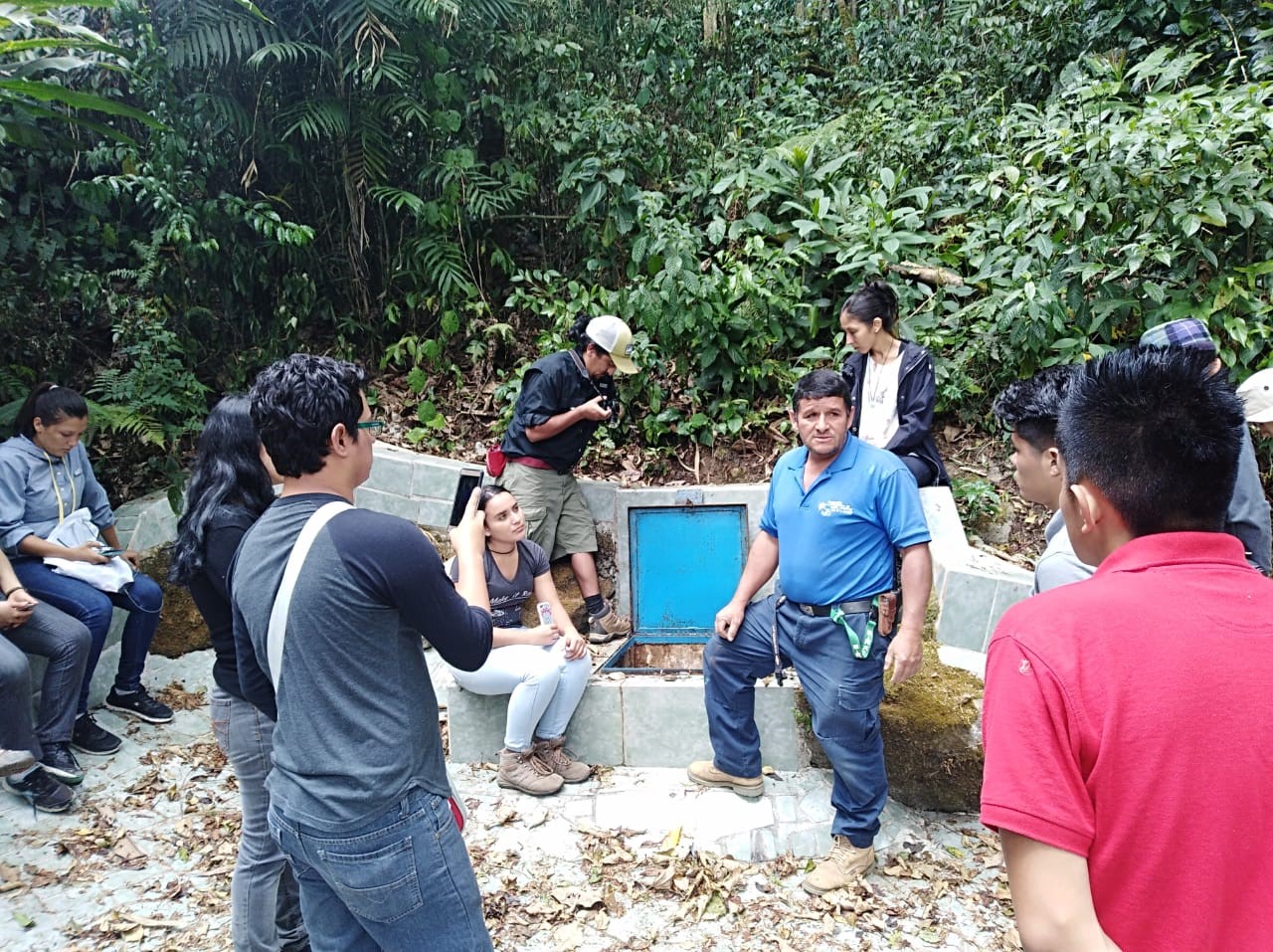
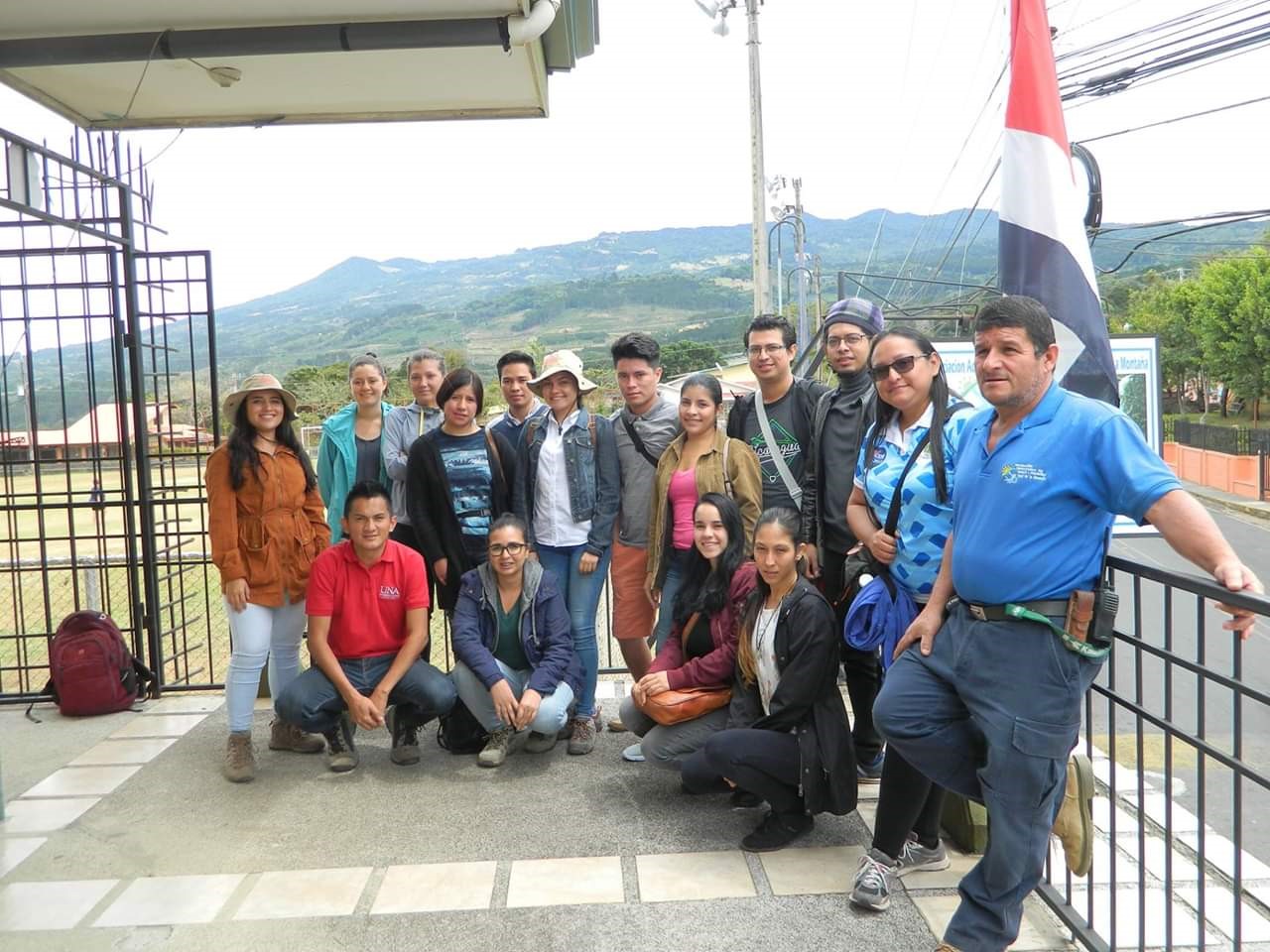
As part of the 3rd Regional Meeting, we wanted a group of young people to learn about the experience of community water management in Costa Rica, where the Communal Aqueducts supply more than one million people and account for almost 30 % of the administration and management of water supply throughout the country. On April 5th, a visit was organized to the Rural Aqueduct San José de la Montaña, Heredia where young people learned about its operation, water sources and infrastructure, the actions they carry out to protect the water resource and the plans they have for the community with their environmental education programme.

red6

Tour to San José de la Montaña Rural Aqueduct. Photo credit: Jason Salgado.

red7

Tour to San José de la Montaña Rural Aqueduct. Photo credit: Jason Salgado.

After this week, our commitment to work and support the empowerment of young people in the rural water sector is even bigger.

About the author

Kenneth Alfaro Alvarado is an Environmental Engineer, and Coordinator of the Youth Network for Water Central America in Costa Rica. The Youth Water Network for Water Central America is a RWSN member organisation. Find out more about the network here.

Contacts:

Make the last mile the first mile: is business the key to fulfilling human rights?

This guest blog was written by Selma Hilgersom (Simavi). The original blog post is available here and is re-published with permission and thanks from Simavi.

Last week, I attended the AGUASAN workshop. This yearly event is organised by the Swiss Agency for Development and Cooperation and joined by a broad variety of WASH practitioners. The key focus of this year’s workshop were ‘service providers that take an inclusive business approach and drive the advancement of the human right to water and sanitation’. Within the conference, six cases of young and inspiring entrepreneurs were put forward during the week and participants teamed up to dive into the business cases and assess the human rights angle of making a business out of WASH.

If anything, the week has given me a serious mind exercise on the role of the private sector in development. I have a background in the field of water technology and supporting the development of innovative business propositions. I do believe that the private sector is key in addressing global challenges. Business comes with internal drivers to guarantee the delivery of products and services that meet the demands of costumers, as entrepreneurs depend on the success of their business to generate an income. This drives efficiency, cost-efficiency and the continuous exploring smarter ways of working.

So, if business has the potential to provide everyone in the world with well-functioning WASH infrastructure, why are we not collectively entrepreneuring into the most rural areas of this world and ensuring that the human right to water and sanitation is fulfilled? And why are NGOs still funded to do a job that business can do while making money out of it?

Let’s first set the perspective straight. I work for an NGO. I am not afraid to re-consider my role in a fast-changing world. I do believe business has an key role to play in accelerating development and strengthening (business) ecosystems in-country. Especially local entrepreneurship and equal North-South partnerships can go a long way in providing people with the basic services that they need. Especially the businesses that pro-actively include women and girls and effectively respond to the needs of all members of a given community, regardless of who they are and their circumstances, seem to have the exact same goal as many NGOs. And stepping away from the ‘beneficiary perspective’ and including people as ‘costumers’ creates a different perspective. Two sidenotes: let’s try to avoid the discussion whether capitalism is the system that ensures everlasting happiness here and at the same time acknowledge that disadvantaged people benefit from a system in which they are participating as more than just ‘costumers’ that are defined by their purchasing power.

The nature of business is to ensure that there is a profit made. And from my experience in start-ups, this is a challenge when starting-up a business. The question that comes to my mind is then how feasible it is to design a self-sustaining business model targeting consumers with the least purchasing power, especially in the beginning. And whether it is possible to focus on the lower-bottom of the pyramid; even if this comes with challenges. A few examples: geography (what if a village is located at a remote mountain), reaching relatively few costumers per community, having to invest a lot in demand-creation before WASH services and products are bought. Are there smart models that make this ‘work’? Or stable financing mechanisms that can blend different revenue streams to cover the high need with the limited profitability? And how do you create a business ecosystem with local entrepreneurs to serve the people who currently lack access to WASH? What is the role and contribution of the government?
There is a broader development perspective to this too. Including ‘impact indicators’ in doing business, which reflect the aim of development work, does require extra efforts that may conflict with business interests. But results in lasting positive change in communities. Think of delivering water in a community where people are at high risk of a specific disease; is this just solved by delivering water? Or does this require the provision of additional health information and working towards improved service delivery? Or in the case that women are not allowed to decide over their own bodies, does the delivery of WASH provide an answer to the broader challenges that exist in the community?

Even if we would imagine an all-inclusive model of the private sector that perfectly responds to the needs of people, there is still one discussion that was put forward more than once during AGUASAN: (government) systems are the enablers of the success and upscaling of any business. The central question is therefore how business models fit in existing local, national and global systems? This links into the very basis of acknowledging that people have rights, and that they should be able to claim them, wherever in the world that may be.
And this is not ‘just a remark’ – it links into the issue of rightly anchoring the responsibility where it belongs: who is (or should) take the responsibility for fulfilling the human right to water and sanitation, and what is the place of the private sector therein? What to do if there is no profitable business case for providing WASH? Maybe the consideration is whether the ideal business model, if it would exist, would silence this discussion: does access to WASH equal that human rights are fulfilled? Even if this is done independently from the government, and in a profitable way? And if so, is it possible (capacity wise) to reach the 2.1 billion people (!) that still do not have safe and sustainable water delivery? Should the private sector be made responsible for fulfilling the human right to water and sanitation, if governments fail to do this?

I am not afraid of profit. I believe that businesses and NGOs both play a vital role in development. I believe in systems that are driven by (young) entrepreneurs and create a broad-range of value to consumers and are self-sustaining. There are many examples in the world where the private sectors makes a huge difference in the lives of disadvantaged people. I refer to the two amazing female entrepreneurs of Pad2Go who want to break the barriers women face in Nepal due to their menstruation (and with whom I had the honour to work with during the week). I am incredibly happy that many entrepreneurs are positive towards cooperation with NGOs. However, I also believe that this comes with a joint dream and a joint responsibility.

Often, the cooperation between NGOs and the private sector is defined by the roles ‘taking care of the business’ and ‘taking care of development’. I advocate for a more integrated business case, where investing in business and investing in development are one and the same thing. Could we agree that the success on the broader impact indicators is equally important as the development of a sustainable business model? And not from a ‘charity perspective’, but from the believe that this will increase the integrated value proposition of businesses. And thereby open up new markets and potential (impact) costumers. And a call to NGOs – can we move beyond the output, outcome and impact indicators, and join hands with those who will remain long after the funding of our NGO programmes has run out? And create built-in incentives to be as successful as we can? And not be guided by pre-set targets?

One of the things that stayed in my mind after AGUASAN is the presentation of human rights superstar Ms. Catarina de Albuquerque, who challenged us to “make the last mile the first mile”. Let’s do that. Together.

Edit from the author: I had some discussions about the extent of ‘pushing (Western) values upon local communities’, and whether businesses or even NGOs should be involved in this at all – or that we should limit ourselves to basic product or service delivery. I can write another blog on my thoughts on this. As this blog has a slightly different focus, I refer to Simavi’s aim to ensure that disadvantaged people in low and middle income countries are enabled to practice healthy behaviour based on their own free and informed decisions and free from coercion and violence. By doing this through supporting civil society to claim its rights with and through local organisations, development is no more than amplifying positive changes that start locally.

About the author

Selma holds a master degree in ‘Human Geography’ and ‘Policy and Organisation’ with a specialisation in transnational advocacy and business and innovation. She has worked in international organisations to promote and support the development of new business models, sustainable innovations and the uptake of new water technologies. Currently, she coordinates programs of Simavi in Tanzania and Nepal that aim to ensure that disadvantaged people, and especially women and girls, can live healthy lives


From Colombia to Kyrgyz Republic and Uganda: how we help countries adopt state-of-the art information systems for better management of rural water services

How many countries have you worked in where an up-to-date national information system for rural water services is used for decision-making?

SUSANNA SMETS (World Bank/RWSN Sustainable Services) & ANTONIO RODRÍGUEZ SERRANO (World Bank/RWSN Mapping & Monitoring (re-blogged from the World Bank)

How many countries have you worked in where an up-to-date national information system for rural water services is used for decision-making?

How many well-intended monitoring initiatives did you encounter which are no longer being used?

Your answers are likely to be “few” and “many”, as government-led information systems to support planning and decision making for fragmented rural water services are not easy to develop, institutionalize, and sustain.

It is widely recognized that information systems are a key building block to achieve sustainable rural services delivery – a top development priority given that 8 out 10 people without basic water services live in rural areas, leaving 628 million people unserved. The good news is that a customizable, tried and tested solution already exists, so that countries can leap-frog a cumbersome development process and – more importantly – go through a fast learning curve when adopting and institutionalizing the Rural Water and Sanitation information System or “SIASAR” as their national rural sector monitoring and evaluation (M&E) system.

Following the initiative of the governments of Honduras, Nicaragua, and Panama, 11 countries in Latin America and the Caribbean are using the innovative open-data platform “SIASAR”. Different actors are using this tool for decision making, strategic planning, rural water performance monitoring, and for taking appropriate actions to prevent services from deteriorating, ensuring that water keeps flowing from the taps and communities receive timely support. SIASAR has been supported by the World Bank since its inception in 2010. In particular, Global Water Security and Sanitation Partnership (GWSP), a multi-donor trust fund housed within the World Bank’s Water Global Practice, provides funding to SIASAR.

Following the initiative of the governments of Honduras, Nicaragua, and Panama, 11 countries in Latin America and the Caribbean are using the innovative open-data platform “SIASAR”.

With its adaptability and multi-language capability, SIASAR has now been introduced in the Kyrgyz Republic (in Russian and Kyrgyz languages), and a pilot has also been planned in Uganda. Within the context of the Kyrgyz Republic’s national rural water program, supported by the World Bank-supported Sustainable Rural Water Supply and Sanitation Project, SIASAR has now gradually been introduced as the sector’s M&E system, covering data on system status and service provider performance for almost a third of its 1800 remote and mountainous villages. This will help to target investments and achieve the Kyrgyz Government’s vision to reach universal access by 2026.

With support from GWSP and the World Bank’s office in Colombia, the South-South Knowledge Exchange Facility helped bring Kyrgyz and Ugandan delegations together in Colombia. This knowledge exchange allowed them to receive peer-to-peer advice on how to introduce, roll out, and use SIASAR, and to learn about effective policy instruments, regulations, and institutional arrangements for sustainable rural water supply and sanitation service provision.

With support from GWSP and the World Bank’s office in Columbia, the South-South Knowledge Exchange Facility helped bring Kyrgyz and Ugandan delegations together in Colombia.

Specifically, the delegations learned about Colombia’s differentiated policy and regulatory instruments for rural areas, including tariff policies, water quality and environmental regulations, technical standards for water supply and sanitation, financing modalities for investments, and of course the SIASAR information systems for evidence-based decision making. Through field visits, the responsibilities of local and regional governments in rural service delivery in Colombia were better understood. The three-way translation between Spanish, English, and Russian put in place and the excellent collaborative spirit by all parties helped to overcome the communication challenge. These delegates took away important lessons on the adaptation process for SIASAR, such as:

  • SIASAR implementation and scale-up requires dedicated human and financial resources at the national and regional levels, including both sectoral and IT experts.
  • A clear roadmap for SIASAR adoption is necessary, bringing in multiple partners to support implementation. Anchoring in national legislation and fostering linkages with other national statistical information systems is critical.
  • SIASAR can cater analysis to the need of different actors and increases transparency and accountability of service provision.
  • SIASAR has helped to inform and influence investment programs to close the urban-rural service gap, accompanied by a range of measures to support rural service providers.

Depending on where they were in the adoption of SIASAR, the Kyrgyz delegation was keen to grasp the process of institutionalization, while the Ugandans were exposed to the range of capabilities and practical first steps that have now led to a first pilot, supported by the Uganda Integrated Water Management and Development Project (IWMDP).  

Seeing solutions in action can be a great motivation. The knowledge exchange with Colombiastimulated learning and encouraged officials from Kyrgyz and Uganda to try and adopt solutions to their own circumstances. A guide is now available that can help any country go through the process and prepare for the steps of adopting SIASAR.

SIASAR has proven to be an effective tool for improving the monitoring, evaluation, planning, and coordination of water supply and sanitation services in participating countries in Latin America and beyond. Through knowledge exchange activities like this and future GWSP technical assistance, we hope to support more countries in adopting the system and joining the initiative, while we commit to continuous improvement of the capabilities of the system. 

Just how much do countries rely on groundwater point sources for their drinking water?

Preliminary analysis of census and national survey data from the 2019 Joint Monitoring Programme, by Dr Kerstin Danert

An important issue for those of us that think a lot about groundwater is the extent that various countries rely on it for their drinking water.

The data presented in the table below has been prepared from the 2019 data published by the Joint Monitoring Programme (JMP) of the World Health Organisation (WHO) and UNICEF (see https://washdata.org/data). Each country has an associated Country File (an excel spreadsheet) with collated data on Water, Sanitation and Hygiene use. This data is gathered from national censuses as well as household surveys such as the Demographic and Health Surveys (DHS) and Multiple Indicator Cluster Surveys (MICS) and many others. The country files given excel spreadsheets on the JMP website (not to mention the underlying surveys) contain a wealth of data!

The table below shows the percentage of the population that rely on groundwater point sources as their main source of drinking water for every country and territory for the most recent year for which census or survey data is available. The data is presented for urban, rural and total populations.  Groundwater point sources include protected and unprotected wells and springs, as well as tube wells and boreholes.  Countries may have slightly different nomenclature for the above terms, but these are harmonised in the country tables produced by the JMP.

It is important to note that the data only includes point sources.  Water that is bought from vendors, sold in bottles/sachets or transmitted in pipes may also originate from groundwater, but this information is not generally collated by the censuses or surveys and thus cannot be reflected.  Consequently, the actual dependency of a particular on groundwater for drinking may be considerably higher. In addition, national governments may also make calculations based on the infrastructure available and assumed number of users per source. Due to the different methods of data collection and calculation, these estimates may differ from that collected by the household survey or census.

Please note that the analysis below has not been peer-reviewed, and so if you are intending to use the data, please do check in the respective JMP country file.  You can access Country Files on: https://washdata.org/data. Click on map to select country, download “Country file” and open the “Water Data” tab. In case you spot any mistakes in the table below, please respond in the comments in the blog below or contact the author directly, via rwsn@skat.ch.

Table 1 Groundwater point source as main drinking water source (% of the population classified as urban, rural and total)

Urban Rural Total
Country Census/ Survey Year Ground-water point source as main drinking water source (% of the urban pop.) Census/ Survey Year Ground-water point source as main drinking water source (% of the rural pop.) Census/ Survey Year Ground-water point source as main drinking water source (% of the total pop.)
Afghanistan 2017 57.3% 2017 71.5% 2017 68.1%
Albania 2012 6.4% 2012 14.7% 2012 10.2%
Algeria 2013 6.6% 2013 19.6% 2013 11.3%
American Samoa 2010 0.5%
Andorra 2005 6.6%
Angola 2016 17.7% 2016 43.0% 2016 26.8%
Anguilla 2009 0.7% 2009 0.7%
Antigua and Barbuda 2011 0.4%
Argentina 2013 9.1% 2010 37.7% 2010 15.0%
Armenia 2016 0.1% 2016 2.6% 2016 1.1%
Aruba 2010 1.3%
Australia 2013 0.1% 2013 1.1% 2013 0.5%
Azerbaijan 2017 0.1% 2017 12.1% 2017 5.4%
Bahamas 2010 2.9%
Bahrain 1995 1.4%
Bangladesh 2016 66.4% 2016 94.7% 2016 84.9%
Barbados 2010 0.1% 2012 0.1%
Belarus 2012 2.7% 2012 32.9% 2012 11.1%
Belize 2016 0.3% 2016 4.1% 2016 2.5%
Benin 2014 39.4% 2014 56.8% 2014 48.9%
Bhutan 2017 0.3% 2017 0.6% 2017 0.5%
Bolivia (Plurinational State of) 2017 5.0% 2017 42.2% 2017 16.5%
Bosnia and Herzegovina 2012 3.6% 2012 11.4% 2012 8.9%
Botswana 2017 0.1% 2017 14.9% 2017 5.3%
Brazil 2017 0.4% 2017 8.4% 2017 1.6%
British Virgin Islands 2010 1.9%
Brunei Darussalam 2011 0.1% 2011 0.1% 2011 0.1%
Bulgaria 2001 0.4% 2001 2.7% 2001 1.1%
Burkina Faso 2017 17.1% 2017 85.6% 2017 72.9%
Burundi 2017 8.6% 2017 68.1% 2017 61.5%
Cabo Verde 2007 0.1% 2012 15.1% 2012 5.1%
Cambodia 2016 13.5% 2016 47.2% 2016 40.2%
Cameroon 2014 35.5% 2014 74.1% 2017 50.0%
Canada 2011 0.1% 2011 0.7% 2011 0.3%
Caribbean Netherlands 2001 27.3%
Cayman Islands 2010 4.9% 0.0% 2010 4.9%
Central African Republic 2010 49.1% 2010 92.1% 2010 75.4%
Chad 2015 48.0% 2015 82.4% 2015 74.6%
Chile 2017 0.6% 2017 4.0% 2017 2.4%
China 2013 7.4% 2013 43.1% 2016 22.4%
Colombia 2018 0.4% 2018 13.7% 2018 3.3%
Comoros 2012 5.1% 2012 21.3% 2012 16.2%
Congo 2015 24.9% 2015 65.7% 2015 38.3%
Cook Islands 2011 0.0%
Costa Rica 2018 0.0% 2018 0.5% 2018 0.2%
Côte d’Ivoire 2017 33.9% 2017 71.0% 2017 49.5%
Croatia 2003 3.3% 2003 18.0% 2003 20.0%
Cuba 2011 13.5% 2014 41.9% 2011 18.2%
Curaçao 2011 0.9%
Czechia 2003 1.5% 2003 7.1%
Democratic People’s Republic of Korea 2017 17.1% 2017 58.1% 2017 33.1%
Democratic Republic of the Congo 2014 33.0% 2014 79.4% 2014 63.5%
Djibouti 2017 0.6% 2017 55.5% 2017 10.9%
Dominica 2001 0.6% 2001 6.3% 2009 0.3%
Dominican Republic 2016 0.1% 2016 2.3% 2016 0.7%
Ecuador 2017 1.1% 2017 17.1% 2017 6.1%
Egypt 2017 0.4% 2017 2.1% 2017 1.4%
El Salvador 2017 3.0% 2017 12.3% 2017 6.6%
Equatorial Guinea 2011 44.7% 2011 51.9% 2011 48.4%
Eritrea 2010 3.4% 2010 36.0% 2010 24.6%
Estonia 2010 1.7% 2010 18.8% 2010 6.7%
Eswatini 2014 3.7% 2014 31.5% 2014 24.0%
Ethiopia 2017 5.1% 2017 62.3% 2017 52.0%
Falkland Islands (Malvinas) 2016 43.7%
Fiji 2014 1.1% 2014 13.6% 2014 7.2%
Finland 1999 1.0% 2005 5.0% 2005 1.0%
French Guiana 1999 5.0% 1999 6.0% 2015 13.5%
Gabon 2013 3.3% 2013 37.8% 2013 8.2%
Gambia 2013 14.4% 2013 60.0% 2013 32.6%
Georgia 2017 4.9% 2017 46.9% 2017 22.2%
Germany 2007 0.8% 2007 0.8% 2007 0.0%
Ghana 2017 11.3% 2017 56.7% 2017 36.0%
Greece 2001 0.2% 2001 3.8%
Grenada 1999 4.0% 1999 18.0%
Guadeloupe 2006 0.8% 2006 0.3% 2006 0.8%
Guam 2010 0.1%
Guatemala 2015 5.0% 2015 19.6% 2015 13.4%
Guinea 2016 32.8% 2016 75.3% 2016 59.0%
Guinea-Bissau 2014 41.0% 2014 78.0% 2014 61.7%
Guyana 2014 1.3% 2014 5.5% 2014 4.4%
Haiti 2017 8.1% 2017 56.5% 2017 37.5%
Honduras 2017 2.0% 2017 4.2% 2017 3.0%
Hungary 1990 5.0% 1990 28.9%
India 2016 23.8% 2016 63.7% 2016 50.5%
Indonesia 2018 35.2% 2018 66.9% 2018 49.6%
Iran (Islamic Republic of) 2015 1.8% 2015 4.6% 2015 0.8%
Iraq 2018 0.5% 2018 4.6% 2018 1.8%
Ireland 2006 0.0% 2006 0.5%
Italy 2001 3.9%
Jamaica 2014 0.0% 2014 1.2% 2014 0.6%
Jordan 2016 0.3% 2016 0.7% 2016 0.4%
Kazakhstan 2015 3.2% 2015 21.0% 2015 11.5%
Kenya 2017 21.2% 2017 54.1% 2017 46.2%
Kiribati 2014 0.0% 2014 0.0% 2014 0.0%
Kyrgyzstan 2014 1.1% 2014 11.3% 2014 8.1%
Lao People’s Democratic Republic 2017 9.0% 2017 46.0% 2017 34.7%
Latvia 2003 2.4% 2003 12.5%
Lebanon 2016 10.9%
Lesotho 2015 5.5% 2015 27.8% 2015 21.4%
Liberia 2016 58.7% 2016 74.7% 2016 65.3%
Libya 1995 35.8% 1995 26.9% 2014 19.1%
Madagascar 2016 24.5% 2016 61.6% 2016 57.6%
Malawi 2017 16.3% 2017 86.0% 2017 73.8%
Malaysia 2003 0.8% 2003 6.7%
Maldives 2014 0.1% 2014 0.2% 2017 0.5%
Mali 2018 19.5% 2018 72.3% 2018 56.2%
Marshall Islands 2017 0.2% 2017 2.5% 2017 0.6%
Martinique 1999 0.5% 2015 0.4%
Mauritania 2015 6.5% 2015 49.4% 2015 29.1%
Mayotte 0.0% 2013 2.5%
Mexico 2017 0.8% 2017 9.5% 2017 2.8%
Micronesia (Federated States of) 2010 3.6% 2010 10.7% 2010 9.1%
Mongolia 2016 12.8% 2016 52.7% 2016 25.8%
Montenegro 2013 5.1% 2013 29.2% 2013 14.1%
Montserrat 1998 2.0% 1998 100.0% 2001 0.1%
Morocco 2012 1.0% 2012 27.2% 2012 10.2%
Mozambique 2015 21.4% 2015 62.5% 2015 49.6%
Myanmar 2016 34.3% 2016 74.8% 2016 64.0%
Namibia 2016 0.6% 2016 23.4% 2016 11.8%
Nauru 2011 1.6% 2011 0.0% 2011 1.6%
Nepal 2016 41.8% 2016 46.8% 2016 44.4%
New Caledonia 2014 3.1%
Nicaragua 2014 4.4% 2014 59.9% 2016 21.4%
Niger 2017 33.9% 2017 71.0% 2017 49.5%
Nigeria 2018 45.3% 2018 73.1% 2018 60.0%
Niue 1999 20.0% 2010 0.0%
North Macedonia 2011 1.5% 2011 15.1% 2011 7.7%
Northern Mariana Islands 2000 1.3% 0.0% 2010 1.1%
Oman 2014 5.1% 2014 10.0% 2014 6.4%
Pakistan 2016 30.4% 2016 44.0% 2016 39.1%
Panama 2015 0.7% 2015 14.6% 2017 0.0%
Papua New Guinea 2017 2.8% 2017 7.5% 2017 7.1%
Paraguay 2017 2.1% 2017 9.2% 2017 4.8%
Peru 2017 1.5% 2017 11.1% 2017 3.8%
Philippines 2017 8.4% 2017 37.6% 2017 23.9%
Portugal 2001 0.1% 2001 0.7%
Puerto Rico 1995 1.8%
Republic of Korea 2015 1.0%
Republic of Moldova 2012 16.9% 2012 65.1% 2012 47.1%
Réunion 2015 0.2%
Romania 1994 11.3% 1994 81.0%
Russian Federation 2009 3.4% 2009 19.5% 2009 8.6%
Rwanda 2017 17.2% 2017 58.4% 2017 50.4%
Saint Kitts and Nevis 1999 27.0% 1999 27.0% 2007 0.3%
Saint Lucia 2012 0.5% 2012 2.0% 2012 1.6%
Saint Vincent and the Grenadines 1999 20.0% 2012 0.1%
Samoa 2016 2.6% 2016 5.6% 2016 5.0%
Sao Tome and Principe 2010 4.5% 2010 11.7% 2010 6.9%
Saudi Arabia 2017 0.2%
Senegal 2017 7.2% 2017 35.0% 2017 22.5%
Serbia 2014 2.4% 2014 11.7% 2014 6.2%
Sierra Leone 2017 54.7% 2017 68.9% 2017 62.6%
Sint Maarten (Dutch part) 2011 7.4%
Slovakia 2003 2.3% 2003 2.3% 2011 13.1%
Solomon Islands 2015 8.6% 2016 27.6% 2015 17.5%
Somalia 2017 9.5% 2017 60.5% 2017 34.1%
South Africa 2017 0.5% 2017 10.1% 2017 3.8%
South Sudan 2017 66.5% 2017 80.1% 2017 77.3%
Spain 2003 0.6% 2003 0.3%
Sri Lanka 2016 17.3% 2016 51.0% 2016 45.3%
Sudan 2014 2.2% 2014 13.2% 2014 9.8%
Suriname 2017 3.1% 2017 5.4% 2017 3.8%
Syrian Arab Republic 2018 4.2% 2018 11.6% 2018 8.4%
Tajikistan 2017 5.2% 2017 18.7% 2017 15.4%
Thailand 2016 1.8% 2016 6.2% 2016 4.2%
Timor-Leste 2016 20.0% 2016 33.6% 2016 29.9%
Togo 2017 36.6% 2017 61.2% 2017 51.8%
Tonga 1999 28.0% 1999 24.0% 1996 1.7%
Trinidad and Tobago 2011 0.9% 2011 1.0% 2011 0.9%
Tunisia 2015 0.5% 2015 10.8% 2015 3.7%
Turkey 2013 5.0% 2013 40.0% 2013 13.0%
Turkmenistan 2016 4.4% 2016 34.3% 2016 22.6%
Turks and Caicos Islands 1999 22.0% 1999 40.0% 2012 1.7%
Tuvalu 2007 1.7% 2007 0.5% 2007 1.1%
Uganda 2017 35.8% 2017 79.6% 2017 71.9%
Ukraine 2018 11.5% 2018 61.2% 2018 27.8%
United Arab Emirates 2003 0.2% 2018 0.1%
United Republic of Tanzania 2017 19.4% 2017 50.5% 2017 41.2%
United States of America 2015 3.0% 2015 45.2% 2015 11.1%
Uruguay 2017 0.0% 2017 3.1% 2017 0.2%
Uzbekistan 2015 6.9% 2015 22.7% 2015 14.2%
Vanuatu 2016 1.6% 2016 4.8% 2016 4.0%
Venezuela (Bolivarian Republic of) 2011 4.3% 2011 25.6% 2011 6.8%
Viet Nam 2016 19.5% 2016 57.2% 2016 45.2%
West Bank and Gaza Strip 2017 1.2% 2017 3.2% 2017 1.5%
Yemen 2013 2.3% 2013 43.1% 2013 31.6%
Zambia 2015 26.7% 2015 76.8% 2015 55.8%
Zimbabwe 2017 11.1% 2017 77.5% 2017 57.0%

Photo:  Groundwater provides over 80% of the rural population with its main source of drinking water in South Sudan. Photo taken in 2014 in Northern Bahr el Ghazal by Kerstin Danert.


India pledges piped water to every rural home within 5 years

India is turning its back on the handpump and is going full bore for piped water supplies.

India is turning its back on the world’s most popular handpump to which it lent its name (India Mark II) and is going full bore for piped water supplies.

The Times of India report : “With more than 80% rural households yet to get piped water supply, the government on Tuesday announced to roll out a new mission to ensure “Nal se Jal”  ater from the tap) for each house in villages in the next five years as promised in BJP’s election manifesto.” 

This promises to be the most ambitious rural water supply programme in the world and this important transition from point source to piped will be watched with interest by many other countries around the world.

You can read more here:

Ne laisser personne de côté dans les zones rurales, c’est plus qu’une question d’approvisionnement en eau potable.

“Ne laisser personne de côté”. Que signifient réellement ces mots et quelles en sont les implications pour nous, les professionnels de l’eau en milieu rural, ainsi que pour le financement des programmes et des projets que nous mettons en œuvre ?

Le mot de la présidente du RWSN: Kelly Ann Naylor, UNICEF, Co-auteur : Dr Kerstin Danert, responsable du Thème Développement Durable des Eaux Souterraines de RWSN

Le thème de la Journée mondiale de l’eau de 2019, du World Water Development Report des Nations Unies, de la Semaine mondiale de l’eau à Stockholm et de la série de webinaires RWSN du printemps 2019 était le même : “Ne laisser personne de côté”. Que signifient réellement ces mots et quelles en sont les implications pour nous, les professionnels de l’eau en milieu rural, ainsi que pour le financement des programmes et des projets que nous mettons en œuvre ?

La résolution 70/1 de l’Assemblée générale des Nations Unies intitulée “Transformer notre monde : l’Agenda 2030 pour le développement durable” stipule qu’il ne faut laisser personne de côté. Cela nous demande d’analyser qui a été exclu de la prestation de services, de la prise de décision et du développement ; de découvrir pourquoi ; de déterminer ce qui peut être fait et de prendre des mesures pour que les personnes marginalisées dans le passé soient incluses maintenant et à l’avenir.  Deuxièmement, il s’agit de travailler de manière transversale entre disciplines et “thèmes de développement” pour combler les lacunes.

Permettez-moi d’illustrer le premier point par un exemple fictif : “Le pays X a connu une croissance économique rapide au cours des deux dernières décennies, qui s’est traduite par une amélioration substantielle de la richesse et du niveau de vie des populations dans trois des cinq régions du pays. Entre-temps, la vie de la majorité des habitants des deux autres régions, essentiellement rurales, n’a guère changé en cinquante ans. Une proportion non négligeable de la population y vit toujours dans l’extrême pauvreté et n’a pas de sécurité. L’écart de richesse entre les différentes régions du pays s’est creusé et, pour aggraver la situation, les populations les plus pauvres des régions les plus pauvres ont peu de voix ou d’influence dans la prise de décision au niveau national. L’objectif de Ne laisser personne de côté exige de demander au gouvernement et aux partenaires, ainsi qu’aux bailleurs de fonds, de comprendre pourquoi ces deux régions sont restées marginalisées, d’explorer ce qui peut être fait pour remédier au déséquilibre et de prendre des mesures. S’attaquer aux inégalités spatiales (géographiques) comme le montre l’exemple ci-dessus n’est qu’un exemple parmi d’autres des mesures prises pour ne laisser personne de côté. Selon le contexte, les inégalités se manifestent dans de nombreuses dimensions, y compris, mais sans s’y limiter, le sexe, la capacité, l’âge, l’origine ethnique, les castes et l’éloignement. Il peut également y avoir des chevauchements entre ces dimensions. 

Le deuxième point, qui porte sur le fait de travailler de manière transversale entre plusieurs thèmes de développement, est bien illustré dans les objectifs de développement durable (ODD) qui sont interdépendants.  Les professionnels de l’eau, de l’assainissement et de l’hygiène (WASH) peuvent se concentrer sur l’ODD 6 – Eau potable et assainissement, mais l’eau potable est directement intégrée dans l’ODD 1 – Mettre fin à la pauvreté (services de base), l’ODD 5 – Egalité des sexes (temps consacré au travail domestique non rémunéré, et femmes occupant des postes de direction) et l’ODD 4 – Éducation de qualité (Eau, Assainissement et Hygiène (EAH) dans les écoles). Tous ces éléments sont tout aussi importants que l’ODD 6.

Ce point est également ressorti d’une évaluation récente du programme d’approvisionnement en eau potable en milieu rural d’UNICEF: si nous voulons nous assurer que personne n’est laissé de côté et nous attaquer fondamentalement à la pauvreté rurale, nous devons, en tant que professionnels de l’eau en milieu rural, envisager de dépasser les limites de l’eau potable et du “monde de l’EAH”. Pour transformer la vie des populations, les infrastructures de l’eau doivent répondre à un plus large éventail de besoins ruraux – approvisionnement domestique, jardins familiaux, entreprises rurales et transformation rurale ainsi que l’eau potable. Nous devons aborder les questions de genre afin que les femmes et les enfants ne “fassent pas le travail d’un tuyau ” car ils passent une grande partie de leur vie à transporter de l’eau sur de longues distances. Nous devons veiller à ce que les personnes handicapées puissent satisfaire leurs besoins en eau et mener une vie digne.

D’ici la fin de l’année, l’UNICEF publiera de nouvelles directives sur l’équité dans le secteur de l’EAH. Nous espérons que cela contribuera non seulement aux efforts que vous entreprenez déjà, mais que ces directives pourront vous inspirer à faire encore plus pour remédier aux inégalités. Entre-temps, commencez à poser des questions sur les personnes qui sont laissées pour compte, ainsi que sur ce qui peut être fait et pourquoi. De plus, songez à contacter vos collègues et amis qui travaillent pour transformer le monde rural, ou sur les questions de genre, la nutrition et l’éducation pour voir s’il existe des moyens de travailler ensemble pour ne laisser personne de côté en milieu rural. 

Leaving no one behind in rural areas is about more than drinking water supplies

‘Leaving No One Behind’ – what do these words actually mean, and what are the implications for us rural water practitioners, as well as those funding the programmes and projects that we implement?

Word from the RWSN Chair: Kelly Ann Naylor UNICEF, Co-author: Dr Kerstin Danert, RWSN Sustainable Groundwater Development Theme Leader in the latest RWSN Update (June 2019)

The theme of the 2019 World Water Day, the United Nations World Water Development Report the World Water Week in Stockholm and the early 2019 RWSN webinar series was ‘Leaving No One Behind’. What do these words actually mean, and what are the implications for us rural water practitioners, as well as those funding the programmes and projects that we implement?

Leave No One Behind’ is stated in the UN General Assembly Resolution 70/1 entitled: Transforming our world: the 2030 Agenda for Sustainable Development.  Leave no one behind calls upon us to find out who has been excluded from service provision, decision-making and development; to find out why; to explore what can be done and to take action to ensure that people who have been marginalised in the past are included now, and in the future.  Secondly, it is about joining hands across disciplines and ‘development themes’ to address gaps.

Let me try to illustrate the first point with a fictitious example: “Country X has witnessed rapid economic growth over the last two decades, leading to substantial improvements in the wealth and living standards of people in three of the country’s five regions. Meanwhile, the lives of the majority of people in the other two, predominantly rural regions have barely changed over fifty years. A sizable proportion of the population there are still living in extreme poverty and have no safety net. The gap in wealth between different parts of the country has widened, and, to make matters worse, the poorest people in the poorest regions have little voice, or influence in decision-making at national level. Leave no one behind calls upon government and partners, as well as funders to understand why these two regions have remained marginalised, to explore what can be done to address the imbalance, and to take action. Addressing spatial (geographical) inequalities as shown in the above example is just one example of taking action to leave no one behind. Depending on the context, inequalities manifest themselves in many dimensions, including, but not limited to gender, ability, age, ethnicity, cast and remoteness. There may also be overlaps. 

The second point, about joining hands and working across development themes is well illustrated in the interlinked Sustainable Development Goals (SDGs).  Water, Sanitation and Hygiene (WASH) practitioners may focus on SDG 6 – Clean Water and Sanitation, but drinking water is directly embedded within SDG 1 – No Poverty (basic services), SDG 5 – Gender Equality (time spent on unpaid domestic and care work and women in managerial positions) and SDG 4 – Quality Education (WASH in schools). These are all just as important as SDG 6.

This point was also highlighted in a recent evaluation of the Rural Water Supply programme of UNICEF: if we are to ensure that no one is left behind and fundamentally tackle rural poverty, we, as rural water practitioners need to consider move beyond the confines of drinking water and ‘the WASH world’. To transform people’s lives, water infrastructures need to cater for a wider spectrum of rural needs – domestic supply, household gardens, rural businesses and rural transformation as well as drinking water. We must address gender issues so that women and children no longer ‘do the work of a pipe’ as they spend large parts of their lives hauling water over long distances. We must ensure that people with disabilities are able to meet their water needs and lead dignified lives.

By the end of 2019, UNICEF will publish new guidance on equity in WASH. We hope that this will not only contribute to the efforts that you are already undertaking, but that it can inspire you to do even more to address inequalities. In the meantime, start asking questions about who is being left behind, as well as why and what can be done. Moreover, consider reaching out to colleagues and friends working on rural transformation, gender transformation, nutrition and education to see if there are ways that you can work together to leave no one behind in rural areas.