Please join us for this Future Climate for Africa webinar by climate change expert Neil Hart.
Friday 17 March 2017, 11:00-12:00 (London, GMT); 13:00-14:00 (Johannesburg)
Climate modelling is a key tool in tackling the effects of climate change. Future Climate for Africa is a research programme that aims to generate fundamentally new climate science, and to ensure that this new science has an impact on human development across Africa. The UMFULA research team is using climate models to try and improve information about the future climate of central and southern Africa. Their aim is to provide decision-makers with the best possible scientific knowledge on how rainfall, temperatures and associated conditions like drought are likely to change in the region in the next 5-40 years. The researchers also seek to help decision-makers understand which aspects of the future climate are simply uncertain – and to explore the implications for investments in development planning and infrastructure that could endure for decades ahead.
This webinar by Neil Hart of the University of Oxford will explore in brief some of the research questions that the FCFA teams are pursuing in central and Southern Africa. This webinar is not for climate specialists but for anyone who is interested in how they could be using climate change information to make more climate-resilient development decisions.
Dr Hart will explain in brief and in layperson’s terms how climate models project as clear a view of the future climate as possible, but are often misunderstood or used incorrectly. He will debunk some common misunderstandings about climate models. The seminar will use illustrations from what we already understand about central and southern Africa and discuss the implications for making climate-informed decisions.
Dr Hart will cover the basics in 15 minute or less then open the discussion for participant questions and answers.
Read Dr Hart and his colleagues’ contribution to the report Africa’s climate.
Celebrate with us at our
40th International Conference!
Local Action with International Cooperation to Improve and Sustain Water, Sanitation and Hygiene (WASH) Services
Loughborough University, UK
24-28 July 2017
The call for papers and other contributions is available here.
Our conference title reflects our vision and ambition – to learn from our shared experiences and achievements to support the sustainable delivery of WASH services through international cooperation.
The week includes three days to discuss and debate peer reviewed content, followed by two days of tailored capacity development workshops.
Our programme structure incorporates a variety of innovative presentation and learning formats, which readily enable networking and facilitate collective learning. Typically attracting participants from research, practice and policy communities across more than 40 countries, this is truly a unique international event.
Come and join us!
We are proud that more than 2,900 papers have been presented and published since the WEDC international conferences began in 1973. These provide an invaluable and unique resource for the water, sanitation and hygiene sector.
Our open access database experiences over 19,000 downloads of papers every month.
Why attend the Conference?
The WEDC International Conference is a valued and respected platform which aims to support knowledge sharing, improve good practice and develop capacity for the water, sanitation and hygiene (WASH) sector. We include topics related to WASH in the broadest sense.
The week typically includes peer-reviewed paper presentations and discussion, capacity development workshops, an exhibition, side events and an exciting social programme, all designed to maximise interaction and networking opportunities.
Further details will be available soon.
To register your interest in the conference click here to log in to My WEDC. If you don’t already have a My WEDC account, please click here to create one.
Pumping up water from the sands of Egypt Is solar-powered pumping of groundwater for irrigation a panacea for water and food insecure areas? It certainly can be marketed that way: in India, the use of solar energy for this purpose is helping ease the load on overburdened electricity grids and reduce its carbon footprint. Other…
This collection of illustrated mobile notes on aspects of water, sanitation and hygiene (WASH) in low- and middle-income countries has been designed for people on the move.
Composed especially for smartphones and tablets, they can be read online or downloaded free of charge.
The link takes you to the list of currently available titles including the WHO Technical Notes on Drinking-water, Sanitation and Hygiene for Emergencies.
Bookmark the link on your phone as the list updates periodically when new notes are added to the collection.
———————————————————–
NEW! : WATER SAMPLING AND ANALYSIS – A series of four films
I regret to inform you all that Robin Temple Hazell, one of the pioneers of systematic groundwater development in Africa, a member of the RWSN and a contributor to Dgroup discussions, passed away in his home, Bodmin, Cornwall on Sunday, 19th February, 2017. He would have been 90 years on 12thMarch, 2017.
Despite massive investments in rural water supply in Tanzania, the number of people with access to improved water sources has not increased. This begs the question, what could be the reason for this stagnation?
This blog post is written by Lukas Kwezi and Catarina Fonseca
Investments in rural water supply in Tanzania have increased significantly over the past decade. According to a 2015/16 water sector status report by the Ministry of Water and Irrigation, about US$ 500 million has been spent on rural water supply since the start of the Water Sector Development Programme (WSDP) in 2006, with about one-third of total spending coming from government.
This increased spend has largely been due to the drive to accelerate delivery of the Millennium Development Goals (MDGs) and political commitment to meet the Tanzania Development Vision 2025 through various initiatives such as the Big Results Now (BRN).
For every new person served with an improved water source, there are two new persons without access
The Tanzanian population has tripled from 12.3 million in 1967 to 44.9 million in 2012. In 2015, due to reduced mortality rates and persistently high fertility rate, the total population had grown to almost 50 million, with about 70% of this population living in rural areas. Despite massive urbanisation, rural population growth was three times higher than urban population growth during this period.
However, access to drinking water coverage has only increased by one percentage point from 45% in 1990 to 46% in 2015 (see Figure 1). This clearly indicates that the investments made in the sub-sector have only managed to keep pace with population growth rather than expanding access to new population.
Figure 1: WHO/UNICEF JMP, URT (2015 Update)
Population growth offers opportunities for investments and economic growth, but many agree that the increase in population is putting a huge strain on provision of basic services and resources, especially water. Recent data from the World Bank shows that the average volume of renewable freshwater per capita per year in Tanzania has declined by 80% since independence (from 7,862 m3 in 1962 to 1,621 m3 in 2014), putting the country in the water-stressed category. Water resource challenges are going to increase with growing agricultural intensification combined with climate change in the coming years. These facts highlight the importance of formulating water sector strategies that address the needs of the current and future population.
Where did the money go?
Construction of new schemes has been prioritised over building effective systems for operation and maintenance. For example, recent analysis shows that during the period 2012-2015, 75% of the expenditure in the rural water subsector went to the construction of new infrastructures, while only 14% went to recurrent expenditure – mainly salaries and allowances at local government level. While focus on new construction is not necessarily wastage of resources, the bias towards new construction compromised a focus on maintaining old and existing schemes. We all know that ‘Old is Gold’, but old gold must be smelted and polished to maintain its value.
On the other hand, over 80% of schemes constructed were motorised schemes with average per capita costs of US$ 24-90, deviating from the envisioned 48% hand pumps during programme design. Although the costs compare reasonably well regionally, the change in technology, meant that the programme was able to reach only half of the target population. Besides, motorised schemes come with their own risks: they are often costly and complex to operate and maintain.
Sustainability challenge: it’s not the pipes, it’s the institutions and its people
Studies in Sub-Saharan Africa show that for local authorities to provide sustainable water services, they should spend between US$ 1-3 per person per year on direct support costs and US$1.5-7 per person per year on major maintenance. However, evidence shows that in Tanzania, local authorities spend only 6-10% of what they should spend to ensure sustainable services.
Local authorities often lack adequate funds for direct support. This means that they are unable to fulfil their administration, contract management, and operation and maintenance support functions, to ensure sustainability of water services, and prevent future problems. Also, when unexpected major maintenance occurs (e.g. renewal or replacement of a pump), local authorities and communities often do not have the resources.
Anecdotal evidence from different regions in the country shows that it may take between 3-6 months to negotiate and settle the costs of repairs. During this period, even if major repairs cost only US$ 100, people revert to using unimproved water sources. Studies estimate that about one-third of water points in Tanzania become non-functional after two years of operation, forcing people to return to using unprotected, unsafe sources, indicating low levels of sustainability of rural water services. The implication is that a significant number of people that may have already been provided with first time access fall back to using unimproved water sources.
Rough estimates show that 5.3 million people could be provided with improved water sources if the bulk of non-functional water points were made functional. If this trend is not reversed, reaching the bottom 40% is going to be even more difficult.
What needs to change?
The second phase of the Water Sector Development Programme (WSDP) began in July 2016, with the aim to provide access to clean, safe water to 85% of the rural population by 2020/21. The government estimates that about US$ 862 million would be required to finance the plan. This is a very ambitious target but achievable if sector stakeholders can adopt new approaches and ways of working beyond the narrow focus on new construction.
First, we need to shift incentives and accountability (at all levels of government, politicians, donors, private sector, local authorities and communities) from delivering water points to delivery of sustainable services. The government has now embarked on results-based financing approaches to rural water supply. However, the implementation should be accompanied by a change in mind-set of planners, politicians, engineers, donors and communities. They need to realise that in order to deliver quality services and achieve the desired outcomes, it is not enough just to create an infrastructure (school, health facility, water point). Equally, we also need to strengthen and invest in the institutional system that manages and maintains the infrastructure.
Secondly, we need to get better at monitoring results. This encompasses cultivating a culture of accurate and timely reporting; measuring and verification of whether results reported have been achieved or not, and ensuring information generated is used to inform planning, budgeting and decision-making processes. New technologies can really create a ‘data revolution’ that will allow government and citizens to monitor and continuously improve service provision – if it’s part of the governance and formal accountability mechanisms.
Thirdly, we need to broaden the approach and adopt alternative service delivery models; for example by considering self-supply as a complementary water service delivery model in areas which are difficult to reach. This would mean adopting a broader financing framework to rural water supply that goes beyond capital investments for community-managed water supply systems.
Lastly, the current water policy, which assumes that communities are able to cover full costs related to operation and maintenance of water infrastructures, needs to be reviewed, along with clarifying financial responsibilities and accountability by different parties for capital investments, minor maintenance, major maintenance and direct support costs.
Disclaimer: Lukas Kwezi currently works for the UK Department for International Development (DFID) as Water and Sanitation Adviser, based in Dar es Salaam. He writes blog posts in his spare time. Though he may talk about the work he does in the sector, this is neither a corporate nor a political blog and the opinions and ideas expressed here are solely his own, not those of his employers.
In some contexts, incremental improvements to water supply can offer greater sustainability than can full interventions. Mark Fabian, Regional Technical Advisor for Southern Africa, describes the proven positives of self-supply.
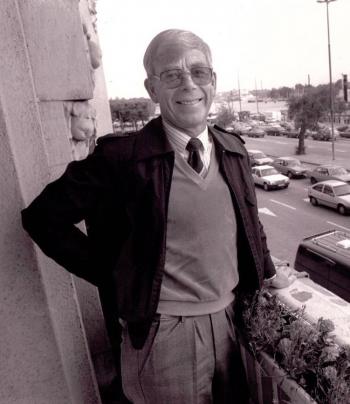
Oscar Carlsson, famed designer of the Sholapur hand pump on which the India MK II is based, died in Sweden on January 18th aged 89. Ingrid, his wife of some 60 years, a teacher and social worker, died four months ago.
Oscar’s funeral will take place in his home town of Kristianstad, southern Sweden on February 11th.
Oscar and Ingrid worked together for many years in Sholapur, Maharashtra State, western India, under the auspices of the Mission Covenant Church of Sweden and the Hindustani Covenant Church.
Oscar Carlsson was a rare being, blessed with out-of-the-box imagination and clever engineering skills that he translated into practical solutions to every day technical and social problems. The Sholapur hand pump was perhaps his greatest contribution to improving the lives of rural people, his efforts magnified many times over by the mass produced India MKII.
From technical, trade school teacher in Sweden to managing the Sholapur Well Service in India, Oscar quickly adapted to his new environment, sharing his engineering expertise and teaching workshop practice and draughtsmanship while dreaming up better water lifting devices for the bore wells drilled by his project in the hard basalt of Maharashtra. It is with hand pumps that Oscar’s name is most closely associated.
Unicef is sometimes wrongly credited with inventing the India MKII hand pump and designing it from scratch. While it is true that the pump would not have seen the light of day without Unicef, it is also true that without the pioneering work of the NGO community in Maharashtra, especially Oscar Carlson with his Sholapur pump, there would not have been a MK II at all. Apart form the pump itself, Oscar devised ball valves for the pump cylinder and a sand trap in the rising main to extend the life of (the then) leather cup washers, amongst many other ingenious ideas to improve efficiency and longevity, all of this, back in the 1970s.
His pivot mechanism for the pump handle, which cleverly avoids lateral stress to the bearings, and his chain and quadrant to maintain alignment and keep the connecting rods in tension that he designed nearly 50 years ago, remain virtually unchanged in the MKII. There are several other features of the pump that still carry Oscar’s imprint and he was pleased with the association, (though he never quite forgave Unicef for not incorporating internal handle stops to prevent crushed fingers in the final design).
The Sholapur hand pump laid the foundation for the India MK II development programme and it was Oscar’s inventive genius and the magnanimity of the Sholapur Well Service in freely sharing his ideas that enabled this to happen.
In recent times, I spent several days each year with Oscar at his home in Kristianstad, reinventing hand pumps (as one does) and debating solar water pumping as The Next Big Thing. Oscar became fascinated by solar. We investigated tracking devices to optimise the use of costly solar panels and purchased a sophisticated German tracker to figure out how it worked. Oscar then cobbled together a design of his own from an old VW windscreen wiper motor and other bits and pieces lying around in his work shop, and set up a test rig on his garage roof to compare performance, correlating his findings with theoretical readings back in India.
And then, a couple of years ago, when he was well into his eighties and we had become alarmed at the plummeting water tables in India’s hard rock areas, he worked on a diaphragm operated cylinder attachment to make pumping easier at depth. I was to have field tested this in India last year, but sadly, time was not on our side.
Oscar was always thinking of something new and never stopped working at his drawing board or with a newly acquired CAD programme, until last year when Alzheimer’s began to take its toll, and then cancer took hold…
These days, it is fashionable to decry the efforts of NGOs and mission based ‘do gooders’. But amongst them are some rare gems. Oscar was one such from the early days of rural development. The 6 million or so MK II hand pumps in India and the thousands more in other countries are a magnificent tribute to Oscar’s engineering prowess and timeless, practical designs. It is something of a tragedy then, that many manufacturers today use inferior material and ignore the specifications and quality norms so critical to the reliability of a MK II hand pump (or anything else for that matter).
Nevertheless, countless rural communities still benefit from Oscar’s creative mind, So, on behalf of them all and on behalf of his many friends and admirers around the world, let me just say, thank you Oscar. Yours was a most useful and valuable life, well lived.
L’association Morija a expérimenté le programme WASH Est (2011–2016) dans quatre provinces. L’approche globale eau potable, assainissement et hygiène ainsi expérimentée est actuellement confortée dans la commune de Nobéré à travers le projet Colibri (2015–2019).
This is a review of the 2016 highlights from a Self-supply point of view: Events, papers, presentations, policy breakthroughs, etc.
We are well into 2017 already, but it is still a good moment to look back to some highlights of 2016 from the point of view of Self-supply:
In the first half of 2016, the UNICEF-funded studies of Self-supply in Zambia and Zimbabwe were completed. The studies showcase these two experiences at scale, and they are the fundament for making an economic case for Self-Supply , demonstrating that using Self-supply as part of the strategies to reach full coverage can be very cost-effective.
In Addis Ababa, Ethiopia,a 2nd national meeting on Self-supply was organized bringing together dozens of national stakeholders involved in the scaling up of Self-supply at country level through the national ONE WASH Programme.
The 2016 edition of the WEDC conference also saw its share of Self-supply: A paper presented by Annemarieke Maltha (on experiences of the SMART Centre approach in Tanzania) and one by Sally Sutton on the experiences in Zambia, among others.
The RWSN mini-series of webinars in the autumn 2016 included an event on Self-supply, focusing on the economic analysis of country strategies in Zambia and Zimbabwe (see recordings of the webinar here).
Self-supply also made a splash at the 7th RWSN Forum in Abidjan (29.11 – 03.12.2016), with 7 sessions related to Self-supply (see a list of Self-supply papers here). Apart from the frequent appearance of the Self-supply Theme in the sessions it also was notable to see how often the term came up in discussions and in plenary speeches, including within the panel of the closing ceremony.
At the same event, a bottom-up, spontaneous initiative of a small group of people helped to engage in conversations with many of the participants of the Forum and resulted in 150 signing a paper confirming their personal approval and support of the Self-supply approach.
As one possible way of implementing Self-Supply, the initiative of SMART Centre Group emerged and gained traction throughout the year. SMART Centres are business incubators which foster the local private sector in the WASH sector. Currently, there are SMART Centres in 5 countries formally recognized as such (see smartcentregroup.com), but many other organizations are implementing similar concepts around the world, and it will be interesting to see how these different initiatives can support each other and create synergies – or even merge – in the future.
Overall, it has been a fantastic year for Self-supply. Especially if we consider that the term “Self-supply” did not even exist before 2004 (when it was created by RWSN), it is remarkable that after a relatively slow process of foundation building we are now witnessing the moment when Self-supply is getting into mainstream – and hopefully we will see a wider use and further development of the concept in the near future. On behalf of RWSN, and particularly Skat as the lead agency for the Self-supply theme, we are encouraged by the results achieved so far and look forward to the next phase of development – and to another year of progress, exchange and learning with our RWSN partners.
Matthias Saladin is the Theme leader of Accerating Self-supply at the Rural Water Supply Network. You can leave comments or questions here or write to him: matthias.saladin@skat.ch.




 h full coverage can be very cost-effective.
 Rural Water Supply Network - blog