
Can failed water & sanitation projects cause harm? Quote from a recent evaluation
Making Impact Evaluation Matter

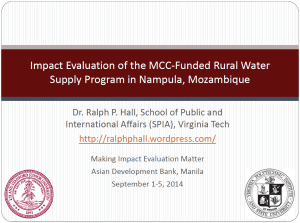
Earlier this month I had the pleasure of attending the Making Impact Evaluation Matter conference in Manila, hosted by the Asian Development Bank (ADB), 3ie, and the Philippine Institute for Development Studies (PIDS). During the conference, I took part in a WASH Impact Evaluation Design Clinic and gave a presentation on the results of the impact evaluation I directed of the MCC-funded Rural Water Supply Program in Nampula, Mozambique. Whereas the final impact evaluation report was based on all of the data we collected, the results I presented in Manila focused only on the panel data obtained from the baseline (2011) and follow-up (2013) studies. The results from the panel data analysis (shown in the presentation below) align well with those developed from the full data set.
During the conference, Eric Vance spoke about his LISA2020 vision to create 20 statistical consulting laboratories in 20 developing countries by the year 2020. Eric is the…
View original post 83 more words
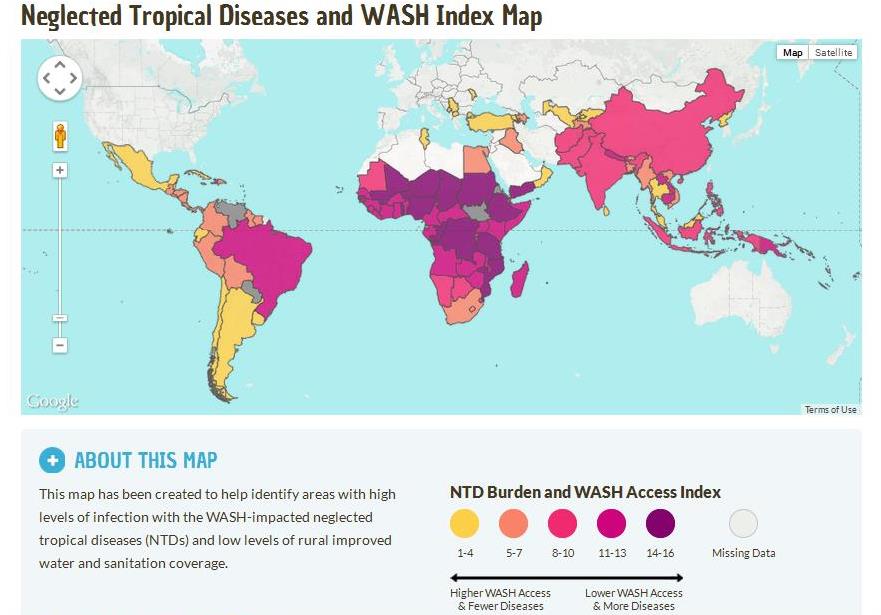
WASH can have health impacts beyond reducing diarrhea
Water Supply in Lagos and Nigeria – the importance of manual drilling

Nigeria has become increasingly dependent on groundwater over the last 20 years. Groundwater (from hand dug wells, boreholes/tubewells and springs) is the main source of drinking water for over 100 million people in the country. But how many people know about this, and what it means for the practices, policies and politics of Africa’s most populous country?
For our short photo/video documentary, visit: http://vimeo.com/107047730. The full report can be downloaded from http://www.rural-water-supply.net/en/resources/details/618.
Groundwater use in Nigeria has increased year after year: boreholes supplied drinking water to 10% of the population in 1999. By 2011 it was 32%. These boreholes are drilled by machines or manually. Most boreholes that are drilled on the sediments in the south or north east of the country are constructed using manual drilling techniques.
The Rural Water Supply Network (RWSN) is known for its work on water supply in rural areas. Thanks to the collaboration with UNICEF, I was able to undertake a short study of manual drilling in Lagos and neighbouring states in June this year. Have you ever visited Lagos? Lagos State is one the world’s most rapidly growing urban agglomerations. Its current population is estimated at 21 million. It is Nigeria’s smallest in terms of size but largest in terms of population. An extremely vibrant and energetic place where urban is interspersed with rural in a very dynamic situation.
Less than 10% of Lagosians access piped water, while the remainder largely fend for themselves. So what do they use? Well, people buy water from vendors, purchase bottled or sachet water, or draw water from their own hand-dug wells or boreholes. One of the less well known factors in Lagos’ success as an economic hub is that it sits on sediments. These are filled with relatively shallow groundwater (at a depth of 10 to 70 meters) which can be tapped affordably.
In recent years, most new groundwater supplies in Lagos are being constructed using manual drilling techniques. We estimate that there are about 200 drilling enterprises operating in Lagos, employing about 1,000 people. For Nigeria as a whole, there are even more.
Here are some quotes from the study:
- There is no other fast technology that can give water like manual drilling. It will keep on happening as long as people are building their houses.” Manual Driller, Lagos
- “[Manual Drilling] is the order of the day. Before you start building a house you must have money to put a borehole there” General Manager, Rural Water and Sanitation State Agency (RUWASSA),
Oyo State - “There is no need to go out [of Nigeria]. There is money to be made in this country…I would be proud for my son to enter this [manual drilling] business, Manual Driller, Oyo State
The manual drilling industry is attracting new recruits with its relatively low entry barrier (about US$2,000 for a set of drilling tools). Manual drilling is thus providing much-needed employment, most of which is within the informal economy. The manually drilled boreholes themselves are affordable, usually at a cost of less than US$2,500 per well. And they can be constructed in small spaces, and in parts of the city where conventional drilling equipment could never reach.
Manual drilling fills a need, but is not regulated. Variable construction quality poses health risks for the population, who, along with political leaders are largely in the dark about key construction standards. There are also longer terms risks of groundwater contamination. With no records of the number of wells drilled and abstraction rates, coupled with a lack of groundwater monitoring, there is no guarantee that groundwater levels will not start to fall in the future.
As the market for manual drilled boreholes and industry expands in many parts of Nigeria, those who can afford it, and are living on suitable formations will benefit from having a water source at their own home. Others will be less fortunate. In order to harness the benefits of manual drilling, we recommend the following:
- Recognise that manual drilling provides affordable water close to the home – but not for everyone
- Educate citizens and political leaders about groundwater
- Recognise and support the initiatives of the manual drillers to organise themselves
- Train manual drillers and supervisors to become professionals
- Popularise and strengthen regulations at state-level and issue permits for manual drillers and licences for manually drilled boreholes
- Find ways to ensure adherence of borehole construction standards – including supervision
- Test water quality
- Assess and monitor water resources
For our short photo/video documentary, visit: http://vimeo.com/107047730.
The full report can be downloaded from http://www.rural-water-supply.net/en/resources/details/618.
Framework of service delivery indicators for assessing and monitoring rural and small town water supply services in Ghana
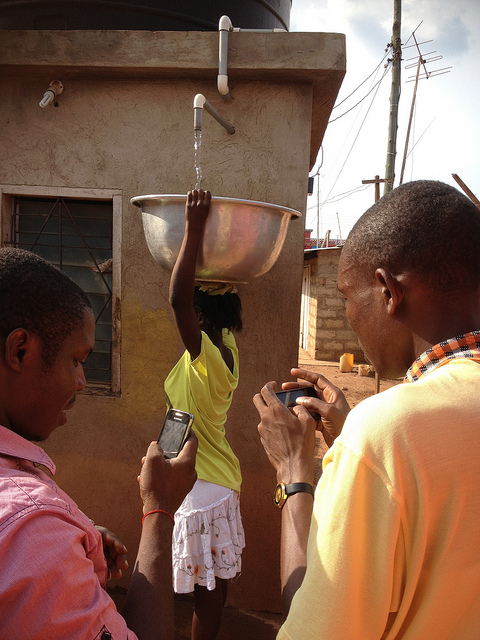

The rural water and sanitation sub sector of Ghana is on a positive trajectory towards establishing an inventory of rural and small-towns water systems across the country and a continuous service monitoring process that will enable the sector to measure and report on access, functionality and sustainability of service levels.
Blog post for the SWA blog series for 2014 World Water Week in Stockholm, by Vida Duti – IRC Country Director in Ghana
Resolution: guidelines for addressing problems with water systems
Manually Drilled Wells: Providing water in Nigeria’s Megacity of Lagos and beyond

by Dr Kerstin Danert, Skat Foundation
In Lagos, a city of over 17 million people, water demands are mainly being met from tapping the groundwater that lies beneath the city. Boreholes provide water directly at people’s homes or business premises. Borehole construction is being paid for by householders and businesses themselves. Water vendors, selling water in jerry cans or trucks are also prolific. Given the limited reach of the piped infrastructure, much of the water vended is likely to also originate from below ground. In fact, exploitation of the large, relatively shallow aquifers that lie below Lagos is one of the main reasons that the city can continue to grow at all.
Continue reading “Manually Drilled Wells: Providing water in Nigeria’s Megacity of Lagos and beyond”
Resolution of Problems with Water Systems
More good analysis:
4 lessons about handpump sustainability in Ghana
By Sara Marks, Senior Scientist at Sandec / Eawag
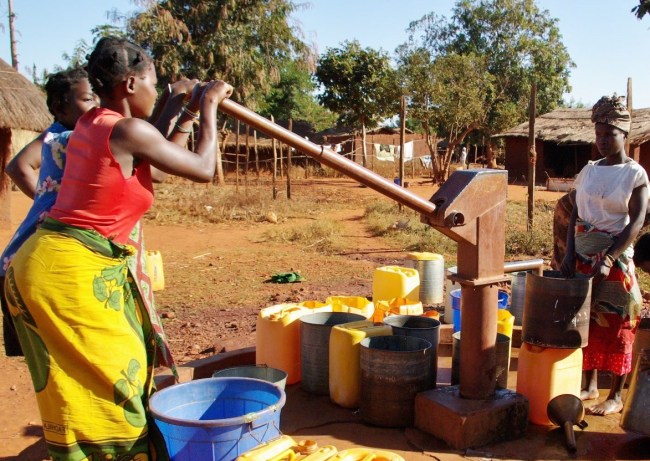
In 2012 we learned the exciting news that the Millennium Development Goal (MDG) for drinking water access had been met, nearly 3 years ahead of schedule. Yet an important question still looms large: What will it take to ensure that those who have gained access continue to enjoy their water services well into the future? And how will sustainable water services be extended to the remaining unserved?
Continue reading “4 lessons about handpump sustainability in Ghana”
 Rural Water Supply Network - blog