Professionalism. Standards. Systems. These themes are repeated throughout Rural Water Supply Network’s (RWSN) spring and fall 2025 webinar series.
Given the large percentage of boreholes with early failure – within one to two years – improvements in standards and professionalism in borehole drilling are necessary. Drilling association leaders spoke passionately about the need for borehole drillers to professionalize to improve the quality of boreholes, increase accountability, stop illegal drilling and enhance community buy-in, which occurs when standards are enforced and certified materials are used.
George k’Ouma, from the Small Scale Drillers Association of Kenya, said it best: Professionalism isn’t optional.
A tidbit: Small borehole drillers have an advantage over large operations because they have knowledge of the local geology and seasonal changes, which enables better planning and materials selection.
Another area in need of increased professionalism is water management. Professor Kwabena Nyarko, from Kwame Nkrumah University of Science and Technology, Kumasi (KNUST), conducted a study comparing public sector, private sector and community water management in Ghana. Model type was less important than having professional standards and following best practices, including metering, tariffs that covered maintenance costs, efficient collection of tariffs, audits and reporting, digital recordkeeping and training, as well as financial support.
Jose Kobashikawa, head of the Enforcement Directorate for Sunass, the regulatory body for drinking water and sanitation services in Peru, echoed these concepts in his presentation. SUNASS uses a benchmarking tool to evaluate rural providers. Metrics include formality and management (are they registered, do they have a water use license), financial sustainability (do they collect tariffs, what percent of customers are defaulters), and quality of services (is water chlorinated and daily hours of water supply). High performing providers are awarded certificates recognizing their good practices in public management and workshops are held in each region to disseminate best practices.
Focusing on systems is another thread that runs through the varied webinar topics. Systems thinking means designing a scheme for the long-term provision of water. Boreholes must be properly sited. Appropriate materials, such as high quality stainless steel (304/316), need to be selected in order to prevent corrosion, as RWSN’s Stop the Rot initiative details. Handpumps often corrode within months or years instead of lasting a decade. Ayebale Ared, Technical and Social Expert at Welthungerhilfe, shared Uganda’s systemic solution: in 2016 the country banned the use of galvanized iron (GI) risers and rods in all new and rehabilitated handpumps – the first sub-Saharan country to do so. Uganda also requires a water quality analysis be done before materials are selected.
In addition, data collection and use must be embedded in all stages and aspects of water projects.. Dr. Callist Tindimugaya, Commissioner for Water Resources Planning and Regulation in Uganda, collects data from drillers which he then turns into groundwater maps the drillers can then use.
Systems thinking also means including the needs of the entire population in the design, especially women, who bear the burden of hauling and carrying water. Women – who are killed by crocodiles while washing clothes in rivers, whose skin is irritated by harsh detergents, who find leaning over low wash basins harder as they age, who need to wash bloody clothes and bedsheets separately from the family’s regular laundry when they menstruate. Laundry is barely mentioned in WASH circles but RWSN devoted an entire webinar to the topic. One speaker questioned how the WASH sector would be different if the metric for success was the amount of time women spend collecting water.
Understanding the local culture is critical; psychologists, behaviorists and sociologists can help provide insights. Technical solutions which aren’t accepted by the community will only lead to failure.
The lack of funds to cover maintenance work on wells is well known. Systems thinking means anticipating root causes of funding issues in a community and pre-emptively building a system that attempts to solve those issues. Tariffs are too low to cover maintenance? Then the project needs to determine how sufficient funds will be raised, whether through higher water fees (that may be less affordable to low-income families) or from external sources. The water committee is inefficient at collecting funds? Then training and capacity building need to be part of the project design from the beginning.
Looking at the bigger picture helps creative ideas flourish: Household rainwater harvesting, replenishing water aquifers through tube recharging, deep bed farming that breaks up the hard pan so water can return to the aquifer, sand dams that filter water and incorporating water management and regreening in the design and construction of roads so crops can grow next to roads. During the laundry webinar, three organizations presented their laundry solutions – devices that save women time, eliminate much of the manual labor, use less water and even offer income-generating opportunities.
The webinars are at times frustrating because we clearly know what needs to be done – yet professionalism, systems thinking and best practices are not always prevalent. More often, though, the webinars are full of insightful information and inspiring stores from experts. The knowledgeable participants, who ask focused, detailed questions, enhance the experience. I look forward to the spring 2026 webinars which are currently being planned.
Rebecca Laes-Kushner is a consultant to NGOs and companies with a social mission, with a particular focus on development issues such as WASH, climate change, supporting SMEs, health care and nutrition. Laes-Kushner Consulting (https://laeskushner.net/) provides research and writing, data analysis, M&E and training services. Rebecca has a Master’s in Public Administration (USA) and a Certificate of Advanced Studies in Development and Cooperation from ETH NADEL in Switzerland.
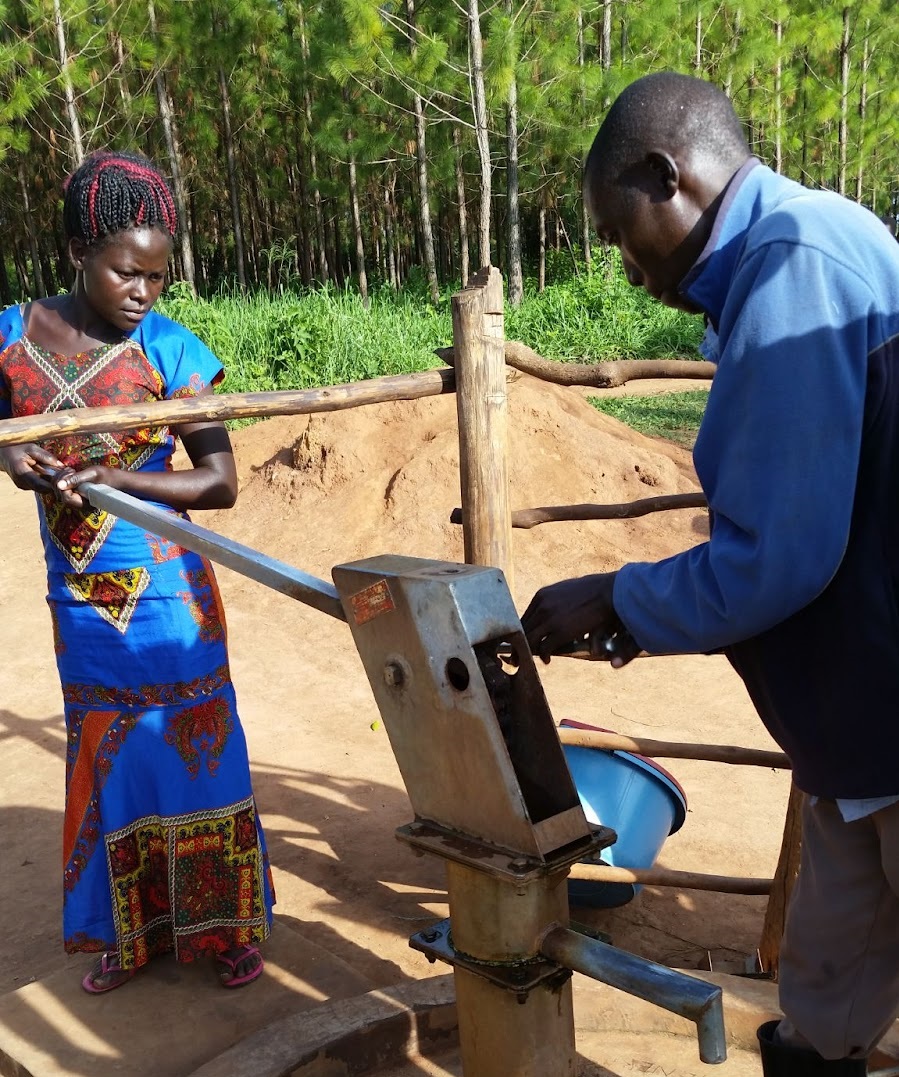
About 67% of the population of rural Uganda rely on a handpump, and, according to the Ministry of Water and Environment (MWE) database, the country currently has an asset base of over 63,000 handpumps. While there is a policy shift towards piped supplies (including using solar-driven pumps), handpumps will remain important in providing water to Uganda’s rural population for the foreseeable future. The U2 and U3 (known elsewhere as the India Mark II and Mark III), as well as the Uganda 3 Modified Pump (U3M) are the standardised pumps used in the country.
The rapid corrosion of submerged handpump riser pipes and rods has been well documented in Uganda, with over a dozen reports, and studies, including academic publications on the subject. When handpumps corrode, the red, badly-tasting water of the supply is often rejected and sources abandoned, with users returning to more distant and contaminated supplies. Rapid corrosion also leads to premature failure of the supply as riser pipes leak or even break completely. It is widely accepted that galvanised iron (GI) riser pipes and rods corrode in aggressive groundwater where pH levels are low (<6.5). High levels of salinity and high chloride concentrations are also highly corrosive.
In recognition of the widespread corrosion problem in Uganda, in 2016 MWE issued a letter suspending the use of galvanised iron riser pipes. Despite the fact that rapid corrosion is a problem in at least 20 countries in sub-Saharan Africa (plus Sudan), Uganda is one of the very few countries to have taken affirmative action to address the issue.
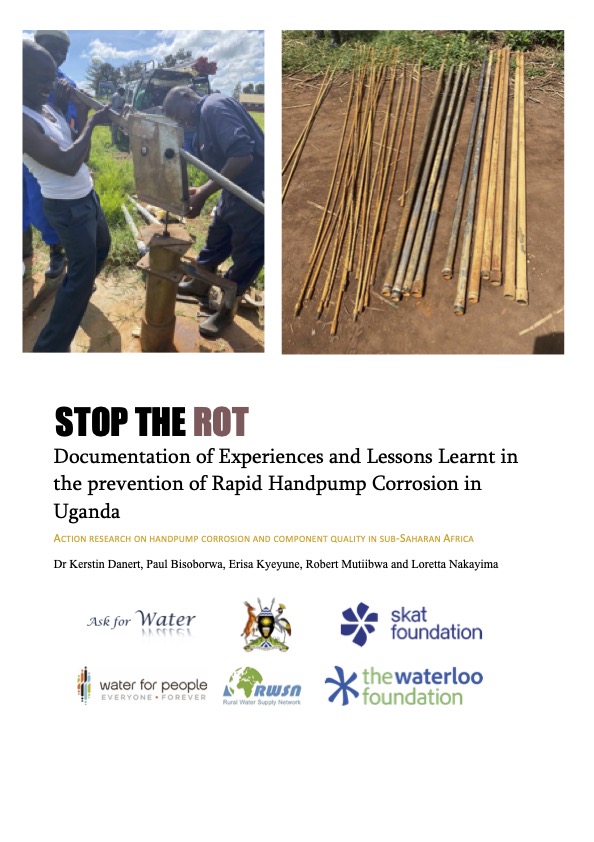
This short study, funded by The Waterloo Foundation, set out to document Uganda’s experience and lessons learnt in preventing rapid corrosion. It is intended to provide insights and recommendations for Uganda and other countries. The in-country study was undertaken in October/November 2023, and comprised interviews with 55 stakeholders from government, suppliers, NGOs, drillers and handpump mechanics as well as a review of select documentation and analysis of quantitative data collected in 16 districts by the NGO Water for People. As well as discussing with stakeholders based in Kampala, the study involved visits to Mityana, Kibaale, Kyegegwa, Mubende, Kamwenge and Masindi Districts, including some observations of components and handpump removal.
The study has found qualitative evidence that the suspension of use of GI pipes on handpump installations in Uganda has had an overall positive effect on reducing the phenomenon of handpump corrosion in the country. It took a few years for stakeholders to adjust to the suspension, including availing alternative materials and determining which grades of stainless steel to be used. In the early years, there were issues of availability and supply of alternatives, gaps in information among some stakeholders alongside cost concerns. Initially, some organisations installed grade 202 stainless steel, which was also found to corrode rapidly. In addition to stainless steel pipes, uPVC (with uPVC connectors) and uPVC pipes with stainless steel connectors are used.
While most stakeholders seem to be aware of the suspension of GI riser pipes and rods, this does not seem to be fully adhered to, with some district local governments, NGOs and communities apparently still installing GI on new installations or for replacements. The study witnessed “mixed” installations comprising GI, and stainless steel (which also sometimes appeared to comprise different grades). Such installations risk creating problems through galvanic corrosion, a phenomenon whereby dissimilar metals submerged in water increase corrosion.
The study concludes with a number of recommendations as summarised below:
Studies and research
Explore reasons why some stakeholders are not adhering to the suspension of GI riser pipes and pump rods and how to effectively overcome these barriers.
Undertake analysis of quantitative data including MWE Management Information System (MIS) data on shallow wells and boreholes (including their functionality status/due for decommissioning). Quantify the extent to which handpumps with corroding GI components have been replaced in the country, and also estimate the cost and human capacity implications of replacing poorly functioning or abandoned sources as a result of corrosion.
Monitor installations to determine if there are any problems with corrosion of the water tank and cylinder when connected to a stainless steel pipe as a result of galvanic corrosion or poor installation, and consider checking for the release of contaminants, including lead.
Clarify maximum installation depths for alternative materials through testing, and communicate this clearly to all stakeholders through written guidance (discussed below).
Developa short document (and film) on what users can measure and inspect directly. This could support stakeholders in assuring quality.
Undertake further research on the relationships between pH, salinity, other water quality parameters and the quality of the galvanising (particularly the thickness of the galvanising).
Explore alternatives to the nationwide suspension of GI, such as lifting the suspension locally based on very clear, scientifically robust criteria in relation to pH and salinity.
The appropriateness of the discontinuation of funding for shallow wells should be further studied and reviewed for appropriateness.
Recommended actions for Uganda
Support quality assurance efforts by updating the Uganda Standard Specifications for the India Mark deepwell and shallow well handpumps, referred to in Uganda as the U2 and U3 pumps.
Develop a certification mechanism for the suppliers of handpumps/components to ensure quality and include labelling requirements to help consumers identify appropriate parts.
Raise awareness and improve knowledge of (i) the GI suspension, and the rationale behind it, (ii) how to determine whether iron in water is naturally occurring or caused by corrosion, (iii) appropriate alternatives (iv) key issues with respect to grades of stainless steel and depth limitations and (v) identifying appropriate parts. Written guidance should be provided.
Provide training for handpump mechanics and handpump installers across the country on the correct handling of the uPVC and stainless-steel alternatives currently available on the market in Uganda, and ensure that they have the appropriate toolkits to handle these materials.
Incorporate inspection of handpump component quality and installation in post-construction monitoring by government, NGOs, the Uganda Drilling Contractors Association (UDCA) and funding agencies.
Continue to engage with and support innovations such as the Handpump Improvement Project.
MWE, in collaboration with NGOs and District Local Governments should find ways of supporting poor and vulnerable communities with ongoing corrosion problems to replace GI pipes and rods.
Lessons for other countries
Based on the experiences of Uganda, key lessons for other countries that are considering taking affirmative action to address rapid handpump corrosion are:
Undertake an in-country study to document the extent of the problem and any efforts that may have been undertaken to address it in the past. If rapid handpump corrosion is found to be a widespread problem in the country, and is related to GI installed in aggressive groundwater, consider suspending the use of GI – carefully considering the pros and cons of a nationwide or more localised suspension as well as the feasibility of using alternative parts.
Prior to any suspension, undertake extensive and transparent stakeholder consultation, taking on board concerns and developing a suitable timeline. Provide user-friendly guidance on alternative materials and their handling. In advance of any suspension, ensure that all stakeholders are informed of it, and are made aware of any implications for programmes and budgets.
Government should either refer to suitable international standard specifications, update national standard specifications or (as an interim measure) provide clear guidance regarding alternative materials, components and dimensioning that should be used. Evaluation is needed to ensure that materials are safe for contact with drinking water. Guidance should include information on depth limitations and material handling.
Document the process of suspension, and monitor adherence, as well as challenges faced by organisations and communities, and consider how to adapt programmes and policies to enable changes to be effective.
Ensure that handpump mechanics and others across the country are trained in the correct handling of the alternatives to GI. They should also be provided with appropriate toolkits for handling the stainless-steel and uPVC pipe materials.
The responsible line ministry should work with the agency responsible for standards to ensure the importation of quality handpump components and consider certification of suppliers.
Photo: Supervised Borehole Drilling Project: Collection of Water Samples for Water Quality Analysis at a completed Borehole during the Final Certification Process
As one of the few remaining qualified, experienced, and active drilling supervisors in Zimbabwe, I would like to share experiences on the status of borehole drilling supervision in my country, Zimbabwe.
Drilling Supervision: A Technical Perspective
Rural areas, where the majority of Zimbabweans reside, are mainly serviced through groundwater sources for their water supply needs. The life span for a significant number of boreholes that have invariably become the technology of choice in Zimbabwe has in most cases proved to be short. This has mainly been due to shortcomings bedeviling the drilling and construction process thereby making the professionalisation of the borehole drilling imperative. Borehole drilling supervision, among other factors, is an integral component of the borehole drilling professionalisation process. This requires the hiring of professionals with relevant qualifications and experience to provide adequate supervision of drilling and related operations for the purposes of controlling the quality of work and securing compliance with the design and technical specifications stipulated for the drilling works as well as generating information for making key decisions in terms of on-site design modifications and the final borehole depth. In this context, questions about whether there is sufficient capacity to supervise borehole drilling in Zimbabwe would need some answers.
Professionals have left the country
Most of the qualified hydrogeologists or professionals with a geological background and relevant experience in drilling supervision have migrated to other countries in the Southern Africa region and beyond. This has largely been due to the fact that job opportunities in the groundwater development field in Zimbabwe are scarce.
If you measure something, how do you know that someone else would get the same result? This is a fundamental question in many fields including medicine and psychology, but it is rarely considered in rural water supply.
Photo: A handpump mechanic performs preventive maintenance in Uganda (Photo: Daniel W. Smith)
If you measure something, how do you know that someone else would get the same result? This is a fundamental question in many fields including medicine and psychology, but it is rarely considered in rural water supply.
This problem became painfully apparent during a recent study of professionalizing handpump maintenance in Uganda conducted by the Program for Water, Health, and Development at the Stanford Woods Institute for the Environment and International Lifeline Fund. Our data collection team had a seemingly straightforward instruction: Count a handpump as functional if it provides water. But different data collectors interpreted the instruction differently. Some would count a handpump as functional even if it took a long time to get a little water. Others counted handpumps in a similar condition as nonfunctional. We needed a clearer, more reliable procedure to ensure that handpump functionality measured by different people would be comparable.
India: home to almost a fifth of the global population. Yet, its rural communities continue to face challenges in accessing water, due to overextraction depleting groundwater, poor recharge, and increased demand for water as industries expand and the rural economy grows. Ensuring water security for the future requires us to learn from the past. Across India, rural populations once met their water needs through ingenious feats of architecture in the form of stepwells (or baolis or vavs). I went to visit Adalaj Ni Vav (Rudabai Stepwell), on the outskirts of Ahmedabad, Gujarat in February 2023. In this two-part blog series, I reflect on the lessons we can learn about the significance of stepwells for India from past uses of Adalaj (part 1) and look ahead the role that stepwells could play in the future (part 2).
What are stepwells?
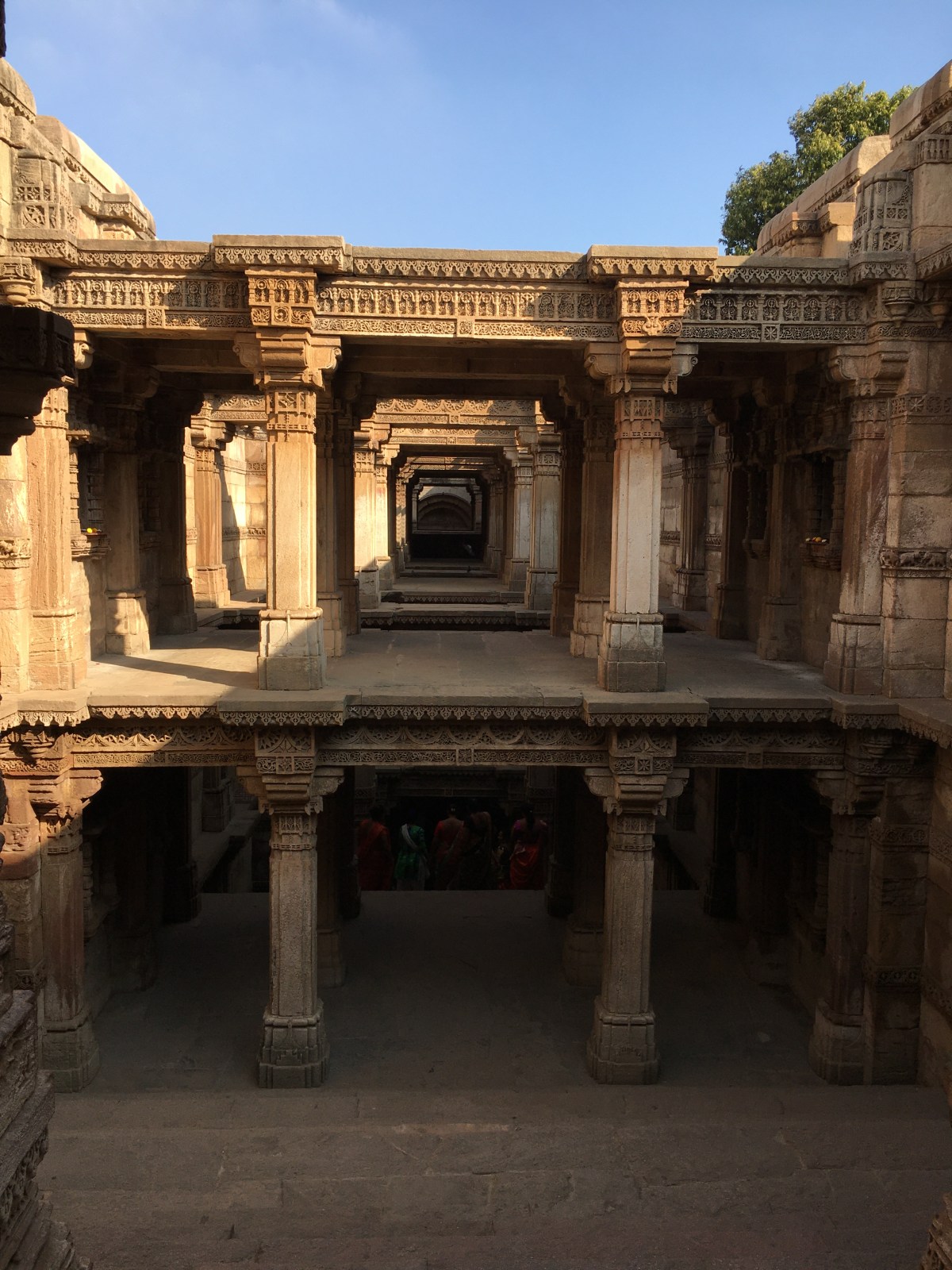
Stepwells are linear buildings. Steps lead down to landings with pavilions that house two shrines, and columns which make them resemble a room, followed by more steps, until reaching a cylindrical well at the bottom. The roof of one room becomes the floor of the pavilion above. Gujarat’s stepwells range from 60 to 80-feet in depth, with their upper-most landings receiving the most light, screened by walls known as Jalees to provide shade. Stepwell corridors are open to the sky except where it enters a pavilion. The terraces of stepwells are typically marked by noises and splashes as women beat clothes and scour pots, animals drink and children run around. The stepwells are referred to by landmarks (e.g. station vav), goddesses (e.g. Surya Kundi), patrons (e.g. queen) or place (e.g. Adalaj)[i].
Shrine in a pavillion at Adalaj (Photo: Amita Bhakta)
Adalaj Ni Vav: a well with a tragic tale
Adalaj Ni Vav is a 75.3-metre-long stepwell laid out in a north-south direction. On my visit, I made my way down one of the three flights of steps arranged in a cross to enter the vav, which are attached to the main stepped corridor leading to the well at the bottom, with an octagonal opening at the top and a pavilion resting on 16 pillars with 4 built-in shrines. The vav was built between 1498-1505 by Sultan Mahmud Begada in honour of Queen Rudrarani, who he promised to marry after it was completed. When the vav was completed, Rudrarani committed suicide by jumping in to the well. Through his grief, the Sultan killed those who built it to prevent another similar vav from being built, who are buried in the graves in the nearby garden i.
Learning from Gujarat’s past links to Adalaj
Adalaj Ni Vav was once a hub for the local community until the British Raj put it and many other vavs into disuse, deeming it unhygienic and introducing taps, pumps and borewells. Rainwater harvesting enabled the community to wash their clothes and feed their animals. Travellers used the vav, built along trade routes to support India’s economic development, as a resting site[ii].
Whilst it is no longer used as a water point, Adalaj’s long-standing spiritual connections to local people can help to sustain the cultural legacy of the stepwell. There is scope to pave a way for the community to continue its traditional purpose as a place of worship. The shrine on the outer wall has long been used and maintained by local Brahmin women to the present day, who worship local goddesses for fertility, health, and family prosperity.
But, it is not just people who stand to benefit from lessons from Adalaj’s past. Birds and animals used to be attracted to the vav as a cool spot, drawn in by food left over from festivals. In an era of global challenges such as climate change, it is important to recognise that the stepwell was once a place where rich biodiversity could flourish.
Moving forward: bridging the history of Gujarat’s stepwells to the future
The history of Gujarat’s rural stepwells reflects the cultural significance they held in the past, and show a need to recognise them as previous places of sustenance and of continued spiritual value. Whilst it is unlikely that Adalaj will once again serve as a water point, it can provide a place for biodiversity to flourish, and has the potential to teach and reengage local communities with their own water management systems for future preservation, particularly in these parts of Gujarat where drilling for petroleum is creating depressions in the water table. Let’s recognise the collective memory of Gujarat’s rural stepwells as historical sites of interest and work to preserve these ancient structures for the future.
Acknowledgement
Special thanks to my friend, Mona Iyer, for facilitating this field visit, and to Mahesh Popat for his brilliant support in the field. Thank you to the secretariat for their moral support for this work and to Temple Oraeki for reviewing drafts of this blog.
About the author: Amita Bhakta is a freelance consultant and co-lead for the leave no-one behind theme at the Rural Water Supply Network. She has specialised in looking at hidden issues to achieve equity and inclusion in WASH and has a keen interest in rural water heritage in India.
Photo credits: Amita Bhakta.
References
[i] National Institute of Design (1992) Adalaj village: a course documentation Ahmedabad: National Institute of Design
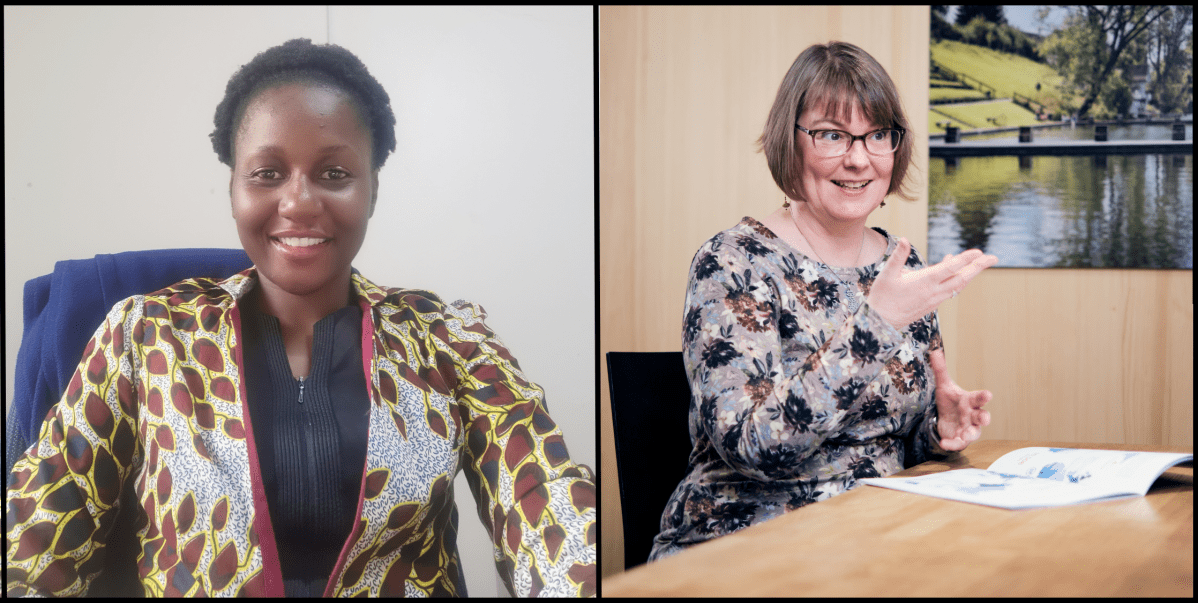
For International Women’s Day, we would like to highlight two participants from the RWSN Mentoring programme for young professionals and women, Fadzai T. Munodawafa-Bhurabhura (from Zimbabwe) and Dr Kerstin Danert (from Switzerland). You can find out more about their experience of mentoring through RWSN below. RWSN plans on launching a new edition of the mentoring programme soon, and encourages women of all ages in the water sector to sign up. To find out more, sign up to become a RWSN member today.
Mentorship is a reciprocal learning relationship in which a mentor and mentee work collaboratively toward the achievement of mutually-defined goals that will develop a mentee’s skills, abilities, knowledge, and/or thinking.
Fadzai’s words:
I am Fadzai T. Munodawafa, a WASH professional with an international Non-Governmental Organisation (NGO) in Zimbabwe. I support teams who implement WASH in the rural communities in Zimbabwe. In addition, I am responsible for managing the drilling unit of the organisation. With such responsibilities as a young professional, I sought to increase my understanding of rural and urban water supply and sanitation as well as groundwater monitoring, which both have a significant bearing on improving access to water for under-privileged communities.
A message of invitation for young professionals in the water sector to join the mentorship programme under the Rural Water Supply Network (RWSN) was shared on the Zimbabwe WASH Cluster platform. I thought this was an opportunity to learn from senior professionals and firm up my career. Following acceptance within the mentorship programme in 2020, I was linked with Dr Kerstin Danert a water sector professional researcher and facilitator.
Kerstin’s words:
I am Kerstin Danert, a rural water supply professional who has been active in RWSN since 2004, when I was still living and working in Uganda. I work as a consultant, with a range of types of work including research, training, facilitation and knowledge-brokering. I currently live in Switzerland.
Fadzai’s words:
My mentorship experience was a flexible one where I would ask questions or a raise discussion point and Kerstin would have a topic for discussion for our scheduled meetings. During our 9-month mentorship relationship, Kerstin and I discussed broadly on topics such as groundwater management, remote sensing and sustainable community-based management of water points key areas that have helped me in my career in the water sector. Kerstin’s experience in sub-Saharan Africa and remote areas made our connection easy as she could relate to my experiences and questions.
Kerstin’s words:
Our mentoring relationship commenced just as I was branching out to start my own company, which unfortunately coincided with the start of the Covid pandemic. It was not an easy time (as we all know), and I was worried as to whether my company would even survive. It very soon became apparent that this would not be a one-way mentorship by any means. Fadzai not only helped me to make contact with field realities (which I was very much missing), but also gave me a lot of support and encouragement regarding my new venture.
Fadzai’s words:
As a young professional, I was not confident speaking in public forums, a weakness my mentor helped me to work on. Now I can confidently speak in professional forums following her encouragement. Our engagement also looked into working on my resume and boost it to showcase the experience and skills I have. In addition, she connected me with experienced drillers and water specialists in Zimbabwe.
Kerstin’s words
Although I have now worked in the water sector for over 25 years always as a consultant, I still remain concerned work may not come in going forwards. Further, I think that I had began to take my years of experience for granted. The exchanges with Fadzai helped me to fully appreciate that I am actually not at the start of my working life, but (hopefully) in the middle of it with a lot under my belt already!
Both of us
Since the mentorship programme under RWSN, we have kept in touch resulting in our participation in the UNHS Climate and Gender podcast on Global Partnership: Gender, Progression and Climate-Orientated Careers (The UNHS Podcast and Spotify) in 2021. The following year, our mentorship led us to work on a report and video documenting the impact stories from participants of online courses on professional drilling by the RWSN
Fadzai’s words:
As a result of my mentorship experience, I can more effectively allocate my time for various activities, connect and confidently engage with other professionals in the water sector as well as have knowledge on key aspects of documentation. I highly recommend other young professionals to join the mentorship program that will build them up in their career within the water sector. Many thanks to the RWSN for this amazing and life changing experience.
Kerstin’s words:
This mentorship brought me closer to the field again. I learned so much from the conversations with Fadzai – and drew insights from her into all of my ongoing assignments, whatever the topic in fact. She always had such insightful contributions to make. And I argue that I was the mentee just as much as Fadzai was. So I encourage others to take the time to get involved in this programme. It has been so rewarding and I look forward to finally meeting Fadzai one day! We have been talking regularly now for three years. A big thanks to RWSN for this chance.
To find out more information about the RWSN mentoring programme, please see here.
Este año celebramos los 30 años de la fundación formal de la Red de Abastecimiento de Agua en Zonas Rurales. Desde unos inicios muy técnicos como grupo de expertos (en su mayoría hombres) la Red de Tecnología de Bombas de Mano- hemos evolucionado hasta convertirnos en una red diversa y vibrante de más de 13.000 personas y 100 organizaciones que trabajan en una amplia gama de temas. En el camino, hemos ganado una reputación de imparcialidad, y nos hemos convertido en un convocante global en el sector del agua rural.
La RWSN no sería lo que es hoy sin las contribuciones y los incansables esfuerzos de muchos de nuestros miembros, organizaciones y personas. Como parte de la celebración del 30º aniversario de la RWSN, estamos llevando a cabo una serie de blogs en rwsn.blog, invitando a nuestros amigos y expertos del sector a compartir sus pensamientos y experiencias en el sector del agua rural.
Esta es una entrada de blog del miembro de la RWSN Joshua Briemberg, con sede en Nicaragua.
Mi carrera en el sector del agua y el saneamiento comenzó en 1993, poco después de que naciera la RWSN. Fue una elección deliberada para mí después de un breve período en la industria petrolera del Reino Unido que siguió a vivir y trabajar durante 4 meses entre 1991 y 1992 en la zona rural de Nicaragua para construir una casa escuela de dos habitaciones. Durante ese tiempo, la diarrea estaba a la orden del día, y de la noche, en una rudimentaria letrina de pozo. Todavía recuerdo que miraba a las hojas de plátano gigantes que se agitaban a la luz de la luna para encontrar una sensación de paz en cierta agonía. En aquella época, luchaba por concentrarme mientras estaba en la universidad en Canadá, entre los estudios de ingeniería química, con una clase de tratamiento del agua que me llamaba la atención, y los estudios de humanidades, intrigado por el debate sobre los derechos del agua y los pueblos de las Primeras Naciones de Canadá.
Una vez terminada mi carrera de ingeniería en 1992, mi verdadera vocación siguió eludiéndose y me trasladé al Reino Unido. Durante mi estancia en Londres, primero como mensajero en bicicleta y luego como ingeniero de salud y seguridad para la construcción de una plataforma petrolífera de 11.000 millones de dólares en el Mar del Norte, la librería Intermediate Technology (que más tarde se convertiría en Practical Action) se convirtió en mi destino favorito y la publicación mensual Waterlines en una temprana inspiración, mientras planeaba volver a Nicaragua para hacer algo, cualquier cosa relacionada con el agua. También recuerdo haber llevado algún que otro paquete como mensajero a una pequeña oficina de WaterAid en un edificio cercano a Green Park. Veinte años más tarde, todavía viviendo en Nicaragua, se me pediría que diseñara y luego dirigiera el primer programa de país de WaterAid en América Latina.
En algún momento, dejé de lado cualquier idea de seguir una formación formal en las aulas de institutos de renombre como el WEDC de la Universidad de Loughborough, donde una vez me reuní con John Pickford, o el IHE de Delft, donde también hice una breve visita. El campo se convertiría en mi aula.
Mi andadura en el mundo del agua y el saneamiento en 1993 empezó de verdad al realizar un estudio sobre la presencia de pesticidas en las aguas subterráneas de las ciudades del histórico cinturón algodonero de Nicaragua en los años setenta. De ahí pasé a un par de trabajos en lo que iba a ser mi campo como ingeniero químico: planes maestros de alcantarillado para Managua y tratamiento de aguas residuales mientras estaba brevemente en Canadá.
Foto: Clase de graduados de Agua para la Vida
Pero fue entonces, cuando me encontré dirigiendo el primer ciclo de un programa de formación de ingenieros de pueblos para diseñar y construir pequeños sistemas rurales de abastecimiento de agua por gravedad alimentados por manantiales en las montañas del centro-norte, cuando realmente encontré mi vocación: el abastecimiento de agua en zonas rurales. En poco más de 30 años esta operación –Agua para la Vida– ha trabajado con pequeñas comunidades rurales de montaña para establecer más de 100 sistemas de abastecimiento de agua utilizando herramientas de diseño de última generación para optimizar el rendimiento y el coste. Los sistemas de abastecimiento de agua por gravedad alimentados por manantiales de montaña bien diseñados son asombrosamente duraderos con unos costes de funcionamiento muy manejables; el principal reto es la protección de la zona de recarga de la cuenca y garantizar la cohesión de la comunidad y una gestión eficaz.
Cautivado por la alegría de abrir el grifo y tener agua limpia a borbotones después de meses de sudor y esfuerzo, me sentí impulsado a seguir en la búsqueda de un vaso de agua limpia en todas partes.
Una cosa que descubrí durante estos años fue que, mientras diseñábamos para el crecimiento, las comunidades a menudo se reducían en tamaño debido a la migración en busca de mayores oportunidades económicas en otros lugares.
Aproveché los conocimientos aprendidos con las comunidades devastadas por la guerra en la frontera agrícola para trabajar con las comunidades indígenas Miskitu y Mayangna para llevar agua limpia de montaña a la gente a lo largo de un sistema de ríos en las profundidades más lejanas de una de las dos reservas de la biosfera en Nicaragua. El suministro de agua por tubería alimentada por gravedad siguió siendo mi opción por defecto hasta que se agotaron los manantiales.
En mi primera misión de reconocimiento, en 1997, en la aldea de Raiti, en el río Coco (Wangki), que separa Honduras de Nicaragua, me acompañó un hidrogeólogo estadounidense que no hablaba ni español ni la lengua local, el Miskitu. Durante la conversación con los líderes de la comunidad sobre la existencia de fuentes potenciales de manantiales, un líder de la comunidad me dijo que la fuente potencial estaba a unos 15 minutos de distancia mientras que otro dijo que estaba más bien a un día de distancia. Ni que decir tiene que mi hidrogeólogo decidió quedarse atrás y tardamos cerca de 6 horas en llegar al lugar que los aldeanos consideraban una fuente viable.
Desafortunadamente, como casi todas las fuentes de agua superficiales en la región oriental o caribeña de Nicaragua, estaba situada a una altura inferior a la de la comunidad, que era la forma en que las comunidades se protegían contra el riesgo de inundaciones. Y así comenzaron mis primeras experiencias de excavación y perforación de pozos con lo que para entonces se había convertido en un estándar nicaragüense: la bomba de mecate.
Transportando tubos en el Río Coco (2000-2003)
No fue hasta principios de la década de 2000, y con una década de experiencia empírica sobre el terreno, cuando empecé a entrar en contacto con redes como la RWSN, que se convirtieron en referencias esporádicas pero importantes, combinadas con otros focos de inspiración que encontraba en las escasas oportunidades en que salía de comunidades remotas por senderos, caminos de tierra y ríos.
A través de estos contactos, me inspiré para añadir nuevas herramientas a mi caja de herramientas en la búsqueda continua de agua limpia. La recogida de agua de lluvia y el tratamiento en el punto de uso o los filtros se convirtieron en aspectos importantes de mi búsqueda para llegar realmente a la última milla, al tiempo que experimentaba con bombas hidráulicas de ariete en el camino. Además de las tecnologías en sí, enfoques como el Marco de Aplicabilidad de la Tecnología (TAF), la aceleración del autoabastecimiento y el fortalecimiento de los sistemas se han convertido en herramientas esenciales en los últimos diez años de mi viaje.
De estos contactos surgieron no sólo referencias técnicas clave, sino una mayor comprensión de la importancia del contexto en la aplicabilidad de una solución, la complejidad de la sostenibilidad, la importancia de los enfoques basados en la demanda acompañados de sistemas que no son necesariamente exclusivos del sector público, sino que incluyen el papel del sector privado local, el espíritu empresarial, las alianzas y la aceleración de los modelos de autoabastecimiento de la prestación de servicios.
Todavía existe una tensión considerable entre estos dos enfoques del suministro de agua -el fortalecimiento de los sistemas y la aceleración de los modelos de autoabastecimiento-, aunque considero que estos últimos son complementarios y forman parte de los primeros, y a pesar de que en el ámbito del saneamiento las soluciones familiares individuales siguen siendo la norma para la población de las zonas rurales.
Ni que decir tiene que pasé de mis inicios en los sistemas de abastecimiento por gravedad alimentados por manantiales a los pozos de sondeo superficiales y profundos, a la perforación manual y mecánica, a las bombas manuales y a las impulsadas por energías renovables, a la captación de agua de lluvia en los tejados y al tratamiento y almacenamiento de agua en los hogares. También me adentré en el concepto de resiliencia y en los conceptos de usos múltiples y fuentes múltiples o sistemas híbridos, este último todavía menos considerado.
No debe pasar desapercibido que mi búsqueda de agua limpia en Nicaragua se ha visto confrontada y marcada en el camino por un número creciente de huracanes: Mitch en 1998, que me llevó al río Coco para construir sistemas de abastecimiento de agua donde no los había, pero donde las comunidades a lo largo del río habían sido totalmente arrasadas. Félix, en 2007, dejó una franja de destrucción en la costa caribeña nororiental. Y, más recientemente, Eta e Iota, en noviembre de 2020, arrasaron con todos los más de 250 sistemas de captación de agua de lluvia en los tejados, con tanques de ferrocemento de 4.000 litros, que habían sido construidos uno a uno durante 5 años por hombres y mujeres en la comunidad de Wawa Bar.
Training RWH System installers Wawa Boom (2021)
En el camino, también me encontré con algunas contribuciones significativas al abastecimiento de agua en las zonas rurales, incubadas en Nicaragua en el espíritu de su afamado poeta de las letras españolas modernas Rubén Darío: Si la Patria es pequeña, uno grande la sueña. Entre ellas se encuentran la bomba de mecate, el filtron de barro (Filtron) y un clorador en línea de fabricación artesanal (conocido originalmente como CTI-8).
Fueron el tratamiento y el almacenamiento de agua en el hogar y Ron Rivera, de Alfareros por la Paz, los que me iniciaron en el concepto de autoabastecimiento y los enfoques basados en el mercado. Este concepto ha terminado por costarme dos veces mi trabajo con organizaciones “sin ánimo de lucro” que no están dispuestas a socavar su modelo de caridad y su dependencia de un estado permanente de “filantropía humanitaria”.
Ahora que mi camino de vida entra en su recta final, mi enfoque es reunir tanto física como virtualmente la mayor cantidad de todas estas grandes iniciativas y las nuevas que surjan, dentro de un marco basado en el contexto y la construcción colectiva de modelos de prestación de servicios adecuados. Mi vehículo desde 2017 es el Centro SMART de Nicaragua: Conectando, asistiendo, acelerando. El Centro SMART fue inspirado en 2015 por Henk Holtslag, a quien conocí en el Foro de la RWSN en Kampala en 2011.
Joshua ha trabajado como profesional en el sector de WASH rural durante más de 30 años, casi en su totalidad en Nicaragua, América Central, con la excepción de un período de 3 años en el que dirigió el desarrollo de un programa en Colombia. Su trabajo le ha llevado desde breves periodos en el sector público y en una empresa privada de consultoría de ingeniería, hasta organizaciones no gubernamentales pequeñas e internacionalmente reconocidas, y agencias de ayuda bilateral. Es el director fundador del Centro de Tecnologías SMART de Agua, Saneamiento e Higiene de Nicaragua, una empresa social que reúne a los sectores público y privado, las instituciones de microfinanciación y el mundo académico para promover los enfoques SMART, incluido el autoabastecimiento para llegar a la última milla. Recientemente ha sido coautor de una nota de campo de la RWSN en la que se hace un balance de los 40 años de historia de la bomba de mecate en Nicaragua.
¿Le ha gustado este blog? ¿Le gustaría compartir su perspectiva sobre el sector del agua rural o su historia como profesional del agua rural? Invitamos a todos los miembros de la RWSN a contribuir a esta serie de blogs del 30º aniversario. Los mejores blogs serán seleccionados para su publicación y traducción. Por favor, consulte las directrices del blog aquí y póngase en contacto con nosotros (ruralwater[at]skat.ch) para obtener más información.Si aprecia el trabajo de la RWSN y desea apoyarnos económicamente, puede hacerlo aquí.
We hope you all had a great start to 2022. The year is already going in full swing, and we would like to share some RWSN updates and upcoming events with you.
My name is Tommy Ka Kit Ngai and I am the Head of Water, Sanitation and Hygiene at WaterAid UK. At the RWSN Executive Steering Committee on 27 January, I was honoured to accept the role of RWSN Chair for the remainder of WaterAid’s tenure. I have been a RWSN member for about 10 years and have always been encouraged by the unwavering commitment of fellow RWSN members to collaborate and support each other in bringing sustainable and reliable water supplies to all rural people. Collectively, we have a world-leading, immense pool of knowledge and experience in rural WASH. I am thrilled to be here. I look forward to learning from and working alongside with all of you.
Thank you, Louisa Gosling and SDC
It is with much sadness that Louisa Gosling stepped down as Chair of RWSN due to health issues as of December 2021. We thank her so much for her great leadership and passion for the network, and in particular, she worked tirelessly with the Leave no One Behind theme and has been a great advocate of RWSN over the last ten years. We wish her strength and good health in her next chapter.
The Swiss Agency for Development and Cooperation (SDC)has supported this network since the beginning when we were founded as the Handpump Technology Network in 1992. Thanks to their steadfast partnership, RWSN has grown from a mailing list of a few dozen engineers to a diverse, global network of nearly 14,000 individuals and more than a hundred organisations in 167 countries. The RWSN Strategy, Roadmap and ongoing governance review are setting the network on an exciting new path and we will share more details in future updates. SDC’s strategic orientation is shifting and with it our modality of collaboration. We thank the SDC Global Programme Water for providing exceptional support over the last 30 years, and to Dr Daniel Maselli in particular who has been a great ally and guide over the last few years. Switzerland remains committed to improving global water security and we look forward to continuing our partnership in new ways.
Welcome to Ndeye Awa Diagne, Dr. Amita Bhakta, WHO and USAID – and “Data for Action”
Ms Ndeye Awa Diagne (“Awa”) has joined the RWSN executive committee. Awa is a Water and Sanitation Specialist at the World Bank in Washington DC, with 10 years experience, including 6 with the World Bank and 2 at the Société Nationale des Eaux du Sénégal. Her current responsibilities include managing the Bank’s internal community of practice on rural WASH. Linkedin
New Leave No One Behind (LNOB) theme co-lead Dr. Amita Bhakta. Amita is a Freelance Consultant in Water, Sanitation and Hygiene (WASH); Website: Amita Bhakta – Hidden WASH; LinkedIn
Welcome to our new RWSN project partners, USAID, who are funding REAL-Water, a five year research programme on rural water headed by Aquaya Institute with KNUST Ghana, ATREE, Safe Water Network, Aguaconsult and Water Mission.
We are delighted to be collaborating with WHO as they prepare to finalise and publish “Guidelines For Small Drinking-Water Supplies: Policy Guidance And Supporting Tools”. Look out for more updates later in the year!
Finally, the RWSN Theme “Monitoring and Mapping” will be changing its name to “Data for Action”; the change will be effective over the course of this year.
Upcoming events
On 22nd March we celebrate World Water Day. This year the theme is “Groundwater: making the invisible, visible”. You can take part in the celebration and raise awareness on groundwater by checking the website: https://www.worldwaterday.org/. There are many materials available for download to share with your community and networks, raising awareness on groundwater. RWSN also has a wealth of resources related to Groundwater, see below.
9th World Water Forum, Dakar – RWSN is delighted to be hosting French/English Session 2A4 on Rural Water Supply Management Models in Room 3 at 9am on 22 March. For those coming to the Dakar, we look forward to welcoming you to this great session, with interesting case studies from Morocco, Madagascar, Senegal, Ghana and Uptime and panellists including the Director General of Water from the Government of Spain. https://www.worldwaterforum.org/
RWSN resources related to Groundwater
Does your organisation drill boreholes, or perhaps fund others to drill? If so, check out the wealth of materials on borehole drilling on the RWSN website: https://tinyurl.com/waterdrilling
Do you want a quick, and easy introduction to borehole siting, supervision, procurement and drilling itself? If so, then watch these very short animated films (available in English and French): https://vimeo.com/channels/drilling
Want to know about how to unlock the potential of groundwater in Africa, then check out this short film: https://vimeo.com/582160363
Want to learn about professional drilling from other RWSN members and partners? There is an archive of presentations and webinars available here: https://vimeo.com/channels/1432819
New Groundwater Publications from RWSN and in collaboration with others
Dr Kerstin Danert, co-lead of Sustainable Groundwater Development Theme has been extremely busy over the last year and involved in lead and co-author roles on several key publications that will be published over the next month:
“Achievements and Lessons Learned in the Implementation of Groundwater Regulation in Zambia” / “Réalisations et enseignements tirés de la mise en oeuvre de la réglementation des eaux souterraines en Zambie” A collaborative publication with the Water Resources Management Authority of Zambia and UNICEF. Available here: https://www.rural-water-supply.net/en/resources/details/1040
“Stop the Rot: Action research on handpump corrosion and component quality in Sub-Saharan Africa”. A three-part RWSN research report will be available from the RWSN website by the end of March.
This blog by Sean Furey was originally published in GeoDrilling International and is available here.
Drilling for water is only useful if there is good water to be had now and into the future. Since 2013, researchers in the UK-funded programme Unlocking the Potential of Groundwater for the Poor, have been working all over Africa to understand better the continents aquifers and how their hidden wealth can be used to benefit everyone. Now after years of patient work, exciting results and resources are emerging.
One is that the Africa Groundwater Atlas, curated by the British Geological Survey, now has downloadable GIS maps for 38 countries. They are quite large scale, so not detailed enough for individual borehole siting, but a good starting point for identifying where major aquifers are. This supports the wealth of other useful information, in English and French, on the soils, climate and groundwater use in all 52 of Africa’s countries.
Meanwhile a major finding published in the leading science journal Nature in August overturns our understanding of how aquifers are recharged in Africa’s drylands. In humid areas of the continent, like the tropical Congo Basin, there is a direct relationship between the rain that falls on an area of rainforest and what percolates down into the soil and rock. Not so in the Savannah’s and scrub land of the Sahel, the Horn of Africa and Savannah’s of East and Southern Africa.
Analysis of the precious few long groundwater records, combined with local studies in Niger, Ethiopia and Tanzania have shown that here rainwater is only able to percolate into the aquifer in well-defined locations, like ponds and riverbeds, and only after very intense storms. As a hydrogeologist that used to work on the Chalk aquifers of South East England, this is almost is a polar opposite. In the UK, nice steady drizzle over the winter maybe unpleasant for most people but it is heaven for ducks and water resource managers, because the soil gets saturated and water flows down into cracks and pore-spaces of the underlying rock, then on to providing baseflow for rivers and wetlands.
In the African drylands, it is the floodwater that is critical for focused recharge along ephemeral river valleys and depressions in the landscape. In parallel to this work, research on climate change indicates that in these areas of West and East Africa, rainy seasons are likely to come later and have fewer rain days – but with the same or more volume of rainfall. The inference from this is that when it does rain, it will rain harder – and more of it will find its way into the ground.
So, looking ahead, the role of aquifers in acting as a buffer between periods of flood and drought will become more and more important. This makes Managed Aquifer Recharge (MAR) look increasingly important to capture floods, both to protect lives and property from damage and to have that water available through the long dry seasons.
One such low-cost opportunity is the way that road drainage is designed so that instead of dumping storm water into already swollen rivers, they divert the water into infiltration ponds and ditches, which can farmers can use when the storm subsides.
Tropical and sub-Tropical climates around the world are always challengingly variable, and these extremes look set to expand, but for drillers and water users at least there is this one silver lining.
Preliminary analysis of census and national survey data from the 2019 Joint Monitoring Programme, by Dr Kerstin Danert
An important issue for those of us that think a lot about groundwater is the extent that various countries rely on it for their drinking water.
The data presented in the table below has been prepared from the 2019 data published by the Joint Monitoring Programme (JMP) of the World Health Organisation (WHO) and UNICEF (see https://washdata.org/data). Each country has an associated Country File (an excel spreadsheet) with collated data on Water, Sanitation and Hygiene use. This data is gathered from national censuses as well as household surveys such as the Demographic and Health Surveys (DHS) and Multiple Indicator Cluster Surveys (MICS) and many others. The country files given excel spreadsheets on the JMP website (not to mention the underlying surveys) contain a wealth of data!
The table below shows the percentage of the population that rely on groundwater point sources as their main source of drinking water for every country and territory for the most recent year for which census or survey data is available. The data is presented for urban, rural and total populations. Groundwater point sources include protected and unprotected wells and springs, as well as tube wells and boreholes. Countries may have slightly different nomenclature for the above terms, but these are harmonised in the country tables produced by the JMP.
It is important to note that the data only includes point sources. Water that is bought from vendors, sold in bottles/sachets or transmitted in pipes may also originate from groundwater, but this information is not generally collated by the censuses or surveys and thus cannot be reflected. Consequently, the actual dependency of a particular on groundwater for drinking may be considerably higher. In addition, national governments may also make calculations based on the infrastructure available and assumed number of users per source. Due to the different methods of data collection and calculation, these estimates may differ from that collected by the household survey or census.
Please note that the analysis below has not been peer-reviewed, and so if you are intending to use the data, please do check in the respective JMP country file. You can access Country Files on: https://washdata.org/data. Click on map to select country, download “Country file” and open the “Water Data” tab. In case you spot any mistakes in the table below, please respond in the comments in the blog below or contact the author directly, via rwsn@skat.ch.
Table 1 Groundwater point source as main drinking water source (% of the population classified as urban, rural and total)
Urban
Rural
Total
Country
Census/ Survey Year
Ground-water point source as main drinking water source (% of the urban pop.)
Census/ Survey Year
Ground-water point source as main drinking water source (% of the rural pop.)
Census/ Survey Year
Ground-water point source as main drinking water source (% of the total pop.)
Afghanistan
2017
57.3%
2017
71.5%
2017
68.1%
Albania
2012
6.4%
2012
14.7%
2012
10.2%
Algeria
2013
6.6%
2013
19.6%
2013
11.3%
American Samoa
2010
0.5%
Andorra
2005
6.6%
Angola
2016
17.7%
2016
43.0%
2016
26.8%
Anguilla
2009
0.7%
2009
0.7%
Antigua and Barbuda
2011
0.4%
Argentina
2013
9.1%
2010
37.7%
2010
15.0%
Armenia
2016
0.1%
2016
2.6%
2016
1.1%
Aruba
2010
1.3%
Australia
2013
0.1%
2013
1.1%
2013
0.5%
Azerbaijan
2017
0.1%
2017
12.1%
2017
5.4%
Bahamas
2010
2.9%
Bahrain
1995
1.4%
Bangladesh
2016
66.4%
2016
94.7%
2016
84.9%
Barbados
2010
0.1%
2012
0.1%
Belarus
2012
2.7%
2012
32.9%
2012
11.1%
Belize
2016
0.3%
2016
4.1%
2016
2.5%
Benin
2014
39.4%
2014
56.8%
2014
48.9%
Bhutan
2017
0.3%
2017
0.6%
2017
0.5%
Bolivia (Plurinational State of)
2017
5.0%
2017
42.2%
2017
16.5%
Bosnia and Herzegovina
2012
3.6%
2012
11.4%
2012
8.9%
Botswana
2017
0.1%
2017
14.9%
2017
5.3%
Brazil
2017
0.4%
2017
8.4%
2017
1.6%
British Virgin Islands
2010
1.9%
Brunei Darussalam
2011
0.1%
2011
0.1%
2011
0.1%
Bulgaria
2001
0.4%
2001
2.7%
2001
1.1%
Burkina Faso
2017
17.1%
2017
85.6%
2017
72.9%
Burundi
2017
8.6%
2017
68.1%
2017
61.5%
Cabo Verde
2007
0.1%
2012
15.1%
2012
5.1%
Cambodia
2016
13.5%
2016
47.2%
2016
40.2%
Cameroon
2014
35.5%
2014
74.1%
2017
50.0%
Canada
2011
0.1%
2011
0.7%
2011
0.3%
Caribbean Netherlands
2001
27.3%
Cayman Islands
2010
4.9%
0.0%
2010
4.9%
Central African Republic
2010
49.1%
2010
92.1%
2010
75.4%
Chad
2015
48.0%
2015
82.4%
2015
74.6%
Chile
2017
0.6%
2017
4.0%
2017
2.4%
China
2013
7.4%
2013
43.1%
2016
22.4%
Colombia
2018
0.4%
2018
13.7%
2018
3.3%
Comoros
2012
5.1%
2012
21.3%
2012
16.2%
Congo
2015
24.9%
2015
65.7%
2015
38.3%
Cook Islands
2011
0.0%
Costa Rica
2018
0.0%
2018
0.5%
2018
0.2%
Côte d’Ivoire
2017
33.9%
2017
71.0%
2017
49.5%
Croatia
2003
3.3%
2003
18.0%
2003
20.0%
Cuba
2011
13.5%
2014
41.9%
2011
18.2%
Curaçao
2011
0.9%
Czechia
2003
1.5%
2003
7.1%
Democratic People’s Republic of Korea
2017
17.1%
2017
58.1%
2017
33.1%
Democratic Republic of the Congo
2014
33.0%
2014
79.4%
2014
63.5%
Djibouti
2017
0.6%
2017
55.5%
2017
10.9%
Dominica
2001
0.6%
2001
6.3%
2009
0.3%
Dominican Republic
2016
0.1%
2016
2.3%
2016
0.7%
Ecuador
2017
1.1%
2017
17.1%
2017
6.1%
Egypt
2017
0.4%
2017
2.1%
2017
1.4%
El Salvador
2017
3.0%
2017
12.3%
2017
6.6%
Equatorial Guinea
2011
44.7%
2011
51.9%
2011
48.4%
Eritrea
2010
3.4%
2010
36.0%
2010
24.6%
Estonia
2010
1.7%
2010
18.8%
2010
6.7%
Eswatini
2014
3.7%
2014
31.5%
2014
24.0%
Ethiopia
2017
5.1%
2017
62.3%
2017
52.0%
Falkland Islands (Malvinas)
2016
43.7%
Fiji
2014
1.1%
2014
13.6%
2014
7.2%
Finland
1999
1.0%
2005
5.0%
2005
1.0%
French Guiana
1999
5.0%
1999
6.0%
2015
13.5%
Gabon
2013
3.3%
2013
37.8%
2013
8.2%
Gambia
2013
14.4%
2013
60.0%
2013
32.6%
Georgia
2017
4.9%
2017
46.9%
2017
22.2%
Germany
2007
0.8%
2007
0.8%
2007
0.0%
Ghana
2017
11.3%
2017
56.7%
2017
36.0%
Greece
2001
0.2%
2001
3.8%
Grenada
1999
4.0%
1999
18.0%
Guadeloupe
2006
0.8%
2006
0.3%
2006
0.8%
Guam
2010
0.1%
Guatemala
2015
5.0%
2015
19.6%
2015
13.4%
Guinea
2016
32.8%
2016
75.3%
2016
59.0%
Guinea-Bissau
2014
41.0%
2014
78.0%
2014
61.7%
Guyana
2014
1.3%
2014
5.5%
2014
4.4%
Haiti
2017
8.1%
2017
56.5%
2017
37.5%
Honduras
2017
2.0%
2017
4.2%
2017
3.0%
Hungary
1990
5.0%
1990
28.9%
India
2016
23.8%
2016
63.7%
2016
50.5%
Indonesia
2018
35.2%
2018
66.9%
2018
49.6%
Iran (Islamic Republic of)
2015
1.8%
2015
4.6%
2015
0.8%
Iraq
2018
0.5%
2018
4.6%
2018
1.8%
Ireland
2006
0.0%
2006
0.5%
Italy
2001
3.9%
Jamaica
2014
0.0%
2014
1.2%
2014
0.6%
Jordan
2016
0.3%
2016
0.7%
2016
0.4%
Kazakhstan
2015
3.2%
2015
21.0%
2015
11.5%
Kenya
2017
21.2%
2017
54.1%
2017
46.2%
Kiribati
2014
0.0%
2014
0.0%
2014
0.0%
Kyrgyzstan
2014
1.1%
2014
11.3%
2014
8.1%
Lao People’s Democratic Republic
2017
9.0%
2017
46.0%
2017
34.7%
Latvia
2003
2.4%
2003
12.5%
Lebanon
2016
10.9%
Lesotho
2015
5.5%
2015
27.8%
2015
21.4%
Liberia
2016
58.7%
2016
74.7%
2016
65.3%
Libya
1995
35.8%
1995
26.9%
2014
19.1%
Madagascar
2016
24.5%
2016
61.6%
2016
57.6%
Malawi
2017
16.3%
2017
86.0%
2017
73.8%
Malaysia
2003
0.8%
2003
6.7%
Maldives
2014
0.1%
2014
0.2%
2017
0.5%
Mali
2018
19.5%
2018
72.3%
2018
56.2%
Marshall Islands
2017
0.2%
2017
2.5%
2017
0.6%
Martinique
1999
0.5%
2015
0.4%
Mauritania
2015
6.5%
2015
49.4%
2015
29.1%
Mayotte
0.0%
2013
2.5%
Mexico
2017
0.8%
2017
9.5%
2017
2.8%
Micronesia (Federated States of)
2010
3.6%
2010
10.7%
2010
9.1%
Mongolia
2016
12.8%
2016
52.7%
2016
25.8%
Montenegro
2013
5.1%
2013
29.2%
2013
14.1%
Montserrat
1998
2.0%
1998
100.0%
2001
0.1%
Morocco
2012
1.0%
2012
27.2%
2012
10.2%
Mozambique
2015
21.4%
2015
62.5%
2015
49.6%
Myanmar
2016
34.3%
2016
74.8%
2016
64.0%
Namibia
2016
0.6%
2016
23.4%
2016
11.8%
Nauru
2011
1.6%
2011
0.0%
2011
1.6%
Nepal
2016
41.8%
2016
46.8%
2016
44.4%
New Caledonia
2014
3.1%
Nicaragua
2014
4.4%
2014
59.9%
2016
21.4%
Niger
2017
33.9%
2017
71.0%
2017
49.5%
Nigeria
2018
45.3%
2018
73.1%
2018
60.0%
Niue
1999
20.0%
2010
0.0%
North Macedonia
2011
1.5%
2011
15.1%
2011
7.7%
Northern Mariana Islands
2000
1.3%
0.0%
2010
1.1%
Oman
2014
5.1%
2014
10.0%
2014
6.4%
Pakistan
2016
30.4%
2016
44.0%
2016
39.1%
Panama
2015
0.7%
2015
14.6%
2017
0.0%
Papua New Guinea
2017
2.8%
2017
7.5%
2017
7.1%
Paraguay
2017
2.1%
2017
9.2%
2017
4.8%
Peru
2017
1.5%
2017
11.1%
2017
3.8%
Philippines
2017
8.4%
2017
37.6%
2017
23.9%
Portugal
2001
0.1%
2001
0.7%
Puerto Rico
1995
1.8%
Republic of Korea
2015
1.0%
Republic of Moldova
2012
16.9%
2012
65.1%
2012
47.1%
Réunion
2015
0.2%
Romania
1994
11.3%
1994
81.0%
Russian Federation
2009
3.4%
2009
19.5%
2009
8.6%
Rwanda
2017
17.2%
2017
58.4%
2017
50.4%
Saint Kitts and Nevis
1999
27.0%
1999
27.0%
2007
0.3%
Saint Lucia
2012
0.5%
2012
2.0%
2012
1.6%
Saint Vincent and the Grenadines
1999
20.0%
2012
0.1%
Samoa
2016
2.6%
2016
5.6%
2016
5.0%
Sao Tome and Principe
2010
4.5%
2010
11.7%
2010
6.9%
Saudi Arabia
2017
0.2%
Senegal
2017
7.2%
2017
35.0%
2017
22.5%
Serbia
2014
2.4%
2014
11.7%
2014
6.2%
Sierra Leone
2017
54.7%
2017
68.9%
2017
62.6%
Sint Maarten (Dutch part)
2011
7.4%
Slovakia
2003
2.3%
2003
2.3%
2011
13.1%
Solomon Islands
2015
8.6%
2016
27.6%
2015
17.5%
Somalia
2017
9.5%
2017
60.5%
2017
34.1%
South Africa
2017
0.5%
2017
10.1%
2017
3.8%
South Sudan
2017
66.5%
2017
80.1%
2017
77.3%
Spain
2003
0.6%
2003
0.3%
Sri Lanka
2016
17.3%
2016
51.0%
2016
45.3%
Sudan
2014
2.2%
2014
13.2%
2014
9.8%
Suriname
2017
3.1%
2017
5.4%
2017
3.8%
Syrian Arab Republic
2018
4.2%
2018
11.6%
2018
8.4%
Tajikistan
2017
5.2%
2017
18.7%
2017
15.4%
Thailand
2016
1.8%
2016
6.2%
2016
4.2%
Timor-Leste
2016
20.0%
2016
33.6%
2016
29.9%
Togo
2017
36.6%
2017
61.2%
2017
51.8%
Tonga
1999
28.0%
1999
24.0%
1996
1.7%
Trinidad and Tobago
2011
0.9%
2011
1.0%
2011
0.9%
Tunisia
2015
0.5%
2015
10.8%
2015
3.7%
Turkey
2013
5.0%
2013
40.0%
2013
13.0%
Turkmenistan
2016
4.4%
2016
34.3%
2016
22.6%
Turks and Caicos Islands
1999
22.0%
1999
40.0%
2012
1.7%
Tuvalu
2007
1.7%
2007
0.5%
2007
1.1%
Uganda
2017
35.8%
2017
79.6%
2017
71.9%
Ukraine
2018
11.5%
2018
61.2%
2018
27.8%
United Arab Emirates
2003
0.2%
2018
0.1%
United Republic of Tanzania
2017
19.4%
2017
50.5%
2017
41.2%
United States of America
2015
3.0%
2015
45.2%
2015
11.1%
Uruguay
2017
0.0%
2017
3.1%
2017
0.2%
Uzbekistan
2015
6.9%
2015
22.7%
2015
14.2%
Vanuatu
2016
1.6%
2016
4.8%
2016
4.0%
Venezuela (Bolivarian Republic of)
2011
4.3%
2011
25.6%
2011
6.8%
Viet Nam
2016
19.5%
2016
57.2%
2016
45.2%
West Bank and Gaza Strip
2017
1.2%
2017
3.2%
2017
1.5%
Yemen
2013
2.3%
2013
43.1%
2013
31.6%
Zambia
2015
26.7%
2015
76.8%
2015
55.8%
Zimbabwe
2017
11.1%
2017
77.5%
2017
57.0%
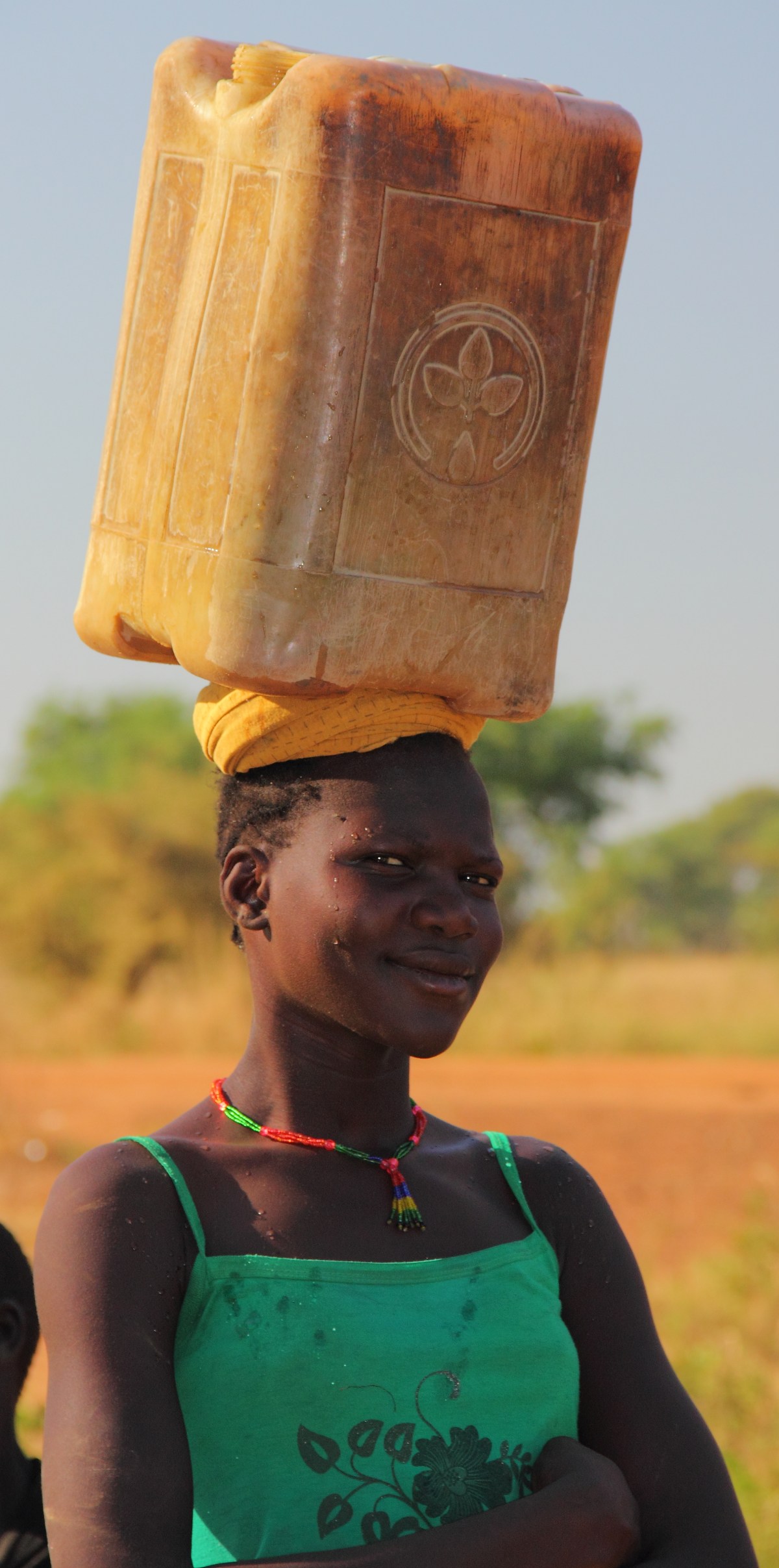
Photo: Groundwater provides over 80% of the rural population with its main source of drinking water in South Sudan. Photo taken in 2014 in Northern Bahr el Ghazal by Kerstin Danert.










 Rural Water Supply Network - blog