Rural Water Point Functionality: Evidence From Nine Countries in Sub-Saharan Africa and South Asia

by Dr Anna Murray, Deputy Director of Research, The Aquaya Institute

The sustainability of drinking water supply infrastructure remains a challenge in rural areas of low-and middle-income countries. Through this research to identify factors contributing to functionality, we analyzed monitoring data from ten non-governmental organization drinking water supply programs across nine sub-Saharan African and South Asian countries. Data were from 1,805 randomly selected water points, including tap stands, spring protections, rainwater collection systems, and hand pumps.

We found an impressive 92% of sampled water points constructed within the prior year were functional, versus only 79% of those constructed earlier (average 3.5 years, range: 1–12 years old).

Tap stands from piped water systems exhibited 74% lower odds of functioning than boreholes with hand pumps within the older construction sample. This disparity underscores the necessity of considering the suitability and reliability of various water supply systems in rural contexts.

As global efforts to expand piped water services align with international development goals, our results advocate for a nuanced approach. Higher water service levels offer undeniable benefits, but the accompanying technological, institutional, and financial requirements must be carefully weighed. Particularly in rural settings, where challenges of limited resources and infrastructure maintenance persist, comprehensive strategies are essential to mitigate risks and maximize the effectiveness of water supply interventions.


Read the full Open Access paper here:

Murray, A. L., Stone, G., Yang, A. R., Lawrence, N. F., Matthews, H., & Kayser, G. L. (2024). Rural water point functionality estimates and associations: Evidence from nine countries in sub-Saharan Africa and South Asia. Water Resources Research, 60, e2023WR034679. https://doi.org/10.1029/2023WR034679

The dataset is available here.

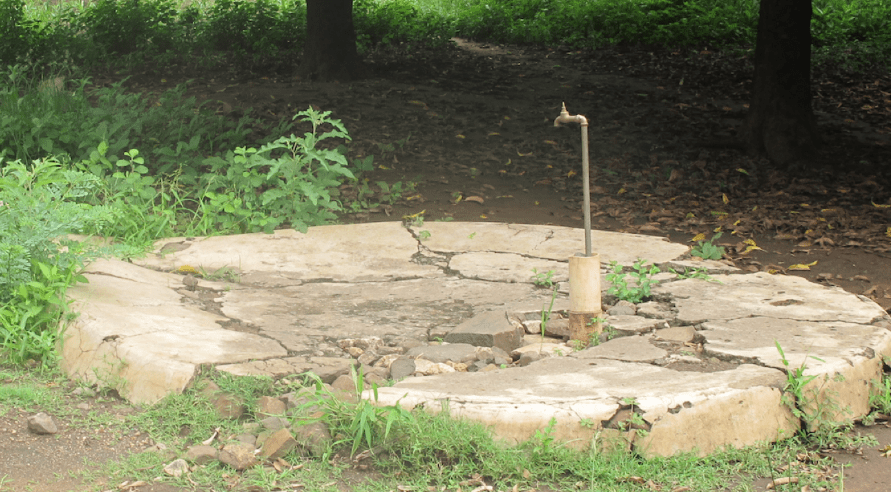
Photo: An abandoned tap stand. Credit: A. Murray
Que peut apprendre le secteur de l’eau rurale de l’expérience de l’Afrique de l’Ouest francophone ?

De nombreux pays cherchent à développer les services d’eau en milieu rural et à améliorer les niveaux de service pour les habitants des petites villes et des zones rurales en investissant dans des réseaux d’eau décentralisés et de petite taille. L’Afrique de l’Ouest francophone a une longue histoire de délégation des services d’eau potable (généralement des petits réseaux) dans les petites villes et les zones rurales à des opérateurs professionnels, qui peuvent être des associations publiques ou des opérateurs privés.

Le Secrétariat du RWSN, en partenariat avec le programme REACH, a passé l’année passée à enquêter sur l’expérience de la délégation des services d’eau et les moteurs des récentes réformes de la politique de l’eau potable en milieu rural dans plusieurs pays d’Afrique de l’Ouest francophone. Nous avons réalisé une étude documentaire détaillée et parlé à 25 experts du secteur de l’eau en milieu rural dans la région pour comprendre pourquoi et comment les réformes des politiques d’eau potable en milieu rural se sont produites, et quelles leçons peuvent être tirées des diverses expériences de délégation des services d’eau potables en milieu rural à des opérateurs professionnels.

Continue reading “Que peut apprendre le secteur de l’eau rurale de l’expérience de l’Afrique de l’Ouest francophone ?”

Musings from Mopti

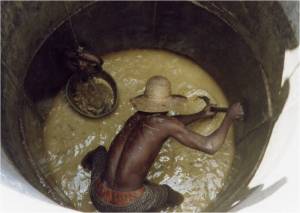
Well digging - Mali (RWSN/Skat)
Well digging – Mali (RWSN/Skat)

by Jonathan Annis, WASHPlus

I’ve spent the last week in the Mopti Region of northern Mali supporting a USAID/WASHplus WASH & Nutrition initiative led by CARE. While behavior change communication related to household- and community-level sanitation, hygiene, and infant nutrition practices is the primary focus of the project, a small sum of funds is dedicated to rehabilitating community water supplies.

The conditions in Mali, as in much of the Sahel, have attracted a plethora of international NGOs, foundations, and do-gooders of every size and intention; increasing access to safe water is a focal point of many of their interventions. The functionality of rural water supplies in Mopti is difficult to ascertain. A number of my colleagues agree that the database of water points maintained by the regional office of the Ministry of Water includes less than 50 percent of the water points existing in the countryside.

Continue reading “Musings from Mopti”