Lessons from the RWSN webinars

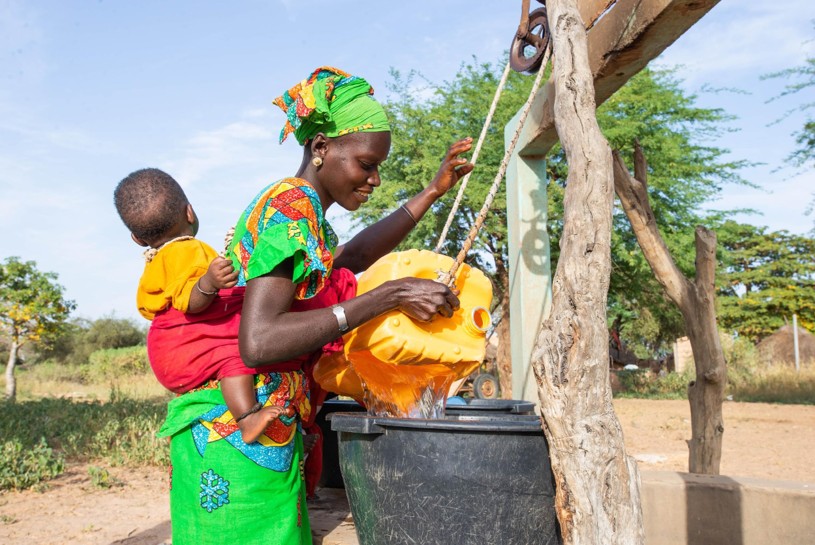
Guest blog by Rebecca Laes-Kushner. Featured photo from RWSN webinar presentation on 29.4.25 (What Drives the Performance of Rural Piped Water Supply Facilities?) by Babacar Gueye from GRET Senegal.

Professionalism. Standards. Systems. These themes are repeated throughout Rural Water Supply Network’s (RWSN) spring and fall 2025 webinar series.

Given the large percentage of boreholes with early failure – within one to two years – improvements in standards and professionalism in borehole drilling are necessary. Drilling association leaders spoke passionately about the need for borehole drillers to professionalize to improve the quality of boreholes, increase accountability, stop illegal drilling and enhance community buy-in, which occurs when standards are enforced and certified materials are used.

George k’Ouma, from the Small Scale Drillers Association of Kenya, said it best: Professionalism isn’t optional.

A tidbit: Small borehole drillers have an advantage over large operations because they have knowledge of the local geology and seasonal changes, which enables better planning and materials selection.

Another area in need of increased professionalism is water management. Professor Kwabena Nyarko, from Kwame Nkrumah University of Science and Technology, Kumasi (KNUST), conducted a study comparing public sector, private sector and community water management in Ghana. Model type was less important than having professional standards and following best practices, including metering, tariffs that covered maintenance costs, efficient collection of tariffs, audits and reporting, digital recordkeeping and training, as well as financial support.

Jose Kobashikawa, head of the Enforcement Directorate for Sunass, the regulatory body for drinking water and sanitation services in Peru, echoed these concepts in his presentation. SUNASS uses a benchmarking tool to evaluate rural providers. Metrics include formality and management (are they registered, do they have a water use license), financial sustainability (do they collect tariffs, what percent of customers are defaulters), and quality of services (is water chlorinated and daily hours of water supply). High performing providers are awarded certificates recognizing their good practices in public management and workshops are held in each region to disseminate best practices.

Focusing on systems is another thread that runs through the varied webinar topics. Systems thinking means designing a scheme for the long-term provision of water. Boreholes must be properly sited. Appropriate materials, such as high quality stainless steel (304/316), need to be selected in order to prevent corrosion, as RWSN’s Stop the Rot initiative details. Handpumps often corrode within months or years instead of lasting a decade. Ayebale Ared, Technical and Social Expert at Welthungerhilfe, shared Uganda’s systemic solution: in 2016 the country banned the use of galvanized iron (GI) risers and rods in all new and rehabilitated handpumps – the first sub-Saharan country to do so. Uganda also requires a water quality analysis be done before materials are selected.

In addition, data collection and use must be embedded in all stages and aspects of water projects.. Dr. Callist Tindimugaya, Commissioner for Water Resources Planning and Regulation in Uganda, collects data from drillers which he then turns into groundwater maps the drillers can then use.

Systems thinking also means including the needs of the entire population in the design, especially women,  who bear the burden of hauling and carrying water. Women – who are killed by crocodiles while washing clothes in rivers, whose skin is irritated by harsh detergents, who find leaning over low wash basins harder as they age, who need to wash bloody clothes and bedsheets separately from the family’s regular laundry when they menstruate. Laundry is barely mentioned in WASH circles but RWSN devoted an entire webinar to the topic. One speaker questioned how the WASH sector would be different if the metric for success was the amount of time women spend collecting water.

Understanding the local culture is critical; psychologists, behaviorists and sociologists can help provide insights. Technical solutions which aren’t accepted by the community will only lead to failure.

The lack of funds to cover maintenance work on wells is well known. Systems thinking means anticipating root causes of funding issues in a community and pre-emptively building a system that attempts to solve those issues. Tariffs are too low to cover maintenance? Then the project needs to determine how sufficient funds will be raised, whether through higher water fees (that may be less affordable to low-income families) or from external sources. The water committee is inefficient at collecting funds? Then training and capacity building need to be part of the project design from the beginning. 

Looking at the bigger picture helps creative ideas flourish: Household rainwater harvesting, replenishing water aquifers through tube recharging, deep bed farming that breaks up the hard pan so water can return to the aquifer, sand dams that filter water and incorporating water management and regreening in the design and construction of roads so crops can grow next to roads. During the laundry webinar, three organizations presented their laundry solutions – devices that save women time, eliminate much of the manual labor, use less water and even offer income-generating opportunities.

The webinars are at times frustrating because we clearly know what needs to be done – yet professionalism, systems thinking and best practices are not always prevalent. More often, though, the webinars are full of insightful information and inspiring stores from experts. The knowledgeable participants, who ask focused, detailed questions, enhance the experience. I look forward to the spring 2026 webinars which are currently being planned.


Rebecca Laes-Kushner is a consultant to NGOs and companies with a social mission, with a particular focus on development issues such as WASH, climate change, supporting SMEs, health care and nutrition. Laes-Kushner Consulting (https://laeskushner.net/) provides research and writing, data analysis, M&E and training services. Rebecca has a Master’s in Public Administration (USA) and a Certificate of Advanced Studies in Development and Cooperation from ETH NADEL in Switzerland.

Is community management sustainable? Evidence from Northern Pakistan

Blog by Jeff Tan, Aga Khan University – Institute for the Study of Muslim Civilisations (AKU-ISMC). Featured photo: Hunza Valley, Gilgit-Baltistan, Pakistan, Jeff Tan

The limitations of community-based management (CBM), and the conditions for its success, were identified as early as 1990 in a World Bank discussion paper. From very early on, it was recognised that communities needed ongoing external support from donors, NGOs and governments. However, management training, capacity building, technical input, financial assistance, and supportive policy and legislation necessary to create an “enabling environment” for successful community management rarely materialised. This raises a number of questions: Why has this external support not been forthcoming? Why has community management continued to be promoted despite the absence of support and lack of sustainability? Why has there been ‘a reluctance amongst academics and practitioners to challenge the CBM model’?

To answer these questions requires some appreciation of the wider discourse on development and in particular the anti-state rhetoric of neoliberalism that has sought to downsize, decentralise and ultimately bypass government. This has had the effect of fragmenting and hollowing out the state while at the same time prioritising markets and the private sector. Given that there is no profit to be made from delivering water services to low-income households that cannot afford to pay cost-covering tariffs, it is not surprising that previous state failure was replaced by market failure, with the private sector failing to step in to deliver water services.

One obvious solution would have been to address the sources of state failure, specifically underfunding, fragmentation and the loss of technical capacity. Instead of rebuilding state capacities, the distrust of, and ideological aversion to, the state has shifted the responsibility of water services from governments to local communities, built around the narrative of community participation, empowerment and self-help, with communities expected to take responsibility of their circumstances. It is hardly surprising then that community management is seen to enable ‘government officials and donors alike to abdicate responsibility for ensuring long-term sustainable water services’.

The recent turn against community management, not least by the World Bank, shows the persistence of CBM problems. But the Bank’s promotion of “professionalization” of water services as an alternative reflects a failure to examine the underlying tensions and problems in the CBM model and the wider delivery of rural water services, and reinforces an anti-state bias and blind faith in private sector participation. There are three structural tensions in the CBM model that have been noted in the literature and that need to be more cogently articulated.

The first tension is between access to water and cost recovery (a cornerstone to the sustainability of CBM), with low tariffs (to ensure access to water) unable to cover operating costs, let alone major repairs and capital refurbishment. Compounding this is the inability of households to pay already very low tariffs, with irregular, if any, tariff payments or collections.

The second tension is the long-term needs of water services and the short-term horizons of donors and NGOs. Only the state has a sufficiently long-term horizon to provide the indefinite support needed to sustain community management and ensure ongoing water services. But this added burden on the state for this comes at a time when the state in lower middle income countries (LMICs) is severely constrained financially and technically, having had fiscal discipline imposed on it and broken up and hollowed out in the name of decentralisation and localisation. If governments do not have the capacity to provide the so-called “enabling environment” to support community management, as has been the case since 1990, then a model that requires continued external support that is not forthcoming cannot be sustainable, “islands of success” notwithstanding.

Finally, and perhaps most significantly, the funding model for CBM is short-term, project driven (rather than programmatic or cross-sectoral) and fragmented, where the needs of water services are indefinite, with the choice being between reaching a greater number of underserved communities in the short term or serving fewer communities but with longer term support and greater sustainability. Longer-term support is especially needed because communities cannot even finance major repairs let alone capital refurbishment needed at the end of the lifespan of water infrastructure (typically 15-20 years) and to expand services to cater for population growth.

These structural features of CBM can be illustrated in the constraints faced by an otherwise successful delivery of clean drinking water through piped water networks to 459 settlements serving around 48,000 households and over 400,000 people under the Water and Sanitation Extension Programme (WASEP) in Gilgit-Baltistan, northern Pakistan. The challenges of sustaining and scaling up this textbook implementation of community management are reported in the results of a two-and-a-half-year British Academy-funded research involving a large-scale household survey of over 3,000 households, interviews with water management committees and a review of financial records, focus group discussions, an engineering audit and water quality tests.

Unlike qualitative and selective case studies, the combination of quantitative and qualitative analysis here presents important insights into the resilience but also limits of communities in sustaining water services, particularly given weak state capacities and the lack of external support. It also highlights the importance of “hardware” (engineering and water infrastructure) in sustaining water delivery, and best practices in the implementation and delivery of water services that can transcend some of the limitations of the CBM model.

The views and opinions expressed in this blog post are those of the author. They do not necessarily reflect the views of the Rural Water Supply Network (RWSN) or its Executive Committee.

Jeff Tan is a Professor of Political Economy at AKU-ISMC and was Principal Investigator on a British Academy grant on the sustainability and scalability of community water management in Northern Pakistan.

UNQUALIFIED WATER WORKERS AND FORGED CREDENTIALS: THE HIDDEN CORRUPTION UNDERMINING SDG 6

Photograph 1  Showing a Graduate in Kenya, Source: NTV Kenya

Blog by Euphresia Luseka, co-lead of the RWSN Leave No-one Behind theme.

The views and opinions expressed in this blog post are those of the author. They do not necessarily reflect the views of the Rural Water Supply Network (RWSN) or its Executive Committee.

Fake Qualifications, Real Consequences: The Brenda Sulungai Case

Across Africa, water utilities are expected to be drivers of sustainable development, climate resilience, and digital transformation. Yet beneath this ambition lies a disturbing contradiction: highly complex systems are being operated by staff who, in most cases, lack even the basic credentials to do the job.

Despite major gains in infrastructure and technology investments, Kenya’s water utilities continue to underperform often not due to a lack of funding or innovation, but because of the human capital crisis festering within. I have witnessed strategic plans, technological upgrades, and donor-funded initiatives collapse under the weight of a talent base that was never prepared or licensed.

In July 2025, Brenda Nelly Sulungai a former staff at Nairobi City Water and Sewerage Company (NCWSC), was arraigned in a Kenyan Court, for forgery, uttering a false document, and deceiving a principal to gain employment. The Sulungai case demonstrates that the underlying problem extends far beyond individual misconduct on fraudulent activities, but rather the existing system permits such deception to occur and persist undetected for long. A fundamental breakdown exists in the accountability mechanisms embedded within the Human resources ecosystem of Water Corporations and Utilities.

This blog analyses the technical, legal and operational risks posed by weak certification systems, forgery, and unqualified staffing across Kenya’s water sector. It also proposes a plan for professionalising the sector, building institutional resilience, and restoring public’s vital trust.

The Pervasive Scale of Credential Fraud

“Every academic certificate in Kenya is now questionable. Forgery is happening across all sectors including those critical to life like water and health. We cannot ignore this anymore.”  –Twalib Mbarak, CEO, Ethics and Anti-Corruption Commission (EACC)

This stark statement captures the magnitude of Kenya’s credential fraud crisis as a structural failure that compromises public service integrity at scale as demonstrated in Box 1.

Box 1: Sector-Wide Credential Fraud Uncovered in National Audit

Following a 2022 presidential directive, the Kenya National Qualifications Authority (KNQA), in collaboration with the EACC and the Public Service Commission (PSC), audited academic and professional credentials across 400+ public institutions. Of 47,000 employment records reviewed, over 10,000 (30%) were forged or unverifiable documents. Credential fraud in Water Service Providers (WSPs) flourished under conditions of decentralised recruitment, limited HR oversight, and politicised hiring. Frontline operational roles such as meter readers, plant technicians, lab staff, and revenue officers are especially vulnerable to infiltration by individuals presenting forged or non-accredited certificates. In a coastal county, 5 out of 8; 63% of water treatment technicians lacked formal technical certification highlighting serious lapses in frontline hiring. WSPs such as Nairobi City and Garissa Water & Sewerage Company were cited for fraudulent promotions and appointments. The audit prompted a directive requiring all WSPs to submit comprehensive staff verification reports. EACC investigated over 2,000 public servants for holding fraudulent academic qualifications. In parallel, PSC has flagged more than 1,200 employees with irregular documentation in public institutions, signalling collapse in credential verification and HR governance.

“This is systemic. There are falsified documents even at PhD level, dissertations are downloaded from the internet.” – Dr. David Oginde, Chairperson, EACC

Senior public officials have not minced words. Head of Public Service Felix Koskei has declared the forged qualifications surge a ‘national emergency.’ PSC Chairman, Anthony Muchiri emphasised the urgency of cultural reform, framing the restoration of integrity as both a legal and moral imperative.

Consequently, this is not simply a matter of individual misconduct it points to a systemic failure in verification systems, risk management, and institutional accountability.

The Grave Consequences: Incompetence Endangering Lives and Undermining Progress

The human capital crisis in Kenya’s water sector driven by systemic weaknesses in credential verification, licensing, and staff training is not only an administrative oversight but threatens public health and utility performance.

Improper chlorine dosing, no action on bacteriological alerts and contaminated boreholes link to unqualified personnel, contributing to recurrent outbreaks of waterborne diseases such as cholera and typhoid. Therefore, Water sector HR reforms must be framed not just as a governance issue, but as a public health and national security imperative.

“You cannot digitize your way out of poor staffing. At some point, someone has to operate the system.”

The human resource crisis is also undermining the operational stability and financial viability of Kenya’s WSPs. Underqualified technical staff routinely mismanage complex systems like SCADA and GIS, leading to frequent breakdowns and service disruptions. Poorly trained revenue officers contribute to billing errors, customer dissatisfaction, and 30% revenue leakage crippling reinvestment in maintenance and training. Even as utilities embrace digitisation, adoption is hindered by a lack of skills and internal resistance to change. Without parallel investment in the human capabilities needed to run and sustain infrastructure, digital and capital investments risk failing to deliver impact.

Sustainable transformation requires human capital to be treated as a core infrastructure asset.

Systemic Vulnerabilities and Their Underlying Causes

I. Governance Deficit: Institutional Decay Through Political Capture

Kenya’s water sector suffers from a foundational governance breakdown; WASREB, the national water regulator notes a few WSPs have structured HR policies, indicating systemic weakness. Other gaps include: Outdated job descriptions, Irregular or absent performance reviews and Non-existent competency frameworks.

“Staff appointments in WSPs are frequently driven by tenure, local allegiances, or political alignment rather than technical merit. This erosion of meritocracy is neither incidental nor benign; it is indicative of deliberate political capture.”— Charles Chitechi, President, Water Sector Workers Association of Kenya (WASWAK)

Even WSP BODs that are governance bulwarks, are compromised. Opaque recruitment, undertrained members, and entrenched conflicts of interest have rendered them susceptible to patronage.

This politicisation has real operational costs, including poor service delivery, stagnant capacity, and a rise in credential forgery.

II. Regulatory Void: Absence of Mandatory Professional Licensing

Despite being designated as Kenya’s 16 critical infrastructure sectors, the water sector lacks a national mandatory licensing framework. Unlike medicine or engineering, no statutory barrier prevents an unqualified person from operating a treatment plant. Training institutions exist, including KEWI, NITA, and TVETs, but certification is inconsistent, and unenforced. Most alarming is the absence of a centralised professional registry, allowing forgeries to pass undetected unless exposed by whistleblowers.

Kenya’s current policy approach enables fraud by omission. The lack of a licensing regime is not a gap; it is a deliberate vulnerability.

III. Investment Blind Spot: Human Capital as the Missing Infrastructure

According to WASREB, Kenya’s WSPs spend less than 1% of OPEX on staff training, compared to the 5%-7% benchmark in high-performing WSPs globally. This chronic underinvestment in people creates a compounding deficit: Stagnant skills lead to operational bottlenecks, Low morale drives attrition and disengagement and Poor efficiency increases non-revenue water (NRW).

“You cannot digitize your way out of poor staffing. At some point, someone has to operate the system.”

A study by AfDB found that targeted training investment can lead to 20%-30% efficiency gains. The false economy of skipping training leads to far greater costs through system failures and revenue loss.

These figures make the business case clear. Training is not a cost; it is a strategic investment with measurable returns.

IV. Project Design Fallacy: Infrastructure Without Operators

Despite significant investments in tools such as GIS mapping, NRW audit software, and digital billing systems, Kenya’s utilities remain trapped in underperformance.

From experience, the primary reason infrastructure projects fail is they’re often designed for a workforce that does not yet exist. Few pause to ask: Who will operate, manage, and sustain these systems?

This leads to predictable implementation failures. Development partners often assume that technology adoption is a standalone solution, overlooking the critical human capability gap.

Table 1 Showing Summary of Systemic Failures and Strategic Fixes

Root ProblemUnderlying CauseStrategic Fix
Politicized HR and opaque recruitmentGovernance failureIndependent oversight and merit-based systems
Weak mandatory licensingRegulatory neglectNational framework aligned with global standards
Minimal training investmentFinancial and strategic myopiaMandated 5% OPEX for staff development
Failed technology implementationsIgnored human capacity gapCapacity-first planning and project sequencing

Towards Resilience: Five Strategic Levers to Professionalize Kenya’s Water Sector

Kenya’s water sector is confronting a systemic talent crisis, addressing these challenges requires a structural response anchored in global best practices, informed by local constraints, and focused on long-term institutional resilience. This plan outlines 4 interlocking strategic levers designed to professionalize the sector and establish talent as a core infrastructure asset.

LeverCore InsightPriority ActionsStrategic ShiftExpected Outcome
Proactive Credential VerificationShift from post-hire audits to real-time identity checksIntegrate KNQA/KUCCPS into hiring- Enforce role-based access protocols. Adopt zero-trust frameworksLink credential verification to hiring and promotionsPre-employment fraud prevention; increased hiring integrity
Mandatory Licensing for Technical RolesLegalise role-based licensing to ensure competenceEstablish national licensing board- Align with NQFs- Phase rollout starting with public-facing rolesMake licensing a prerequisite for key technical rolesProfessionalised, accountable workforce
Performance-Driven HR GovernanceReplace tenure-based hiring with performance-linked systemsImplement HR scorecards tied to KPIs- Map skills to close gaps- Link career progression to performanceInstitutionalise meritocracy and depoliticise HRTalent aligned with service outcomes; improved retention
Strategic Learning InvestmentTreat training as core infrastructure, not a cost centreMandate 5% OPEX for learning- Deploy centralized Learning Management System- Align training to operational KPIsMake capacity-building part of financial and project planningTechnically agile, continuously upskilled workforce

Conclusion: Talent Is Infrastructure

Kenya’s water systems are only as effective as the people who plan, operate, and maintain them. As the World Bank warns, weak water institutions can turn climate risks into crises undermining resilience across health, agriculture, and energy systems.

The Brenda Nelly Sulungai case shows credential fraud is not just a governance lapse it’s a national risk multiplier. Amid climate stress and population growth, human error becomes infrastructure failure.

Reform must begin and end with people. Priority actions include:

  • Verifying identities and qualifications through real-time credential checks
  • Mandating professional licensing to close technical regulatory gaps
  • Investing in structured, ongoing training
  • Aligning performance systems with merit-based progression
  • Fostering a culture of accountability, technical rigor, and service

These steps reflect a central truth: talent is infrastructure.

Former President Mwai Kibaki, UNESCO’s Special Envoy for Water in Africa, put it clearly: “We need to commit ourselves to turning actions into real reforms… and together we can make Africa water secure and peaceful.”

How did you wash up doing WASH?

Rain from the skirts of Hurricane Mitch lashed the ancient Landcruiser as it hurtled along the dark tar snake of the Pan American Highway.  Cans of burning oil belched out black smoke and orange flames in a line along the carriageway to demarcate roadworks. Sodden policemen waved us on as workers tried to salvage their equipment from the storm. I had arrived in Guatemala.

A steep learning curve in Guatemala (c) Skat

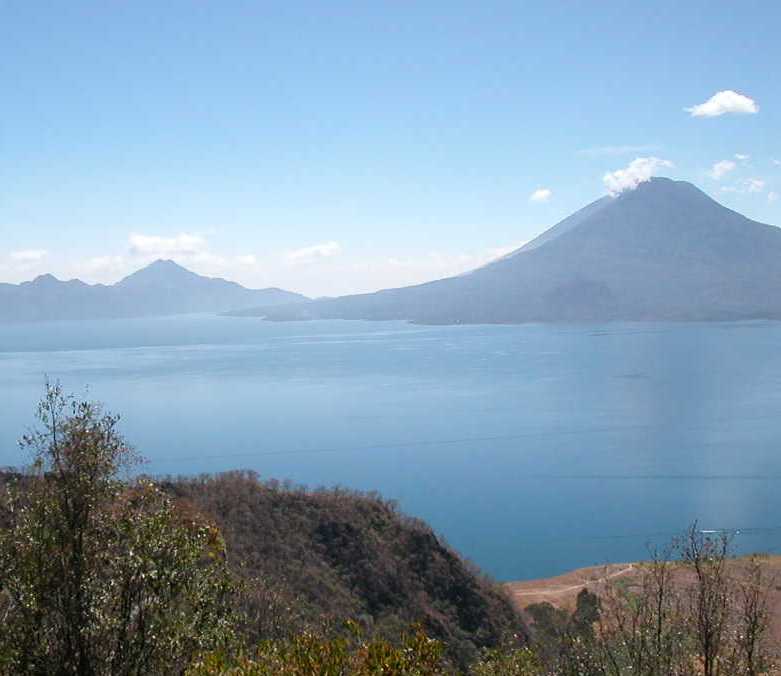
A few days later I was standing by the shore of Lake Atitlan, in the town of San Lucas Toliman.  I was staring down a large diameter well choked with electric cables and rising mains. Off to my a left a team of community members were digging a trench for a new 4″ PVC pipeline that would snake up the ridge behind the town and down to the scattered finca (coffee plantation) hamlets on the other side.

The foreman turned to me and asked whether their pump would have enough power to get water up to their people living on the side on the volcano. All eyes were on me. Not hostile, not friendly, just expecting an answer from this young gringo ‘expert’.  I was gripped by fear. My stomach cramped, my heart-rate went through the roof.  This wasn’t a university field trip, my career as a WASH professional had just begun.

How do I start a career in Water, Sanitation and Hygiene (WASH)?
Continue reading “How did you wash up doing WASH?”