Weaving threads of knowledge and trust across the world – Part 1 (Global Actors)

by Sean Furey, Director – RWSN Secretariat @ Skat Foundation

Rural Water, Sanitation and Hygiene (WASH) is such a local, personal, issue that does global-level exchange make sense?

At first glance, rural areas and communities worldwide seem too diverse for networking and knowledge exchange to be useful or meaningful. What does WASH for isolated hamlets in the Nepalese Himalayas have in common with a fishing village on the Peruvian coast or a small town in northern Nigeria? Quite a lot, it turns out.

Last year, we were privileged to be approached by the Water Section at the Inter-American Development Bank (IDB), to support them with an exciting programme called Sustainable and Innovative Rural Water, Sanitation and Hygiene (SIRWASH), funded by the Water Section of the Swiss Agency for Development & Cooperation (SDC). They asked us to help strengthen the sharing on rural WASH topics within the Latin America and Caribbean (LAC) region and to encourage South-South exchange between LAC, Africa and Asia. Thanks to our strategic partnership with SuSanA we felt well placed to do this, and a great opportunity for both networks to grow our membership in the LAC region and serve our members there better.

Multilateral Development Banks – amazing allies

When it comes to shear financial clout and convening power, Multi-lateral Development Banks (MDBs) are hard to beat, but even they have had mixed success with rural WASH – but there have been successes and they have recognised that they can learn from each other so that they can provide their client governments with the technical assistance and financial options to deliver sustained improvements. So, last year the relevant focal points from the African (AfDB), Asian (ADB) and Inter-American (IDB) met and agreed on a Call to Action with three priorities:

  • Information-based decision-making and rural WASH investments and service monitoring.
  • Institutional strengthening & coordination.
  • Rural sanitation.

From this, we organised a webinar mini-series drawing on their recommendations for case studies on each topic from each region.

Finding the common threads and bringing them together to make them stronger

This year, we took more steps to build an understanding and appreciation of the solutions that have the potential to transcend the variability of local contexts and be adapted. With growing interest, our colleagues at the World Bank also joined the small group and together we organised a special SIRWASH breakfast meeting and an open session on “Coordinating Rural Water Investments to Promote Security and Stability” with REAL-Water :

The SIRWASH breakfast meeting that followed was in the spirit of collaboration among countries in the global south, using knowledge sharing as a catalyst for innovative and sustainable solutions. It was attended by more than 40 representatives from countries (Haiti, Brazil, Peru, Chile, Nigeria and Uganda), multilateral banks, multilateral and bilateral agencies (SDC, AECID, SIDA, WHO, OAS, UNICEF), NGOs and philanthropists (including, One Drop, Water For People, Avina, Aguatuya, mWater, Global Water Center), as well as networks, partnerships and research (RWSN, SuSanA, WASH Agenda for Change, WASH Funders Group, SIWI, Uptime, the Aquaya Institute). 

Reflections on the SIRWASH Breakfast meeting (source: IDB)

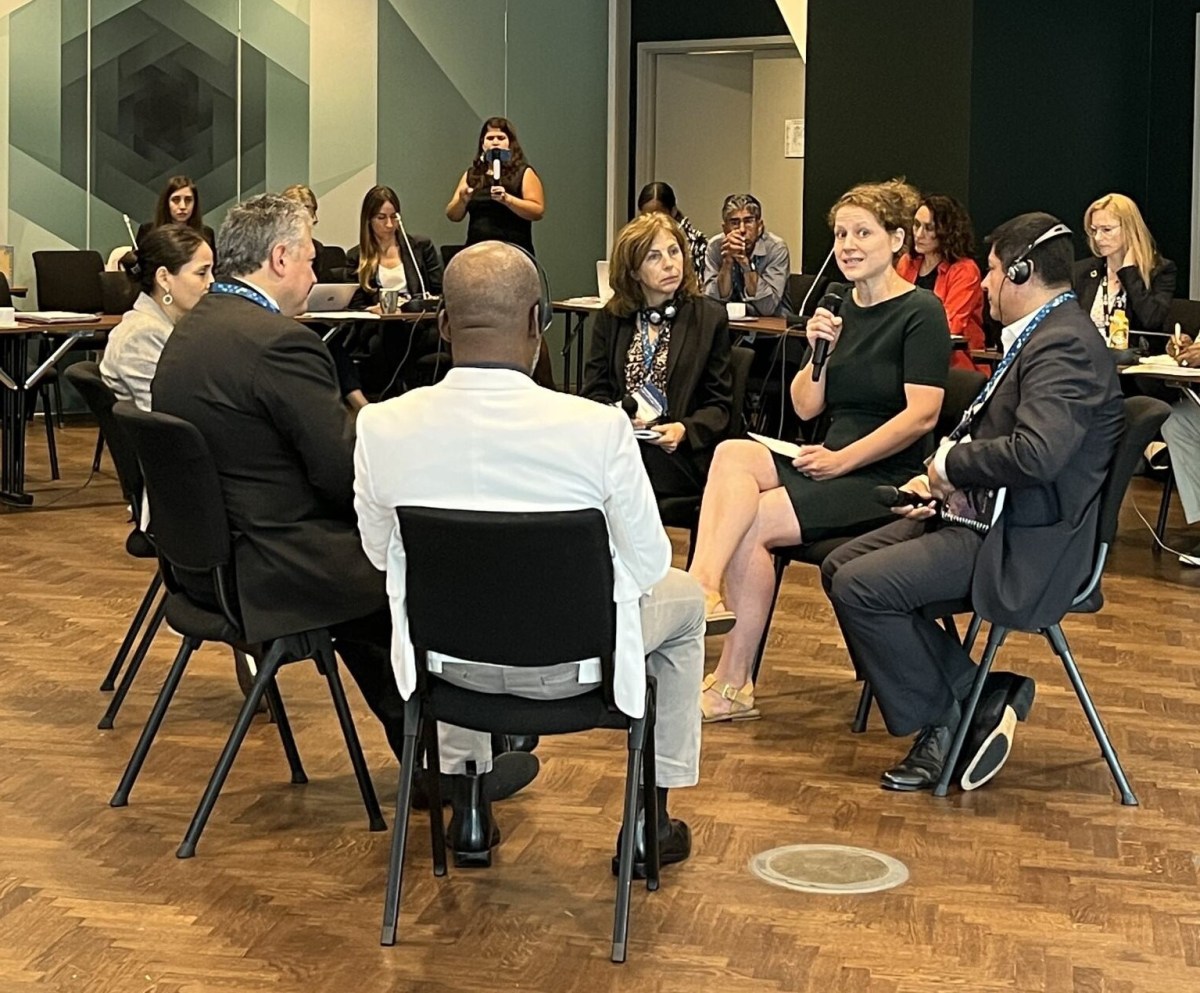
Using the “Fishbowl” method, participants exchanged their perspectives in an open and dynamic way on how strategic partnerships can increase impact in the sector. Discussions focused on two key questions: 

1. How can technological innovations in rural WASH information systems be supported to be truly effective in decision making and incentivize scaling up? 

2. What are practical solutions to improve the design and implementation of national rural WASH programs so that their benefits are sustained over the long term? 

One of the central themes was innovation through sector information systems, a crucial tool for planning and managing water and sanitation services in rural areas. Three countries shared their experiences on how they have adapted and improved these systems:

The importance of institutionalizing information at the national level and ensuring that communities participate in the validation and appropriation of data and decisions was emphasized.

In addition to information systems, the event underscored the need to integrate both technological and social innovations to improve rural services. Social innovations and behavioural change are essential for communities to take ownership of the systems and actively participate in their management and maintenance. Participants agreed that long-term sustainability is about finding the sweet spot between community-ownership/responsibility and external support.

The second critical issue addressed was the sustainability of rural water and sanitation services. Participants stressed that the successful implementation of these services cannot depend solely on initial investments in infrastructure. Innovative mechanisms need to be developed to ensure their financing and continued operation. The examples of Brazil and Nigeria were instructive, both countries demonstrating how the combination of effective governance and innovative financial models can ensure the operational sustainability of services:

  • Brazil presented its comprehensive implementation of their National Rural Sanitation Program (PNSR).
  • Nigeria highlighted the ways a results-based SURWASH programme is strengthening institutional capacity.
  • The Uptime Consortium shared their experiences and successes with Results-based Contracting on rural water service delivery across many contexts.

The discussion emphasized the need for functionality and quality indicators for rural services, linking reliable information to financial incentives for operators. This strategy can enhance the long-term sustainability of these systems. The working group concluded that collaboration is essential to ensure countries have reliable information for decision-making, aimed at improving the quality of rural services.r decision-making aimed at enhancing the quality of services in rural areas.

In the final discussion, consensus was reached on the need to create and maintain an enabling ecosystem for the development and sustainability of rural services. The great opportunity for development partners to join efforts and seek synergies, contributing technical and financial resources to this ecosystem in the countries was highlighted.

The event concluded with a clear call to action: all actors – governments, development banks, cooperation agencies, NGOs, networks and the private sector – must remain committed to financing and strengthening rural water and sanitation services. The MDBs will continue to work together on a concrete action plan to exchange and replicate successful and innovative experiences to ensure universal and quality WASH services in the countries.

Knowledge exchange is not just talk and powerpoint presentations, it is about building connections and trust between individuals and organisations, finding those common interests and encouraging co-creation of new insights and more sustainable solutions.

The symbolic activity organized by One Drop, where participants bonded to represent their intention to work together towards a common goal, was a powerful reminder of the importance of lasting partnerships. This symbolic gesture is just the beginning; it is essential to continue to scale up efforts so that the most vulnerable communities can access quality water and sanitation services in a sustainable and equitable manner.

Top-Down meets Bottom-Up

After this event, our partner Aguatuya convened an online meeting of Latin American WASH networks to encourage bottom-up exchange to complement our high-level approach. But we will follow that thread in the next post…


Many thanks to the large number of people involved, but in particular to Sergio Campos, Manuela Velasquez-Rodriguez and Cristina Mecerreyes at IDB; Diane Arjoon at AfDB, Vivek Raman and Tanya Huizer at ADB, Awa Diagne and Sarah Nedolast at the World Bank, Janine Kuriger at SDC, and to the wonderful RWSN/SuSanA team: Dr Aline Saraiva, Batima Tleulinova, Susanna Germanier, Lourdes Valenzuela, Paresh Chhajed, Chaiwe Sanderse and all the speakers and panellists for the webinars and sessions.

Strengthening accountability for water


This blog is based on the Accountability for Water action and research programme funded by the William and Flora Hewlett Foundation and managed by the Partnership For African Social and Governance Research (PASGR), supported by Water Witness International, KEWASNET and Shahidi Wa Maji. The full webinar summary is available here.

On 15th December 2022, a global webinar was held to discuss the critical importance of accountability for water. During the webinar, a partnership of organizations led by PASGR and Water Witness presented the findings of their Accountability for Water research program, which aimed to identify specific actions to strengthen accountability in different contexts. The programme partners involved in the research include KEWASNET, Shahidi Wa Maji, WaterAid, Water Integrity Network, End Water Poverty, IRC, and World Bank. Dr Pauline Ngimwa and Dr Muthio Nzau of PASGR introduced the webinar.

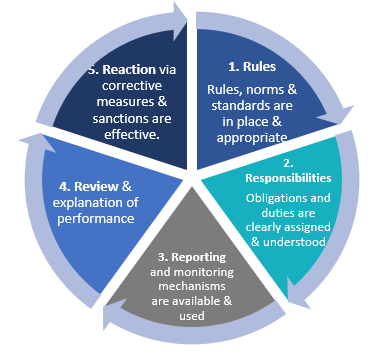
Dr Tim Brewer of Water Witness gave an overview of the research programme which started with the global review of evidence carried out in 2019-2020.  According to this review, 80% of the research papers on accountability found that interventions contributed to improved water, sanitation and hygiene (WASH) services and water resource management (WRM). Common lessons emerged with clear recommendations for action by governments, civil society, donors and others. While a key lesson is that accountability is context specific, an analytical framework based on the “5 Rs of accountability” can be used to identify specific challenges and opportunities within this framework – the ability to review, explain, and report performance against rules, responsibilities, and obligations, and to react constructively to improve performance through sanctions, incentives, or corrective measures.

The review identified a series of knowledge gaps and questions, including gender, donors, government responsiveness, measurement, and civic space. Based on this analysis, 14 Professional Research Fellows (PRF) working in the water sector in Ethiopia, Kenya, Tanzania, Zambia, Liberia, and Zimbabwe from a range of government, civil society and academic institutions investigated accountability issues in their own contexts. The full list of research topics and researchers is at the bottom of this blog.

The following key takeaways for governments, civil society organizations (CSOs), and donors were drawn from a compilation of recommendations from the research projects .Presenters included Dr Firehiwot Sintayehu (Addis Ababa University);  Eunice Kivuva (CESPAD); Chitimbwa Chifunda (WaterAid Zambia), The full list of research topics and researchers at the end of this blog demonstrates the depth and breadth of evidence underlying these recommendations .

Three key takeaways for governments      

  1. Laws, policies and accountability mechanisms are essential to support accountability. However, lack of clarity and consistency between sectors and levels, a lack of knowledge and capacity about the laws and mechanisms, and weak enforcement often undermine these. Therefore, the key recommendations are to: 
    • Harmonise, strengthen, and execute laws and policies for water resources and WASH at national and subnational levels,
    • Strengthen accountability systems and relationships:  mechanisms, standards, regulation, monitoring, stakeholder engagement and enforcement including for the private sector,
    • Build capacity on accountability, develop an accountable outlook and de-politicise accountability systems.
  2. Clear roles and responsibilities and better coordination: Accountability mechanisms are often let down by poor coordination, unclear or conflicting roles and responsibilities and widespread lack of enforcement. Key actions required are to:
    • Clarify institutional roles and responsibilities between actors for WASH and WRM – eliminate conflicts in functions,
    • Separate implementation and regulatory institutions,
    • Strengthen horizontal and vertical institutional and sector coordination across water users through enforceable accountability systems and mechanisms.
  3. Informed engagement with citizens and users: All the researchers found that effective engagement with citizens, citizen groups and water users is essential for accountability but wanting. To address this governments need to:
    • Introduce or strengthen accountability mechanisms such as public hearings and citizen oversight panels,
    • Provide Information, education, and mobilisation for communities ensure access for marginalised groups,
    • Support civil society to vertically integrate social accountability initiatives into decision making at different levels,
    • Support coordination amongst actors to increase the capacity of rural women and marginalised communities to participate in problem analyses and decision-making processes.

Three key takeaways for civil society,

  1. Activate and institutionalise effective citizen oversight mechanisms.  As well as the government actions to strengthen engagement with citizens and water users Civil society organisations need to support this, they should:
    • Advocate for more legally institutionalised avenues of citizen oversight,
    • Ensure that citizens’ monitoring and advocacy initiatives are vertically and strategically integrated in decision making at all levels,
    • Carry out budget tracking throughout the whole cycle from planning to expenditure.
  2. Build capacity, empowerment and organise communities. A very common cause of weak accountability is the low levels of knowledge and capacity of water users about their rights, the laws and responsibilities around water provision and resource management, and how they can use accountability mechanisms. Civil society organisations need to:
    • Build capacity on accountability mechanisms and support their use,
    • Strengthen grassroots user groups and associations to participate in decision making,
    • Support civil society and water users, especially women, to move up the Participation ladder from token participation to active participation,  decision making, and control.
  3. Build on what works, like budget tracking, evidence-based advocacy, litigation. There is growing knowledge about successful strategies for strengthening accountability. This research has helped to strengthen a community of practice on accountability and identify examples that others can learn from. Key lessons for civil society are to:
    • Strike a balance between constructive and critical approaches to advocacy,
    • Bring strong evidence for advocacy,
    • Raise awareness of WASH and WRM issues amongst all stakeholders including citizens, government and development partners.

Four key takeaways for donors and private sector

  1. Support governments and CSOs to strengthen accountability frameworks, monitoring and enforcement. Donors can provide financial and political support for the actions for governments and civil society mentioned above. They need to:
    • Support governments on WASH and WRM accountability actions as above,
    • Support CSO actions as above,
    • Support good governance and democratic space for citizens’ voice. Citizens’ engagement is critical to enhancing accountability,
    • Invest in women’s participation and reaching marginalised people,
    • Strengthen political will for accountability.  Donors can influence government priorities,
    • Invest seriously in sustainability.
  2. Water investments need to go beyond projects. They need to: 
    • Go beyond procedural & financial accountability. For example strengthen basins planning to ensure responsible industrial water use,
    • Support budget tracking through the cycle – budget tracking is an effective tool to improve budget performance,
    • Invest in appropriate technology to support accountable and responsive services, For example digital monitoring of services and water treatment technology to prevent pollution of water resources.
  3. Enhance due diligence. Researchers found examples of very weak accountability in economic uses of water by industrial and agricultural actors. Donors and private investors can help strengthen accountability by requiring:
    • Stronger due diligence of companies in relation to water use,
    • mandatory reporting on water,
    • promoting and enforcing the Polluter pays principle
  4. Be accountable!  Donors are major investors in the water sector but often do not fulfil their commitments. For example in Zambia the WASH sector is 80% funded by Donors but only 29% of that was tracked through the budget.
    • Accountability Mechanisms are needed to enable Governments and CSO to hold Donors accountable for their commitments. 

Discussion and next steps

During the webinar, Sareen Malik from KEWASNET, emphasised the importance of legislation to strengthen accountability mechanisms. NGOs can play an important role to advocate for this and bring stakeholders together in Joint Sector reviews as a critical mechanism for accountability, monitoring and reporting. 

Martin Atela of PASGR reflected on the role of politics in undermining accountability and suggested that political interference can be mitigated by greater clarity on roles and boundaries of ministerial responsibilities. He also emphasized the need to find ways to work with political elites so they see the value in change

Next steps involve joining the community of practice on accountability for water, to continue learning from experience and to advocate for commitments to strengthen accountability.

Research partners are organising an event at the UN Conference on Water 2023: “Where is the accountability”  on Tuesday 21st March, driving a greater emphasis on governance and accountability. This needs to be front and centre of all discussion.

The Research programme is managed by the Partnership for African Social and Governance Research (PASGR) and Water Witness International with financial support from the Hewlett Foundation.

More information about the research is on the website including findings from the global review of evidence, recorded presentations from webinars at World Water Week 2022 in Stockholm, presentations from country specific webinars, and summary briefings of all the research topics. www.accountabilityforwater.org

List of Research topics, Professional Research Fellows and host institutions

Ethiopia

  • Government Dynamics of Accountability in Ethiopia, Mulugeta Gashaw, Water Witness Ethiopia
  • Political Economy Analysis of water governance, Asnake Kefale
  • Risks and opportunities for growth in Ethiopia’s textile and apparel industries,  Esayas Samuel
  • Wastewater management in upstream catchment of ARB, Yosef Abebe, Addis Ababa University and Ministry of Water and Energy
  • Accountability of the One WASH National Programme of Ethiopia, Michael Negash, PSI
  • Towards a sustainable management of faecal sludge: the case of Addis Ababa, Tamene Hailu
  • Alwero Dam governance, Firehiwot Sentayu, Addis Ababa University

Kenya

  • Government Dynamics of Accountability in Kenya, Dr Tiberius Barasa
  • Enhancing coordination for accountability and sustainability in water resources management; a case of Kerio sub-catchment in Baringo rift valley basin. Eunice Kivuva (CESPAD)
  • Kakamega County Water and Sanitation Company, Kenya.  Mary Simiyu, Kakamega Water Service Provider
  • Rural Women and water decisions in Kwale and Kilifi Counties, Felix Brian, KWAHO
  • Strengthening accountability in solid waste management through incentives and penalties in Naivasha, Kenya, Naomi Korir, Sanivation

Tanzania

  • Government Dynamics of Accountability in Tanzania, Dr Opportuna Kweka
  • Assessment of Gender Power Relations and Accountability in Community Based Water Supply Operators in Selected Water Basins of Tanzania, Pitio Ndyeshumba, Institute of Lands
  • Regulatory and Legal Accountability for Water Pollution in Tanzania: The Case of Msimbazi River Basin in Dar es Salaam City, Mwajuma Salum, University of Dar Es Salaam
  • Opportunities and challenges of accountability claiming in Tanzania’s water sector, Dr Parestico Pastory, University of Dodoma

Zambia

  • What makes budget advocacy an effective accountability tool, Bubala Muyove, NGO WASH Forum and Chitimbwa Chifunda, WaterAid Zambia

Zimbabwe

  • Assessing the effectiveness and impact of statutory accountability mechanisms to improve water service provision and catchment management, Mable Murambiwa, Combined Harare Residents Association, Zimbabwe

Liberia

  • Accountability Challenges in The Liberia Water-Supply Sector: LWSC in Robertsport and Kakata, Timothy Kpeh, United Youth for Peace,  Liberia

About the author:  This blog is authored by Louisa Gosling, freelance specialist in accountability, rights and inclusion in WASH, previously working with WaterAid and as chair of RWSN.

An opportunity to reflect on manual drilling – UNESCO Seminar in Madrid, 2019

It was 21 years ago that I was first confronted with manual drilling.  I had just started my PhD research at Cranfield University.  The idea was to develop a human operated rig that could break through harder (laterite) formation, test it in an African country, and have it adopted by the private sector… in three years.  Back then I could never have imagined that in 2019 (and in my mid-40’s), that I would join ten others for a seminar hosted in Madrid, Spain on the role of manual drilling to reach universal water access.

Looking back, the goals of the project were unrealistic, but we did not know that at the time, and research provides space for considerable learning. Oh, and by the way, digital cameras were very new on the market in 1998.  My colleague had one, which produced recognisable, but quite grainy images.

The UK Department for International Development (DFID) Knowledge and Research (KAR) funded research project, “Low Cost Drilling” took me to Uganda, and three years of field work in collaboration with the (now) Ministry of Water and Environment and district local governments in Mukono and Mpigi. Following initial trials in a field in the UK, UNICEF and the government enabled use of the rig to provide drinking water supplies within their joint drinking water programme (called WES).

We proved that the new technology (which we called the Pounder Rig) could work, but embedding it in Uganda proved to be beyond us within the three-year period. In the meantime, I had gone from standing in a hotel lobby to make calls to landlines and leaving messages for people who were not there, to having my first mobile phone. My photographs remained analogue; a digital camera being well out of financial reach at the time.

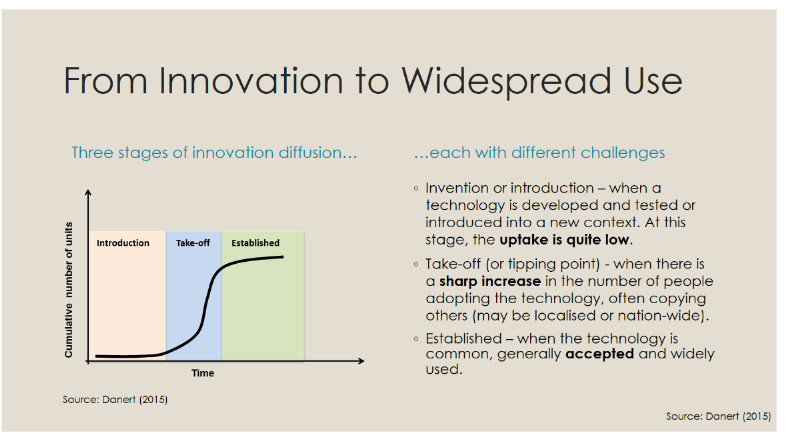
The PhD research process taught me so much, but let me try to stay close to the topic of manual drilling. The subject of innovation diffusion was opened up, and I came to learn that the successful adoption of any technology is brought about by much more than technical aspects (my PhD thesis provides insights into this in case you wish to be one of the very few people to read it).

Over the subsequent years, I was extremely fortunate to have the chance to keep on returning to the subject of manual drilling. The collaboration with UNICEF to follow-up their efforts to support manual drilling professionalization in several countries was a welcome opportunity, leading to not only the 2015 manual drilling compendium, but also more in-depth documentation of the status quo in Nigeria and Chad. In short, we documented that by 2015 manual drilling technologies had provided drinking water sources in at least 36 countries.

Manual Drilling

There are quite a few organisations introducing manual drilling technology, including private enterprises developing new markets; local non-governmental organisations (NGOs) with overseas funding; governments relying on foreign/local expertise as well as foreign companies and NGOs (including several faith-based organisations).

However, as I started to learn while in Uganda some 20 years ago, the diffusion of innovation has different phases.  Broadly speaking, there is the introduction phase, the uptake phase (also known as the valley of death, given that many technologies are not taken up), and the established phase. Mobile phones combined with digital cameras (aka SMART phones), that can enable you to make calls and take high resolution photographs are in the established phase.

Innovation Uptake (003)

Dr Pedro Martinez-Santos, the new UNESCO Chair in “Appropriate Technologies for Human Development” at the Universidad Complutense de Madrid chose the role of manual drilling technologies towards universal water access as the topic for the first seminar of the chair in April 2019.  I was privileged to be among the eleven people who attended the event. I thus had the opportunity to listen to, and learn from professionals talking of specific experiences in Nigeria, Senegal, the Demographic of Congo, Zambia and Guinea Bissau as well as more widely. It was also a chance to present my own experiences and reflections, and engage in open and fee dialogue.

Returning, after two decades, to an academic environment and reflecting on a topic that has engaged me ever since, is something that may only happen once in a lifetime! There is much that I could say about manual drilling, and even more to learn about, but I close this blog with three short messages:

  • Manual drilling is fully established in some countries and less so in others. Globally, a suite of technologies, when used in the right locations and with professional construction methods, can provide drinking water of good quality. Manual drilling undoubtedly has a significant role to play in reaching the Sustainable Development Goal Targets for Drinking Water, especially in remote areas, but also in rapidly growing urban centres where piped supplies are failing to provide reliable services.
  • Manual drilling is not just about technology but also: the businesses that invest; the drillers (male and female) that need be able to work professionally; the data that can be collected; and the question of whether some people are left behind while others tap the water from their back yards. And there is the regulation (alongside other innovations) needed ensure that the sources are, and remain safe to drink, tapping sustainable groundwater resources.
  • I close by urging not only governments, but also development partners to consider manual drilling, and manual drillers in policies, legislation, investments and capacity strengthening efforts rather than leaving it on the margins. As we experienced in Madrid in April, engage in real dialogue and listening with the different actors involved. The rewards may even be beyond your expectations!

You can download all the presentations from the Madrid seminar from here.

RWSN has collated information on manual drilling technologies and associated wider issues here.

Technovation Rush: Are developing countries ready?

by Takudzwa Noel Mushamba, WASH & Infrastructure Coordinator at Danish Refugee Council / Dansk Flygtningehjælp

re-posted from: https://www.linkedin.com/pulse/technovation-rush-developing-countries-ready-takudzwa-noel-mushamba/

Failure of technological innovation in the water and sanitation sector.
Across the globe there is growing momentum to address emerging and traditional threats to the water and sanitation sector through innovative technology. As a result, without thinking twice governments and practitioners have jumped on to the technology bandwagon. In the last decade there have been massive investments in technological innovation in the sector in developing countries. Furthermore, there are numerous articles that narrate how technology can help advance the water and sanitation sector in the developing world. There is no doubt there are some benefits emanating from the use of technology be it ICT or new technology introduced to operate and or manage water and sanitation systems. Regardless, the question is to what extent is the technology in question effective and is it introduced at right time?

Continue reading “Technovation Rush: Are developing countries ready?”

Webinar 16.11.2016 / Webinar el día 16.11.2016 – “A tool for Monitoring the Scaling up of Water and Sanitation Technologies”

Texto en español más abajo

From the RWSN secretariat we herewith announce the latest webinar of our mini-series 2016, which will take place on 16.11.2016. The title of the event is “A tool for Monitoring the Scaling up of Water and Sanitation Technologies (TAF – Technology Applicability Framework)” and it will focus on the use of the TAF, which has been presented and discussed previously in this Dgroup. The session will take place in English (2-3 PM Central European Time, please check your local time here) and in Spanish (4-5 PM Central European Time, please check your local time here). We are happy to announce the two presenters and the titles of their presentations:

  • Joshua Briemberg, WaterAid, Nicaragua: TAF as a participative planning and monitoring tool
  • Younes Hassib, GIZ, Germany: Scaling up sanitation solutions in Afghanistan

After the two presentations, you will have the chance to ask questions and participate in the on-line Q&A session and discussion around this topic.

Please use this link in order to register for the sessions.

Recordings and presentations of previous sessions of this mini-series of webinars are available for download and viewing here.

Continue reading “Webinar 16.11.2016 / Webinar el día 16.11.2016 – “A tool for Monitoring the Scaling up of Water and Sanitation Technologies””

Location Matters: A Small Tweak Brings Clean Water Innovations to 5 Million People

by Maura O’Neill,  Chief Innovation Officer and Senior Counselor to the Administrator, USAID

(first appeared: http://www.huffingtonpost.com/maura-o/location-matters-a-small-_b_3333535.html)

From the hills of western Kenya to the coastlines of Haiti, blue bins are popping up unexpectedly across local landscapes. These unassuming plastic containers positioned near communal water sources and propped on stands built from local materials, don’t exactly seem like life-saving innovations–but ask the half million people who use them daily, and they will tell you otherwise.

These modest-looking systems are the water purifying Chlorine Dispensers developed by Connecticut-based NGO Innovations for Poverty Action (IPA). These systems are designed to bring clean water to beneficiaries like Martin Ouma, the Head Teacher at Busidibu Primary School in Kenya, and his students. Martin tells a common story that is echoed among the communities whose lives are transformed by Chlorine Dispensers: “The dispenser has reduced diarrhea in schools. Standards have gone up, and diseases related to drinking water have been minimized.”

Continue reading “Location Matters: A Small Tweak Brings Clean Water Innovations to 5 Million People”

WASHTech at the IRC symposium in Addis Ababa

WASHTech presentation at Monitoring Symposium

dietvorst's avatarWASHTech, THE project (2011-2013)

With two presentations and a pre-launch side event, WASHTech was well represented at the IRC Monitoring Sustainable WASH Service Delivery symposium. The symposium and side events took place from 9-12 April 2013 in Addis Ababa, Ethiopia.

Introducing the TAF

André Olschewski (Skat) and Benedict Tuffuor (TREND Ghana) gave a general introduction to the Technology Applicability Framework (TAF) in a special session on the enabling environment. The session included a presentation on another tool, the Sustainability Monitoring Framework developed by the Dutch WASH Alliance.

Both presentations prompted a discussion about the number and variability of sustainability and how all these tools fit together. The presenters stressed that both tools fit in wider thinking around sustainability in the sector. Even though the tools are being developed in parallel, they both attempt to simplify the analysis of complex, variable data.

View original post 541 more words

Defender or Prius? When it comes to WASH technologies, are we asking the wrong questions?

The Rope Pump - the Land Rover of rural water supply? (Photo: RWSN/Skat)
The Rope Pump – the Land Rover of rural water supply? (Photo: RWSN/Skat)

In her latest blog post “What’s wrong with a free car?”, Susan Davis of Improve International argues that giving away cars for free would not solve mobility problems for those on low incomes and that likewise, with WASH projects, giving away a capital asset does not help a ‘beneficiary’ if it leaves them with crippling running costs that they can’t afford. In planning WASH services we need to consider lifecycle costs.

There are also parallels in terms of technology choice: do you buy an old Land Rover, which will be unreliable but many things can be fixed by the owner (My neighbour and I changed a head gasket and a cracked cylinder head on my 20-year-old Defender, and I spent many happy – and unhappy – hours tinkering),  or do you buy a Toyota Prius that will be ultra-efficient and reliable, but when it does break will cost and fortune and needs specialist skills and materials.

What should water users in say, Nicaragua or South Sudan, choose for their pump? Would they be better with a handpump that is precision-manufactured out of the very best materials to make it as reliable as possible, or a Rope Pump or an EMAS pump that can be made cheaply from readily available materials, and can be easily fixed by the user if it goes wrong.

It may seem to perverse to compare the two situations where millions everyday around the world do not have access to safe water, let alone a vehicle. But I found Susan’s comparison a helpful one in explaining the value of a topic like lifecycle costing that at first glance can seem intangible and academic.  In the WASHtech project we, along with our project partners IRC, WaterAid, Cranfield, KNUST and Netwas, have embedded the findings of WASHCost from day one so that the assessment of the applicability of new WASH technologies tries to get the whole picture.

What lifecycle costing does is that it shows us that there are better questions to questions to ask than just “which technology is better”.  Instead:  for any given context, which approach to supplying a water service is the most financially sustainable? What are all the costs involved, not just the CapEx and OpEx? If water users and Government can be provided with that information, in a way that is clear and understandable, then they have a fighting chance of getting a system that works, and continues to work.

Sustainability of solar water pumping in Uganda

Latest news from WASHTech project in Uganda: http://www.rural-water-supply.net/en/projekts/details/56

Jonga Micheal's avatarWASHTech, THE project (2011-2013)

    This video highlights steps of using the Technology Applicability Framework (TAF) to assess the potential solar powered water pumping for domestic supply in Kanungu district of south western Uganda

    View original post

    Deuxième test du TAF : les acteurs du secteur eau et assainissement du Burkina passent les technologies d’assainissement : VIP et EcoSan à l’épreuve du TAF

    News from Burkina Faso on the WASHTech project

    valérie's avatarWASHTech, THE project (2011-2013)

    En sortie terrain du 05 au 09 septembre  2012, l’équipe du projet WASHTech Burkina font passer les technologies d’assainissement : VIP et EcoSan à l’épreuve du Technology Applicability Framework (TAF).
    L’équipe de recherche a rencontré des partenaires étatiques (Direction Régionale de l’Agriculture et de l’hydraulique du Centre Ouest et l’ONEA), communales ( la commune urbaine de Koudougou)  associatives (action Micro-barrage et agro action), des maçons, des artisans, des bénéficiaires de ces technologies, tous engagés qui dans le développement,  qui  dans la promotion des latrines EcoSan ou VIP.  

    View original post 330 more words